Jump to Content
Dental Sterilization Market - Size, Share, Industry Trends, and Forecasts (2025-2032)
Dental Sterilization Market Size:
Dental Sterilization Market size is estimated to reach over USD 2,909.56 Million by 2032 from a value of USD 1,680.85 Million in 2024 and is projected to grow by USD 1,770.24 Million in 2025, growing at a CAGR of 7.1% from 2025 to 2032.
Dental Sterilization Market Scope & Overview:
Dental sterilization uses equipment, consumables, and technologies used to eliminate microbial contamination in dental tools and instruments, ensuring a sterile environment for patient care. This market includes autoclaves, ultrasonic cleaners, disinfectants, sterilization wraps, and monitoring systems designed to meet stringent infection control standards in dental practices.
Key characteristics of dental sterilization products include high efficacy in pathogen elimination, compliance with global health regulations, and user-friendly operation for dental healthcare professionals. The benefits include reduced risk of cross-contamination, enhanced patient safety, and adherence to infection control protocols.
Applications span dental clinics, hospitals, dental laboratories, and academic research institutions where sterilization of instruments is critical. End-users include dental practitioners, hygienists, and support staff, driven by rising awareness of infection control, increasing dental procedures worldwide, stringent regulatory guidelines, and advancements in sterilization technologies.
How is AI Transforming the Dental Sterilization Market?
AI is playing an increasingly important role in enhancing dental sterilization processes by improving efficiency, accuracy, and safety. Moreover, AI-powered systems can analyze data to optimize sterilization cycles, ensuring they are faster, safer, and more efficient. These systems can adapt to different types of dental instruments, reducing the risk of damage and improving the effectiveness of the sterilization process. Additionally, AI-powered systems can monitor sterilization processes in real-time, providing feedback and alerts to ensure proper functioning. Thus, the above factors are anticipated to boost the market growth in the upcoming years.

Dental Sterilization Market Dynamics - (DRO) :
Key Drivers:
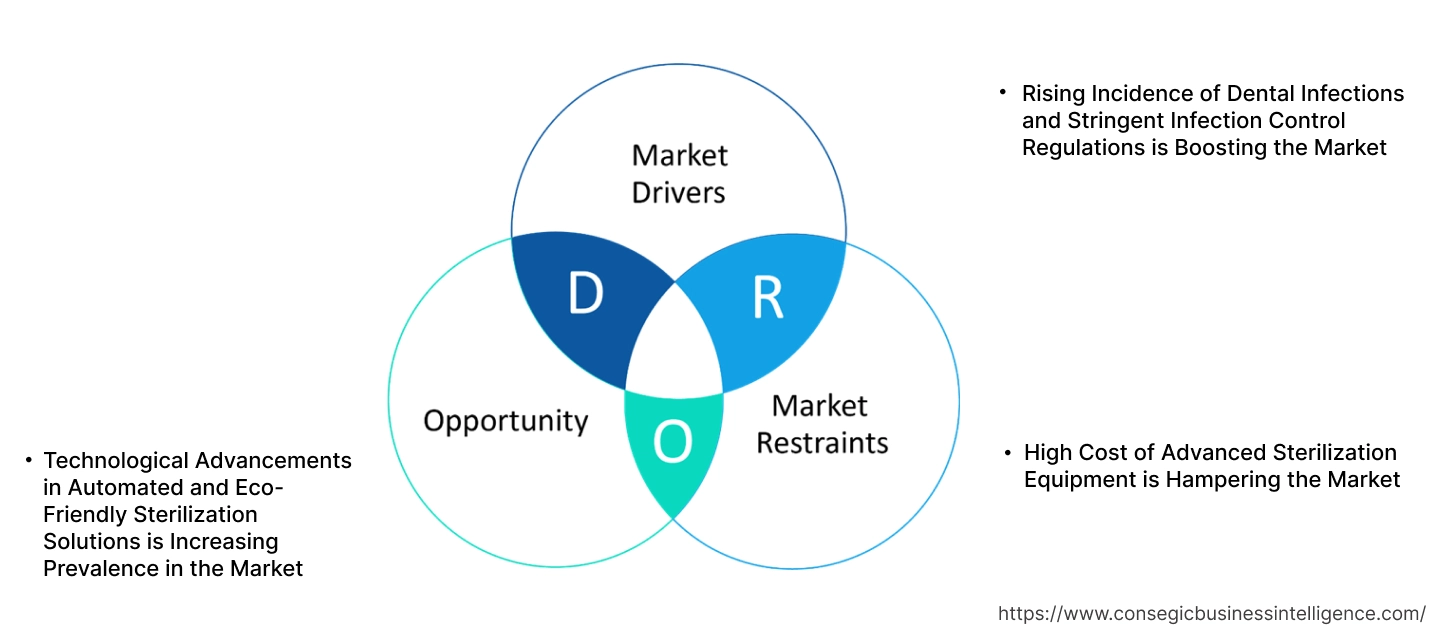
Rising Incidence of Dental Infections and Stringent Infection Control Regulations is Boosting the Market
The dental sterilization market is primarily driven by the increasing incidence of dental infections and the implementation of stringent infection control regulations across dental practices globally. Dental procedures involve close contact with blood and saliva, making sterilization of instruments and equipment critical to preventing cross-contamination and infection transmission. Regulatory bodies such as the Centers for Disease Control and Prevention (CDC) and the World Health Organization (WHO) have established strict guidelines for infection control in dental settings, mandating the use of sterilization devices like autoclaves, ultrasonic cleaners, and disinfectants. The rising awareness among dental professionals about the importance of infection control, coupled with growing patient concerns about safety and hygiene, has significantly driven the demand for advanced dental sterilization solutions.
Key Restraints:
High Cost of Advanced Sterilization Equipment is Hampering the Market
Despite its necessity, the high cost associated with purchasing, operating, and maintaining advanced dental sterilization equipment poses a major challenge to market growth. Small and medium-sized dental clinics, particularly in developing regions, may find it financially burdensome to invest in high-end sterilization devices such as Class B autoclaves, plasma sterilizers, and automated instrument washers. Additionally, sterilization processes often require consumables, energy, and ongoing maintenance, further increasing operational costs. Limited funding and reimbursement support for dental equipment in certain markets exacerbate this issue, slowing down the adoption of advanced sterilization technologies in cost-sensitive regions.
Future Opportunities :
Technological Advancements in Automated and Eco-Friendly Sterilization Solutions is Increasing Prevalence in the Market
The growing demand for automated and eco-friendly sterilization technologies presents significant opportunities for market expansion. Innovations in sterilization equipment, such as low-temperature plasma sterilizers, ozone-based sterilization systems, and automated ultrasonic cleaners, offer faster, safer, and more energy-efficient solutions compared to conventional methods. These advancements not only improve sterilization efficiency but also minimize the environmental impact by reducing water and energy consumption and limiting the use of harmful chemicals. Additionally, the integration of digital monitoring systems in sterilization equipment allows dental practitioners to track sterilization cycles in real-time, ensuring compliance with safety standards and improving operational efficiency. The shift towards sustainable and smart sterilization technologies is expected to create lucrative growth of dental sterilization market opportunities for manufacturers, particularly as dental clinics seek to enhance workflow efficiency and meet rising hygiene standards.
These dynamics underscore the increasing significance of dental sterilization in ensuring patient safety and regulatory compliance. While the high costs of advanced sterilization devices remain a challenge, ongoing technological innovations and the push for sustainable and automated solutions offer promising avenues for market growth and transformation.
Dental Sterilization Market Segmental Analysis :
By Product Type:
Based on product type, the market is segmented into sterilization equipment, cleaning and disinfection instruments, and consumables and accessories.
The sterilization equipment segment accounted for the largest revenue in dental sterilization market share in 2024.
- Sterilization equipment, including autoclaves and dry heat sterilizers, are critical for ensuring infection control in dental practices.
- Rising awareness about cross-contamination risks and stringent regulatory guidelines have driven demand for advanced sterilization equipment.
- Continuous innovations in technology, such as faster sterilization cycles and energy-efficient models, support segment dominance.
- Increasing adoption of automated sterilization solutions in dental clinics and hospitals is fueling dental sterilization market growth.
The consumables and accessories segment is anticipated to register the fastest CAGR during the forecast period.
- Consumables such as sterilization wraps, indicator tapes, and biological indicators are essential for daily sterilization practices.
- Growing dental sterilization market trends for single-use consumables to minimize infection risks supports segment trends.
- Rising adoption of eco-friendly and biodegradable consumables in dental practices is driving dental sterilization market demand.
- Expanding dental procedures and increasing patient volume contribute to the rising use of sterilization consumables and accessories.
By Mode of Delivery:
Based on the mode of delivery, the market is segmented into portable/bench-top sterilizers and standalone sterilizers.
The standalone sterilizers segment accounted for the largest revenue in dental sterilization market share in 2024.
- Standalone sterilizers offer high capacity and efficiency, making them suitable for larger dental facilities and hospitals.
- Increasing installation in high-traffic dental clinics and dental hospitals to manage large volumes of instruments supports this segment's dominance.
- Advancements in automated and smart sterilizers with real-time monitoring features are boosting adoption.
- Rising regulatory requirements for infection control in dental practices have led to higher demand for advanced standalone sterilizers.
The portable/bench-top sterilizers segment is anticipated to register the fastest CAGR during the forecast period.
- Portable and bench-top sterilizers are ideal for small to medium-sized dental clinics due to their compact size and cost-effectiveness.
- Growing adoption among solo practitioners and mobile dental units is driving trends.
- Technological innovations in compact sterilizers, including faster cycles and energy efficiency, support trends.
- Increasing preference for flexible and space-saving sterilization solutions is expected to propel this segment's growth.
By End User:
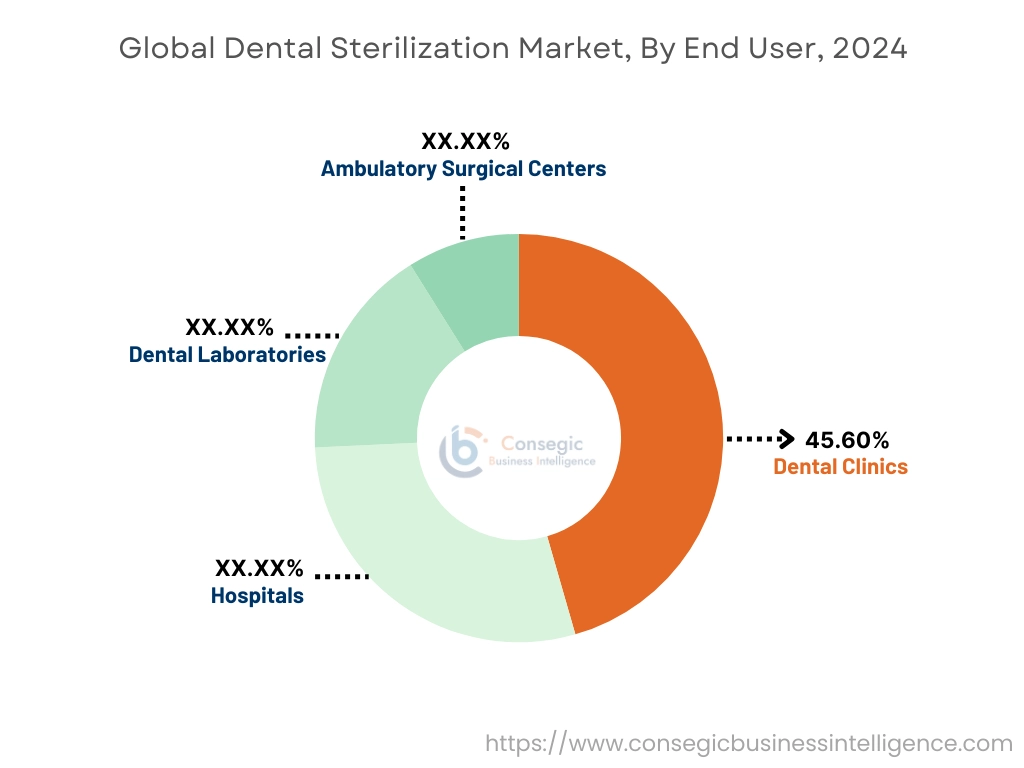
Based on end-user, the market is segmented into hospitals, dental clinics, dental laboratories, and ambulatory surgical centers.
The dental clinics segment accounted for the largest revenue share of 45.60% in 2024.
- Dental clinics are the primary users of sterilization products due to the high frequency of dental procedures requiring sterile instruments.
- Increasing patient awareness of hygiene and safety standards is driving clinics to invest in advanced sterilization solutions.
- Growing establishment of multispecialty and cosmetic dental clinics has boosted the demand for sterilization equipment.
- Rising regulatory compliance for infection control in dental practices supports the dominance of this segments analysis.
The dental laboratories segment is anticipated to register the fastest CAGR during the forecast period.
- Dental laboratories require rigorous sterilization processes for tools and molds used in dental prosthetics and restorations.
- Increasing dental sterilization market trends for customized dental prosthetics and orthodontic devices is driving the need for advanced sterilization in labs.
- Technological advancements in sterilization solutions tailored for dental labs are supporting trends.
- Expanding collaborations between dental labs and clinics for outsourced dental product manufacturing is expected to propel this segmental analysis.
Regional Analysis:
The regions covered are North America, Europe, Asia Pacific, the Middle East and Africa, and Latin America.
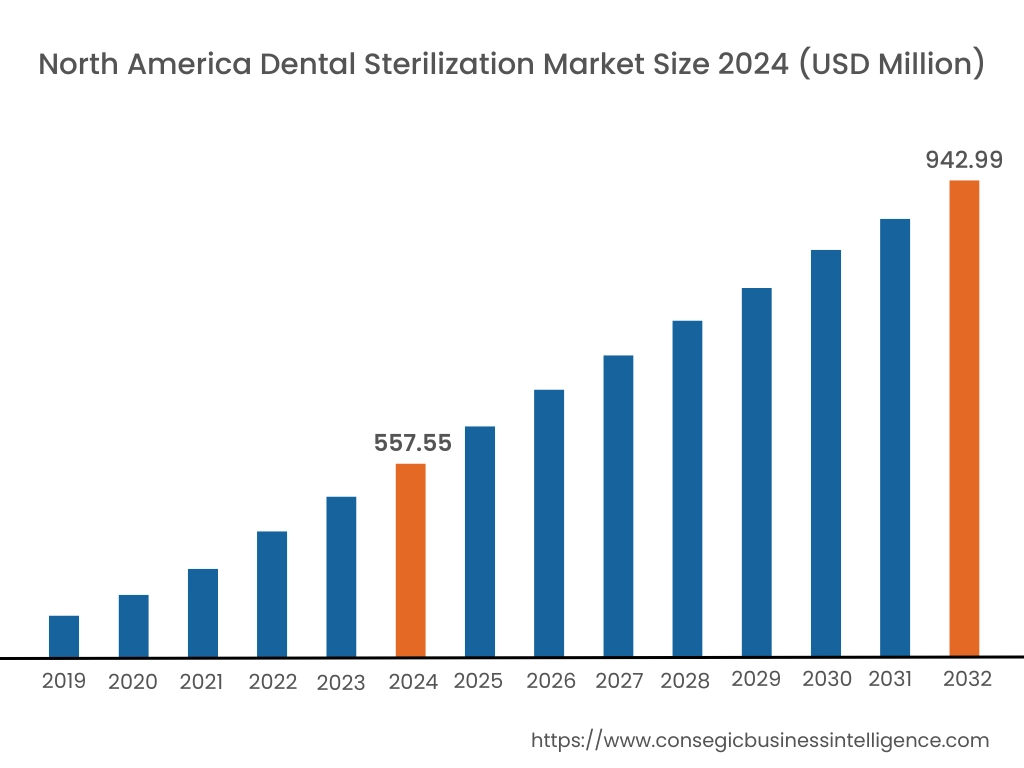
In 2024, North America was valued at USD 557.55 Million and is expected to reach USD 942.99 Million in 2032. In North America, the U.S. accounted for the highest share of 72.80% during the base year of 2024. North America holds a significant share in the global dental sterilization market, driven by stringent regulations on infection control, advanced healthcare infrastructure, and a high volume of dental procedures. The U.S. leads the region due to strict guidelines from agencies like the CDC and OSHA, which mandate the use of sterilization equipment in dental clinics. The widespread adoption of autoclaves, ultrasonic cleaners, and sterilization consumables contributes to dental sterilization market growth. As per the analysis, Canada supports market expansion with growing awareness about infection control and rising investments in dental healthcare facilities. However, the high cost of advanced sterilization equipment may challenge adoption in smaller dental practices.

In Asia Pacific, the market is experiencing the fastest growth with a CAGR of 7.5% over the forecast period. The dental sterilization market, is fueled by rising awareness about infection control, increasing dental tourism, and expanding dental healthcare infrastructure in China, India, and Japan. China dominates the region with growing adoption of sterilization equipment in urban dental clinics, supported by government healthcare reforms. India’s rapidly expanding dental industry drives demand for cost-effective sterilization solutions in small and mid-sized dental clinics. As per the dental sterilization market analysis, Japan emphasizes the use of advanced sterilization technologies in high-end dental practices, leveraging its strong technological advancements. However, limited awareness and inadequate implementation of infection control protocols in rural areas may hinder dental sterilization market expansion.
Europe is a prominent market for dental sterilization, supported by strong regulatory frameworks, increasing dental procedures, and high emphasis on patient safety. Countries like Germany, the UK, and France are key contributors. Germany leads with its advanced dental clinics and strong compliance with European Union sterilization standards. The UK emphasizes infection control policies in both public and private dental practices, while France focuses on improving sterilization protocols in dental care facilities. However, the high cost of equipment maintenance and compliance with evolving sterilization standards may pose challenges in some regions.
The Middle East & Africa region is witnessing steady growth in the dental sterilization market, driven by increasing healthcare investments and growing demand for quality dental care. Countries regional analysis shows areas like Saudi Arabia and the UAE are adopting advanced sterilization technologies to meet international healthcare standards, particularly in premium dental clinics. In Africa, South Africa is emerging as a key market with government initiatives to improve dental care infrastructure and focus on infection prevention. However, limited access to high-end sterilization equipment and insufficient regulatory enforcement in some regions may restrict market development.
Latin America is an emerging market for dental sterilization, with Brazil and Mexico leading the region. Brazil’s expanding dental industry and rising number of dental clinics drive the trends for sterilization equipment and consumables. Mexico is focusing on improving sterilization practices in dental care facilities, supported by increasing dental tourism and government health initiatives. The region benefits from growing awareness of infection control, but economic instability and inconsistent healthcare regulations may pose challenges to the market's trends in smaller economies.
Top Key Players & Market Share Insights:
The dental sterilization market is highly competitive with major players providing products and services to the national and international markets. Key players are adopting several strategies in research and development (R&D), product innovation, and end-user launches to hold a strong position in the global dental sterilization market. Key players in the dental sterilization industry include -
- Dentsply Sirona Inc. (United States)
- A-dec Inc. (United States)
- Hu-Friedy Mfg. Co., LLC (United States)
- SciCan Ltd. (Canada)
- Coltene Holding AG (Switzerland)
- Mocom (Italy)
- Midmark Corporation (United States)
- Getinge AB (Sweden)
- MELAG Medizintechnik GmbH & Co. KG (Germany)
- Tuttnauer (Netherlands)
Dental Sterilization Market Report Insights:
| Report Attributes | Report Details |
| Study Timeline | 2019-2032 |
| Market Size in 2032 | USD 2,909.56 Million |
| CAGR (2025-2032) | 7.1% |
| By Product Type |
|
| By Mode of Delivery |
|
| By End User |
|
| By Region |
|
| Key Players |
|
| North America | U.S. Canada Mexico |
| Europe | U.K. Germany France Spain Italy Russia Benelux Rest of Europe |
| APAC | China South Korea Japan India Australia ASEAN Rest of Asia-Pacific |
| Middle East and Africa | GCC Turkey South Africa Rest of MEA |
| LATAM | Brazil Argentina Chile Rest of LATAM |
| Report Coverage |
|
Key Questions Answered in the Report
What is the projected size of the Dental Sterilization Market by 2032? −
Dental Sterilization Market size is estimated to reach over USD 2,909.56 Million by 2032 from a value of USD 1,680.85 Million in 2024 and is projected to grow by USD 1,770.24 Million in 2025, growing at a CAGR of 7.1% from 2025 to 2032.
What factors are driving the growth of the Dental Sterilization Market? +
The market growth is driven by the rising incidence of dental infections, stringent infection control regulations, growing awareness of hygiene and safety in dental practices, and technological advancements in sterilization equipment.
What are the key challenges restraining the market growth? +
The high cost of advanced sterilization equipment and maintenance, particularly for small and medium-sized dental practices, and limited funding support in developing regions are major challenges hindering market growth.
What opportunities are available in the Dental Sterilization Market? +
Opportunities include technological advancements in automated and eco-friendly sterilization solutions, such as plasma sterilizers and smart monitoring systems, and the growing adoption of digital workflows in dental practices to enhance sterilization efficiency.
Overview
Reputation & Certifications


Our Services
- Market Intelligence & Forecasting
- Custom Research Solutions
- Market Entry Strategy
- Competitive Intelligence
- Customer Insights
- Industry Innovation Analysis
- Investment Advisory