Jump to Content
E-House Market Size & Industry Share - Growth Trends & Forecasts (2026 - 2034)
E-House Market Size:
E-House Market size is estimated to reach over 3,995.99 (US$M) by 2034 from a value of 1,982.41 (US$M) in 2025 and is projected to grow by 2,142.98 (US$M) in 2026, growing at a CAGR of 8.1% from 2026 to 2034, according to a recent report from Consegic Business Intelligence.
E-House Market Scope & Overview:
The E-house comprises modular, prefabricated buildings that house crucial electrical equipment such as switchgear and motor control centers. These units are designed for easy transport and rapid deployment, offering a quick, cost-effective alternative to traditional on-site construction. They are widely used across sectors including industrial, mining, oil & gas, power generation, and data centers, where they enable efficient power distribution, particularly in remote or harsh environments. Key benefits include lower construction costs, shorter setup time, enhanced safety by protecting equipment and personnel, and scalability for future needs. Their modular nature and adaptability make it an attractive choice for industries seeking reliable and flexible electrical infrastructure solutions, in turn driving market growth.

E-House Market Dynamics - (DRO) :
Key Drivers:
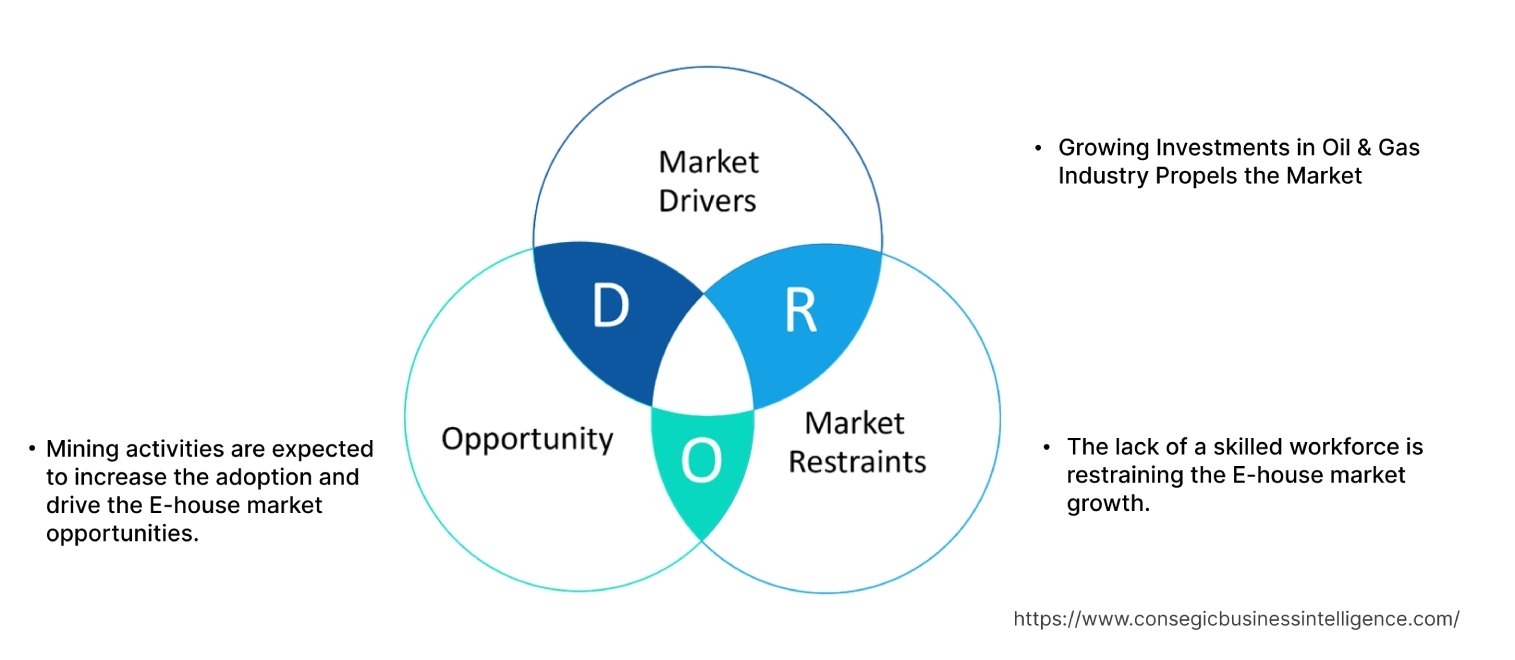
Growing Investments in Oil & Gas Industry Propels the Market
Rising investments in the oil and gas sector, particularly in exploration and production, are fueling the demand for electrical houses. These modular power solutions are essential for quick and reliable power distribution in remote, harsh environments typical of oil and gas operations. As the focus on cost efficiency and reducing setup time intensifies, electrical houses present a flexible and scalable alternative to conventional infrastructure. This trend enables oil and gas companies to meet production goals while controlling costs, thereby, boosting the overall growth of the oil and gas industry.
- For instance, ABB provided 98m of electrical houses to enable reliable power supply, for the SARB (Satah al-Razboot) offshore oil field in the UAE.
Thus, the analysis shows that the growing investments in oil and gas exploration are driving the E-house market trends.
Key Restraints :
The lack of a skilled workforce is restraining the E-house market growth.
The market faces significant development constraints due to a lack of skilled workforce. Insufficient technical expertise hinders effective implementation and maintenance. The limited availability of trained professionals restricts scalability. The shortage of skilled labor increases operational costs. Recruitment and training challenges delay project timelines. Inadequate knowledge of E-H technologies leads to inefficient energy management and a lack of strong infrastructure.
Therefore, the lack of skilled labor for installation and operations is restraining the E-house market demand.
Future Opportunities :
Mining activities are expected to increase the adoption and drive the E-house market opportunities.
The expansion of the mining industry presents a significant trend in the adoption of electrical houses. Mining operations are often located in remote locations where traditional power infrastructure is difficult and costly to establish. Electrical houses offer a modular, cost-effective solution for power distribution, enabling quick deployment and easy relocation as mining sites change. As mining companies prioritize efficiency and seek reliable power solutions in rugged environments, demand for E-houses is expected to rise, creating growth prospects in this sector. Increasing investments in mineral extraction and the need for sustainable, reliable power in harsh environments are driving the E-house market expansion.
- In May 2021, Schneider Electric partnered with Wartsila to create a sustainable and uninterrupted power solution i.e. E-house for lithium mines around the world.
Thus, the analysis states that growing mining activities drive the global E-house market opportunities.
E-House Market Segmental Analysis :
By Type:
Based on types, the market is segmented into mobile substation and fixed.
Trends in the Type:
- The fixed type offers a permanent solution for housing electrical systems, providing stability and robustness for long-term applications.
- These substations are usually custom-built to meet precise site requirements, making them ideal for projects with predictable, sustained power needs.
The mobile substation segment accounted for the largest revenue share of the total E-house market share in 2023 and is anticipated to register the fastest CAGR during the forecast period.
- Mobile substations are specifically designed for rapid deployment, providing crucial support during power outages or emergencies.
- They offer a flexible and effective solution for industries and utilities in need of temporary, reliable power.
- The mobile substation market consists mainly of small to mid-sized, locally focused companies with electrical engineering expertise.
- These providers primarily serve utilities, offering specialized power solutions for regional needs.
- In November 2021, VEO signed a contract with Boliden to deliver a 5MW mobile substation for Boliden Kevitsa mine’s machinery which improved operational efficiency.
- For instance, Zest WEG made a custom-designed mobile substation for Guinea in 2022 by using its in-house expertise and local manufacturing facility.
- According to the analysis, the rising necessity for improving operational efficiency is driving the adoption of the mobile substation segment in the E-house industry.
By Component:
Based on components, the market is segmented into switchgear, transformers, UPS, HVAC systems, and others.
Trends in the Component:
- The incorporation of high-efficiency transformers in electrical houses is on the rise, driven by the requirement for energy savings and improved performance in industrial and utility applications.
- There is a rising trend toward smart HVAC systems with remote monitoring capabilities, enabling precise climate control and reduced maintenance costs in E-house installations.
The switchgear segment accounted for the largest revenue at % of the overall E-house market share in 2023.
- Switchgear plays an important role in electrical houses by ensuring safe and efficient power distribution, which is essential for interrupted operations.
- This high revenue share reflects the significant trend for switchgear in various industries that rely on electrical houses for secure power regulation.
- Increasing innovations in switchgear, such as automated control and digital monitoring, have improved its value, making it an ideal option for modern electrical house installations.
- In August 2020, Schneider Electric Group partnered with L&T Switchgear following L&T’s investment and diversification of its automation and electrical business.
- Therefore, the rising investments and partnerships related to switchgear sare driving the E-house market growth.
The UPS segment is anticipated to register the fastest CAGR during the forecast period.
- As industries increasingly prioritize power reliability, the demand for UPS systems in electrical houses has increased, supporting continuous operations during power disruptions.
- Sectors such as healthcare, data centers, and industrial automation rely heavily on UPS systems to prevent downtime.
- There is an increase in innovations in UPS technologies, such as modular designs and energy-efficient systems.
- Rising concerns over power grid stability are driving companies to heavily invest in UPS systems as a reliable backup solution.
- In September 2023, Vertiv launched Vertiv Liebert APM2 an UPS, which is compact in size and compatible with VRLA and Li-ion batteries for midsized and edge applications.
- Hence, the rising advancements related to UPS are driving the market.
By Application:
Based on application, the market is segmented into industrial, mining, oil & gas, and others.
Trends in the Application:
- There is an increasing utilization of electrical houses in the mining sector for remote mining operations to house electrical equipment safely and efficiently in harsh environments.
- Rising adoption of electrical houses in oil and gas applications to facilitate the safety of electrical systems.
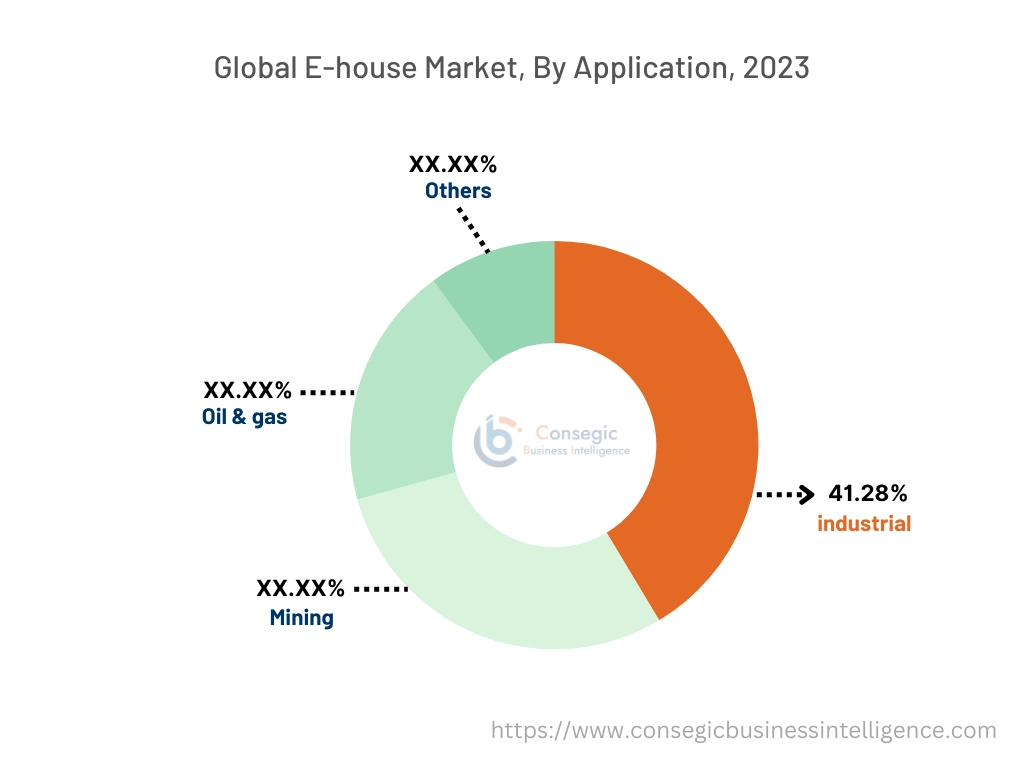
The industrial segment accounted for the largest revenue at 41.28% of the overall share in 2023 and is anticipated to register the fastest CAGR during the forecast period.
- sE-houses are prefabricated modular structures designed for use in industrial purposes for operational efficiency in remote environments.
- It offers time and cost savings through prefabrication and enhances safety by protecting equipment from hazardous environments.
- It is used in the energy sector for power plants and substations for reliable power supply in remote areas.
- For instance, in October 2024, KJ Controls developed a customized electrical house for a plywood facility which included a workstation and a PLC cabinet for monitoring.
- Therefore, the rising advancements in the customization of electrical houses for different industrial applications drive the market.
Regional Analysis:
The regions covered are North America, Europe, Asia Pacific, the Middle East and Africa, and Latin America.
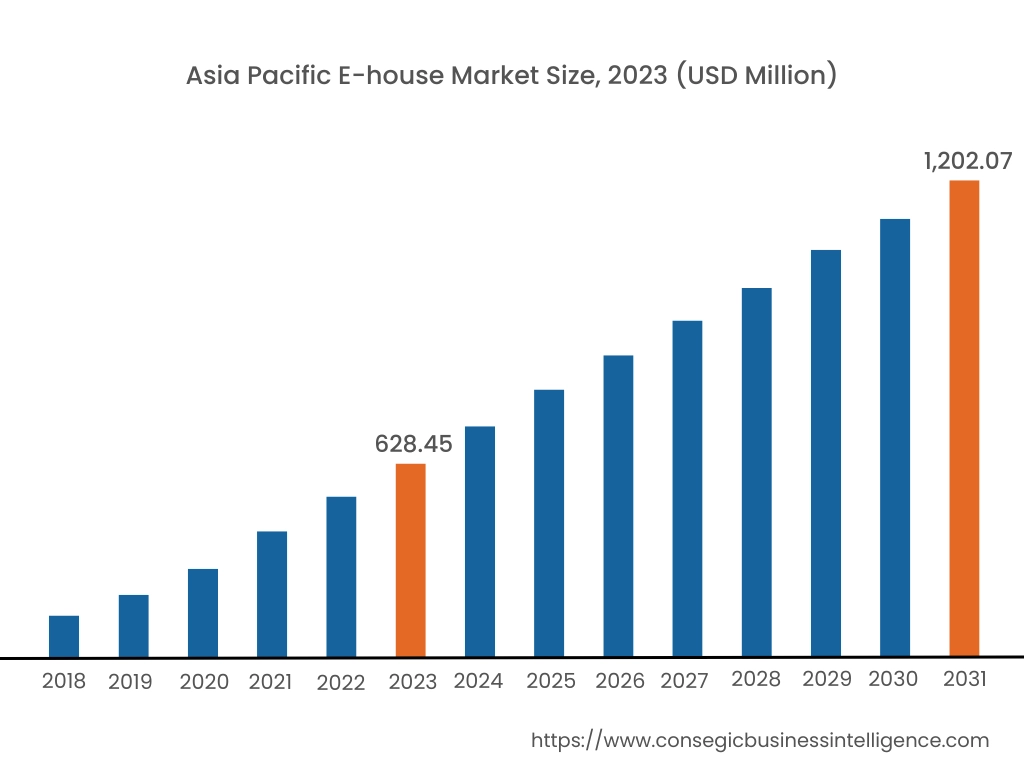
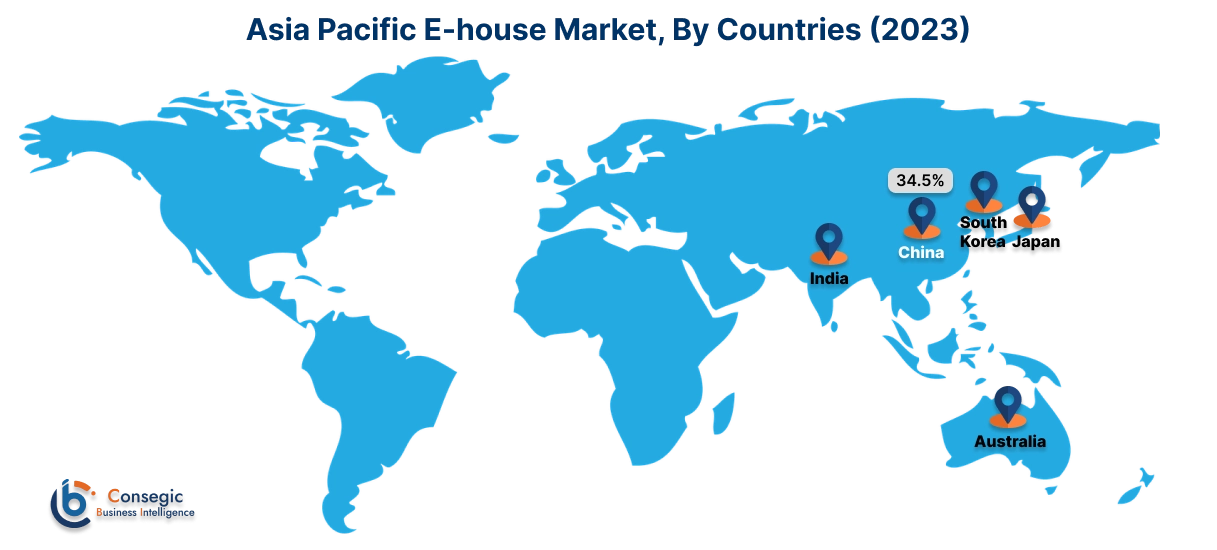
Asia Pacific region was valued at USD 628.45 Million in 2023. Moreover, it is projected to grow by USD 669.65 Million in 2024 and reach over USD 1,202.07 Million by 2031. Out of this, China accounted for the maximum revenue share of 34.5%. As per the E-house market analysis, increasing investments in industrialization and infrastructure development to meet growing operational efficiency needs are driving the adoption of electrical houses. The rapid development and the rising requirement of E-house for industries like oil & gas accelerate the E-house market expansion.
- For instance, in April 2024, Wing Wah a Chinese oil company signed an amended production-sharing contract with the Chinese government, the oilfield aims to reach 80,000 barrels per day from 45,000 barrels per day in turn driving the E-house market trends.
North America is estimated to reach over USD 885.74 Million by 2031 from a value of USD 474.20 Million in 2023 and is projected to grow by USD 504.28 Million in 2024. The growth is driven by the increasing adoption of advanced technologies such as smart grids and IoT to increase the scalability and flexibility of industrial plants. Hence, the increased investment in energy and power projects contributes to the E-house market demand.
- In February 2020, GE Power an American company, delivered an electrical house to Shell Nederland Chemie B.V. supervision for a petrochemical facility.
The regional trends analysis depicts that the strict carbon emission laws of Europe increase the adoption of sustainable solutions, as these modular electrical houses support eco-friendly power distribution and control, in turn driving the market. Further, as per the E-house market analysis, the primary factor driving the market in the Middle East and African region is increasing investment in the oil and gas sector to reduce the production cost related to oilfields and mining projects. The rising investments in mineral extraction projects are, accelerating the market growth in the Latin America region.
Top Key Players & Market Share Insights:
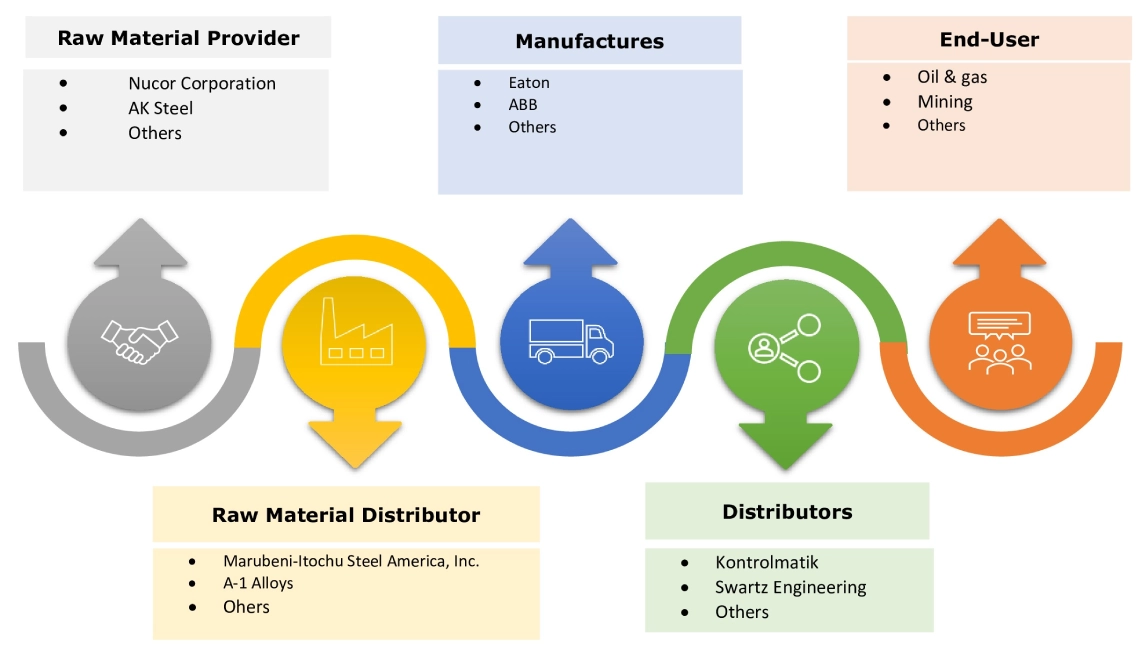
The E-house market is highly competitive with major players providing services to the national and international markets. Key players are adopting several strategies in research and development (R&D), product innovation, and end-user launches to hold a strong position in the global E-house market. Key players in the E-house industry include -
- Siemens (Germany)
- ABB (Switzerland)
- GE Power (US)
- Electroinnova (Spain)
- Schneider Electric (France)
- Eaton (Ireland)
- General Electric (US)
- CG Power (India)
- Meidensha (Japan)
Recent Industry Developments :
Product launches
- In September 2024, VEO launched a new light switchgear which features a low-voltage solution with compact design and reduce operational time and others.
- In May 2024, the Socomec launched the DELPHYS MS Elite+ UPS which features embedded galvanic isolation transformer, LED interface, low cost solution and others.
E-House Market Report Insights :
| Report Attributes | Report Details |
| Study Timeline | 2021-2034 |
| Market Size in 2034 | USD 3,995.99 Million |
| CAGR (2026-2034) | 8.10% |
| Base Year | 2025 |
| By Type |
|
| By Component |
|
| By Application |
|
| By Region |
|
| Key Players |
|
| North America | U.S. Canada Mexico |
| Europe | U.K. Germany France Spain Italy Russia Benelux Rest of Europe |
| APAC | China South Korea Japan India Australia ASEAN Rest of Asia-Pacific |
| Middle East and Africa | GCC Turkey South Africa Rest of MEA |
| LATAM | Brazil Argentina Chile Rest of LATAM |
| Report Coverage |
|
Key Questions Answered in the Report
How big is the E-House market? −
E-House Market size is estimated to reach over USD 3,163.35 Million by 2031 from a value of USD 1,693.02 Million in 2023 and is projected to grow by USD 1,800.46 Million in 2024, growing at a CAGR of 8.1% from 2024 to 2031.
What specific segmentation details are covered in the E-House market report? +
The E-House market report includes specific segmentation details for type, component, and region.
Which is the fastest segment anticipated to impact the growth? +
In the type segment, the mobile substation sector is the fastest-growing segment during the forecast period.
Who are the major players in the E-House market? +
The key participants in the E-House market are Siemens (Germany), ABB (Switzerland), Schneider Electric (France), Eaton (Ireland), General Electric (US), CG Power (India), Meidensha (Japan), GE Power (US), and Electroinnova (Spain).
Overview
Reputation & Certifications


Our Services
- Market Intelligence & Forecasting
- Custom Research Solutions
- Market Entry Strategy
- Competitive Intelligence
- Customer Insights
- Industry Innovation Analysis
- Investment Advisory