Jump to Content
Elbow Stiffness Market - Size, Share, Industry Trends, and Forecasts (2025-2032)
Elbow Stiffness Market Size:
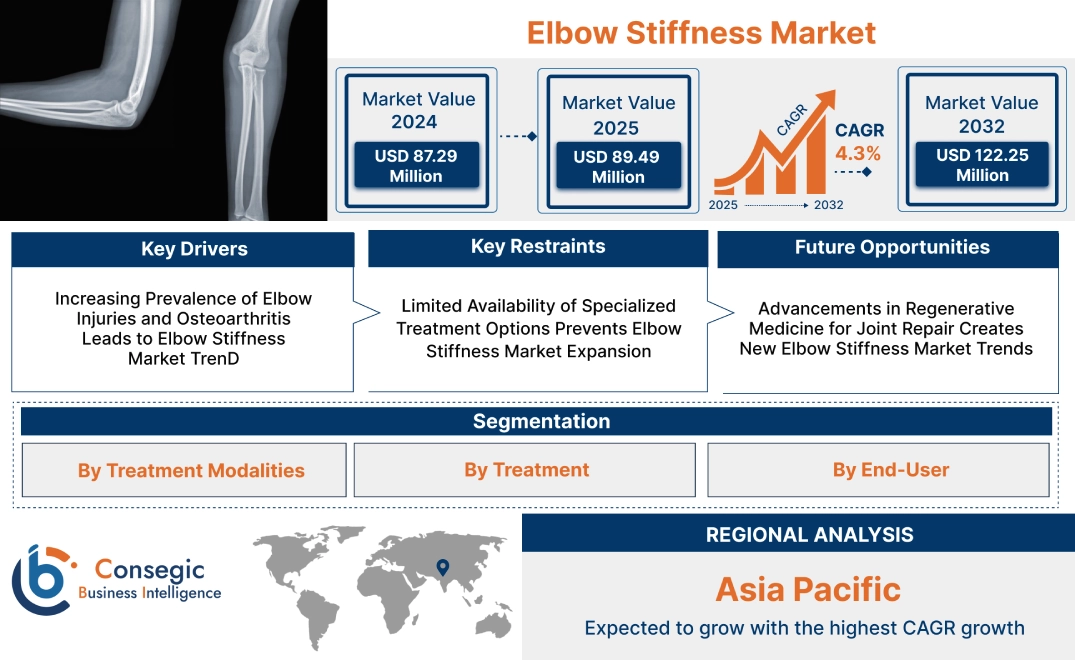
Elbow Stiffness Market size is estimated to reach over USD 122.25 Million by 2032 from a value of USD 87.29 Million in 2024 and is projected to grow by USD 89.49 Million in 2025, growing at a CAGR of 4.3% from 2025 to 2032.
Elbow Stiffness Market Scope & Overview:
Elbow stiffness treatment involves therapies and medical interventions to address limited range of motion caused by injury, arthritis, or post-surgical complications. Common treatments include physical therapy, pharmacological interventions, and surgical procedures. These solutions aim to restore joint mobility, alleviate discomfort, and enhance functionality. Key features of elbow stiffness treatments include targeted therapeutic approaches, pain management capabilities, and suitability for diverse patient needs. These treatments support recovery and improve patients' quality of life.
Elbow stiffness treatments are utilized in hospitals, rehabilitation centers, and outpatient clinics. They are essential in orthopedic care, sports medicine, and post-trauma recovery. Timely intervention ensures effective outcomes and sustained mobility.
Elbow Stiffness Market Dynamics - (DRO):
Key Drivers:
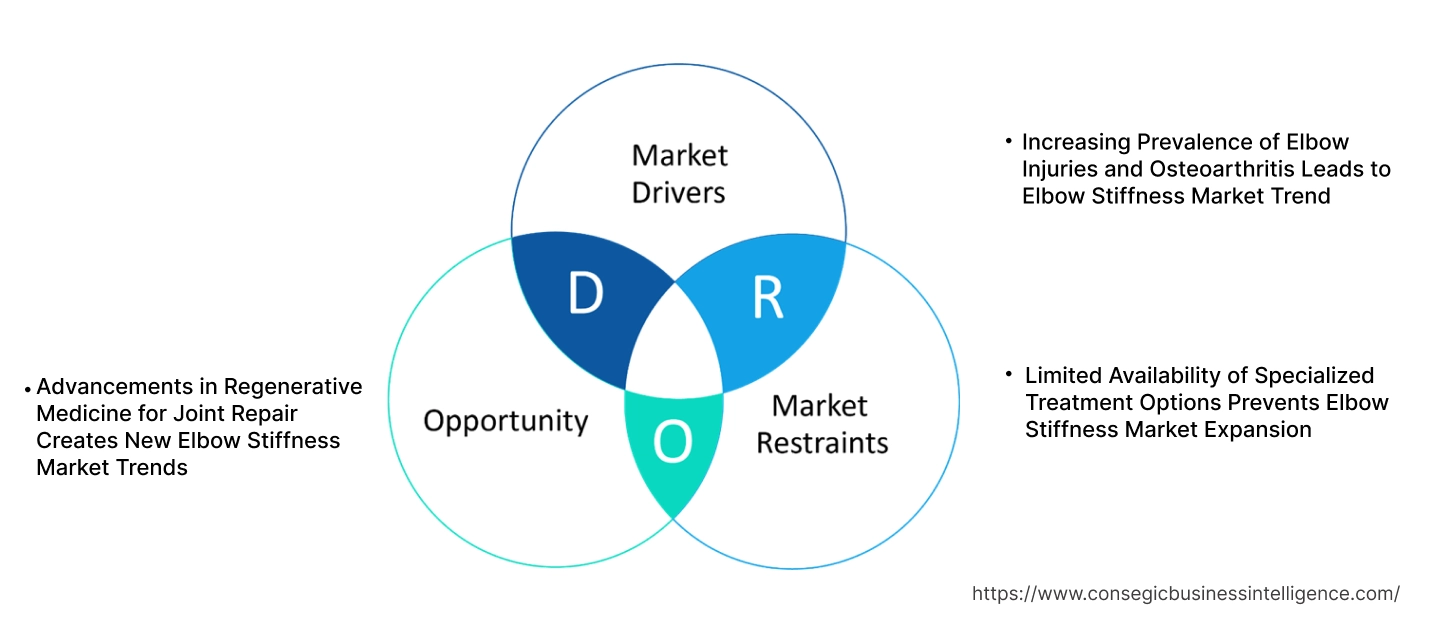
Increasing Prevalence of Elbow Injuries and Osteoarthritis Leads to Elbow Stiffness Market Trend
Elbow stiffness is often caused by injuries such as fractures, dislocations, or surgeries, as well as degenerative conditions like osteoarthritis. As the global aging population increases, so does the incidence of osteoarthritis, which can lead to significant elbow stiffness. Additionally, sports-related injuries among younger populations, particularly in high-impact sports, contribute to elbow stiffness cases. Treatment methods such as physical therapy, joint injections, and surgical procedures play a crucial role in managing these conditions.
Therefore, the rising prevalence of elbow-related injuries and osteoarthritis is a key factor fueling trend for elbow stiffness treatment options and driving elbow stiffness market growth.
Key Restraints:
Limited Availability of Specialized Treatment Options Prevents Elbow Stiffness Market Expansion
One of the main challenges faced by the market is the limited availability of specialized treatment options that address the root cause of the stiffness. While physical therapy and corticosteroid injections offer some relief, they do not always fully restore range of motion. More invasive treatments, such as elbow arthroplasty or joint manipulation, are associated with significant risks, including complications during recovery. The lack of effective non-invasive treatment options that specifically target elbow stiffness limits the market potential.
This gap in treatment availability restricts the market, as patients often seek alternatives outside traditional therapies.
Future Opportunities:
Advancements in Regenerative Medicine for Joint Repair Creates New Elbow Stiffness Market Trends
Regenerative medicine holds great promise in the field of elbow stiffness treatment. Technologies such as stem cell therapy and platelet-rich plasma (PRP) injections are being explored as potential solutions for promoting healing and tissue regeneration in the elbow joint. These treatments aim to repair damaged cartilage and ligaments, thereby reducing stiffness and improving joint mobility. As research in regenerative medicine continues to advance, it is expected that more effective and minimally invasive treatment options will emerge.
The development of regenerative therapies for elbow stiffness presents a significant opportunity for the market, offering improved long-term outcomes and reduced recovery times for patients.
Elbow Stiffness Market Segmental Analysis :
By Treatment Modalities:
Based on treatment modalities, the market is segmented into conservative treatments and surgical treatments.
The conservative treatments sector accounted for the largest revenue in elbow stiffness market share in 2024.
- Conservative treatments, which include physiotherapy and splinting, are the first line of treatment for most patients experiencing elbow stiffness.
- These options are non-invasive and aim to alleviate pain, improve flexibility, and restore function.
- Physiotherapy is a widely used treatment that focuses on stretching, strengthening exercises, and joint mobilization techniques to increase range of motion and reduce stiffness.
- Splinting is another common approach, providing support to the elbow joint and preventing further damage while allowing healing to occur.
- Conservative treatments are preferred due to their effectiveness in managing mild to moderate cases of elbow stiffness, as well as their relatively low risk and cost.
- With increasing awareness about rehabilitation techniques and a rising preference for non-invasive solutions, conservative treatments are expected to maintain their dominant position in the market.
- Therefore, according to elbow stiffness market analysis, conservative treatments, particularly physiotherapy and splinting, are the most widely utilized and preferred options in managing elbow stiffness due to their non-invasive nature and proven effectiveness.
The surgical treatments sector is anticipated to register the fastest CAGR during the forecast period.
- Surgical treatments, including open surgery and arthroscopic procedures, are typically reserved for more severe cases of elbow stiffness where conservative methods fail to provide relief.
- Open surgery involves a more invasive approach, often necessary in cases where there is significant joint damage or bone deformities that need correction.
- Arthroscopic procedures are less invasive and use small incisions, which lead to quicker recovery times, fewer complications, and a high level of precision.
- As advancements in surgical techniques and tools improve the effectiveness and safety of these procedures, more patients are likely to opt for surgery as a viable option.
- The increasing trend for effective treatments for advanced elbow stiffness, along with a growing preference for minimally invasive procedures, is expected to drive the elbow stiffness market growth of the surgical treatments segment.
- Thus, according to elbow stiffness market analysis, the surgical treatments segment is expected to witness the highest growth due to the increasing elbow stiffness market demand for advanced options for severe cases and the ongoing improvements in surgical techniques and recovery outcomes.
By Diagnostic Methods:
The market is segmented into diagnostic methods including X-ray and MRI.
The X-ray sector accounted for the largest revenue in elbow stiffness market share in 2024.
- X-rays remain the most common and cost-effective diagnostic tool used to identify bone abnormalities, fractures, and joint dislocations that may contribute to elbow stiffness.
- X-rays provide a clear, detailed image of bone structures, making them essential in detecting issues such as bone spurs, calcifications, and joint degeneration, all of which can lead to stiffness.
- They are typically the first diagnostic method used in cases of elbow stiffness, as they are widely available and require minimal preparation.
- With their ability to quickly provide valuable information on bone health and structural issues, X-rays continue to be a dominant tool in diagnosing elbow stiffness.
- Therefore, according to market analysis, X-ray diagnostics are the most commonly used and preferred method due to their accessibility, affordability, and effectiveness in identifying bone-related causes of elbow stiffness.
The MRI sector is anticipated to register the fastest CAGR during the forecast period.
- MRI offers more detailed images of soft tissues, including cartilage, ligaments, tendons, and muscles, making it an ideal diagnostic tool for more complex cases of elbow stiffness where soft tissue damage is suspected.
- MRI is non-invasive and provides a higher level of detail compared to X-rays, enabling physicians to assess the extent of injury or degeneration in soft tissues.
- As the need for accurate, non-invasive diagnostic methods increases, the adoption of MRI is expected to rise, particularly for cases that require detailed assessment of soft tissue structures around the elbow joint.
- Thus, according to market analysis, MRI is expected to experience the fastest growth due to its ability to provide detailed information on soft tissue damage, which is crucial for diagnosing more complicated cases of elbow stiffness.
By End-User:
Based on the end-user, the market is segmented into hospitals and clinics, research institutes and ambulatory surgical centers, and others.
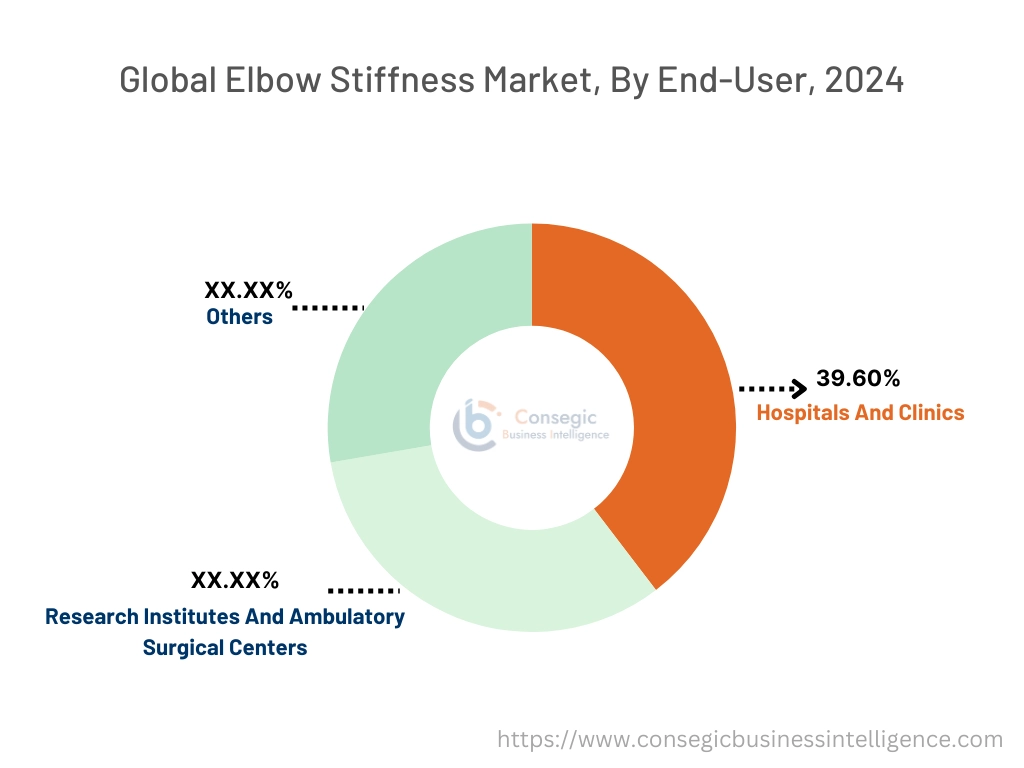
The hospitals and clinics sector accounted for the largest revenue share by 39.60% in 2024.
- Hospitals and clinics remain the primary end-users for elbow stiffness treatments, offering a comprehensive range of services including diagnostic assessments, conservative therapies, and surgical interventions.
- The presence of experienced healthcare professionals, advanced diagnostic tools, and multidisciplinary treatment options makes hospitals and clinics the preferred choice for most patients.
- These institutions are well-equipped to handle all stages of elbow stiffness management, from initial diagnosis to rehabilitation and surgical interventions.
- With a growing patient population requiring treatment for elbow stiffness, hospitals and clinics are expected to maintain their dominance in the market.
- Therefore, according to market analysis, hospitals and clinics dominate the elbow stiffness market due to their ability to provide a wide array of treatment options, expert care, and access to advanced diagnostic tools, making them the primary choice for patients.
The research institutes and ambulatory surgical centers sector is anticipated to register the fastest CAGR during the forecast period.
- Research institutes and ambulatory surgical centers offer specialized treatments and perform research and clinical trials aimed at improving treatment outcomes for elbow stiffness.
- Ambulatory surgical centers (ASCs) are gaining popularity due to their ability to offer outpatient services with shorter recovery times and lower costs compared to hospitals.
- The growing trend towards outpatient care, along with ongoing research into innovative treatment techniques, is expected to drive the elbow stiffness market demand for services from research institutes and ASCs.
- Thus, according to market analysis, research institutes and ambulatory surgical centers are expected to experience the fastest growth due to the increasing shift towards outpatient care and the ongoing advancements in treatment techniques for elbow stiffness.
Regional Analysis:
The regional segment includes North America, Europe, Asia Pacific, Middle East and Africa, and Latin America.
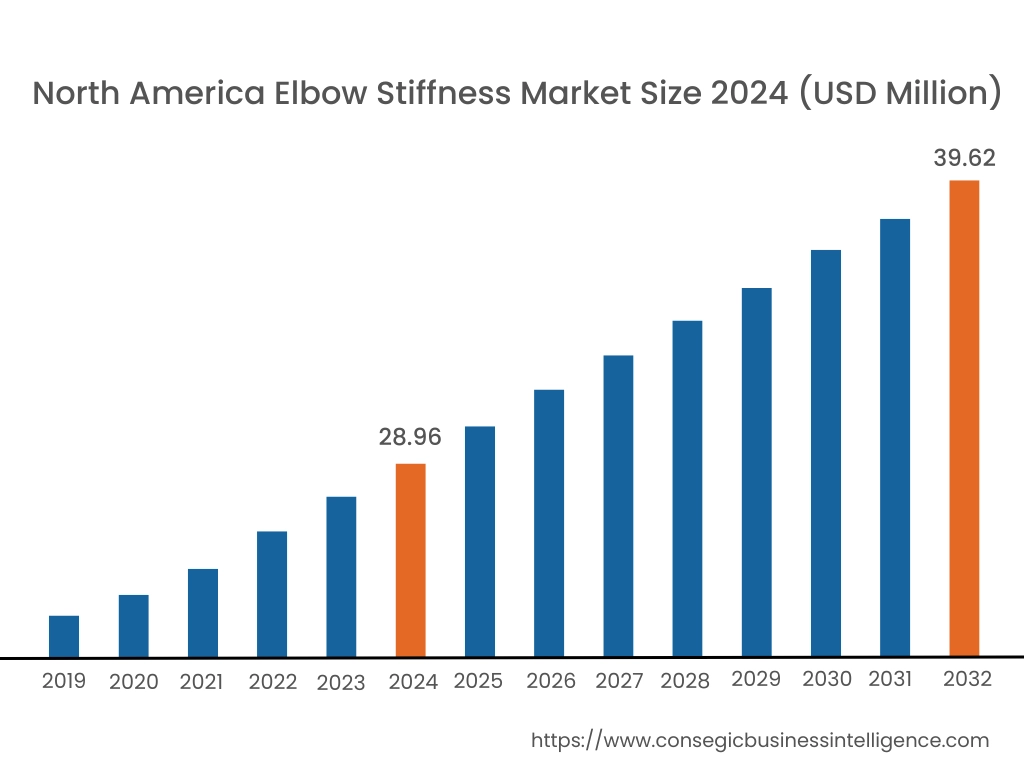
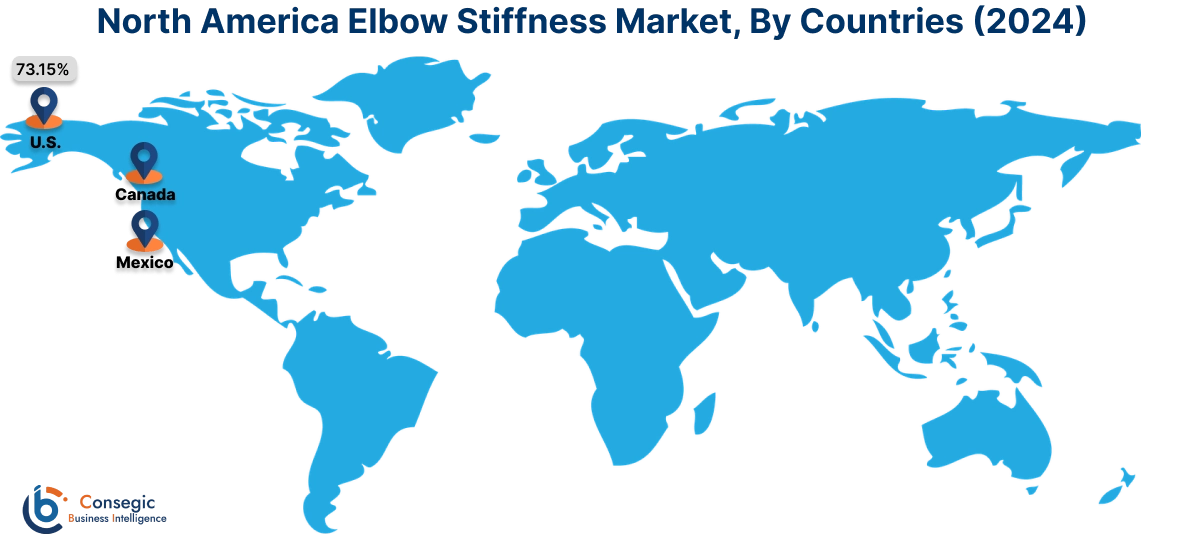
In 2024, North America was valued at USD 28.96 Million and is expected to reach USD 39.62 Million in 2032. In North America, the U.S. accounted for the highest share of 73.15% during the base year of 2024. In North America, the elbow stiffness market benefits from advanced healthcare infrastructure and widespread access to medical treatment. The region shows high demand for innovative therapeutic devices and rehabilitation technologies. The presence of leading healthcare providers and hospitals further stimulates market performance. Key factors influencing growth include increasing awareness of elbow rehabilitation and rising sports-related injuries.
In Asia Pacific, the market is experiencing the fastest growth with a CAGR of 4.7% over the forecast period. Asia-Pacific exhibits a significant potential for elbow stiffness market expansion due to growing healthcare investments and increasing cases of elbow stiffness resulting from trauma or sports injuries. Countries like Japan, China, and India are seeing a rise in demand for rehabilitation services. Improved access to healthcare and rising disposable income are important factors boosting the adoption of elbow stiffness treatments in the region.
Europe has a well-established medical device market for elbow stiffness treatments. The market in this region is characterized by a growing elderly population, increasing instances of orthopedic surgeries, and advancements in medical technologies. Public and private health organizations' support for rehabilitation therapies contributes to the region's market performance. Rising awareness of elbow stiffness management among healthcare professionals plays a crucial role in market development.
The Middle East and Africa show varying levels of market activity, with countries such as the United Arab Emirates and South Africa demonstrating a higher demand for elbow stiffness treatments. Economic development in the healthcare sector and an increasing focus on healthcare facilities are key contributors to market performance. However, limited access to advanced medical services in some areas remains a challenge.
In Latin America, the elbow stiffness market is expanding as healthcare systems improve, and people seek more effective treatment options. The increasing prevalence of sports injuries and orthopedic conditions boosts market demand. However, the market is still developing in some countries, with challenges including economic instability and limited access to advanced rehabilitation services. Despite this, increasing awareness of treatment options creates elbow stiffness market opportunities for market growth.
Top Key Players & Market Share Insights:
The global elbow stiffness market is highly competitive with major players providing products and services to the national and international markets. Key players are adopting several strategies in research and development (R&D), product innovation, and end-user launches to hold a strong position in the global elbow stiffness market. Key players in the elbow stiffness industry include-
- Zimmer Biomet (United States)
- Stryker Corporation (United States)
- Arthrex Inc. (United States)
- Exactech, Inc. (United States)
- B. Braun Melsungen AG (Germany)
- Smith & Nephew (United Kingdom)
- DePuy Synthes (Johnson & Johnson) (United States)
- Medtronic PLC (Ireland)
- Wright Medical Group N.V. (United States)
- Conmed Corporation (United States)
Recent Industry Developments :
Partnerships & Collaborations:
- In February 2024, the All India Institute of Medical Sciences (AIIMS) and the Indian Institute of Technology, Delhi (IIT-Delhi), partnered to create state-of-the-art elbow replacement implants. These implants are designed to offer precise fitting and superior quality, providing a cost-effective solution for patients suffering from stiff elbow joints and limited mobility. This collaboration aims to address challenges posed by the high cost and inadequate quality of imported elbow replacement setups, making elbow replacement surgery more accessible to a broader segment of the population.
Elbow Stiffness Market Report Insights:
| Report Attributes | Report Details |
| Study Timeline | 2019-2032 |
| Market Size in 2032 | USD 122.25 Million |
| CAGR (2025-2032) | 4.3% |
| By Treatment Modalities |
|
| By Diagnostic Methods |
|
| By End-User |
|
| By Region |
|
| Key Players |
|
| North America | U.S. Canada Mexico |
| Europe | U.K. Germany France Spain Italy Russia Benelux Rest of Europe |
| APAC | China South Korea Japan India Australia ASEAN Rest of Asia-Pacific |
| Middle East and Africa | GCC Turkey South Africa Rest of MEA |
| LATAM | Brazil Argentina Chile Rest of LATAM |
| Report Coverage |
|
Key Questions Answered in the Report
How big is the Elbow Stiffness Market? −
In 2024, the Elbow Stiffness Market was USD 87.29 million.
What will be the potential market valuation for the Elbow Stiffness Market by 2032? +
In 2032, the market size of Elbow Stiffness Market is expected to reach USD 122.25 million.
What are the segments covered in the Elbow Stiffness Market report? +
The treatment modalities, diagnostic methods and end-user are the segments covered in this report.
Who are the major players in the Elbow Stiffness Market? +
Zimmer Biomet (United States), Stryker Corporation (United States), Smith & Nephew (United Kingdom), DePuy Synthes (Johnson & Johnson) (United States), Medtronic PLC (Ireland), Wright Medical Group N.V. (United States), Conmed Corporation (United States), Arthrex Inc. (United States), Exactech, Inc. (United States), B. Braun Melsungen AG (Germany) are the major players in the Elbow Stiffness market.
Overview
Reputation & Certifications


Our Services
- Market Intelligence & Forecasting
- Custom Research Solutions
- Market Entry Strategy
- Competitive Intelligence
- Customer Insights
- Industry Innovation Analysis
- Investment Advisory