Jump to Content
Obesity Management Market Size & Industry Share - Growth Trends & Forecasts (2026 - 2034)
The Obesity Management market size was valued at 149.15 (US$B) in 2025 and is projected to grow from 159.89 (US$B) in 2026 to 278.85 (US$B) by 2034, at a CAGR of 7.2% from 2026 to 2034, according to a recent report from Consegic Business Intelligence.
Obesity Management Market Scope & Overview:
Obesity management involves a complete, long-term approach to treating obesity through a combination of lifestyle, medical, and surgical interventions. Weight management solutions aim at achieving a healthy body weight and reducing the risk of serious health issues through a combination of lifestyle modifications, including a reduced-calorie, nutrient-dense diet and moderate-intensity exercise per week. Moreover, weight management solutions can significantly improve cardiovascular health, decrease blood pressure as well as cholesterol levels, improve joint mobility, enhance sleep quality, and increase energy. The above benefits of weight management solutions are further driving the market.
How is AI Transforming the Obesity Management Market?
The incorporation of AI is considerably transforming the obesity management market. AI incorporation helps in facilitating hyper-personalized, data-driven, and continuous care through predictive modeling, digital therapeutics, as well as wearable integration. AI-powered tools are being used for risk assessment from health records, generative AI for coaching, while AI-powered apps are used for personalized diet/activity tracking.
Also, AI-powered solutions help in improving patient outcomes by real-time tracking and identifying high-risk individuals for targeted, efficient care. In addition, AI-powered systems are capable of accelerating the discovery of new anti-obesity medications and simulating long-term treatment outcomes for ensuring safety and effectiveness. Therefore, the above factors are expected to positively impact the market growth in upcoming years.
Obesity Management Market Insights:

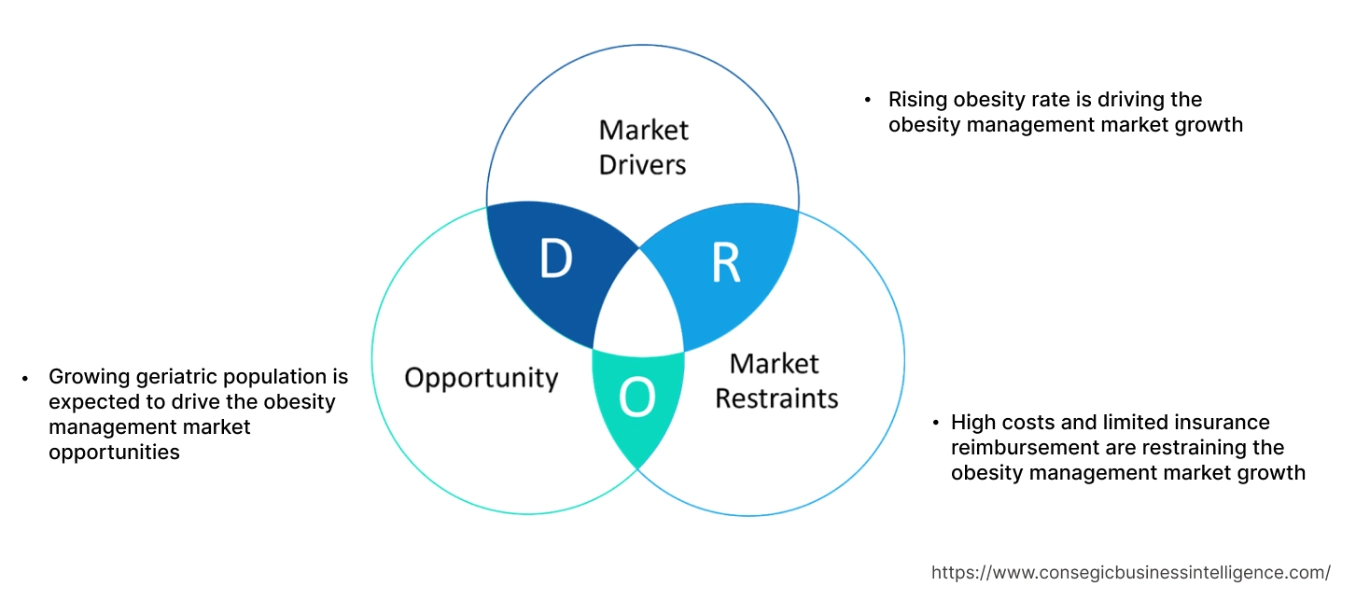
Obesity Management MarketDynamics - (DRO) :
Key Drivers:
Rising obesity rate is driving the obesity management market growth
The rising global prevalence of obesity, which is mainly driven by sedentary lifestyles, poor dietary habits, and genetic tendencies, is among the key factors driving the market. The growing patient base is further increasing the need for effective, long-term interventions and weight management solutions. This surging need, combined with the recognition of obesity as a chronic disease, is considerably driving the adoption of advanced weight management solutions, ranging from dietary changes, next-generation pharmacological therapies, to minimally invasive surgical procedures.
- For instance, in 2024, the World Obesity Federation stated that over one billion individuals globally are living with obesity, comprising nearly 880 million adults and 159 million children and adolescents, aged between 5 and 19 years, marking a considerable rise in global obesity rates.
Hence, the rising cases of obesity are increasing the demand for weight management solutions, in turn driving the obesity management market size.
Key Restraints :
High costs and limited insurance reimbursement are restraining the obesity management market growth
High costs and limited insurance reimbursement associated with obesity management solutions are among the key restraints limiting the market growth, as they create substantial barriers to patient access and long-term treatment adherence. There are highly effective pharmacological treatments like GLP-1 agonists which are currently available, however, their high monthly expenses often result in financial constraints for users, particularly as many insurance plans do not completely cover or restrict coverage for weight loss medications.
For instance, pharmacological treatments such as GLP-1 receptor agonists require substantial, ongoing monthly expenses, mostly exceeding USD 1,000 per month without insurance coverage. Also, this lack of coverage results in low treatment persistence, as well as high abandonment rates for obesity medications due to financial burden. Hence, the aforementioned factors are hindering the obesity management market expansion.
Future Opportunities :
Growing geriatric population is expected to drive the obesity management market opportunities
The global increase in geriatric population is expected to offer lucrative aspects for market growth, as aging individuals are highly prone to both increased abdominal obesity that require specialized care. As the population aged over 65 grows, there is a rising prevalence of sarcopenic obesity, which involves the loss of muscle mass combined with high fat mass. This in turn, requires tailored interventions and solutions that balance weight reduction with the preservation of functional independence, thereby, driving the market.
- For instance, according to the S. Census Bureau, the total number of Americans aged 65 and older is estimated to increase from 58 million in 2022 to 82 million by 2050. Likewise, the share of 65 and older age group in the U.S. is anticipated to increase from 17% to 23% of the total population.
Consequently, the growing geriatric population is projected to boost the obesity management market opportunities during the forecast period.
Obesity Management Market Segmental Analysis :
By Solution Type:
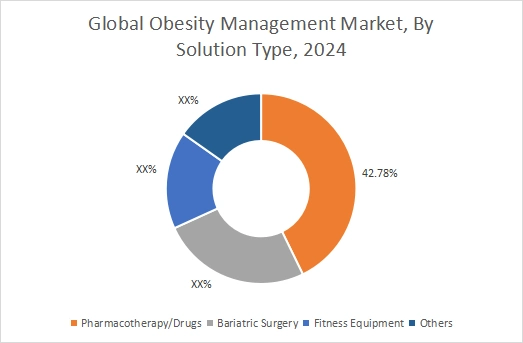
Based on solution type, the market is segmented into pharmacotherapy/drugs, bariatric surgery, fitness equipment, and others.
Trends in the solution type:
- Factors including substantial weight loss, improved metabolic parameters, increased satiety, cardiovascular risk reduction, and reduction in comorbidities are key aspects driving the adoption of pharmacotherapy options for weight management.
- Rising investments in research and development (R&D) and increasing advancements related to anti-obesity drugs are among the key trends driving the market.
The pharmacotherapy/drugs segment accounted for the largest revenue share of 42.78% in the obesity management market share in 2024, and it is anticipated to register a significant CAGR during the forecast period.
- Obesity management mainly focuses on chronic, long-term weight reduction through lifestyle changes, which is often supported by FDA-approved pharmacotherapy.
- Key pharmacotherapy options include GLP-1 receptor agonists, dual agonists, and combination drugs that are capable of increasing satiety, reducing appetite, or inhibiting fat absorption.
- Also, the use ofpharmacotherapy in weight management offers several benefits, such as significant weight loss, improved metabolic parameters, cardiovascular risk reduction, increased satiety, and reduction in comorbidities, among others.
- For instance, in 2025, Novo Nordisk launched its new, injectable anti-obesity drug Wegovy (semaglutide 2.4 mg) in India, with the aim of targeting the country's growing obesity prevalence.
- According to the obesity management market analysis, the rising advancements associated with anti-obesity drugs are driving the obesity management market size.
By Diet Type:
Based on diet type, the market is segmented into meals, beverages, and dietary supplements.
Trends in the diet type:
- The rising demand for convenient, structured meal plans and dietary solutions that are specifically tailored for weight management is driving the market.
- The increasing consumption of dietary supplements, such as green tea extract, glucomannan, and others, for improving weight loss by boosting metabolism, increasing satiety, or reducing fat absorption, is among the key factors driving the market.
The meals segment accounted for the largest revenue in the obesity management market share in 2024, and it is anticipated to register a significant CAGR during the forecast period.
- Effective weight management mostly requires a sustained approach which focuses on creating a moderate, long-term calorie deficit, usually ranging from 500 to 750 fewer calories per day.
- Meals should prioritize vegetables, lean proteins, and whole grains, while limiting processed foods.
- Also, a successful meal structure usually involves three balanced meals daily for managing hunger and preventing overeating, rather than constant snacking.
- Key meal plans must include a protein-rich breakfast, a lunch featuring lean protein and vegetables, and a smaller dinner, with a focus on cutting out refined carbohydrates, sugary drinks, and high-fat fried foods.
- Additionally, implementing portion control options, like using smaller plates, and staying well-hydrated, can considerably increase the weight loss success.
- According to the analysis, the growing need for convenient, structured dietary solutions and meal plans that are tailored for weight management is driving the obesity management market trends.
By Age Group:
Based on age group, the market is segmented into pediatric, adult, and geriatric.
Trends in the age group:
- The increasing global prevalence of obesity, particularly among adults, is a key factor driving the market.
- Rising adoption of complete weight management solutions, including advanced pharmacological treatments like GLP-1 agonists, bariatric surgeries, specialized digital coaching, along with weight management services, is driving the market.
The adult segment accounted for the largest revenue share in the obesity management market in 2024, and it is anticipated to register a substantial CAGR during the forecast period.
- The segment growth is primarily driven by the rising global prevalence of obesity, particularly among adults. The rise in obesity rates among adults is increasing chronic, weight-related health conditions such as type 2 diabetes, cardiovascular diseases, and musculoskeletal disorders, which in turn is driving the need for effective weight management solutions.
- Also, the growing obesity rates among adults are increasing the adoption of complete weight management solutions, including advanced pharmacological treatments like GLP-1 agonists, bariatric surgeries, specialized digital coaching, along with weight management services.
- For instance, according to the European Food Information Council, approximately 53% of adults were overweight in the EU in 2024, with rates higher among men as well as older age groups.
- Consequently, the above factors are further increasing the adoption of weight management solutions and treatment among adults, thereby driving the market.
By End Use:
Based on the end use, the market is segmented into hospitals and clinics, fitness centers and health clubs, and home care settings.
Trends in the end user:
- There is an increasing trend in adoption of obesity management solutions in hospitals and clinical settings, particularly among patients suffering from severe obesity or related comorbidities, aiming for long-term weight reduction and improved health outcomes.
- There is a rising trend towards the adoption of weight management solutions in home care settings, which mostly focus on empowering patients to achieve sustainable weight loss through self-monitoring and lifestyle modifications within their own environment.
The hospitals & clinics segment accounted for the largest revenue share in the market in 2024.
- Obesity management within hospitals and clinics serves as a vital, high-end, and mostly final treatment setting for patients suffering from severe obesity or related comorbidities, aiming for long-term weight reduction and improved health outcomes.
- Hospitals and clinics usually include endocrinologists, bariatric surgeons, dietitians, and behavioral psychologists for offering complete, personalized care, ranging from intensive lifestyle counseling to medical interventions like GLP-1 agonists, and even surgical procedures for treatment of obesity.
- Also, hospitals usually handle high-risk, chronic, and complex cases which require advanced diagnostic tools, pre-operative screening, surgical facilities, and post-operative monitoring.
- The primary goal in hospital and clinical settings includes effective management of patients through a structured approach, while addressing underlying causes and offering medically supervised, sustainable solutions that are not readily available in retail or home-care settings.
- Hence, according to the analysis, the aforementioned factors are propelling the market growth.
The home care settings segment is anticipated to register a substantial CAGR during the forecast period.
- Weight management in home care settings mainly focuses on empowering patients to achieve sustainable weight loss through self-monitoring and lifestyle modifications within their own environment.
- It mostly involves using digital tools, such as remote weight monitoring scales, apps, and wearable devices, along with personalized, in-home care services like tailored meal planning, behavioral counseling for addressing emotional eating, and customized, low-impact exercise planning.
- Also, managing dietary intake, increasing physical activity, and ensuring quality sleep help in facilitating weight management in home care settings while improving overall health and preventing comorbidities.
- Consequently, the above factors are expected to drive the market during the forecast period.
Regional Analysis:
The regions covered are North America, Europe, Asia Pacific, Middle East and Africa, and Latin America.
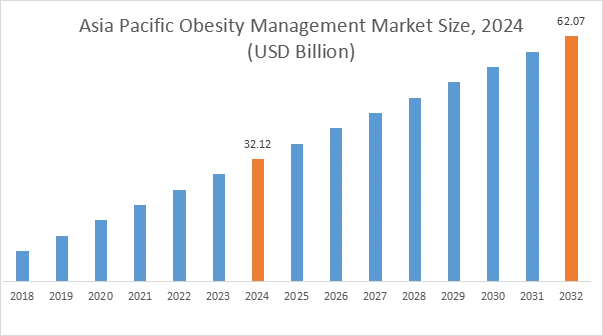
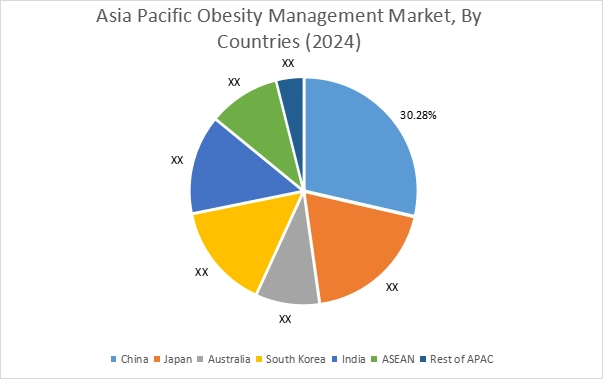
Asia Pacific region was valued at USD 32.12 Billion in 2024. Moreover, it is projected to grow by USD 34.14 Billion in 2025 and reach over USD 62.07 Billion by 2032. Out of this, China accounted for the maximum revenue share of 30.28%. As per the obesity management market analysis, the adoption of weight management solutions in the Asia-Pacific region is primarily driven by the increasing prevalence of obesity, particularly among adults, caused by factors such as urbanization, changing lifestyles, poor dietary habits, and genetic tendencies, among others. Additionally, the growing geriatric population and improving healthcare infrastructure and services are further accelerating the obesity management market expansion.
- For instance, the National Family Health Survey highlighted that approximately 23% of men and 24% of women in India are overweight or obese. Projections also indicate a massive surge, with childhood obesity expected to impact 27 million children by 2030. The above factors are increasing the need for effective weight management solutions, thereby driving the market in the Asia-Pacific region.
North America is estimated to reach over USD 92.81 Billion by 2032 from a value of USD 50.40 Billion in 2024 and is projected to grow by USD 53.35 Billion in 2025. In North America, the growth of the obesity management industry is driven by the rising prevalence of obesity along with increasing awareness regarding health risks related to obesity, and growing emphasis on weight management. Similarly, the rising advancements associated with anti-obesity drugs and increasing R&D for effective pharmacotherapy options are further contributing to the obesity management market demand in the region.
- For instance, according to the S. Centers for Disease Control and Prevention (CDC), all states and territories in the United States had an obesity prevalence of 25% or higher (at least 1 in 4 adults) in 2024. The aforementioned factors are expected to drive the obesity management market trends in North America during the forecast period.
Meanwhile, according to the regional analysis, factors including the prevalence of elderly population, rising obesity rates, strong emphasis on preventive healthcare, and robust healthcare industry and services are driving the obesity management market demand in Europe. Furthermore, according to the market analysis, the market demand in Latin America, Middle East, and African regions is expected to grow at a considerable rate due to factors such as increasing prevalence of obesity, growing awareness of weight management solutions, and expanding access to improved healthcare services, among others.
Top Key Players & Market Share Insights:
The global obesity management market is highly competitive with major players providing solutions to the national and international markets. Key players are adopting several strategies in research and development (R&D), product innovation, and end-user launches to hold a strong position in the obesity management market. Key players in the obesity management industry include-
- Novo Nordisk(Denmark)
- Eli Lilly and Company(USA)
- Medtronic PLC(Ireland)
- Johnson & Johnson (USA)
- Boston Scientific (USA)
- Amgen (USA)
- Boehringer Ingelheim (Germany)
- Nestlé Health Science (Switzerland)
- WW International (USA)
- Currax Pharmaceuticals (USA)
Recent Industry Developments :
Product Launches:
- In December 2025, Boehringer Ingelheim announced advancements in BI 3034701, its triple-agonist peptide, into mid-stage (Phase II) clinical development for the treatment of obesity. The solution was developed in collaboration with Gubra and represents a significant step in Boehringer's strategy for addressing obesity.
- In December 2025, Cipla Limited launched Yurpeak (tirzepatide) in India. It is a one-weekly injectable therapy developed for managing obesity and type 2 diabetes.Following the DCGI approval of tirzepatide in India, Cipla has secured the rights to market and distribute Yurpeak. This represents Eli Lilly’s second brand for the molecule in the Indian market.
Partnerships & Collaborations:
- In January 2026, AstraZeneca announced a collaboration agreement with CSPC Pharmaceuticals. The collaboration aims at advancing the development of multiple next-generation therapies for obesity and strengthening the company’s weight management portfolio.
- In July 2025, IIM Ahmedabad (IIMA) and Novo Nordisk India signed a five-year Memorandum of Understanding (MoU), with the motive of transforming the obesity care landscape in India. This partnership aims to strengthen the healthcare ecosystem in India through a multi-dimensional approach which focuses on non-communicable diseases, particularly obesity.
Obesity Management Market Report Insights :
| Report Attributes | Report Details |
| Study Timeline | 2021-2034 |
| Market Size in 2034 | USD 278.85 Billion |
| CAGR (2026-2034) | 7.20% |
| Base Year | 2025 |
| By Solution Type |
|
| By Diet Type |
|
| By Age Group |
|
| By End-Use |
|
| By Region |
|
| Key Players |
|
| North America | U.S. Canada Mexico |
| Europe | U.K. Germany France Spain Italy Russia Benelux Rest of Europe |
| APAC | China South Korea Japan India Australia ASEAN Rest of Asia-Pacific |
| Middle East and Africa | GCC Turkey South Africa Rest of MEA |
| LATAM | Brazil Argentina Chile Rest of LATAM |
| Report Coverage |
|
Key Questions Answered in the Report
How big is the obesity management market? −
The obesity management market was valued at USD 131.18 Billion in 2024 and is projected to grow to USD 242.65 Billion by 2032.
Which is the fastest-growing region in the obesity management market? +
Asia-Pacific is the region experiencing the most rapid growth in the obesity management market.
What specific segmentation details are covered in the obesity management report? +
The obesity management report includes specific segmentation details for solution type, diet type, age group, end use, and region.
Who are the major players in the obesity management market? +
The key participants in the obesity management market are Novo Nordisk (Denmark), Eli Lilly and Company (USA), Medtronic PLC (Ireland), Johnson & Johnson (USA), Boston Scientific (USA), Amgen (USA), Boehringer Ingelheim (Germany), Nestlé Health Science (Switzerland), WW International (USA), Currax Pharmaceuticals (USA), and others.
Which region is expected to experience the fastest growth in this market? +
Asia-Pacific is projected to grow at the fastest CAGR over the forecast period, fueled by urbanization, changing dietary habits, and increasing obesity prevalence in China, India, and Japan.
Overview
Reputation & Certifications


Our Services
- Market Intelligence & Forecasting
- Custom Research Solutions
- Market Entry Strategy
- Competitive Intelligence
- Customer Insights
- Industry Innovation Analysis
- Investment Advisory