Jump to Content
Europe Flame Retardant Apparel Market - Size, Share, Industry Trends, and Forecasts (2025-2034)
Market Scope & Overview
The Europe flame retardant apparel market is a very narrowly focused and safety-conscious niche in the larger personal protective equipment (PPE) market, which includes flame-resistant fibers engineered into fabrics or flame-retardant chemicals added to protect workers against thermal hazards such as flash fires, electric arc incidents, molten metal splashes, and combustible dust explosions in industrial manufacturing, oil and gas operations, electrical utilities, chemical processing plants, firefighting services, and the high-risk construction sector.
It also has strong fundamentals with a valuation of USD 1.15 Billion in 2024 and USD 1.22 Billion in 2025 (base year) and is expected to reach USD 1.88 Billion by 2034. Such a growth pattern indicates a compound annual growth rate (CAGR) of 4.9 percent over the 2026–2034 forecast period, driven by the increasing enforcement of European Union safety directives such as the PPE Regulation (EU) 2016/425, a faster pace of rolling out renewable power systems necessitating arc flash safety gear, the introduction of multi-norm protective garments providing simultaneous protection against a variety of risks, and the growing interest in corporate initiatives in the area of workplace safety known as Vision Zero, which aims to eliminate occupational hazards.
Regional Trends and Insights
- Western Europe
- Western Europe holds 54% market share, valued at USD 658 million in 2025 and expected to reach USD 1.01 billion by 2034
- Growth is driven by advanced industrial infrastructure, strict safety regulations, and strong worker protection standards
- Germany leads with around 28% share, supported by a large manufacturing base and strong occupational safety systems
- United Kingdom and France are key contributors, driven by offshore energy, chemical industries, petrochemical complexes, and nuclear power sectors
- Eastern Europe
- Market valued at USD 305 million in 2025 (25% share) and projected to reach USD 522 million by 2034, growing at 6.2% CAGR
- Growth supported by industrial modernization, foreign direct investment, and alignment with EU safety standards
- Poland leads with 38% regional share, driven by strong automotive manufacturing and expanding chemical industries
- Market demand focuses on cost-effective flame-retardant clothing, rental service models, and increasing presence of international safety equipment suppliers

High-Technology Material Development System
Modern flame-retardant clothing incorporates advanced material science including flame-resistant synthetic fibers like meta-aramid (Nomex) and para-aramid (Kevlar), which offer permanent thermal protection without any chemical treatments, flame-resistant viscose rayon treated with phosphorus-based compounds to enhance breathability, and advanced multi-component fiber systems based on aramid and cotton, with antistatic properties to ensure the optimal level of protection while maintaining a high level of comfort and mobility of its wearers.
The European industrial safety sector, which generates estimated annual revenues of about EUR 18.7 billion across the protective clothing categories, is facing serious challenges such as the complex regulatory compliance requirements across the various EU directives and national standards, shortages of skilled labor in the manufacturing sector, with an 8–12 percent vacancy rate in critical industries and the sustainability pressures of the European Green Deal, which aims to reduce hazardous chemical use in textile treatments by 25 percent by the year 2030.
Key Drivers
Intense Regulatory Framework and Mandatory Compliance
The main force that triggers the growth of the market is the increasingly strict occupational safety laws that are obligatory in the European Union member states, and are implemented by the national occupational health and safety authorities with fines ranging from EUR 5,000 to EUR 500,000 in accordance with the severity and the jurisdiction of the violation.
The regulatory environment includes the PPE Regulation (EU) 2016/425 which classifies flame retardant apparel as Category III PPE that must undergo strict conformity testing and are subject to continuous surveillance, harmonized European standards such as EN ISO 11612 of protective clothing against heat and flame, EN ISO 11611 of welding and allied processes, EN 1149 of electrostatic properties, and IEC 61482-2 protection against thermal hazards of electric arc incidents.
According to the European Agency on Safety and Health at Work, the number of workplace accidents related to thermal injuries affects about 47,000 workers every year in the EU member states and the economy suffers EUR 2.8 billion in terms of medical costs, productivity and compensation claims. This statistical evidence supports a regulatory focus on preventive strategies such as the use of mandatory flame-retardant garments in the specific high-risk professions, and the workplace safety inspections grow by 23 percent between 2020 and 2024.
The industry specific regulation further increases the demand such as offshore oil and gas industries involving NORSOK compliance, chemical processing plants that follow the COMAH regulations, and electrical industries that have an in-depth arc flash protection program that has been implemented based on the updated IEC 61482 standards. These strict regulations and the complexity of rules make flame retardant apparel mandatory safety gear instead of optional protective garments to maintain an even base of demand in regulated industrial markets.
Key Restraints
High Product Costs as a Significant Economic Barrier to Adoption.
The flame-retardant clothing market in Europe is confronted with a strong barrier to adoption due to a large difference in product costs with high-performance aramid-clad garments of EUR 180-450 per unit being 300-500 percent above standard workwear options, posing a procurement challenge especially for small and medium-sized enterprises having limited funds to allocate to safety equipment.
Total cost of ownership is not only the cost of purchasing the equipment but also includes special industrial laundering requirements in which cleaning services would cost EUR 8–15 per garment laundry cycle, a replacement schedule of 18–24 months for garments that have undergone harsh industrial environments and complexity in inventory management that would necessitate size assortments, backup stock and rotation schedules to maintain compliance between laundry runs.
The economic pressures during 2023-2024 saw the European industrial sectors facing energy cost inflation averaging 35–45 percent, the volatility of raw material prices that influenced the costs of synthetic fibers, and overall inflationary pressures that reduced the operating margin. According to the survey data, 34 percent of small construction firms have reported the costs of protective equipment as a major financial burden and 28 percent of participants reported instances of inadequate provision of safety equipment because of financial constraints.
The cost issue extends to lifecycle considerations such as cost of disposal of garments treated with chemical flame retardants, which involve special waste management measures, training cost on correct use and maintenance of garments, and administrative overhead cost on documentation and certification of compliance, thereby making flame-retardant apparel a significant operational cost with required budgetary allocation and cost benefit analysis.
Key Opportunities
Circular and Sustainable Economy Solutions
Further market growth is driven by sustainable flame-retardant technology development and commercialization due to the increasing concern about the environment over the current chemical treatments and synthetic fibers production processes, alongside the European Chemicals Agency (ECHA) restriction proposals on the use of some halogenated flame retardants and the requirements of the REACH regulations on the registration and safety evaluation of chemical substances, create substantial market opportunities.
According to market research, 62 percent of European industrial procurement managers take into account environmental sustainability issues during purchasing decisions in protective equipment and 41 percent are prepared to pay a 10–15 percent price premium on garments that satisfy increased environmental standards such as a reduced chemical regimen, recyclable materials, and carbon-neutral manufacturing processes in accordance with corporate sustainability promises and ESG reporting demands.
Examples of technological directions in this regard include the development of bio-based flame-retardant chemistries that are based on agricultural byproducts, natural fiber modifications that are inherently flame resistant without requiring chemical treatment, and closed-loop manufacturing processes that utilize material recovery and recycling systems to reduce the environmental impact. The Circular Economy Action Plan of the European Union which contains an investment of EUR 450 Million in sustainable textile innovation is an opportunity to receive funding that facilitates research and commercialization of the next-generation flame retardant technologies.
The opportunities in innovation include design-to-recycle strategies that would allow end-of-life disassembly of garments and recover materials, take-back schemes that would accept worn-out protective clothing where they can be disposed of in responsible ways or reclaim materials, and the model of garment-as-service that would allow the extension of product life through a series of rental and maintenance programs and maintenance guarantees and control of protective performance and regulatory compliance.
Market Segmentation Analysis
By Material Type: Technology Platform Evolution
Inherent FR Fabrics: Premium Performance Segment
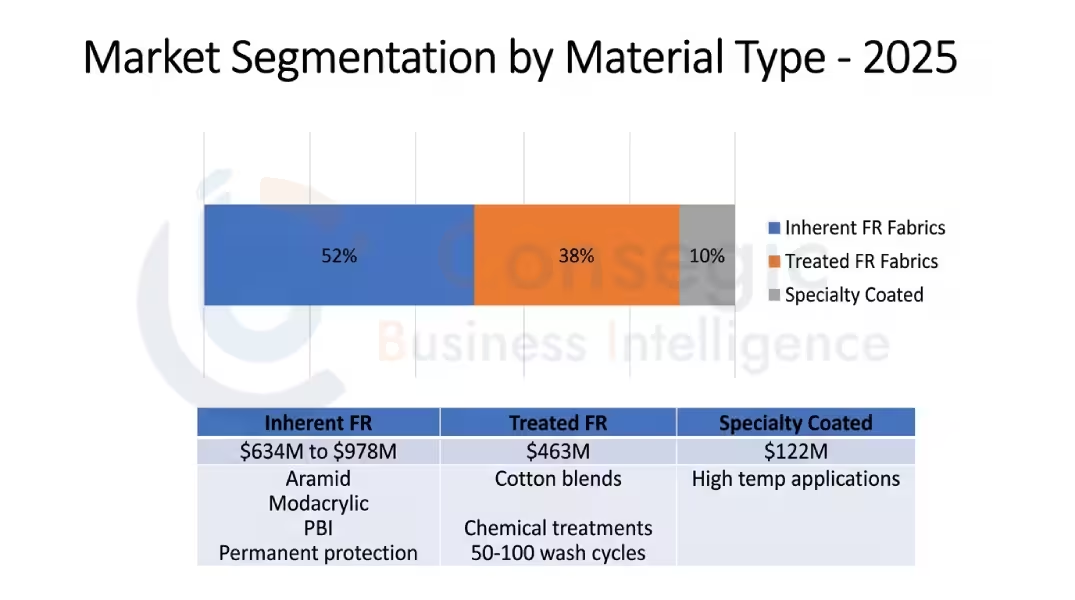
Flame retardant fabrics, which are inherent fabrics, are likely to dominate the market with USD 634 Million (52.0 percent of market value) in 2025 to USD 978 Million in 2034. It includes garments made out of fiber types whose flame resistant properties are permanent and built in at the molecular scale, such as meta-aramid fibers which offer outstanding thermal stability and preserve their protective qualities throughout the life of the garments, para-aramid fiber which offers superior strength and resistance to cuts as well as flame protection, modacrylic fiber blends which provide cost-effective intrinsic flame resistance with high comfort properties, and polybenzimidazole (PBI) fiber which is used in applications with extremely high hazard levels, such as high-temperature protection applications.
Treated FR Fabrics: Cost-Effective Solutions
Treated flame retardant fabrics account for USD 463 million (38.0 percent of sales) in nature, which are garments made of cotton, cotton-polyester mixtures, or synthetic fibers that are treated with chemical flame retardant formulations including organophosphorus compounds, nitrogen-based treatments and proprietary chemical systems that offer long-lasting flame protection up to 50-100 industrial laundering cycles at a costs that are affordable to price-sensitive market segments and mid-risk application areas.
By Application: End-Use Market Analysis
Oil and Gas Industry: Largest Application Segment
The oil and gas industry accounts for USD 390 million (32.0 percent of market value) of which includes upstream exploration and drilling, midstream pipeline transportation, downstream refining and petrochemical processing, and offshore platform operations and requires high-performance flame retardant clothing that meets the stringent industry requirements of arc flash protection ratings, multi-hazard protection against chemical splashes and thermal exposures, and special characteristics such as the antistatic properties to prevent ignition of flammable atmospheres.
Electrical and Utilities: Fastest-Growing Segment
Electrical utilities and power generation account for USD 341 million (28.0 percent of market value), which is the fastest-growing area of application in the market due to the implementation of renewable energy infrastructure facilities, electrical grid modernization projects, and the increasing need for arc flash protection. The segment includes power generation plants, the transmission and distribution operations, the installation of the renewable energy, and electrical maintenance operations, which require calibrated arc flash protection in terms of calories per square centimeter (Cal/cm2) and layered protection system with FR base layers, shirts and outerwear to meet the desired total protection levels.
Manufacturing and Construction: Diverse Industrial Base
Manufacturing and construction applications account for USD 244 million (20.0 percent of market value) which include welding operations, in which EN ISO 11611 compliance is required, metal fabrication and foundry work, general industrial manufacturing, and thermal-hazard construction applications. This sector evidences increasing use of multi-norm protective garments that provide concurrent protection against flame, high visibility (EN ISO 20471), antistatic (EN 1149) and limited chemical (EN 13034) requirements.
Regional Market Analysis
Western Europe: Market Leadership and Premium Positioning
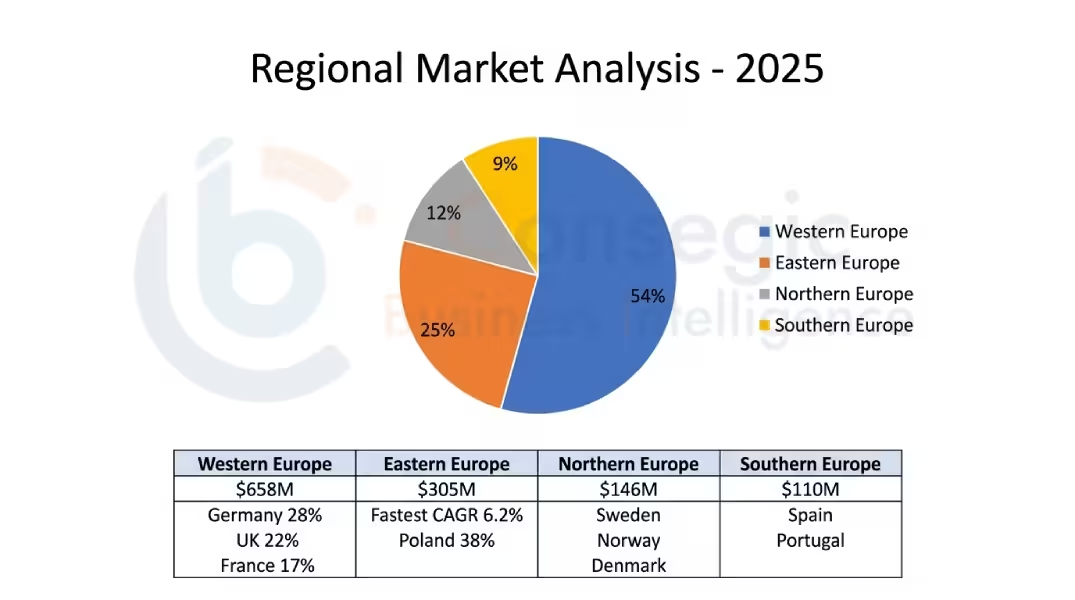
Western Europe commands the market at USD 658 million (54.0 percent of market value) in 2025 with USD 658 Million (54.0 percent of market value) as of 2025 and USD 1.01 Billion by 2034 due to the excellent industrial infrastructure, mature safety culture, strict regulatory enforcement, and high standards of worker protection among the leading economies such as Germany, France, the United Kingdom, and the Netherlands.
Germany is the leader in the regional market with a rate of about 28 percent of the total market share in the Western Europe which has been facilitated by substantial manufacturing base with 7.8 million workers in the metals working sector, chemical production sector, and in the automobile manufacturing sector, extensive occupational safety system through trade associations (Beruf sgenossenschaften) and a high preference of the rental service models (Textil service) whereby the company leases FR clothing to maintain professional maintenance and regulatory compliance.
The United Kingdom has a market value of 22 percent of Western Europe, faceted by a substantial offshore energy sector operational in the North Sea, vast chemical processing facilities, and an active enforcement of the Health and Safety Executive (HSE) with specific focus on inspection campaigns and prosecution of breaches of safety. France takes up 17 percent of which are major petrochemical complexes, nuclear power industry, which needs special protective clothing, and government programs to take care of safety improvement in workplaces via financial incentives and technical assistance programmers.
Eastern Europe: Rapidly-Expanding Regional Market.
Eastern Europe is valued at USD 305 million (25.0 percent of market value) in 2025, which is projected to be USD 522 Million in 2034, with the highest growth rate in the region in 6.2 percent CAGR due to the industrial modernization efforts, foreign direct investment in manufacturing plants, alignment with EU safety standards, and the development of energy infrastructure.
Poland has the highest market share of 38 percent in the region with strong support of automotive manufacturing industry, rising chemical industries and increasing awareness of occupational safety needs after EU membership and harmonization of regulations. Romania has strong growth potential, driven by automotive manufacturing clusters, Black Sea region development of offshore oil and gas projects, and refurbishing of industrial plants with the introduction of modern safety management systems.
The Eastern European market is characterized by price sensitivity and greater demand for cost-effective treated flame-retardant clothing, as well as on modacrylic fibers, the growing popularity of the rental programs that provide operational expenditure models, the growing penetration of the international safety equipment suppliers that build the regional distribution networks and local manufacturing associations.
Recent Industry Developments
Circular Economy Programs and Sustainability Initiatives (2024-2025).
Large companies in the industry, such as DuPont, Teijin Aramid and European garment manufacturers, have declared extensive sustainability strategies to handle environmental issues across flame retardant garment lives. DuPont launched Nomex Eco fiber with 50 percent bio-based content that is made with renewable feedstocks without reducing thermal protection properties and aims to reduce the carbon footprint by 25 percent relative to traditional aramid manufacturing operations.
Teijin Aramid has expanded its Green Aramid Initiative that uses renewable energy sources (65 percent of its manufacturing energy consumption) to power down the manufacturing facility and pilot projects of recycling aramid fibers through the chemical depolymerization process. European garment producers have introduced take-back schemes where used flame-retardant clothing can be recycled to recover the material used and disposed of sustainably, and the most established companies have put into practice the business models of the circular economy, which involve providing garments refurbishment services, prolonging product life by 40-60 percent.
Digital Integration and Intelligent Protective Clothing (2024-2025).
The integration projects brought in smart flame-retardant clothes with electronic monitoring devices and connection capability. In September 2024, Sione Industries released connected workwear platform, which adds RFID tracking chips that allow automated management of inventory, monitoring the laundering cycle and recording compliance, and pilot programs have been implemented in large European chemical processing facilities.
DuPont collaborated with wearable technology developers that are working on prototype clothing including temperature sensors, impact detection, and worker location tracking, which is intended to be introduced to the market in 2026 in high-risk industrial environments. The industry experts foresee that the smart protective apparel market sector will reach EUR 180-220 Million by 2030 with 10-12 percent of total flame-retardant apparel market value.
Regulatory Developments and Standards Evolution (2024-2025)
The evolution of regulatory landscape consisted of a revision of the EN ISO 11612 standard of protective clothing against heat and flame, was published in February 2024, added new testing procedures to the radiant heat protection, changed the performance classification schemes, and also increased the demands of multi-hazard protection against a combination of thermal, mechanical, and chemical exposures.
The restriction proposal of some brominated flame retardants in textiles under the REACH regulation was initiated by the European Commission, and its public consultation was finalized in November 2024 and the final decision could be made in 2026, which could force industry to redesign its chemical treatment systems. Germany’s national regulatory changes include encompass the revised technical regulations on workplace safety (TRGS 524), which make clear that improved standards of protective clothing in areas that handle flammable substances will be required, effective January 2025.
Europe Flame Retardant Apparel Market Report Insights
| Report Attributes | Report Details |
|---|---|
| Study Timeline | 2022–2034 |
| Base Year | 2025 |
| Forecast Period | 2026–2034 |
| Market Size in 2024 | USD 1.15 Billion |
| Market Size in 2025 | USD 1.22 Billion |
| Market Size in 2034 | USD 1.88 Billion |
| CAGR (2026–2034) | 4.9% |
| By Material Type | Inherent FR Fabrics (52.0%), Treated FR Fabrics (38.0%), Specialty Coated (10.0%) |
| By Application | Oil & Gas (32.0%), Electrical Utilities (28.0%), Manufacturing (20.0%), Construction (12.0%), Others (8.0%) |
| By Distribution Channel | Direct B2B Sales (55.0%), Specialized Distributors (30.0%), Online B2B (10.0%), Retail (5.0%) |
| By Region | Western Europe (54.0%), Eastern Europe (25.0%), Northern Europe (12.0%), Southern Europe (9.0%) |
| Key Players | TenCate Protective Fabrics, DuPont, Sione Industries, Teijin Aramid, Frist ads AB, Port west, Alsico Group |
| Report Coverage |
|
Key Questions Answered in the Report
What is the size of European market of flame-retardant apparel? −
The European flame-retardant apparel market exhibits strong growth parameters wherein the market value stands at USD 1.22 Billion by 2025 which is expected to increase to USD 1.88 Billion by 2034 with 4.9 percent CAGR. Its market has a scope of about 14.5-16.8 million units of annual sales volume in terms of industrial, emergency services and defense applications; average selling prices of EUR 55–280 depending on specifications of products, performance needs and complexity of the application.
What do you consider are the key drivers of growth in the European market? +
Strict compliance with the EU safety standards, fines of EUR 5,000-500,000 in case of non-observance, the development of renewable energy facilities with specific arc flash protection, the modernization of the industry in Eastern Europe with 6.2 percent regional CAGR, technical breakthroughs in fiber chemistry and textile engineering, and corporate Vision Zero safety programs with a stronger focus on the protection of workers and the elimination of risks in both the main industries are the main development drivers.
What is the largest market share and the reason? +
Western Europe is the largest with 54.0 percent market share, with Germany contributing the highest 28 percent regional share that is a result of large manufacturing base, well developed safety culture and full development of regulatory framework. The leadership of the region is based on the high compliance rates, the preference to high quality inherent FR materials, the developed models of the rent service, the significant industrial infrastructure in oil and gas, chemical processing, cars manufacturing, and the electricity industries that demand high quality protective clothes.
Which are the major trends in material technology? +
The market shows a clear shift from treated fabrics to inherent FR fabrics with inherent materials taking market share of 52.0 percent because of the permanent protection features and high durability. The current trends in the industry are sustainable FR technologies using bio-based fibers and less intensive chemical treatment, multi-norm protective clothing that can provide protection against various hazards, and a smart textile, which can be interconnected and monitored to manage safety better.
What are the key competitive players and how are they positioned? +
The competitive environment includes TenCate Protective Fabrics with their innovative approach to engineered fabrics dominating, DuPont holding the authority in the segments with premium aramids in the name of Nomex, Sione Industries with their vertical integration abilities, and Teijin Aramid with their European production presence. The competitive agenda is on material innovation, sustainability programs, digital penetration, and targeted female-fit protective garment and new industry uses.
Overview
Reputation & Certifications


Our Services
- Market Intelligence & Forecasting
- Custom Research Solutions
- Market Entry Strategy
- Competitive Intelligence
- Customer Insights
- Industry Innovation Analysis
- Investment Advisory