Jump to Content
Europe Functional Drinks Market - Size, Industry Share, Growth Trends and Forecasts (2025-2034)
Executive Summary
The Europe functional drinks market is a high-end intersection of traditional beverage manufacturing and modern nutritional science which includes ready-to-drink products designed to provide specific health advantages beyond simple hydration and refreshment. This broad market encompasses energy beverages with optimized caffeine levels of 80–160 mg per serving alongside taurine and B-vitamin complexes, sports and performance beverages with 20-50 milliequivalents per liter of electrolyte levels that support hydration, protein-enhanced drinks with 15–30 grams per serving of high-quality protein from dairy and plant-based sources and functional coffee and tea drinks with adaptogenic and nootropic ingredients, probiotic drinks with 1–10 billion CFU per serving.
The functional drinks market in Europe today has changed significantly due to the changing consumer demands of products that are conveniently packaged to combine health benefits, comfort, and taste appeal. Recent formulations are more focused on scientifically validated ingredients such as plant-based proteins with a digestibility score of 0.9-1.0 on the PDCAAS scale, adaptogenic botanicals with standardized levels of active compounds such as ashwagandha and rhodiola, nootropic ingredients with cognitive support such as L-theanine and lion’s mane mushroom extract, prebiotic fibers with 3-5 grams per serving to support gut health, and natural caffeine such as green tea and guarana. These superior formulations serve a wide range of consumer wellness needs in terms of optimization of athletic performance, enhancement of cognitive functions, immune support, and enhancement of digestive health as well as general wellness maintenance, along with reduced artificial additives and refined sugar content due to regulatory factors and health-related consumer behaviors.
The European market was valued at USD 31.2 billion in the base year but with a strong growth projected to attain USD 58.7 Billion by the year 2034. This growth pattern implies a compound annual growth rate of 7.1 % during the forecast period between 2026 and 2034 due to the expected rise in health consciousness of European consumers where 68 % of adults actively seek functional advantages in beverages, increasing participation in fitness programs, with gym memberships growing 4-6 % per year across key markets, demographic changes toward ageing populations where specific nutritional support is needed, regulatory frameworks that promote innovation of functional ingredients but maintain safety standards, growing acceptance of plant-based and sustainable formulae in line with environmental values, expansion of distribution channels is further supporting market growth.
The business environment is highly dynamic and competitive, including global beverage companies, regional players, and start-up brands. Major brands such as Red Bull, Monster Beverage, PepsiCo, Coca-Cola, and Danone are able to lead the industry through their large distribution channels, heavy investments in marketing and constant product development. At the same time, niche brands with a focus on plant-based formulas, organic ingredients, and category-specific wellness are also capturing high-end market niches and making categories innovative with direct-to-consumer models and subscription services.
Key Market Insights
- Market projected to grow from USD 31.2 Billion to USD 58.7 Billion by 2034 at 7.1% CAGR
- Europe functional drinks market includes energy, sports, protein, probiotic, and functional coffee/tea beverages with added health benefits
- Growth driven by rising health awareness, fitness trends, and demand for wellness-focused beverages
- Increasing use of advanced ingredients like plant proteins, adaptogens, nootropics, and probiotics
- Expanding distribution channels including e-commerce and direct-to-consumer models

Market Scope & Overview
The Europe functional drinks market refers to the entire ecosystem of at delivering a particular physiological or cognitive benefit due to scientifically substantiated components. Functional beverages, in contrast to traditional soft drinks and juices, which are based mainly on refreshment and simple nutrition, include bioactive compounds such as vitamins, minerals, amino acids, proteins, probiotics, adaptogens, and botanical extracts, which are designed to produce specific health effects. The market serves approximately 385 million consumers in Europe, with penetration rates of 55–65% in the mature western European markets and 35-45 % in developing Eastern European markets.
Modern functional drinks reflect advanced formulation concepts of multiple benefit platforms, where products supply 200–400% of daily vitamin requirements in immunity-enhancing drinks, 20-30 grams of quality protein in recovery drinks and 1-10 billion colony forming units of probiotics in digestive health products, and 100–200 mg of L-theanine with 80-120 mg caffeine in cognitive enhancement drinks. Their complex formulations are designed to meet a wide range of consumer wellness goals including optimal athletic performance with products to support training sessions of 60-120 minutes duration, cognitive function enhancement in the workplace and in schools, where professionals and students require sustained mental acuity over 6-10 hour work shifts, digestive health improvement via prebiotic and probiotic supplementation and overall wellness maintenance incorporating multiple benefit platforms.
The market is also technologically advanced in terms of ingredient sourcing and processing (using cold-pressed extraction to preserve 85-95 % of bioactive compounds), microencapsulation technologies (to prevent the destruction of sensitive ingredients) and time-release (to maintain the nutrient availability of the individual product over 4-8 hours), and synergistic formulation (to enhance the efficacy through the combination of complementary ingredients). The quality assurance procedures involve third-party testing of the identity and potency of the ingredients, microbiological safety testing to verify that shelf-stable products are safe over 12–18 months, stability testing to confirm that the nutrients remain intact throughout the product lifecycle and clinical validation studies to prove the efficacy of the major formulations.
Product categories that feature in the market include energy drinks made with natural sources of caffeine and those not using artificial stimulants, sports and performance drinks with isotonic formulations that help in optimizing fluid intake, functional waters with vitamins and minerals in zero-calorie versions, ready-to-drink protein drinks that would meet the muscle recovery needs and the meal replacement needs that meet muscle recovery and meal replacement requirements, probiotic drinks designed to support digestive and immune health, adaptogenic drinks including botanicals that reduce stress, and beauty drinks with collagen and antioxidants, as well as nootropic compounds to meet consumer needs.
Key Market Driver
Health Consciousness and Preventive Wellness Revolution
The fundamental change that has occurred within the consumer attitudes towards the proactive health management and preventive wellness approaches is the most important structural force that drives the European functional drinks market. This transition can be seen as a move towards preventive nutrition rather than reactive healthcare solutions and functional beverages can be viewed as an easy-to-use delivery system of necessary nutrients, bioactive components and wellness promoting substances that are introduced into the contemporary living environment in an unobtrusive manner. European shoppers perceive beverages as a means to obtain health benefits rather than just refreshment and 72% of functional drink buyers actively research the health effects of products before making a purchase decision, 58 % of functional drink buyers will look at the nutrition label to determine the content and doses of the ingredients, and 45 % of functional drink buyers seek products that have scientific support through clinical trials or expert recommendations.
Immunity as a year-round consumer priority has been permanently increased by the post-pandemic environment, which has led to sustained demand for beverages fortified with immune-supporting ingredients such as vitamin C at 80-200mg per serving delivering 100-250 % of daily needs, vitamin D3 at 10–25 micrograms addresses widespread deficiency affecting 40-60 % of European populations, zinc at 10–15 mg supports immune cell functioning and botanical extracts like elderberry standardized extracts. The immunity health functional drinks sub-segment continued to record tremendous growth rates in 2023-2024 of 18-22 % as compared to the overall 7.1 % market growth, and 45 % of consumers indicated that they will continue to use immunity-based beverages as a long-term lifestyle change, but not as a short-term response to the pandemic.
Mental wellness and cognitive functionality are two categories of functional benefits that are currently expanding at an exceptionally high rate and 42 % of consumers in Europe are interested in drinks that promote stress reduction, mood boosting, focus, and mental acuity. This movement is an indicator of a growing understanding of the gut-brain axis and the impact of nutrition on the mind, stress at work that is impacting 55-65 % of European workers, academic stress on students, and cognitive issues in the older population of more than 50 years. Adaptogenic functional drinks include ashwagandha standardized to 5-10mg with anilides with 20–30% cortisol reduction in clinical trials, rhodiola rosea with 3-5 % rosavin’s improving mental performance during fatigue, and L-theanine at 100-200mg promoting calm focus when used with caffeine in 2:1 ratio.
The ageing population of Europe results in high demand for functional drinks to meet the health challenges of the aging population such as bone health due to osteoporosis in a quarter of adults above 50 years, joint performance due to osteoarthritis in a fifth to quarter of adults over 60 years, cardiovascular fitness that needs constant care, and maintaining cognitive function with age. Consumers between 50-plus years old are the largest demographic segment of consumers who are sensitive to functional beverages with 35 % regularly buying the products that are formulated to meet their particular requirements and 28 % willing to pay a premium price of EUR 3.50-5.50/per serving of age-specifically formulated products that provide age-specific proven benefits backed by clinical research.
Key Market Restraint
Regulatory Complexity and Health Claims Restrictions
The greatest European functional drinks market constraint is the strict regulatory environment in the European Union laws on health claims and ingredient approvals and product labeling under the European Union regulations such as Regulation (EC) No. 1924/2006 on nutrition and health claims and Regulation 1925/2006 on food fortification. The European Food Safety Authority has strict criteria in substantiating the health claims, which entails strong scientific evidence that includes human intervention studies showing cause-and-effect associations between the intake of ingredients and purported health advantage, systematic reviews of the published literature as well as biological plausibility of proposed mechanisms of the proposed mechanisms.
Under this regulatory environment, the rates of rejection on health claim submissions have been noted to be 75–80% and EFSA has approved around 250 health claims of all kinds since regulation came into effect in 2006 and rejected over 2,000 health claim submissions that have not passed the evidentiary test. The strict approval procedure poses significant obstacles to product differentiation and communication to consumers so that manufacturers are unable to communicate functional benefits and to justify premium pricing based on specific health outcomes.
Officially endorsed health claims are confined to well-established nutrient functions such as vitamin C contributes to normal functioning of immune system; calcium is required to maintain normal bone mass and protein contributes to maintenance of normal muscle mass, whilst novel functional ingredients with much popularity among consumers and positive pre-clinical research results are not authorized to make health claims. This loophole compels manufacturers to use general wellness positioning with the use of ambiguous terms and structure-function claims instead of disease risk reduction or health improvement claims, which restrict their potential to communicate the benefits of a product.
Costs vary between EUR 150,000-400,000 per claim filing and it takes 2-4 years to be approved in the claim process through scientific dossier preparation, human intervention study, systematic literature review, and regulatory consultation services. These large time and financial commitments set prohibitive aspects on small and medium sized businesses and innovative ingredient suppliers with no resources to get through the complicated approval process, leading to market concentration among large multinational companies with the capacity to absorb the cost of regulations.
A policy of sugar taxation used by the United Kingdom, Ireland, Portugal, France, Belgium and a number of other European nations taxes drinks exceeding specified sugar thresholds that are considered to contain 5-8 grams per 100ml above the set sugar limit, which puts considerable cost pressures and reformulation needs on beverages. The UK Soft drinks industry Levy which is in effect since 2018 levies GBP 0.18 per liter on drinks with 5-8g sugar per 100ml and GBP 0.24 per liter on drinks with more than 8g sugar per 100ml, increasing retail prices by 8–12% and triggering industry-wide programs leading to reformulation, with 65–70% of products reduced below taxable sugar thresholds.
Key Market Opportunity
Plant-Based Innovation and Sustainable Formulation Leadership
The European market of functional drinks represents unprecedented prospects to companies that invest in vegetarian formulations and environmentally-conscious production technologies that comply with the changing consumer demands and environmental concerns and respond to regulatory demands of a cleaner ingredient profile. Plant-based functional drinks have seen growth rates of 15-18 % in 2024, which is significantly higher than the growth of functional beverages as a whole of 7.1 %, as 42 % of European consumers are actively reducing their animal product consumption, 35 % of them self-identify as flexitarians or pursue plant-based dietary habits, and 28 % identify as vegetarian or vegan compared to 18-22 % in 2020.
Plant-based protein functional drinks are specifically a high-growth opportunity sector with plant-based protein beverage segment expected to record 14-17 % CAGR till 2034, and have market value of EUR 4.5-6.2 billion. The neutral protein profile on proper processing, high protein content (85-90 % by weight), complete amino acid profile with all 9 essential amino acids, allergen-free, free of any dairy sensitivities, and production that requires 75-85 % less water than dairy protein have put pea protein isolates at the leading competition of all plant proteins.
High-technology food processing methods such as enzymatic treatment which disintegrates the compounds that cause off-flavors and flavor masking systems using natural vanilla, chocolate, and fruit flavors, and texture modification by the use of emulsification and homogenization have solved the historical taste and mouthfeel issue with plant proteins. Plant-based protein beverages produced in modern times have attained the same level of sensory properties as dairy-based beverages in blind taste tests with 55-65 % of the consumers not able to detect a difference in the optimally formulated plant protein and dairy protein beverages and providing 20-25 grams of protein per serving that supports muscle protein synthesis on a par with whey protein.
Sustainability credentials give substantial competitive differentiation prospects, 58 % of European consumers take into account environmental impact in drink purchases, 45 % are ready to pay 15-25 % premiums to products with confirmed sustainability qualities and 38 % are already avoiding perceived brand harmful to the environment. The major functional drinks companies are undertaking holistic sustainability initiatives such as carbon footprint reduction goals of 30-50 % by 2030 compared to 2020 benchmarks, water consumption optimization with 20-30 % production process cuts through closed-loop systems, the use of renewable energy sources to 60-80 % of manufacturing energy requirements with on-site solar farms and power purchase agreements, along with regenerative agriculture sourcing of botanical ingredients in the promotion of soil health and biodiversity.
Circular economy business models generate additional value propositions that respond to the 52 % of European consumers who report being concerned about packaging waste due to beverage consumption. The recycling of bottles-to-bottle programs recycle materials at 90-95 % rates, with the leading companies (Coca-Cola and Danone) aiming 50 (PET bottles) and 100 (packaging) % recycled, reusable, or compostable material recovery rates by 2030 and 2025, respectively. Reducing packaging through lightweighting technologies reduces material usage by 15-25 %, and refillable retail and foodservice channel packaging programs can increase 20-50 reuse cycles, eliminating up to 65-80 % of the environmental impact per-use.
Market Segmentation Analysis
By Product Type: Category Performance and Innovation Trends
Energy Drinks: Market Leadership with Clean Label Evolution
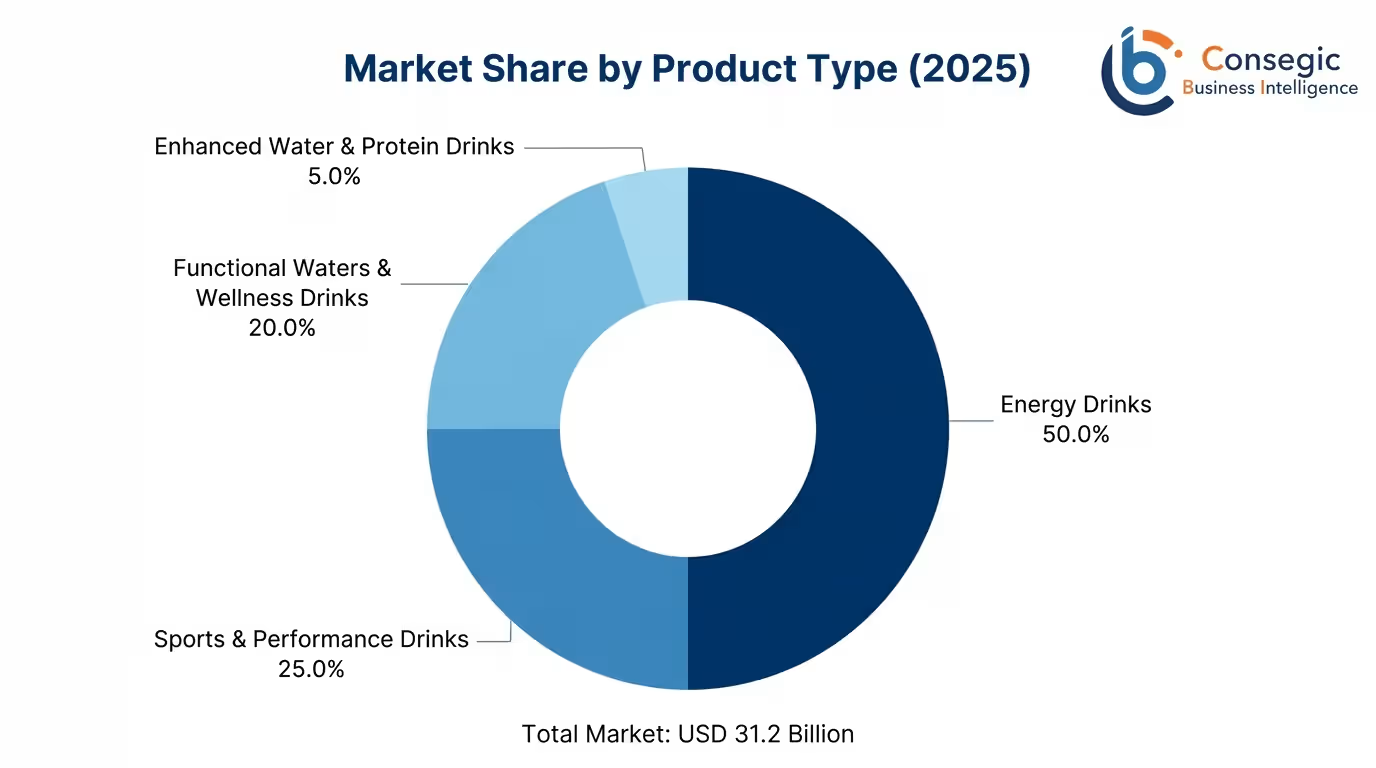
The energy drinks are estimated to dominate the market with USD 15.60 Billion, which is 50.0 % of the total market value, in year 2025 at 7.1 % CAGR which would translate to USD 29.35 Billion. This type includes the traditional energy drinks with caffeine concentrations of 80-160mg per 250-330ml of serving on top of taurine levels of 1,000-2,000mg and B-vitamin levels of 100-300 % of the daily requirements, energy shots with 150-200 mg caffeine in concentrated 60-90ml portions to offer the greatest convenience and the natural energy drinks that use green tea extract containing 80–120 mg caffeine per serving along with plant-based stimulants such as guarana and yerba mate, thereby catering to both performance-oriented and health-conscious consumer segments across the European market.
The segment has a wide variety of consumer occasions such as morning alertness with 42 % of consumption before noon as substitutes to coffee, afternoon energy maintenance with 28 % of consumption occasions dealing with post-lunch energy lapses, pre- work out activation with 18 % of consumption occasions that serve to deal with shift workers and students that comprises 12 % of total consumption patterns. Product innovation is geared towards clean energy formulations free of artificial ingredients and synthetic sources of caffeine and sugar-free with erythritol and stevia with 65-70 % of the new product launch in 2024.
Sports and Performance Drinks: Athletic Performance and Recovery Focus
Sports and performance drinks with USD 7.80 Billion equivalent of 25.0 % of market value and projected growth of USD 14.68 Billion in 2034 at 7.1 % CAGR. This category comprises of isotonic sports beverages containing 6-8 % carbohydrate levels and electrolyte formulations that match the sweat loss with sodium at 400-600mg per liter, protein recovery drinks with 15-25 grams protein per serving in whey isolate or plant-based sources, pre-workout beverages with 150-200mg of caffeine, and performance enhancing compounds and endurance drinks with sustained energy release systems with the use of maltodextrin and fructose.
The category has 85 million active gym members in Europe and recreational athletes, weekend warriors, and consumers of hydration and performance optimization solutions with an active lifestyle. Sports drinks made with pea and rice proteins are growing at a rate of 18-22 % per year, significantly surpassing the growth of products based on whey, which is 4-6 % per year, as flexitarian and vegan athletes constitute 15-20 % of all fitness fans, and dairy production is environmentally damaging.
Functional Waters and Wellness Drinks: Fastest Growing Segment
Functional waters and wellness drinks constitute USD 6.24 Billion equivalent to 20.0 % of market value with the greatest growth rate of 9.2 % CAGR with a market value of USD 12.52 Billion by 2034. It contains vitamin-added waters with vitamin C, B-complex, and D at 50-150 % of daily needs, electrolyte waters to which minerals can be added, probiotic drinks with 1–10 billion CFU per serving 10 billion CFU per serving of beneficial bacterial strains, adaptogen beverages with ashwagandha and rhodiola to deal with stress, and beauty drinks with collagen peptides, hyaluronic acid and antioxidants to support skin health.
The category has a special attraction among the female consumers who take 60-65 % of the buyers and health-conscious consumers who want the functionality but not calories or sugar in their product. Innovation is on forms of immunity support, probiotic functional waters that cater the digestive health issues of 20-30 per cent of European populations, and beverages that prove their beauty-from-within by improving skin elasticity by 15-25 per cent in clinical trials.
Enhanced Water and Protein Drinks: Mainstream Wellness Integration
The improved water and protein beverages take USD 1.56 Billion and 5.0 % of market worth with a growth to USD 2.94 Billion in 2034 at 7.1 % CAGR. Ready to drink protein drinks are best placed to grow most at 10-13 % per year as compared to the powder form, indicating the need by consumers to consume conveniently and in portable modes of consumption. Its products provide 20-30 grams of high-quality protein and a combination of vitamins, minerals and functioning ingredients to maintain muscle, control weight and active lifestyles.
By Distribution Channel: Retail Evolution and Channel Dynamics
Supermarkets and Hypermarkets: Dominant Distribution Platform
The supermarkets and hypermarkets amount to USD 17.16 Billion equivalent 55.0 % of the revenue of the distribution channel in terms of the reach of 95-98 % of the populations in Europe, promotional features such as end-cap stores and special offers, and the convenience of shopping under one roof. Large grocery stores such as Tesco, Carrefour, Lidl, Aldi, Rewe and Sainsbury allocate 25-40 linear meters of shelf space to functional drinks, with a high-profile display, refrigerated units to house chilled foods, and ambient shelving to house shelf-stable formats.
Online and E-commerce: Fastest Growing Distribution Channel
Online and e-commerce mediums constitute USD 3.74 Bill million equivalent of 12.0 % distribution revenue with highest growth rate of 25-30 % per annum due to subscription models of automatic replenishment, direct-to-consumer models that eliminate intermediaries of intermediaries in retailing and unlimited virtual shelf space and niche product identification. The subscription customers have 65-75 % retention rates over 35-45 % that is seen with one-time buyers and lifetime values of EUR 800-1,500 over EUR 150-300.
Regional Market Analysis
Western Europe: Market Leadership and Innovation Hub
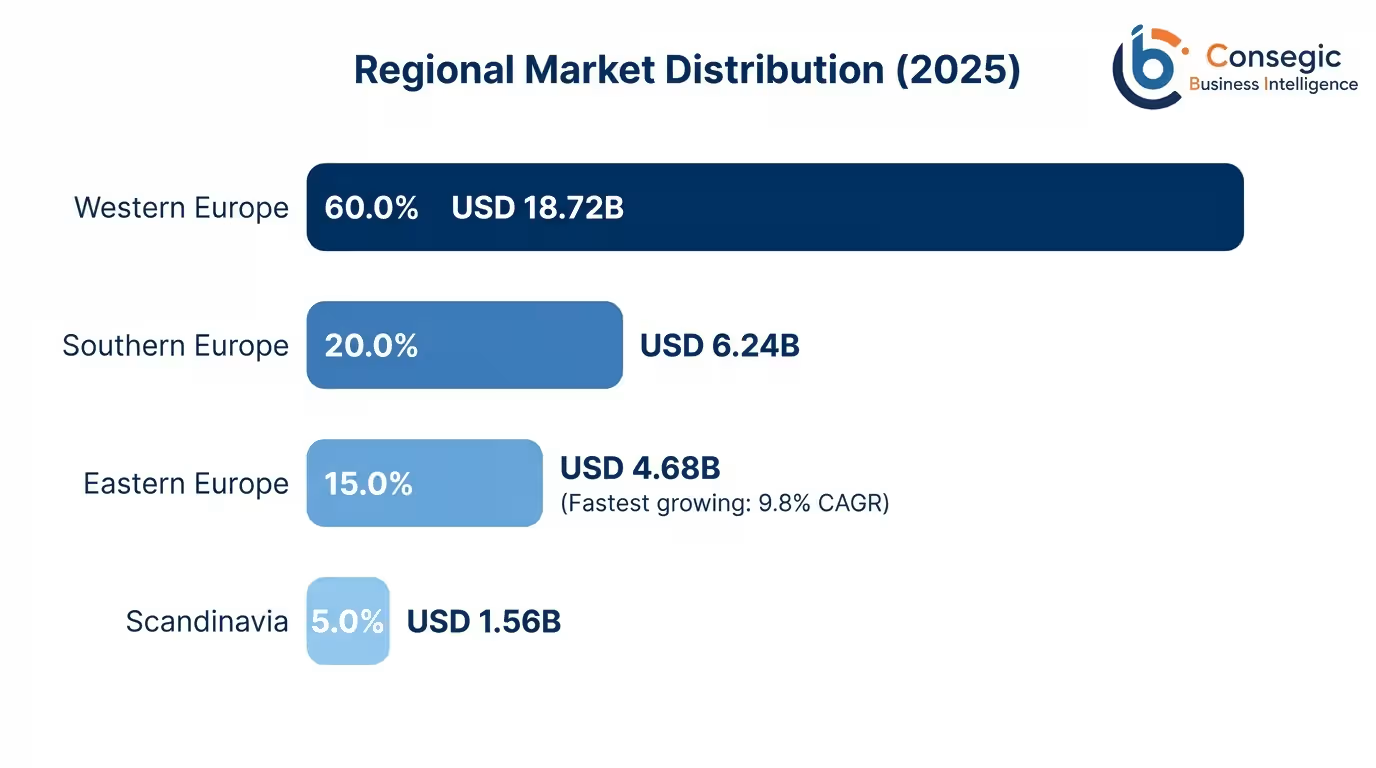
Western Europe comprising Germany, United Kingdom, France, Netherlands, Belgium, Austria and Switzerland symbolize USD 18.72 Billion that portrays equivalent 60.0 % of the aggregate European market value in 2025, and a projected USD 35.22 Billion in 2034 with a 7.1 % CAGR. The market is mature and the penetration of the high functional drinks is 55-65 %, the consumer preference is highly sophisticated and prefer high quality and specialized formulations, the regulatory framework is stringent to direct product quality and safety and the concentration of the leading brands together with innovative startups is creating a category development.
Germany dominates Western European markets with USD 5.62 Billion reflecting 30.0 % of regional value, due to good sport and fitness culture with 11.7 million gym memberships, consumers pragmatic with functional advantages, and retail environment by discounters and high-end retailers. German market has shown its specific strength with regard to sports nutrition drinks and protein drinks with 48 % of the consumers buying the products regularly with the aim of using them on fitness and health-related uses.
United Kingdom implies USD 4.68 Billion is equivalent to 25.0 % of Western European market value, where promoters have mature energy drinks market and high per-capita consumption, increasing interest in wellness drinks such as kombucha and probiotic beverages, and strong sports nutrition segment with 10.4 million members of the gym. The 2018 levy on the UK soft drinks industry has spurred the rates of sugar reduction with 65-70 % of functional drinks currently being formulated to less than 5 grams of sugar per 100ml.
Eastern Europe: Quickest-Expanding regional market.
The Eastern Europe such as Poland, Czech Republic, Hungary, Romania and Baltic states is equivalent to USD 4.68 Billion equivalent of 15.0 % of entire European market worth with highest growth rate of 9.8 % CAGR, and is projected to increase USD 11.74 Billion by the year 2034. This region shows lower current rate of functional drinks penetration of 35-45 % than Western Europe penetration rate of 55-65 % which provides a huge growth runway as awareness and availability rise through modernization of retail stores.
Growth drivers are increasing disposable income, growth in disposable income is 4-6 % annually, increasing the share of discretionary spending on premium beverages, urbanization, with 60-70 % of population in major urban areas getting more access to modern retail high-end waters, and wellness drinks, growing attention to health and wellness, and younger populations with a median age of 38-42 years versus 43-47 years in Western Europe, which are increasingly adopting new product categories.
Poland is the Eastern European market leader with USD 1.87 Billion, which constitutes 40.0 per cent of the regional value, due to the robust economic growth, upward middle class, growing fitness culture of 4.2 million gym members, and the existence of modern retail infrastructure. There is a specific interest of Polish consumers in energy drinks and sports nutrition products, and the market is growing by 11-13 % per year and is becoming more preimmunized.
Recent Industry Developments
Initiatives on regulatory framework evolution and compliance initiatives (2024-2025).
In 2024, the European Commission began a wholesale review of all nutrition and health claims regulations, examining possible amendments to Regulation 1924/2006 to accommodate emerging functional ingredients and simplify claim authorization procedures as well as harmonize their implementation across member states. Industry consultations engaged 850+ stakeholders comprising of manufacturers, retailers, consumer organizations and scientific experts and addressed the issues of lengthy approval timelines averaging 3-4 years, high rejection rates 75–80% of submitted claims and lack of approved claims of innovative ingredients such as adaptogens, nootropics and plant-based bioactive compounds.
In 2024-2025, the authorities of member states conducted the strengthened enforcement of the existing regulations, performing 2500+ compliance audits of the products of functional drinks and their marketing materials, issuing 180+warning letters due to the usage of the unauthorized health claims, and requiring 120+ products that do not meet regulatory standards to be reformulated or relabeled. Priorities of enforcement were substantiation of immunity claims after the COVID-19 pandemic, identification of probiotic strains, and viability, correctness of protein content statements, and adherence to caffeine labeling regulations.
Circular Economy Program Implementation and Sustainability (2024-2025).
The major manufacturers of functional drinks declared new sustainability goals in 2024-2025, which include carbon neutrality by 2030-2040, 100 % renewable energy in their production processes, a reduction of 25-40 % in their water consumption, and comprehensive circle economy plans involving the waste of packaging and material recovery. Red Bull had invested EUR 500 Million in sustainability solutions such as all production factories using 100 % renewable energy by 2025, distribution processes being carbon neutral by 2030, and packaging materials being 100 % recycling and aluminum can make its packs lightweight by 15 %.
PepsiCo declared global change plan including functional drinks portfolio with targets such as net-0 emissions by 2040, regenerative farming of 100 % of key ingredients by 2030 and cut virgin plastic usage by 50 % by 2030. These efforts are supported by investments of EUR 800 Million-1.0 billion in 2024-2026 that will result in renewable energy purchases, sustainable agricultural programs, packaging innovation, 100 % recycled PET bottles, and plant-based bottles with 30-50 % of renewable materials.
Plant-Based and Clean Label Product Innovation (2024-2025).
Plant-based product innovation in the functional drinks industry was unparalleled in 2024-2025 when more than 450 new plant-based functional drinks were innovated across European markets comprising 35-40 % of overall category innovation. Big producers came out with complete lines of plants, such as PepsiCo rolling out Gatorade Organic made with plant-based ingredients, Coca-Cola rolling out plant-based protein drinks with pea and rice protein blends that provided 20-26 grams of protein in a bottle, and Monster Beverage rolling out plant-based energy drinks using natural caffeine sources in either green tea or guarana.
Clean label reformulation efforts replaced 60-70 % of functional drinks portfolios with artificial ingredients by the middle of 2024-2025, used natural fruit and vegetable colors instead of artificial colors, used natural flavor systems instead of artificial flavors, and used natural sweeteners including stevia, monk fruit, and allulose. The programs of reformulation are reactions to the need of transparency and ingredient recognition by consumers and to the regulatory pressure and sustainability goals.
Competitive Landscape and Key Market Players
Strategic Positioning and Market Leadership
Red Bull: European Market Leader
Red Bull has dominant position in the market with annual revenues of estimated USD 4.5-5.2 Billion in Europe with approximately 15-18 % market share via its iconic branding, extensive distribution centers of 300,000+ retail locations and the premium positioning with prices of EUR 2.80-3.50 per serving. Some of competitive advantages are world recognition of the brand, strong connection with sports and lifestyle activities, innovative marketing, and introduction of organic and natural ingredient lines through Red Bull Organics to cater to health-aware consumers and still maintain a strong presence in high-value energy segment.
Monster Beverage Corporation: Innovation Aggressor.
Monster Beverage has a good European market presence with an estimated revenue of USD 3.2-3.8 Billion at 12-14 % of the market share with a special focus on fast product development especially in sugar-free Monster Ultra product range and coffee-energy hybrid. The strategic focus involves the expansion of the energy drink demographics to cover gamers, fitness buyers, and older professionals with the help of a specific product development and marketing efforts without the necessity to lose its popularity in the convenience and impulse channels.
PepsiCo: Sports nutrition leadership.
PepsiCo has a considerable presence of European functional drinks that have an estimated revenue of USD 2.8-3.4 Billion of 10-12 % market share via Gatorade sports hydration leadership, Rockstar energy drinks, and growing protein beverage portfolio. The competitive advantages are that it has a wide distribution network because of its wider beverage portfolio, good sports marketing relationships, research and development, and sustainability pledges that help in brand differentiation to the environmentally conscious customers.
Additional Key Market Participants:
- The Coca-Cola Company - Diversified hydration (Powerade) portfolio, functional waters, and growing plant-based portfolio.
- Danone - Leadership in probiotics drinks (Actimel) and plant-based functional drinks with Alpro brand.
- Suntory Lucozade Ribena - Excellent bodies in sports and energy markets in the UK under heritage brands.
- Innocent Drinks - Wellness shots and functional smoothies of premium positioning with a focus on natural ingredients.
Europe Functional Drinks Market Report Insights
| Report Attributes | Report Details |
|---|---|
| Study Timeline | 2022–2034 |
| Base Year | 2025 |
| Forecast Period | 2026–2034 |
| Market Size in 2025 | USD 31.2 Billion |
| Market Size in 2034 | USD 58.7 Billion |
| CAGR (2026–2034) | 7.1% |
| By Product Type | Energy Drinks (50.0%), Sports & Performance Drinks (25.0%), Functional Waters & Wellness Drinks (20.0%), Enhanced Water & Protein Drinks (5.0%) |
| By Distribution Channel | Supermarkets & Hypermarkets (55.0%), Convenience Stores & Petrol Stations (25.0%), Online & E-commerce (12.0%), Gyms & Foodservice (8.0%) |
| By Functional Benefit | Energy & Alertness (42.0%), Sports Performance & Recovery (28.0%), Immunity Support (12.0%), Digestive Health (8.0%), Mental Wellness (6.0%), Beauty & Anti-Aging (4.0%) |
| By Region | Western Europe (60.0%), Southern Europe (20.0%), Eastern Europe (15.0%), Scandinavia (5.0%) |
| Key Players | Red Bull, Monster Beverage, PepsiCo, Coca-Cola Company, Danone, Lucozade Ribena Suntory, Innocent Drinks, Optimum Nutrition |
| Report Coverage |
|
Key Questions Answered in the Report
What is the present size of the Europe functional drinks market and what is the rate of market growth? −
The market size of Europe functional drinks is USD 31.2 Billion in 2025 and is expected to experience a growth of up to USD 58.7 Billion in 2034 and its CAGR is 7.1 in the forecast period 2026-2034. The factors that lead to this growth include the rising levels of health consciousness among 68% of the European adults who actively pursue functional benefits, the post-pandemic emphasis on immunity as a year-round priority, the growth in the number of people in the fitness industry as the number of gym members increases 4-6% yearly, mental wellness, and the older generation in need of specialized nutrition. The market has a penetration rate of 55-65 in the western European market and 35-45 in the eastern European developing markets and covers a market of about 385 million consumers.
What product category has the most growth in the European functional drinks market? +
The strongest growth is observed in functional waters and wellness drinks with the largest CAGR of 9.2%, which is significantly higher than the general market development, due to the desire of consumers to have functional benefits with no calories or sugar in them. There are subsegments in which plant-based functional drinks across all segments are growing between 15-18% per year and the plant-based protein drinks are expected to grow between 14-17% CAGR. Beverages with immunity as one of its core values recorded a remarkable growth of 18-22% in 2023-2024 under wellness drink segments, whereas the adaptogenic and nootropic-based mental wellness and cognitive function beverages in the future will experience a CAGR of 12-15%.
Which are the major benefits of the functional drinks over the traditional drinks? +
Functional drinks offer purposeful health advantages with scientifically validated ingredients that meet 200-400% of daily vitamin needs in immunity products, 20-30 grams of high-quality protein that helps maintain muscle, 1-10 billion CFU probiotics that help with digestive health, and adaptogenic drugs that help with stress management. The convenience advantage of products is the integration of nutrition into on-the-go lifestyles, the instant availability of the products provided by high retail distribution (95-98% of the European populations) and the taste appeal of the products as equal to a conventional soft drink, without losing functional benefits. Among the performance benefits are an increase of energy due to caffeine which offers 12-18% endurance gain, sports recovery due to protein which helps in muscle building and cognitive benefits due to nootropics which enhances concentration by 8-15%.
What are the major issues and regulatory issues that influence the market? +
The first difficulty is that the EU health claims regulations set high standards of scientifically based evidences with a high rejection rate of approximately 75–80% of claims submitted by manufacturers, restricting the capacity of manufacturers to convey benefits of products. The process of claim approval takes 2-4 years and costs between EUR 150,000-400,000 per submission which puts small businesses and innovative ingredients at a disadvantage. Taxation of sugars in the UK, Ireland, Portugal and France and other countries, levies EUR 0.10-0.30 per liter on products over 5-8 grams sugar/100ml, which forces cost and complexity in reformulation and may lead to decreased consumer acceptance of products using the old formulations.
What are the most popular companies operating in the European functional drinks market? +
Leaders of the market are Red Bull with sustained dominance in energy drinks with an estimated market share of 15-18% total market share, Monster Beverage with market share of 12-14% focusing on innovation in sugar-free and coffee-energy hybrid segments, PepsiCo with 10-12% market share based on Gatorade sports drinks and growing portfolio of protein beverages, Coca-Cola with diversified functional portfolio in hydration and wellness segments, and Danone with leadership in probiotic drinks and plant-based functional drinks. Specialized brands: Lucozade Ribena Suntory has solid UK base; Innocent Drinks has high-quality functional smoothies and emerging direct-to-consumer brands taking premium segments via subscription.
Overview
Reputation & Certifications


Our Services
- Market Intelligence & Forecasting
- Custom Research Solutions
- Market Entry Strategy
- Competitive Intelligence
- Customer Insights
- Industry Innovation Analysis
- Investment Advisory