Jump to Content
Flexible Lid Stock Packaging Market - Size, Share, Industry Trends, and Forecasts (2025-2032)
Flexible Lid Stock Packaging Market Size:
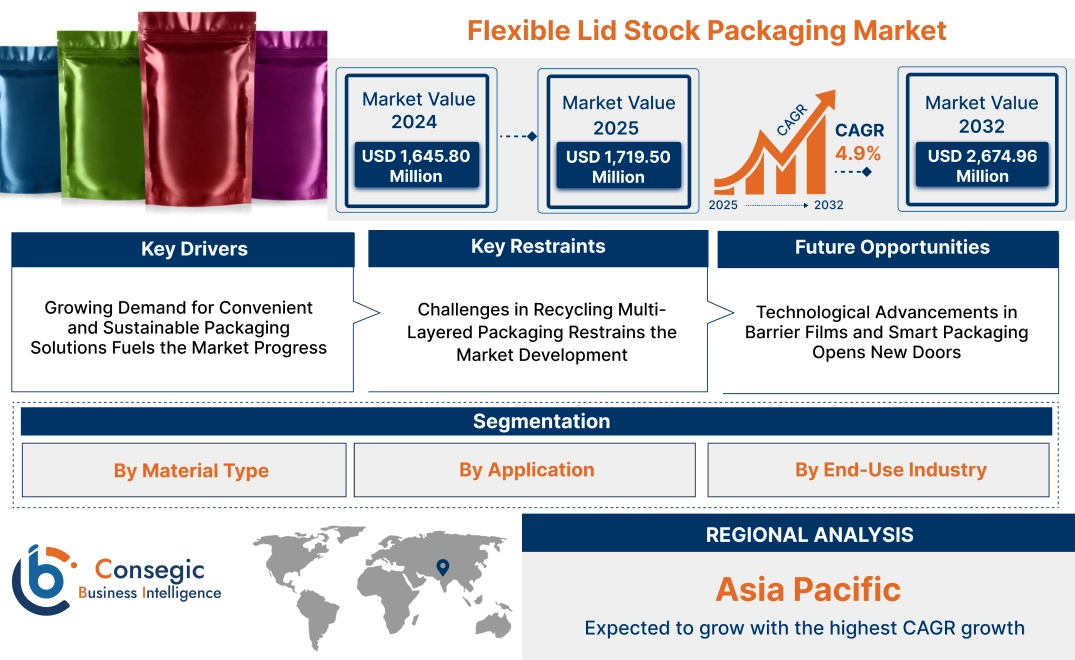
Flexible Lid Stock Packaging Market size is estimated to reach over USD 2,674.96 Million by 2032 from a value of USD 1,645.80 Million in 2024 and is projected to grow by USD 1,719.50 Million in 2025, growing at a CAGR of 6.3% from 2025 to 2032.
Flexible Lid Stock Packaging Market Scope & Overview:
Flexible lid stock packaging refers to a type of packaging material used to seal containers and provide protective coverings for various products. This packaging solution is widely employed across industries such as food and beverage, pharmaceuticals, and consumer goods to ensure product freshness, extend shelf life, and maintain safety. It is designed to offer a lightweight and flexible alternative to rigid lids, providing easy peelability and resealability.
These materials are available in various compositions, including aluminum, paper, and plastic films, tailored to meet the specific requirements of different applications. The type of packaging is engineered for durability, barrier protection, and compatibility with printing technologies, enabling customization for branding and labeling. Additionally, it is designed to withstand a range of environmental conditions, including temperature variations and moisture exposure.
End-users include manufacturers in the food, healthcare, and cosmetics sectors that prioritize product integrity and consumer convenience. Flexible lid stock packaging plays a vital role in ensuring efficient sealing, protection, and presentation of packaged goods.
Flexible Lid Stock Packaging Market Dynamics - (DRO) :
Key Drivers:
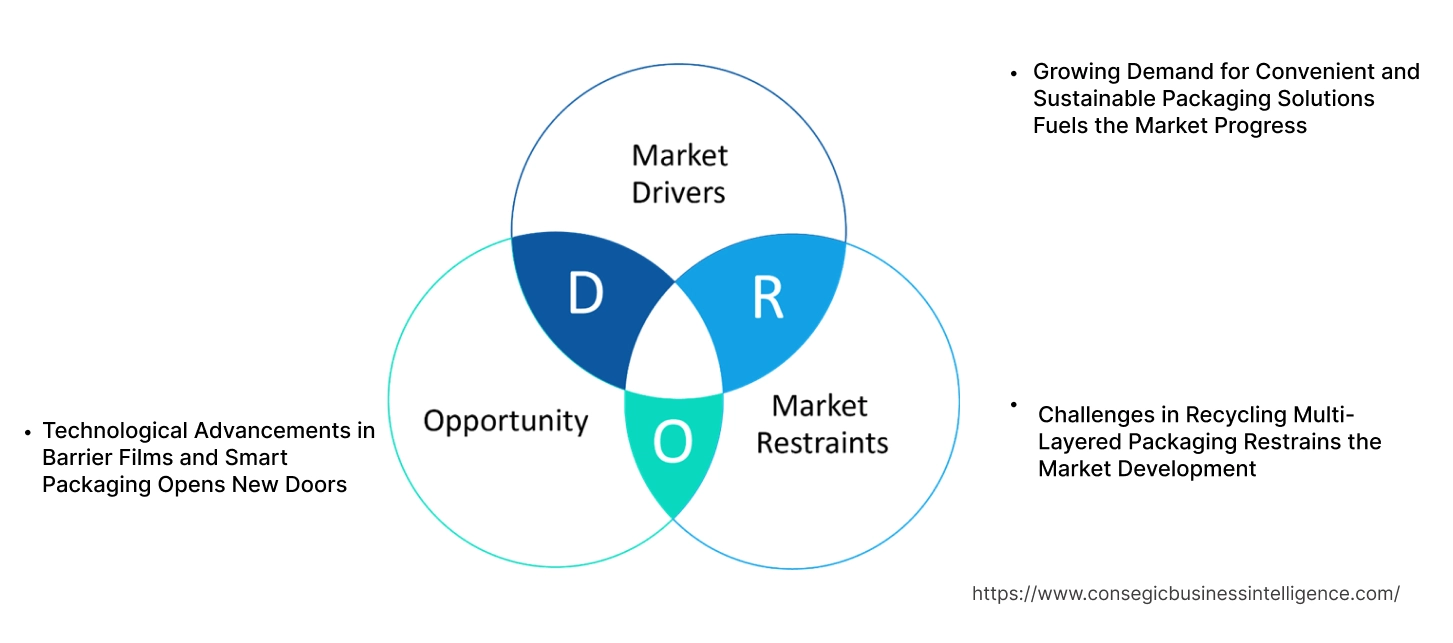
Growing Demand for Convenient and Sustainable Packaging Solutions Fuels the Market Progress
The growing demand for convenient, lightweight, and sustainable packaging is driving the expansion of the market. As consumers and businesses increasingly prioritize environmental sustainability, there is a shift towards packaging materials that are recyclable, biodegradable, or made from renewable resources. Flexible lid stock packaging meets these needs by offering a high degree of functionality with minimal material usage. It provides superior sealing, which helps extend the shelf life of products, and is easy to use for both manufacturers and consumers. This makes it particularly appealing for industries like food and beverage, pharmaceuticals, and cosmetics, where packaging must balance convenience, product protection, and environmental impact. As consumers need more eco-friendly solutions, this packaging has become a preferred choice due to its ability to meet sustainability goals while maintaining product quality and integrity. This trend drives the flexible lid stock packaging market growth and innovation.
Key Restraints:
Challenges in Recycling Multi-Layered Packaging Restrains the Market Development
One of the major constraint of the flexible lid stock packaging is the difficulty in recycling multi-layered packaging. Many flexible lid stock solutions are composed of multiple layers of different materials, such as plastics, aluminum, and paper, which provide enhanced durability, barrier properties, and product protection. However, the complexity of separating these layers during recycling makes the process more difficult and costly. As a result, multi-layered packaging is often sent to landfills instead of being recycled, limiting its environmental benefits. This issue is compounded by the increasing consumer demand for sustainable packaging and the stricter regulations surrounding waste management and recycling. Manufacturers face pressure to develop alternative packaging solutions that are both functional and easier to recycle. Hence, the aforementioned factors limit the flexible lid stock packaging market demand.
Future Opportunities :
Technological Advancements in Barrier Films and Smart Packaging Opens New Doors
The integration of smart technologies, such as QR codes, sensors, and Near Field Communication (NFC), enhances product safety, traceability, and consumer engagement. These innovations allow manufacturers to provide real-time information on product freshness, origin, and handling conditions, ensuring better quality control and reducing the risk of counterfeit products. For consumers, smart packaging offers convenience, such as easy access to product details, nutritional information, and promotional content through mobile devices. Additionally, smart sensors monitor environmental factors like temperature and humidity, helping to preserve the quality and extend the shelf life of sensitive products, especially in food and pharmaceuticals. This integration not only adds value to the product but also strengthens brand loyalty and trust, creating substantial flexible lid stock packaging market opportunities.
Flexible Lid Stock Packaging Market Segmental Analysis :
By Material Type:
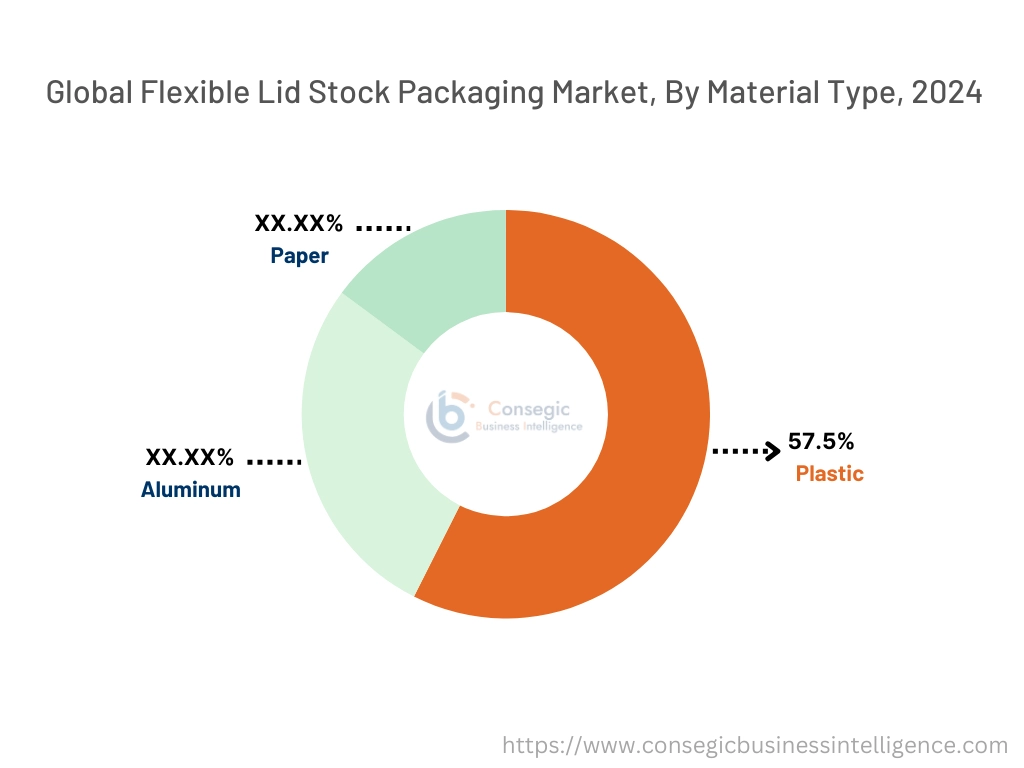
Based on material type, the market is segmented into aluminum, plastic, and paper.
The plastic segment accounted for the largest revenue of 57.5% of the total flexible lid stock packaging market share in 2024.
- Plastic materials, including polyethylene and polypropylene, offer excellent flexibility and durability, making them ideal for packaging a variety of products.
- The segment’s dominance is attributed to its cost-effectiveness and lightweight nature, which supports reduced transportation costs and environmental impact.
- Increased adoption of plastic materials in industries such as food & beverage and pharmaceuticals further fuels the segment's prominence.
- As per flexible lid stock packaging market trends, advancements in recyclable plastic materials and growing requirement for sustainable solutions contribute to the segment's leadership.
The aluminum segment is expected to grow at the fastest CAGR during the forecast period.
- Aluminum materials provide excellent barrier properties against moisture, oxygen, and light, ensuring product freshness and extending shelf life.
- The growth of this segment is driven by its extensive use in packaging perishable items, such as dairy products and ready-to-eat meals.
- Increased focus on eco-friendly and recyclable packaging solutions enhances the adoption of aluminum materials.
- The segment’s growth is supported by innovations in lightweight aluminum packaging, catering to consumer and sector needs for sustainable practices, further contributing to the flexible lid stock packaging market expansion.
By Application:
Based on application, the market is segmented into fresh produce, dairy products, meat & poultry, ready-to-eat meals, and others.
The dairy products segment accounted for the largest revenue of the total flexible lid stock packaging market share in 2024.
- Flexible lid stock packaging ensures enhanced product protection for dairy items by providing airtight sealing, maintaining freshness and quality.
- The segment’s dominance is driven by the increased consumption of packaged dairy products, such as yogurt, cheese, and cream.
- Rising consumer preference for convenient and resealable packaging formats further supports the segment's prominence.
- As per flexible lid stock packaging market analysis, increased demand for sustainable dairy packaging solutions contributes to the segment's leadership.
The ready-to-eat meals segment is expected to grow at the fastest CAGR during the forecast period.
- Rising urbanization and changing consumer lifestyles drive the need for convenient and ready-to-eat meal packaging.
- Flexible lid stock solutions provide superior sealing and product integrity, ensuring the freshness of packaged meals.
- The growth of this segment is attributed to the increasing popularity of single-serve and portion-controlled meal packaging.
- Therefore, advancements in microwave-compatible and heat-resistant lid stock materials further boost the segment’s adoption, driving the flexible lid stock packaging market demand.
By End-Use Industry:
Based on end-use industry, the market is segmented into food & beverage, pharmaceuticals, personal care, industrial, and others.
The food & beverage segment accounted for the largest revenue share in 2024.
- The segment’s leadership is driven by the extensive adoption of flexible lid stock packaging for preserving food quality and extending shelf life.
- Increased requirement for packaged and processed food products, such as dairy, snacks, and ready-to-eat meals, supports the segment's dominance.
- It also offers excellent barrier properties, ensuring the safety and hygiene of food & beverage items.
- As per flexible lid stock packaging market trends, innovations in sustainable and biodegradable packaging solutions contribute to the segment’s leadership.
The pharmaceuticals segment is expected to grow at the fastest CAGR during the forecast period.
- Flexible lid stock packaging ensures the safety and integrity of pharmaceutical products by offering superior protection against contamination and tampering.
- The growth of this segment is attributed to the increasing demand for pharmaceutical packaging solutions with high barrier properties.
- Rising healthcare expenditure and advancements in drug delivery systems further enhance the adoption of this type of packaging in this sector.
- As per the market trends, the segment's growth is driven by the adoption of lightweight, sustainable, and cost-effective packaging materials in the pharmaceutical sector, fueling the flexible lid stock packaging market expansion.
Regional Analysis:
The regions covered are North America, Europe, Asia Pacific, the Middle East and Africa, and Latin America.
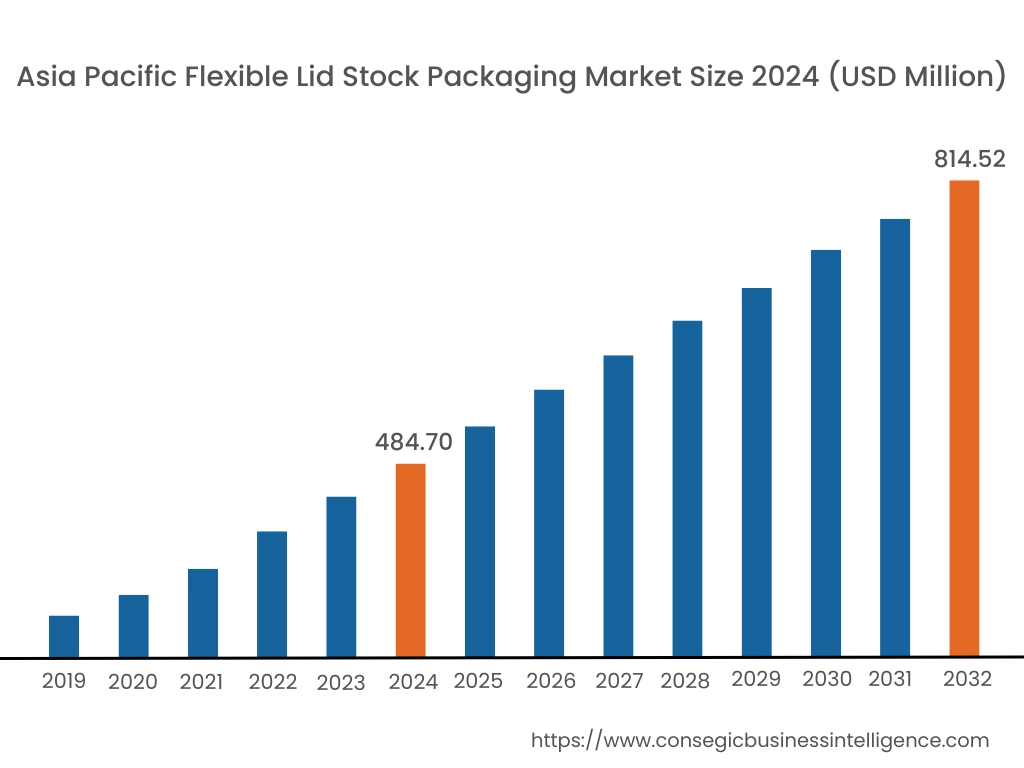
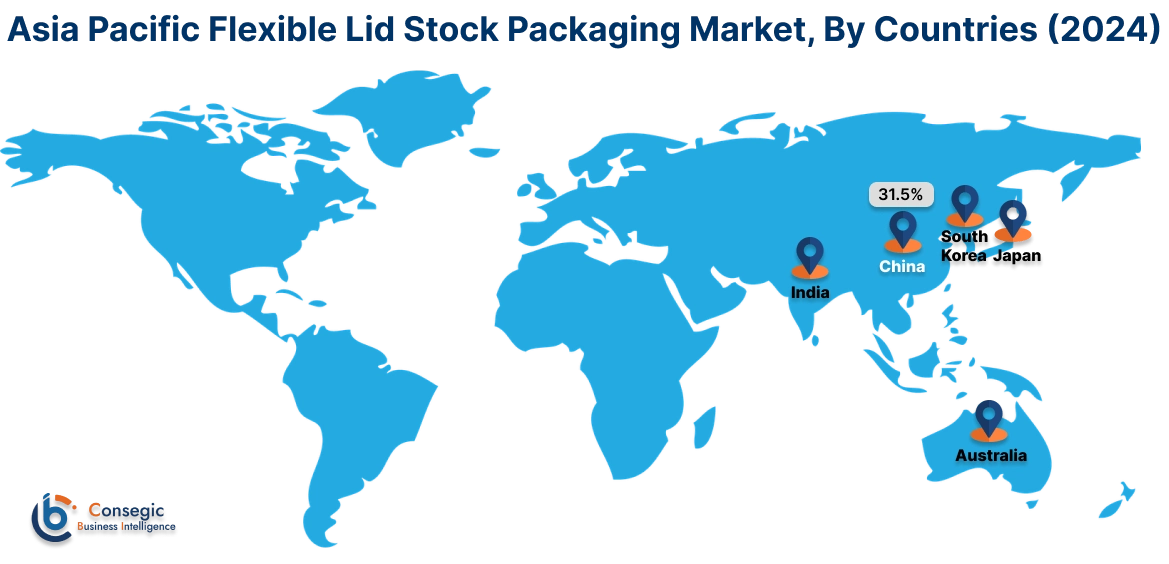
Asia Pacific region was valued at USD 484.70 Million in 2024. Moreover, it is projected to grow by USD 507.84 Million in 2025 and reach over USD 814.52 Million by 2032. Out of this, China accounted for the maximum revenue share of 31.5%. The Asia-Pacific region is witnessing rapid growth in the flexible lid stock packaging market, attributed to increasing urbanization and a burgeoning middle class. A prominent trend is the rising need for packaged convenience foods, leading to the adoption of this packaging. The flexible lid stock packaging market analysis indicates that countries like China and India are leading the market, with expanding food processing industries and increasing consumer spending on packaged goods.
North America is estimated to reach over USD 866.95 Million by 2032 from a value of USD 545.93 Million in 2024 and is projected to grow by USD 569.28 Million in 2025. This region holds a significant share of the flexible lid stock packaging market, driven by the food and beverage industry's need for convenient and sustainable packaging solutions. A notable trend is the increasing adoption of recyclable and eco-friendly materials, aligning with consumer preferences for sustainable products. Analysis indicates that stringent regulations promoting environmental sustainability are further propelling the flexible lid stock packaging market growth in North America.
European countries, particularly Germany, France, and the UK, are key players in the flexible lid stock packaging market, with a strong emphasis on reducing plastic waste. A significant trend is the collaboration between packaging manufacturers and food producers to develop biodegradable and compostable lid stock materials. Analysis suggests that the European Union's directives on single-use plastics are driving innovation and adoption of sustainable packaging solutions in this region, boosting flexible lid stock packaging market opportunities.
In the Middle East, the market is influenced by a growing food and beverage sector and increasing investments in packaging technology. The focus is on introducing innovative packaging solutions that extend product shelf life, catering to both local consumption and export markets. In Africa, the market is gradually developing, with efforts to improve food preservation and reduce waste through effective packaging. Analysis suggests that economic diversification efforts and investments in the food processing sector are contributing to market development in these regions.
Latin American countries are increasingly recognizing the benefits of flexible lid stock packaging in enhancing product appeal and shelf life. A notable trend is the incorporation of advanced barrier materials to protect against moisture and oxygen, essential for the region's diverse climate conditions. However, economic constraints and limited access to advanced technology may impact the pace of adoption. Analysis indicates that government initiatives to improve food safety standards and packaging regulations could play a pivotal role in advancing the market in this region.
Top Key Players and Market Share Insights:
The flexible lid stock packaging market is highly competitive with major players providing products and services to the national and international markets. Key players are adopting several strategies in research and development (R&D), product innovation, and end-user launches to hold a strong position in the global flexible lid stock packaging market. Key players in the flexible lid stock packaging industry include -
- Amcor Ltd. (Australia)
- Bemis Company Inc. (USA)
- Coveris Holdings S.A. (USA)
- Sealed Air Corporation (USA)
- Constantia Flexibles (Austria)
- Berry Plastics Corporation (USA)
- Mondi plc. (Austria)
- Sonoco Products Company (USA)
- Wipak Germany GmbH (Germany)
- Anchor Packaging Inc. (USA)
Flexible Lid Stock Packaging Market Report Insights :
| Report Attributes | Report Details |
| Study Timeline | 2019-2032 |
| Market Size in 2032 | USD 2,674.96 Million |
| CAGR (2025-2032) | 6.3% |
| By Material Type |
|
| By Application |
|
| By End-Use Industry |
|
| By Region |
|
| Key Players |
|
| North America | U.S. Canada Mexico |
| Europe | U.K. Germany France Spain Italy Russia Benelux Rest of Europe |
| APAC | China South Korea Japan India Australia ASEAN Rest of Asia-Pacific |
| Middle East and Africa | GCC Turkey South Africa Rest of MEA |
| LATAM | Brazil Argentina Chile Rest of LATAM |
| Report Coverage |
|
Key Questions Answered in the Report
What is the size of the Flexible Lid Stock Packaging Market? −
The Flexible Lid Stock Packaging Market size is estimated to reach over USD 2,674.96 Million by 2032 from a value of USD 1,645.80 Million in 2024 and is projected to grow by USD 1,719.50 Million in 2025, growing at a CAGR of 6.3% from 2025 to 2032.
What are the key segments in the Flexible Lid Stock Packaging Market? +
The market is segmented by material type (aluminum, plastic, and paper), application (fresh produce, dairy products, meat & poultry, ready-to-eat meals, others), and end-use industry (food & beverage, pharmaceuticals, personal care, industrial, others).
Which segment is expected to grow the fastest in the Flexible Lid Stock Packaging Market? +
The ready-to-eat meals segment is expected to grow at the fastest CAGR during the forecast period, driven by rising urbanization and changing consumer lifestyles, creating demand for convenient meal packaging.
Who are the major players in the Flexible Lid Stock Packaging Market? +
Key players in the Flexible Lid Stock Packaging market include Amcor Ltd. (Australia), Bemis Company Inc. (USA), Berry Plastics Corporation (USA), Mondi plc. (Austria), Sonoco Products Company (USA), Wipak Germany GmbH (Germany), Anchor Packaging Inc. (USA), Coveris Holdings S.A. (USA), Sealed Air Corporation (USA), Constantia Flexibles (Austria).
Overview
Reputation & Certifications


Our Services
- Market Intelligence & Forecasting
- Custom Research Solutions
- Market Entry Strategy
- Competitive Intelligence
- Customer Insights
- Industry Innovation Analysis
- Investment Advisory