Jump to Content
Gum Grafting Market - Size, Share, Industry Trends, and Forecasts (2025-2032)
Gum Grafting Market Size:
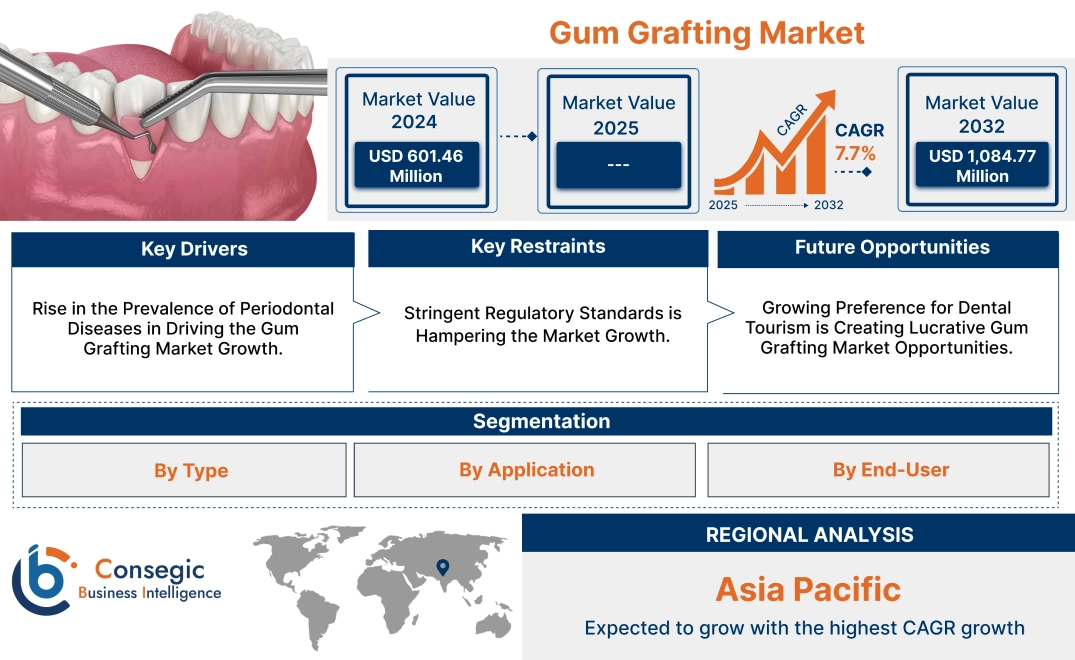
Gum Grafting Market size is growing with a CAGR of 7.7% during the forecast period (2025-2032), and the market is projected to be valued at USD 1,084.77 Million by 2032 from USD 601.46 Million in 2024.
Gum Grafting Market Scope & Overview:
Gum grafting is a surgical procedure used to treat gum recession, a condition where the gums pull away from the teeth, exposing the underlying tooth roots. This procedure involves transplanting healthy tissue from another part of the mouth, such as the roof of the mouth (palate), to the area with receding gums. The transplanted tissue covers the exposed roots, protecting them from decay, sensitivity, and further recession. Gum graft is used to improve the appearance of the gum line and enhance the overall aesthetics of the smile. The procedure is typically performed by periodontists, specialists in gum disease, and requires local anesthesia or sedation.
The types of gum graft generally include connective-tissue grafts, free gingival grafts, pedicle grafts, allografts and others. These grafts primarily find application in root coverage to protect exposed tooth roots, ridge augmentation to improve bone support for dental implants, and cosmetic enhancement to address concerns such as a gummy smile or uneven gum lines among others. The end-users for these procedures encompass a diverse range of healthcare settings, including dental clinics, hospitals, ambulatory surgical centers, and others.
How is AI Impacting the Gum Grafting Market?
AI is transforming the gum grafting market by improving diagnostics, treatment planning, and surgical precision. AI-powered tools can analyze dental images with greater accuracy than the human eye, detecting early signs of gum disease and bone loss that might be missed in traditional examinations. This leads to more personalized and effective treatment strategies for patients. Further, AI automate periodontal charting, making it easier for dentists to track changes in gum health over time. Furthermore, AI algorithms can analyze patient data to create customized treatment plans that are tailored to individual needs and risk factors.
Gum Grafting Market Dynamics - (DRO) :
Key Drivers:
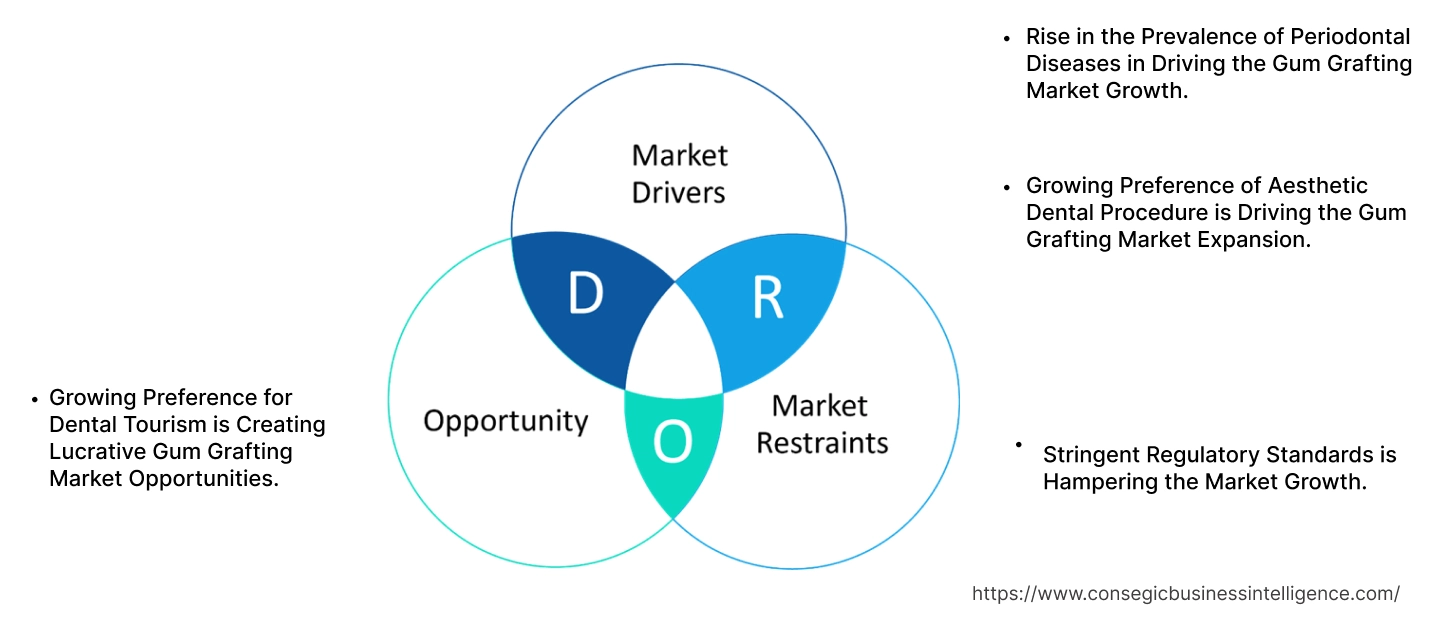
Rise in the Prevalence of Periodontal Diseases in Driving the Gum Grafting Market Growth.
The rise in the prevalence of periodontal diseases is a significant driver of the gum grafting market growth. Periodontal diseases, such as gingivitis and periodontitis, are characterized by inflammation and infection of the tissues surrounding the teeth, often leading to gum recession. These conditions arise from the accumulation of plaque, a sticky film of bacteria that forms on the teeth. When plaque is not effectively removed through proper oral hygiene practices such as brushing and flossing, it hardens into tartar, which irritates the gums. This irritation leads to gingivitis, the earliest stage of periodontal disease, characterized by red, swollen, and bleeding gums. If left untreated, gingivitis progresses to periodontitis, a more severe form of disease. As the prevalence of these diseases increases, it is driven by factors such as poor oral hygiene, smoking, and systemic conditions like diabetes among others.
- According to the data published by the National Library to Medicine, in April 2023, periodontal disease is more common in men than in women, affecting nearly 50% of men and 35% of women. Additionally, over 60% of smokers suffer from periodontal diseases.
These factors influence the demand for gum grafting procedures to address the resulting complications, such as tooth sensitivity, tooth loss, and aesthetic concerns. Hence, the growing need for restorative and aesthetic periodontal procedures is a key factor propelling the gum grafting market expansion.
Growing Preference of Aesthetic Dental Procedure is Driving the Gum Grafting Market Expansion.
The growing preference for aesthetic dental procedures is a significant driver of the market. Patients are increasingly seeking to enhance their smile aesthetics, and gum recession, which significantly impact the overall appearance. Exposed tooth roots create an unsightly gummy smile or uneven gum lines, negatively impacting a patient's self-confidence and social interactions. Gum graft effectively address these cosmetic concerns by restoring the natural contour of the gum line, improving the balance and symmetry of the smile, and enhancing the overall aesthetic appearance of the teeth. As the need for dental aesthetics increases, so does the requirement gum graft procedures for restoring the smile.
- According to the data published by NCBI, in 2022, there is an increase in the demand for aesthetic dental procedures. Aesthetic procedures, including Hollywood smile (17.1%), dental veneers (11.9%), are among the most commonly utilized aesthetic procedures that have significant implications for the use of gum grafts. Gum graft procedures play a crucial role in achieving these aesthetic goals by restoring the natural contour of the gum line, enhancing the overall balance and symmetry of the smile, and ultimately contributing to a more confident and aesthetically pleasing appearance.
Thus, this increasing emphasis on aesthetics, particularly among younger and more image-conscious populations, is a major cause of the growing requirement for grafting procedures within the market
Key Restraints:
Stringent Regulatory Standards is Hampering the Market Growth.
Stringent regulatory standards imposed by government bodies worldwide pose significant constraints in the market. These regulations, designed to protect the environment and public health, increase production costs and slow down product development. The regulatory approval process for gum graft solutions and materials are time-consuming and expensive, requiring extensive testing and documentation to meet stringent safety and efficacy requirements. This regulatory burden increases the time-to-market for new products, potentially hindering innovation and slowing market development. Furthermore, compliance with evolving regulatory standards necessitates ongoing investments in research, development, and quality control, which increases the overall cost of production and potentially impacts market profitability.
Compliance with these regulations increases the cost of product development and testing. These regulations also result in significant disruptions to traditional industry supply chains and loss of current raw materials uses. Moreover, evolving federal regulations accelerate annual compliance and operating costs throughout medical industry supply chains. Thus, the impact of these stringent regulations on the market is multifaceted.
Future Opportunities :
Growing Preference for Dental Tourism is Creating Lucrative Gum Grafting Market Opportunities.
Dental tourism, where patients travel abroad to seek affordable dental treatments, creates potential for the market. The rising costs of dental care in developed countries such as the U.S., Canada, and Europe have led many patients to seek more affordable alternatives in countries where dental services are less expensive. Gum graft procedures are frequently included in dental tourism packages, attracting patients seeking comprehensive dental care solutions. Patients are increasingly seeking affordable and high-quality dental care in countries with lower healthcare costs, such as Mexico, Costa Rica, and Thailand.
- According to an article published by Goodness Dental, in 2024, visiting countries such as Costa Rica for dental procedures results in savings of up to 70% compared to the prices in the U.S. Numerous clinics provide all-inclusive packages that cover transportation, lodging, and dental services.
Additionally, many patients opting for dental treatments abroad still require cost-effective and durable restorative options. These procedures not only enhance the aesthetic appeal of one’s smile but also address underlying issues related to gum health. As patients venture abroad for their dental needs, they find that these packages often combine state-of-the-art gum graft techniques with other essential treatments, creating a convenient and cost-effective way to achieve optimal oral health while exploring new destinations. Overall, growing dental tourism is expected to increase gum grafting market opportunities.
Gum Grafting Market Segmental Analysis :
By Type:
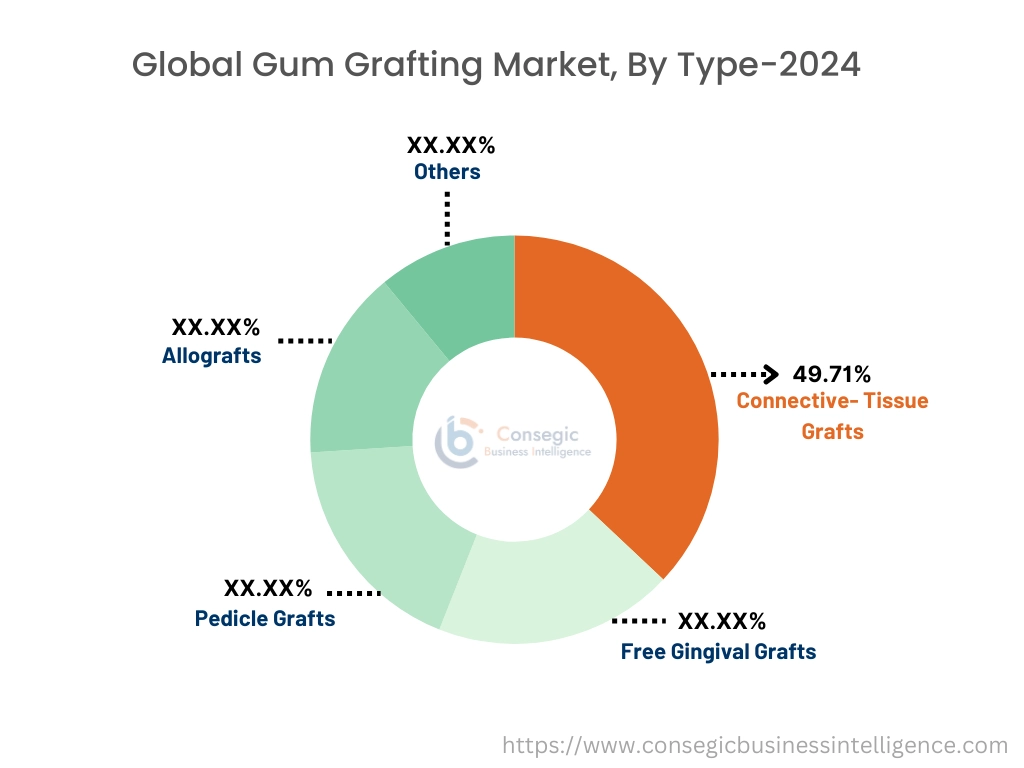
Based on type, the market is categorized into connective- tissue grafts, free gingival grafts, pedicle grafts, allografts and others.
Trends in the Type:
- Rise in the trends of customized grafting procedures tailored to individual patient needs.
- Growing use of laser techniques to enhance precision and improve healing when performing connective-tissue grafts is influencing segment growth.
The connective-tissue grafts segment accounted for the largest gum grafting market share of 49.71% in 2024.
- The connective tissue graft is a widely utilized technique in periodontal surgery.
- This procedure involves harvesting a thin layer of connective tissue from the palate, typically from the area adjacent to the upper teeth.
- This connective tissue, rich in collagen and blood vessels, is then placed over the exposed root surface of the receded tooth.
- The overlying gingival tissue is then sutured into place.
- This technique offers several advantages, including excellent root coverage, minimal donor site morbidity, and improved aesthetic outcomes.
- Connective tissue grafts are considered the gold standard for treating moderate to severe gum recession and are widely employed in periodontal practice.
- The connective tissue grafts have shown a positive success rate for root cover.
- For instance, according to the data provided by the Gum Disease Guide, in 2022, states that connective tissue grafts possess high degree of success, achieving an average root cover of 98.4% after 27.5 months, confirming its effectiveness in covering tooth roots.
- Thus, these factors are driving the gum grafting market demand.
The allografts segment is expected to grow at the fastest CAGR over the forecast period.
- An allograft is a surgical procedure involving the use of gum tissue that is harvested from a donor who is not the patient.
- This method provides an alternative to an autograft, where tissue is taken from the patient's own body.
- One of the primary benefits of choosing an allograft is that it is typically less painful and invasive.
- Additionally, because there is no requirement for a second surgical site such as the removal of tissue from the patient's mouth the recovery time is often significantly reduced.
- This leads to a more comfortable healing process and a quicker return to normal activities for the patient.
- Allografts are especially advantageous in cases where the patient does not have sufficient tissue to take from their own body.
- Advancements in tissue processing and preservation techniques have significantly improved the quality and predictability of allografts.
- Allografts offer several advantages, such as readily available supply, reduced donor site morbidity, and consistent graft quality.
- As a result, based on the market analysis, allografts are gaining increasing acceptance in periodontal practices.
By Application:
Based on applications, the market is categorized into root coverage, ridge augmentation, and cosmetic enhancement among others.
Trends in Application:
- The increasing focus on root coverage with deep cleaning for scaling and root planning for comprehensive care, is influencing the segment.
- Growing trend for dental aesthetics is driving the development of the segment.
The root coverage segment accounted for the largest market share in the year 2024.
- Gum grafting for root coverage is a crucial periodontal procedure aimed at addressing the detrimental effects of gum recession.
- Gum recession exposes the underlying tooth root, rendering it susceptible to sensitivity, decay, and potential root fractures.
- Root coverage procedures aim to restore the protective layer of gum tissue around the exposed root.
- This is achieved by transplanting healthy tissue, such as connective tissue from the palate to the area of recession.
- Successful root coverage not only improves the aesthetic appearance of the smile but also enhances the long-term health and function of the affected teeth by protecting them from further damage and decay.
- Thus, the aforementioned factors are influencing the gum grafting market trends.
The cosmetic enhancement segment is expected to grow at the fastest CAGR over the forecast period.
- The requirement for gum graft procedures is significantly driven by the growing emphasis on cosmetic dentistry and the desire for aesthetically pleasing smiles.
- Gum recession negatively impacts the appearance of the smile, creating gummy smile or uneven gum lines. This significantly impacts a patient's self-esteem and confidence.
- Gum graft procedures effectively address these cosmetic concerns by restoring the natural contour of the gum line, improving the overall balance and symmetry of the smile, and enhancing the aesthetic appearance of the teeth.
- Gum graft is an important adjunct to dental implant procedures, not only for functional purposes but also for achieving optimal aesthetic outcomes and ensuring long-term implant success.
- The rise in the number of dental implants shows the rise in gum grafts, which further enhances the aesthetic appeal which leads to cosmetic enhancement,
- For instance, according to the data published by the Impressions Dental, in 2024, about 3 million Americans have a dental implant, with 9% of all dental implant cases occurring in patients between 65-74 years old, highlights the significant development of this treatment option. This demographic, with its increasing focus on quality of life and overall well-being, is a key driver for the requirement for dental implants, including those that require gum graft for optimal cosmetic and functional outcomes.
- This growing emphasis on aesthetics and the desire for a more confident smile, particularly among younger and more image-conscious populations, is a major driver of the increasing trends for gum graft procedures within the market.
By End User:
Based on end user, the market is categorized into dental clinics, hospitals, ambulatory surgical centers, and others.
Trends in the End User:
- Dental clinics are increasingly focusing on enhancing patient comfort and experience, leading to a higher requirement for effective and patient-friendly grafting solutions.
- Hospitals are increasingly utilizing guided surgery tools that are influencing the development of the segment
The dental clinics segment accounted for the largest market share in the year 2024.
- Dental clinics serve as the primary end-users for gum graft procedures, constituting a significant segment of the market.
- These clinics, ranging from solo private practices to large group practices, are equipped to handle a wide range of dental procedures, including gum graft.
- The expertise of dentists and periodontists in these settings is crucial for proper patient evaluation, treatment planning, and surgical execution of gum graft procedures.
- Dental clinics often invest in advanced technologies and equipment, such as dental lasers and microscopes, which enhance the precision and efficacy of these procedures.
- Furthermore, the rise in the number of dental clinics plays a vital role in patient education and post-operative care, ensuring optimal patient outcomes and satisfaction.
- For instance, in 2023, according to American Dental Association (ADA), U.S. Census Bureau, County Business Patterns, there were 135,333 dental clinics establishments in the U.S.
- Thus, the growing requirement for cosmetic dental procedures, coupled with advancements in techniques and technologies, is driving the market expansion within the dental clinic setting.
The ambulatory surgical centers segment is expected to grow at the fastest CAGR over the forecast period.
- Ambulatory surgical centers (ASCs) are increasingly playing a significant role as end-users in the gum grafting market.
- These facilities offer a cost-effective and convenient alternative to hospital settings for various surgical procedures, including gum graft.
- ASCs are equipped with modern technology and staffed by experienced professionals, enabling them to perform a range of outpatient procedures safely and efficiently.
- This shift towards outpatient settings for gum graft procedures offers several advantages, including reduced healthcare costs, improved patient convenience and faster recovery times. ASCs provide a comfortable and less intimidating environment for patients compared to a traditional hospital setting.
- Furthermore, the focus on efficiency and cost-effectiveness in ASCs contributes to more affordable gum graft procedures for patients.
- Thus, based on the market analysis, the growing utilization of ASCs for gum graft procedures is expected to continue in the coming years, driven by factors such as increasing requirements for convenient and cost-effective healthcare options.
Regional Analysis:
The regional segment includes North America, Europe, Asia Pacific, the Middle East and Africa, and Latin America.
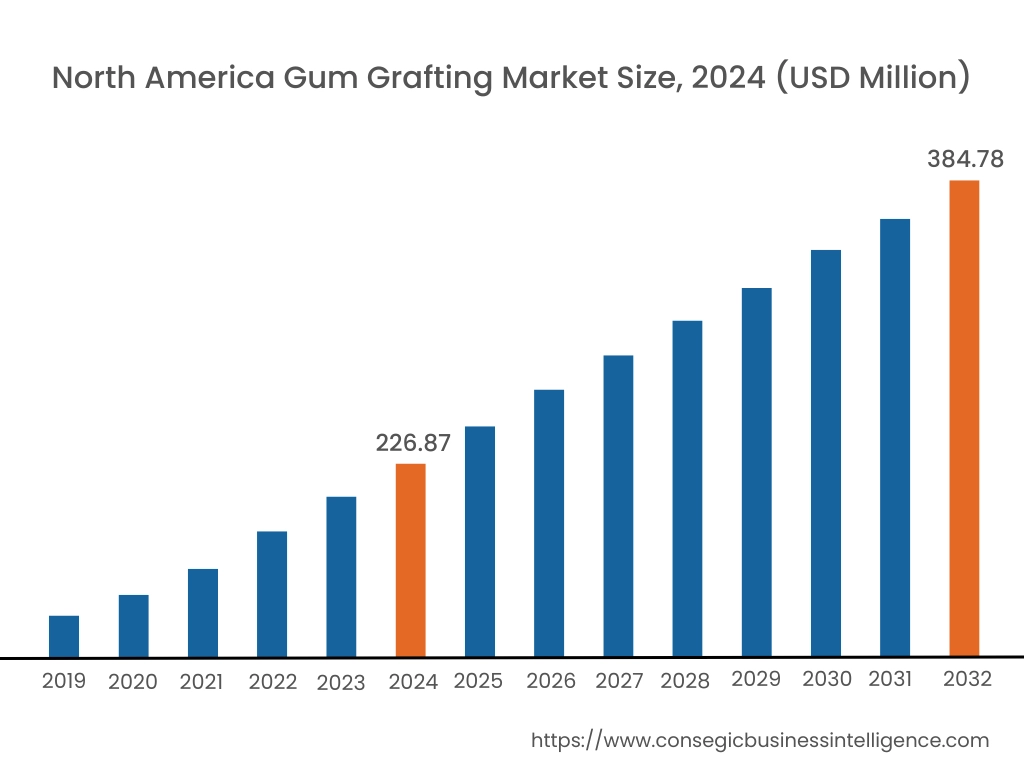
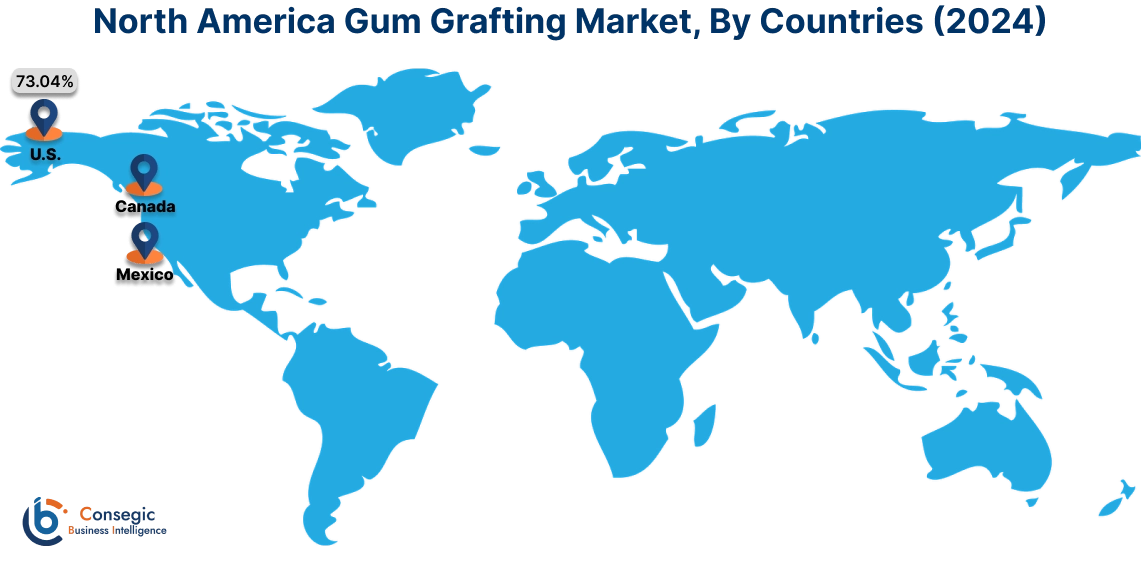
In 2024, North America accounted for the highest market share at 37.72% and was valued at USD 226.87 Million and is expected to reach USD 384.78 Million in 2032. In North America, U.S. accounted for the highest market share of 73.04% during the base year of 2024. North America boasts a highly developed healthcare infrastructure with significant investments in dental care, translating to high healthcare expenditure and increased access to dental services. This robust healthcare infrastructure, equipped with advanced facilities, skilled healthcare professionals, and novel technology, facilitates implementation of gum graft. Furthermore, a strong emphasis on aesthetic dentistry and a growing awareness of the importance of oral health among the population are driving significant requirements for gum graft procedures, thus influencing the rise in dental spending.
- According to American Dental Association (ADA), national dental spending increased by 2.5% from 2022 to 2023.
Thus, based on the gum grafting market analysis, the presence of renowned dental institutions and a high concentration of skilled periodontists further contribute to the robust development of the market in North America
Asia Pacific is experiencing the fastest growth with a CAGR of 9.1% over the forecast period. The Gum Grafting market trend across the region is attributed to factors such as increasing awareness of oral health, rising disposable incomes, and a growing emphasis on aesthetics. The region boasts a large and rapidly growing population with a rising requirement for cosmetic and restorative dental procedures. The increasing prevalence of periodontal diseases, coupled with a growing awareness of the aesthetic and functional benefits of gum graft, is driving market. Furthermore, the growing influence of Western dental practices and the increasing availability of advanced dental technologies in the region are contributing to the adoption of modern gum grafting techniques. Thus, these aforementioned factors are influencing the market.
Europe presents a significant contribution to the Gum Grafting market analysis. The gum grafting market in Europe is a mature market characterized by well-established dental infrastructure and a high level of patient awareness regarding oral health. Europe boasts a strong tradition of advanced dental care, with a significant focus on both functional and aesthetic aspects of oral health. This has led to a high requirement for gum graft procedures to address issues such as gum recession, which affect both oral health and aesthetics. The market is driven by factors such as an aging population with an increased prevalence of periodontal diseases, growing awareness of the importance of oral health, and increasing patient requirement for advanced cosmetic dental procedures. Furthermore, the presence of a strong network of dental clinics, specialized periodontist practices, and well-developed healthcare systems contributes to the development of the market in Europe.
The Middle East and Africa (MEA) regions are witnessing notable Gum Grafting market demand characterized by significant potential. The gum grafting market in the Middle East and Africa regions are characterized by a diverse landscape. While some countries within these regions boast advanced healthcare infrastructure and access to modern dental technology, others face significant challenges in terms of healthcare access and resource availability. The increasing prevalence of periodontal diseases, coupled with the growing emphasis on aesthetics and oral health, is driving the requirement for gum graft procedures in this region. Based on the market analysis, the growing awareness of oral health, increasing disposable incomes, and the development of more affordable and accessible treatment options are expected to drive the development of the market in the Middle East and Africa region in the coming years.
Latin America is an emerging region in the Gum Grafting market share, with significant potential for innovation. While access to healthcare services and advanced dental care varies across the region, the demand for aesthetic dental procedures, including gum grafting, is steadily increasing. Growing awareness of the importance of oral health, coupled with increasing disposable income and a desire for improved aesthetics, are driving this market growth. However, challenges such as uneven access to quality healthcare, limited availability of specialized dental professionals, and economic disparities across different regions hinder market growth in some areas. Based on the market analysis, despite these challenges, the Latin American market presents significant opportunities for growth, driven by increasing demand for cosmetic dental procedures, improving healthcare infrastructure, and the growing presence of international dental tourism.
Top Key Players and Market Share Insights:
The Gum Grafting market is highly competitive with major players providing precise products to the national and international markets. Key players are adopting several strategies in research and development (R&D) and product innovation to hold a strong position in the global Gum Grafting market. Key players in the market include-
- Institut Straumann AG (Switzerland)
- Periodontology, Inc. (United States)
- IndyPerio (United States)
- Marylebone Implant Centre (United Kingdom)
- Marylebone Implant Centre (United States)
- MD Periodontal (United States)
- Zental (United Kingdom)
- Highlands Ranch Periodontics (United States)
- Keystone Periodontal Group (United States)
- Zimmer Biomet Holdings, Inc. (United States)
Gum Grafting Market Report Insights :
| Report Attributes | Report Details |
| Study Timeline | 2019-2032 |
| Market Size in 2032 | USD 1,084.77 Million |
| CAGR (2025-2032) | 7.7% |
| By Type |
|
| By Application |
|
| By End User |
|
| By Region |
|
| Key Players |
|
| North America | U.S. Canada Mexico |
| Europe | U.K. Germany France Spain Italy Russia Benelux Rest of Europe |
| APAC | China South Korea Japan India Australia ASEAN Rest of Asia-Pacific |
| Middle East and Africa | GCC Turkey South Africa Rest of MEA |
| LATAM | Brazil Argentina Chile Rest of LATAM |
| Report Coverage |
|
Key Questions Answered in the Report
How big is the Gum Grafting market? −
In 2024, the Gum Grafting market is USD 601.46 Million.
Which is the fastest-growing region in the Gum Grafting market? +
Asia Pacific is the fastest-growing region in the Gum Grafting market.
What specific segmentation details are covered in the Gum Grafting market? +
Type, Application, and End User segmentation details are covered in the Gum Grafting market.
Who are the major players in the Gum Grafting market? +
Institut Straumann AG (Switzerland), Periodontology, Inc. (United States), and IndyPerio (United States) are some of the major players in the market.
Overview
Reputation & Certifications


Our Services
- Market Intelligence & Forecasting
- Custom Research Solutions
- Market Entry Strategy
- Competitive Intelligence
- Customer Insights
- Industry Innovation Analysis
- Investment Advisory