Jump to Content
Nutrigenomics Market Size & Industry Share - Growth Trends & Forecasts (2026 - 2034)
Nutrigenomics Market Size:
The Nutrigenomics Market is expected to expand from 682.32 (US$M) in 2025 to 780.58 (US$M) in 2026, and is forecast to surpass 2,289.94 (US$M) by 2034, growing at a CAGR of 14.4% between 2026 and 2034, according to a recent report from Consegic Business Intelligence.
Nutrigenomics Market Scope & Overview:
Nutrigenomics is a developing science that focuses on the study of the interaction between nutrition and an individual's genetic makeup to develop personalized dietary recommendations. It combines genomics, nutrition science, and molecular biology to understand how nutrients affect gene expression and how genetic variations influence nutrient metabolism. Key characteristics include the use of genetic testing, biomarker analysis, and advanced molecular techniques to deliver targeted dietary interventions. The benefits of nutrigenomics include improved health outcomes, prevention of chronic diseases, and optimized nutrient absorption based on genetic profiles. Applications span weight management, metabolic health, cardiovascular wellness, and personalized nutrition planning. End-users include research institutions, healthcare providers, nutraceutical companies, and wellness clinics, driven by growing consumer interest in personalized health solutions, advancements in genomic technologies, and the rising prevalence of lifestyle-related disorders.

Nutrigenomics MarketDynamics - (DRO) :
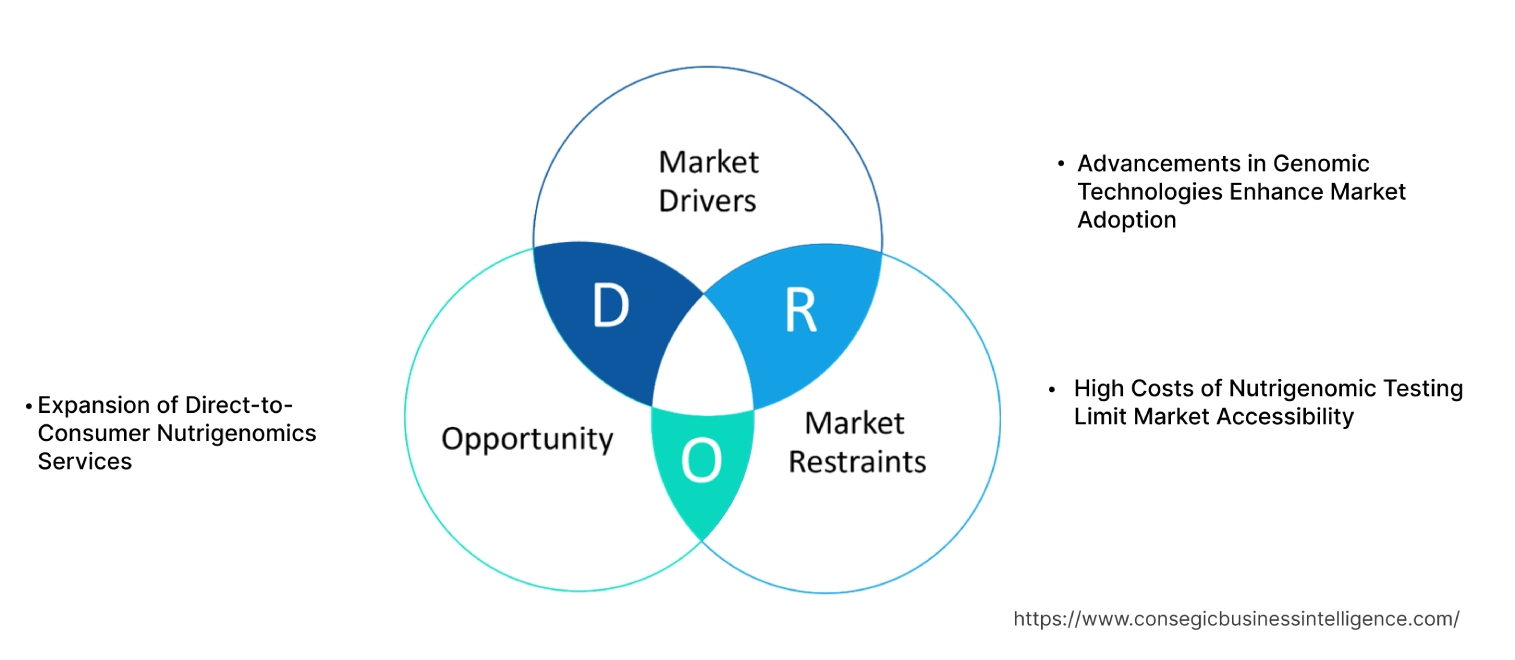
Key Drivers:
Advancements in Genomic Technologies Enhance Market Adoption
The rapid advancements in genomic technologies are significantly driving the adoption of nutrigenomics. Tools such as next-generation sequencing (NGS), single nucleotide polymorphism (SNP) genotyping, and microarray analysis have revolutionized the field by enabling precise and comprehensive genetic profiling. These technologies allow researchers and healthcare providers to analyze an individual’s genetic variations and their interactions with dietary components, offering insights into optimal nutrition plans.
Additionally, the cost of genomic sequencing has declined significantly over the past decade, making genetic testing more affordable and accessible to a broader population creating new nutrigenomics market opportunities. This affordability has expanded the reach of nutrigenomics services beyond research facilities to include clinics, nutritionists, and direct-to-consumer platforms. Integration with artificial intelligence (AI) and machine learning is further enhancing the interpretation of complex genomic data, providing actionable dietary recommendations tailored to individual needs. These advancements are not only improving the accuracy and efficiency of nutrigenomics but also fostering innovation, making personalized nutrition a practical and increasingly sought-after solution.
Key Restraints :
High Costs of Nutrigenomic Testing Limit Market Accessibility
Despite advancements in genomic technologies, the high costs associated with nutrigenomic testing remain a significant barrier to widespread adoption. Comprehensive nutrigenomic services, which include genetic analysis, interpretation of results, and personalized dietary guidance, require advanced equipment and expertise, contributing to their high price. For instance, while the cost of genomic sequencing has decreased, additional steps such as bioinformatics analysis, report generation, and consultation services continue to add to the expense.
Furthermore, the lack of insurance coverage for nutrigenomic testing in many regions exacerbates the financial burden, limiting accessibility for middle- and low-income populations. This disparity is particularly evident in developing countries, where healthcare systems prioritize essential medical services over preventive care and personalized solutions like nutrigenomics. Without affordable options or subsidized services, the market faces challenges in scaling its reach to a wider audience, restraining nutrigenomics market growth in cost-sensitive regions.
Future Opportunities :
Expansion of Direct-to-Consumer Nutrigenomics Services
The emergence of direct-to-consumer (DTC) nutrigenomics platforms is creating a transformative new nutrigenomics market opportunity in the market. DTC companies offer affordable and convenient genetic testing kits, allowing consumers to access personalized nutrition insights without requiring physician referrals or clinic visits. These platforms typically provide users with detailed reports on how their genetic profile influences responses to specific foods, nutrients, and dietary patterns, enabling individuals to make informed choices about their health.
Advances in mobile applications and cloud-based technologies have further enhanced the accessibility and usability of DTC nutrigenomics services. Many companies are integrating AI-driven tools into their platforms to deliver real-time recommendations and progress tracking, fostering greater consumer engagement. For example, users can receive alerts about dietary adjustments based on their genetic predispositions to conditions such as lactose intolerance, gluten sensitivity, or vitamin deficiencies. As consumers increasingly prioritize personalized and preventive healthcare solutions, the growing adoption of DTC nutrigenomics platforms is expected to expand the market’s reach and accelerate surge across diverse demographics.
Nutrigenomics Market Segmental Analysis :
By Product Type:
Based on the product type, the genetic testing kits market is segmented into reagent kits and services.
Reagents and kits have the largest revenue in the nutrigenomics market share in 2023.
- Reagents and kits dominate the market due to their widespread use in diagnostic laboratories, hospitals, and research institutes.
- These kits enable efficient DNA and RNA extraction, amplification, and study, which are critical for applications such as cancer diagnostics and cardiovascular risk assessments.
- Increasing demand for at-home testing kits, advancements in reagent formulations, and the availability of multiplexing kits have further supported this segment's leadership.
- Therefore, reagents and kits lead the nutrigenomics market trends due to their critical role in genetic testing workflows and increasing adoption of home testing solutions.
The services segment accounted for the fastest-growing sub-segment during the forecasted period.
- Services, including genetic counseling, sample processing, and data analysis, are growing rapidly.
- This nutrigenomics market growth is driven by the need for expert interpretation of genetic test results and personalized healthcare recommendations.
- The expansion of direct-to-consumer genetic testing platforms and rising awareness of preventive care are boosting demand for these services.
- Hence, services are expected to grow rapidly, supported by rising trends for consumer demand for expert analysis and personalized healthcare solutions.
By Application:
The market is segmented into obesity, cardiovascular diseases, cancer research, and other applications.
The cancer research segment accounted for the largest revenue share in 2023.
- Cancer research dominates the application segment due to the increasing focus on precision medicine and early diagnostics.
- Genetic testing plays a vital role in identifying cancer predispositions, understanding tumor genomics, and guiding targeted therapies.
- Advancements in next-generation sequencing (NGS) technologies and the growing number of clinical trials focusing on genetic markers drive this segment's dominance.
- Thus, cancer research leads the application segment, driven by its trend for an integral role in precision medicine and advancements in genomic technologies.
The cardiovascular diseases segment accounted for the fastest-growing sub-segment over the forecasted period.
- The cardiovascular diseases segment is experiencing the fastest development due to the rising prevalence of conditions like coronary artery disease and hypertension.
- Genetic testing is being increasingly adopted to assess hereditary risks and tailor preventive measures.
- The development of cardiovascular-specific panels and biomarkers further supports this segment’s advancement.
- Therefore, cardiovascular diseases are expected to grow rapidly, driven by the increasing adoption of genetic testing for risk assessment and preventive strategies.
By Technique:
The market is segmented into buccal swabs, blood, and saliva collection techniques.
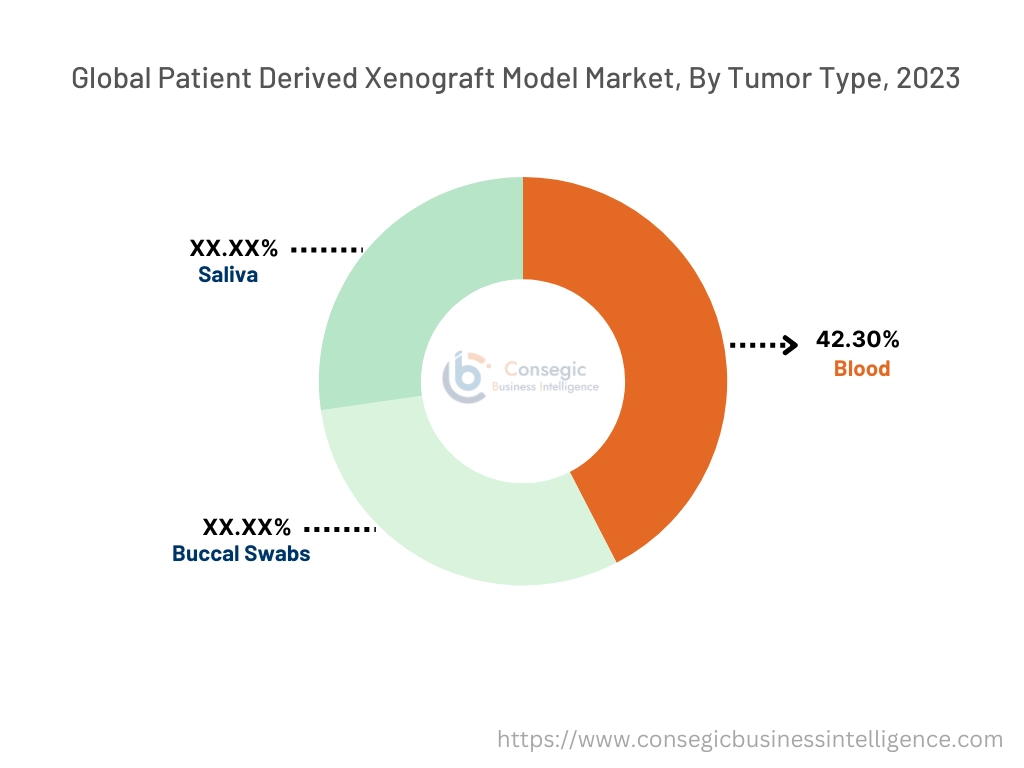
The blood segment has accounted for the largest revenue in the nutrigenomics market share of 42.30% in 2023.
- Blood-based genetic testing dominates due to its reliability, high accuracy, and ability to provide comprehensive genetic information.
- This technique is widely used in clinical diagnostics and research applications, particularly for conditions such as cancer and cardiovascular diseases.
- The integration of blood-based tests in routine healthcare practices and advancements in blood collection technologies support this segment’s leadership.
- Thus, blood collection dominates the market trends due to its reliability and extensive use in clinical diagnostics and research.
The saliva segment accounts for the fastest growing sub-segment over the forecasted period.
- Saliva-based testing is gaining traction due to its non-invasive nature and convenience.
- It is increasingly used in at-home genetic testing kits for ancestry, health risk assessments, and lifestyle recommendations.
- The ease of sample collection and advancements in saliva stabilization technologies are driving this segment’s rapid development.
- Thus, saliva-based genetic testing is expected to grow rapidly, driven by its convenience and rising adoption of at-home testing kits.
By Distribution Channel:
The market is segmented into hospitals & clinics and online platforms.
The Hospitals & Clinics segment accounts for the largest revenue share in 2023.
- Hospitals and clinics remain the primary distribution channel for genetic testing kits due to the demand for physician-supervised testing and access to advanced diagnostic facilities.
- These settings ensure reliable sample handling and accurate results interpretation, making them indispensable for critical diagnostic and preventive care applications.
- Hospitals and clinics dominate the nutrigenomics market trends, driven by their reliability and integration into routine diagnostic workflows.
The Online Platforms segment accounts as the fastest growing sub-segment during the forecasted period.
- Online platforms are witnessing rapid advancement due to the increasing popularity of direct-to-consumer genetic testing kits.
- These platforms provide easy access to a wide range of tests for ancestry, health risks, and lifestyle factors.
- The growing trend of telehealth and the expansion of e-commerce further accelerate this segment's rise.
- Online platforms are expected to grow rapidly, supported by the rising trends for the adoption of direct-to-consumer genetic testing and telehealth services.
Regional Analysis:
The regions covered are North America, Europe, Asia Pacific, the Middle East and Africa, and Latin America.
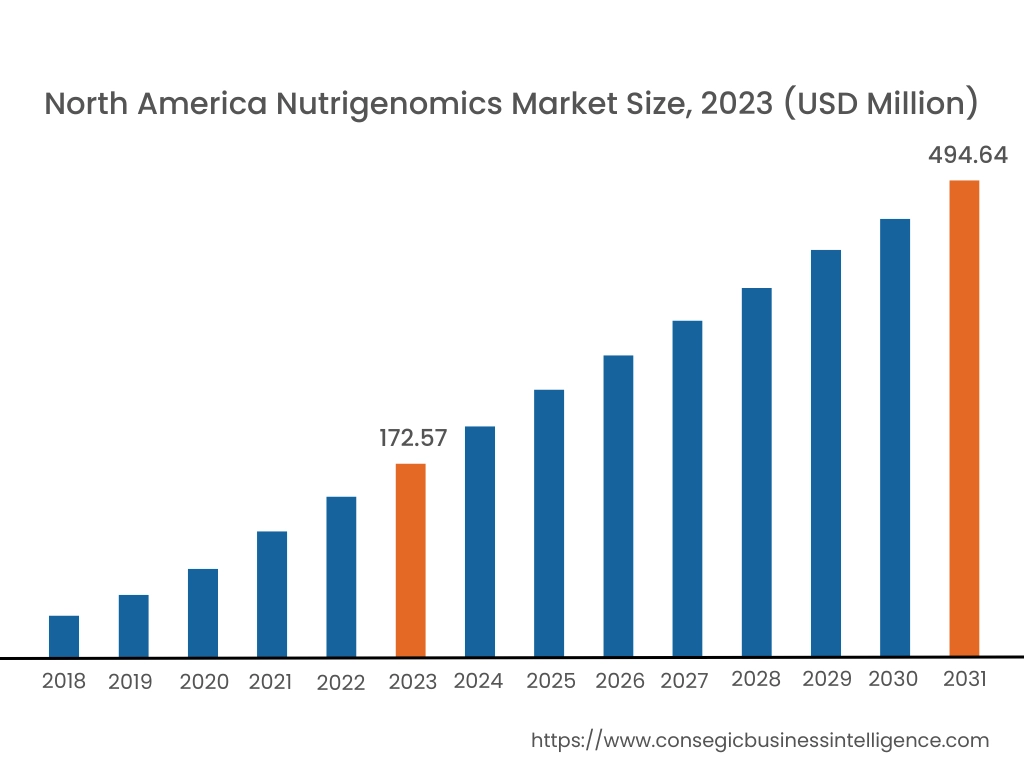
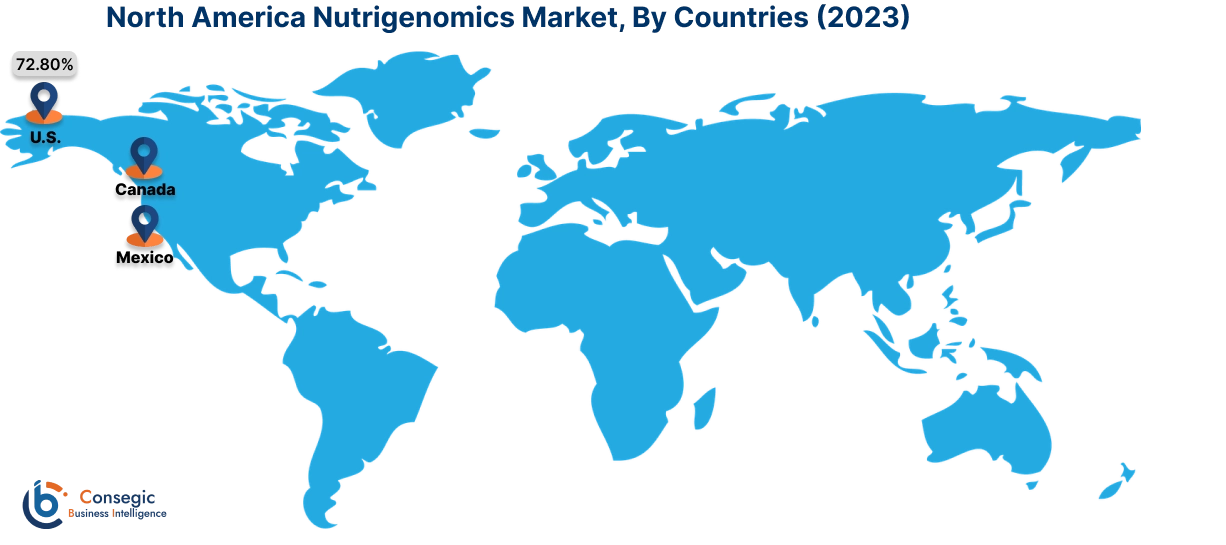
In 2023, North America was valued at USD 172.57 Million and is expected to reach USD 494.64 Million in 2031. In North America, the U.S. accounted for the highest share of 72.80% during the base year of 2023. North America dominates the nutrigenomics market analysis, driven by increasing awareness of personalized nutrition and the prevalence of lifestyle-related diseases such as obesity and diabetes. The U.S. leads the region due to its advanced healthcare infrastructure, high adoption of genetic testing services, and strong presence of nutrigenomics-focused companies. The growing trend of personalized diets based on genetic profiles is supported by collaborations between genetic testing firms and nutrition companies. Canada also contributes to market growth with rising investments in health genomics and personalized medicine initiatives. However, high costs associated with genetic testing and the lack of reimbursement policies can limit broader adoption.
In Asia Pacific, the market is experiencing the fastest growth with a CAGR of 14.8% over the forecast period. Asia-Pacific is the fastest-growing region in the nutrigenomics market analysis depicts, it is fueled by rising health awareness, increasing prevalence of metabolic disorders, and growing investments in genomics research. China leads the region with its rapid adoption of genetic testing services and emphasis on integrating nutrigenomics into preventative healthcare. Japan’s aging population and focus on personalized wellness solutions are driving nutrigenomics market demand in managing age-related health conditions. In India, rising disposable incomes and growing awareness of the link between genetics and nutrition are spurring interest in personalized diets. However, challenges such as limited access to genetic testing services and varying regulatory landscapes across countries hinder rapid growth.
Europe is a significant market for nutrigenomics, driven by a strong interest in precision nutrition and government-backed initiatives supporting genomics research. Countries like Germany, the UK, and France are leading, with high adoption of genetic testing for dietary recommendations and disease prevention. Germany’s focus on integrating nutrigenomics into healthcare systems is driving the nutrigenomics market demand for personalized nutritional solutions. The UK is advancing research in nutrigenomics through collaborations between academia and the food industry, aiming to address health concerns like cardiovascular diseases and obesity. However, challenges such as strict regulatory frameworks and privacy concerns over genetic data may slow nutrigenomics market expansion.
The Middle East & Africa region is witnessing steady growth in the nutrigenomics market, driven by increasing awareness of lifestyle diseases and a growing interest in preventative healthcare. The UAE and Saudi Arabia are focusing on integrating nutrigenomics into wellness programs to combat rising rates of obesity and diabetes. South Africa is also seeing growth in nutrigenomics applications in dietary recommendations for chronic disease management. However, the region faces challenges such as limited public awareness, high costs of genetic testing, and inadequate infrastructure for advanced healthcare services.
Latin America is an emerging market for nutrigenomics, with Brazil and Mexico leading the region. Brazil’s rising focus on health and wellness, coupled with increasing interest in genetic testing for personalized nutrition, is driving market growth. Mexico is adopting nutrigenomics in preventative healthcare to address high rates of obesity and diabetes, supported by collaborations between healthcare providers and nutrition companies. However, economic instability and limited access to advanced genomic technologies pose challenges for nutrigenomics Market expansion in the region.
Top Key Players & Market Share Insights:
The nutrigenomics market is highly competitive with major players providing products and services to the national and international markets. Key players are adopting several strategies in research and development (R&D), product innovation, and end-user launches to hold a strong position in the global nutrigenomics market. Key players in the nutrigenomics industry include -
- 23andMe Inc. (USA)
- Gini Health (USA)
- geneOmbio (India)
- Xcode Life (India)
- Mapmygenome (India)
- DNAfit (UK)
- GX Sciences Inc. (USA)
- Vitagene (USA)
- Nutrigenomix (Canada)
Recent Industry Developments :
Product Launch:
- In June 2022, MEDITECH launched Expanse Genomics, integrating genetic data into EHR workflows for precision medicine. It enables personalized treatments, improves efficiency, and enhances connectivity with labs.
Nutrigenomics Market Report Insights :
| Report Attributes | Report Details |
| Study Timeline | 2021-2034 |
| Market Size in 2034 | USD 2,289.94 Million |
| CAGR (2026-2034) | 14.40% |
| Base Year | 2025 |
| By Product Type |
|
| By Application |
|
| By Technique |
|
| By Distribution Channel |
|
| By Region |
|
| Key Players |
|
| North America | U.S. Canada Mexico |
| Europe | U.K. Germany France Spain Italy Russia Benelux Rest of Europe |
| APAC | China South Korea Japan India Australia ASEAN Rest of Asia-Pacific |
| Middle East and Africa | GCC Turkey South Africa Rest of MEA |
| LATAM | Brazil Argentina Chile Rest of LATAM |
| Report Coverage |
|
Key Questions Answered in the Report
How big is the Nutrigenomics market? −
Nutrigenomics Market size is estimated to reach over USD 1,529.49 Million by 2031 from a value of USD 520.35 Million in 2023 and is projected to grow by USD 586.15 Million in 2024, growing at a CAGR of 14.4% from 2024 to 2031.
What specific segmentation details are covered in the Nutrigenomics Market report? +
The Nutrigenomics market report includes segmentation details for product type (reagents and kits, services), application (obesity, cardiovascular diseases, cancer research, other), technique (buccal swab, blood, saliva), distribution channel (hospitals & clinics, online platforms), and region.
Which is the fastest-growing segment in the Nutrigenomics market? +
The Services segment, particularly genetic counseling, sample processing, and data analysis, is the fastest-growing sub-segment due to increasing consumer demand for expert analysis and personalized healthcare solutions.
Who are the major players in the Nutrigenomics market? +
The major players in the Nutrigenomics market include research institutions, healthcare providers, nutraceutical companies, and wellness clinics, but specific companies are not detailed in the provided data.
What are the key opportunities in the Nutrigenomics market? +
The expansion of direct-to-consumer (DTC) nutrigenomics services offers significant growth opportunities. DTC platforms are enhancing the accessibility of personalized nutrition insights by offering affordable genetic testing kits and integrating advanced technologies like AI-driven recommendations.
Overview
Reputation & Certifications


Our Services
- Market Intelligence & Forecasting
- Custom Research Solutions
- Market Entry Strategy
- Competitive Intelligence
- Customer Insights
- Industry Innovation Analysis
- Investment Advisory