Jump to Content
Hallux Rigidus Market - Size, Share, Industry Trends, and Forecasts (2025-2032)
Hallux Rigidus Market Size:
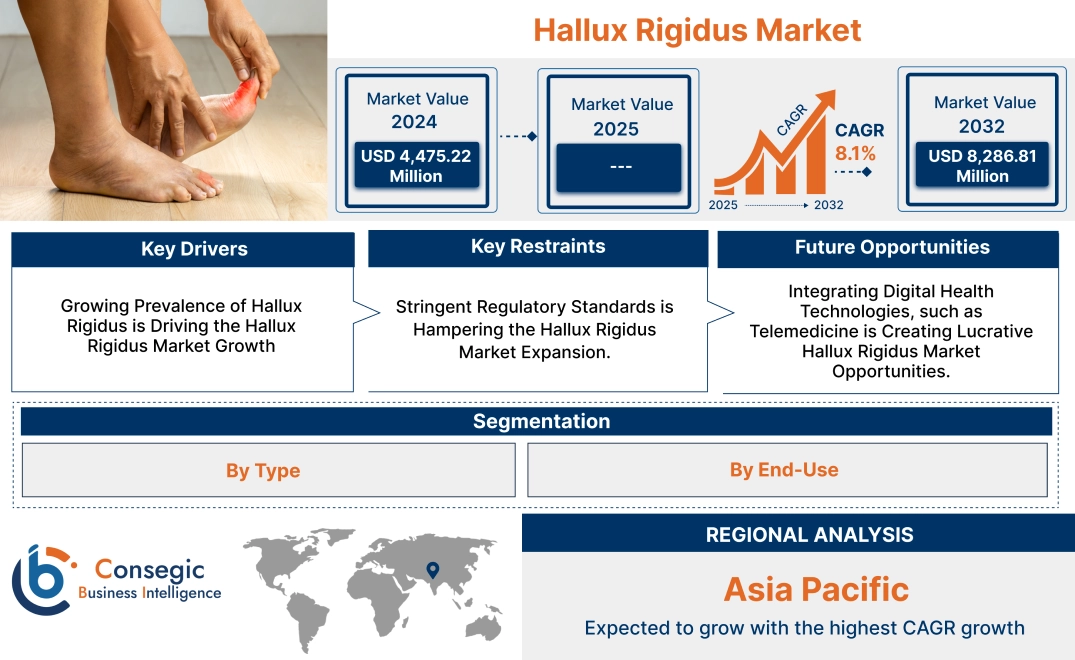
Hallux Rigidus Market size is growing with a CAGR of 8.1% during the forecast period (2025-2032), and the market is projected to be valued at USD 8,286.81 Million by 2032 from USD 4,475.22 Million in 2024.
Hallux Rigidus Market Scope & Overview:
Hallux rigidus (stiff big toe) is a degenerative condition affecting the joint at the base of the big toe (metatarsophalangeal joint). It occurs when cartilage, the smooth tissue that cushions the joint, breaks down, leading to pain, stiffness, and limited range of motion. It develops gradually, often due to repetitive stress and wear and tear on the joint, particularly in individuals who participate in activities that involve significant weight-bearing on the toes, such as running or jumping. Other factors that contribute to the development of this condition include prior injuries to the big toe, certain foot deformities (such as bunions), and underlying medical conditions such as arthritis.
Diagnosis typically involves a physical examination, and imaging studies such as X-rays among others to assess the extent of joint damage. Treatment options include surgical and non-surgical procedures. The end user mainly consists of hospitals, clinics, ambulatory surgical centers, homecare settings, and others.
Hallux Rigidus Market Dynamics - (DRO) :
Key Drivers:
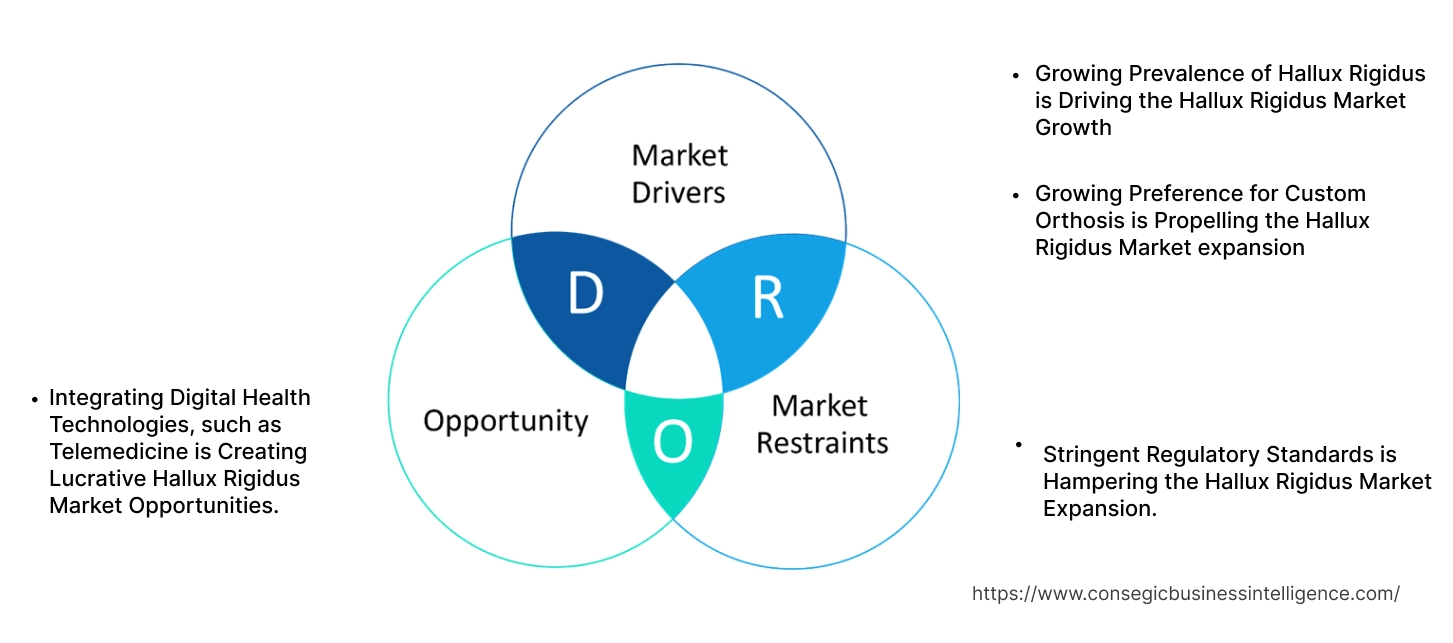
Growing Prevalence of Hallux Rigidus is Driving the Hallux Rigidus Market Growth
The growing prevalence is a significant driver of the Hallux Rigidus market growth. It is a degenerative condition of the big toe joint, is becoming increasingly prevalent due to several factors. The aging population is more susceptible to age-related joint degeneration, a primary cause of this condition. Additionally, lifestyle factors such as obesity and sedentary lifestyles contribute to the development of this condition. Furthermore, the increasing popularity of activities that put significant stress on the feet, such as running and high-impact sports, exacerbate the risk of developing this condition. These factors lead to the prevalence of stiff big toe.
- According to the data published by NCBI, in 2023, states that Hallux rigidus is a prevalent condition, affecting approximately 25% of global patients over 50 years old presenting with foot disorders. In populations with end-stage ankle arthritis, the prevalence of hallux rigidus is as high as 73%, highlighting its significance in foot and ankle pathology.
As the prevalence of this condition continues to rise, the demand for effective treatment options, including both conservative and surgical interventions, is increasing significantly. This growing demand for treatment options is a key driver for the market.
Growing Preference for Custom Orthosis is Propelling the Hallux Rigidus Market expansion
The growing preference for custom orthotics is significantly propelling the expansion of the market. Custom-made orthotics, designed specifically for an individual's foot structure and biomechanics, offer several advantages over off-the-shelf options. They provide superior support and comfort, effectively addressing the unique biomechanical issues associated with stiff big toe, such as altered gait patterns and pressure imbalances. Furthermore, custom orthotics are customized to accommodate individual patient needs and preferences, ensuring optimal fit and function.
- According to the data published by the National Library of Medicine, in 2022, studies have shown a significant proportion of patients with hallux rigidus responded positively to conservative treatment options. Specifically, 47% of patients experienced improvement with the use of custom orthotics alone, while another 10% responded favorably to simple shoe modifications such as wider toe boxes. These findings highlight the effectiveness of conservative management strategies in addressing hallux rigidus and reducing the need for more invasive interventions.
Thus, this increasing preference for personalized solutions is driving demand for podiatric services and specialized orthotic manufacturers, contributing to the growth of the overall market.
Key Restraints:
Stringent Regulatory Standards is Hampering the Hallux Rigidus Market Expansion.
The development of the market is being hindered by stringent regulatory standards governing the development and approval of new medical devices and surgical procedures. These regulations, designed to protect the environment and public health, increase production costs and slow down product development. The regulatory landscape for orthopedic devices is complex and evolving, requiring rigorous clinical trials to demonstrate safety and efficacy. This stringent regulatory environment significantly increases the time and cost associated with bringing new Hallux Rigidus treatments to market.
Moreover, navigating the regulatory hurdles and obtaining necessary approvals are time-consuming and resource-intensive processes for medical device manufacturers. These regulatory factors delay the introduction of innovative solutions for Hallux Rigidus, such as novel implants, minimally invasive surgical techniques, and advanced regenerative therapies, thereby hindering the growth of the overall market.
Future Opportunities :
Integrating Digital Health Technologies, such as Telemedicine is Creating Lucrative Hallux Rigidus Market Opportunities.
The integration of digital health technologies, such as telemedicine, is creating lucrative opportunities within the market. Telemedicine platforms enable remote consultations with podiatrists, facilitating early diagnosis, remote monitoring of patient progress, and access to care for individuals in remote locations. This improves patient outcomes by enabling timely interventions and reducing the need for frequent in-person visits. Furthermore, telemedicine facilitates the dissemination of information and educational resources related to Hallux Rigidus prevention and management, empowering patients to actively participate in their care.
Furthermore, telemedicine platforms facilitate the exchange of patient information, including medical history, images, and treatment responses, between healthcare providers, improving coordination of care and optimizing treatment outcomes.
- In June 2024, Apollo Telehealth's launch of a telemedicine-driven primary health center in India. By leveraging telemedicine technology, the center connects patients with specialists from across India, facilitating timely diagnosis and treatment of various health conditions such as hallux rigidus, including those requiring medications such as non-inflammatory medications. This initiative plays a crucial role in improving health care in the region by enhancing access to specialized expertise and ensuring continuity of care for patients with conditions like stiff big toe.
Thus, the growing adoption of telemedicine, coupled with advancements in digital health technologies, is expected to drive market growth by improving patient access to care, and enhancing treatment outcomes, thus creating lucrative hallux rigidus market opportunities in the coming years.
Hallux Rigidus Market Segmental Analysis :
By Type:
Based on type, the market is categorized into diagnosis and treatment
Trends in the Type:
- Advancements in surgical techniques such as cheilectomy and arthroscopy are gaining popularity for their shorter recovery time
- Rising trends of NSAIDs for pain management is influencing the development of the segment.
The treatment segment accounted for the largest hallux rigidus market share in 2024 and is expected to grow at the fastest CAGR over the forecast period.
- The treatment segment is further classified into surgical and nonsurgical procedures.
- Hallux rigidus, a degenerative condition affecting the big toe joint, is treated through a combination of non-surgical and surgical approaches.
- Non-surgical options often include conservative measures such as pain relievers (like NSAIDs), ice packs, and wearing supportive footwear with wider toe boxes.
- Physical therapy is also beneficial, focusing on improving flexibility, strength, and range of motion in the foot and ankle.
- In cases where conservative measures fail to provide adequate pain relief or improve function, surgical interventions are considered.
- These include procedures such as cheilectomy (removal of bone spurs), arthrodesis (fusion of the big toe joint), and joint replacement, among others.
- Various studies have been initiated to develop advanced treatments for stiff big toes.
- For instance, in 2023, Arugula Sciences received FDA clearance for evaluating SIG002, a perinatal-derived secretome product, for the treatment of patients with symptomatic osteoarthritis of the first metatarsophalangeal joint (hallux rigidus). This open-label, dose-ranging study will assess the safety, tolerability, preliminary efficacy, and dose effect of SIG002 in this patient population.
- Thus, based on the market analysis, these aforementioned factors are influencing the growth of the segment.
By End User:
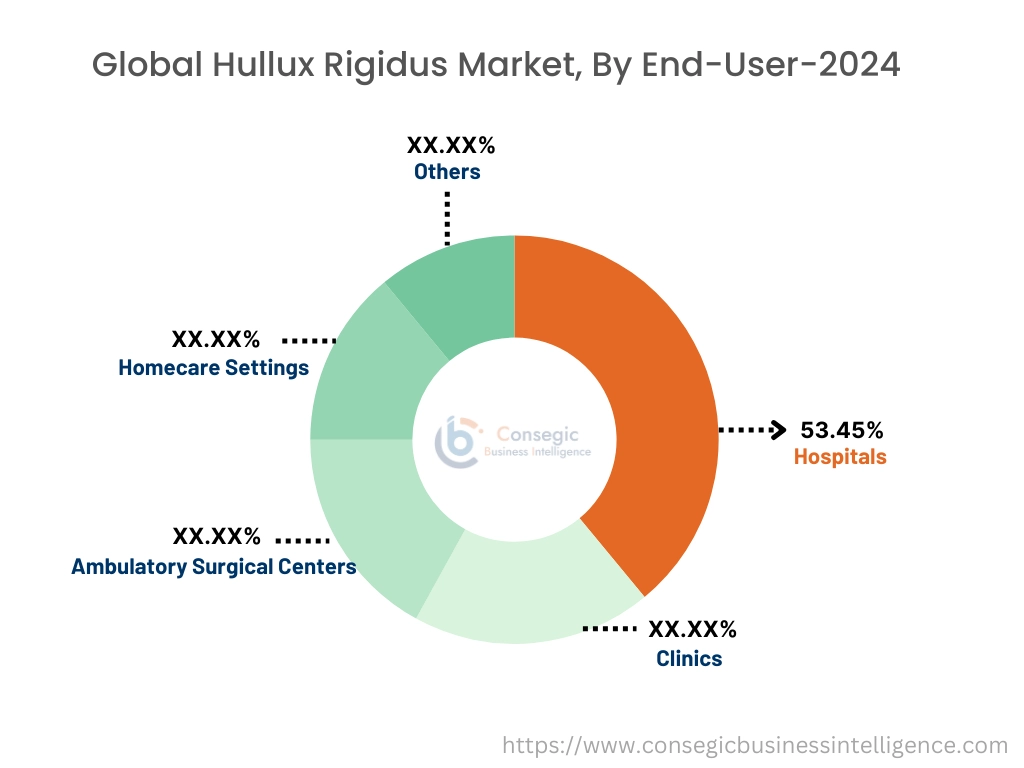
Based on end user, the market is categorized into hospitals, clinics, ambulatory surgical centers, homecare settings, and others.
Trends in the End User:
- Increasing availability of multidisciplinary approaches combined physical therapy and pharmacological solutions.
- Rise in the trend for clinics provide high focus on athletes and physically active individuals with customized rehabilitation programs.
The hospital segment accounted for the largest market share of 53.45% in the year 2024.
- Hospitals constitute a major end-user segment within the Hallux Rigidus market.
- They serve as the primary point of care for diagnosis, treatment, and post-operative management of this condition.
- Hospitals house specialized departments such as podiatry, orthopedics, and pain management, providing comprehensive care for patients with stiff big toe.
- This includes initial consultations, diagnostic procedures (such as X-rays), non-surgical interventions like physical therapy and corticosteroid injections, and surgical procedures such as cheilectomy and arthrodesis.
- Furthermore, hospitals play a crucial role in post-operative care, including pain management, rehabilitation, and monitoring for potential complications.
- New orthopedic hospitals and facilities are introduced to offer advanced diagnosis and treatment for conditions such as stiff big toe.
- For instance, in 2024, West Virginia achieved a significant milestone in healthcare with the official opening of its first dedicated orthopedic hospital in Charleston. It represents a significant advancement in healthcare access for residents suffering from conditions such as stiff big toe. This new facility will provide enhanced access to specialized orthopedic surgeons, state-of-the-art diagnostic equipment, and advanced treatment options, including minimally invasive surgeries, physical therapy, and access to cutting-edge rehabilitation programs.
- Thus, based on the market analysis, the rise in the diagnosis and treatment solutions offered by hospitals is influencing the hallux rigidus market trends.
The homecare settings segment is expected to grow at the fastest CAGR over the forecast period.
- Ambulatory surgical centers (ASCs) are emerging as significant end-users within the Hallux Rigidus market.
- These facilities specialize in providing surgical procedures in an outpatient setting, offering a cost-effective and convenient alternative to traditional hospital settings.
- ASCs are increasingly well-equipped to handle a variety of foot and ankle surgeries, including minimally invasive procedures for stiff big toe such as cheilectomy.
- This shift towards outpatient settings not only reduces healthcare costs but also enhances patient satisfaction by minimizing hospital stays and facilitating faster recovery.
- Based on the market analysis, as ASCs continue to expand their service offerings and invest in advanced technologies, they are poised to play an increasingly important role in the delivery of care for this condition, thus influencing the hallux rigidus market demand and trends in the coming years.
Regional Analysis:
The regional segment includes North America, Europe, Asia Pacific, the Middle East and Africa, and Latin America.
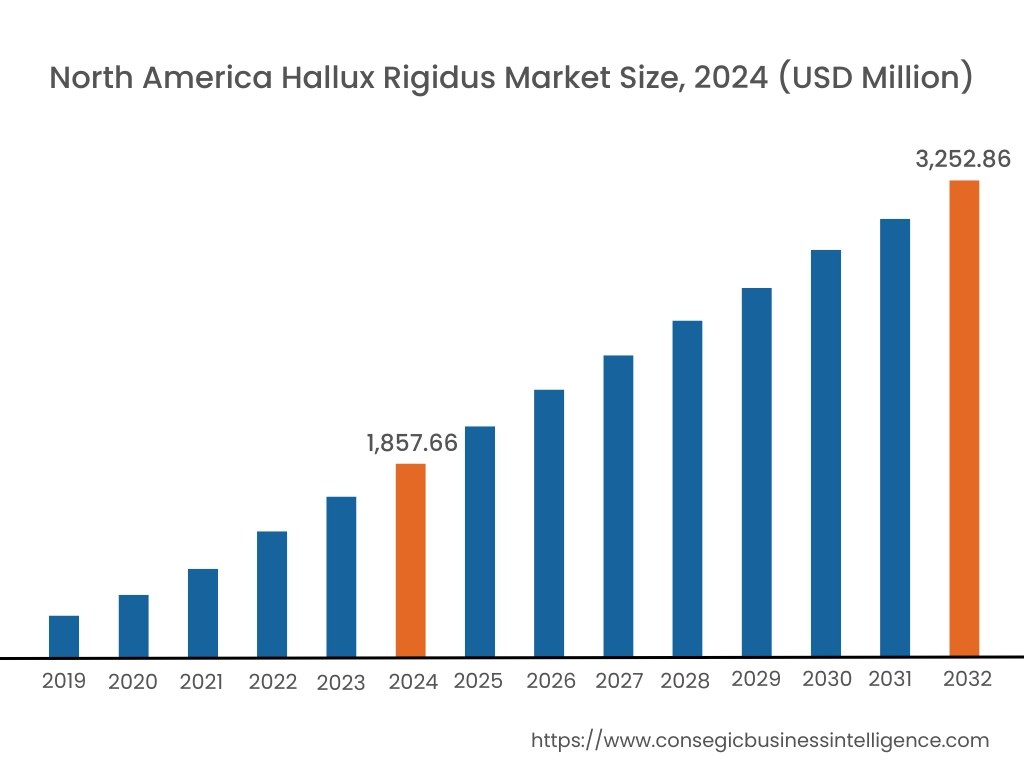
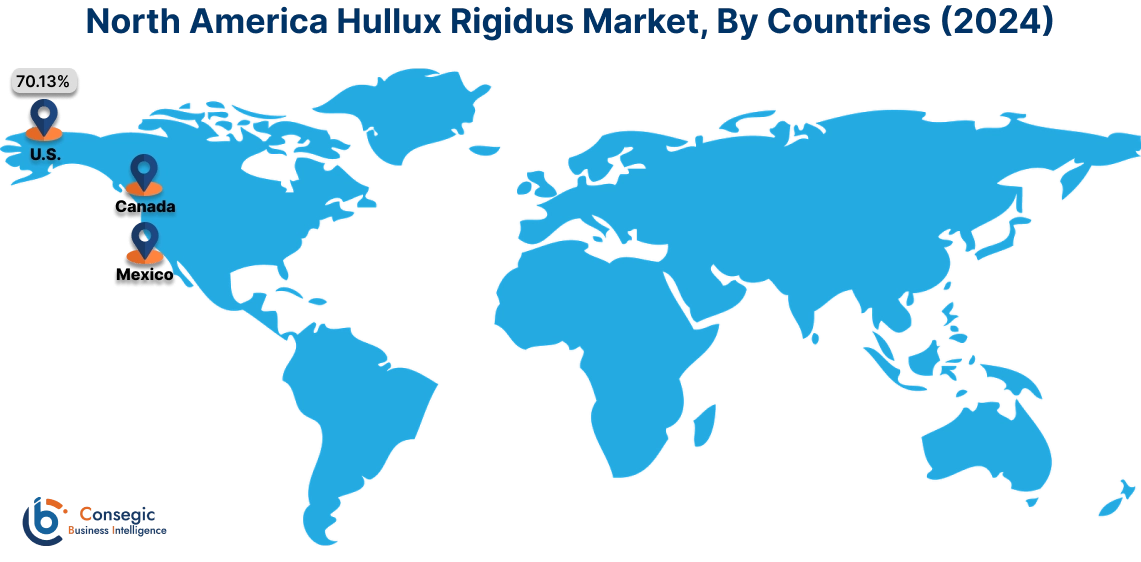
In 2024, North America accounted for the highest market share at 41.51% and was valued at USD 1,857.66 Million and is expected to reach USD 3,252.86 Million in 2032. In North America, U.S. accounted for the highest market share of 70.13% during the base year of 2024. Hallux rigidus is a prevalent condition in North America, significantly impacting the lives of many individuals. It is characterized by the degeneration of the joint at the base of the big toe, causing pain, stiffness, and limited mobility. The aging population within North America, coupled with increasingly sedentary lifestyles and a growing prevalence of obesity, contributes to the rising incidence of stiff big toe. In North America, the diagnosis and treatment of a stiff big toe are typically managed within a well-established healthcare system. Hospitals and clinics in this region offer comprehensive care, often utilizing advanced diagnostic tools like X-rays to assess the extent of the toe damage. The introduction of new hospitals in the region provides an effective diagnosis of these conditions.
For instance,
- In September 2024, HSS Orthopedics with Stamford Health expanded its reach with the opening of a new outpatient center in Westport. This collaboration between the renowned Hospital for Special Surgery and Stamford Health brings world-class orthopedic care closer to the Westport community. The new center will offer a range of services, including consultations, diagnostic procedures, and physical therapy, providing convenient access to expert care for patients suffering from stiff big toe and other conditions.
Thus, as per the hallux rigidus market analysis, the aforementioned factors are driving the trends of the market in this region.
Asia Pacific is experiencing the fastest growth with a CAGR of 9.6% over the forecast period. Hallux rigidus, a degenerative condition of the big toe joint, is prevalent throughout the Asia-Pacific region. Factors contributing to its rise include increasing life expectancy, leading to a larger elderly population susceptible to age-related joint degeneration. Changing lifestyles, including a rise in sedentary behavior and a shift towards more urbanized environments, also play a role. Furthermore, cultural factors, such as traditional footwear choices that are not adequately support the feet, contribute to the development of stiff big toe in certain Asian populations. Diagnosis often relies on a combination of physical examination, patient history, and imaging studies like X-rays. However, access to advanced diagnostic tools and specialized podiatrists vary across the region. Treatment approaches typically include conservative measures like shoe modifications, orthotics, and physical therapy. Surgical interventions, such as cheilectomy and arthrodesis, are also considered, though access to specialized surgical facilities and skilled surgeons vary across different countries.
Europe makes a significant contribution to the Hallux Rigidus market analysis. Stiff big toe in Europe is characterized by a focus on evidence-based medicine and a multidisciplinary approach to treatment. Diagnosis typically involves a thorough physical examination, patient history, and imaging studies like X-rays. Treatment often begins with conservative measures such as shoe modifications, orthotics, and physical therapy. When conservative measures fail to provide adequate relief, surgical interventions, including cheilectomy and arthrodesis, are considered. The European healthcare industry emphasizes value-based care and cost-effectiveness, which influences the selection and utilization of different treatment options for stiff big toe. Medications like NSAIDs are used to manage pain and inflammation. Minimally invasive procedures, such as arthroscopy, are considered when conservative measures fail to provide adequate relief. The availability of high-quality healthcare industry and access to specialized orthopedic care across many European countries ensures that patients have access to effective diagnosis and treatment options for this condition, thus driving the hallux rigidus market trends in this region.
The Middle East and Africa (MEA) regions are witnessing notable Hallux Rigidus market demand characterized by significant potential. Factors like cultural practices, footwear choices (e.g., traditional footwear), and varying levels of healthcare access influence the presentation and management of this condition. Limited access to specialized podiatrists and advanced diagnostic imaging in some regions hinder early diagnosis and appropriate treatment. Furthermore, cultural factors influence patient preferences for conservative versus surgical interventions. Addressing these disparities in healthcare industries and ensuring equitable access to quality care are crucial for effective management of these conditions in this region. Based on the market analysis, as healthcare industries improve and disposable incomes rise, particularly in the Middle East, the demand for effective stiff big toe treatment options, such as advanced diagnostic techniques, minimally invasive surgeries, and specialized rehabilitation programs, is expected to increase steadily.
Latin America is an emerging region in the Hallux Rigidus market share, with significant potential for innovation. Factors like lifestyle changes, increased physical activity, and an aging population are likely contributing to its rise. Access to quality healthcare, including specialized podiatric care, vary significantly across different countries. Furthermore, the availability and affordability of treatment options, including both conservative measures and surgical interventions, vary across the region. While advancements in minimally invasive surgical techniques and the availability of newer technologies offer hope for improved outcomes, access to these resources is limited in certain areas. Despite these challenges, there is a growing awareness of foot and ankle conditions in Latin America, and efforts are being made to improve access to quality healthcare and enhance the availability of specialized podiatric care.
Top Key Players and Market Share Insights:
The Hallux Rigidus market is highly competitive with major players providing precise products to the national and international markets. Key players are adopting several strategies in research and development (R&D) and product innovation to hold a strong position in the global Hallux Rigidus market. Key players in the market include-
- BioPro, Inc (United States)
- KevinRoot Medical (United States)
- Nordorthopaedics clinic (United Kingdom)
- Smith+Nephew, Inc.(United Kingdom)
- Integra LifeSciences (United States)
- Stryker (United States)
- Alberta Association of Orthotists and Prosthetists (Canada)
- Anika Therapeutics, Inc (India)
- Hughston Clinic (United States)
- Buchanan Orthotics (United Kingdom)
Hallux Rigidus Market Report Insights :
| Report Attributes | Report Details |
| Study Timeline | 2019-2032 |
| Market Size in 2032 | USD 8,286.81 Million |
| CAGR (2025-2032) | 8.1% |
| By Type |
|
| By End User |
|
| By Region |
|
| Key Players |
|
| North America | U.S. Canada Mexico |
| Europe | U.K. Germany France Spain Italy Russia Benelux Rest of Europe |
| APAC | China South Korea Japan India Australia ASEAN Rest of Asia-Pacific |
| Middle East and Africa | GCC Turkey South Africa Rest of MEA |
| LATAM | Brazil Argentina Chile Rest of LATAM |
| Report Coverage |
|
Key Questions Answered in the Report
How big is the Hallux Rigidus market? −
In 2024, the Hallux Rigidus market is USD 4,475.22 Million.
Which is the fastest-growing region in the Hallux Rigidus market? +
Asia Pacific is the fastest-growing region in the Hallux Rigidus market.
What specific segmentation details are covered in the Hallux Rigidus market? +
Type, and End User segmentation details are covered in the Hallux Rigidus market.
Who are the major players in the Hallux Rigidus market? +
BioPro, Inc (United States), KevinRoot Medical (United States), and Stryker (United States) are some of the major players in the market.
Overview
Reputation & Certifications


Our Services
- Market Intelligence & Forecasting
- Custom Research Solutions
- Market Entry Strategy
- Competitive Intelligence
- Customer Insights
- Industry Innovation Analysis
- Investment Advisory