Jump to Content
Hearing Aids Market - Size, Share, Industry Trends, and Forecasts (2024 - 2031)
Hearing Aids Market Size:
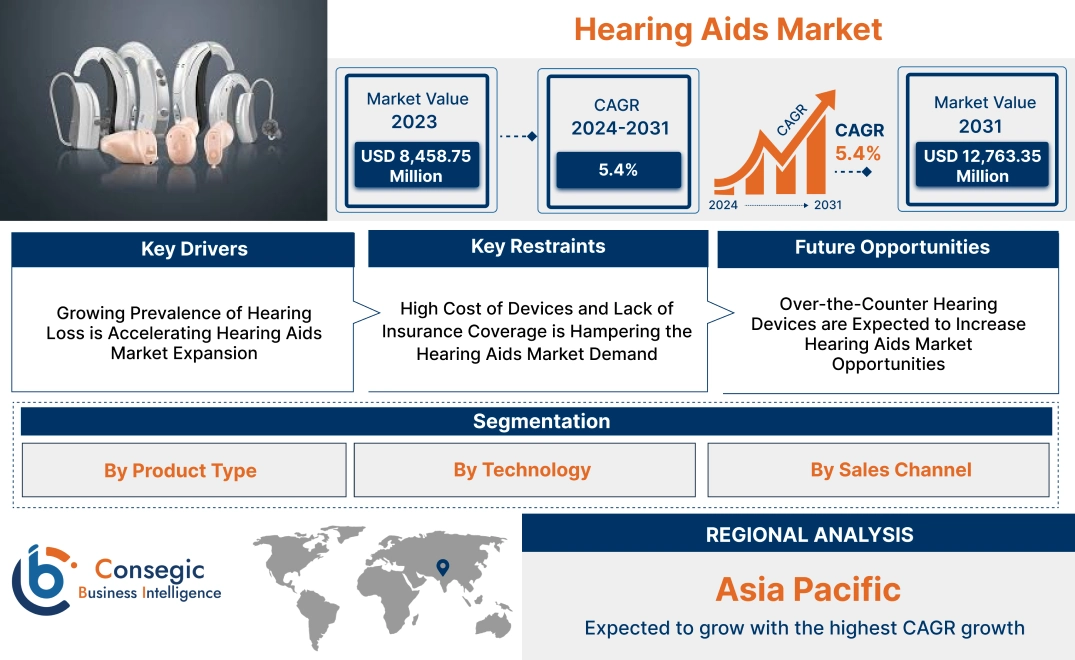
Hearing Aids Market size is growing with a CAGR of 5.4% during the forecast period (2024-2031), and the market is projected to be valued at USD 12,763.35 Million by 2031 from USD 8,458.75 Million in 2023.
Hearing Aids Market Scope & Overview:
Hearing aids, also known as hearing devices, are electronic devices designed to amplify sound for individuals with hearing loss. They consist of a microphone, amplifier, and speaker, improving speech understanding and communication in various environments. There are various types of these devices, including behind-the-ear (BTE), in-the-ear (ITE), receiver-in-canal (RIC), and completely-in-canal (CIC) amongst others. The choice of the device depends on factors such as the degree of hearing loss, lifestyle, and personal preference. These aids pick up sound through a microphone, amplify it using a processor, and deliver it to the ear via a speaker. Advanced models filter background noise, enhance speech clarity, and offer wireless connectivity. Benefits include improved communication, reduced social isolation, and improved quality of life.
How is AI Impacting the Hearing Aids Market?
AI is revolutionizing the hearing aids market by significantly enhancing device functionality and user experience. AI-powered hearing aids offer personalized sound processing, automatic adjustments, and improved noise reduction, leading to better speech understanding and reduced listening effort. Furthermore, AI is enabling remote audiology services, earlier detection of hearing loss, and better integration with other smart devices. Also, AI-powered hearing aids automatically adjust settings in real-time based on the surrounding environment, improving speech clarity and reducing background noise.
Hearing Aids MarketDynamics - (DRO) :
Key Drivers:
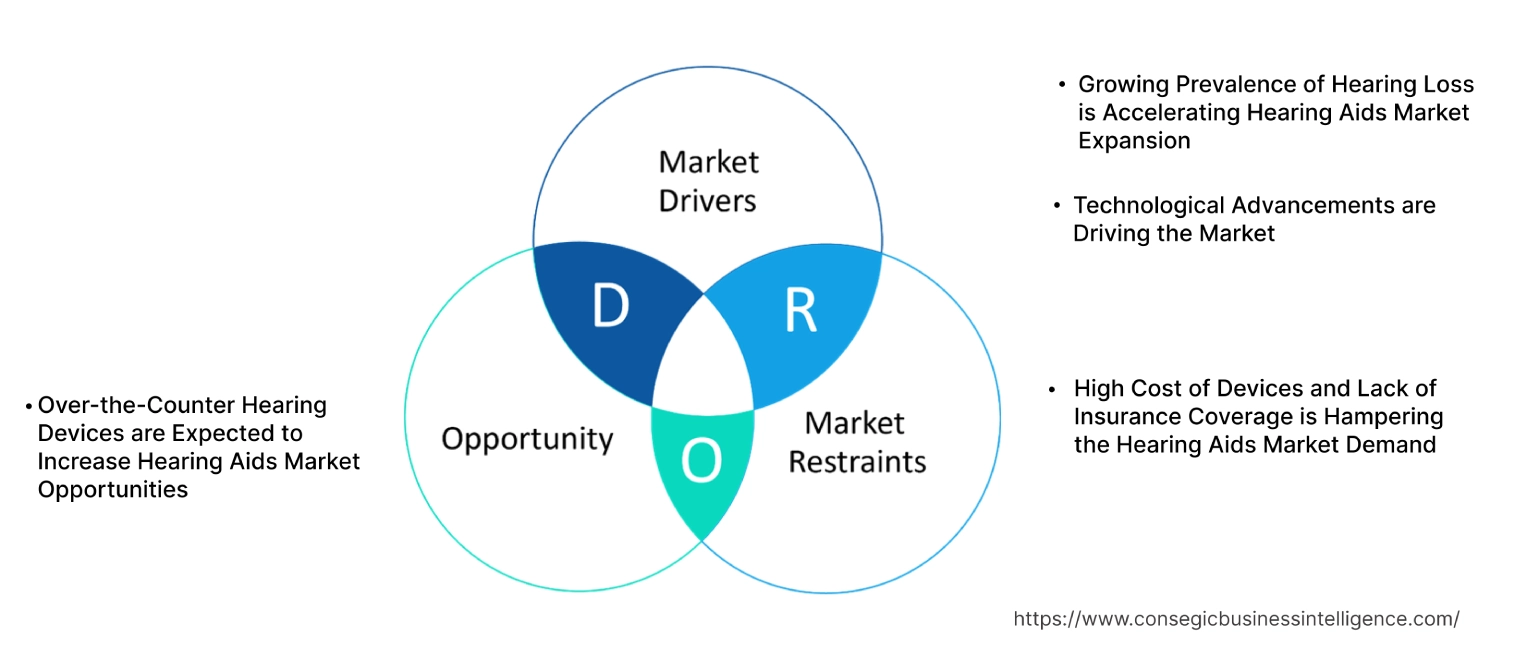
Growing Prevalence of Hearing Loss is Accelerating Hearing Aids Market Expansion
Hearing loss is when someone is unable to hear as well as someone with normal hearing, which is defined as having hearing thresholds of 20 decibels (dB) or better in both ears. It results from aging, noise exposure, infections, or genetic factors. Types include conductive, sensorineural, and mixed hearing loss, impacting communication, social interaction, and overall quality of life.
Hearing aids amplify sound, improving the ability to hear and communicate effectively. They enhance speech clarity, especially in noisy environments, and reduce the effort required to listen, minimizing mental fatigue. These devices improve social interactions, overall well-being, and confidence by reconnecting individuals with their surroundings. Additionally, these devices slow cognitive decline linked to untreated hearing loss, ensuring a higher quality of life. Aging populations, exposure to loud noise, certain medications, and underlying health conditions have contributed to the rising number of individuals experiencing hearing loss.
- For instance, according to an article published by Hear World Communications, a company that specializes in providing hearing assistive technology, in 2023, hearing impairment impacts approximately 60.7 million Americans aged 12 and above. Roughly 15.5% (44.1 million) of American adults aged 20 and over experience varying degrees of hearing loss. This has required an increased need for hearing devices to cater to the diverse needs of this expanding population.
Overall, the increasing prevalence of hearing loss is significantly boosting the hearing aids market expansion.
Technological Advancements are Driving the Market.
Modern hearing devices have undergone significant technological advancements, offering enhanced features and improved user experience. One key innovation is the incorporation of Bluetooth connectivity. This feature enables hearing devices to connect seamlessly with smartphones, televisions, and other devices, allowing users to stream audio directly to their hearing devices.
- For instance, in September 2023, GN Hearing launched its latest generation of hearing devices, named ReSound Nexia. ReSound Nexia is compatible with Bluetooth LE Audio and incorporates Auracast broadcast audio, representing the next frontier of low-energy connectivity, which provides users with enhanced streaming and communication prospects in public venues such as theaters, airports, restaurants, and arenas. These innovations continue to improve user experience, leading to increased usage, and positively influencing hearing aids market trends.
Moreover, artificial intelligence (AI) has also made its way into hearing devices, allowing for adaptive learning. AI-powered devices analyze soundscapes and adjust settings automatically to suit different environments, such as crowded spaces. Additionally, some hearing devices now include health monitoring features, such as tracking heart rate, broadening their functionality beyond hearing enhancement.
Overall, technological advancements such as Bluetooth connectivity and artificial intelligence amongst others are playing a crucial role in accelerating the global hearing aids market growth.
Key Restraints :
High Cost of Devices and Lack of Insurance Coverage is Hampering the Hearing Aids Market Demand
There is low adoption of hearing devices amongst patients, which refers to a situation where a significant portion of people who have diagnosable hearing loss choose not to use hearing devices. One primary reason for not using it is the high cost. Advanced technology, research costs, and the cost of manufacturing materials such as microphones and microprocessors make it expensive. Moreover, customizing hearing devices to fit a person's ear also increases the cost. The average cost of a single hearing aid ranges from USD 1,000 to USD 4,000, and many users require two devices. These costs include not only the device itself but also fittings, consultations, and follow-up care, which further increase the financial burden.
Another restraint in the market is the limited insurance coverage for these devices. While some insurance plans provide partial coverage, many exclude hearing devices entirely. This places the full financial burden on consumers, making them less likely to invest in these devices. For instance, in the U.S., Medicare typically does not cover hearing aids, leaving millions of seniors without financial assistance, further hampering hearing aids market trends. Overall, analysis shows that the high cost of hearing devices and limited insurance coverage is hindering the hearing aids market demand.
Future Opportunities :
Over-the-Counter Hearing Devices are Expected to Increase Hearing Aids Market Opportunities
The inconvenience of scheduling appointments with audiologists is the primary driver of over-the-counter hearing devices. The lengthy process of audiologist consultations and fittings discourages timely intervention of hearing loss. All these factors, combined with the need for a more affordable, accessible, and user-friendly solution, have led the government and manufacturers to focus on this mode.
- For instance, in August 2024, Sony Electronics, in partnership with WSA, introduced a new OTC hearing aid aimed at adults experiencing mild to moderate hearing loss, boasting state-of-the-art sound technology, a personalized user experience, and the ease of rechargeable functionality. Thus, this will allow increased availability of hearing devices to patients, creating lucrative hearing aids market opportunities in the upcoming years.
OTC hearing devices are cost-effective, easily accessible, and empower individuals to manage mild to moderate hearing loss independently. They reduce the need for professional consultations, offering convenience and time savings. Designed for self-fitting, OTC devices enhance accessibility, promote early intervention, and improve quality of life for a wider audience.
Overall, the introduction of OTC hearing devices addresses the unmet need for affordable and accessible hearing solutions, creating the potential for industry.
Hearing Aids Market Segmental Analysis :
By Product Type:
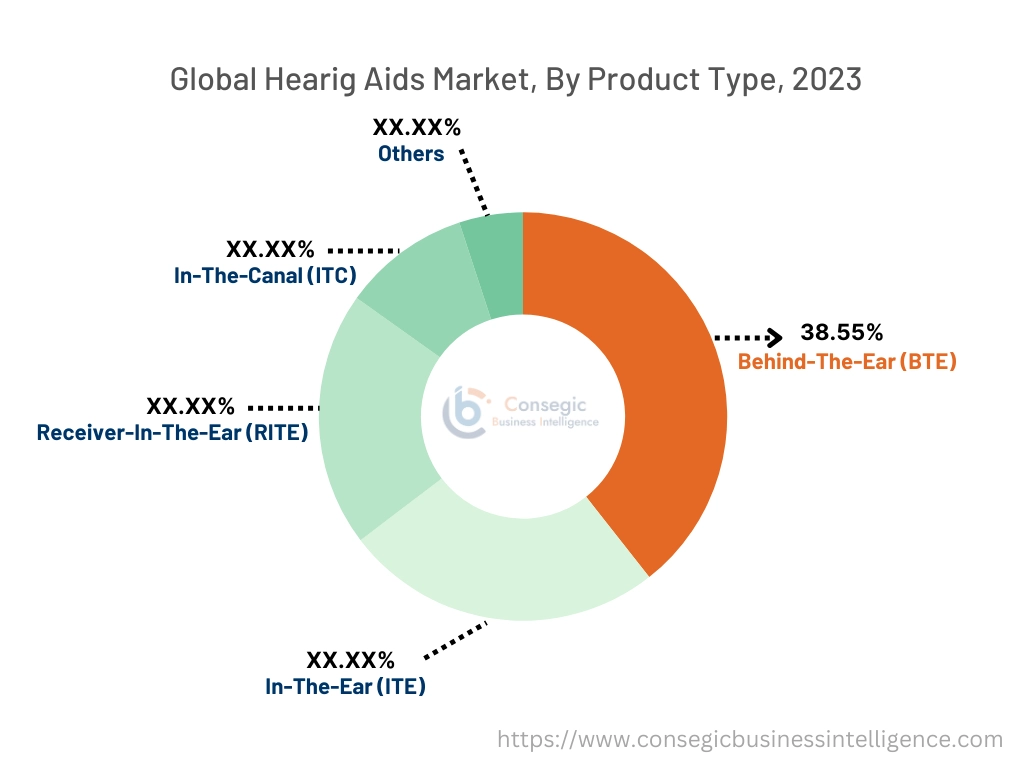
Based on product type, the market is categorized into behind-the-ear (BTE), in-the-ear (ITE), receiver-in-the-ear (RITE), in-the-canal (ITC), and others.
Trends in the Product Type:
- Miniaturization across all types influences the market.
- Hearing devices with rechargeable batteries gain traction, reducing maintenance.
The behind-the-ear (BTE) segment accounted for the largest market share of 38.55% in 2023.
- Behind-the-ear (BTE) hearing devices are a popular type of hearing device that consists of two main parts. A small case sits behind the ear and a thin tube connects to an earmold that fits inside the ear canal.
- They are suitable for people of all ages and almost any type of hearing loss, from mild to profound. They are robust and withstand daily wear and tear.
- Moreover, these devices are easier to handle, insert, and adjust than other types of hearing devices. They are also easier to fit and remove, and cleaning is straightforward. The rising geriatric population and advancements in technology are driving the segment.
- For instance, in October 2024, Unitron launched Stride V-M. This is the smallest and most lightweight behind-the-ear (BTE) option, making it a perfect selection for style-conscious consumers preferring comfort. This has led to increased usage among younger demographics, driving the segment.
- Overall, rising geriatric demographics globally and technological advancements are driving the segment.
The receiver-in-the-ear (RITE) segment is expected to grow at the fastest CAGR over the forecast period.
- Receiver-in-ear (RITE) hearing devices offer a discreet and effective solution for individuals with hearing loss. This technology separates the receiver (speaker) from the main casing, making it a more compact and less visible device.
- The main shell, typically smaller than traditional behind-the-ear (BTE) models, houses essential components such as the microphone, amplifier, and battery. The receiver, connected to the shell via a thin wire, is positioned directly in the ear canal, providing a more natural sound experience.
- One of the significant advantages of RITE hearing devices is their open-fit design. This allows for better airflow and reduces the feeling of occlusion, leading to improved sound quality and voice perception. Additionally, RITE devices are highly customizable, with various receiver and dome options to cater to different hearing loss levels and ear canal shapes. This flexibility ensures optimal fitness and performance.
- As per the market research analysis, the segment of receiver-in-ear (RITE) for the upcoming years is driven by the consumer preference for aesthetically pleasing and comfortable hearing solutions, as well as the growing awareness of the benefits of early intervention.
By Technology:
Based on the technology, the market is categorized into analog and digital.
Trends in the Technology:
- Artificial intelligence (AI) enables personalized listening experiences and automatic adjustments.
- Focus on tinnitus relief features in digital hearing devices.
The digital segment accounted for the largest market share in 2023, and it is expected to grow at the fastest CAGR over the forecast period.
- Digital hearing devices are the most common type of hearing devices and are designed to improve hearing in a variety of situations. Digital hearing devices use microchips to analyze sound and convert it into digital signals, which are then processed more complexly than analog hearing aids. This allows them to separate speech from background noise and produce a cleaner sound.
- Digital hearing devices are programmed to an individual's specific hearing loss and listening environment. They also have multiple programs for different situations. They are programmed with different settings for various listening environments, such as noisy restaurants or quiet one-on-one conversations.
- Additionally, many modern digital hearing devices are Bluetooth-enabled, allowing users to stream audio directly from their smartphones or other devices. Also, modern digital hearing devices boast smaller and sleeker designs. Strategic partnerships between hearing aid manufacturers to solve the existing challenges are influencing segment growth.
- For instance, in July 2024, Oticon and the Audiology Division of Henry Ford Health initiated a clinical research collaboration aimed at enhancing hearing device fittings and the overall user experience. This will expand the market reach while improving accessibility.
- Overall, as per the market research analysis, digital hearing aids, with their advanced features, customization options, and sleek designs, continue to dominate the market, driven by technological advancements and strategic partnerships, thus driving segmental growth in the hearing aids industry.
By Sales Channel:
The sales channel segment is categorized into hospital pharmacies, retail pharmacies, and online pharmacies.
Trends in Sales Channel:
- E-commerce platforms are expanding their hearing device offerings, attracting a wider audience.
- Subscription-based models are gaining traction, offering flexible payment options and device upgrades.
The hospital pharmacies segment accounted for the largest market share in 2023.
- Hospital pharmacies are dominating due to several trends. Hearing aids are prescribed or recommended following comprehensive audiological assessments performed in hospitals or specialized clinics. This ensures that patients receive devices tailored to their specific hearing loss, lifestyle, and medical needs, making hospital pharmacies a trusted choice.
- Additionally, hospital pharmacies provide access to expert advice and support. Audiologists and hearing care professionals work closely with these pharmacies to guide patients through the selection process, fitting, and post-purchase adjustments.
- Patients prefer purchasing from hospitals to avoid counterfeit products, especially in markets where counterfeit devices are prevalent.
- The rising prevalence of hearing loss in children and the aging population is a significant driver of the segment.
- For instance, according to an article published by the World Health Organization (WHO), in 2024, around 30% of individuals aged 60 and above experience hearing loss. As people age, their hearing loss increases, driving the demand for hearing devices from hospital pharmacies.
- Overall, the market research analysis indicates that the rising geriatric population globally is a driving segment in the hearing aids market growth.
The retail pharmacies segment is expected to grow at the fastest CAGR over the forecast period.
- Retail pharmacies are standalone or chain-operated stores that sell a variety of healthcare products, including prescription and over-the-counter medicines and medical devices, including hearing devices.
- Retail pharmacies are emerging in the market due to their increasing ability to serve a broader customer base as they are located in easily accessible locations such as shopping malls and grocery stores.
- Additionally, retail pharmacies offer extended hours and accessibility, making them a convenient choice for customers seeking quick purchases without scheduling a hospital visit.
- Furthermore, established retail pharmacy chains have strong brand recognition and customer loyalty, which contributes to their growth and success.
- The rise of OTC hearing devices, particularly following FDA approval will drive the segment in the market for the upcoming years.
Regional Analysis:
The regional segment includes North America, Europe, Asia Pacific, the Middle East and Africa, and Latin America.
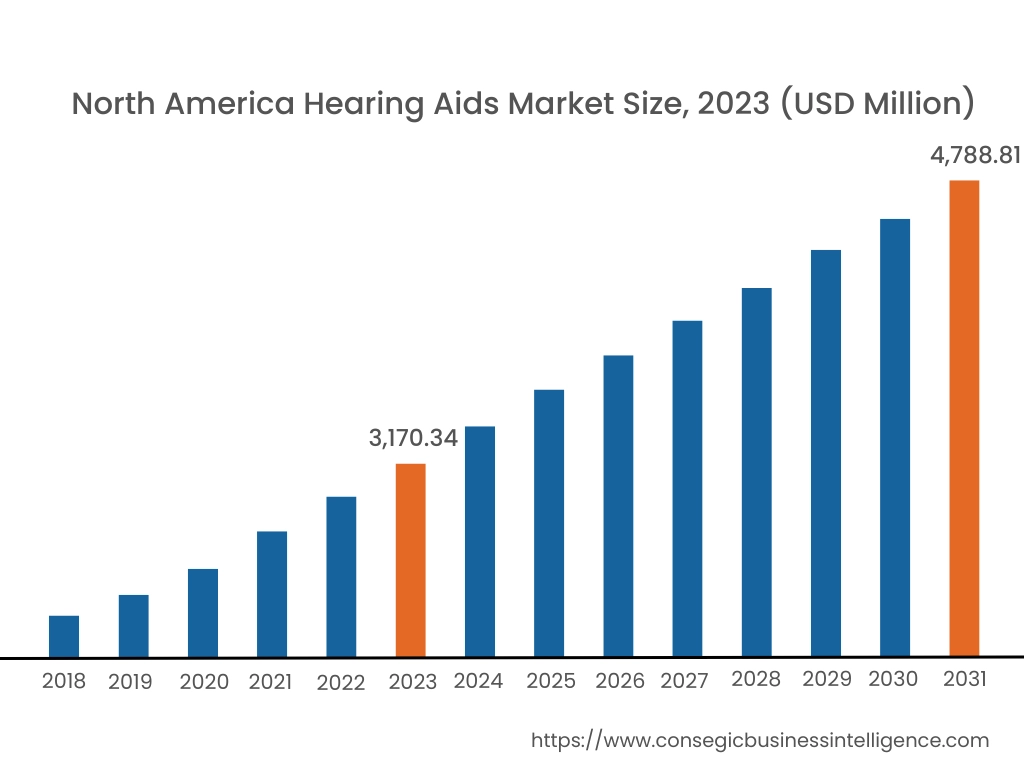
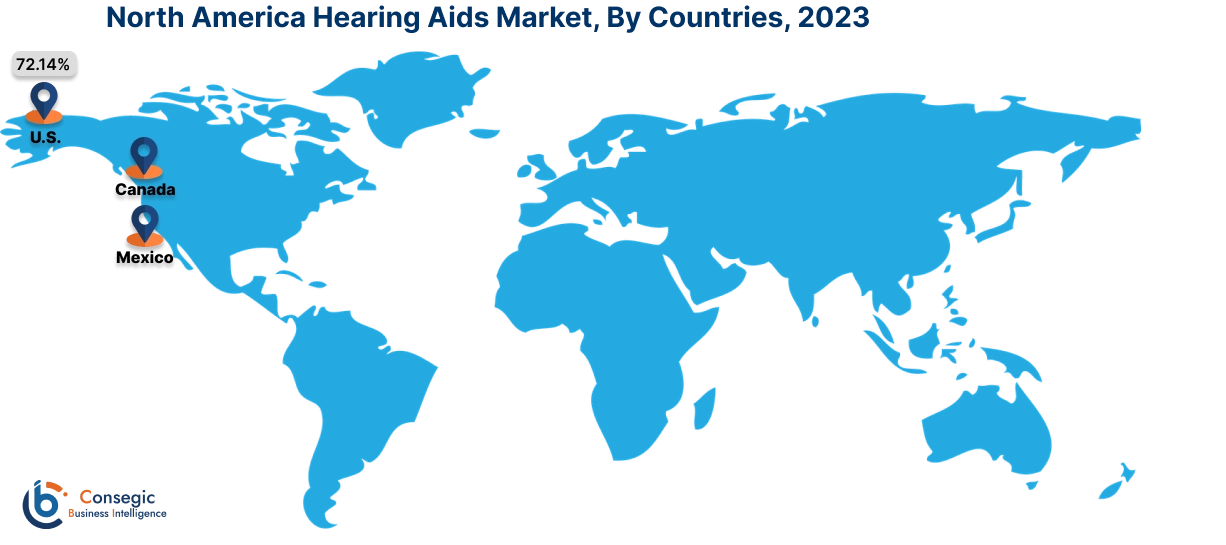
In 2023, North America accounted for the highest hearing aids market share at 37.48% and was valued at USD 3,170.34 Million and is expected to reach USD 4,788.81 Million in 2031. In North America, the U.S. accounted for the highest hearing aids market share of 72.14% during the base year of 2023. The dominance is driven by several key trends. In North America, particularly in the United States, there are a significant number of individuals with hearing loss, driving the demand for hearing devices. Moreover, the region boasts a well-developed healthcare infrastructure, including a strong network of audiologists and hearing care professionals, facilitating access to hearing device services. Additionally, North America is a pioneer in adopting advanced hearing device technologies, with a strong focus on research and development. This leads to early access to innovative products and features.
- For instance, to enhance the accessibility of hearing devices for the general public and to better support those with hearing impairments, the FDA introduced a new classification for over-the-counter (OTC) hearing devices aimed at adults aged 18 and older who experience perceived mild to moderate hearing loss, which became effective on October 17, 2022.
Furthermore, North America is home to leading hearing device manufacturers and R&D centers, fostering innovation in products. Overall, the combination of a large aging population, advanced healthcare infrastructure, and early adoption of technology is driving the market in the region.
In Asia Pacific, the hearing aids market is experiencing the fastest growth with a CAGR of 6.1% over the forecast period. Hearing loss is significantly growing in the region, with the Western Pacific region being projected to have the highest prevalence, driving the demand for hearing devices. Moreover, a large portion of young people are at risk of preventable hearing loss due to loud noise exposure from personal devices and entertainment venues, further boosting the market. Additionally, improved healthcare access and growing awareness about hearing health have led to a higher adoption rate of hearing devices in the region. Furthermore, the market is also fueled by rising disposable incomes and a growing middle class, enabling more people to afford advanced hearing devices.
Europe's hearing aids market analysis states several trends are responsible for the progress of the market in the region. High public awareness about hearing health, driven by government campaigns and support from non-profits, has increased adoption rates. Moreover, universal healthcare systems in many European nations provide partial or full reimbursement for hearing devices, making them more accessible. Additionally, Europe is a hub for hearing device innovation, with several leading manufacturers such as Sonova and WS Audiology headquarters in the region. These companies continually invest in R&D, introducing cutting-edge technologies such as AI and tinnitus masking. Stringent regulatory standards ensure the quality and effectiveness of devices, building consumer trust.
The Middle East and Africa (MEA) hearing aids market analysis states the region is also witnessing a notable surge in the market. Rising disposable incomes in Gulf Cooperation Council (GCC) countries, such as Saudi Arabia and the UAE, allow for greater affordability of hearing devices. Growing awareness about hearing loss and its impact on quality of life is also driving the need for hearing devices. Additionally, in sub-Saharan Africa, non-governmental organizations and international collaborations play a crucial role in providing affordable hearing solutions. Initiatives such as free hearing tests and subsidized devices are helping underserved populations with access to care.
Latin America's hearing aids market size is also emerging. Rising awareness of hearing health and the increasing prevalence of age-related hearing loss is driving the market in the region. Moreover, countries such as Brazil and Mexico are driving market growth, supported by their large populations and expanding healthcare coverage. Public health programs are increasingly focusing on early diagnosis and intervention, improving hearing device adoption rates. Economic development in the region is enabling the growing middle class to afford hearing devices, particularly in urban areas. Cultural stigmas around hearing loss remain a challenge but increasing education efforts are changing perceptions.
Top Key Players & Market Share Insights:
The hearing aids market is highly competitive with major players providing products to the national and international markets. Key players are adopting several strategies in research and development (R&D) and product innovation to hold a strong position in the global hearing aids market. Key players in the hearing aids industry include-
- RION Co., Ltd. (Japan)
- Eargo, Inc (U.S.)
- Amplifon S.p.A. (Italy)
- GN Store Nord A/S (Denmark)
- Audicus (U.S.)
- Sonova Holding AG (Switzerland)
- Demant A/S (Denmark)
- WS Audiology (Denmark)
- Cochlear Ltd. (Australia)
- Starkey Laboratories Inc. (U.S.)
Recent Industry Developments :
Product Expansion:
- In August 2024, GN, a worldwide pioneer in hearing device innovation, announces the enhancement of the ReSound Nexia family, providing additional choices for individuals with hearing loss to take advantage of cutting-edge hearing technology while embracing the “next era” of Bluetooth connectivity.
Product Launch:
- Widex introduced the SmartRIC hearing device series in April 2024, featuring a new sleek L-shaped Receiver in Canal (RIC) hearing solution. Utilizing the Moment platform chip, this design incorporates microphones strategically positioned to enhance directionality and focus, particularly when it comes to speech recognition.
Hearing Aids Market Report Insights :
| Report Attributes | Report Details |
| Study Timeline | 2018-2031 |
| Market Size in 2031 | USD 12,763.35 Million |
| CAGR (2024-2031) | 5.4% |
| By Product Type |
|
| By Technology |
|
| By Sales Channel |
|
| By Region |
|
| Key Players |
|
| North America | U.S. Canada Mexico |
| Europe | U.K. Germany France Spain Italy Russia Benelux Rest of Europe |
| APAC | China South Korea Japan India Australia ASEAN Rest of Asia-Pacific |
| Middle East and Africa | GCC Turkey South Africa Rest of MEA |
| LATAM | Brazil Argentina Chile Rest of LATAM |
| Report Coverage |
|
Key Questions Answered in the Report
How big is the Hearing Aids market? −
In 2023, the Hearing Aids market is USD 8,458.75 Million.
Which is the fastest-growing region in the Hearing Aids market? +
Asia Pacific is the fastest-growing region in the Hearing Aids market.
What specific segmentation details are covered in the Hearing Aids market? +
Product Type and Technology segmentation details are covered in the Hearing Aids market.
Who are the major players in the Hearing Aids market? +
Sonova Holding AG (Switzerland), Demant A/S (Denmark), WS Audiology (Denmark), Cochlear Ltd. (Australia), Starkey Laboratories Inc. (U.S.), RION Co., Ltd. (Japan), Eargo, Inc (U.S.), Amplifon S.p.A. (Italy), GN Store Nord A/S (Denmark), and Audicus (U.S.).
Overview
Reputation & Certifications


Our Services
- Market Intelligence & Forecasting
- Custom Research Solutions
- Market Entry Strategy
- Competitive Intelligence
- Customer Insights
- Industry Innovation Analysis
- Investment Advisory