Jump to Content
High Volume Dispensing Systems Market - Size, Share, Industry Trends, and Forecasts (2025-2032)
High Volume Dispensing Systems Market Size:
High Volume Dispensing Systems Market Size is estimated to reach over USD 4.93 Billion by 2032 from a value of USD 2.77 Billion in 2024 and is projected to grow by USD 2.93 Billion in 2025, growing at a CAGR of 8.2% from 2025 to 2032.
High Volume Dispensing Systems Market Scope & Overview:
High volume dispensing systems are automated systems designed to efficiently manage and dispense large quantities of medication, often in healthcare settings like pharmacies and hospitals. These systems aim to reduce medication errors, improve dispensing speed, and enhance overall healthcare service efficiency. They handle large volumes of prescriptions with precision and speed, contributing to reduced waiting times and improved patient satisfaction. As industries strive for higher productivity and quality standards, the adoption of high volume dispensing systems plays a crucial role for streamlining processes and minimizing wastage.

High Volume Dispensing Systems Market Dynamics - (DRO) :
Key Drivers:
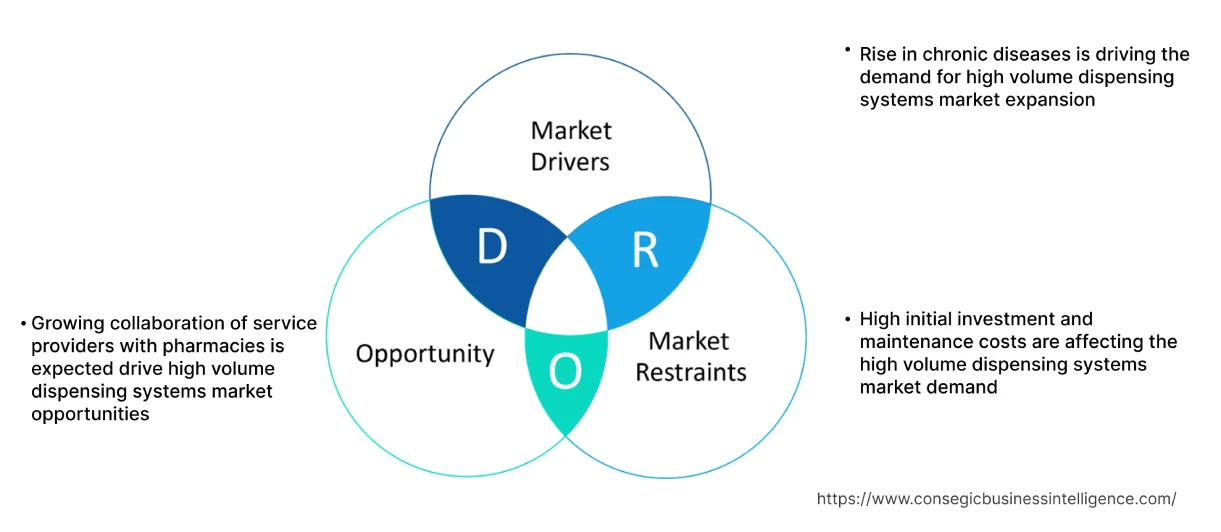
Rise in chronic diseases is driving the demand for high volume dispensing systems market expansion
The rise in chronic diseases worldwide has prompted a significant need for efficient and accurate medication dispensing systems. These systems have emerged as a crucial solution to streamline medication management processes in healthcare facilities. These systems are designed to handle large quantities of medications efficiently, reducing the margin for errors and improving overall patient safety. With the increasing burden of chronic diseases such as diabetes, cardiovascular disorders, and respiratory illnesses, healthcare providers are seeking advanced technologies such as dispensing systems to enhance medication adherence, optimize inventory management, and minimize wastage of pharmaceuticals.
- For instance, according to the Centers for Disease Control and Prevention (CDC), 6 out of 10 U.S. citizens suffer from at least one chronic condition and 4 out of 10 suffer from two chronic conditions.
Thus, according to the high volume dispensing systems market analysis, the rise in chronic diseases is driving the high volume dispensing systems market size and trends.
Key Restraints:
High initial investment and maintenance costs are affecting the high volume dispensing systems market demand
For healthcare facilities with limited funds, such as small hospitals, local pharmacies, or organizations serving underprivileged communities, the significant initial cost of buying and setting up high-volume dispensing equipment can be a major obstacle. Furthermore, the difficulty of incorporating these complex systems into their current operations, along with the addition of ongoing expenses for software and hardware upkeep, as well as potential downtime, makes them financially unviable in the long term. Therefore, the aforementioned factors would further impact the high volume dispensing systems market.
Future Opportunities :
Growing collaboration of service providers with pharmacies is expected drive high volume dispensing systems market opportunities
Pharmacies are increasingly recognizing the benefits of collaborating with high volume dispensing system providers to optimize their operations and meet its growing requirement from patients. By implementing these advanced dispensing solutions, pharmacies can reduce dispensing errors, minimize medication waste, and improve overall efficiency. Moreover, the integration of high volume dispensing systems into pharmacy workflows enables pharmacists to focus more on patient counseling and clinical services, thereby, enhancing the quality of care. As the global healthcare landscape continues to evolve, collaboration between pharmacies and high volume dispensing system manufacturers will play a crucial role in shaping the future of medication management and delivery.
- For instance, in December 2024, Swisslog Healthcare announced the partnership with BD, to automate pharmacy inventory management in U.S. hospitals. This collaboration aims to meet the rising need for advanced and dependable robotic systems that automate pharmacy tasks such as medication storage, dispensing, and others in hospitals across North America.
Thus, based on the above high volume dispensing systems market analysis, the growing pharmacies worldwide are expected to drive the high volume dispensing systems market opportunities and trends.
High Volume Dispensing Systems Market Segmental Analysis :
By Product:
Based on product, the high volume dispensing systems market is segmented into systems/cabinets and software.
Trends in the product:
- The expanding number of pharmacies worldwide, combined with a rise in the volume of prescriptions, are leading to substantial medication inventories.
- Manufacturers are offering tailor-made solutions that cater to specific industry needs, allowing for adjustments in system components and functionalities. This customization extends to the integration of additional features such as advanced sensors, data analysis software, and IoT connectivity, which enhance the capabilities of both automated and manual systems.
- Thus, the above analysis and factors are driving the high volume dispensing systems market demand and trends.
The systems/cabinets segment accounted for the largest revenue share in the high volume dispensing systems market share in 2024.
- High volume dispensing cabinets are physical units that store and dispense medications in a controlled, automated environment.
- These cabinets are typically used in hospitals and healthcare facilities to handle large quantities of medications efficiently.
- They provide secure storage, real-time tracking, and easy access to medication, allowing healthcare professionals to quickly retrieve drugs while maintaining inventory control and reducing the potential for medication errors.
- High-volume dispensing cabinets are often equipped with advanced features such as barcode scanning, RFID tagging, and automated restocking, improving both security and efficiency.
- As hospitals and healthcare facilities look for ways to manage increasing medication demands with minimal human intervention, the need for dispensing cabinets continues to grow.
- For instance, Omnicell XT automated dispensing cabinets utilize advanced new hardware and intelligent features to enhance how healthcare professionals work, improve medication tracking, and ultimately boost patient safety. Their flexible design allows the XT system to easily grow and adapt alongside expanding healthcare organizations, and it is also built to integrate future technological advancements.
- Thus, based on the above analysis, these factors are further driving the high volume dispensing systems market growth and trends.
The software segment is anticipated to register the fastest CAGR during the forecast period.
- High volume dispensing software refers to digital solutions that facilitate the automated dispensing of medications in high-volume settings, such as hospitals, clinics, and pharmacies.
- The software segment is experiencing significant growth, driven by the increasing adoption of electronic health records (EHR) and the need for more streamlined and error-free medication management.
- This software is designed to integrate existing hospital management systems, enabling seamless tracking, managing, and dispensing of prescriptions.
- It enhances accuracy, reduces human error, and improves the efficiency of medication delivery by automating processes like inventory management, prescription verification, and drug dispensing.
- Thus, the above factors are expected to drive the high volume dispensing systems market share and trends during the forecast period.
By End Use:
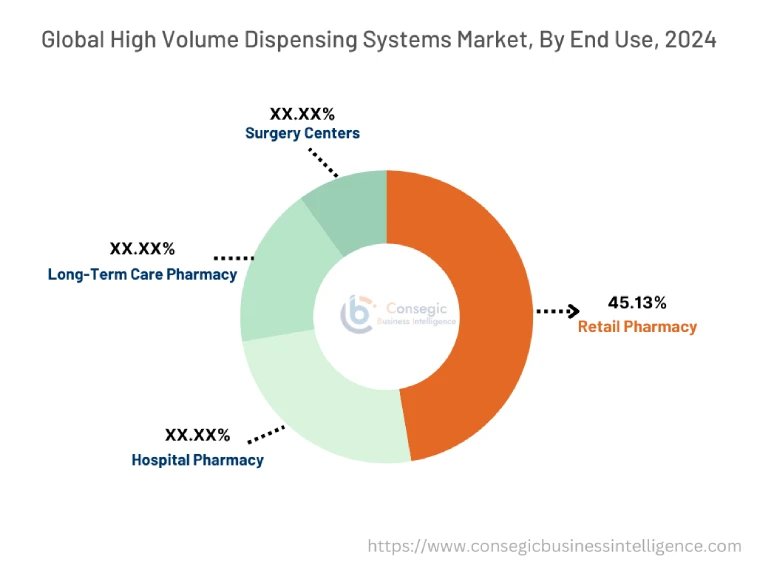
Based on end use, the high volume dispensing systems market is segmented into retail pharmacy, hospital pharmacy, long-term care pharmacy, and surgery centers.
Trends in the end use:
- The rise in personalized medicine and complex drug formulations is prompting the development of specialized dispensing solutions tailored to the pharmaceutical sector's evolving needs. These factors would further supplement the high volume dispensing systems market.
- Dispensing systems play a crucial role in ensuring portion control, consistency, and quality in food production. The industry's shift towards sustainable practices and waste reduction is further accelerating the adoption of dispensing systems that minimize material wastage.
- These analysis and factors are anticipated to further drive the high volume dispensing systems market trends during the forecast period
The retail pharmacy segment accounted for the largest revenue share of 45.13% in the year 2024 and it is expected to register the highest CAGR during the forecast period.
- The increasing demand for medications and over-the-counter products necessitates efficient dispensing solutions to manage inventory and reduce wait times for customers.
- Automated systems in retail pharmacies facilitate quick and accurate dispensing of prescriptions, improving customer satisfaction and operational efficiency.
- The rise of e-pharmacies and online medication delivery services is also driving the adoption of advanced dispensing systems that can handle high volumes and ensure timely delivery of medications.
- Thus, based on the above analysis, these factors would further supplement the high volume dispensing systems market trends and opportunities.
Regional Analysis:
The regions covered are North America, Europe, Asia Pacific, the Middle East and Africa, and Latin America.
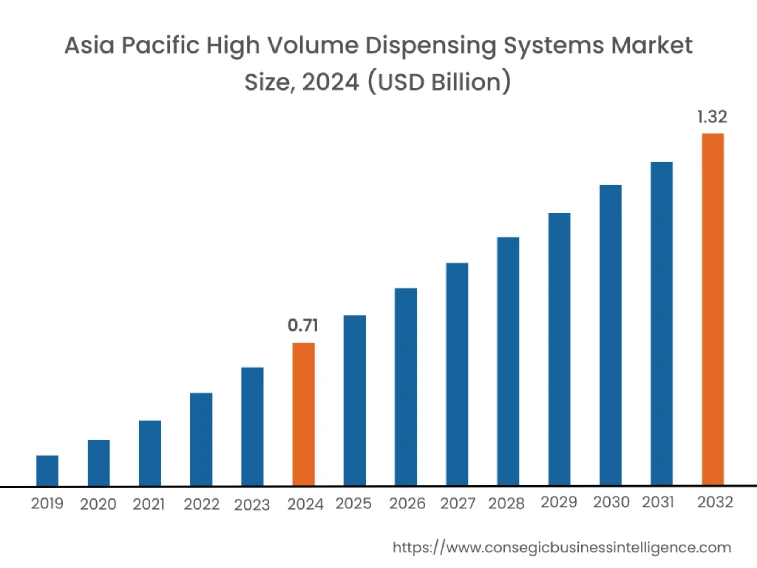
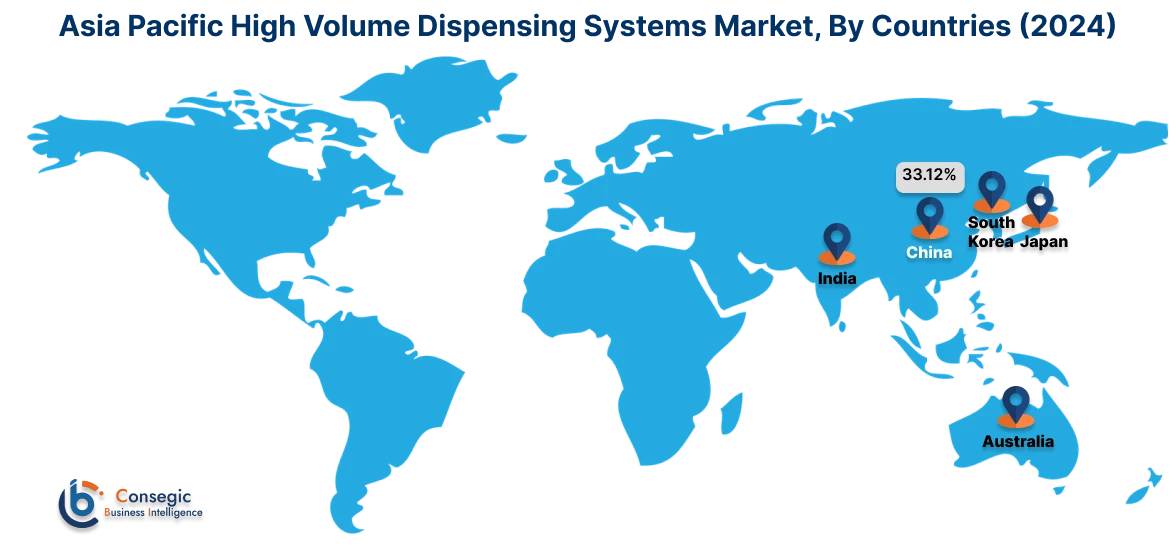
Asia Pacific high volume dispensing systems market expansion is estimated to reach over USD 1.32 billion by 2032 from a value of USD 0.71 billion in 2024 and is projected to grow by USD 0.75 billion in 2025. Out of this, the China market accounted for the maximum revenue split of 33.12%. The rapid industrialization, expanding healthcare investments, and increasing manufacturing activities are key drivers for high volume dispensing systems market growth in this region. Countries in the region are witnessing robust demand for dispensing systems, driven by their growing pharmaceutical sector and rising production of medicines. Further, the region's favorable business environment, combined with government initiatives to boost industrial production and innovation, are attracting significant investments from global market players. As infrastructure developments and technological advancements continue to develop, the region is set to become a major hub for the high volume dispensing systems market.
- For instance, the INDE’s dispensing robot is an automated machine engineered to precisely distribute liquids or granular substances. Its programmable nature allows it to deliver specific quantities of materials to designated locations, making it a valuable tool in diverse industries such as pharmaceuticals, food and beverage, and others.
North America market is estimated to reach over USD 1.67 billion by 2032 from a value of USD 0.94 billion in 2024 and is projected to grow by USD 1.00 billion in 2025. The presence of several dispensing system companies in North America increases the accessibility of automated dispensing systems. Additionally, the region's well-developed healthcare system and the high rate of chronic illnesses contribute significantly in driving the market. The early incorporation of cabinets and software by both pharmacies and hospitals, along with rapid technological progressions are also driving market growth. Furthermore, increasing concern about deprived inventory management are significantly boosting the demand for these systems in the region. These factors would further drive the regional market share during the forecast period.
- For instance, in March 2024, Nordson EFD introduced two new lines of automated fluid dispensing products, the GVPlus and PROX. Both robotic solutions are designed with advancements in motion control, workspace capacity, dispensing consistency, payload handling, setup processes, and vision technology. The new GVPlus solution offers enhanced repeatability, the ability to handle larger payloads with easier setup, and improved vision capabilities.
Additionally, according to the analysis, the high volume dispensing systems industry in Europe is expected to witness significant development during the forecast period. Countries in the region are prominent adopters of dispensing solutions, particularly in the pharmaceutical sector. The European market is expected to exhibit steady growth, with a focus on innovations that enhance efficiency and minimize environmental impact. The region's commitment to renewable energy and circular economy practices is also driving the development and adoption of eco-friendly dispensing systems that align with sustainability goals.
Additionally, Latin American region is experiencing a growth in the number of pharmacies and an increasing volume of prescriptions due to factors such as an aging population and a higher prevalence of chronic diseases. This necessitates more efficient dispensing processes. Further, the development of healthcare facilities and development of sophisticated hospital networks across the Middle East & Africa are creating a need for efficient medication management systems. These factors are driving the regional high volume dispensing systems market size.
Top Key Players and Market Share Insights:
The global high volume dispensing systems market is highly competitive with major players providing solutions to the national and international markets. Key players are adopting several strategies in research and development (R&D), product innovation, and end-user launches to hold a strong position in the market. Key players in the high volume dispensing systems industry include-
- McKesson (U.S.)
- Becton, Dickinson and Company (U.S.)
- Omnicell Inc. (U.S.)
- Innovation Associates (U.S.)
- HealthMark Group (U.S.)
- Capsa Healthcare (U.S.)
- Yuyama Co., Ltd. (Japan)
- Willach Pharmacy Solutions (U.K.)
- RxSafe, LLC (U.S.)
- TouchPoint Medical (U.S.)
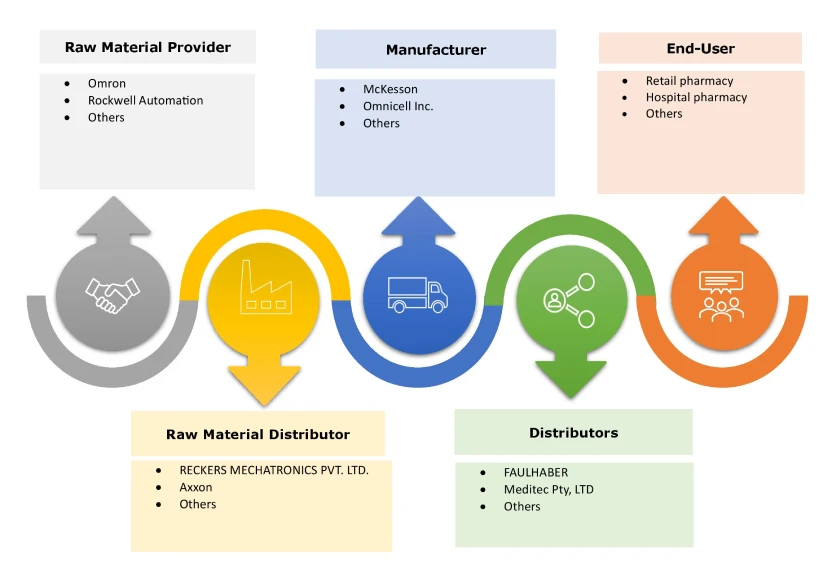
High Volume Dispensing Systems Market Ecosystem:
Recent Industry Developments :
Product Launch:
- In August 2024, Omnicell Inc. launched a new subscription service, Central Med Automation Service, to assist hospitals and health systems in creating and continuously improving centralized medication management for their central fill pharmacies and similar operations. This service aims to simplify the process of high volume dispensing systems from a central location across the entire healthcare network, while improving inventory tracking, the ability to handle growth, and patient safety.
High Volume Dispensing Systems Market Report Insights :
| Report Attributes | Report Details |
| Study Timeline | 2019-2032 |
| Market Size in 2032 | USD 4.93 Billion |
| CAGR (2025-2032) | 8.2% |
| By Product |
|
| By End Use |
|
| By Region |
|
| Key Players |
|
| North America | U.S. Canada Mexico |
| Europe | U.K. Germany France Spain Italy Russia Benelux Rest of Europe |
| APAC | China South Korea Japan India Australia ASEAN Rest of Asia-Pacific |
| Middle East and Africa | GCC Turkey South Africa Rest of MEA |
| LATAM | Brazil Argentina Chile Rest of LATAM |
| Report Coverage |
|
Key Questions Answered in the Report
How big is the High Volume Dispensing Systems Market? −
High Volume Dispensing Systems market size is estimated to reach over USD 4.93 Billion by 2032 from a value of USD 2.77 Billion in 2024 and is projected to grow by USD 2.93 Billion in 2025, growing at a CAGR of 8.2% from 2025 to 2032.
Which is the fastest-growing region in the High Volume Dispensing Systems Market? +
Asia-Pacific is the region experiencing the most rapid growth in the market.
What specific segmentation details are covered in the High Volume Dispensing Systems report? +
The high volume dispensing systems report includes specific segmentation details for product, end use, and region.
Who are the major players in the High Volume Dispensing Systems Market? +
The key participants in the market are McKesson (U.S.), Becton, Dickinson and Company (U.S.), Omnicell Inc. (U.S.), Innovation Associates (U.S.), HealthMark Group (U.S.), Capsa Healthcare (U.S.), Yuyama Co., Ltd. (Japan), Willach Pharmacy Solutions (U.K.), RxSafe, LLC (U.S.), TouchPoint Medical (U.S.), and others.
Overview
Reputation & Certifications


Our Services
- Market Intelligence & Forecasting
- Custom Research Solutions
- Market Entry Strategy
- Competitive Intelligence
- Customer Insights
- Industry Innovation Analysis
- Investment Advisory