Jump to Content
Hydrogen Market - Size, Share, Industry Trends, and Forecasts (2024 - 2031)
Hydrogen Market Size:
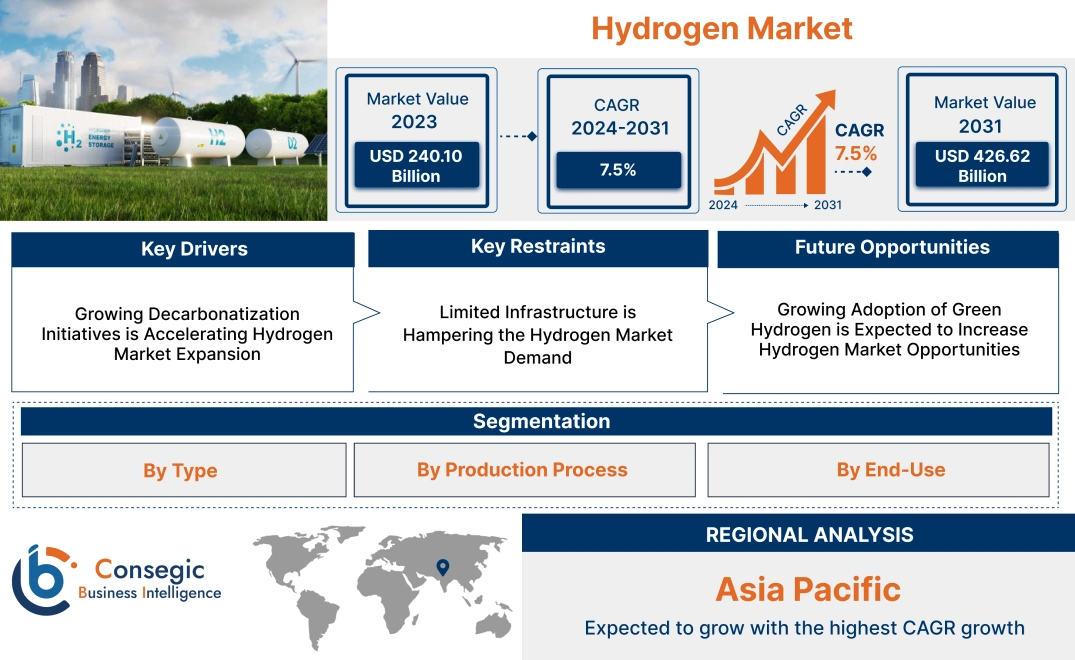
Hydrogen Market size is growing with a CAGR of 7.5% during the forecast period (2024-2031), and the market is projected to be valued at USD 426.62 Billion by 2031 from USD 240.10 Billion in 2023.
Hydrogen Market Scope & Overview:
Hydrogen is the lightest and most abundant element in the universe, represented by the chemical symbol H₂. It is a colorless, odorless gas that serves as a key component in water and organic compounds. Chemically, it exhibits a dual nature, acting as both an oxidizing and reducing agent. Its high energy density makes it an attractive energy carrier, particularly in fuel cells. It is non-toxic, non-metallic, highly reactive, and burns with a nearly invisible flame. When combined with oxygen in a fuel cell, it produces electricity and water vapor, emitting zero greenhouse gases, which aids sustainability. Additionally, it plays a crucial role in various industrial processes, including ammonia synthesis and petroleum refining. It is produced from water or natural gas, ensuring long-term availability. It is categorized into three types, namely gray, blue, and green.
Hydrogen Market Dynamics - (DRO) :
Key Drivers:
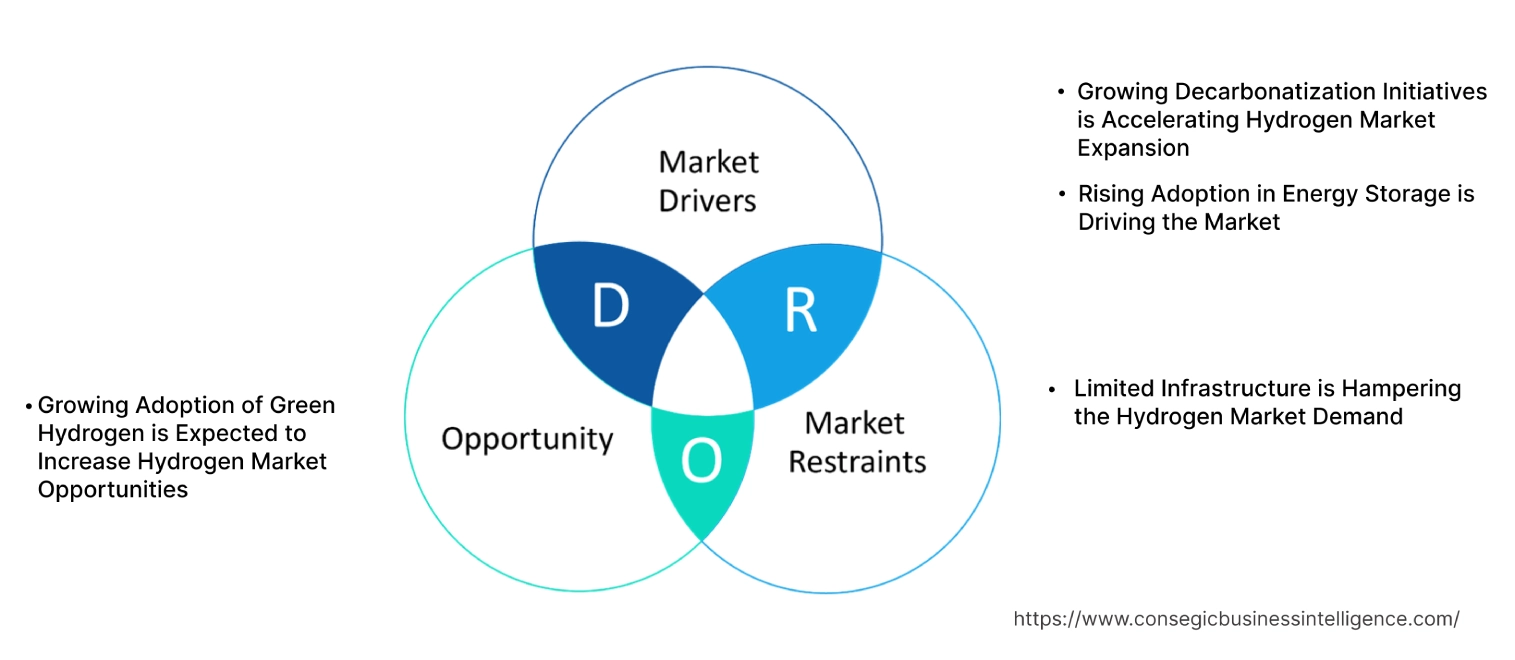
Growing Decarbonatization Initiatives is Accelerating Hydrogen Market Expansion
Decarbonization refers to reducing carbon dioxide (CO₂) emissions by transitioning to cleaner and renewable energy sources while improving energy efficiency. Hydrogen is a versatile, clean energy carrier that plays a pivotal role in decarbonization. When used as fuel, it produces only water as a byproduct, eliminating CO₂ emissions.
It supports deep decarbonization in hard-to-abate sectors such as heavy industry (steel, cement) and long-haul transportation (trucks, shipping, aviation). Countries from all regions are adopting different strategies and policies to achieve net-zero emissions by 2050. This has led to increased investment from both public and private sectors into hydrogen production and infrastructure development. Moreover, industries are using it to replace fossil fuels in processes such as steel production and refining. Scalability and versatility make it an attractive option for achieving long-term climate goals while driving economic increase. The increasing urgency of climate change, coupled with advancements in renewable energy technologies and stringent government regulations, has spurred a significant increase in decarbonization initiatives.
- For instance, in June 2023, the Department of Energy announced a substantial investment of USD 135 million aimed at minimizing emissions throughout the industrial sector in America, which encompasses 10 initiatives focused on decarbonizing iron and steel and 5 initiatives dedicated to the decarbonization of cement and concrete. This has significantly increased the need for hydrogen as a clean energy carrier and reducing agent.
Overall, hydrogen's potential to decarbonize various sectors, coupled with increasing global efforts and investments, positions it as a crucial element in achieving a sustainable and low-carbon future, thus driving the hydrogen market expansion.
Rising Adoption in Energy Storage is Driving the Market
Hydrogen energy storage is a method of storing electrical energy by converting it into gas through electrolysis. This is then stored and later used to generate electricity when required, typically through a fuel cell. In comparison to batteries, it holds a greater amount of energy in a more compact and lighter form.
Furthermore, in contrast to batteries that gradually deplete their charge, hydrogen is stored indefinitely with minimal energy loss. This characteristic renders it an excellent choice for long-term energy storage and seasonal energy management. Moreover, its energy storage systems are adjusted in range to accommodate the requirements of different applications, ranging from small home systems to extensive grid storage solutions. Its storage also enables energy transport across regions, connecting areas with abundant renewable resources to those with high energy requirements.
The development of fuel cell electric vehicles (FCEVs) is boosting the need for efficient storage solutions, impacting the market positively. Moreover, the escalating need for clean energy sources is becoming increasingly evident.
- For instance, according to the International Energy Agency, 2023 saw a significant surge in the demand for clean energy, with global renewable capacity additions increasing by almost 50%, reaching nearly 510 gigawatts (GW), the fastest growth rate in the past two decades.
Overall, hydrogen energy storage offers a promising solution to the challenges of energy storage and transportation. Its ability to store energy efficiently, its scalability, and its compatibility with renewable energy sources make it a valuable asset in the transition to a sustainable energy future thus driving hydrogen market trends.
Key Restraints :
Limited Infrastructure is Hampering the Hydrogen Market Demand
Hydrogen infrastructure denotes the comprehensive system of facilities, technologies, and networks essential for the generation, storage, transportation, and distribution. Limited infrastructure is a significant restraint for the market, hindering its widespread adoption and growth. The infrastructure needs to be capable of withstanding high pressure for the storage and transportation of it, which is difficult to execute.
- For instance, according to Energy Tracker Asia, a platform that provides news across Asia, hydrogen is compressed to more than 700 bars for transportation purposes. This necessitates the use of specialized compressors and large storage tanks, possessing significant technical challenges.
Moreover, its properties, such as its low energy density and propensity to leak, necessitate specialized infrastructure that differs from traditional fossil fuel systems. In addition to that, the lack of a well-developed supply chain creates a bottleneck, restricting its availability for industries, power generation, and mobility applications. Overall, analysis shows that the lack of a robust infrastructure is a major hurdle, that is hindering the hydrogen market demand.
Future Opportunities :
Growing Adoption of Green Hydrogen is Expected to Increase Hydrogen Market Opportunities
Unlike traditional production methods, which rely on fossil fuels and emit significant greenhouse gases, green hydrogen is made using renewable energy sources, such as solar and wind power. It stands out as a clean and sustainable alternative to traditional production methods. Its benefits include zero greenhouse gas emissions, versatility in various applications such as transportation, and the potential to store excess renewable energy. This will ensure a reliable and resilient energy supply. The urgent need to reduce greenhouse gas emissions and transition to a low-carbon economy is a major factor propelling the adoption green hydrogen for the upcoming years.
- For instance, according to Plug Power, a global leader in hydrogen fuel-supply solutions, as of 2024, the market surpassed USD 6.49 billion, with projections indicating a compound annual growth rate (CAGR) exceeding 31% from 2024 through 2032. By 2030, the worldwide implementation of green hydrogen is anticipated to achieve 150 GW – roughly 63,750 tons each day.
Moreover, rising corporate commitments to net-zero targets further bolster the adoption of green hydrogen. Companies are integrating it into operations to reduce carbon footprints and meet regulatory requirements, creating potential for partnerships and technology innovation. Overall, the need for clean energy, energy security, and components for the global energy transition will increase the hydrogen market opportunities.
Hydrogen Market Segmental Analysis :
By Type:
Based on type, the market is categorized into green hydrogen, blue hydrogen, and grey hydrogen.
Trends in the Type:
- Continuous investment in carbon capture for blue hydrogen projects.
- Increasing subsidies, and incentives for renewable hydrogen usage.
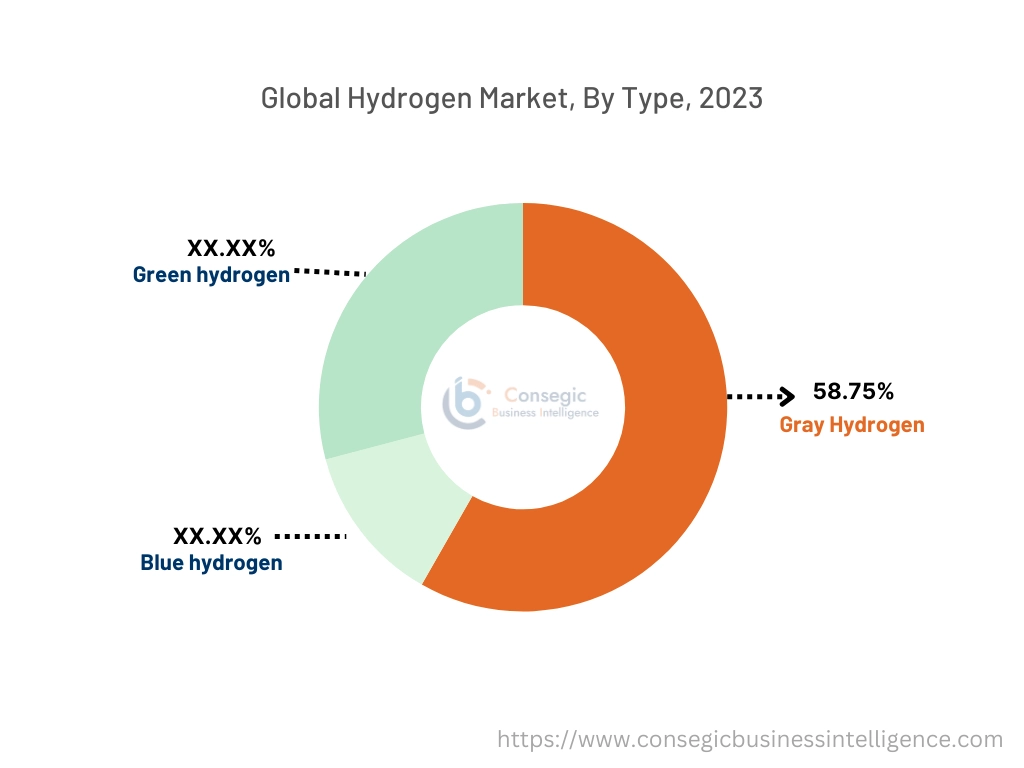
The Grey segment accounted for the largest market share of 58.75% in 2023.
- Grey hydrogen is produced by reforming natural gas (methane) through a process called steam methane reforming (SMR), without capturing the resulting carbon dioxide emissions.
- It is used as a feedstock in various industrial processes, such as ammonia production for fertilizers and refining oil. It is also used in fuel-cell vehicles. It has lower production costs compared to blue and green hydrogen. It is stored and used to balance energy supply and demand in the power grid.
- Global demand for chemicals is rising, driven by factors such as population growth and industrialization.
- For instance, according to the United States Geological Survey, in 2021, the United States produced approximately 17 million metric tons of ammonia, marking a significant increase from previous years, with the country considered one of the leading producers globally. This has led to an increased need for grey hydrogen as a key input material.
- Overall, the rising requirements for chemicals, particularly ammonia driving segmental in hydrogen market growth.
The green segment is expected to grow at the fastest CAGR over the forecast period.
- Green hydrogen is a clean energy source that's produced by splitting water into hydrogen and oxygen using electricity from renewable sources such as wind or solar power. This process is called electrolysis and doesn't produce harmful greenhouse gas emissions.
- This approach to producing green hydrogen prevents the release of 830 million tonnes of CO2 that result each year from generating this gas through fossil fuels. Moreover, it is easily storable, enabling it to be utilized later for various applications.
- It also is converted into electricity or synthetic gas and utilized for commercial, industrial, or transportation applications.
- The segment is driven by several trends, including global decarbonization goals, technological advancements in electrolysis, and increasing investments from both public and private sectors.
By Production Process:
The production process segment is categorized into steam-methane reforming, biomass gasification, electrolytic processes, and others.
Trends in the Production Process:
- Advancements in renewable energy sources and electrolysis technologies
- Shift towards smaller-scale, localized hydrogen production to reduce transportation costs and improve grid flexibility
The steam-methane reforming segment accounted for the largest market share in 2023.
- Steam-methane reforming (SMR) is a well-established industrial process that involves reacting to methane (primarily from natural gas) with steam at high temperatures (700-1000°C) and moderate pressures (15-30 bar) in the presence of a catalyst. This process yields a mixture of carbon monoxide and hydrogen gas.
- SMR is a well-developed technology with decades of operational experience, ensuring reliability and scalability.
- For instance, according to a research article published in Science Direct in 2022, approximately half of the world's hydrogen supply is generated from natural gas, with steam methane reforming standing out as the most common production method.
- Large-scale SMR plants benefit from significant economies of scale, reducing production costs.
- The existing natural gas infrastructure is leveraged for SMR, facilitating its deployment and reducing initial investment costs.
- Continuous advancements in production, storage, and distribution technologies are reducing costs and improving efficiency. This is driving the segment in hydrogen market growth.
- Overall, as per the market research analysis, steam-methane reforming is the dominant production method due to its mature technology, economies of scale, and significant industrial requirements.
The electrolytic processes segment is expected to grow at the fastest CAGR over the forecast period.
- Hydrogen production through electrolysis is a process that uses electricity to split water into hydrogen and oxygen.The reaction takes place in a unit called an electrolyzer, which can range in range from small to large.
- Electrolysis is a promising option for producing carbon-free hydrogen from renewable and nuclear resources. If the electricity used for electrolysis comes from renewable sources such as solar or wind, the resulting hydrogen is also considered renewable.
- Some types of electrolysis include alkaline electrolysis and proton exchange membrane (PEM) water electrolysis. Hydrogen produced through electrolysis is used for many applications, including energy storage and industrial processes.Also, it is generally between 99% and 99.9% pure. Moreover, electrolysis has a low capital cost.
- The growing market is driven by various applications in transportation, power generation, and energy storage, which is increasing the need for clean hydrogen, which will drive the adoption of electrolytic processes in the upcoming years.
By End Use:
The end-use segment is categorized into power generation, petroleum refinery, automotive fuel, chemicals, edible fats and oil, and others.
Trends in End-Use:
- Growing aerospace research for hydrogen-based fuel.
- Expanding applications in gas turbines and energy storage systems.
The petroleum refinery segment accounted for the largest market share in 2023.
- A petroleum refinery is an industrial process plant where crude oil is processed and refined into more useful petroleum products, such as gasoline, and diesel fuel.
- Hydrogen is used to remove sulfur, nitrogen, and other impurities from various feedstocks, improving product quality and environmental performance.
- It is also used to break down heavy hydrocarbon molecules into lighter, more valuable products such as gasoline and diesel fuel.
- Moreover, it is used to convert low-octane naphtha into high-octane gasoline. Additionally, it is used to remove metal contaminants, such as vanadium and nickel, from heavy crude oils, protecting refinery catalysts.
- The increasing global need for transportation fuels, growing industrial activity, and advancements in refining technologies to produce cleaner and higher-value products are driving the petroleum refining segment, thus positively influencing the market.
- For instance, according to the Press Information Bureau, in light of the current refining capacity of 256.8 MMTPA, the domestic use of petroleum products of India in the fiscal year 2023-24 stood at 233.3 MMTPA. The nation's refining capacity is anticipated to rise to 309.5 MMTPA by the year 2028. This has led to a surge in hydrogen for various refining processes.
- Overall, the increasing demand for refined petroleum products, driven by factors such as rising global consumption and stricter environmental regulations, has significantly boosted the segment in the hydrogen industry.
The power generation segment is expected to grow at the fastest CAGR over the forecast period.
- Power generation refers to the process of producing electricity. This electricity is used to power homes, businesses, and industries.
- Hydrogen has many uses in power generation. It stores energy produced by renewables such as wind for days or weeks. It alsoreplaces fossil fuels in combustion-based power generation, reducing emissions.
- Moreover, it is used in fuel cells to stabilize grids during peak times. In addition to that, ammonia is used in gas turbines to increase power system flexibility. Also, it is blended with natural gas to generate electricity.
- Apart from all these factors, it is converted to electricity in a fuel cell, emitting only water vapor and warm air.It is transformed into methane to power homes and feed industry, and into fuels for cars, trucks, ships, and planes.
- As per the analysis, the power generation segment is driven by an increasing focus on clean and reliable energy sources, coupled with the growing need to reduce greenhouse gas emissions.
- Additionally, advancements in production and fuel cell technologies are making hydrogen a more viable and cost-effective option for power generation.
Regional Analysis:
The regional segment includes North America, Europe, Asia Pacific, the Middle East and Africa, and Latin America.
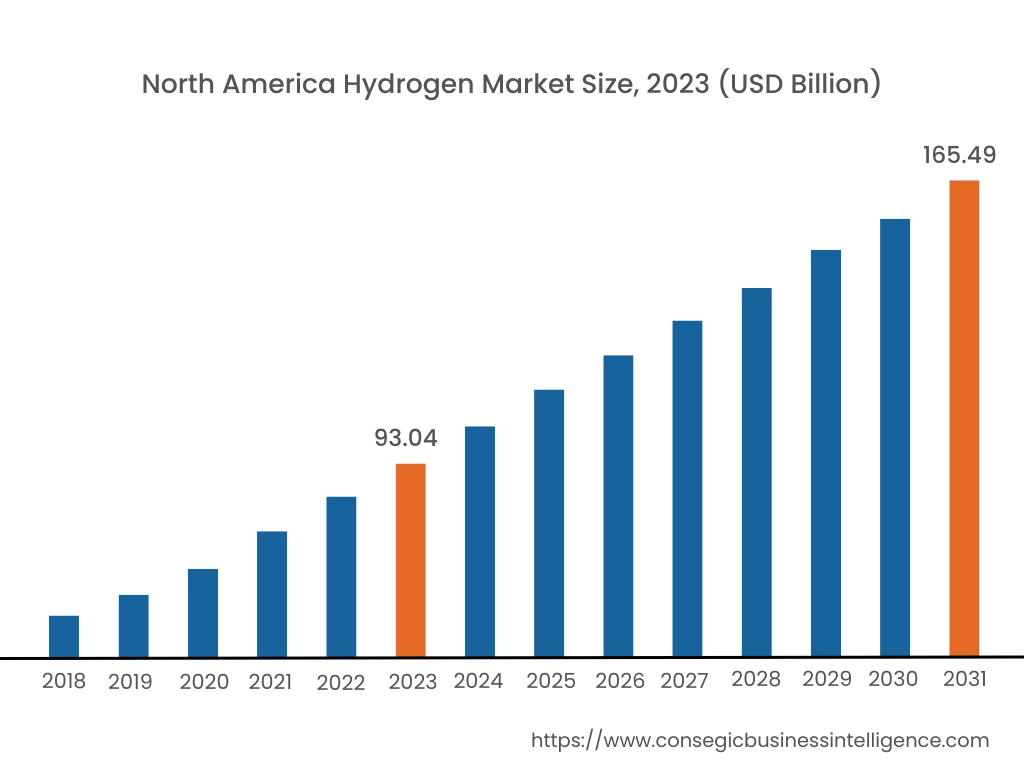
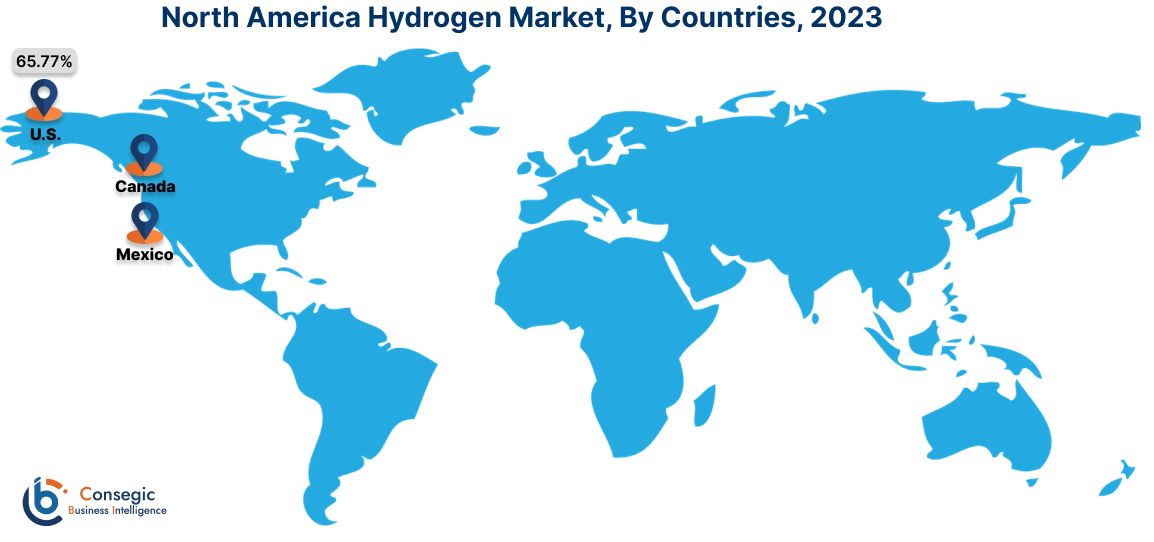
In 2023, North America accounted for the highest hydrogen market share at 38.75% and was valued at USD 93.04 Billion and is expected to reach USD 165.49 Billion in 2031. In North America, the U.S. accounted for the highest market share of 65.77% during the base year of 2023. The dominance is driven by several key trends. First, both the United States and Canada have ambitious climate change goals and policies that prioritize the development of clean energy solutions, including hydrogen. Governments in these countries have implemented various incentives, tax credits, and funding programs to encourage investment in hydrogen production, storage, and distribution infrastructure.
- For instance, the U.S. Department of the Treasury and the Internal Revenue Service (IRS) released proposed regulations for the Clean Hydrogen Production Tax Credit on December 22, 2023. It is designed to enhance the economic viability of production with minimal environmental impact and to accelerate the growth of the clean hydrogen sector in the United States.
Moreover, North America possesses a well-developed natural gas infrastructure, which is leveraged for better transportation and distribution. Additionally, the strong presence of energy companies, including oil and gas majors, provides a solid foundation for hydrogen projects. Overall, supportive government policies, a well-developed energy infrastructure, and a strong focus on clean energy solutions are driving the dominance of North America in the global hydrogen market.
In Asia Pacific, the market is experiencing the fastest growth with a CAGR of 7.9% over the forecast period. Countries such as China, India, and South Korea are experiencing rapid industrialization, leading to increased energy demand, and influencing market surges. Moreover, similar to North America, many countries in the APAC region have also set ambitious net-zero emissions targets, making hydrogen a crucial component of their decarbonization strategies. Additionally, the region boasts significant solar and wind energy potential, which is used to produce green hydrogen through electrolysis. Furthermore, the region's large-scale chemical industries are major consumers of it for various processes. By capitalizing on these trends, Asia Pacific is poised to play a pivotal role in shaping the future of the global hydrogen market.
Europe's hydrogen market analysis states several factors are responsible for the progress of the market in the region. The European Union's Green Deal sets ambitious targets for reducing greenhouse gas emissions and transitioning to a low-carbon economy, impacting the market positively. Moreover, the EU Hydrogen Strategy outlines a comprehensive roadmap for developing a hydrogen economy, including investments in production, storage, and distribution infrastructure. Additionally, Europe has several well-established industrial clusters, particularly in Germany and the Netherlands, with a strong focus on refining, and energy, requiring hydrogen for various crucial processes. Furthermore, Europe is actively engaging in international partnerships to develop global supply chains and standards.
The Middle East and Africa (MEA) region is also witnessing a notable surge in the market. The region boasts abundant solar and wind resources, making it ideal for generating renewable electricity through electrolysis. Moreover, the Middle East and Africa hydrogen market analysis depicts that the region's substantial natural gas reserves are utilized as a feedstock for traditional hydrogen production methods such as steam methane reforming. Additionally, governments are providing supportive policies, incentives, and funding to accelerate the development of hydrogen projects. Furthermore, research institutions and universities are at the forefront of research and development, driving technological advancements. Apart from all these factors, the public and private sectors are investing in hydrogen plants, further driving the market in the region.
Latin America's market is also emerging. Industries such as steel, chemicals, and refining are seeking to reduce their carbon footprints by adopting hydrogen-based technologies. Moreover, hydrogen fuel cell vehicles and hydrogen-powered ships and trains are gaining traction as clean transportation solutions. Additionally, market research analysis states that Latin America's proximity to major markets in North America, Europe, and Asia makes it a strategic location for hydrogen production and export, further boosting the market. Furthermore, governments here in this region also are actively promoting the development of hydrogen economies through supportive policies, incentives, and regulations. Apart from all these factors, collaborative efforts between governments and private sector entities are accelerating hydrogen projects and infrastructure development.
Top Key Players & Market Share Insights:
The market is highly competitive with major players providing products to the national and international markets. Key players are adopting several strategies in research and development (R&D) and product innovation to hold a strong position in the global hydrogen market. Key players in the hydrogen industry include-
- Linde PLC (Ireland)
- Air Products and Chemicals, Inc. (U.S.)
- Lhyfe (France)
- ENGIE (France)
- Messer Group (Germany)
- Air Liquide (U.S.)
- Uniper SE (France)
- Chevron Corporation (Germany)
- SABIC (Saudi Arabia)
- Shell Plc (Netherlands)
Recent Industry Developments :
Collaboration:
- In May 2024, there was a collaboration between Equinor and Centrica to create a hydrogen production facility in Easington, UK. The facility will produce blue and green hydrogen and could be expanded in the 2030s.
Launches:
- In June 2024, Wartsila launched the world's first large-scale 100% hydrogen-ready engine power plant. This plant can be converted to run on 100% hydrogen and is intended to support flexible, zero-carbon power generation.
Hydrogen Market Report Insights :
| Report Attributes | Report Details |
| Study Timeline | 2018-2031 |
| Market Size in 2031 | USD 426.62 Billion |
| CAGR (2024-2031) | 7.5% |
| By Type |
|
| By Production Process |
|
| By End-User |
|
| By Region |
|
| Key Players |
|
| North America | U.S. Canada Mexico |
| Europe | U.K. Germany France Spain Italy Russia Benelux Rest of Europe |
| APAC | China South Korea Japan India Australia ASEAN Rest of Asia-Pacific |
| Middle East and Africa | GCC Turkey South Africa Rest of MEA |
| LATAM | Brazil Argentina Chile Rest of LATAM |
| Report Coverage |
|
Key Questions Answered in the Report
How big is the Hydrogen market? −
In 2023, the Hydrogen market is USD 240.10 Billion.
Which is the fastest-growing region in the market? +
Asia Pacific is the fastest-growing region in the market.
What specific segmentation details are covered in the market? +
Type and Production Process segmentation details are covered in the market.
Who are the major players in the market? +
Linde PLC (Ireland), Air Products and Chemicals, Inc. (U.S.), Air Liquide (U.S.), Uniper SE (France), Chevron Corporation (Germany), SABIC (Saudi Arabia), Shell Plc (Netherlands), Lhyfe (France), ENGIE (France), and Messer Group (Germany).
Overview
Reputation & Certifications


Our Services
- Market Intelligence & Forecasting
- Custom Research Solutions
- Market Entry Strategy
- Competitive Intelligence
- Customer Insights
- Industry Innovation Analysis
- Investment Advisory