Jump to Content
Hyperglycemia Treatment Market - Size, Share, Industry Trends, and Forecasts (2025-2032)
Hyperglycemia Treatment Market Size:
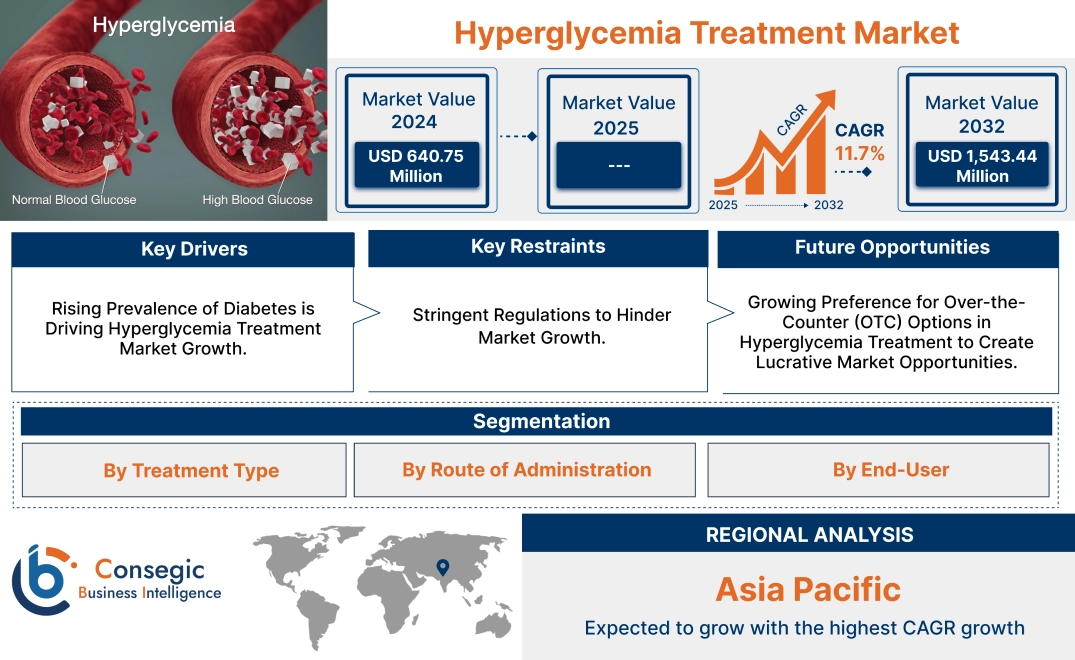
The Hyperglycemia Treatment Market size is growing with a CAGR of 11.7% during the forecast period (2025-2032), and the market is projected to be valued at USD 1,543.44 Million by 2032 from USD 640.75 Million in 2024.
Hyperglycemia Treatment Market Scope & Overview:
Hyperglycemia is a health concern that occurs due to several factors such as diabetes, infections, stress, insufficient exercise amongst others. One of the key factors due to which hyperglycemia occurs is when the body doesn't produce enough insulin or cannot utilize the insulin it produces. Insulin is vital for transporting glucose from blood stream to the cells in the body. A few of the symptoms are blurred vision, fatigue, nausea, headache amongst others. Treatments for hyperglycemia are dependent on the cause and severity of the condition. Few of the treatments include adjusting medications, incorporating a healthy diet, monitoring of blood sugar levels and others
Hyperglycemia Treatment Market Dynamics - (DRO) :
Key Drivers:
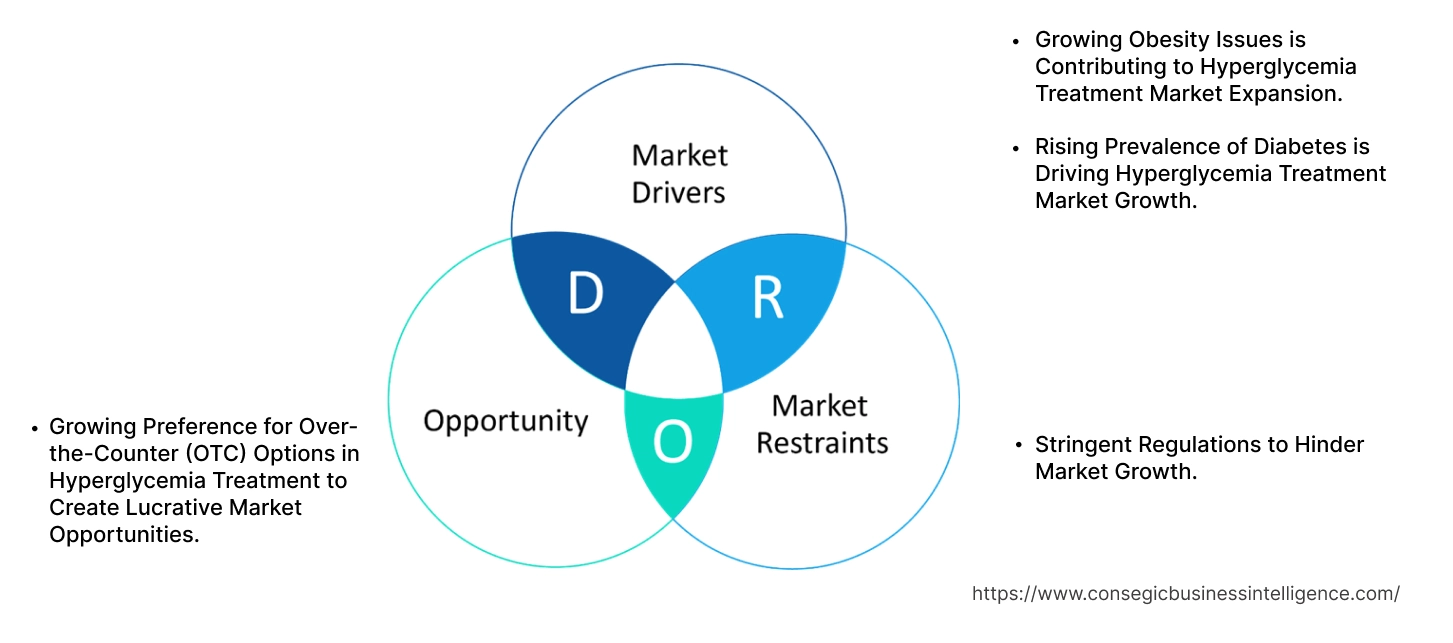
Rising Prevalence of Diabetes is Driving Hyperglycemia Treatment Market Growth.
Rising global prevalence of diabetes is one of the primary driving factors for the hyperglycemia treatment market growth. A few of the factors supporting the prevalence of diabetes are unhealthy diets, active lifestyle amongst others. As a result, the incidence of hyperglycemia is also increasing, primarily among individuals with diabetes.
- For instance, according to Institute for Health Metrics and Evaluation, in 2023, Globally the prevalence of diabetes was roughly more than half a billion among individuals. The number is expected to double among the forecast period
Thus, there is an increase in the hyperglycemia treatment market demand. Advancements in research and development are leading to new innovative therapies. These include advanced insulin delivery systems, and others. These therapies are aimed to reduce the risk of diabetes-related complications. In summary, due to the aforementioned factors, the market is fueled by rising prevalence of diabetes cases
Growing Obesity Issues is Contributing to Hyperglycemia Treatment Market Expansion.
The growing issues regarding obesity are directly impacting the market. Obesity is a condition in which the body cannot effectively utilize insulin for managing blood sugar. Obesity is a major factor which leads to the development of type 2 diabetes. Type 2 diabetes is a condition that occurs when an individual has consistently high blood sugars also known as hyperglycemia.
- For instance, in 2023, according to the World Obesity Atlas report, the global incidences of individuals beings obese or overweight are roughly around 38%.
Thus, as per analysis, rising prevalence of obesity globally is directly related to an increased prevalence of type 2 diabetes. This increase in diabetes cases, in turn, drives the hyperglycemia treatment market demand.
Key Restraints:
Stringent Regulations to Hinder Market Growth.
The timeframe for the introduction of treatment options for glycemia is impacted due to the stringent regulations imposed. For production of new innovative drugs and therapies, an assessment must be made. This assessment is conducted to ensure the safety and effectiveness of the drug. The assessment process involves long preclinical research, leading to several clinical trial phases. These trials help in understanding the drugs efficacy and safety. After the successful completion of these clinical trials, pharmaceutical companies need to submit their application to the regulatory authorities for approval of the drug.
The regulatory agencies thoroughly review information. Information such as preclinical and clinical trial results, before granting approval are evaluated. This process requires significant time and financial investment from pharmaceutical companies.
Therefore, these stringent regulations delay the availability of new treatments options hyperglycemia patients, thus hindering the hyperglycemia treatment market expansion.
Future Opportunities :
Growing Preference for Over-the-Counter (OTC) Options in Hyperglycemia Treatment to Create Lucrative Market Opportunities.
OTC options for hyperglycemia treatment are incorporated due to their ease accessibility and availability. It helps individuals to cater to mild to moderate hyperglycemia. This approach aims to support hectic lifestyles through different OTC products. The rising incidence of diabetes is one of the major factors leading to busy individuals opting for OTC hyperglycemia medication products.
- For instance, according to Consumer Healthcare Products Association, approximately 96% of the adults in U.S. prefer OTC medications for treatment of medical ailments. Additionally, roughly 80% of the individuals in the U.S. utilize OTC medications to relieve their symptoms before seeking any professional help
Hence, the availability of OTC products is of great potential, creating lucrative hyperglycemia treatment market opportunities.
Hyperglycemia Treatment Market Segmental Analysis :
By Treatment Type:
Based on Treatment Type, the market is categorized into fluid replacement, electrolyte replacement, insulin therapy, and others.
Trends in the Treatment Type:
- The industry preference and trend towards more suitable delivery systems of insulin.
- The focus is on personalized fluid and electrolyte replacement strategies based on individual patients.
The insulin therapy segment accounted for the largest market share in 2024.
- Insulin therapy is the primary option for blood sugar management for individuals with diabetes. As a result, insulin therapy currently dominates the hyperglycemia treatment market.
- Consumer inclination towards more suitable insulin delivery systems improves ease of use and patient consent. A few of the suitable insulin delivery systems include pre-filled syringes, insulin pens, and insulin pumps.
- For instance, according to NCBI, the primary treatment option to control hyperglycemia is insulin in inpatient settings
- Additionally, the development of innovative insulin formulations is providing effective management solutions for hyperglycemia. Some of the innovative formulations are rapid-acting insulin analogs and long-acting insulin analogs.
- Therefore, due to the above-mentioned factors, the insulin therapy segment is dominating the market
The fluid replacement segment is expected to grow at the fastest CAGR over the forecast period.
- The fluid replacement segment is expected to grow significantly due to several key factors. In severe cases, hyperglycemia leads to increased urination, leading to considerate fluid loss in the body. This loss of fluid leads to consequences such as hypotension, electrolyte imbalance, amongst others
- In this case, significant and immediate requirement of fluid is needed. These fluids are required to stabilize the patient experiencing hyperglycemia. If the condition of patient is diabetic ketoacidosis (DKA), then the requirement needs to expedite.
- The awareness related to the significance of effective fluid management in hyperglycemia conditions among healthcare professionals is increasing. This growing awareness has led to the increasing demand for fluid management in case of an emergency.
- Therefore, this increased awareness along with proper hydration strategies are expected to provide lucrative opportunities and trends for market growth.
By Route of Administration:
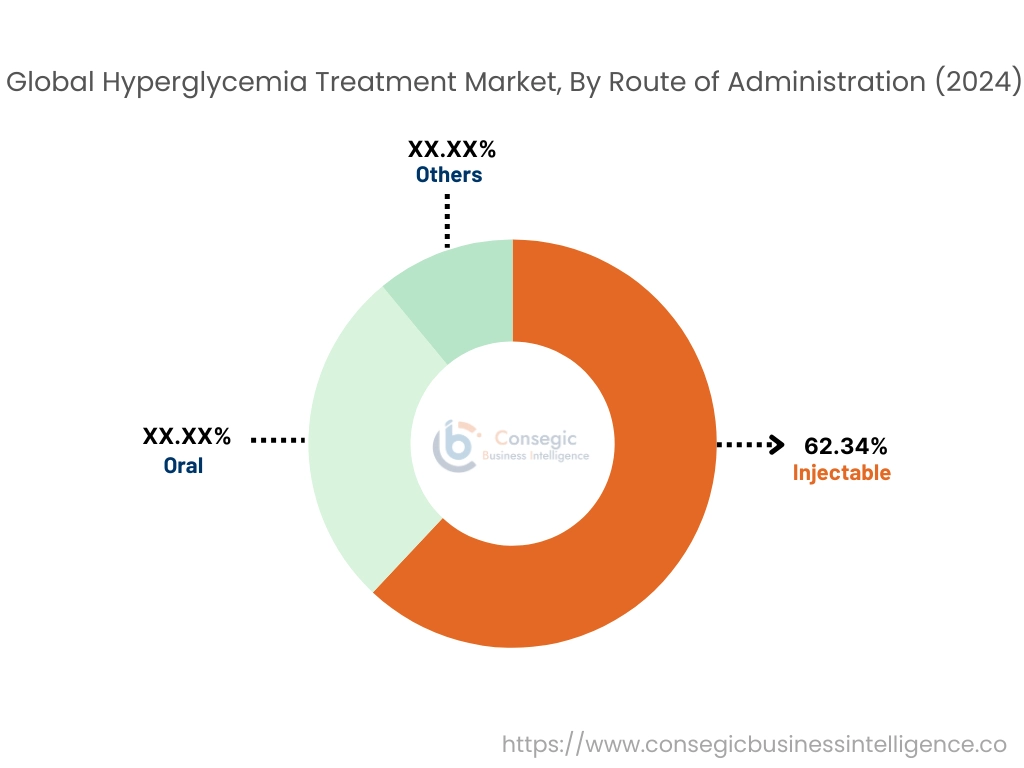
The Route of Administration segment is categorized into oral, injectable and others.
Trends in the Route of Administration
- Consumer preference and trends towards Oral medications due to their convenience allowing for easy self-administration at home.
- Advancements in insulin delivery systems are improving patient convenience.
The injectable segment accounted for the largest market share of 62.34% in 2024 and is expected to grow with the highest CAGR over the forecast period.
- Insulin Therapy is most widely used with injectable route of administration for hyperglycemia medications. This includes a diverse range of insulin formulations that are personalized to specific patient needs.
- For instance, according to American Diabetes Association, insulin is used as a primary injectable for treatment of type 2 diabetes. GLP-1 RA is one such primary injectable therapies available that is administered subcutaneously.
- Advancements in insulin delivery systems creating hyperglycemia treatment market opportunities for market growth. The development of insulin pens, pre-filled syringes, and others have improved ease of use and convenience. This has led to the improvement of patient treatment.
- Outside of insulin, other injectable medications offer distinct therapeutic benefits. A few of these medications are GLP-1 receptor agonists.
- Thus, due to the above-mentioned factors, the injectable segment is the dominating one and is expected to register at the fastest CAGR in the market.
By End Use:
Based on end use, the market is categorized into hospitals and clinics, retail pharmacy, and others.
Trends in the End Use:
- The integration of digital health technologies to further enhance the delivery of hyperglycemia treatment.
The hospitals and clinics segment accounted for the largest market share in 2024.
- Hospitals and clinics currently hold the largest share of the hyperglycemia treatment industry. They play a vital role in diabetes care, right from the initial diagnosis to the ongoing management.
- Additionally, hospitals are equipped with advanced equipment to cater for all kinds of cases including hyperglycemia cases. Several such cases often require immediate hospitalization
- For instance, according to a research study conducted by UC Davis health, roughly 40% of the hospitalized patient are hyperglycemic. The causes are either hyperglycemia that is stress induced or due to diabetes
- Furthermore, based on the market analysis, clinics also provide suitable options for treatment of hyperglycemia including insulin therapy amongst others. This comprehensive care delivered within the hospital and clinic setting is driving the market growth and hyperglycemia treatment market tends.
The retail pharmacy segment is expected to grow at the fastest CAGR over the forecast period.
- The retail pharmacy segment is driven by factors such as their offering convenient access to medications. Additionally, they offer medications with extended hours and widespread availability.
- Moreover, the increasing role of retail pharmacies in chronic disease management, including diabetes, is a major contributor.
- In addition to this, the increase global prevalence of diabetes significantly increases the demand for medications
- Furthermore, the availability of generic medications for many hyperglycemia treatments reduces costs. They also make these medicines more affordable and are accessible to a wider patient population.
- Based on market analysis, technological advancements such as home delivery services are further creating potential hyperglycemia treatment market trends.
Regional Analysis:
The regional segment includes North America, Europe, Asia Pacific, the Middle East and Africa, and Latin America.
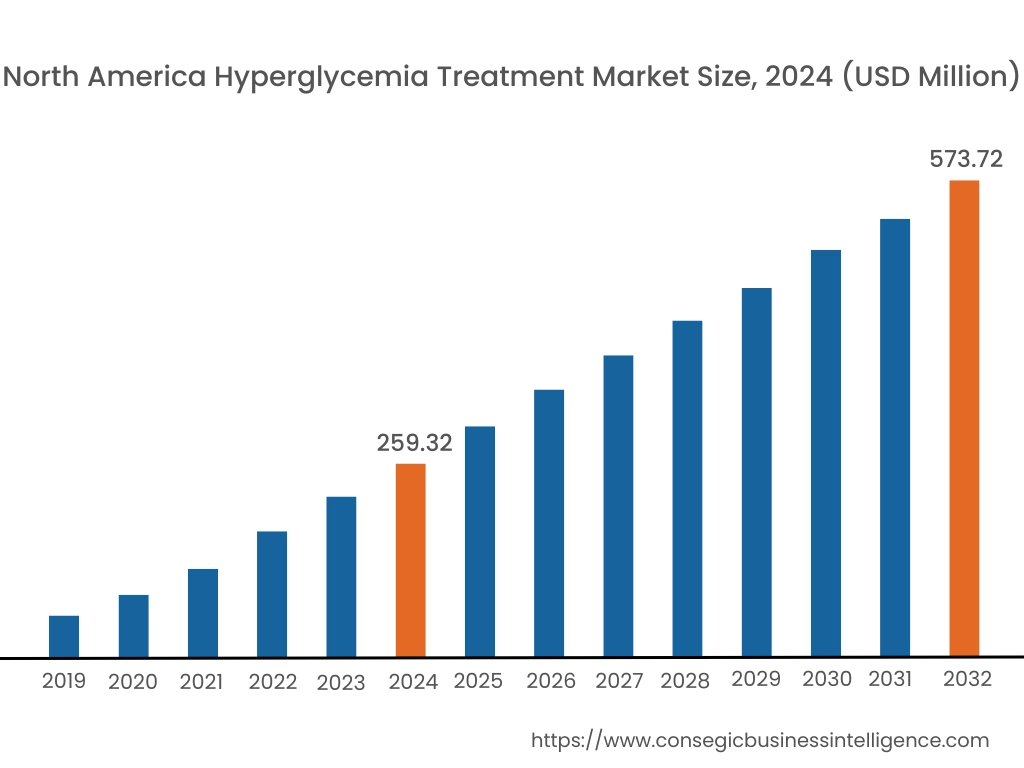
In 2024, North America accounted for the highest hyperglycemia treatment market share at 40.48% and was valued at USD 259.32 Million and is expected to reach USD 573.72 Million in 2032. In North America, the U.S. accounted for the hyperglycemia treatment market share of 70.17% during the base year of 2024. Hospitals are the primary end users for hyperglycemia treatment in the North American Market. They provide all-inclusive diabetes care including services such as treatment options from initial diagnosis until the treatment management of the condition. Additionally, they are crucial for controlling acute hyperglycemic cases such as diabetic ketoacidosis. Diabetic ketoacidosis is such a case where there is a requirement of immediate hospitalization. Similarly, clinics also help in treatment for such cases by providing treatment options such as insulin therapy, adjustments in medication and others.
- For instance, in 2024, according to NCBI, the incidence of hyperglycemia cases in non-critically ill patients that are hospitalized to be around 22% to 46% in the U.S.
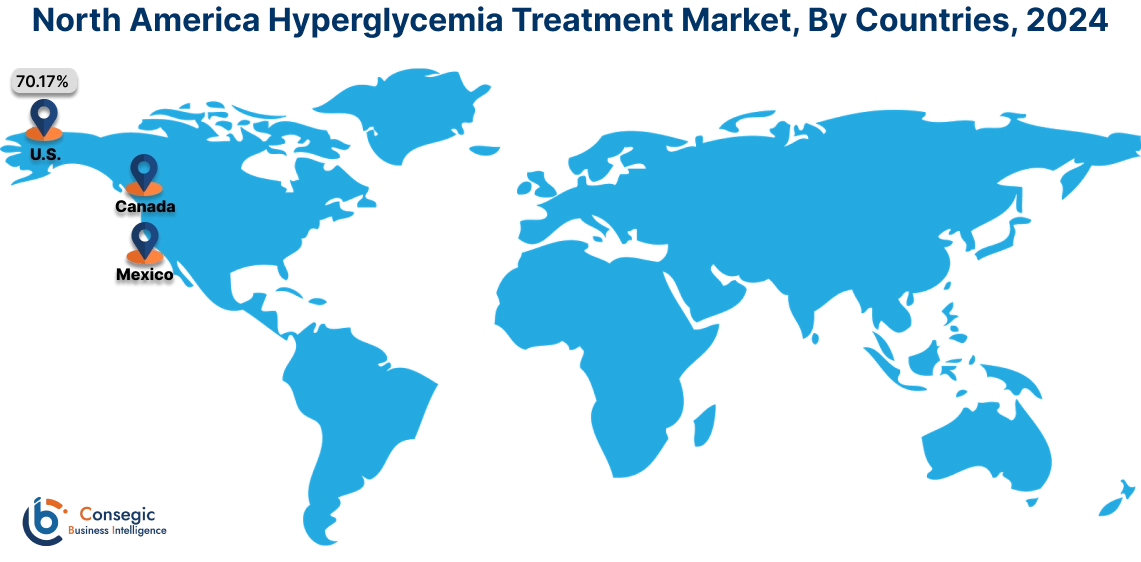
Furthermore, as per the hyperglycemia treatment market analysis, key players are significantly investing in the new innovative development of treatment options for hyperglycemia. Overall, due to these initiatives by the key players, significant advancement of diabetes care in North America are observed.
In Asia Pacific, the hyperglycemia treatment market is experiencing the fastest growth with a CAGR of 13.8% over the forecast period. Insulin therapy is the primary treatment type for hyperglycemia management for individuals with diabetes across the Asia Pacific region. Major types of hyperglycemia patients include type 1 diabetes and type 2 diabetes individuals. Type 2 individuals are those whose condition is not appropriate with the help of oral medications. Additionally, due to the growing cases of diabetes in the region, insulin therapy is expected to be a crucial therapy even in the forecast period for Asia Pacific Market. Insulin therapy primarily relies on the injectable route of administration. This method includes a range of different formulations personalized to individual patient needs. However, to maintain persistent compliance to insulin therapy treatments is expected to be challenging for some patients. In conclusion, based on the hyperglycemia treatment market analysis, insulin therapy plays a critical role in managing hyperglycemia across the Asia Pacific region.
The European market for hyperglycemia treatment is well-established. This provides a strong base for the treatment of hyperglycemia. The region consists of different specialized diabetes clinics. These clinics provide comprehensive care, that includes diagnosis, treatment, and others for hyperglycemia patients. Additionally, the European healthcare systems are aiming towards advancements in diabetes care. The major focus is on advanced monitoring and treatment options including insulin pumps as well. European countries are also investing in the healthcare industry for management of several chronic diseases like diabetes. This initiative is in the field of research, development, and implementation of new treatment options. However, addressing healthcare disparities and ensuring the long-term sustainability of healthcare systems are a few challenges faced in this region. These above-mentioned factors drive the development and commercialization of advanced treatment solutions, thus driving the hyperglycemia treatment market trends.
Obesity is a growing health concern in the Middle East and Africa. This obesity issue is contributing significantly to the rising cases of type 2 diabetes. Factors such as dietary changes, along with active and busy lifestyles, have fueled the obesity issue in these regions. The rising prevalence of obesity-related type 2 diabetes increases the demand for hyperglycemia treatment options. Few of the treatment options majorly used are medications, insulin therapy, and others. Online pharmacies in these regions offer potential solutions to address the challenges of accessing treatment in the Middle East and Africa. They improve access to medications, particularly for individuals residing in remote areas. Furthermore, based on the market analysis, online pharmacies are offering competitive pricing and discounts, making medications more affordable for patients.
Diabetes is rapidly growing in Latin America due to urbanization and associated lifestyle changes. Lifestyle changes include increased consumption of processed foods and sugary drinks amongst others. Additionally, certain populations within Latin America show a higher genetic tendency to diabetes. The high prevalence of diabetes in Latin America directly translates to a higher incidence of hyperglycemia. This requires a robust healthcare system to effectively manage hyperglycemia. Some OTC medications, such as certain dietary supplements, are sometimes used to support blood sugar control. However, the primary focus for managing hyperglycemia in Latin America is on lifestyle modifications. Regular physical activity is crucial to improve insulin sensitivity. Addressing the causes of diabetes is crucial for effectively managing hyperglycemia in the Latin America market.
Top Key Players and Market Share Insights:
The global Hyperglycemia Treatment Market is highly competitive with major players providing products to the national and international markets. Key players are adopting several strategies in research and development (R&D) and product innovation to hold a strong position in the global Hyperglycemia Treatment market. Key players in the Hyperglycemia Treatment industry include-
- Novo Nordisk A/S (Denmark)
- Merck & Company Inc. (Germany)
- Bayer AG (Germany)
- Bristol-Myers Squibb (U.S.)
- Abbott Laboratories (U.S.)
- Medtronic (Ireland)
- Johnson & Johnson Services Inc. (U.S.)
- Teva Pharmaceuticals Ltd. (Israel)
- Eli Lilly and Company (U.S.)
- Sanofi S.A. (U.S.)
Hyperglycemia Treatment Market Report Insights :
| Report Attributes | Report Details |
| Study Timeline | 2019-2032 |
| Market Size in 2032 | USD 1,543.44 Million |
| CAGR (2025-2032) | 11.7% |
| By Treatment Type |
|
| By Route of Administration |
|
| By End User |
|
| By Region |
|
| Key Players |
|
| North America | U.S. Canada Mexico |
| Europe | U.K. Germany France Spain Italy Russia Benelux Rest of Europe |
| APAC | China South Korea Japan India Australia ASEAN Rest of Asia-Pacific |
| Middle East and Africa | GCC Turkey South Africa Rest of MEA |
| LATAM | Brazil Argentina Chile Rest of LATAM |
| Report Coverage |
|
Key Questions Answered in the Report
How big is the Hyperglycemia Treatment market? −
In 2024, the Hyperglycemia Treatment market is USD 640.75 Million.
Which is the fastest-growing region in the Hyperglycemia Treatment market? +
Asia Pacific is the fastest-growing region in the Hyperglycemia Treatment market.
What specific segmentation details are covered in the Hyperglycemia Treatment market? +
By Treatment Type, Route of Administration and End Use segmentation details are covered in the Hyperglycemia Treatment market.
Who are the major players in the Hyperglycemia Treatment market? +
Sanofi S.A. (U.S.), Bayer AG (Germany), Bristol-Myers Squibb (U.S.), Abbott Laboratories (U.S.) are some of the major players in the market.
Overview
Reputation & Certifications


Our Services
- Market Intelligence & Forecasting
- Custom Research Solutions
- Market Entry Strategy
- Competitive Intelligence
- Customer Insights
- Industry Innovation Analysis
- Investment Advisory