Jump to Content
Paronychia Treatment Market - Size, Share, Industry Trends, and Forecasts (2025 - 2032)
Paronychia Treatment Market Size:
Paronychia Treatment Market size is estimated to reach over USD 1,099.49 Million by 2032 from a value of USD 630.45 Million in 2024 and is projected to grow by USD 664.61 Million in 2025, growing at a CAGR of 7.2% from 2025 to 2032.
Paronychia Treatment Market Scope & Overview:
The paronychia treatment market focuses on the diagnosis and management of paronychia, an infection of the skin around the nails, which can be acute or chronic. This market includes pharmaceutical treatments such as topical and systemic antibiotics, antifungal medications, and anti-inflammatory agents, as well as surgical interventions for severe cases. Key characteristics of paronychia treatments include their ability to address underlying infections, alleviate pain and inflammation, and restore nail and skin health.
The benefits include rapid symptom relief, prevention of complications such as abscess formation, and improved quality of life for patients. Applications span dermatology clinics, hospitals, and general healthcare practices where diagnosis and treatment of nail infections are common. End-users include healthcare providers, dermatologists, and patients, driven by increasing incidence of nail infections, rising awareness about nail and skin health, and advancements in antifungal and antibacterial therapies targeting resistant pathogens.

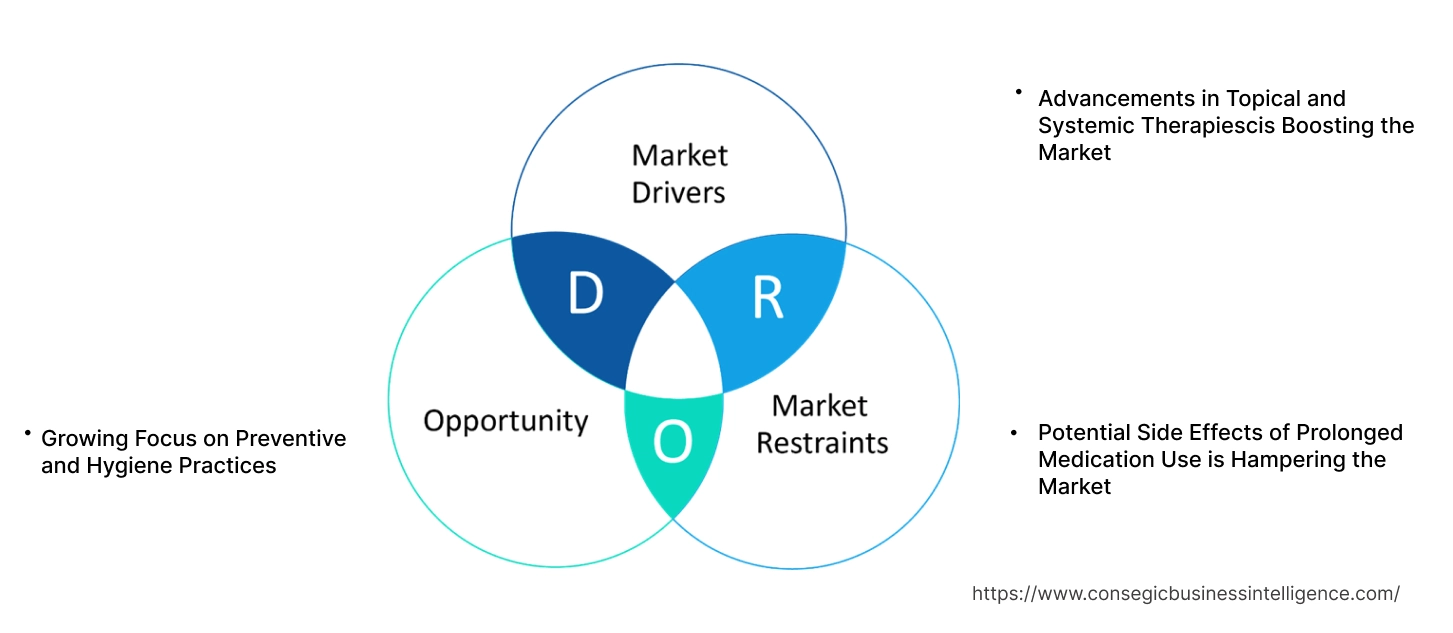
Paronychia Treatment Market Dynamics - (DRO) :
Key Drivers:
Advancements in Topical and Systemic Therapiescis Boosting the Market
The development of innovative topical and systemic therapies has significantly improved the management of paronychia. Modern antifungal creams, ointments, and oral antibiotics are now designed to target specific pathogens effectively, reducing treatment duration and enhancing patient outcomes. These advancements cater to both acute and chronic cases, offering versatile options for various severities of the condition.
Trends in drug delivery systems, such as sustained-release formulations and bioactive coatings, are further enhancing the efficacy of these treatments. Analysis underscores the importance of these innovations in addressing patient compliance issues and minimizing recurrence rates, making them a cornerstone of modern paronychia management.
Key Restraints:
Potential Side Effects of Prolonged Medication Use is Hampering the Market
While topical and systemic therapies are effective, prolonged use of antifungals and antibiotics can lead to adverse effects, including skin irritation, gastrointestinal disturbances, and the emergence of antibiotic-resistant pathogens. These complications can discourage patients from adhering to their prescribed treatment plans, particularly in cases requiring long-term management.
Trends in healthcare emphasize the importance of balancing efficacy with safety. Analysis suggests that the development of targeted and less invasive therapies will be crucial in overcoming these barriers and improving patient adherence to treatment protocols.
Future Opportunities :
Growing Focus on Preventive and Hygiene Practices
Raising awareness about proper nail care and hygiene practices is emerging as a key strategy in reducing the prevalence of paronychia. Educational initiatives targeted at high-risk populations, such as healthcare workers, food handlers, and individuals in wet work environments, emphasize preventive measures like keeping nails dry, avoiding trauma, and using protective equipment.
Trends in workplace safety and personal care are driving the adoption of preventive products, such as antimicrobial nail care solutions and protective gloves. Analysis highlights that promoting preventive care not only reduces the incidence of paronychia but also creates opportunities for early intervention, thereby easing the burden on healthcare systems.
Paronychia Treatment Market Segmental Analysis :
By Type:
Based on type, the market is segmented into acute paronychia and chronic paronychia.
The acute paronychia segment accounted for the largest revenue in paronychia treatment market share in 2024.
- Acute paronychia is a common condition caused by bacterial infection, often requiring immediate medical attention.
- The high incidence rate of acute paronychia, particularly among individuals involved in frequent water exposure or minor nail trauma, drives paronychia treatment market trends for treatment.
- Availability of effective antibiotics and topical therapies for managing acute cases has contributed to the segment’s dominance.
- Increased awareness about prompt medical care for acute infections has supported the growth of this segment.
The chronic paronychia segment is anticipated to register the fastest CAGR during the forecast period.
- Chronic paronychia is often associated with fungal infections and prolonged exposure to irritants, requiring long-term management.
- The rising prevalence of chronic conditions in individuals with occupational exposure to moisture or chemicals is driving development for advanced therapies.
- Growing adoption of antifungal medications and advanced topical treatments for chronic cases is boosting paronychia treatment market trends.
- Increasing awareness about preventive care and regular dermatological consultations for managing chronic paronychia is expected to support segment trends.
By Treatment:
Based on treatment, the market is segmented into medications, surgical intervention, and home remedies and supportive care.
The medications segment accounted for the largest revenue in paronychia treatment market share in 2024.
- Medications, including antibiotics, antifungals, and anti-inflammatory drugs, are the first line of treatment for paronychia.
- The widespread availability of topical and oral medications for both acute and chronic cases has driven surge.
- Rising awareness about self-management of mild cases through over-the-counter drugs has bolstered segment growth.
- Advances in drug formulations, such as fast-acting topical creams, are improving treatment efficacy and patient compliance.
The surgical intervention segment is anticipated to register the fastest CAGR during the forecast period.
- Surgical procedures, such as incision and drainage, are increasingly performed for severe or complicated cases of paronychia.
- Growing adoption of minimally invasive techniques in dermatological clinics is driving the trends for surgical interventions.
- Rising prevalence of recurrent paronychia requiring surgical treatment is contributing to segment development.
- Increased availability of specialized surgical services in ambulatory care and dermatology clinics is further propelling demand.
By Route of Administration:
Based on route of administration, the market is segmented into oral, topical, and injectable.
The topical segment accounted for the largest revenue share in 2024.
- Topical therapies, including antibiotics and antifungal creams, are widely used due to their ease of application and targeted action.
- Increasing paronychia treatment market opportunities in the consumer preference for non-invasive and self-administered treatments is driving the dominance of this segment.
- Advancements in formulation technology, such as quick-drying and high-penetration gels, have improved treatment outcomes.
- The growing availability of over-the-counter topical medications has further boosted segment growth.
The injectable segment is anticipated to register the fastest CAGR during the forecast period.
- Injectable treatments, including corticosteroids and antibiotics, are gaining traction for severe or complicated cases of paronychia.
- Rising adoption of injectables in hospital and specialty clinic settings is driving demand in this segment.
- Advances in injectable formulations with prolonged action and reduced side effects are enhancing patient outcomes.
- The increasing prevalence of complicated paronychia cases requiring immediate intervention is expected to propel segment advancement.
By End-User:
Based on end-user, the paronychia treatment market is segmented into hospitals, specialty dermatology clinics, ambulatory surgical centers, and homecare settings.
The hospitals segment accounted for the largest revenue share of 42.50% in 2024.
- Hospitals are key providers of comprehensive care for paronychia, offering advanced diagnostic and therapeutic services.
- Availability of multidisciplinary teams and specialized surgical units in hospitals ensures effective management of severe cases.
- Rising hospital admissions for complicated or recurrent paronychia has bolstered demand for hospital-based treatments.
- Increasing investments in hospital infrastructure and dermatology departments are supporting growth in this segment.
The specialty dermatology clinics segment is anticipated to register the fastest CAGR during the forecast period.
- Specialty dermatology clinics offer focused care for paronychia, including advanced medications and minimally invasive procedures.
- Growing consumer preference for personalized and outpatient care in dermatology clinics is driving demand.
- Expansion of dermatology clinics in urban and semi-urban areas is enhancing accessibility to specialized care.
- Collaboration between clinics and pharmaceutical companies to offer innovative treatments is further boosting growth in this segment.

Regional Analysis:
The regions covered are North America, Europe, Asia Pacific, the Middle East and Africa, and Latin America.

In 2024, North America was valued at USD 209.13 Million and is expected to reach USD 356.35 Million in 2032. In North America, the U.S. accounted for the highest share of 72.40% during the base year of 2024. North America holds a significant share in the global paronychia treatment market, driven by a high prevalence of skin and nail infections, increasing awareness about personal hygiene, and advanced healthcare infrastructure. As per the paronychia treatment market analysis the U.S. dominates the region with strong demand for antifungal and antibacterial treatments, particularly in clinical and outpatient settings. Canada contributes with rising adoption of topical medications and growing awareness about nail health in both rural and urban areas. However, the high cost of prescription medications and limited awareness about preventive measures in certain regions may pose challenges.

In Asia Pacific, the market is experiencing the fastest growth with a CAGR of 7.6% over the forecast period. The paronychia treatment market analysis shows, it is fueled by a large population, increasing prevalence of fungal infections, and improving healthcare infrastructure in China, India, and Japan. China’s analysis portrays it dominates the region with rising demand for antifungal treatments due to a high burden of nail and skin infections. India’s expanding healthcare sector supports the use of both prescription and over-the-counter treatments for acute and chronic paronychia. Japan focuses on advanced and innovative treatments, leveraging its strong pharmaceutical industry to address nail health concerns. However, affordability challenges and limited access to specialized care in rural areas may hinder growth in certain parts of the region.
Europe is a prominent market for paronychia treatment, supported by a growing elderly population, high awareness of skin infections, and advanced dermatological care. Countries like Germany, France, and the UK are key contributors. Germany drives demand through its focus on advanced topical and systemic therapies, supported by a strong pharmaceutical industry. France emphasizes preventive care and the use of prescription medications to manage chronic cases of paronychia. The UK is witnessing increasing adoption of over-the-counter antifungal and antibacterial treatments due to growing public awareness. However, regulatory restrictions on the sale of certain medications may limit paronychia treatment market expansion.
The Middle East & Africa region is witnessing steady growth in the paronychia treatment market, driven by increasing healthcare investments and rising awareness about personal hygiene. In the Middle East, countries like Saudi Arabia and the UAE are adopting advanced topical and oral medications to treat paronychia in hospitals and clinics. In Africa, South Africa is emerging as a key market, focusing on improving access to affordable treatments and promoting awareness about fungal and bacterial infections. However, limited healthcare infrastructure in many parts of the region may restrict broader market development.
Latin America is an emerging market for paronychia treatment, with Brazil and Mexico leading the region. Brazil’s growing healthcare sector and rising prevalence of skin infections drive paronychia treatment market trends for antifungal and antibacterial medications. Mexico focuses on increasing access to over-the-counter treatments and educating the public about proper nail hygiene to prevent infections. The region also sees demand for natural and herbal remedies alongside conventional treatments. However, economic instability and inconsistent healthcare infrastructure may pose challenges to market expansion in smaller economies.
Top Key Players and Market Share Insights:
The paronychia treatment market is highly competitive with major players providing products to the national and international markets. Key players are adopting several strategies in research and development (R&D), product innovation, and end-user launches to hold a strong position in the paronychia treatment market. Key players in the paronychia treatment industry include -
- Pfizer Inc. (United States)
- Novartis AG (Switzerland)
- Teva Pharmaceutical Industries Ltd. (Israel)
- Sun Pharmaceutical Industries Ltd. (India)
- Cipla Limited (India)
- GlaxoSmithKline plc (United Kingdom)
- Johnson & Johnson (United States)
- Sanofi S.A. (France)
- Roche Holding AG (Switzerland)
- Bayer AG (Germany)
Paronychia Treatment Market Report Insights :
| Report Attributes | Report Details |
| Study Timeline | 2019-2032 |
| Market Size in 2032 | USD 1,099.49 Million |
| CAGR (2025-2032) | 7.2% |
| By Type |
|
| By Treatment |
|
| By Route of Administration |
|
| By End-User |
|
| By Region |
|
| Key Players |
|
| North America | U.S. Canada Mexico |
| Europe | U.K. Germany France Spain Italy Russia Benelux Rest of Europe |
| APAC | China South Korea Japan India Australia ASEAN Rest of Asia-Pacific |
| Middle East and Africa | GCC Turkey South Africa Rest of MEA |
| LATAM | Brazil Argentina Chile Rest of LATAM |
| Report Coverage |
|
Key Questions Answered in the Report
What is the projected market size of the Paronychia Treatment Market by 2032? −
Paronychia Treatment Market size is estimated to reach over USD 1,099.49 Million by 2032 from a value of USD 630.45 Million in 2024 and is projected to grow by USD 664.61 Million in 2025, growing at a CAGR of 7.2% from 2025 to 2032.
What are the key drivers of the Paronychia Treatment Market? +
Key drivers include advancements in topical and systemic therapies, rising awareness about nail and skin health, and increasing incidence of nail infections due to occupational and environmental factors.
What challenges does the market face? +
Challenges include potential side effects of prolonged medication use, emergence of antibiotic resistance, and limited awareness about preventive measures for paronychia.
Overview
Reputation & Certifications


Our Services
- Market Intelligence & Forecasting
- Custom Research Solutions
- Market Entry Strategy
- Competitive Intelligence
- Customer Insights
- Industry Innovation Analysis
- Investment Advisory