Jump to Content
Lactose Intolerance Treatment Market - Size, Share, Industry Trends, and Forecasts (2025 - 2032)
Lactose Intolerance Treatment Market Size:
Lactose Intolerance Treatment Market size is estimated to reach over USD 49,425.67 Million by 2032 from a value of USD 28340.72 Million in 2024 and is projected to grow by USD 29,876.27 Million in 2025, growing at a CAGR of 7.2% from 2025 to 2032.
Lactose Intolerance Treatment Market Scope & Overview:
The lactose intolerance treatment is a therapeutic approaches to manage lactose intolerance, a condition caused by the inability to digest lactose due to insufficient levels of the lactase enzyme. The market includes pharmaceutical therapies such as lactase enzyme supplements, probiotics, and dietary modifications to alleviate symptoms like bloating, diarrhea, and abdominal discomfort.
Key characteristics of lactose intolerance treatments include ease of use, fast-acting relief, and suitability for various patient demographics, including infants, adults, and elderly populations. The benefits include improved digestion, enhanced quality of life, and prevention of complications associated with unmanaged lactose intolerance.
Applications span over-the-counter enzyme supplements, prescription medications, and functional foods designed to support lactose digestion. End-users include individual consumers, healthcare providers, and nutritional product manufacturers, driven by increasing awareness of digestive health, growing demand for enzyme-based supplements, and rising prevalence of lactose intolerance globally.
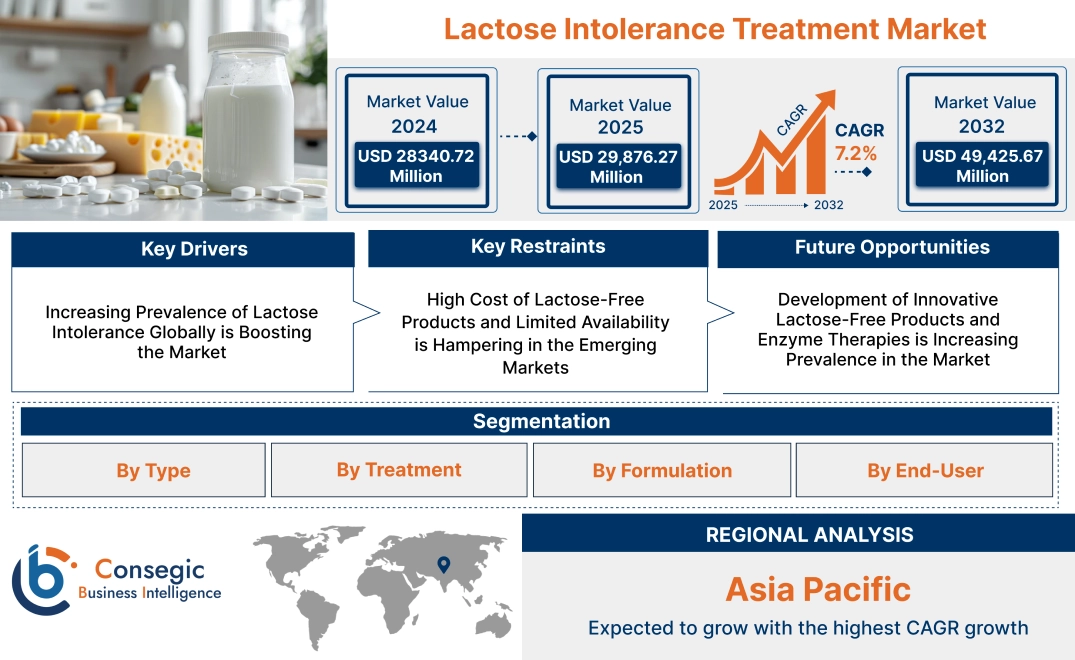
Lactose Intolerance Treatment Market Dynamics - (DRO) :
Key Drivers:
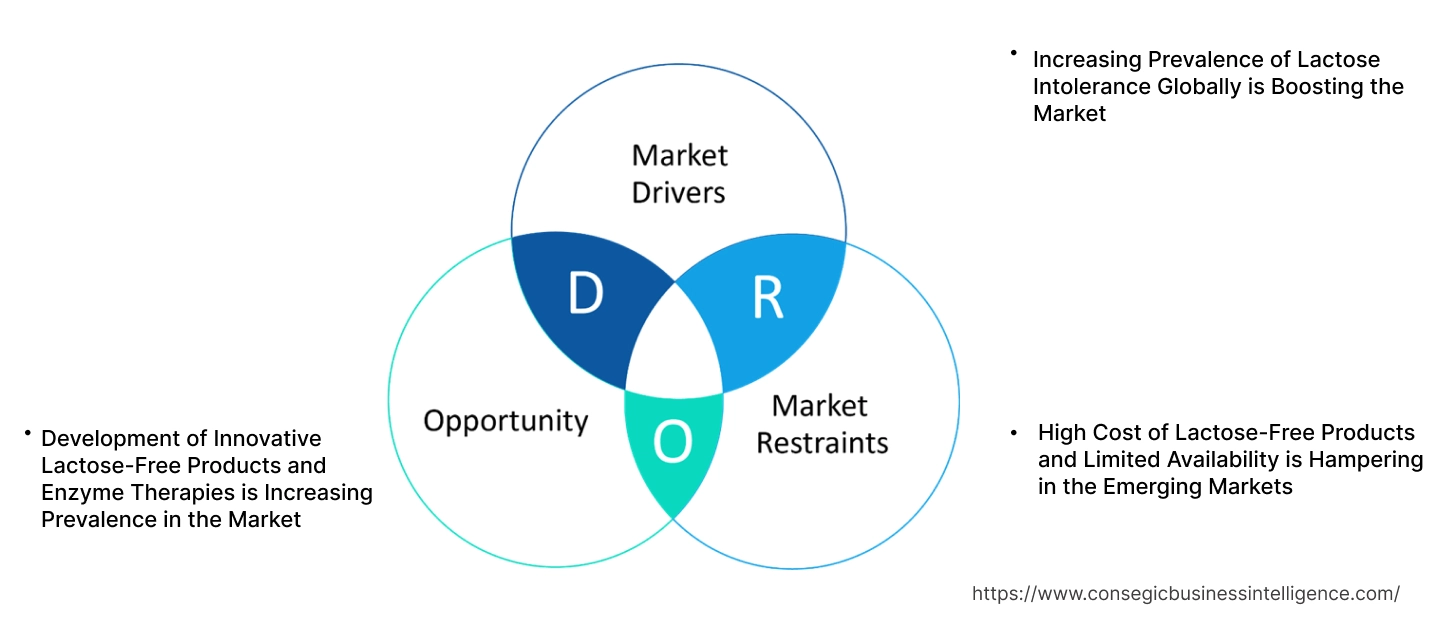
Increasing Prevalence of Lactose Intolerance Globally is Boosting the Market
The rising prevalence of lactose intolerance worldwide is a key driver of the lactose intolerance treatment market. Lactose intolerance affects a significant portion of the global population, particularly in regions such as Asia-Pacific, Africa, and South America, where a higher percentage of individuals experience difficulty digesting lactose. The condition leads to symptoms such as bloating, diarrhea, and abdominal pain, driving the demand for effective management solutions. The growing awareness of lactose intolerance and its impact on quality of life has led to increased adoption of treatment options, including lactase enzyme supplements, probiotics, and lactose-free food and beverage products. Additionally, the rising focus on gut health and dietary modifications to manage intolerance is further fueling lactose intolerance treatment market expansion.
Key Restraints:
High Cost of Lactose-Free Products and Limited Availability is Hampering in the Emerging Markets
The high cost of lactose-free products and their limited availability in emerging markets are significant restraints for the market. While lactose-free dairy alternatives and enzyme supplements are widely available in developed regions, they remain inaccessible to many individuals in low- and middle-income countries due to affordability and distribution challenges. Furthermore, the lack of awareness about the availability of lactose-free solutions in these regions limits market penetration. Many consumers in emerging markets rely on dietary avoidance rather than investing in supplements or specialized products, which restricts market growth in these regions.
Future Opportunities :
Development of Innovative Lactose-Free Products and Enzyme Therapies is Increasing Prevalence in the Market
The development of innovative lactose-free products and advanced enzyme therapies presents significant advancement opportunities for the lactose intolerance treatment market. Manufacturers are focusing on creating lactose-free alternatives that closely replicate the taste and texture of traditional dairy products, enhancing consumer satisfaction. Additionally, advancements in enzyme formulations, such as delayed-release lactase supplements, are improving the efficacy and convenience of managing lactose intolerance. The integration of probiotics into treatment regimens to support gut health and enhance lactose digestion is another area of opportunity. With increasing consumer trends for plant-based and functional food products, the market is also poised for development in plant-based lactose-free alternatives, including almond, oat, and soy-based dairy substitutes. Companies investing in R&D to develop innovative, accessible, and cost-effective solutions are expected to gain a competitive edge in the market.
These dynamics highlight the growing demand for effective lactose intolerance treatment solutions, driven by the increasing prevalence of the condition and the rising focus on dietary management. While challenges related to affordability and accessibility persist, the development of innovative products and therapies presents a promising avenue for market growth and expansion.
Lactose Intolerance Treatment Market Segmental Analysis :
By Type:
Based on type, the market is segmented into primary lactose intolerance, secondary lactose intolerance, congenital lactose intolerance, and developmental lactose intolerance.
The primary lactose intolerance segment accounted for the largest revenue in lactose intolerance treatment market share in 2024.
- Primary lactose intolerance, the most common form, results from a natural decline in lactase production with age, particularly in adults.
- High prevalence in regions with significant genetic predisposition, such as Asia-Pacific and Africa, drives this segment's dominance.
- Increasing awareness about managing primary lactose intolerance through supplements and dietary modifications supports lactose intolerance treatment market growth.
- The growing availability of over-the-counter enzyme supplements has further fueled adoption in this segmental analysis.
The secondary lactose intolerance segment is anticipated to register the fastest CAGR during the forecast period.
- Secondary lactose intolerance arises due to gastrointestinal conditions or treatments, such as Crohn's disease or chemotherapy, increasing its incidence rate.
- Rising prevalence of gastrointestinal disorders globally is driving demand for treatment solutions targeting this condition.
- Advancements in enzyme therapy and dietary formulations are improving management and outcomes for patients with secondary lactose intolerance.
- Growing awareness about the condition and its link to other gastrointestinal diseases is expected to propel lactose intolerance treatment market trends in this segment analysis.
By Treatment:
Based on treatment, the market is segmented into enzyme supplements, dietary supplements, medications, and dietary modifications.
The enzyme supplements segment accounted for the largest revenue in lactose intolerance treatment market share in 2024.
- Enzyme supplements, such as lactase tablets and drops, are widely used to aid digestion of lactose-containing foods, ensuring convenience and effectiveness.
- Increasing consumer preference for non-invasive and readily available solutions supports the dominance of this segment.
- Growing adoption of enzyme supplements among individuals with moderate to severe lactose intolerance is boosting lactose intolerance treatment market trends.
- The availability of enzyme supplements in various forms, including chewables and liquid drops, enhances accessibility and user compliance.
The dietary modifications segment is anticipated to register the fastest CAGR during the forecast period.
- Dietary modifications, such as the adoption of lactose-free and plant-based alternatives, are gaining popularity for managing lactose intolerance.
- Rising consumer preference for natural and sustainable dietary solutions is driving demand in this segment.
- Increasing availability of lactose-free products in retail and online channels is expanding the market for dietary modifications.
- Awareness campaigns by healthcare providers and nutritionists about managing lactose intolerance through diet are expected to propel lactose intolerance treatment market growth.
By Formulation:
Based on formulation, the market is segmented into tablets, capsules, and liquid.
The tablets segment accounted for the largest revenue share in 2024.
- Tablets are the most widely used formulation due to their convenience, affordability, and effectiveness in managing lactose intolerance.
- Their portability and extended shelf life make them a preferred choice for individuals seeking on-the-go solutions.
- Increasing availability of chewable and flavored tablet options has enhanced consumer preference for this formulation.
- Rising trends for over-the-counter enzyme supplements in tablet form supports the dominance of this segment.
The liquid segment is anticipated to register the fastest CAGR during the forecast period.
- Liquid formulations are gaining traction for their ease of use, particularly among pediatric and elderly patients.
- Their suitability for mixing with food and beverages makes them a versatile option for managing lactose intolerance.
- Rising innovations in liquid enzyme formulations, including improved taste and potency, are driving advancement.
- Expanding adoption of liquid supplements in homecare settings is expected to propel this segment.
By End-User:
Based on end-user, the market is segmented into hospitals, specialty clinics, and homecare settings.
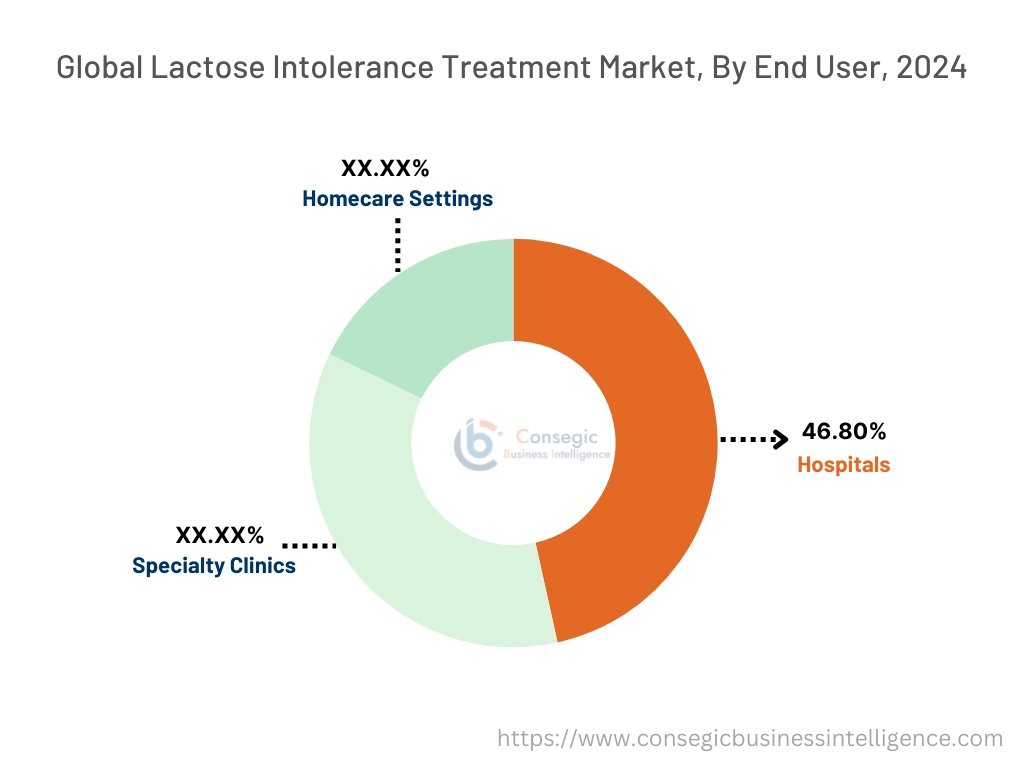
The hospitals segment accounted for the largest revenue share of 46.80% in 2024.
- Hospitals remain the primary setting for diagnosing and managing severe cases of lactose intolerance, especially congenital forms.
- Availability of multidisciplinary care teams and advanced diagnostic tools supports the dominance of hospitals in this market.
- Rising hospital admissions for gastrointestinal disorders linked to lactose intolerance are driving lactose intolerance treatment market trends.
- Increasing investments in hospital infrastructure and access to specialized dietary consultations are further boosting growth.
The homecare settings segment is anticipated to register the fastest CAGR during the forecast period.
- Growing preference for at-home treatment solutions, including enzyme and dietary supplements, is driving this segment.
- Advancements in telemedicine and remote consultation services are enhancing accessibility to personalized lactose intolerance management.
- Rising adoption of lactose-free products and supplements for daily use in homecare settings is boosting demand.
- Increasing awareness about self-management of lactose intolerance supports development in this segment.
Regional Analysis:
The regions covered are North America, Europe, Asia Pacific, the Middle East and Africa, and Latin America.
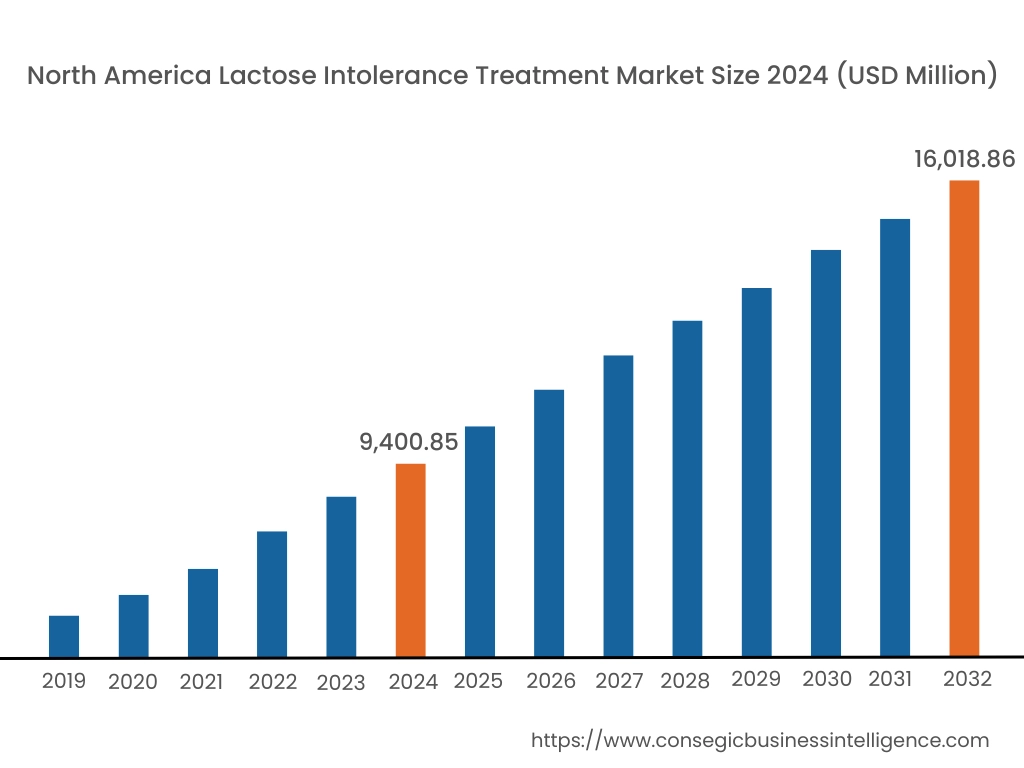
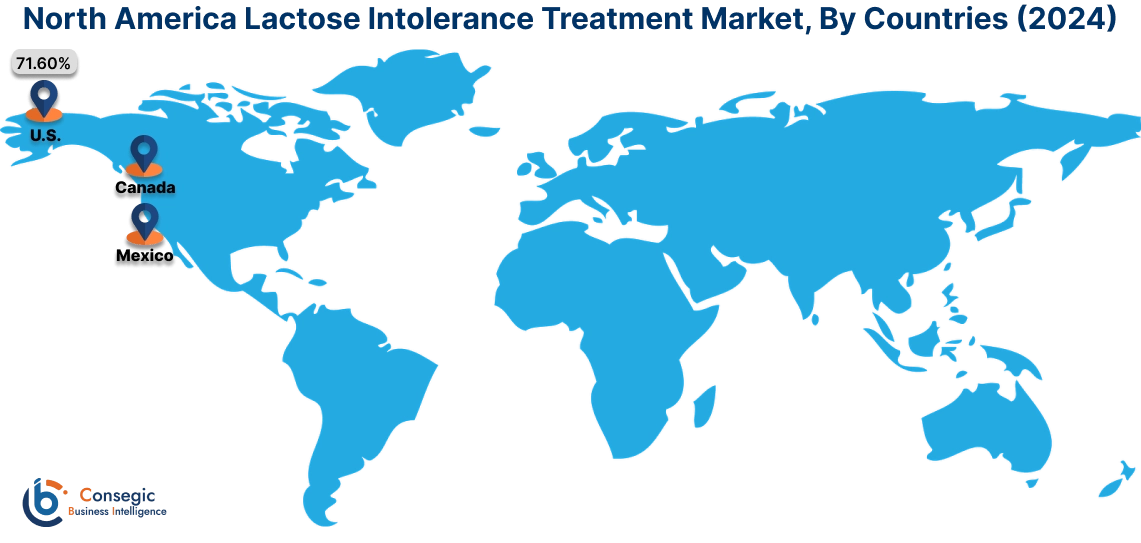
In 2024, North America was valued at USD 9,400.85 Million and is expected to reach USD 16,018.86 Million in 2032. In North America, the U.S. accounted for the highest share of 71.60% during the base year of 2024. North America holds a significant share in the global lactose intolerance treatment market, driven by increasing awareness of lactose intolerance and the availability of a wide range of treatment options. The U.S. dominates the region with growing trends for lactase enzyme supplements, lactose-free dairy products, and probiotic-based solutions. As per the lactose intolerance treatment market analysis, Canada contributes through rising adoption of lactose-free diets and increasing healthcare initiatives to address digestive disorders. However, the high cost of lactose-free products and limited awareness in rural areas may hinder market growth.
In Asia Pacific, the market is experiencing the fastest growth with a CAGR of 7.6% over the forecast period. The lactose intolerance treatment market analysis, is fueled by a high prevalence of lactose intolerance, increasing urbanization, and growing demand for lactose-free products in China, India, and Japan. China dominates the region with rising awareness about digestive health and increasing availability of lactose-free dairy products in urban areas. India’s expanding healthcare infrastructure supports the adoption of lactase enzyme supplements and dietary solutions, particularly among urban populations. Japan emphasizes the use of advanced probiotic formulations and lactose-free beverages, leveraging its strong R&D capabilities in nutritional sciences. However, affordability challenges and limited access to lactose-free options in rural areas may restrict lactose intolerance treatment market opportunities.
Europe is a prominent market for lactose intolerance treatment, supported by a high prevalence of lactose intolerance analysis, particularly in Southern and Eastern European countries, and a strong focus on dietary solutions. Countries like Germany, France, and the UK are key contributors. As per the analysis, Germany drives demand through its robust dairy industry and extensive availability of lactose-free products. France emphasizes the use of probiotics and dietary supplements for managing lactose intolerance, while the UK focuses on increasing awareness and promoting lactose-free alternatives in retail and healthcare sectors. However, stringent EU regulations on food labeling and ingredients may pose challenges for manufacturers.
The Middle East & Africa region is witnessing steady growth in the lactose intolerance treatment market, driven by increasing awareness of digestive health and rising trends for lactose-free dairy alternatives. In the Middle East, countries like Saudi Arabia and the UAE are adopting lactose-free diets and supplements to address a growing prevalence of lactose intolerance. In Africa, South Africa is emerging as a key market, focusing on improving access to lactose-free products and educational initiatives about lactose intolerance. However, limited local production capabilities and reliance on imports may restrict broader market expansion in the region.
Latin America is an emerging market for lactose intolerance treatment, with Brazil and Mexico leading the region. Brazil’s growing healthcare sector and increasing awareness about lactose intolerance drive trends for dietary solutions, including lactose-free milk and lactase enzyme supplements. Mexico focuses on integrating educational programs and promoting lactose-free products through retail and healthcare channels. The region also benefits from increasing collaborations with international food and supplement companies to improve accessibility. However, economic instability and inconsistent healthcare infrastructure in smaller economies may pose challenges to market expansion.
Top Key Players and Market Share Insights:
The lactose intolerance treatment market is highly competitive with major players providing products to the national and international markets. Key players are adopting several strategies in research and development (R&D), product innovation, and end-user launches to hold a strong position in the lactose intolerance treatment market. Key players in the lactose intolerance treatment industry include -
- Abbott Laboratories (United States)
- Nestlé S.A. (Switzerland)
- Amway Corporation (United States)
- Alpro (part of Danone S.A.) (Belgium)
- DSM Nutritional Products (Netherlands)
- Bayer AG (Germany)
- Johnson & Johnson (United States)
- Pfizer Inc. (United States)
- Procter & Gamble Co. (United States)
- Hansen Holding A/S (Denmark)
Lactose Intolerance Treatment Market Report Insights :
| Report Attributes | Report Details |
| Study Timeline | 2019-2032 |
| Market Size in 2032 | USD 49,425.67 Million |
| CAGR (2025-2032) | 7.2% |
| By Type |
|
| By Treatment |
|
| By Formulation |
|
| By End-User |
|
| By Region |
|
| Key Players |
|
| North America | U.S. Canada Mexico |
| Europe | U.K. Germany France Spain Italy Russia Benelux Rest of Europe |
| APAC | China South Korea Japan India Australia ASEAN Rest of Asia-Pacific |
| Middle East and Africa | GCC Turkey South Africa Rest of MEA |
| LATAM | Brazil Argentina Chile Rest of LATAM |
| Report Coverage |
|
Key Questions Answered in the Report
What is the projected size of the Lactose Intolerance Treatment Market by 2032? −
Lactose Intolerance Treatment Market size is estimated to reach over USD 49,425.67 Million by 2032 from a value of USD 28340.72 Million in 2024 and is projected to grow by USD 29,876.27 Million in 2025, growing at a CAGR of 7.2% from 2025 to 2032.
What are the key drivers for the Lactose Intolerance Treatment Market? +
The increasing prevalence of lactose intolerance globally, particularly in regions such as Asia-Pacific and Africa, is a primary driver. Growing awareness about digestive health and the rising demand for enzyme-based supplements and lactose-free products are also boosting market growth.
What challenges does the Lactose Intolerance Treatment Market face? +
High costs and limited availability of lactose-free products in emerging markets hinder market penetration. Additionally, lack of awareness about treatment options in low-income regions poses a significant challenge.
Which type dominates the Lactose Intolerance Treatment Market? +
The primary lactose intolerance segment holds the largest market share, driven by its high prevalence globally and the availability of enzyme supplements for effective management.
Overview
Reputation & Certifications


Our Services
- Market Intelligence & Forecasting
- Custom Research Solutions
- Market Entry Strategy
- Competitive Intelligence
- Customer Insights
- Industry Innovation Analysis
- Investment Advisory