Jump to Content
Leigh Syndrome Treatment Market - Size, Share, Industry Trends, and Forecasts (2025-2032)
Leigh Syndrome Treatment Market Size:
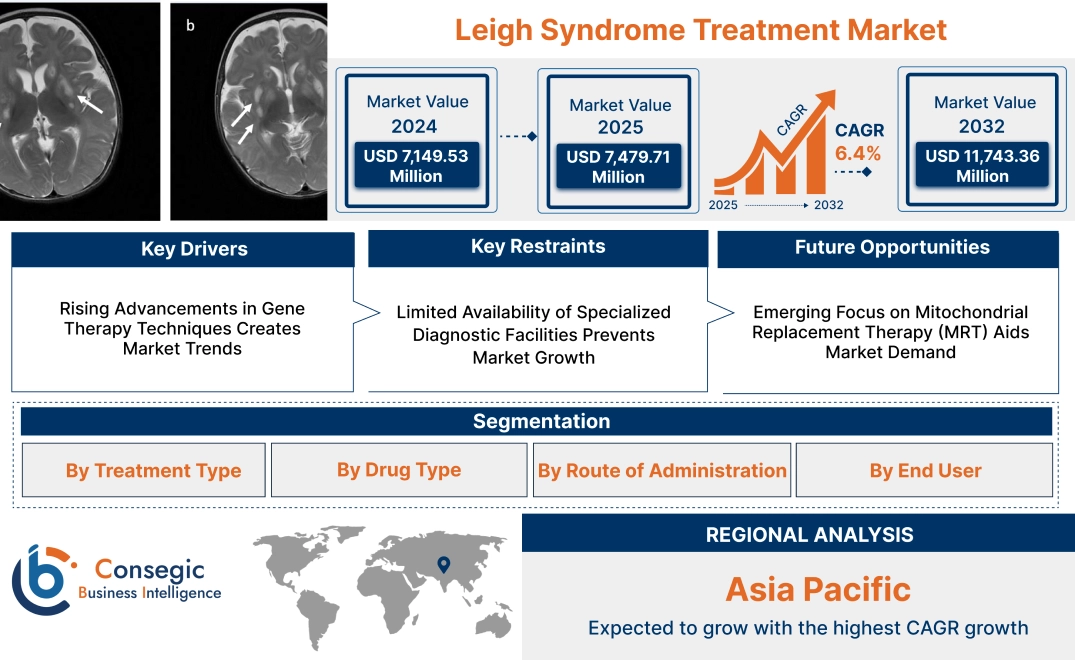
Leigh Syndrome Treatment Market size is estimated to reach over USD 11,743.36 Million by 2032 from a value of USD 7,149.53 Million in 2024 and is projected to grow by USD 7,479.71 Million in 2025, growing at a CAGR of 6.4 % from 2025 to 2032.
Leigh Syndrome Treatment Market Scope & Overview:
Leigh syndrome is a rare, progressive neurological disorder caused by genetic mutations affecting energy production in mitochondria. Treatments for Leigh syndrome aim to manage symptoms, slow disease progression, and improve quality of life. Therapeutic approaches include nutritional supplements, respiratory support, and targeted therapies addressing mitochondrial dysfunction. These treatments enhance energy metabolism, reduce symptoms, and improve patient outcomes.
Leigh syndrome treatments are primarily utilized in hospitals, specialized clinics, and research centers. The market serves the healthcare sector by providing advanced treatment options for this complex disorder, benefiting patients and medical professionals worldwide.
Leigh Syndrome Treatment Market Dynamics - (DRO) :
Key Drivers:
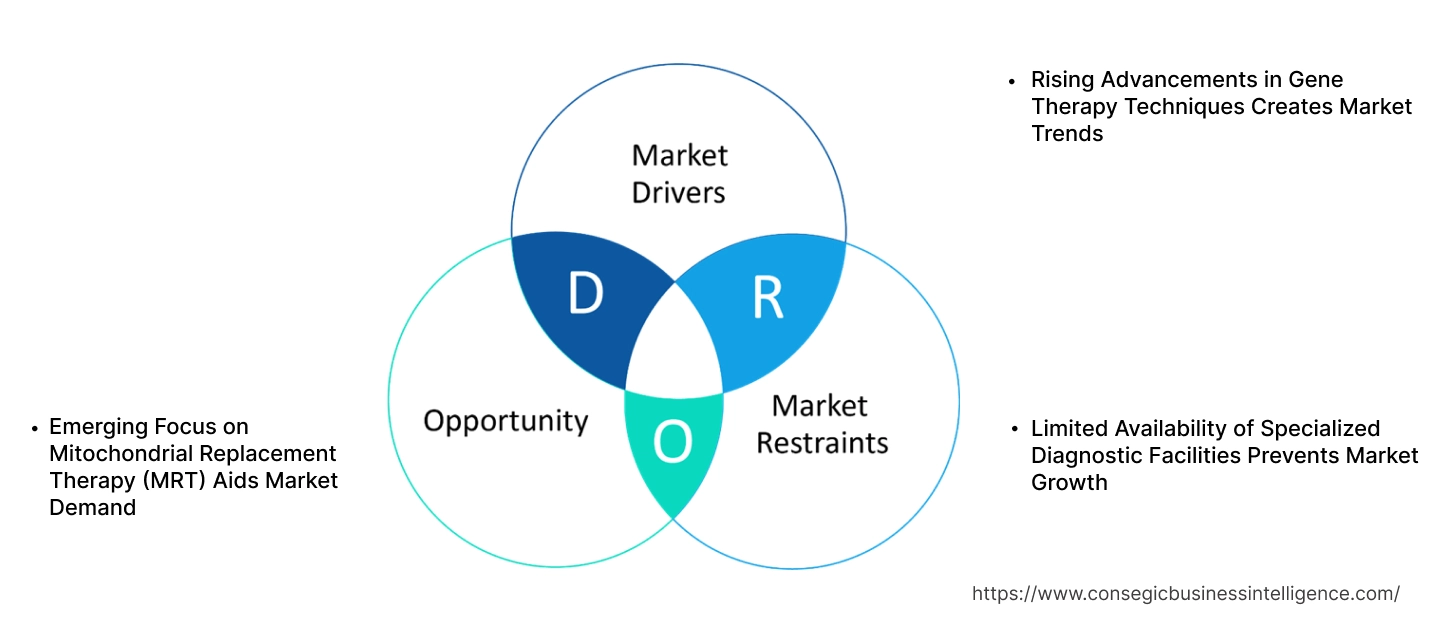
Rising Advancements in Gene Therapy Techniques Creates Market Trends
Gene therapy has emerged as a promising approach for the treatment of Leigh syndrome by addressing its root cause—mutations in mitochondrial or nuclear DNA. These therapies aim to restore or replace defective genes, offering long-term solutions to patients. For instance, ongoing research focuses on using adeno-associated virus (AAV) vectors to deliver corrective genes to target tissues, such as the brain or muscles. The precision and potential of gene therapy to provide targeted treatment have gained significant traction in the healthcare sector.
Thus, advancements in gene therapy techniques are propelling the development and adoption of effective treatments for Leigh syndrome.
Key Restraints:
Limited Availability of Specialized Diagnostic Facilities Prevents Market Growth
The accurate diagnosis of Leigh syndrome requires advanced diagnostic facilities capable of conducting genetic testing and neuroimaging. However, such facilities are often limited to specialized centers in developed regions. This constraint delays diagnosis and subsequent treatment initiation, particularly in low- and middle-income countries where healthcare infrastructure is underdeveloped. For example, patients in remote areas may need to travel extensively to access diagnostic services, adding financial and logistical burdens.
Hence, the lack of widespread availability of specialized diagnostic facilities hinders the overall Leigh syndrome treatment market growth.
Future Opportunities :
Emerging Focus on Mitochondrial Replacement Therapy (MRT) Aids Market Demand
Mitochondrial replacement therapy (MRT) is gaining attention as a potential breakthrough for treating mitochondrial disorders, including Leigh syndrome. This technique involves replacing defective mitochondria with healthy ones during in vitro fertilization, thereby preventing the inheritance of mitochondrial mutations. The increasing focus on MRT and its potential applications in clinical settings are expected to significantly enhance treatment outcomes in the future. For instance, regulatory bodies in countries like the UK have begun approving MRT procedures under strict guidelines.
Therefore, the emergence of MRT presents a promising opportunity for the future Leigh syndrome treatment market expansion.
Leigh Syndrome Treatment Market Segmental Analysis :
By Treatment Type:
Based on treatment type, the market is segmented into dietary supplements, gene therapy, enzyme replacement therapy, and others.
The dietary supplements sector accounted for the largest revenue in Leigh syndrome treatment market share in 2024.
- Dietary supplements, particularly Coenzyme Q10, riboflavin, and other vitamins, have gained prominence in managing Leigh Syndrome due to their potential to alleviate mitochondrial dysfunction, a hallmark of the disease.
- These supplements are typically recommended as part of supportive care, aiming to slow down the progression of symptoms and improve the quality of life.
- As a non-invasive approach, dietary supplements are widely accessible, cost-effective, and often used in conjunction with other treatments.
- The growing awareness of mitochondrial disorders and their treatment options has contributed to the increasing Leigh syndrome treatment market demand for dietary supplements in the management of Leigh Syndrome.
- Thus, dietary supplements are expected to maintain their dominance as a cost-effective and accessible treatment option for Leigh Syndrome.
- Therefore, according to Leigh syndrome treatment market analysis, dietary supplements are likely to remain the primary choice for Leigh Syndrome management due to their effectiveness, accessibility, and affordability. This segment will continue to lead the market, offering a crucial role in patient care.
Gene therapy is anticipated to register the fastest CAGR during the forecast period.
- Gene therapy, an innovative treatment approach, involves the direct modification of genes to address the underlying genetic defects causing Leigh Syndrome.
- This treatment aims to target the mitochondrial DNA or nuclear DNA mutations, offering a potential long-term solution to this fatal disease.
- While gene therapy is still in clinical trials, its promising results in rare mitochondrial diseases have created optimism in the medical community.
- As research progresses, the ability to deliver targeted gene therapies could transform the treatment landscape for Leigh Syndrome, making it a rapidly evolving field.
- Therefore, gene therapy is expected to see significant Leigh syndrome treatment market trend, especially as clinical advancements lead to more refined and effective treatments.
- Thus, according to Leigh syndrome treatment market analysis, gene therapy holds significant promise for the future treatment of Leigh Syndrome. With continued advancements, this segment is likely to experience rapid growth, especially as clinical trials prove the efficacy and safety of these treatments.
By Drug Type:
The market is segmented by drug type into Coenzyme Q10, riboflavin, carnitine, thiamine, and others.
Coenzyme Q10 holds the largest revenue in Leigh syndrome treatment market share in 2024.
- Coenzyme Q10 is essential for mitochondrial energy production, and its supplementation has been a standard treatment for Leigh Syndrome, especially for patients with defects in mitochondrial respiratory chain complexes.
- The antioxidant properties of Coenzyme Q10 help protect mitochondria from oxidative stress, a key contributor to the disease's progression.
- This drug is commonly used in combination with other treatments to support mitochondrial function and is widely prescribed in clinical practice.
- The high Leigh syndrome treatment market demand for Coenzyme Q10 is driven by its well-established efficacy in slowing disease progression, making it a cornerstone of Leigh Syndrome management.
- As a result, Coenzyme Q10 is expected to continue to dominate the market for Leigh Syndrome treatment.
- Therefore, according to market analysis, coenzyme Q10 remains the leading drug for Leigh Syndrome treatment, thanks to its long-standing role in managing mitochondrial dysfunction and its widespread use in clinical practice. This segment will continue to hold the largest market share.
Riboflavin is expected to register the fastest CAGR during the forecast period.
- Riboflavin is another vital drug used in the treatment of Leigh Syndrome, particularly for patients with specific mitochondrial defects.
- Known for its role in mitochondrial function and energy production, riboflavin has demonstrated promising results in managing the disease and reducing symptoms in certain patient populations.
- As a low-cost, easy-to-administer treatment, riboflavin has gained acceptance as part of the management plan for Leigh Syndrome, particularly in combination with other supplements.
- The increasing recognition of riboflavin's potential in treating Leigh Syndrome is likely to drive its rapid Leigh syndrome treatment market growth.
- Thus, according to market analysis, riboflavin's growing recognition as an effective treatment for Leigh Syndrome, especially in combination therapies, positions it as the fastest-growing drug type, offering new hope for patients with mitochondrial defects.
By Route of Administration:
The market is segmented by route of administration into oral, intravenous, and others.
The oral route of administration accounted for the largest revenue share in 2024.
- Oral administration is the most common and convenient method for patients to receive Leigh Syndrome treatments, including dietary supplements like Coenzyme Q10 and riboflavin.
- Oral administration allows for easy long-term use, particularly for patients who are managing symptoms at home.
- It also ensures better patient compliance, as it does not require medical supervision or hospital visits, making it a preferred choice for many caregivers.
- The increasing preference for oral treatment options is expected to maintain the dominance of this route of administration in the market.
- Therefore, according to market analysis, oral administration will remain the preferred method for Leigh Syndrome treatment due to its convenience and ease of use, ensuring high patient compliance and continued market dominance.
The intravenous route of administration is anticipated to grow at the fastest CAGR during the forecast period.
- Intravenous administration is typically used for more immediate and controlled delivery of treatments, particularly in severe cases of Leigh Syndrome that require fast intervention.
- This method is often employed in clinical settings, allowing healthcare providers to closely monitor the patient's response to treatment.
- With advancements in intravenous therapies, this route is expected to see rapid adoption for more aggressive treatment strategies in specialized medical centers.
- Thus, according to market analysis, intravenous administration is expected to see accelerated Leigh syndrome treatment market trend, particularly for severe cases requiring targeted intervention, positioning it as a key segment for future developments in Leigh Syndrome treatment.
By End User:
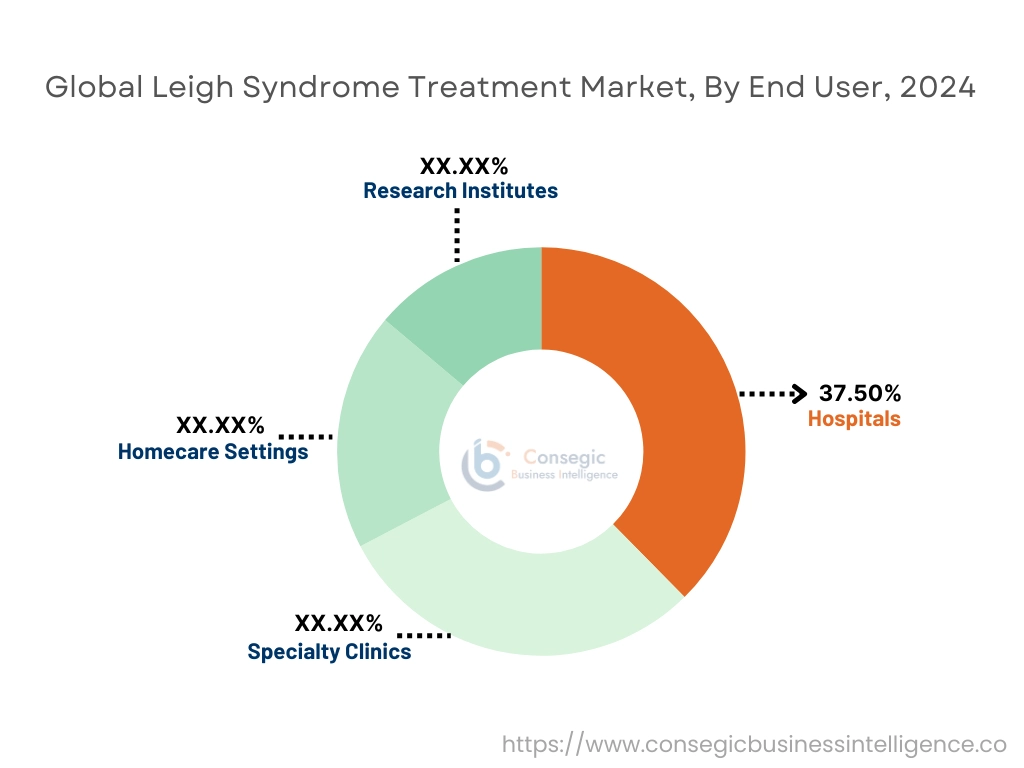
Based on end-users, the market is segmented into hospitals, specialty clinics, homecare settings, and research institutes.
The hospital sector accounted for the largest revenue share by 37.50% in 2024.
- Hospitals remain the primary healthcare setting for managing Leigh Syndrome, as they are equipped with the necessary medical facilities and expertise to address the complex needs of patients.
- The treatment protocols for Leigh Syndrome often involve multidisciplinary teams, including neurologists, geneticists, and metabolic disease specialists, all of whom are typically found in hospital settings.
- As a result, hospitals are expected to continue playing a central role in the diagnosis and treatment of Leigh Syndrome, contributing significantly to market revenue.
- Therefore, according to market analysis, hospitals will continue to dominate the Leigh Syndrome treatment market, owing to their comprehensive care capabilities and specialized expertise in managing complex mitochondrial diseases.
Specialty clinics are expected to register the fastest CAGR during the forecast period.
- Specialty clinics focusing on metabolic disorders and mitochondrial diseases are emerging as key players in the treatment of Leigh Syndrome.
- These clinics provide highly specialized care tailored to the unique needs of Leigh Syndrome patients, offering a more personalized approach to treatment.
- The increasing establishment of mitochondrial disease centers is driving the growth of specialty clinics, which are expected to see rapid demand as awareness of the disease increases.
- Thus, according to market analysis, specialty clinics, with their focused expertise on mitochondrial diseases, will experience the fastest growth, offering more personalized treatment options and becoming an increasingly important part of the Leigh Syndrome treatment landscape.
Regional Analysis:
The regional segment includes North America, Europe, Asia Pacific, Middle East and Africa, and Latin America.
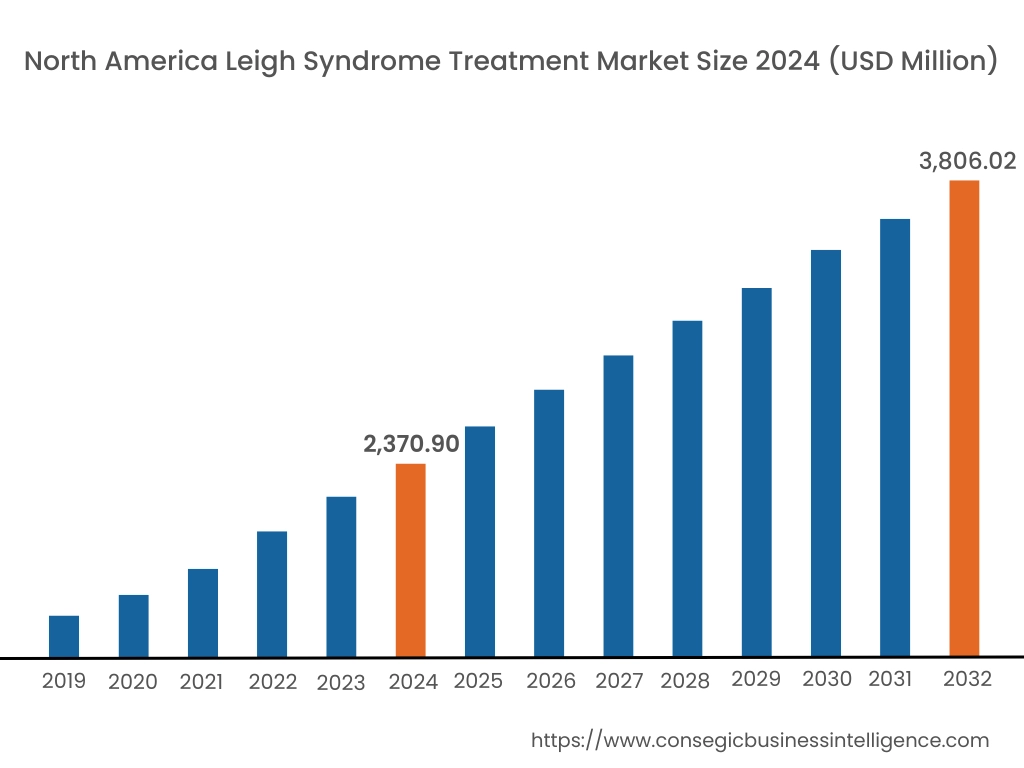
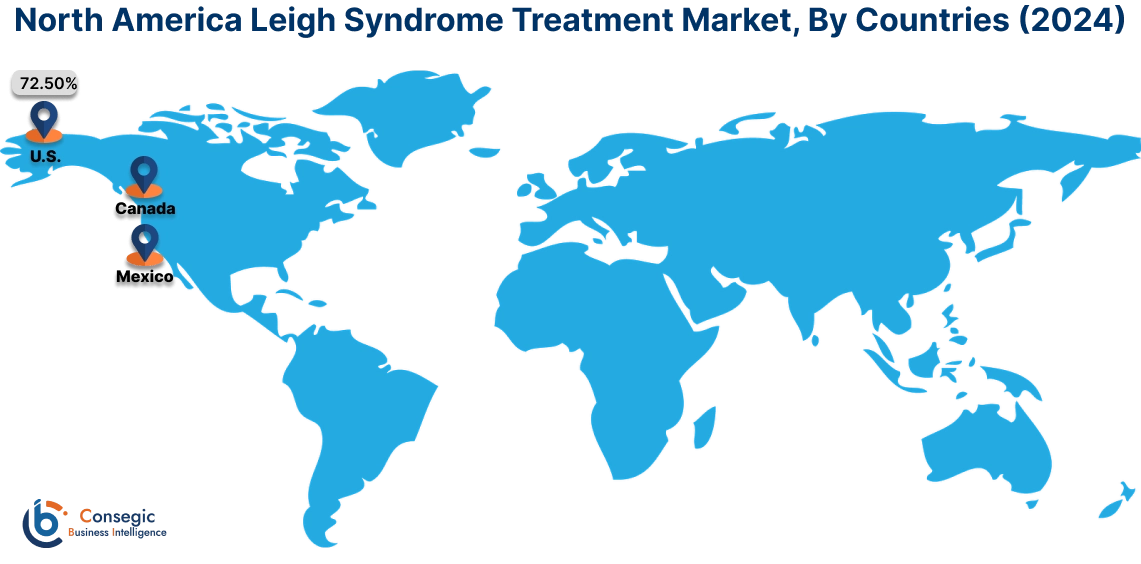
In 2024, North America was valued at USD 2,370.90 Million and is expected to reach USD 3,806.02 Million in 2032. In North America, the U.S. accounted for the highest share of 72.50% during the base year of 2024. North America holds a significant share of the Leigh syndrome treatment market due to the high prevalence of the disease and advanced healthcare infrastructure. The United States leads the region, with substantial investments in genetic research and clinical trials targeting Leigh syndrome. Increased awareness and the presence of key pharmaceutical companies contribute to the market’s development. Government initiatives and healthcare funding also play a role in advancing treatment options. However, the high cost of treatment and the complexity of developing effective therapies limit access to treatment for some patients.
In Asia Pacific, the market is experiencing the fastest growth with a CAGR of 6.8%over the forecast period. The Asia-Pacific region is witnessing an increasing interest in Leigh syndrome treatment due to rising healthcare awareness and improved healthcare infrastructure in countries like Japan, China, and India. Japan leads the region in terms of healthcare innovation, with ongoing clinical trials focused on rare diseases, including Leigh syndrome. However, the region faces challenges related to limited access to specialized treatment centers and high costs. In developing countries, the awareness and diagnostic capabilities for Leigh syndrome remain low, restricting Leigh syndrome treatment market expansion. As healthcare infrastructure improves, the market potential in this region increases.
Europe has a growing market for Leigh syndrome treatment, primarily driven by advances in genetic research and healthcare systems. The United Kingdom, Germany, and France are the key markets in Europe, supported by well-established healthcare networks and strong regulatory frameworks. The European Medicines Agency (EMA) facilitates approval processes for treatments targeting rare diseases, helping to bring new therapies to market. However, high treatment costs and limited availability of specialized care centers in some European countries pose challenges to wider access. Ongoing research in gene therapies and enzyme replacement therapies offers significant potential for market trend.
The Middle East and Africa (MEA) region faces significant challenges in the Leigh syndrome treatment market. Limited healthcare infrastructure, low awareness, and restricted access to specialized treatment facilities hinder market development. While countries like the UAE and Saudi Arabia have advanced healthcare systems, other regions in Africa struggle with a lack of resources and expertise in diagnosing and treating rare diseases. Efforts to raise awareness and improve healthcare facilities are underway, but the market remains small in comparison to other regions. Increased investment in healthcare and genetic research may open Leigh syndrome treatment market opportunities for growth in the future.
The Leigh syndrome treatment market in Latin America is in its early stages. Brazil, Mexico, and Argentina show the most promise due to their improving healthcare systems and growing access to advanced medical treatments. However, the region faces challenges, including high treatment costs and limited availability of specialized care. In many Latin American countries, awareness of rare diseases like Leigh syndrome remains low, which limits early diagnosis and treatment options. Efforts by healthcare providers and non-profit organizations to raise awareness and improve genetic testing capabilities will likely have a positive impact on the market in the coming years.
Top Key Players and Market Share Insights:
The Global Leigh Syndrome Treatment Market is highly competitive with major players providing products and services to the national and international markets. Key players are adopting several strategies in research and development (R&D), product innovation, and end-user launches to hold a strong position in the Global Leigh Syndrome Treatment Market. Key players in the Leigh Syndrome Treatment industry include-
- Sanofi S.A. (France)
- Novartis International AG (Switzerland)
- Ultragenyx Pharmaceutical Inc. (United States)
- Zogenix Inc. (United States)
- GeneTx Biotherapeutics (United States)
- AbbVie Inc. (United States)
- Pfizer Inc. (United States)
- Eli Lilly and Co. (United States)
- Vertex Pharmaceuticals (United States)
- Horizon Therapeutics (Ireland)
Leigh Syndrome Treatment Market Report Insights :
| Report Attributes | Report Details |
| Study Timeline | 2019-2032 |
| Market Size in 2032 | USD 11,743.36 million |
| CAGR (2025-2032) | 6.4% |
| By Treatment Type |
|
| By Drug Type |
|
| By Route of Administration |
|
| By End-User |
|
| By Region |
|
| Key Players |
|
| North America | U.S. Canada Mexico |
| Europe | U.K. Germany France Spain Italy Russia Benelux Rest of Europe |
| APAC | China South Korea Japan India Australia ASEAN Rest of Asia-Pacific |
| Middle East and Africa | GCC Turkey South Africa Rest of MEA |
| LATAM | Brazil Argentina Chile Rest of LATAM |
| Report Coverage |
|
Key Questions Answered in the Report
How big is the Leigh Syndrome Treatment Market? −
In 2024, the Leigh Syndrome Treatment Market was USD 7,149.53 million.
What will be the potential market valuation for the Leigh Syndrome Treatment Market by 2032? +
In 2032, the market size of Leigh Syndrome Treatment Market is expected to reach USD 11,743.36 million.
What are the segments covered in the Leigh Syndrome Treatment Market report? +
The treatment type, drug type, route of administrations, and end-user are the segments covered in this report.
Who are the major players in the Leigh Syndrome Treatment Market? +
Sanofi S.A. (France), Novartis International AG (Switzerland), AbbVie Inc. (United States), Pfizer Inc. (United States), Eli Lilly and Co. (United States), Vertex Pharmaceuticals (United States), Horizon Therapeutics (Ireland), Ultragenyx Pharmaceutical Inc. (United States), Zogenix Inc. (United States), GeneTx Biotherapeutics (United States) are the major players in the Leigh Syndrome Treatment market.
Overview
Reputation & Certifications


Our Services
- Market Intelligence & Forecasting
- Custom Research Solutions
- Market Entry Strategy
- Competitive Intelligence
- Customer Insights
- Industry Innovation Analysis
- Investment Advisory