Jump to Content
Light Field Market - Size, Share, Industry Trends, and Forecasts (2026 - 2034)
Light Field Market Size:
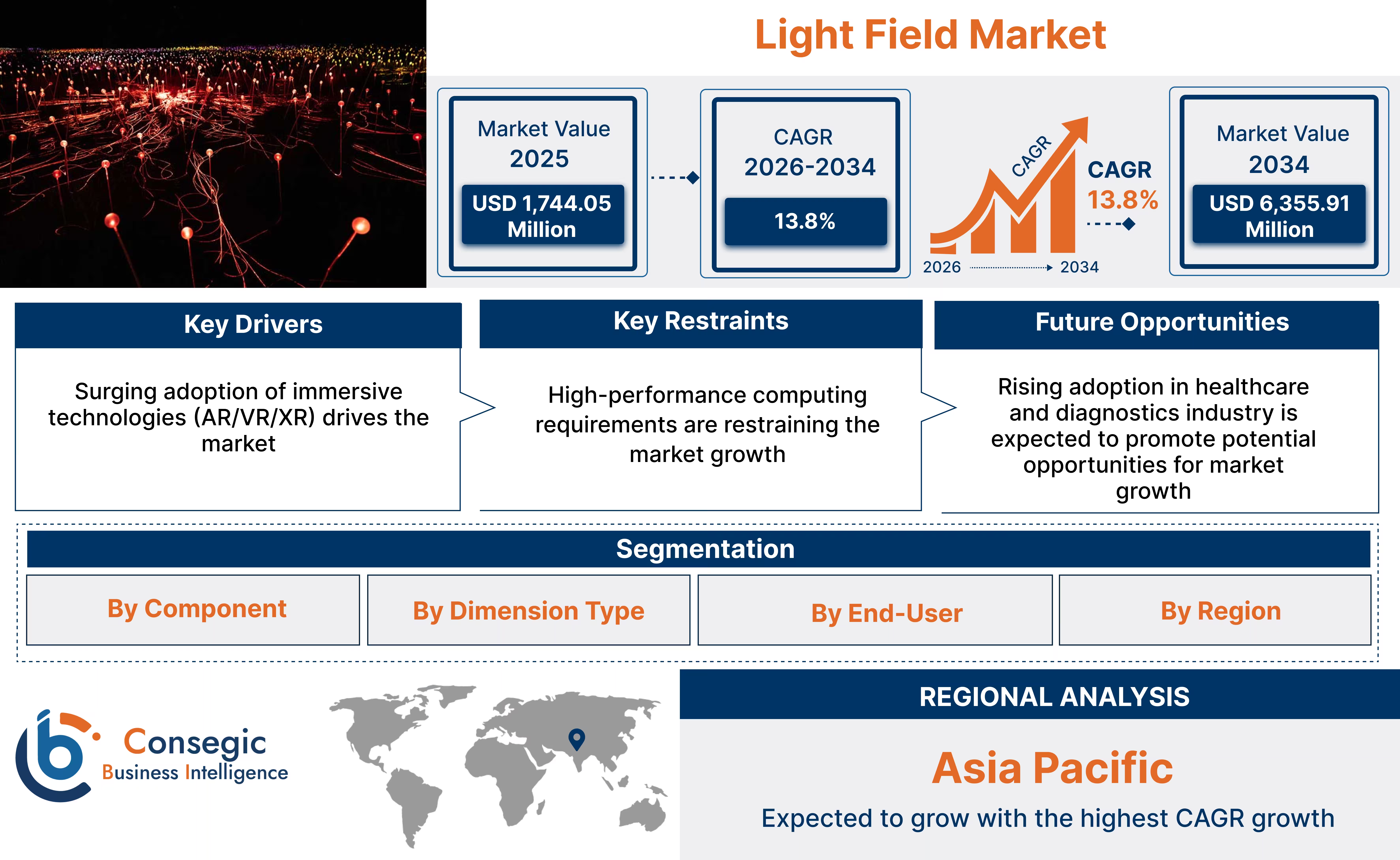
Light Field Market size is estimated to reach over USD 6,355.91 Million by 2034 from a value of USD 1,744.05 Million in 2025 and is projected to grow by USD 1,987.14 Million in 2026, growing at a CAGR of 13.8% from 2026 to 2034
Light Field Market Key Takeaways
- Asia Pacific is projected to witness the fastest market growth, driven by increasing adoption of advanced imaging technologies.
- By component, the hardware segment held the largest market share in 2023 due to strong demand for light field cameras and displays.
- By dimension type, the 3D segment dominated the market owing to its growing use in VR, AR, and gaming applications.
- By end-user, film and animation studios accounted for the largest revenue share in 2023.
- Healthcare providers are expected to register significant growth due to rising adoption of advanced medical imaging solutions.
- Light Field Lab, CREAL, Raxium, Brelyon, Sony, Meta, and Google are among the key companies operating in the market.
Light Field Market Scope & Overview:
The light field encompasses hardware and software that are designed to capture, process, and display 3D visual information by recording the intensity and direction of light rays. Also, the technology is known as integral imaging and is dependent on advanced imaging systems and computational algorithms. The technology helps to provide a multidimensional view, offering depth, focus adjustment, and perspective changes. The technology is transitioning from niche consumer gadgets to high-end enterprise applications. The key applications include 3D displays, holographic imaging, and advanced depth-mapping cameras used in media, medical diagnostics, and defense. Further, the key end users include film & animation studios, healthcare providers, automotive manufacturers, architects, retailers, and defense organizations. In addition, the surging adoption of immersive augmented/virtual reality (AR/VR) is driving the light field market growth.
Light Field Market Dynamics - (DRO) :
Market Drivers:
Surging adoption of immersive technologies (AR/VR/XR) drives the market
The displays are revolutionizing immersive technologies (AR/VR/XR) by accurately simulating the behavior of light in the real world. Also, the rising adoption of extended reality (XR), combining augmented reality (AR) and virtual reality (VR) for consumer and enterprise use, is driving the light field market growth. In AR/VR/XR, the technology provides hyper-realistic depth, natural focus, and correct perspective scaling. Further, the technology eliminates eye strain and visual fatigue by perfectly mimicking the natural human eye, which perceives the physical world, boosting the market demand. Furthermore, the technology offers highly realistic as well as comfortable visual experiences, which is driving the market adoption.
- For instance, Eventagrate Group, the global immersive technologies market, reached an impressive USD 493.5 billion in 2025. Also, 88% of medium-sized businesses globally are expected to adopt immersive technologies for sales demos, remote collaboration, or product design.
Therefore, the rising adoption of immersive technology is paving the way for the need for this technology, in turn, proliferating the growth of the market.
Market Restraints:
High-performance computing requirements are restraining the market growth
The massive computational power and high-performance computing (HPC) infrastructure required to render and process volumetric data create a bottleneck for wider commercial adoption of light field market expansion. Additionally, the rising demand for immersive imaging is mainly affected by the hardware costs and specialized processing demands is hindering the market expansion. Also, the real-time rendering and ray-tracing require vast parallel processing capabilities, specialized GPUs, and low-latency interconnects, which in turn are hindering the market adoption.
Therefore, the massive computational power required for technology is restraining the market growth.
Future Market Opportunities :
Rising adoption in healthcare and diagnostics industry is expected to promote potential opportunities for market growth
The integral imaging technology is revolutionizing medical imaging by capturing the direction and intensity of light to generate high-resolution, glasses-free 3D visualizations of organs, cellular structures, and tumors, which is driving the adoption by healthcare providers and diagnostic facilities. Additionally, surgeons are utilizing light field displays to view anatomical structures before and during operations, vastly improving precision and reducing procedural risks, paving the way for the light field market opportunity.
- For instance, in September 2024, ZEISS Vision Care invested in CREAL to leverage CREAL’s light field display technology on solutions, allowing the digital examination and diagnosis of eye conditions.
Hence, the rising adoption of technology for medical imaging is anticipated to increase the utilization, in turn promoting prospects for the market opportunity during the forecast period.
Light Field Market Segmental Analysis:
By Component:
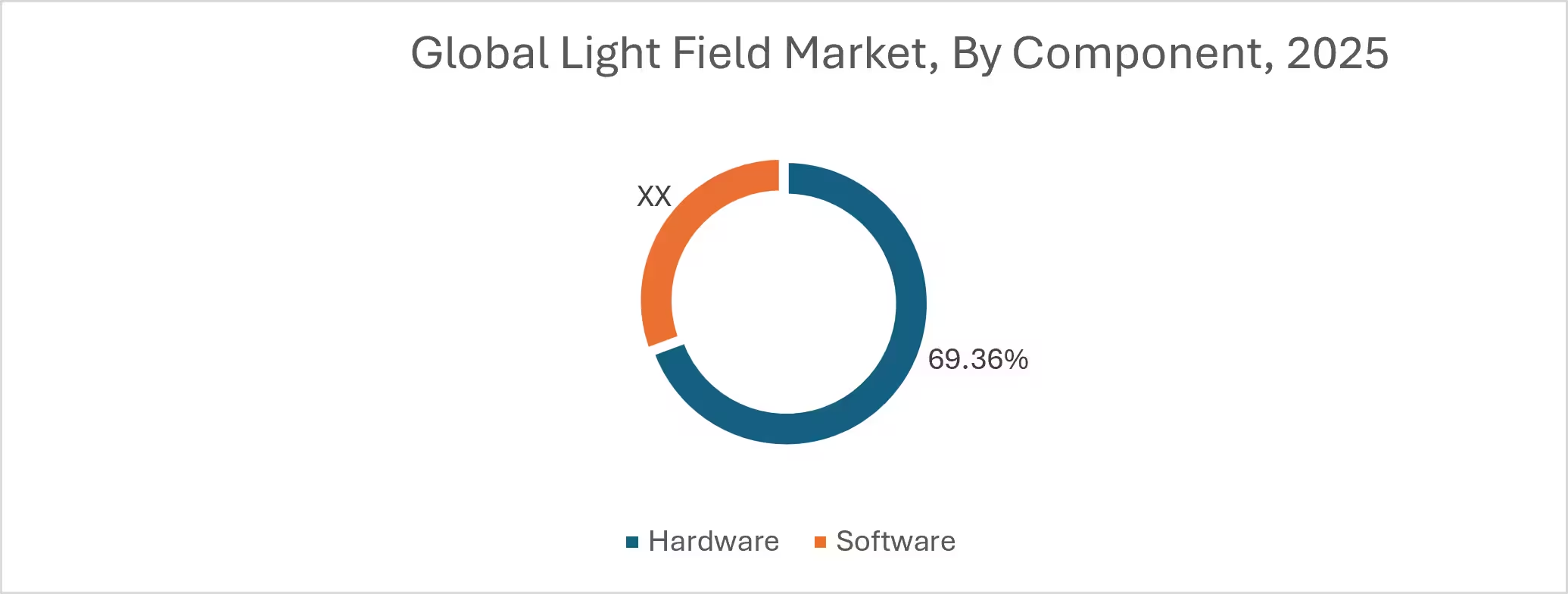
Based on the components, the light field market is bifurcated into hardware and software.
Trends in the Component:
- The integration of deep learning and AI with rendering software for bypassing manual multi-view computation and generating massive ray frames from sparse inputs is boosting the market trends.
- The push to make AR/VR headsets and heads-up displays (HUDs) lighter and more immersive is propelling hardware components to be miniaturized, which in turn is driving the market trends.
The hardware segment accounted for the largest revenue share of 69.36% in the year 2025.
- The hardware segment comprises light field displays, cameras, lenses, and sensors.
- The displays generate 3D imagery with accurate depth cues to avoid the visual fatigue typical of conventional stereo screens. Also, the cameras have the ability to capture the color and angle of every ray striking the sensor.
- Moreover, the growing adoption of extended reality (XR) and volumetric video requires displays, cameras, lenses, sensors technologies that replicate natural human vision, which in turn is fueling the market size.
- In sectors such as semiconductor manufacturing and automotive engineering, the systems are critical for quick, non-destructive depth-map acquisition and highly accurate 3D measurements, which in turn is fueling the market share.
- Thus, as per the market analysis, the rising adoption in semiconductor manufacturing and automotive engineering is driving the demand for the hardware segment.
The software segment is anticipated to register the fastest CAGR during the forecast period.
- The software segment includes rendering software, simulation software, and image processing software, among others. The primary function of the software is to decode, calibrate, and transform raw data into usable, multi-dimensional fields.
- Additionally, the simulation tools allow users to virtually test how light rays travel through a system, which is fueling the demand for software and thereby driving the market share.
- Further, the growing enterprise and consumer desire for spatial, multi-angle 3D visualization without the need for wearable devices is boosting the market size.
- Therefore, as per the market analysis, the growing need for simulation tools and increasing need for spatial, multi-angle 3D visualization are anticipated to boost the market during the forecast period.
By Dimension Type:
Based on the dimension type, the market is bifurcated into 2D Light Field and 3D Light Field.
Trends in the Dimension Type:
- The trend towards the proliferation of micro-LEDs, AI-driven 2D-to-3D conversion, and resolving VR (virtual reality) vergence-accommodation conflicts is boosting the adoption of 2D dimension type.
- The trend towards the exploration of technology to eliminate uncomfortable eye strain caused by traditional 3D head-mounted displays is boosting the market growth.
The 3D light field accounted for the largest revenue share in the year 2025.
- A 3D dimension type is an advanced display technology that simulates natural human vision by reproducing exact light rays, color, and depth.
- It allows viewers to experience natural depth, texture, and motion parallax, which represents that the image changes realistically as the viewing angle changes, all without needing special 3D glasses.
- Further, the need for 3D environment perception, driver monitoring systems, and immersive in-cabin displays is driving the light field market.
- In addition, the need to visualize high-speed, three-dimensional biological events in real-time without physically scanning the specimen is boosting the market.
- Thus, as per the market analysis, the need for 3D environment perception is driving the light field industry.
The 2D light field is anticipated to register a substantial CAGR during the forecast period.
- The amount of light traveling in every direction through every point in space. The two-dimensional field is a simplified theoretical or practical model that limits radiance to a flat plane, making it easier to analyze, render, or manipulate spatial data.
- The key advantages of 2D dimension include unprecedented refocusing & depth estimation, motion parallax & virtual viewpoints, reduced vergence-accommodation conflict, and others.
- Additionally, the need to eliminate retinal blur and calculate accurate dense-view disparities for 3D depth perception is driving advancement in 2D field display.
- Furthermore, the key driving factors for this 2D projection include targeted focal depth manipulation, multi-tone beam driving, and immersive spatial tracking.
- Therefore, the need to eliminate retinal blur is anticipated to boost the market during the forecast period.
By End-User:
Based on the end-user, the market is segmented into film & animation studios, healthcare providers, automotive manufacturers, architects, retailers, and defense organizations.
Trends in the End-User:
- The trend towards embedding pillar-to-pillar screens and dynamic AR projections in automotive manufacturers is boosting the market need.
- The trend towards the adoption of technology by architects for the generation of personalized indoor lighting environments tuned to specific comfort parameters is driving the market progress.
The film & animation studios accounted for the largest revenue share in the year 2025.
- The technology captures the intensity and angle of light rays, letting studios record or generate immersive, glasses-free 3D. Also, the technology enables dynamic focus adjustments in post-production, interactive parallax effects, and the creation of holographic assets without traditional green screens for film & animation studios.
- The key advantages of this technology for film & animation studios include holographic immersion, customizable focus, visual comfort, and others.
- The need for immersive, multi-dimensional storytelling and hyper-realistic depth perception in film & animation studios is driving the market demand.
- Further, the technology allows film & animation studios to build content for the emerging metaverse and extended reality, which in turn is fueling the market development.
- Thus, as per the light field market analysis, the aforementioned factor is driving the market progress.
The healthcare providers segment is anticipated to register the fastest CAGR during the forecast period.
- The technology offers true-to-life, glasses-free 3D visualization and real-time anatomical tracking in the healthcare sector.
- The technology helps in capturing and displaying all light rays across end users, such as surgeons and radiologists, who explore volumetric medical data from any angle.
- Further, the technology helps to significantly improve diagnostic precision and minimize operational risks, thereby driving the market progress.
- In addition, the spinal and cranial navigation heavily relies on iterative X-ray, and CT imaging is dependent on the technology, which is further driving the market adoption by healthcare providers.
- Therefore, as per the market analysis, the aforementioned factors are anticipated to boost the market during the forecast period.
Light Field Market Regional Analysis:
The regions covered are North America, Europe, Asia Pacific, Middle East and Africa, and Latin America.
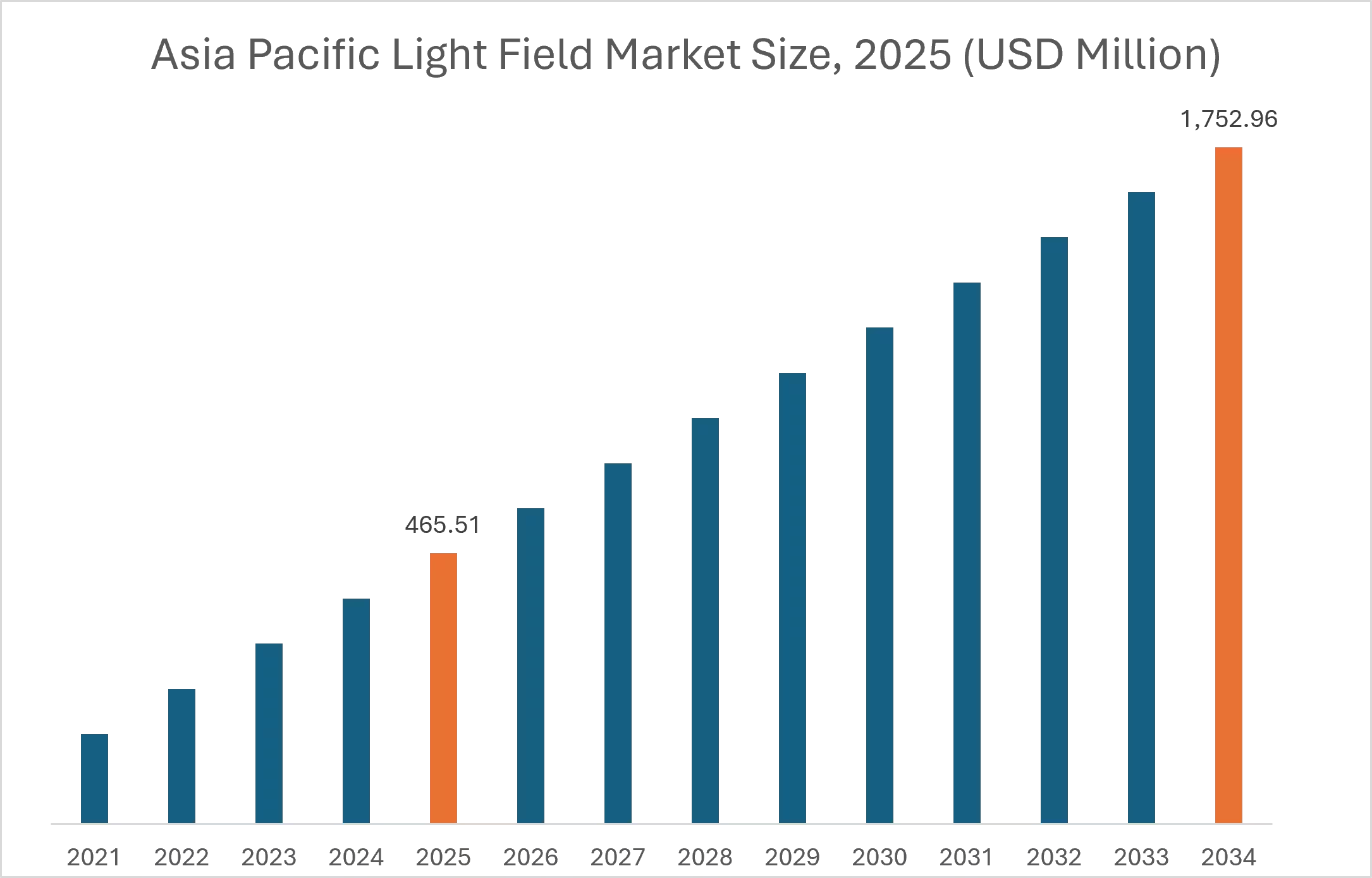
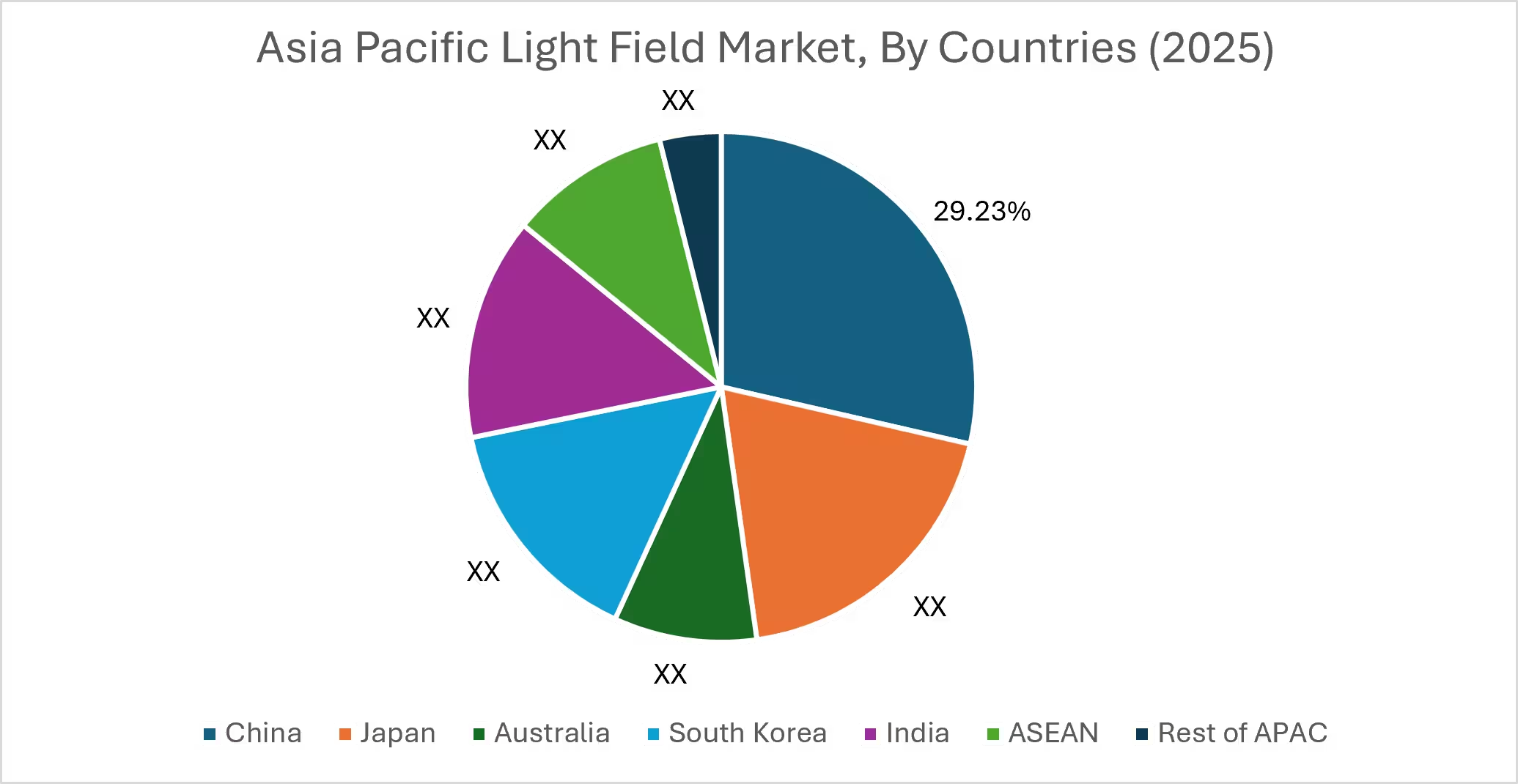
Asia Pacific region was valued at USD 465.51 Million in 2025. Moreover, it is projected to grow by USD 532.35 Million in 2026 and reach over USD 1,752.96 Million by 2034. Out of this, China accounted for the maximum revenue share of 29.23%. The market development is mainly driven by a boom in next-generation wearable devices and gaming systems in countries like China, Japan, and South Korea. Furthermore, factors including the increasing consumer electronics manufacturing and large-scale government-supported R&D initiatives are projected to drive the market development in the Asia Pacific region during the forecast period.
- For instance, according to the Indian Brand Equity Foundation (IBEF), India’s online gaming sector was valued at USD 3.7 billion in 2024. Also, India has 591 million gamers, which accounts for 20% of the global gaming population, which is showcasing strong progress of the gaming industry in India.
North America is estimated to reach over USD 2,069.49 Million by 2034 from a value of USD 563.06 Million in 2025 and is projected to grow by USD 642.14 Million in 2026. The North American region's growing focus on media and entertainment AR/VR sectors offers lucrative growth prospects for the market. Additionally, the rising R&D investments in autonomous systems and defense modernization are driving the market development.
- For instance, according to the International Trade Administration, the automotive sector invested USD 33 billion in research and development in the automotive sector of U.S. in 2023 with an aim to strengthen competitiveness.
The regional analysis depicts that the automotive sector heavily uses the technology to develop advanced driver assistance systems (ADAS) and high-performance in-car screens, which are key factors driving the market in Europe. Additionally, factors such as the rising urbanization, growing need for advanced 3D spatial mapping, AR/VR integration, and immersive visualization are among the key aspects propelling the market adoption in the Middle East and African region. Further, the digitalization of healthcare and medical imaging sectors along with expanding digital media and visual effects are paving the way for the market development in the Latin American region.
Top Key Players & Market Share Insights:
The global light field market is highly competitive with major players providing technology to the national and international markets. Key players are adopting several strategies in research and development (R&D), product innovation, and end user launches to hold a strong position in the light field industry. Key players in the market include-
- Raytrix (Germany)
- Teledyne Vision Solutions (USA)
- CREAL (Switzerland)
- Raxium (USA)
- Brelyon (USA)
- MOPIC (South Korea)
- Sony Corporation (Japan)
- Lytro (USA)
- Lumus (Israel)
- Meta Platforms, Inc. (USA)
- Google LLC (USA)
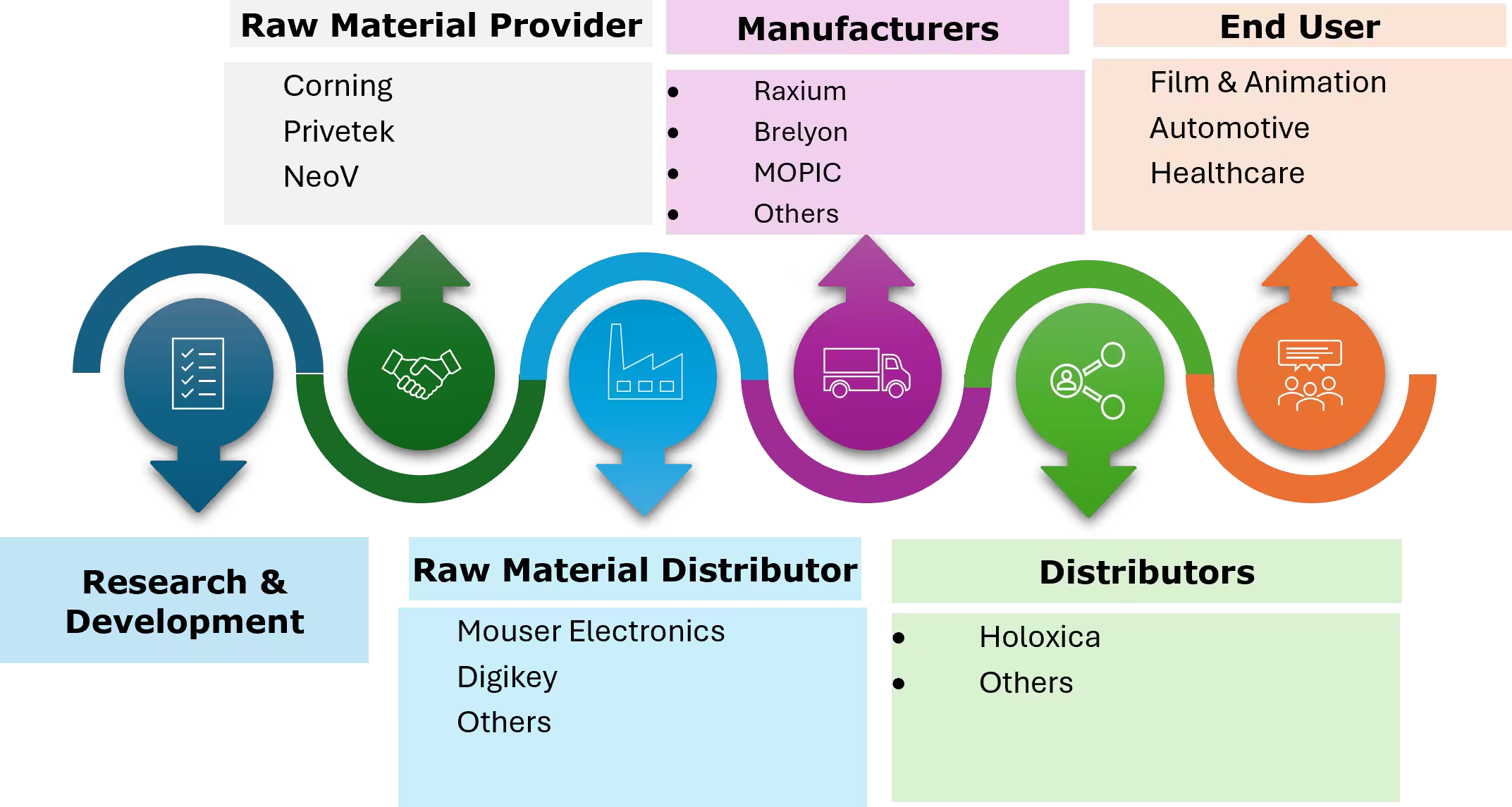
Light Field Market Ecosytem:
Recent Industry Developments :
Product Launches:
- In January 2025, CREAL launched a next-generation light field display, which is designed for applications in augmented reality (AR) glasses. The glasses offer high transparency to ensure a clear view, eye contact, and social comfort.
Light Field Market Report Insights :
| Report Attributes | Report Details |
| Study Timeline | 2021-2034 |
| Market Size in 2034 | USD 6,355.91 Million |
| CAGR (2026-2034) | 13.8% |
| By Component |
|
| By Dimension Type |
|
| By End-User |
|
| By Region |
|
| Key Players |
|
| Report Coverage |
|
Key Questions Answered in the Report
How big is the Light Field Market? −
The light field market size is estimated to reach over USD 6,355.91 Million by 2034 from a value of USD 1,744.05 Million in 2025 and is projected to grow by USD 1,987.14 Million in 2026, growing at a CAGR of 13.8% from 2026 to 2034.
What specific segmentation details are covered in the Light Field Market report? +
The light field report includes specific segmentation details for component, dimension type, end user, and regions.
What are the key trends in the light field market? +
The light field market is being shaped by several key trends including the increasing focus on embedding pillar-to-pillar screens and dynamic AR projections in automotive industry and the need to make wearable devices lightweight and miniaturized, among others.
Which is the fastest segment anticipated to impact the market growth? +
In the light field market, the software segment is the fastest-growing segment during the forecast period due to the growing need for simulation tools and the increasing need for spatial, multi-angle 3D visualization.
Who are the major players in the Light Field Market? +
The key participants in the light field market are Raytrix (Germany), Teledyne Vision Solutions (USA), CREAL (Switzerland), Raxium (USA) Brelyon (USA), MOPIC (South Korea), Sony Corporation (Japan), Lytro (USA), Lumus (Israel), Meta Platforms, Inc. (USA), Google LLC (USA), and others.
Overview
Reputation & Certifications


Our Services
- Market Intelligence & Forecasting
- Custom Research Solutions
- Market Entry Strategy
- Competitive Intelligence
- Customer Insights
- Industry Innovation Analysis
- Investment Advisory