Jump to Content
Microbiology Testing Market - Size, Share, Industry Trends, and Forecasts (2024 - 2031)
Microbiology Testing Market Size:
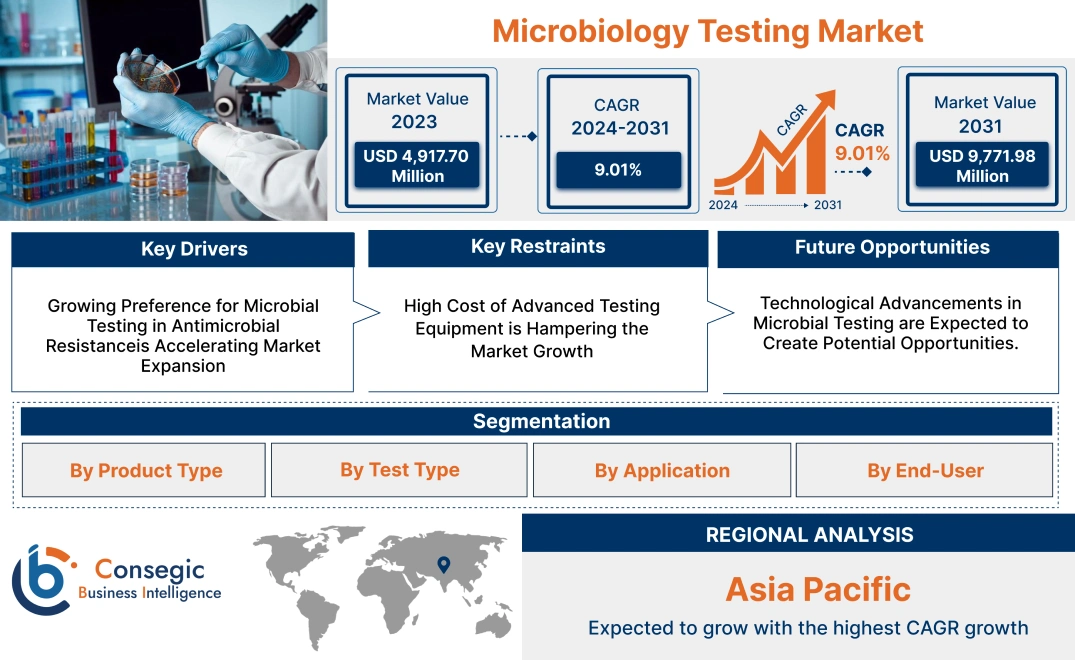
Microbiology Testing Market size is growing with a CAGR of 9.01% during the forecast period (2024-2031), and the market is projected to be valued at USD 9,771.98 Million by 2031 from USD 4,917.70 Million in 2023.
Microbiology Testing Market Scope & Overview:
Microbiology testing involves the examination of substances including food, water, air, clinical specimens, and environmental samples for analysis of microorganisms such as bacteria, viruses, and fungi. This testing is important for various industries due to the health and safety risks associated with microbial contamination. In healthcare, it is used to diagnose infections and determine the cause of disease. The food sector relies on this testing to ensure food safety and prevent outbreaks of food-borne illnesses. The pharmaceutical industry utilizes microbiology testing to guarantee sterility; while ensuring they are safe to consume and are free of any contamination. Environmental microbiology testing helps assess the quality of water, air, and soil.
Microbiology Testing Market Dynamics - (DRO) :
Key Drivers:
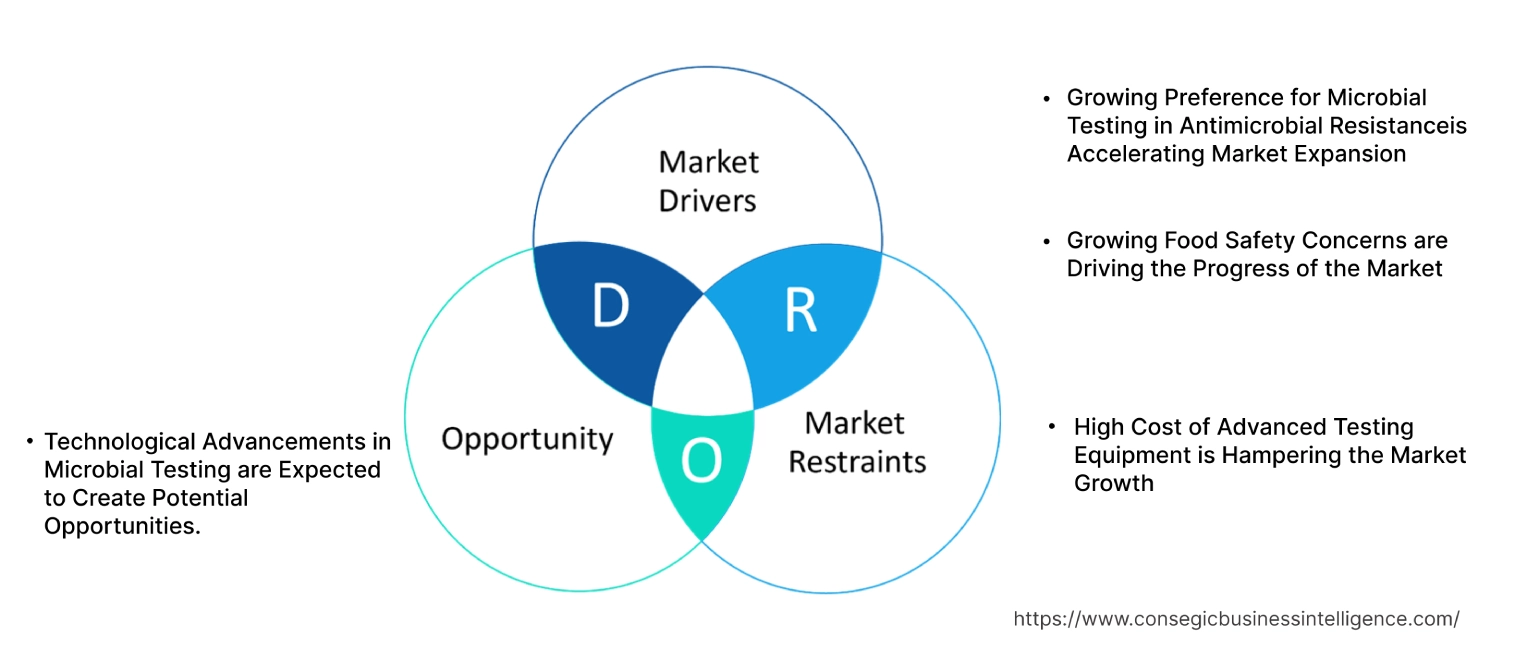
Growing Preference for Microbial Testing in Antimicrobial Resistance is Accelerating Market Expansion
The growing preference for microbial testing in antimicrobial resistance is significantly driving the global microbiology testing market analysis. Antimicrobial resistance occurs when viruses, fungi, parasites, and bacteria no longer respond to antimicrobial medicines increasing the risk of disease spread, severe illness, and death.
- For instance, According to the World Health Organization (WHO), globally, there are approximately 4.95 million deaths annually linked to antimicrobial resistance (AMR). In 2021, the projected percentage of individuals with TB who were suffering from drug resistance was 3.6% in new cases and 18% in those who had received prior treatment.
These challenges require rapid and accurate testing to identify resistant pathogens early, which eventually helps healthcare professionals make tailored treatment plans and reduce the use of unnecessary antibiotics. Moreover, pharmaceutical companies and governments are investing in analysis, monitoring, tracking, and combating AMR, further boosting the need for microbial testing.
- For instance, According to the CDC, the "Global Antimicrobial Resistance Laboratory and Response Network" was launched in 2021. This network aims to improve the detection of antimicrobial resistance threats and prevent their spread globally by taking a comprehensive, One Health approach.
Overall, the rising burden of antimicrobial resistance coupled with governmental efforts to mitigate its effects on the public has led to an increase in requirements for testing, positively influencing the microbiology testing market growth.
Growing Food Safety Concerns are Driving the Progress of the Market
The growing trend of foodborne illnesses is due to more complex supply chains, processing methods, and inadequate handling practices. Public awareness and regulatory standards around food safety have increased strict testing requirements across food production, processing, and distribution stages. Microbiological testing is essential for detecting harmful pathogens like E. coli, Salmonella, Listeria, and other microorganisms that lead to severe health risks.
Food companies, processors, and government bodies are increasingly adopting microbiological testing solutions to ensure compliance with safety standards, avoid costly recalls, and protect consumer health.
- For instance, in 2023, ADM, a worldwide leader in human and animal nutrition, has inaugurated its new Microbiology Laboratory in North America. This facility is located within the ADM Specialty Manufacturing Facility in Decatur, Illinois. The newly established lab has effectively doubled ADM's existing microbiology laboratory space, showcasing a notable improvement in its testing capabilities and its presence within the Decatur community.
Additionally, advanced testing technologies, such as rapid microbial detection, molecular diagnostics, and automated systems, are being implemented to improve testing accuracy and speed. As a result, microbiological testing is rising steadily, making it a critical tool in maintaining food quality and consumer confidence, thus driving the market.
Key Restraints:
High Cost of Advanced Testing Equipment is Hampering the Market Growth
The expense associated with advanced testing devices employed to detect these microorganisms poses significant barriers to the market, especially for small and medium-sized laboratories. Technologies such as mass spectrometry, next-generation sequencing, and automated systems are highly accurate and efficient in microbiological testing analysis. However, these high-precision instruments cost tens or even hundreds of thousands of dollars. These costs are challenging for smaller labs, particularly in developing regions, where limited financial resources and lower budgets for healthcare infrastructure are common.
Additionally, the high initial investment in advanced equipment means increased operational expenses. Also, such types of advanced machines require specialized maintenance, consumables, and trained personnel to operate effectively. Healthcare providers incur additional costs due to factors such as regulatory compliance, administrative overhead, and technological advancements. To offset these expenses, they pass on a portion of the costs to patients in the form of higher fees or co-payments. This leads to a reduced need for healthcare services, especially in regions where the healthcare sector is not heavily subsidized or covered by insurance. Thus, the high cost of equipment limits the accessibility and adoption of advanced testing, hindering broader market expansion.
Future Opportunities:
Technological Advancements in Microbial Testing are Expected to Create Potential Opportunities.
Technological advancements in microbial testing are creating significant opportunities by enhancing the speed, accuracy, and efficiency of diagnostics. Innovations such as automated systems, next-generation sequencing (NGS), and real-time PCR are transforming the testing landscape. These technologies allow for rapid and precise detection and analysis of pathogens, reducing the turnaround time for results and allowing timely treatment decisions. Automation, for example, minimizes manual intervention and reduces human error. This trend helps labs to process more tests in less time.
Additionally, advancements in molecular diagnostics enable the identification of microorganisms at a genetic level, which improves the accuracy of results and helps in the detection of even minute quantities of pathogens. This is especially beneficial for infectious disease management and monitoring antimicrobial resistance. Furthermore, new applications are emerging, driving the adoption of innovative microbiological testing solutions.
- For instance, the Rapid Sterility application is a new test kit from Rapid Micro Biosystems, Inc. that is designed to be used with their Direct system for rapid sterility testing. The application is expected to be commercially available by mid-2024. This groundbreaking solution facilitates the detection of organisms within a timeframe of as little as twelve hours for the time-to-organism detection ("TTD") and achieves a final time-to-result ("TTR") in a span of 1-3 days. This capability signifies a considerable enhancement over conventional testing methodologies that are predominantly employed, which typically necessitate a 14-day endpoint incubation period, thereby offering a compelling distinction when juxtaposed with existing rapid sterility products.
Overall, as the requirements for faster, more reliable diagnostics grow, these technological advancements make microbiological testing more accessible and valuable, opening up new microbiology testing market opportunities.
Microbiology Testing Market Segmental Analysis:
By Product Type:
Based on product type, the market is categorized into instruments, reagents and consumables, test kits, and software.
Trends in the Type:
- Rising preference for automated instruments for faster turnaround times.
- Increasing adoption of molecular diagnostic tests for accurate and rapid detection.
The instruments segment accounted for the largest share of the total microbiology testing market share in 2023.
- In the market, instruments refer to the essential devices used to detect, analyze, and monitor microorganisms in various samples.
- These instruments offer several benefits. Microscopy systems allow direct observation of morphology and structure. PCR systems amplify specific DNA or RNA sequences, offering high sensitivity, specificity, and rapid detection. Mass spectrometers rapidly identify microorganisms based on their molecular profiles.
- Whereas automated testing instruments reduce manual labor, freeing up staff for more complex tasks, while enhancing accuracy and precision.
- These instruments, alongside automated plate readers and colony counters, advance pathogen testing, facilitating faster, more accurate diagnosis and treatment.
- The increasing demand for rapid and accurate diagnosis of infectious diseases is a key driver. Moreover, advances in the automation of instruments are positively influencing the market.
- For Instance, in 2023, Becton Dickinson (BD) launched a fully automated robotic track system for microbiology laboratories, called the "BD Kiestra 3rd Generation Total Lab Automation System," which significantly automates specimen processing and aims to streamline workflows by eliminating manual plate sorting and specimen movement between modules; essentially marking a major advancement in automated microbiology systems.
- Overall, advancements in microbial testing instruments are driving the global market, as they enable faster, more accurate, and efficient diagnosis of microorganisms.
The test kits segment is expected to grow at the fastest CAGR over the forecast period.
- The microbiology testing market opportunities include test kits that are essential tools designed to detect and identify microorganisms such as bacteria, viruses, fungi, and parasites. They are used in clinical, environmental, food testing, and other applications to ensure safety and compliance with health standards.
- Test kits contain pre-measured reagents and consumables needed for the test. This simplifies the process and reduces the need for complex laboratory procedures.
- Types of microbiology test kits include culture-based kits, PCR (Polymerase Chain Reaction) kits, immunoassay kits, and rapid diagnostic test kits. Culture-based kits allow for the growth of microorganisms. PCR kits offer molecular analysis for specific pathogens. Immunoassay kits utilize antibodies for pathogen detection, and rapid diagnostic kits provide quick results, within minutes.
- The key benefits of microbiology test kits include increased accuracy, faster results, ease of use, and the ability to perform tests outside of a traditional laboratory environment, improving overall efficiency and public health safety.
- The increasing prevalence of infectious diseases, particularly antibiotic-resistant strains, necessitates rapid and accurate diagnosis. This will drive the demand for test kits. New product innovations are further fueling the segmental market revenue for the upcoming years.
By Test Type:
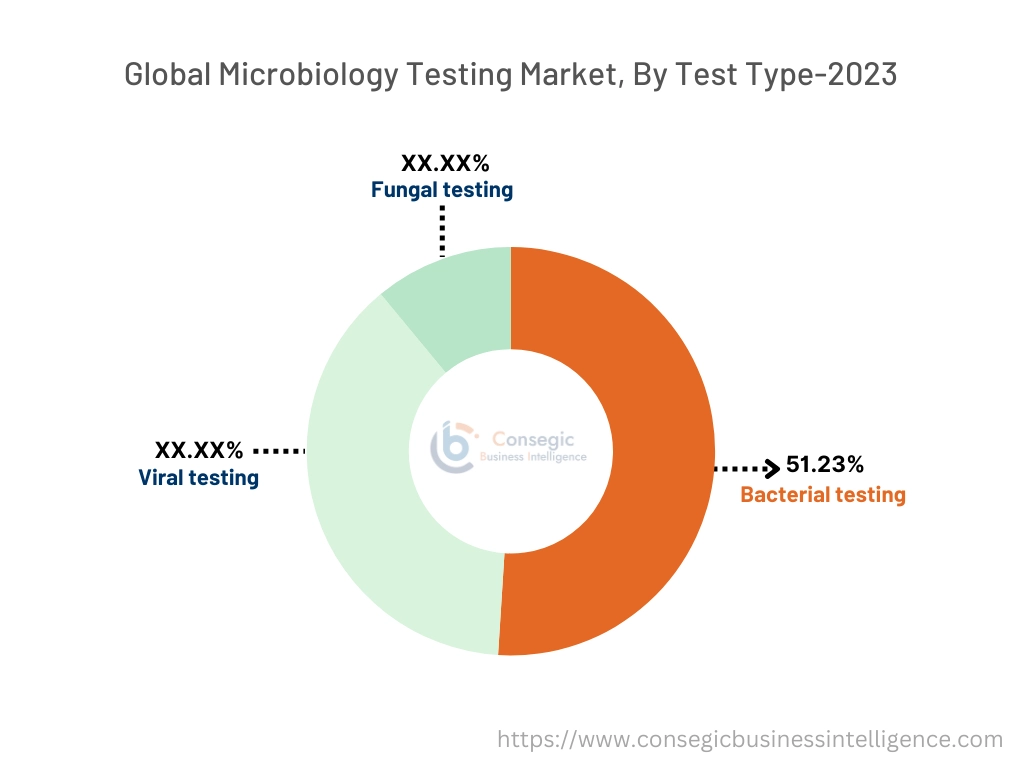
The test type segment is categorized into bacterial testing, fungal testing, and viral testing.
Trends in the Test Type:
- Increasing preference for diagnostic tools for invasive fungal infections.
- Focus on antibiotic resistance testing and rapid identification methods.
The bacterial testing segment accounted for the largest market share of 51.23% in 2023.
- Bacterial testing is a process used to identify and quantify bacteria in various samples, such as food, water, clinical specimens, and environmental surfaces.
- In the healthcare sector, bacterial testing is crucial for diagnosing infections and guiding effective treatment.
- In the food and beverage industry, bacterial testing ensures the safety of products by detecting harmful pathogens such as Salmonella or E. coli.
- Similarly, in water treatment and environmental monitoring, bacterial testing ensures the water quality and the cleanliness of public spaces.
- The advantages of bacterial testing include improved public health safety and quicker diagnosis. It also helps in the prevention of infections and in complying with regulatory standards.
- The need to identify and control outbreaks of foodborne illnesses is fueling the appeal of bacterial testing. Moreover, the development of rapid diagnostic tests is improving the accuracy and efficiency of bacterial testing.
- For instance, in 2024, Conidia Bioscience introduced FUELSTAT One, an innovative test kit that expands the FUELSTAT line, aimed at swiftly identifying bacterial contamination in jet fuel, diesel, and other middle distillate fuels to avert operational interruptions and safety concerns.
- Overall, bacterial testing is essential for ensuring public health, food safety, and environmental protection, driving bacterial testing.
The viral testing segment is expected to grow at the fastest CAGR over the forecast period.
- Viral testing is a diagnostic procedure used to detect the presence of viruses. It is used to examine samples such as blood, urine, saliva, or tissue. It employs techniques such as PCR, antigen testing, and viral culture to identify specific viruses.
- In the healthcare industry, viral testing is essential for diagnosing infections. It also helps in monitoring viral loads and determining the effectiveness of antiviral treatments. Moreover, it helps in managing diseases such as HIV, hepatitis, and COVID-19.
- In the food and beverage sector, viral testing ensures the safety of products, particularly in environments where viruses such as norovirus spread. In the pharmaceutical industry, viral testing is crucial during vaccine development and clinical trials. This ensures safety and efficacy.
- The advantages of viral testing include accurate diagnosis, early detection, improved patient outcomes, enhanced public health safety, and better risk management across industries, especially in preventing viral outbreaks.
- Government bodies globally are forming strict regulations for food safety, environmental monitoring, and clinical diagnostics. This will require the adoption of advanced viral testing methods in the upcoming years. Moreover, the emergence of new viruses and the resurgence of old ones necessitates the need for effective viral testing.
By Application:
The application segment is categorized into clinical testing, food and beverage testing, pharmaceutical testing, environmental testing, and others.
Trends in Application:
- Stringent food safety regulations and consumer awareness are fueling the market.
- Growing rigorous quality control standards in the pharmaceutical sector necessitate robust microbiological testing.
The clinical testing segment accounted for the largest market share in 2023.
- Clinical testing is a laboratory procedure conducted to diagnose and monitor diseases, infections, and health conditions in patients. It involves analyzing biological samples such as blood, urine, and saliva. It is also used in tissue to detect the presence of pathogens.
- Microbial testing is important in clinical testing as it helps in identifying harmful microorganisms in patient samples. This is crucial for diagnosing infections such as pneumonia, urinary tract infections, and sepsis.
- Rapid identification of pathogens reduces the risk of complications and supports healthcare professionals in making proper treatment decisions with appropriate antibiotics or antiviral therapies.
- Additionally, it helps in detecting antibiotic-resistant organisms, guiding healthcare providers in choosing the right medication, and reducing the use of unnecessary medications. This improves patient outcomes and better infection control.
- The rise of antibiotic-resistant bacteria is driving the need for rapid and accurate diagnosis, driving the need in clinical settings.
- For instance, according to an article published in the Centers for Disease Control and Prevention in 2024, in the United States, over 2.8 million infections caused by antimicrobial resistance are reported annually.
- Overall, the integration of microbial testing in clinical settings is crucial for accurate diagnosis, effective treatment, and improved patient outcomes, increasing segment value.
The environmental testing segment is expected to grow at the fastest CAGR over the forecast period.
- Microbial environmental testing involves identifying contaminants, pollutants, and pathogens from surroundings. The tests are conducted in samples collected from soil, water, air, or surfaces.
- It helps detect harmful bacteria like E. coli in water sources. This prevents outbreaks of waterborne diseases. In indoor environments, microbial testing identifies mold or fungal growth. This ensures air quality in buildings and workplaces.
- Additionally, it aids in assessing contamination levels in soil, supporting agriculture and land use planning. The benefits of microbial testing in the environment include detection of contaminants, prevention of disease spread, protection of natural resources, regulatory compliance, and enhanced public safety. It enables organizations to take proactive measures, reducing health risks and safeguarding environmental quality.
- Rapid industrialization and urbanization have increased the risk of environmental contamination. Climate change is altering ecosystems and increasing the prevalence of certain diseases.
- Owing to these factors, there is rising awareness which is leading to increased focus on monitoring environmental quality, driving segmental growth. Moreover, governments worldwide are implementing stricter regulations to protect the environment and public health, further boosting growth.
By End-User :
The end-user segment is categorized into hospitals and diagnostic laboratories, biotechnology and pharmaceutical companies, food and beverage companies, and others.
Trends in the End-User:
- Expanding research on emerging pathogens to develop novel treatment strategies.
- Increased requirement for microbial testing to assess water quality, soil health, and air quality.
The hospitals and clinics segment accounted for the largest market share in 2023.
- Hospitals and diagnostic laboratories dominate in the global microbiology testing market due to several factors.
- These institutions encounter a diverse range of infectious diseases. This necessitates frequent and accurate microbial testing for diagnosis, treatment, and infection control in patients.
- Moreover, timely and accurate microbiological testing is crucial for patient care, guiding treatment decisions, and monitoring patient outcomes. This is especially important for immunocompromised patients and those with severe infections.
- Additionally, stringent regulatory standards for healthcare facilities require adherence to standardized microbial testing protocols to ensure patient safety and quality of care. Owing to these hospitals and clinics are adopting high-profile instruments to conduct microbial testing.
- For instance, ECU Health Medical Center's microbiology lab recently expanded its capabilities by adding the BD Kiestra Total Lab Automation (TLA) system. The new equipment was installed in July 2024. Thus, the increasing adoption of advanced microbiological testing instruments by hospitals in need of efficient and accurate diagnoses is positively impacting the market.
- Apart from all these factors, the increasing number of infectious diseases, including antibiotic-resistant strains, drives the need for accurate and timely microbial testing in hospitals and diagnostic centers.
- Thus, the high prevalence of infectious diseases, stringent regulatory standards, and the need for accurate diagnosis and treatment drive the microbiology testing market growth.
The biotechnology and pharmaceutical companies segment is expected to grow at the fastest CAGR over the forecast period.
- Biotechnology and pharmaceutical companies research, develop and manufacture products derived from living organisms. They focus on developing innovative treatments for diseases, such as cancer, diabetes, and infectious diseases.
- They are key players in the global microbiology testing market as these companies utilize advanced technologies and scientific knowledge to create new drugs, vaccines, and other therapeutic products. They play a crucial role in improving human health and well-being.
- These companies use microbiological testing to ensure the safety, effectiveness, and quality of their products throughout research, development, and production. Microbial testing helps identify any harmful contaminants. It also verifies the sterility of products. Moreover, it assesses the stability and efficacy of drugs and vaccines.
- The microbiology testing market expansion for biotechnology and pharmaceutical companies is emerging due to the rising inclination for new pharmaceuticals and increased focus on vaccine production, thus driving segmental growth for the upcoming years. Additionally, the growth of biologics, such as gene therapies and monoclonal antibodies is also driving the market for effective microbiological testing, further boosting segmental growth.
- Furthermore, microbial testing is crucial in these fields to meet stringent regulatory standards for product safety and to ensure consistency in production.
- Apart from all these, the ongoing development of innovative therapeutics, such as personalized medicine, gene therapy, and mRNA vaccines, requires highly specific microbial testing to ensure these treatments' viability and safety.
Regional Analysis:
The regional segment includes North America, Europe, Asia Pacific, the Middle East and Africa, and Latin America.
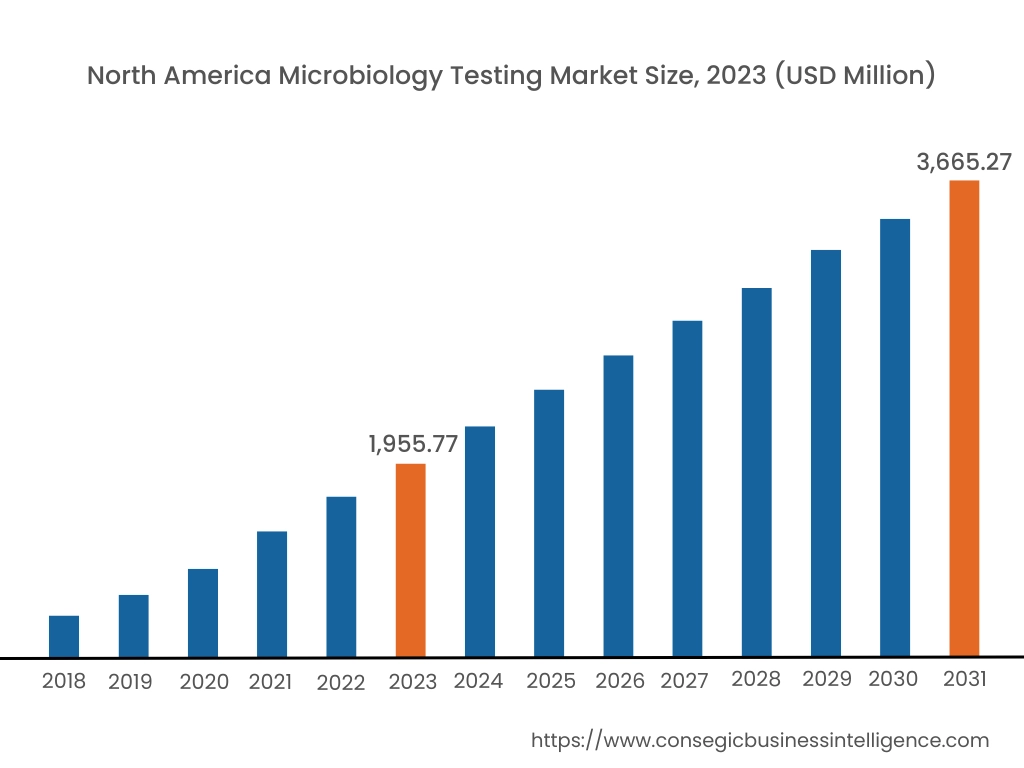
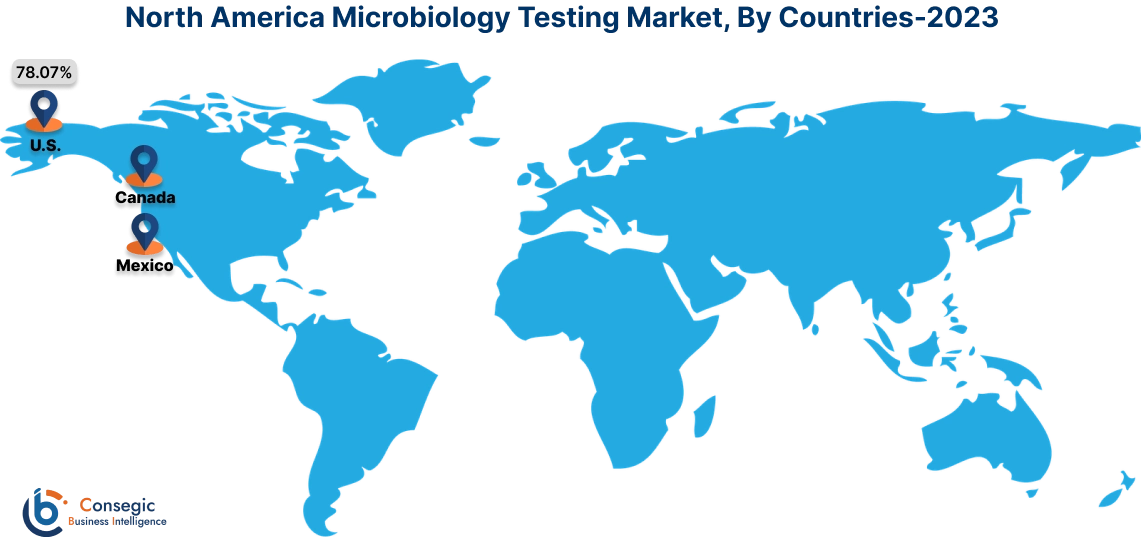
In 2023, North America accounted for the highest microbiology testing market share at 39.77% and was valued at USD 1,955.77 Million and is expected to reach USD 3,665.27 Million in 2031. In North America, the U.S. accounted for the highest share of 78.07% during the base year of 2023. The microbiology testing market trends are gaining a significant rise in North America owing to the confluence of multiple factors. The region has a well-established healthcare infrastructure with advanced diagnostic laboratories and research institutions. This facilitates the adoption of cutting-edge technologies and innovative testing methods. Moreover, the increasing prevalence of infectious diseases, coupled with a growing aging population, drives the demand for accurate and timely microbiological testing.
Additionally, stringent regulatory standards in North America, particularly in the United States, necessitate rigorous quality control and compliance with Good Laboratory Practices (GLP) and Good Manufacturing Practices (GMP). This drives the adoption of advanced microbiology testing technologies. Furthermore, significant investments in healthcare research and development in North America contribute to the growth of the microbiology testing market.
- For instance, USD 197 million was requested in the 2024 President's Budget for the CDC's Antibiotic Resistance Solutions Initiative (AR Solutions Initiative), which is a USD 15 million increase from the 2022 funding. Thus, significant investments in healthcare are driving the adoption of advanced microbial testing technologies, driving the market positively.
Overall, the confluence of factors such as advanced healthcare infrastructure, increasing prevalence of infectious diseases, stringent regulations, and significant R&D investments are driving the growth of the microbiology testing market in North America.
In Asia Pacific, the microbiology testing market is experiencing the fastest growth with a CAGR of 10.5% over the forecast period. Increased government and private sector investments in healthcare infrastructure are driving the need for advanced diagnostic services. Moreover, the region's large and growing population, especially in countries such as India and China, is associated with a higher incidence of infectious diseases. Additionally, government initiatives to improve public health and the increased research and development capabilities are driving the need for effective microbiological testing further propelling the market expansion.
Europe is experiencing considerable growth in the market, with several factors responsible. First, Europe has a well-developed healthcare system with advanced laboratories and research institutions. Strict regulatory standards for healthcare, environment, and food safety drive the adoption of advanced microbiology testing technologies. Moreover, the aging population in Europe is more susceptible to infections, leading to an increased preference for diagnostic services. The increasing prevalence of antibiotic-resistant bacteria also boosts demand, as hospitals and labs prioritize rapid, accurate diagnostics.
The Middle East and Africa (MEA) region is also witnessing a notable surge in the microbiology testing market, fueled by improvements in healthcare infrastructure, government initiatives to prevent infectious disease spread, and increasing focus on food and water safety. Efforts to address high infection rates, particularly in sub-Saharan Africa, create a demand for microbial diagnostics in hospitals and diagnostic labs. Investment in modern healthcare facilities, especially in the Gulf states, further supports market growth. The region's expanding pharmaceutical and biotechnology sectors, alongside public health initiatives, contribute to the rising requirement for microbiology testing across the MEA. Countries such as Saudi Arabia, UAE, and South Africa are experiencing economic growth, which is fueling the demand for advanced healthcare services, including microbiology testing.
The microbiology testing market analysis depicts that Latin America is an emerging region in the market. It is driven by rising healthcare needs, government policies targeting disease prevention, and a growing awareness of food and water safety. A growing middle class with increased disposable income is driving demand for better healthcare services, including diagnostic testing. High incidences of infectious diseases, such as dengue and Zika, increase the demand for accurate diagnostic testing in hospitals and public health labs. The region's growing pharmaceutical and food and beverage industries also boost demand, with companies focusing on microbial testing to meet regulatory standards. Countries such as Brazil and Mexico lead in healthcare improvements and technological advancements, further propelling the microbiology testing market across Latin America.
Top Key Players & Market Share Insights:
The microbiology testing market is highly competitive with major players providing products to the national and international markets. Key players are adopting several strategies in research and development (R&D) and product innovation to hold a strong position in the global microbiology testing market. Key players in the Microbiology Testing industry include-
- Bio-Rad Laboratories Inc. (U.S.)
- Abbott Laboratories (U.S.)
- F. Hoffmann-La Roche Ltd (Switzerland)
- Bruker Corporation (U.S.)
- Hologic Corporation (U.S.)
- Cepheid Inc. (U.S.)
- Biomerieux SA (France)
- Becton Dickinson and Company (U.S.)
- Thermo Fisher Scientific Inc. (U.S.)
- Agilent Technologies Inc. (U.S.)
- Merck KGaA (Germany)
- Shimadzu Corporation (Japan)
- NEOGEN Corporation (U.S.)
Recent Industry Developments:
Product Launch:
- In June 2023, LuminUltra revealed the introduction of BugCount Fuel, a groundbreaking and easy-to-use testing kit designed to swiftly and precisely assess fuels for microbial contamination, which can present considerable difficulties for various sectors such as aviation, marine, and fuel management.
- In January 2021, Bruker Corporation revealed that it has received US FDA clearance and is set to launch the MBT Sepsityper Kit US IVD in the U.S., designed for the swift identification of over 425 microorganisms from positive blood cultures utilizing the MALDI Biotyper CA System.
Partnerships and Collaborations:
- In April 2024, Oxford Nanopore Technologies (Oxford Nanopore), the innovative company responsible for a new era of molecular sensing technology utilizing nanopores, along with BugSeq, a prominent provider of fully automated bioinformatics services for infectious diseases, revealed a partnership focused on providing swift and precise analytical solutions for microbiology laboratories.
Microbiology Testing Market Report Insights :
| Report Attributes | Report Details |
| Study Timeline | 2018-2031 |
| Market Size in 2031 | USD 9,771.98 Million |
| CAGR (2024-2031) | 9.0% |
| By Product Type |
|
| By Test Type |
|
| By Application |
|
| By End-User |
|
| By Region |
|
| Key Players |
|
| North America | U.S. Canada Mexico |
| Europe | U.K. Germany France Spain Italy Russia Benelux Rest of Europe |
| APAC | China South Korea Japan India Australia ASEAN Rest of Asia-Pacific |
| Middle East and Africa | GCC Turkey South Africa Rest of MEA |
| LATAM | Brazil Argentina Chile Rest of LATAM |
| Report Coverage |
|
Key Questions Answered in the Report
How big is the Microbiology Testing market? −
In 2023, the Microbiology Testing market is USD 4,917.70 Million.
Which is the fastest-growing region in the Microbiology Testing market? +
Asia Pacific is the fastest-growing region in the Microbiology Testing market.
What specific segmentation details are covered in the Microbiology Testing market? +
Test Type and Application segmentation details are covered in the Microbiology Testing market.
Who are the major players in the Microbiology Testing market? +
Bio-Rad Laboratories Inc. (U.S.), Abbott Laboratories (U.S.), Becton Dickinson and Company (U.S.), F. Hoffmann-La Roche Ltd (Switzerland), Bruker Corporation (U.S.), Hologic Corporation (U.S.), Cepheid Inc. (U.S.), Biomerieux SA (France), Thermo Fisher Scientific Inc. (U.S.), Agilent Technologies Inc. (U.S.), Merck KGaA (Germany), Shimadzu Corporation (Japan), and NEOGEN Corporation (U.S.)
Overview
Reputation & Certifications


Our Services
- Market Intelligence & Forecasting
- Custom Research Solutions
- Market Entry Strategy
- Competitive Intelligence
- Customer Insights
- Industry Innovation Analysis
- Investment Advisory