Jump to Content
Nanomaterials Market Size & Industry Share - Growth Trends & Forecasts (2026 - 2034)
Nanomaterials Market Size:
The Nanomaterials market size was valued at 21.43 (US$B) in 2025 and is projected to grow from 24.92 (US$B) in 2026 to 83.42 (US$B) by 2034, at a CAGR of 16.3% from 2026 to 2034, according to a recent report from Consegic Business Intelligence.
Nanomaterials Market Scope & Overview:
Nanomaterials are materials whose one dimension is less than 100 nanometers. Their nanoscale provides them with rare physical, biological, and chemical properties. They can be nanoplates, nanoparticles, carbon nanotubes (CNTs), etc. These properties render them with a larger surface area which is relative to their volume. This allows them to possess effective strength. They also have enhanced durability and rare optical properties like light absorption and scattering, and excellent electrical and thermal conductivity. They tend to have several benefits, the primary one being its advanced functionality and cost-efficiency. They also have high performance and reduced energy consumption, making them highly environmentally friendly. They have their usage found its way in various industries, especially in the electronics and healthcare sectors. Examples of other industries that utilize these materials include cosmetics, aerospace, energy, and manufacturing sectors.
Nanomaterials Market Insights:

Nanomaterials Market Dynamics - (DRO) :
Key Drivers:
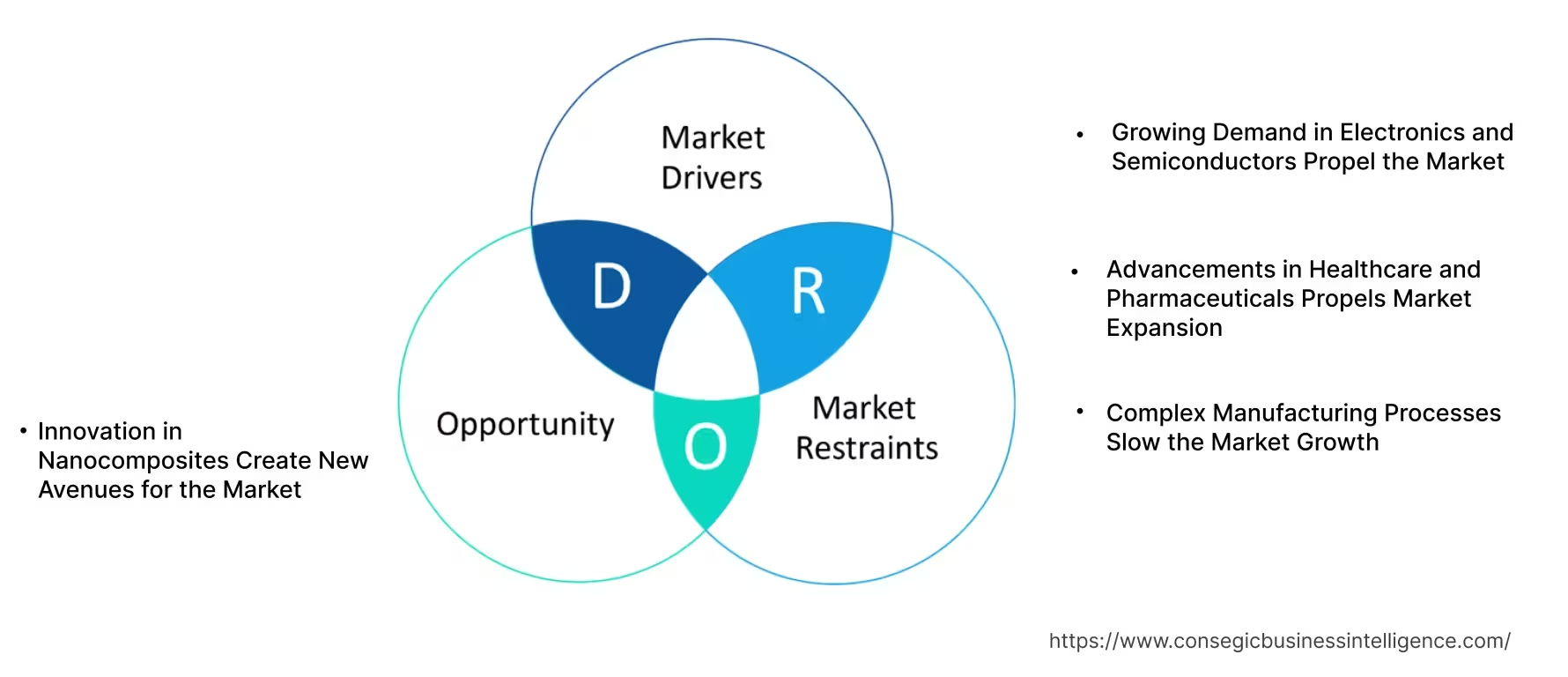
Growing Demand in Electronics and Semiconductors Propel the Market
Nanomaterials have rare properties, making them a suitable choice for the electronics sector where smaller and efficient components are desired. For instance, graphene has such high-quality electrical conductivity, that it is ideal for the reduction of energy. They also have critical thermal conductivity which easily dissipates heat, improving the semiconductors. Unlike silicon-based semiconductors, these materials are two-dimensional which makes them ideal for the creation of transistors at atomic scale. It ensures the continuous shrinking of electronic components.
- In July 2023, a group of researchers from the Spanish National Research Council developed a hybrid nanomaterial from graphene and polythiophene. It was aimed to change the way nanotech is employed in electronics by converting light into electricity. It revolutionizes optoelectronics such as solar panels, smart-tech device screens, etc.
Thus, as the demand for more compact as well as durable electronics increases it fuels the broadening avenues for the market, leading to the nanomaterials market expansion and innovations.
Advancements in Healthcare and Pharmaceuticals Propels Market Expansion
The healthcare sector leverages the exceptional and unique properties of nanomaterials to promote effective treatments and diagnostics. Certain examples such as dendrimers or liposomes are essential for drug delivery. They can be designed to carry drugs to particular cells or tissues. It reduces side effects and increases favorable outcome rates. They can also be engineered to release drugs with controlled methods for longer durations. They are also employed as imaging agents for techniques like MRIs or CT scans and are important for the development of biosensors.
- In October 2023, Xēnix Medical obtained from the US FDA for the circulation of nanotech implants for the fusion, called NANOACTIV. This new neoWave line is aimed at treating deteriorating lumbar disease. It is designed to enhance fixation to adjacent bone which has been curated with nano-scale on a nanometer.
Therefore, as per the analysis, they offer solutions for cancer treatment, thus driving the nanomaterials market growth.
Key Restraints :
Complex Manufacturing Processes Slow the Market Growth
The production of nanomaterials often demands the usage of specially designed pieces of equipment. Further, the synthesis methods alone, such as chemical vapor deposition (CVD) or high-precision lithography require a developed infrastructure with generous investment. It makes their production comparatively expensive and reduces their scalability. There is also the need to have precise knowledge and expertise in nanotechnology, chemicals, etc to initiate the synthesis processes.
- A 2021 report by the Royal Society of Chemistry talks about the challenges faced during the synthesis of these materials. The study highlights how synthesizing 2D nanomaterials can pose a challenge for large-scale production. It could lead to defects and low-quality nanomaterial production.
Therefore, manufacturing of nanoscale materials requires consistency and ongoing optimization which is difficult to maintain without proper technical skills. This, in turn, obstructs the nanomaterials market growth.
Future Opportunities :
Innovation in Nanocomposites Create New Avenues for the Market
Nanocomposites, which are materials that are formed by integrating nanoparticles and matrix material, can be curated to respond to external stimuli. It can coerce favorable outcomes with certain magnetic fields or temperatures, etc. This makes nanocomposite a smart material capable of self-healing, longevity, and durability. It is then conducive to employment in a wide range of industries such as aerospace, infrastructure, etc. They are imperative in providing properties that result in a reduction of material usage, making nanocomposites very sustainable unlike conventional materials, such as silicon.
- In 2023, researchers from Chulalongkorn University were trying to find ways to improve chitosan-based nanocomposites. They employed methods such as the addition of chemical modifications, dendrimers, etc to use chitosan nanoparticles for biomedical applications like in dressing wounds.
Thus, as per analysis, innovations and ongoing research on nanocomposites result in a wide range of applications for the material, such as in coatings and films, semiconductors, adaptors, etc. This creates leads to more nanomaterials market opportunities.
Nanomaterials Market Segmental Analysis :
By Material Type:
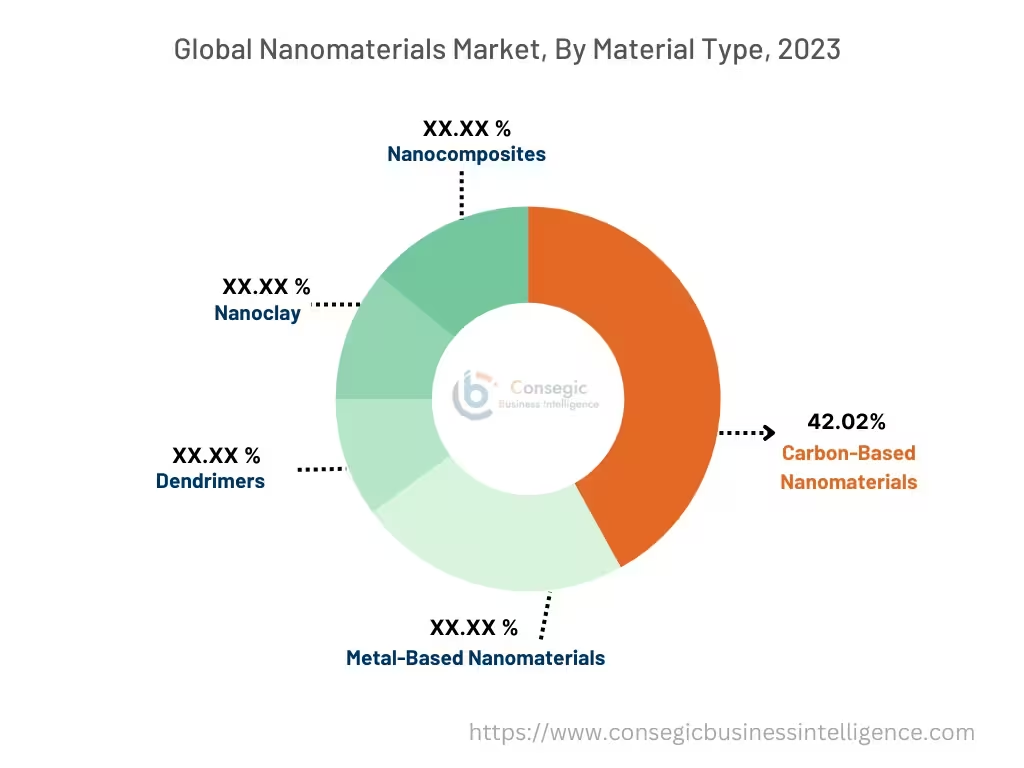
The market is segmented, based on material types, into Metal-Based Nanomaterials (copper nanoparticles, gold nanoparticles, silver nanoparticles), Carbon-Based Nanomaterials (Graphene, Nanotubes, Fullerenes), Nanoclay (Montmorillonite, Kaolinite), Dendrimers (Polyamidoamine (PAMAM) Dendrimers, Starburst Dendrimers), and Nanocomposites (Polymer Nanocomposites, Ceramic Nanocomposites, and others).
Trends in the material type:
- Dendrimers can deliver blood DNA-based nanoparticles for the treatment of cancer.
- Nanocomposites can make traditional golf clubs lighter and stronger than before.
The carbon-based segment accounts for the largest revenue share of 42.02% in the nanomaterials market share in 2023.
- Carbon-based nanomaterials such as carbon nanotubes (CNTs) or graphene have exceptional tensile strength and high flexibility, making them conducive to a wide range of activities.
- They have excellent electric and thermal conductivity, making them suitable for use in the electronics sector, automotive sector, aerospace, etc.
- They make coatings durable by enhancing their properties which makes them resistant to corrosion.
- They are energy-efficient and have utility in enhancing the mechanical properties of composite materials.
- In 2021, Frontiers in Nanotechnology talked about the efficiency of carbon-based nanomaterials' utilization in drug delivery. These are versatile nanocarriers and research efforts are underfoot to increase its scalability in the industrial sector.
- Therefore, as per the analysis, using of these materials is recognized for its potential to propel nanotechnology forward, thus driving the market.
Nanocomposites are expected to have the fastest-growing CAGR during the forecasted period.
- Nanocomposites integrate nanoparticles with the total matrix. This leads to enhancement in its material properties, making it lightweight yet having toughness and strength.
- They offer improved barrier properties which makes them suitable for the packaging industries to lengthen shelf life.
- They are instrumental in reducing material usage and carbon footprints, making it a sustainable choice.
- Nanocomposites could be specifically designed to be durable and to meet particular needs making it versatile and environment friendly.
- For instance, the National Library of Medicine (NLM) published an article that revealed the capability of nanocomposites-based electrochemical biosensors to detect and treat breast cancer. The biomarker-based diagnosis is a major shift from traditional methods of ultrasonography as nanocomposites provide targeted drug delivery, bioimaging, and accurate therapies.
- Thus, as per the nanomaterials market analysis, more research and development are ongoing to make nanocomposites more scalable. This would lead to new and fast-growing opportunities within this market.
By Product Type:
The market is segmented, based on product types, into Nanoparticles, Nanofibers, Nanotubes, Nanoclays, and Nanowires.
Trends in the Product Type:
- They could be integrated with cement as well as clothes to make them durable yet lightweight.
- Products like nanowires are great for improving optical absorption rates and combining efficiency in photovoltaic systems.
Nanoparticles account for the largest revenue share in 2023.
- Nanoparticles are highly versatile and are essential in various industries. For example, the cosmetics sector relies on titanium dioxide and zinc oxides while the electronics sector relies on silver nanoparticles.
- Certain nanoparticles are used in chemical reactions as catalysts such as platinum.
- They also have optical properties which makes them important in biomedical imaging, for example, quantum dots.
- For instance, in March 2024, researchers at Purdue University are enhancing and validating patent-pending nanoparticles to improve immunotherapy results for tumors. These new nanoparticles are augmented by adenosine triphosphate (ATP) so that the immune cells (dendritic cells) can detect tumor antigens and bring trained immune cells to stave off tumors.
- Therefore, as nanoparticles provide a sustainable source for smart technologies, they form the largest revenue-generating segment in the nanomaterial market.
Nanotubes are expected to have the fastest-growing CAGR during the forecasted period.
- Nanotubes, also known as Carbon Nanotubes (CNTs) have a strength-to-weight ratio that surpasses that of steel. They are lightweight yet have exceptional strength, which is essential in the aerospace and construction sectors.
- They have high thermal conductivity making them efficient in heat dissipation. This is useful in batteries, electronics, etc.
- They are used in reinforcing materials due to their capability to increase durability and improve strength.
- CNTs are also known for being cost-effective and helping in the reduction of emissions.
- In a study by the University of Maryland Baltimore County, it was highlighted how twisted CNTs offer more efficient energy storage which the researchers concluded after observing single-walled CNTs. This is because twisted CNTs give more energy per unit than conventional lithium-ion batteries. The research was published in Nature Nanotechnology and can show a way to improve CNTs for energy storage solutions for micro-minimized electronics.
- Thus, as innovation in the applications of CNTs increases, it also brings in the potential for its fast growth and market expansion in the future.
By Structure Type:
The market is bifurcated, based on structure type, into Non-polymer Organic Nanomaterials and Polymeric Nanomaterials.
Trends in the Structure Type:
- 2D nanomaterials can be used in water purification because they have increased specific surface area.
- They are being used for intelligent packaging where it can detect food spoilage, temperature, moisture, etc.
Non-polymer organic nanomaterials account for the largest revenue share in 2023.
- Non-polymer organic nanomaterials have exceptionally customizable internal structures. This increases their effectiveness, for example, fullerenes, and is employed across various applications.
- They have high surface area, have tunable optical and chemical properties. It makes them versatile and valuable for varied functionalization.
- Certain materials like dendrimers or liposomes are used in drug delivery systems.
- They can be engineered effectively to be less toxic and more degradable, making them highly sustainable.
- Thus, as per the analysis, as consumer awareness grows about nanotechnology, it drives the nanomaterials market trends.
Polymeric nanomaterials are expected to have the fastest-growing CAGR during the forecasted period.
- Polymeric materials such as nanogels can be functionalized to enhance their nature and make them compatible with various environments. It increases performance levels and renders them versatile.
- They are extremely biocompatible, making them ideal for use in the medical sector. For example, it can be used in tissue engineering to replicate extracellular matrix which supports cell growth.
- They can improve the shelf life of products, minister their freshness, and provide protection against moisture and oxygen.
- For instance, in a recent study by MIT chemical engineers have resulted in the introduction of a new 2D polymeric material, polyaramide. It is a lightweight material that has high durability and could be used in coating car components, and electronics, as well as for construction.
- Therefore, as they offer eco-friendly solutions to consumers, they are expected to have the fastest growth during the forecasted period in the future.
By Synthesis Method:
The market is segmented based on the synthesis method into Chemical Vapor Deposition (CVD), Physical Vapor Deposition (PVD), Sol-Gel Method, Biological Synthesis, Mechanical Milling, and others.
Trends in the Synthesis Method:
- Nanomaterials made from biological synthesis employ components from agro-food waste and other biomaterials. It reduces plastic waste.
- They can be synthesized by using acoustic waves to make cavitation which propels chemical reactions to build up nano-scale materials.
Chemical Vapor Deposition (CVD) accounts for the largest revenue share in 2023.
- Chemical Vapor Deposition (CVD) is versatile and can produce a wide range of nano-scale materials, like nanowires, CNTs, etc.
- It controls the precise composition, quality, and thickness of the material, allowing for high performance. This method also produces high uniformity as well as purity outputs.
- This synthesis method is highly scalable, making it ideal for small laboratories as well as large industries.
- In June 2023, CVD Equipment Corporation received directions from OneD Battery Sciences for the production of new high-performing nanomaterials that could be employed in Electric Vehicle (EV) batteries. This new product, PowerCoat1104 was shipped to Europe in the latter half of 2023 and has fast charging.
- Therefore, as the CVD method guarantees reproducibility, it results in consistent quality. This drives the nanomaterials market demand.
Biological synthesis is expected to have the fastest-growing CAGR during the forecasted period.
- Biological synthesis is also termed ‘green synthesis' as it employs organisms like bacteria or algae in the production of nanomaterials.
- The ones synthesized through this method are biodegradable and highly suitable for drug delivery and other medical applications.
- There are certain types such as silver nanoparticles, have anticancer and antimicrobial properties.
- This type of synthesis method consumes less energy and has lower production costs, making it cost-effective.
- For instance, researchers at Jeonbuk National University were successful in manufacturing nanomaterials using organic products such as rosemary leaf extract and combining them with reduced graphene oxide (GO). They also included silver and selenium nanoparticles.
- Thus, the simplicity of biological synthesis and its scalability will result in having the fastest-growing CAGR during the forecasted period.
By End-user Industry:
The market is segmented based on end-users into Healthcare, Electrical and Electronics, Energy, Construction, Personal Care, and others.
Trends in the End-user Industry:
- They are being effectively developed for the curation of personalized medicines.
- Carbon nanotubes (CNTs) are used in increasing the effectiveness of solar cells and lighting.
The electrical and electronics sector accounts for the largest revenue share in 2023.
- There is a growing trend of miniaturization of electronics. Nano-scale materials such as CNTs help in creating smaller and more compact electronic components without compromising performance.
- They are employed in electronics as they offer flexibility, especially for wearable devices. Such materials like graphene also provide exceptional electrical conductivity which results in improved durability in electronics.
- They also have superior electrical conductivity, making them ideal for high-speed and high-capacity devices.
- Certain nano-scale materials like indium tin oxide (ITO) promise transparency in coating and are essential in OLED displays and touch screens.
- For instance, the Korea Institute of Machinery and Material (KIMM) has recently developed a new screen, the Nano Transparent Screen (NTS). This 100-inch screen's transparency level changes with external stimuli.
- Therefore, as per analysis, the electronics and electrical sector utilizes these materials to gain a competitive edge, making it the largest revenue segment in this market.
Healthcare is expected to have the fastest-growing CAGR in the market during the forecasted period.
- Nanomaterials enhance the solubility of poorly soluble drugs which is helpful in the development of efficient treatments for critical diseases.
- They also help in the creation of innovative diagnostic tools such as imaging agents and biomarkers.
- They help in the improvement of delivery and effectiveness of stem cell therapies by allowing better stem cell growth and differentiation.
- They can be used in the development of nanomedicines like formulation of targeted drugs or innovative vaccines with effective impacts on body immunity.
- For instance, researchers at Michigan State Univerity have developed a certain variation of nanoparticle that can eat away the fat deposited in the arteries which are the main reasons for sudden strokes or heart attacks.
- As significant efforts are made to revolutionize the healthcare sector with nanotechnology, this end-user industry will continue to have the fastest growth rate in the nanomaterials market.
Regional Analysis:
The regions covered are North America, Europe, Asia Pacific, the Middle East and Africa, and Latin America.
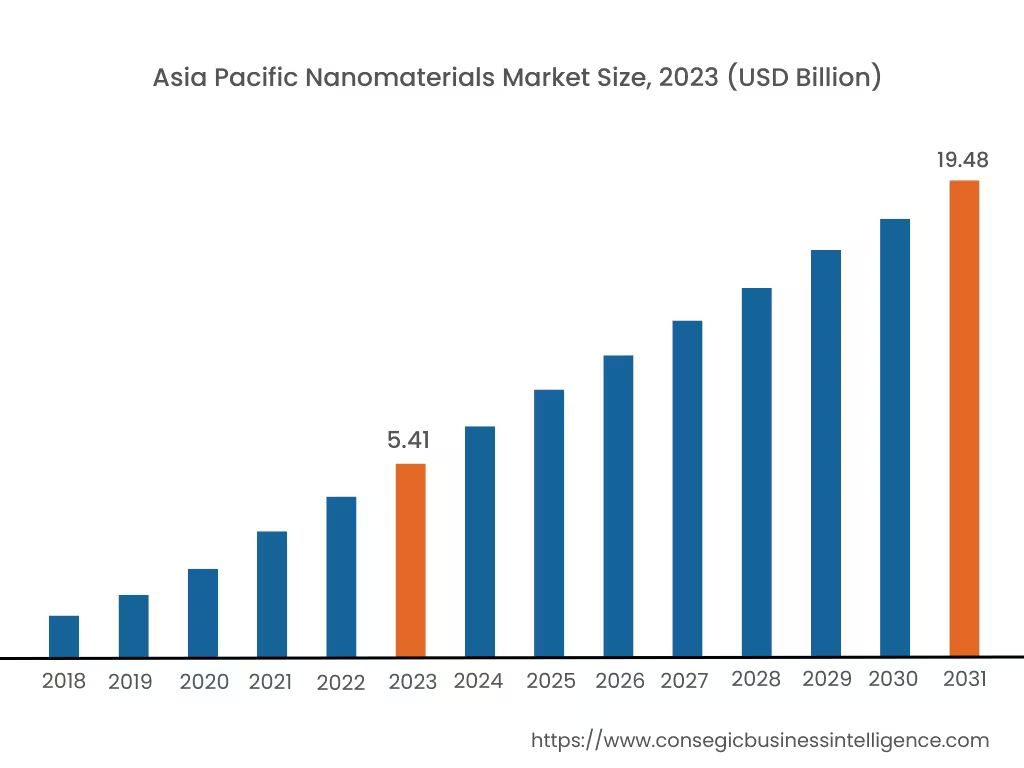
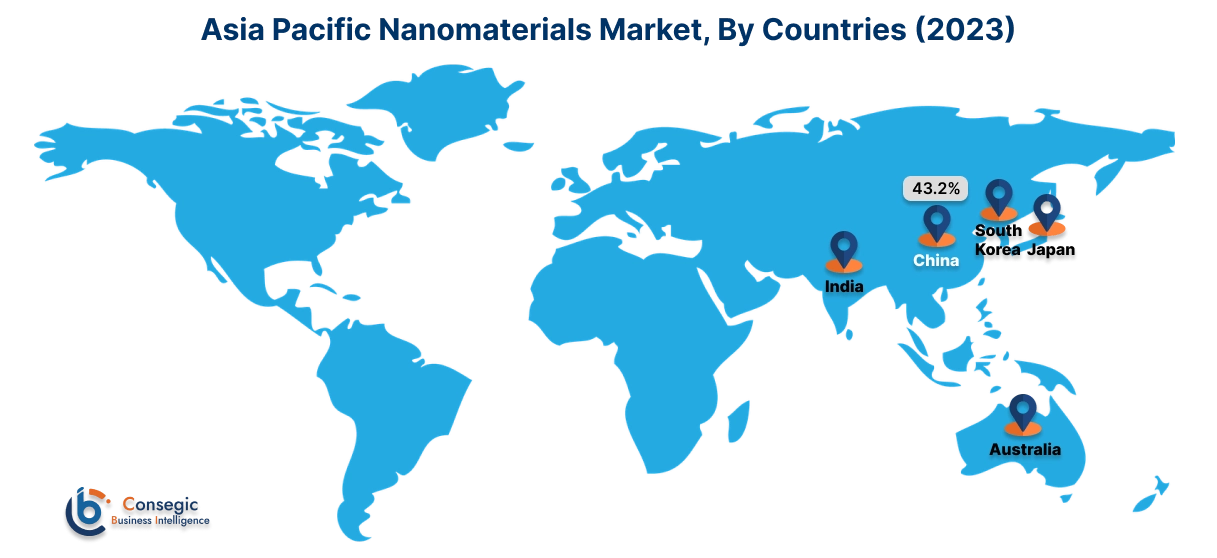
Asia Pacific region was valued at USD 5.41 Billion in 2023. Moreover, it is projected to grow by USD 6.24 Billion in 2024 and reach over USD 19.48 Billion by 2031. Out of this, China accounted for the maximum revenue share of 43.2%.
The Asia-Pacific (APAC) region, especially countries like China, South Korea, Japan, India, etc is a global hub of IT and electronics. Since nanomaterials play an important role in the production of modern electronic components with enhanced performance and efficiency, the market for this has seen robust growth in this region. They have an increased demand for nano-scale materials and a massive consumer base that utilizes nanoparticles extensively.
- For instance, in August 2023, researchers from the Japan Advanced Institute of Science and Technology curated a new cancer theranostic agent that could effectively convert light energy to heat. This would lead to the elimination of cancer cells within the patient. They would rely on liquid metal nanoparticles such as pure gallium or GA-based alloys for cancer photoimmunotherapy.
Thus, the global market benefits immensely from the APAC region's prowess in the nanomaterials market trends.
North America is estimated to reach over USD 15.80 Billion by 2031 from a value of USD 4.74 Billion in 2023 and is projected to grow by USD 5.43 Billion in 2024. North America, especially the US and Canada is home to a strong industrial base with advancement in research and technology. The institutes of these nations with government support devote their resources to the development of nanotechnology, translating it for industrial and commercial use.
Europe is at the forefront of sustainable development and the adoption of green technologies. Countries like the UK, France, Germany, etc have employed nano-scale materials as they are biodegradable and offer energy storage as well as environmental remediation.
Many nations in the Middle East & Africa, especially the Gulf region have been focused on economic diversification to reduce their reliance on fossil fuels. This trend has led the governments of these regions, such as in Qatar or UAE encourage investment in smart technologies like nanotechnology as a part of their economic diversification strategies.
In Latin America, the agricultural sector also benefits from nanotechnology adoption. Nano-scale materials improve the productivity of crops and increase their sustainability through soil health monitoring, precise release of fertilizers, etc. These results in higher crop outputs and promise food security, which raises the nanomaterials market demand.
Top Key Players & Market Share Insights:
The nanomaterials market is highly competitive with major players providing it to the national and international markets. Key players are adopting several strategies in research and development (R&D), product innovation, and end-user launches to hold a strong position in the nanomaterials market. Key players in the nanomaterials industry include:
- BASF (Germany)
- US Research Nanomaterials, Inc. (US)
- nanoComposix (US)
- Nanophase Technologies Corporation (US)
- American Elements (US)
- Altairnano (US)
- ssnano.com. (US)
- Ascensus (US)
- Quantum Materials Corporation (US)
- Cytodiagnostics Inc (Canada)
- Nanoshel LLC (US)
Recent Industry Developments :
Product Launches:
- In September 2023, Meta Materials announced the launching of Quantum Stripe, a nano-optic bank note that is an ophthalmic viscosurgical device (OVD) developed. This product is fully animated and provides a new dimension to security in the authentication sector. Through Meta's prowess in nanotechnology, this product offers the banking and governmental system the provision of safeguarding the public currency from fraud.
Partnerships and Collaborations:
- In March 2024, SiAT, a Chinese company partners with Taiwan C.S Aluminium Corporation (CSAC) to introduce a new product, carbon nanotube CNT-coated aluminum foil. This new product has ten times improved conductivity than carbon black, and the CNT coating prevents corrosion of the aluminum foil. It also has an enhanced battery life for better performance.
Product Enhancements:
- In July 2023, the World Nano Foundation (WWF) announced the launching of a new white paper that underscores the position of nanotech in space exploration. It delves deeper into how nanotech can be customized to address space exploration through material science.
Investment and Fundings:
- In November 2023, Nanofilm Technologies International invested S$66 Million to launch a corporate lab jointly with Nanyang Technological University (NTU). This laboratory would be developing nanotechnology products. They aimed to create medical implants, non-toxic coatings as well as protective coatings to render hydrogen fuel cells more energy-efficient, cost-effective, and reliable.
Nanomaterials Market Report Insights :
| Report Attributes | Report Details |
| Study Timeline | 2021-2034 |
| Market Size in 2034 | USD 83.42 Billion |
| CAGR (2026-2034) | 16.30% |
| Base Year | 2025 |
| By Material Type |
|
| By Product Type |
|
| By Structure Type |
|
| By Synthesis Method |
|
| By End-user Industry |
|
| By Region |
|
| Key Players |
|
| North America | U.S. Canada Mexico |
| Europe | U.K. Germany France Spain Italy Russia Benelux Rest of Europe |
| APAC | China South Korea Japan India Australia ASEAN Rest of Asia-Pacific |
| Middle East and Africa | GCC Turkey South Africa Rest of MEA |
| LATAM | Brazil Argentina Chile Rest of LATAM |
| Report Coverage |
|
Key Questions Answered in the Report
Who are the major players in the nanomaterials market? −
The major players in the market include BASF (Germany), and Frontier Carbon Solutions, LLC. (US), ssnano.com. (US), Ascensus (US), US Research Nanomaterials, Inc. (US), nanoComposix (US), Nanophase Technologies Corporation (US), Quantum Materials Corporation (US), Cytodiagnostics Inc (Canada), American Elements (US), Nanoshel LLC (US), and Altairnano (US).
What specific segmentation details are covered in the nanomaterials market report? +
The nanomaterials market is segmented into material type, product type, structure type, synthesis method, and end-user industry.
Which is the fastest-growing region in the nanomaterials market? +
Asia Pacific is the fastest-growing region in the nanomaterials market.
Overview
Reputation & Certifications


Our Services
- Market Intelligence & Forecasting
- Custom Research Solutions
- Market Entry Strategy
- Competitive Intelligence
- Customer Insights
- Industry Innovation Analysis
- Investment Advisory