Jump to Content
Paroxysmal Supraventricular Tachycardia Market - Size, Share, Industry Trends, and Forecasts (2025 - 2032)
Paroxysmal Supraventricular Tachycardia Market Size:
Paroxysmal Supraventricular Tachycardia Market size is estimated to reach over USD 521.88 Million by 2032 from a value of USD 310.65 Million in 2024 and is projected to grow by USD 325.93 Million in 2025, growing at a CAGR of 6.7% from 2025 to 2032.
Paroxysmal Supraventricular Tachycardia Market Scope & Overview:
The paroxysmal supraventricular tachycardia (PSVT) is, a condition characterized by sudden episodes of rapid heart rate originating above the ventricles. The market includes pharmaceutical therapies, such as antiarrhythmic drugs (e.g., adenosine, beta-blockers, and calcium channel blockers), catheter-based ablation procedures, and wearable monitoring devices for real-time diagnosis.
Key characteristics of PSVT treatment options include rapid action in controlling heart rate, long-term effectiveness in preventing recurrences, and advancements in minimally invasive interventions. The benefits include improved patient outcomes, reduced hospital admissions, and enhanced quality of life for individuals with recurrent PSVT episodes.
Applications span cardiology departments, hospitals, and outpatient clinics, focusing on acute management, long-term prevention, and monitoring of the condition. End-users include cardiologists, healthcare providers, and patients, driven by increasing awareness of arrhythmias, advancements in electrophysiology technologies, and the growing availability of personalized treatment options to manage this condition effectively.
How is AI Impacting the Paroxysmal Supraventricular Tachycardia Market?
AI is improving the paroxysmal supraventricular tachycardia (PSVT) market by enabling early detection through AI-enabled ECG analysis during normal sinus rhythm, personalizing treatment planning, and assisting in predicting responses to therapies like ablation. Additionally, AI enhances diagnostic capabilities, in turn improving patient outcomes, and creating new market opportunities for AI-driven cardiac solutions. Further, AI supports remote monitoring of patients and helps identify subtle physiological changes, offering a broader therapeutic window for intervention.

Paroxysmal Supraventricular Tachycardia Market Dynamics - (DRO) :
Key Drivers:
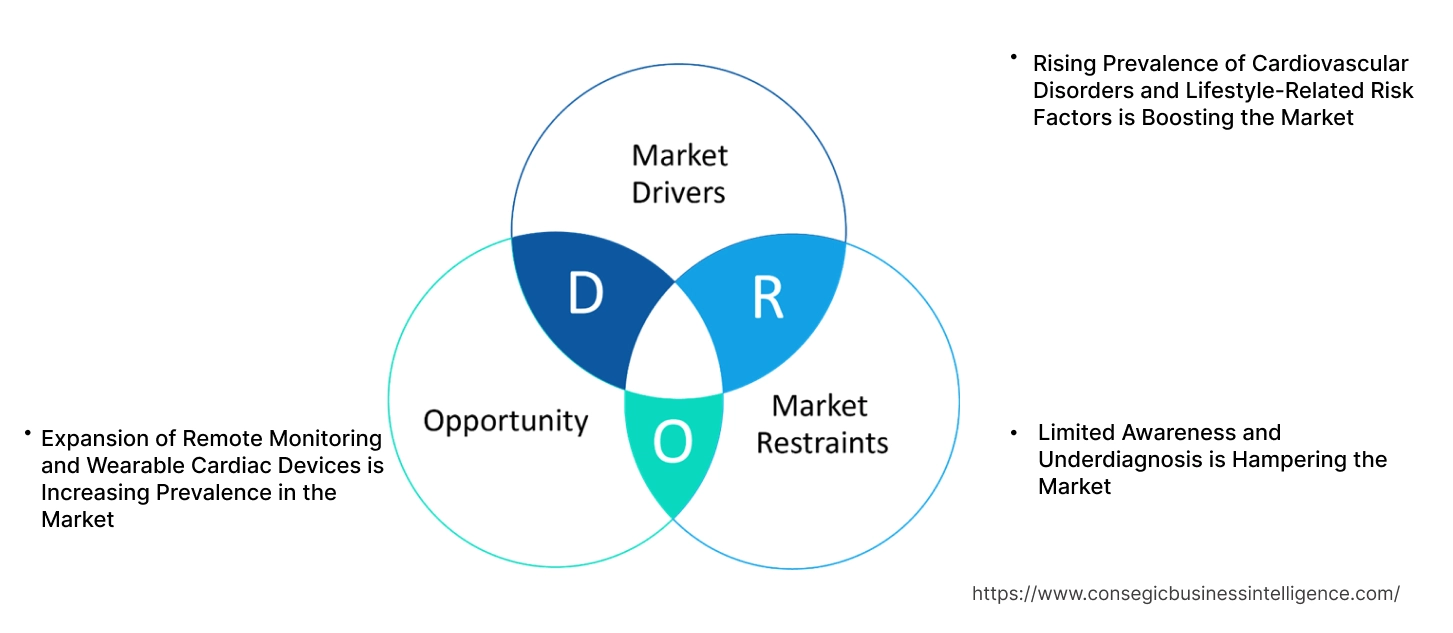
Rising Prevalence of Cardiovascular Disorders and Lifestyle-Related Risk Factors is Boosting the Market
The increasing prevalence of cardiovascular diseases, including paroxysmal supraventricular tachycardia (PSVT), is driven by lifestyle-related factors such as stress, obesity, smoking, and sedentary behaviors. These conditions significantly elevate the risk of arrhythmias, necessitating advanced diagnostic and therapeutic approaches. The aging global population, which is more susceptible to cardiac conditions, further underscores the importance of addressing PSVT.
Trends in early screening and public health campaigns are encouraging proactive cardiovascular health management. Analysis highlights that the rising focus on arrhythmia detection and the development of targeted interventions have positioned PSVT management as a key area in cardiac care.
Key Restraints:
Limited Awareness and Underdiagnosis is Hampering the Market
Despite its significant impact on health, PSVT often goes underdiagnosed due to its episodic nature and non-specific symptoms, such as palpitations and dizziness. Many patients and even healthcare providers fail to recognize the condition, leading to delays in diagnosis and treatment. This lack of awareness can exacerbate complications and reduce the effectiveness of available therapies.
Efforts to educate both patients and healthcare professionals about PSVT are critical for improving detection rates. Trends in medical education and patient advocacy are working to bridge this awareness gap, but more targeted initiatives are needed to ensure timely and accurate diagnosis.
Future Opportunities :
Expansion of Remote Monitoring and Wearable Cardiac Devices is Increasing Prevalence in the Market
The adoption of wearable cardiac devices and remote monitoring technologies is transforming the management of PSVT. These tools provide real-time tracking of heart rhythms, enabling early detection of arrhythmias and facilitating timely intervention. Devices such as ECG-enabled smartwatches and ambulatory monitors are particularly beneficial for capturing transient PSVT episodes that may otherwise go undetected.
Trends in digital health and telemedicine are driving the development of integrated platforms that combine wearable devices with cloud-based data analysis and remote consultation capabilities. Analysis suggests that this integration will not only improve access to care but also empower patients to actively participate in their cardiac health management, expanding the reach and efficacy of PSVT treatment strategies.
Paroxysmal Supraventricular Tachycardia Market Segmental Analysis :
By Type:
Based on type, the Paroxysmal Supraventricular Tachycardia (PSVT) market is segmented into atrioventricular nodal reentrant tachycardia (AVNRT), atrioventricular reciprocating tachycardia (AVRT), and atrial tachycardia.
The atrioventricular nodal reentrant tachycardia (AVNRT) segment accounted for the largest revenue in paroxysmal supraventricular tachycardia market share in 2024.
- AVNRT is the most common form of PSVT, occurring in both pediatric and adult populations, contributing significantly to the market share.
- Its high prevalence, especially among women and older adults, drives paroxysmal supraventricular tachycardia market demand for effective diagnostic and therapeutic solutions.
- Advancements in catheter ablation procedures, which are often used to treat AVNRT, have significantly improved patient outcomes.
- Growing awareness about AVNRT symptoms and the availability of non-invasive diagnostic tools have bolstered this segment's growth.
The atrial tachycardia segment is anticipated to register the fastest CAGR during the forecast period.
- Atrial tachycardia, although less common, requires specialized diagnostic and therapeutic approaches, leading to growing adoption of advanced solutions.
- Increasing prevalence of atrial tachycardia in patients with structural heart diseases and post-surgical conditions is driving demand.
- Rising focus on personalized medicine and advancements in electrophysiology (EP) testing are supporting paroxysmal supraventricular tachycardia market growth in this segment.
- Expansion of healthcare access in emerging markets is expected to further boost paroxysmal supraventricular tachycardia market trends for atrial tachycardia treatments.
By Diagnosis:
Based on diagnosis, the PSVT market is segmented into electrocardiogram (ECG), Holter monitoring, event monitoring, electrophysiology (EP) testing, and echocardiogram.
The electrocardiogram (ECG) segment accounted for the largest revenue in paroxysmal supraventricular tachycardia market share in 2024.
- ECG is the primary diagnostic tool for PSVT due to its simplicity, affordability, and high accuracy in detecting abnormal heart rhythms.
- Increasing integration of portable and wearable ECG devices has expanded their use in both clinical and homecare settings.
- Rising adoption of advanced ECG technologies, such as AI-based analysis, is enhancing diagnostic efficiency.
- Growing emphasis on early diagnosis and routine heart monitoring is driving the dominance of this segment.
The electrophysiology (EP) testing segment is anticipated to register the fastest CAGR during the forecast period.
- EP testing is considered the gold standard for identifying the underlying mechanisms of PSVT and guiding treatment decisions.
- Advances in 3D mapping and navigation systems have improved the accuracy and safety of EP studies.
- Increasing availability of specialized electrophysiology labs in hospitals and cardiology clinics is driving advancement in this segment.
- Rising focus on precision medicine and personalized treatment plans is expected to boost demand for EP testing.
By Treatment:
Based on treatment, the PSVT market is segmented into medications, vagal maneuvers, catheter ablation, electrical cardioversion, and implantable devices.
The catheter ablation segment accounted for the largest revenue share in 2024.
- Catheter ablation is a curative treatment option for PSVT, offering high success rates and minimal recurrence.
- Increasing adoption of minimally invasive procedures and advancements in ablation technologies are driving paroxysmal supraventricular tachycardia market growth in this segment.
- Rising preference for catheter ablation over long-term medication therapy among patients and clinicians is reinforcing its dominance.
- Supportive reimbursement policies and expanding healthcare infrastructure are further propelling trends in this segment.
The medications segment is anticipated to register the fastest CAGR during the forecast period.
- Medications, including beta-blockers, calcium channel blockers, and antiarrhythmic drugs, remain a cornerstone for initial PSVT management.
- Rising prevalence of PSVT among aging populations and patients with comorbidities is driving paroxysmal supraventricular tachycardia market trends for pharmacological solutions.
- Increasing availability of advanced formulations and combination therapies is boosting market growth.
- Growing focus on patient education and adherence to prescribed medication regimens is expected to fuel this segment.
By End-User:
Based on end-user, the PSVT market is segmented into hospitals, cardiology clinics, ambulatory surgical centers, and homecare settings.
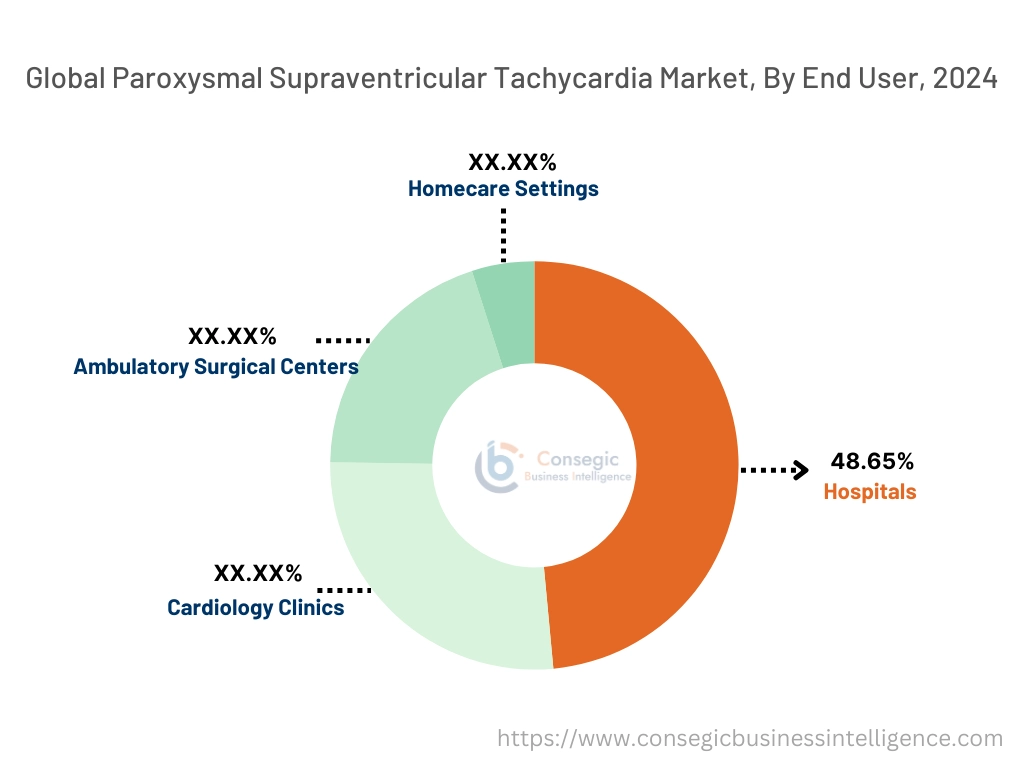
The hospitals segment accounted for the largest revenue share of 48.65% in 2024.
- Hospitals remain the primary centers for comprehensive diagnosis, treatment, and post-operative care for PSVT patients.
- Availability of multidisciplinary teams and advanced facilities for EP testing and catheter ablation ensures effective patient management.
- Rising hospital admissions for PSVT-related emergencies and complications have bolstered demand in this segment.
- Increasing investments in hospital infrastructure and adoption of cutting-edge cardiac care technologies are supporting growth.
The cardiology clinics segment is anticipated to register the fastest CAGR during the forecast period.
- Cardiology clinics are increasingly sought after for personalized and outpatient care for PSVT, offering advanced diagnostic and therapeutic options.
- Expansion of specialized clinics in urban and semi-urban areas has improved accessibility to expert cardiac care.
- Growing preference for non-invasive and minimally invasive procedures performed in clinic settings is driving growth.
- Collaboration between clinics and technology providers for advanced diagnostic tools and patient monitoring systems is expected to propel this segment.
Regional Analysis:
The regions covered are North America, Europe, Asia Pacific, the Middle East and Africa, and Latin America.
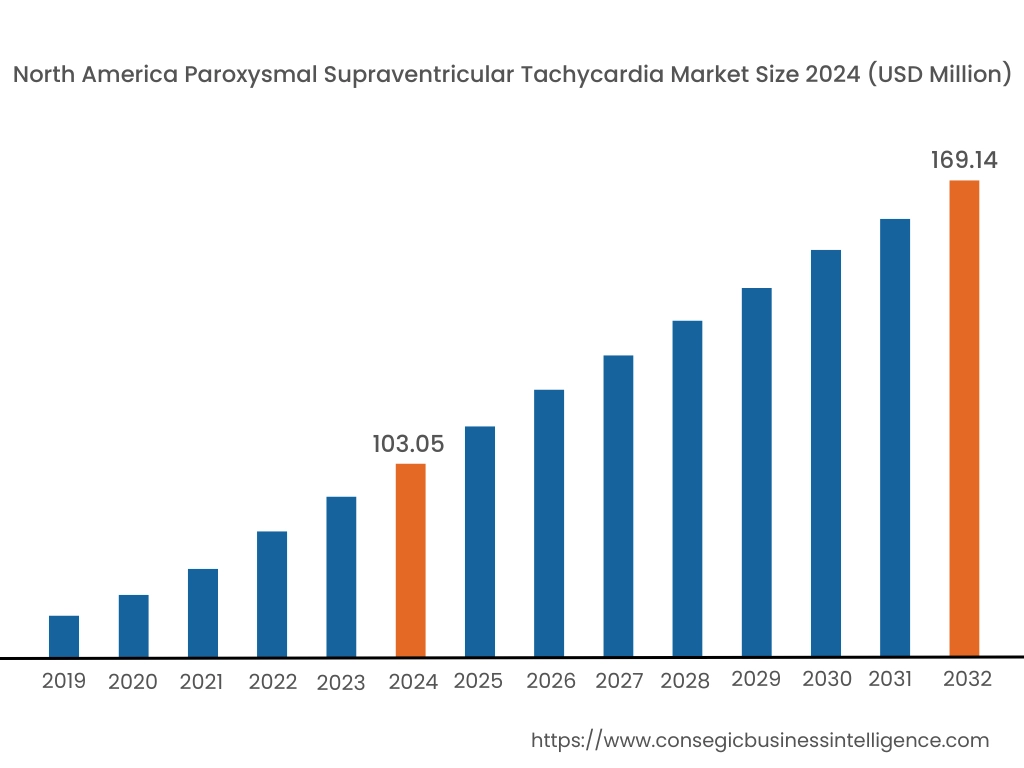
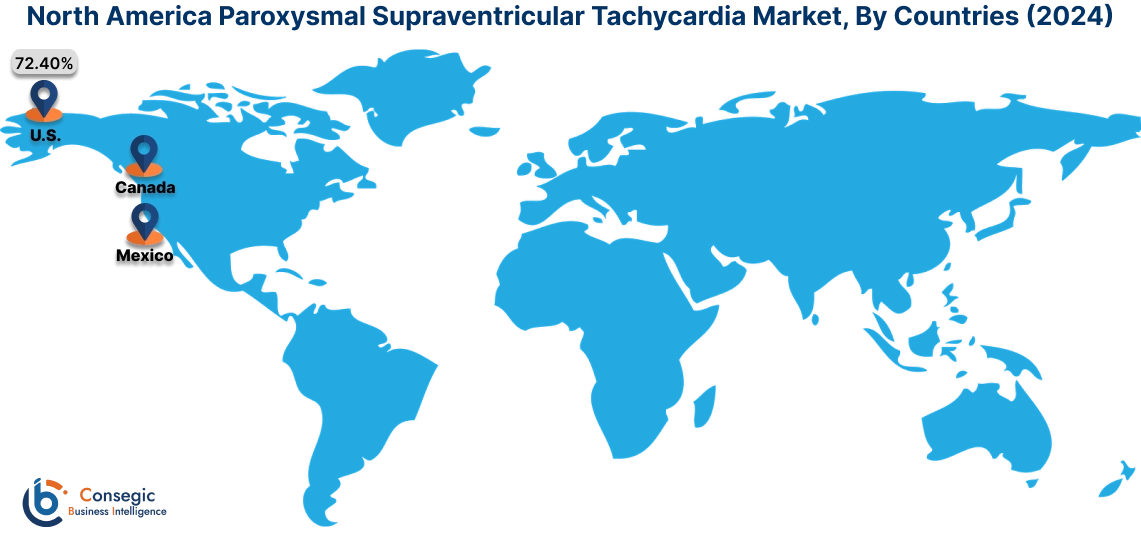
In 2024, North America was valued at USD 103.05 Million and is expected to reach USD 169.14 Million in 2032. In North America, the U.S. accounted for the highest share of 72.40% during the base year of 2024. North America holds a significant share in the global PSVT market, driven by advanced healthcare infrastructure, high awareness about cardiac arrhythmias, and the availability of advanced diagnostic and treatment options. The U.S. leads the region due to a large patient population suffering from PSVT and widespread use of catheter ablation, anti-arrhythmic drugs, and advanced monitoring systems. As per the paroxysmal supraventricular tachycardia market analysis, Canada contributes through increasing adoption of non-invasive diagnostic technologies and expanding cardiovascular healthcare programs. However, high treatment costs and disparities in access to specialized cardiac care in rural areas may limit advancement.
In Asia Pacific, the market is experiencing the fastest growth with a CAGR of 7.1% over the forecast period. The paroxysmal supraventricular tachycardia market analysis, is fueled by increasing prevalence of cardiovascular conditions, improving healthcare infrastructure, and rising awareness about arrhythmias in China, India, and Japan. China dominates the region with growing adoption of anti-arrhythmic drugs and non-invasive diagnostic tools to manage PSVT. India’s expanding healthcare sector supports trends for cost-effective treatments and increased use of catheter ablation in urban centers. Japan focuses on advanced cardiac care technologies and minimally invasive procedures, leveraging its strong medical device industry. However, limited awareness in rural areas and affordability challenges may hinder paroxysmal supraventricular tachycardia market opportunities in some parts of the region.
Europe is a prominent market for PSVT, supported by a growing aging population, increasing prevalence of cardiovascular diseases, and strong government initiatives for early diagnosis and treatment. Countries like Germany, France, and the UK are key contributors. Germany drives demand with its advanced cardiac care facilities and widespread use of catheter ablation procedures. France emphasizes public awareness campaigns for early detection of arrhythmias, while the UK focuses on expanding access to cardiac monitoring devices and therapies. However, budget constraints in public healthcare systems may challenge the adoption of advanced treatments in certain areas.
The Middle East & Africa region is witnessing steady growth in the PSVT market, driven by increasing investments in healthcare infrastructure and the rising prevalence of cardiovascular diseases. Countries like Saudi Arabia and the UAE are adopting advanced treatment options such as catheter ablation and wearable monitoring devices to improve arrhythmia management. In Africa, South Africa is emerging as a key market, focusing on enhancing access to diagnostic and therapeutic options for arrhythmias. However, limited local expertise in advanced cardiac care and reliance on imports for medical devices may restrict paroxysmal supraventricular tachycardia market expansion in the region.
Latin America is an emerging market for PSVT, with Brazil and Mexico leading the region. Brazil’s expanding healthcare sector and growing prevalence of arrhythmias drive demand for anti-arrhythmic drugs, electrophysiology studies, and catheter ablation procedures. Mexico focuses on increasing access to cardiac monitoring devices and promoting awareness about arrhythmia management in public healthcare systems. The region also sees increasing collaboration with international medical device companies to enhance access to advanced treatments. However, economic instability and inconsistent healthcare infrastructure may pose challenges to market growth in smaller economies.
Top Key Players and Market Share Insights:
The paroxysmal supraventricular tachycardia market is highly competitive with major players providing products to the national and international markets. Key players are adopting several strategies in research and development (R&D), product innovation, and end-user launches to hold a strong position in the paroxysmal supraventricular tachycardia market. Key players in the paroxysmal supraventricular tachycardia industry include -
- Pfizer Inc. (United States)
- Novartis AG (Switzerland)
- Boston Scientific Corporation (United States)
- GlaxoSmithKline plc (United Kingdom)
- AstraZeneca plc (United Kingdom)
- Sanofi S.A. (France)
- Johnson & Johnson (United States)
- Bristol Myers Squibb (United States)
- Medtronic plc (Ireland)
- Abbott Laboratories (United States)
Recent Industry Developments :
Clinical Trails:
- In July 2023, Milestone Pharmaceuticals reported positive results from the RAPID trial, a Phase 3 study evaluating etripamil nasal spray for the acute termination of paroxysmal supraventricular tachycardia (PSVT). The study demonstrated that self-administered etripamil effectively converted PSVT to sinus rhythm, offering a potential at-home treatment option for patients.
Paroxysmal Supraventricular Tachycardia Market Report Insights :
| Report Attributes | Report Details |
| Study Timeline | 2019-2032 |
| Market Size in 2032 | USD 521.88 Million |
| CAGR (2025-2032) | 6.7% |
| By Type |
|
| By Diagnosis |
|
| By Treatment |
|
| By End-Use |
|
| By Region |
|
| Key Players |
|
| North America | U.S. Canada Mexico |
| Europe | U.K. Germany France Spain Italy Russia Benelux Rest of Europe |
| APAC | China South Korea Japan India Australia ASEAN Rest of Asia-Pacific |
| Middle East and Africa | GCC Turkey South Africa Rest of MEA |
| LATAM | Brazil Argentina Chile Rest of LATAM |
| Report Coverage |
|
Key Questions Answered in the Report
What is the projected size of the PSVT market by 2032? −
Paroxysmal Supraventricular Tachycardia Market size is estimated to reach over USD 521.88 Million by 2032 from a value of USD 310.65 Million in 2024 and is projected to grow by USD 325.93 Million in 2025, growing at a CAGR of 6.7% from 2025 to 2032.
What are the key drivers for the PSVT market? +
Key drivers include the rising prevalence of cardiovascular disorders, lifestyle-related risk factors, advancements in catheter ablation and monitoring technologies, and increased awareness of arrhythmia management.
What challenges does the PSVT market face? +
Challenges include limited awareness and underdiagnosis of PSVT due to its episodic nature and non-specific symptoms, leading to delays in treatment and potential complications.
Which PSVT type dominates the market? +
The atrioventricular nodal reentrant tachycardia (AVNRT) segment dominates the market due to its high prevalence and advancements in diagnostic and treatment solutions.
Overview
Reputation & Certifications


Our Services
- Market Intelligence & Forecasting
- Custom Research Solutions
- Market Entry Strategy
- Competitive Intelligence
- Customer Insights
- Industry Innovation Analysis
- Investment Advisory