Jump to Content
Phenol Market - Size, Share, Industry Trends, and Forecasts (2024 - 2031)
Phenol Market Size:
Phenol Market size is growing with a CAGR of 4.2% during the forecast period (2024-2031), and the market is projected to be valued at USD 32.71 Billion by 2031 from USD 24.45 Billion in 2023.
Phenol Market Scope & Overview:
Phenol a white crystalline compound, also known as carbolic acid, is an aromatic organic compound. The molecular formula is C6H5OH, and it consists of a carboxyl group that is directly attached to the Benzene ring. It is highly soluble in water and other solvents. It is generally used in the healthcare sector, where it serves as an antiseptic agent and disinfectant in pharmaceutical manufacturing. In the electronic sector, it is utilized for the formulation of epoxy resins and printed circuit boards because of their insulation properties. Additionally, phenolic resins which are derived from the compound are utilized in the construction sector for the production of laminates, plywood, and various insulation materials.
How is AI Transforming the Phenol Market?
AI is being utilized in the Phenol market, primarily for optimizing production processes through predictive maintenance and automated control, improving supply chain efficiency through demand forecasting and inventory management, and enhancing safety by predicting equipment failures and detecting anomalies. AI-driven systems monitor and control production processes in real-time, thereby improving precision, product consistency, and minimizing human intervention. In addition, AI-powered tools are used to enhance the accuracy of quality monitoring, which ensures higher purity and consistent product output. Therefore, the above factors are expected to create lucrative prospects for market growth in upcoming years.
Phenol Market Insights:

Phenol Market Dynamics - (DRO) :
Key Drivers:
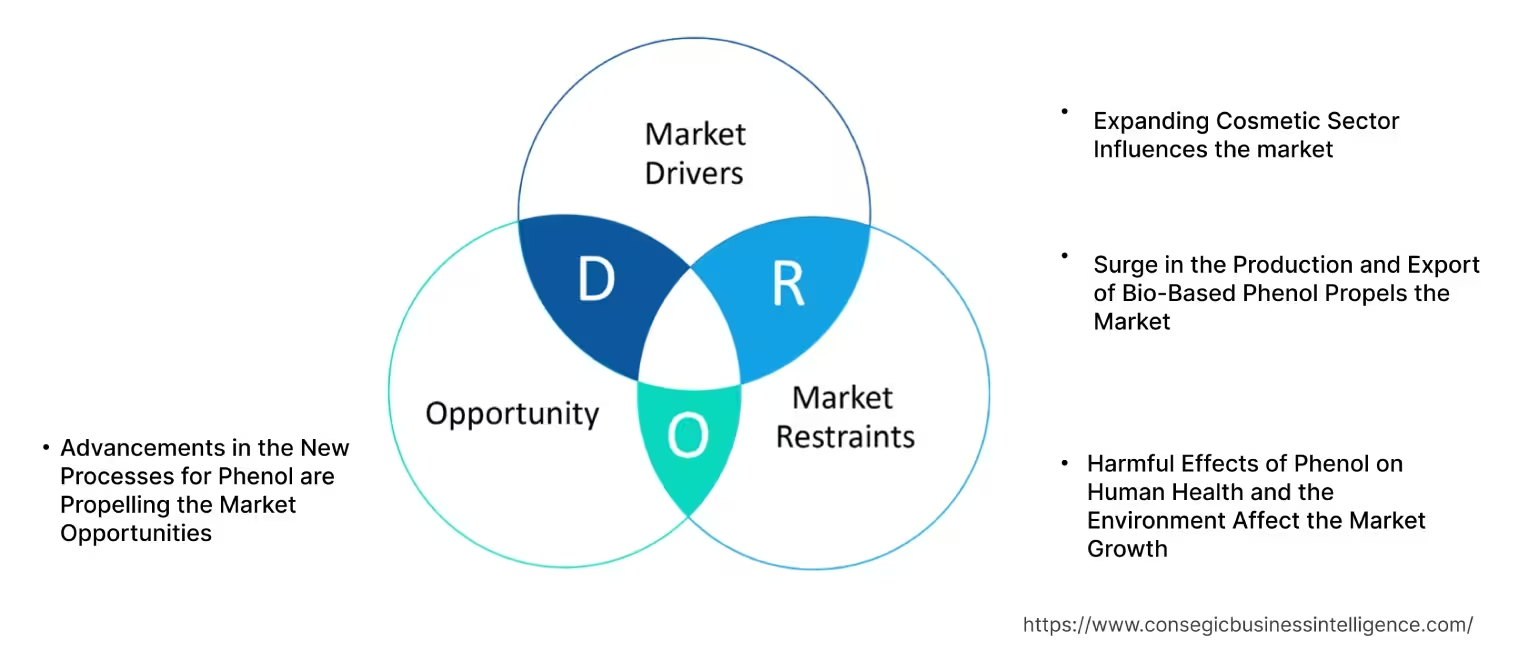
Expanding Cosmetic Sector Influences the market
Phenol is a compound generally derived from natural sources such as coal, petroleum, and natural gas, and is used as a primary ingredient for various cosmetic products because of its antiseptic and disinfectant properties. It is used as a key ingredient in various products such as hair dyes, skin creams, and nail polish removers. Additionally, the growing demand for cosmetic items, influenced by factors such as evolving beauty and personal care requirements, and increased emphasis on personal grooming is influencing the development of the cosmetic sector.
Moreover, the innovation and development of new products incorporating phenol is shaping the market. Additionally, various chemical peels containing the compound are launched for deep cleaning and rejuvenating the skin. A phenol croton oil chemical peel is a dermatological procedure that exfoliates the skin and treats severe skin issues such as acne scars, wrinkles, and pigmentation. Furthermore, patents have been granted for the incorporation of advanced phenol-croton oil formula.
- The "Compositions and Methods for Treating Skin Conditions" patent was granted to Carlos Wambier, who's the inventor of a deep chemical peel formula, on February 22, 2022. The patent describes the recent improvement in the emulsification of phenol-croton oil formulas for deep chemical peels to treat wrinkling of the skin, remove pigmentation anomalies, and treat precancerous skin.
Thus, the expansion of the cosmetic sector and the use of the compound for the preparation of various cosmetics is propelling the phenol market growth.
Surge in the Production and Export of Bio-Based Phenol Propels the Market
Bio-based substitutes for conventional chemical compounds such as phenol are gaining popularity as environmental concerns and sustainability become more widespread. Bio-based phenols are an environment-friendly option because it is derived from renewable resources such as biomass or agricultural byproducts. To meet sustainable targets and lower carbon footprint various industries are producing bio-based phenol.
- In June 2022, INEOS Phenol launched a new lower carbon bio product line known as INVIRIDIS for its phenol acetone and alpha-methyl styrene business. These products are made from sustainable alternatives without using fossil fuels as feedstock.
Thus, the analysis depicts that the surge in the production of biobased phenol as a sustainable solution is propelling the phenol market demand.
Key Restraints :
Harmful Effects of Phenol on Human Health and the Environment Affect the Market Growth
Phenol is a volatile compound that is highly toxic to human health, especially when not handled or used properly. It is generally considered safe in small quantities but when exposed for a longer period, it leads to adverse health effects. Indigestion or inhaling the compound leads to various health issues, including gastrointestinal problems, irritation of the respiratory system, and damage to internal organs. Prolonged exposure to the compound causes various conductions, such as skin irritation, and chronic exposure leads to liver and kidney damage, skin burns, convulsions, and other health effects.
Moreover, the production of the compound leads to various environmental concerns. The emission from production facilities contributes to air pollution as they release volatile organic compounds and pollutants. Wastewater discharges containing phenols and other chemicals pollute water sources, threatening aquatic ecosystems, and drinking water quality.
- According to the data published by the World Health Organization , Phenol is considered a toxic compound to aquatic organisms. The environmental concern level is considered to be 0.02 µg/liter.
Thus, the analysis shows that environmental concerns and health hazards are hindering the phenol market growth.
Future Opportunities :
Advancements in the New Processes for Phenol are Propelling the Market Opportunities
Various accurate and efficient developments in the process of phenol synthesis have been established to gain higher yields and provide a more sustainable approach. There is a rise in the emphasis on environment-friendly and biobased procedures, such as using renewable feedstock and chemical compounds and minimizing waste and energy consumption.
- According to the article published in the Royal Society of Chemistry, in October 2023, reported that phenol and their derivatives are obtained by bio-based route from furfural and their derivatives. The approach is based on a sequential Diels–Alder reaction of biobased furans with alkynes, which is followed by an aromatization reaction.
This process opens the possibility of using disubstituted furanic derivatives for the production of the compound. Moreover, the development of more reliable catalysts and reaction conditions for direct hydroxylation of benzene is developed for direct conversion of benzene to phenol. Thus, as per the market analysis, the aforementioned processes are boosting the phenol market opportunities in the upcoming years.
Phenol Market Segmental Analysis :
By Manufacturing Process:
Based on the manufacturing process the market is categorized into cumene process, raschig hooker process, dow process, and others.
Trends in the Manufacturing Process:
- The recent trends towards optimizing the cumene process for higher yield are influencing the expansion.
- Trends toward new research and development for the production of phenol from renewable sources such as by-products are propelling the segment.
In 2023, the cumene process segment accounted for the largest market share in the phenol market share and is expected to hold the fastest CAGR over the forecast period.
- The cumene process is the manufacturing process for the production of phenol in the chemical sector.
- Cumene (isopropyl benzene) is catalytically oxidized with oxygen present in the air for the formation of cumene peroxide.
- The cumene peroxide is further cleaved by an acid to form phenol and acetone.
- The mixture of acetone and phenol is produced by this process, and the mixture is then separated by distillation.
- The cumene process is highly preferred because of its high productivity, affordability, and capacity to simultaneously produce acetone and phenol, which are two important chemicals that are utilized in numerous industries.
- Leading companies have initiated various cumene facilities for the production of phenol without causing much harm to the environment.
- In 2023, INEOS Phenol launched Europe's largest cumene facility in Germany. The project focuses on reducing the carbon footprint during the production of essential materials.
- Thus, segmental analysis shows that the incorporation of the cumene process for the production of the compound is driving the phenol market trends.
By Application:
Based on application, the market is categorized into phenolic resins, caprolactam, bisphenol–a (BPA), alkyl phenol, epoxy resins, polycarbonate plastics, detergents, pharmaceutical drugs, and others.
Trends in the Application:
- The rising need for polycarbonate in the automotive, electronics, and construction sectors and the use of Bisphenol A for manufacturing polycarbonate plastics and epoxy resins.
In 2023, the bisphenol–a (BPA) segment accounted for the highest revenue in the phenol market share and it is also expected to grow at the fastest CAGR over the forecast period.
- Phenol is a primary raw material used in the production of BPA, which is a major precursor for polycarbonate plastic and epoxy resins.
- In the BPA synthesis process, the compound undergoes an adol condensation reaction with acetone to form an intermediate compound which is then hydrolyzed to yield BPA.
- Polycarbonate plastic is manufactured through the polymerization of BPA with phosgene or bisphenol-A chloride, generally resulting in high-strength transparent material.
- Various innovative products are being launched for numerous industrial applications.
- In February 2023, Vulcan Plastics launched polycarbonate plastic sheets as superior alternatives for building materials.
- Thus, the use of the compound in the production of BPA is propelling the phenol market trends.
By End-User-Industry:
The end-user industry segment is categorized into chemical, construction, automotive, electronic, pharmaceutical, and others.
Trends in the End-User-Industry:
- The rising trends in the utilization of the compound in the chemical sector are influencing the growth of the segment.
- The rising requirements for antiseptic solutions and the use of the compound in the preparation of anticeptics are influencing the segment growth.
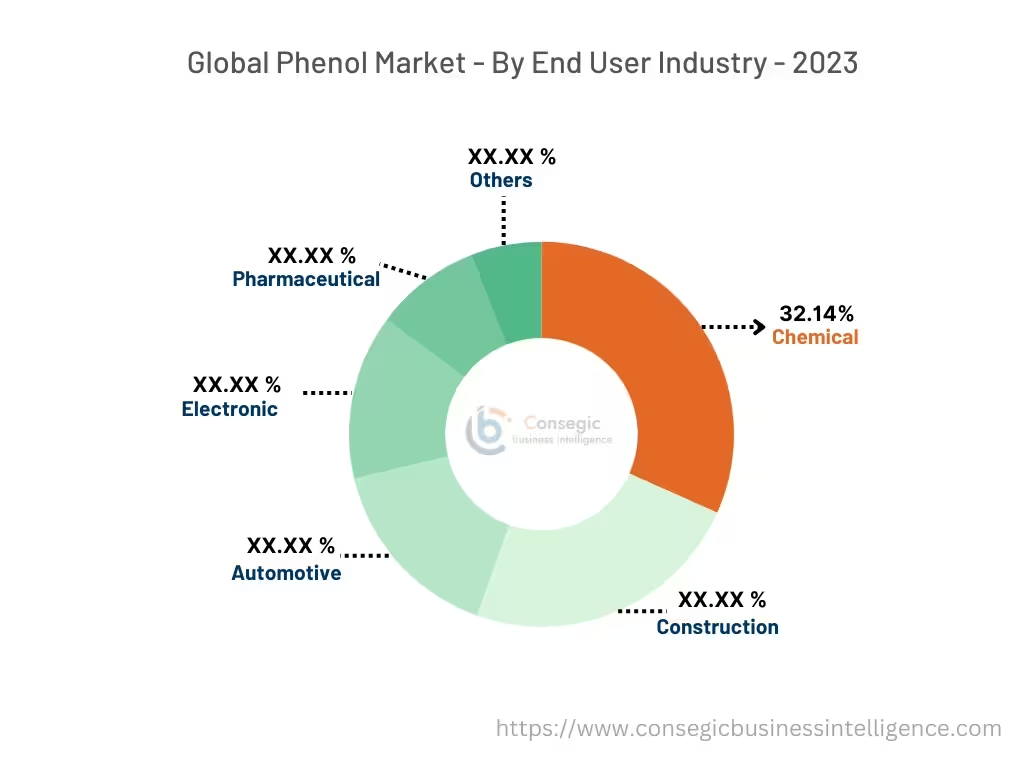
The chemical segment accounted for the largest revenue share of the total 32.14% in the year 2023.
- In the chemical sector the compound serves as an important intermediate for the production of various chemicals.
- It is a primary raw material used in the manufacturing of phenolic resins which is widely used in the production of adhesives, coating, and molded products.
- Moreover, it is used as a solvent and an additive for the production of various chemicals.
- According to the data provided by the International Trade Administration in January 2024, the Indian chemicals sector is valued at USD 220 billion and is projected to grow at 9 -12 % per annum to reach USD 300 billion by 2026.
- Hence, the use of the compound in the formulation of various chemicals and chemical products is influencing the phenol market demand.
The automotive segment is anticipated to register the fastest CAGR during the forecast period.
- Phenolic resins developed from phenol compounds are used as a key binder in the manufacturing of lightweight, and high-strength composite materials such as fiberglass-reinforced plastic and carbon fiber-reinforced plastic used for body panels, interior trims, and various structural components, which contribute to improving the fuel efficiency and vehicle performance.
- Furthermore, it is utilized for the production of brakes, clutch components, and seals, ensuring the reliable and efficient working of automobiles.
- According to SIAM, in November 2023, the total production of passenger vehicles, three-wheelers, two-wheelers, and quadricycles was 2.22 million units.
- Thus, the use of the compound for the production of various parts used in the automotive sector is propelling the phenol market expansion.
Regional Analysis:
The regional segment includes North America, Europe, Asia Pacific, the Middle East and Africa, and Latin America.
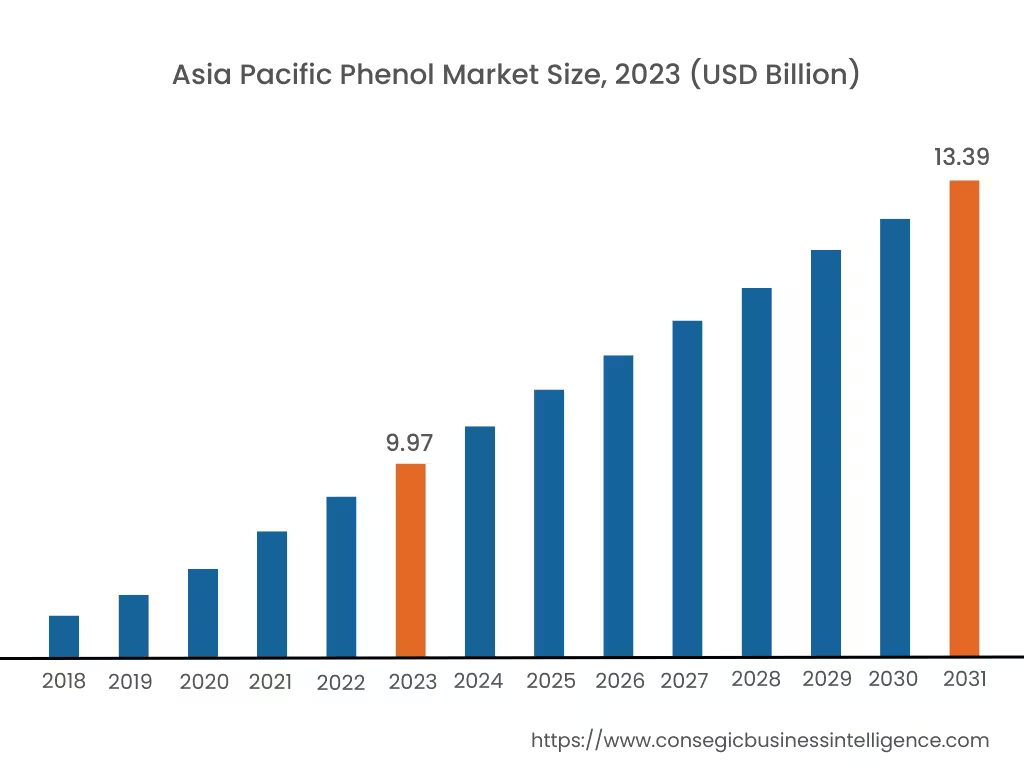
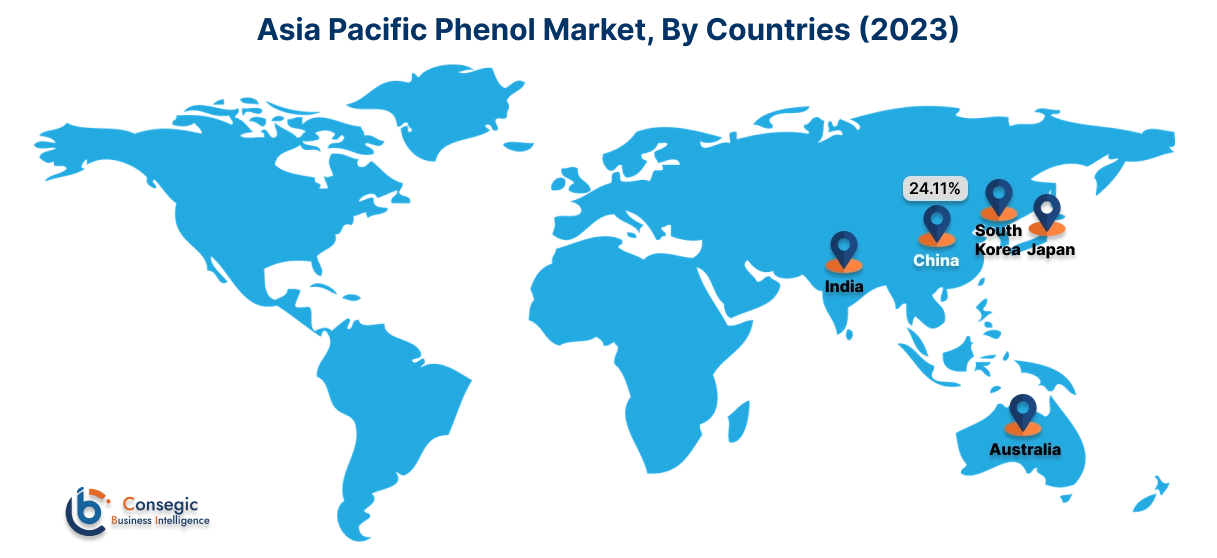
In 2023, Asia Pacific accounted for the highest market share at 40.79% and was valued at USD 9.97 Billion, and is expected to reach USD 13.39 Billion in 2031. In Asia-Pacific, China accounted for the highest market share of 24.11% during the base year of 2023. As per the phenol market analysis, the significant growth of the market across the Asia Pacific region is attributed to factors such as rising urbanization and growing population leading to the need for advanced infrastructure. These factors are leading to a higher trend and the need for the compound from industries such as electrical and electronics, construction, and transportation. Additionally, the rising population in the region is propelling the output of these industries, further fueling the phenol market demand. Furthermore, the investment by the governments of countries in this region for infrastructure development is expected to contribute to the market.
- According to the data provided by the India Brand Equity Foundation in August 2023, in Budget 2023-24, capital investment outlay for infrastructure is being increased by 33% to USD 122 billion, which would be 3.3 percent of GDP.
North America is expected to witness the fastest CAGR over the forecast period of 4.9% during 2024-2031. The phenol market analysis in North America shows that the market is currently characterized by weak demand, particularly due to low consumption levels downstream. Despite the challenging market conditions, the United States remains a significant player with its established manufacturing base. Supply from Asia, especially with additional capacities being introduced in China, may further influence market dynamics in the region.
- For instance, a report by S&P Global noted that the market is facing challenges with many producers struggling to place their products, leading to a cautious outlook for 2024.
The market in Latin America is witnessing gradual growth, driven by requirements from industries like automotive, pharmaceuticals, and construction. However, challenges like economic fluctuations and limited production capacities hinder rapid expansion. Efforts to improve manufacturing capabilities and supply chains are essential for phenol market expansion in the region.
In the Middle East and Africa, the market is growing, primarily fueled by the increasing need for plastics and resins. The region's ongoing industrialization and urbanization are expected to drive the market. However, infrastructure challenges and reliance on imported materials may limit immediate growth prospects.
Europe's market is robust. Key propellers include the rising demand for phenolic resins in the construction and automotive sectors. The focus on sustainable practices is pushing innovation in compound production.
Top Key Players & Market Share Insights:
The Phenol market is highly competitive with major players providing derivates to the national and international markets. Key players are adopting several strategies in research and development (R&D), product innovation, and end-user launches to hold a strong position in the global phenol market. Key players in the Phenol industry include-
- Vizag chemicals (India)
- Borealis Compounds Inc. (Austria)
- INEOS (U.K)
- KANTO KAGAKU(Japan)
- KUMHO P&B CHEMICALS., INC(Seoul)
- Merck KGaA(Germany)
- Shell(U.K.)
- Altivia(U.S.)
- Mitsubishi Chemical Group Corporation (Japan)
- JFE Chemical Corporation (Japan)
- Mitsui Chemicals(Japan)
- Honeywell International Inc(U.S.)
- Solvay(Belgium)
- LG Chem(South Korea)
- Cepsa(Spain)
Recent Industry Developments :
Acquisition and Mergers:
- In April 2023, INEOS Phenol announced the completion of its acquisition of Mitsui Phenols Singapore Ltd from Mitsui Chemicals, a leading Japanese chemicals manufacturer, for a total consideration of USD 330 million.
Phenol Market Report Insights :
| Report Attributes | Report Details |
| Study Timeline | 2018-2031 |
| Market Size in 2031 | USD 32.71 Billion |
| CAGR (2024-2031) | 4.2% |
| By Manufacturing Process |
|
| By Application |
|
| By End User Industry |
|
| By Region |
|
| Key Players |
|
| North America | U.S. Canada Mexico |
| Europe | U.K. Germany France Spain Italy Russia Benelux Rest of Europe |
| APAC | China South Korea Japan India Australia ASEAN Rest of Asia-Pacific |
| Middle East and Africa | GCC Turkey South Africa Rest of MEA |
| LATAM | Brazil Argentina Chile Rest of LATAM |
| Report Coverage |
|
Key Questions Answered in the Report
How big is the phenol market? −
In 2023, the phenol market is valued at USD 24.45 Billion.
Which is the fastest-growing region in the phenol market? +
North America is the fastest-growing region in the phenol market.
What specific segmentation details are covered in the phenol market? +
Manufacturing Process, Application, and End-user Industry are the segmentation details covered in the phenol market.
Who are the major players in the phenol market? +
The major players in the phenol market are Vizag Chemicals, Borealis Compounds Inc., INEOS, Mitsubishi Chemical Group Corporation, JFE Chemical Corporation, KANTO KAGAKU, KUMHO P&B CHEMICALS., INC, Merck KGaA, Shell, Mitsui Chemicals, Honeywell International Inc, Solvay, LG Chem, Cepsa, Altivia.
Overview
Reputation & Certifications


Our Services
- Market Intelligence & Forecasting
- Custom Research Solutions
- Market Entry Strategy
- Competitive Intelligence
- Customer Insights
- Industry Innovation Analysis
- Investment Advisory