Jump to Content
Plant Based Meat Market - Size, Share, Industry Trends, and Forecasts (2025-2035)
Plant Based Meat Market:
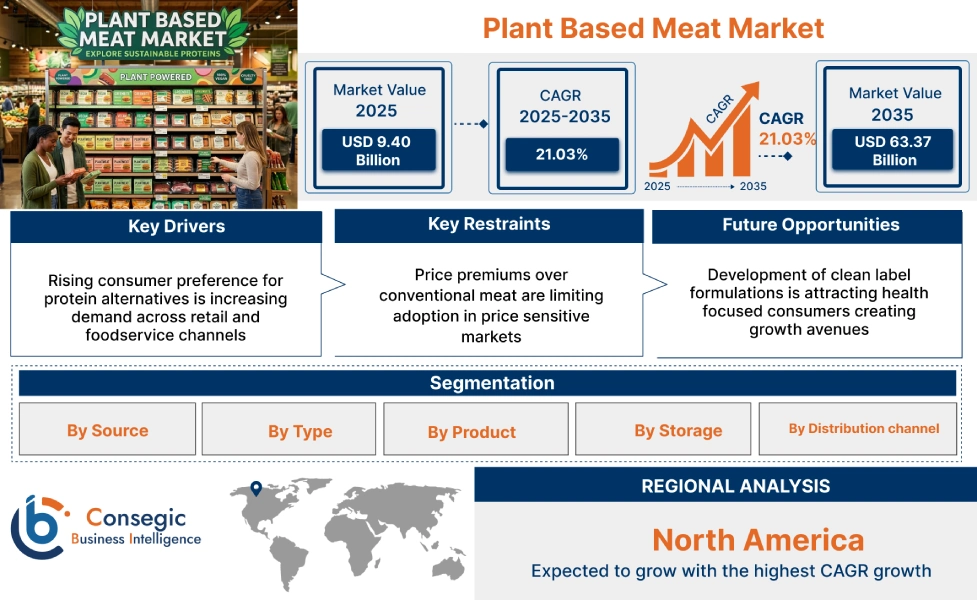
Plant Based Meat Market size is estimated to reach over USD 63.37 Billion by 2035 from a value of USD 7.76 Billion in 2024 and is projected to grow by USD 9.40 Billion in 2025, growing at a CAGR of 21.03% from 2025 to 2035
Plant Based Meat Market Scope & Overview:
Plant based meat is defined as a type of food product made from plant-derived proteins that mimic the taste, texture, and cookability of animal-derived meat. The plant based meat market includes the processing of plant-derived proteins such as soy, pea, wheat, and other sources through various technologies such as extrusion, fermentation, and texturization. The goal is to provide a meat alternative that meets shifting consumer preferences while minimizing animal-derived protein supply chains. The value chain includes ingredient suppliers, food technology developers, contract manufacturers, foodservice operators, and retail distribution networks across both developed and emerging markets.
The plant based meat sector is expanding due to rising consumer focus on health, environmental impact, and animal welfare considerations. Food manufacturers and quick service restaurant chains are increasing product launches and menu integration to address flexitarian demand. Investment in protein development, flavor modification, and texture modification is further driving the acceptability of plant based meat products. Retail availability and private label development are further driving the plant based meat market.
How is the Plant Based Meat Market Affected by AI?
The development of plant-based meats is also being aided by the increasing capabilities of AI. It analyzes large volumes of ingredients, protein structures, and even sensory responses with a high degree of precision. Machine learning models identify optimal protein blends, fat distribution ratios, and moisture levels to match the texture and mouthfeel of conventional meat. AI tools also detect formulation gaps during pilot trials, which reduces product development cycles and limits raw material waste.
AI systems are used for flavor modeling, ingredient substitution analysis, and process optimization across extrusion and fermentation stages. Predictive analytics help to forecast the yield of plant-based meats, the stability of shelf life, and even the demand for plant-based meats. These tools help to ensure the quality of the plant-based meats, cost control, and faster commercialization.
Plant Based Meat Market Dynamics - (DRO):
Key Drivers:
Rising consumer preference for protein alternatives is increasing demand across retail and foodservice channels
The trend towards plant-based protein sources is increasing among consumers. It’s largely because of the health and environmental concerns that consumers face. Flexitarian eating styles are becoming increasingly prominent among the urban population. Younger consumers are also adapting to flexitarian eating styles. Retail outlets are dedicating more shelf space to plant-based meats to capitalize on the changing consumer trends. Food service operators are including plant-based meats in the core menu to retain the changing consumer base.
- For instance, in January 2026, Maple Leaf Foods’ Lightlife introduced a pea protein-based burger containing 20g of protein and zero cholesterol in January 2026, along with other plant-based ground and sausage variants that are GMO, soy, and gluten-free.
Thus, the increasing preference for alternative sources of protein is contributing to the growth of the plant-based meat market by increasing volumes.
Key Restraints:
Price premiums over conventional meat are limiting adoption in price sensitive markets
Plant-based meat products tend to command premium pricing based on input costs, production complexity, and lower production scales. Consumers in emerging markets compare directly with conventional meat costs. The low affordability of plant-based meat is limiting repeat rates and market reach.
Thus, premium pricing of plant-based meat over conventional meat is limiting market adoption rates.
Future Opportunities:
Development of clean label formulations is attracting health focused consumers creating growth avenues
Consumers are studying the labels and opting for products with familiar and minimally processed ingredients. Companies are reformulating products with fewer artificial ingredients and increased transparency with the source. Clean label positions can be used for building brand trust and consumption habits.
- In October 2025, Beyond Meat has announced the launch of its new clean label Beyond Burger and Beyond Beef IV products at Erewhon locations in Southern California. These GMO-free products, first certified by Clean Label Project, pack 21g protein from peas/lentils/faba beans and just 2g saturated fat from avocado oil.
Thus, development of clean label formulations is creating growth opportunities in the plant based meat market.
Plant Based Meat Market Segmental Analysis:
By Source:
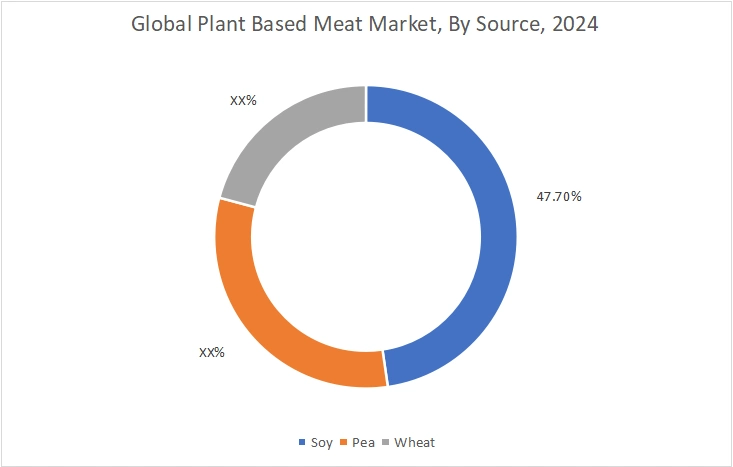
On the basis of source, the plant based meat market is segmented into soy, pea, and wheat.
Trends in the Source:
- Growing preference for high protein formulations is increasing demand for pea based inputs.
- Additionally, the concerns regarding allergens are affecting the manufacturers’ decision on the source.
The soy was responsible for the highest revenue share of 47.7% in 2024.
- Soy has the advantages of complete protein content and processing infrastructure.
- Moreover, the large-scale cultivation ensures the consistent availability of the raw materials.
- Besides, the cost efficiency of the processing also helps with the pricing strategies.
- Furthermore, the high market penetration in the Asia Pacific ensures the bulk demand for the product.
- Therefore, established supply chains and functional protein properties are supporting dominance of the soy segment.
It is anticipated that the pea will exhibit the highest compound annual growth rate (CAGR) during the forecast period.
- Pea protein addresses allergen concerns associated with soy and wheat.
- Neutral taste profile is beneficial for the development of improved flavor.
- In addition, the rising demand for clean label is contributing to the growth.
- Furthermore, the expansion of pea processing facilities is contributing to the growth of supply.
- Therefore, rising preference for allergen free and clean label protein sources is expected to support growth of the pea segment.
By Type:
On the basis of type, the plant based meat market is segmented into chicken, pork beef, and fish.
Trends in the Type:
- High demand for poultry alternatives is influencing product development strategies.
- Manufacturers are concentrating on developing a traditional meat texture.
The chicken was responsible for the highest revenue share in 2024.
- Poultry is consumed on a large scale globally.
- Product development is less complex compared to developing a replica of red meat.
- Moreover, quick service restaurants are adopting plant based chicken formats.
- Additionally, consumer familiarity supports faster trial rates.
- Therefore, high global poultry demand is supporting dominance of the chicken segment.
It is anticipated that the fish will exhibit the highest compound annual growth rate (CAGR) during the forecast period.
- Rising concerns over marine sustainability are influencing seafood alternatives.
- Limited competition in plant based seafood supports new product entry.
- Also, retailers are expanding frozen seafood alternatives.
- Further, innovation in algae and plant protein blends is improving texture outcomes.
- Therefore, sustainability concerns and product diversification are supporting growth of the fish segment.
By Product:
On the basis of product, the plant based meat market is segmented into burger, patties, nuggets, sausages, strips, meatballs, grounds, tenders, cutlets, and others.
Trends in the Product:
- Expansion of ready to cook formats is increasing retail sales.
- Foodservice adoption is influencing standardized portion sizes.
The burger was responsible for the highest revenue share in 2024.
- Burgers remain a widely consumed quick service product.
- Standardized patty format simplifies manufacturing and distribution.
- Moreover, restaurant collaborations are centered on burger offerings.
- Furthermore, retail private labels prioritize burger formats.
- Therefore, strong foodservice integration is supporting dominance of the burger segment.
It is anticipated that the nuggets will exhibit the highest compound annual growth rate (CAGR) during the forecast period.
- Rising demand for convenient snack formats is increasing household adoption.
- Family oriented consumption patterns support repeat purchases.
- In addition, expansion into school and institutional catering supports volume demand.
- Moreover, product innovation in coating and texture is improving appeal.
- Therefore, convenience driven consumption trends are expected to support growth of the nuggets segment.
By Storage:
On the basis of storage, the plant based meat market is segmented into refrigerate, frozen, and shelf stable.
Trends in the Storage:
- Growth in cold chain infrastructure is supporting frozen distribution.
- Retailers are expanding refrigerated shelf space for fresh alternatives.
The frozen was responsible for the highest revenue share in 2024.
- Frozen products offer extended shelf life and lower spoilage risk.
- Export distribution relies on frozen logistics networks.
- In addition, bulk retail packaging aligns with frozen storage.
- Further, foodservice operators prefer frozen inventory management.
- Therefore, extended shelf stability is supporting dominance of the frozen segment.
It is anticipated that the refrigerated will exhibit the highest compound annual growth rate (CAGR) during the forecast period.
- Consumers associate refrigerated products with freshness perception.
- Supermarkets are increasing chilled display sections.
- Moreover, shorter ingredient lists support fresh positioning.
- In addition, urban retail expansion is improving cold storage access.
- Therefore, growing preference for fresh positioned alternatives is supporting growth of the refrigerated segment.
By Distribution Channel:
On the basis of distribution channel, the plant based meat market is divided into food retail, food service, e commerce, and hotel restaurant café.
Trends in the Distribution Channel:
- Retail chains are expanding private label plant based offerings.
- Digital grocery platforms are increasing direct consumer access.
Food retail accounted for the largest revenue share in the year 2024.
- Supermarkets provide wide product assortment and visibility.
- In store promotions support trial purchases.
- Additionally, private label expansion improves affordability.
- Further, organized retail penetration is rising in urban markets.
- Therefore, strong shelf presence and consumer accessibility are supporting dominance of the food retail segment.
E-commerce is anticipated to register the fastest CAGR during the forecast period.
- Online grocery platforms are expanding cold chain delivery capabilities.
- Subscription based models are increasing repeat purchases.
- Moreover, digital marketing improves product awareness.
- Additionally, direct to consumer channels support niche product launches.
- For instance, the U.S. Census Bureau data shows retail e-commerce sales hit USD 304.2 billion in Q2 2025, up 1.4% from the prior quarter seasonally adjusted.
- Therefore, rising digital grocery adoption is expected to support growth of the e commerce segment.
Regional Analysis:
North America, Europe, Asia Pacific, the Middle East and Africa, and Latin America are the regions of coverage.
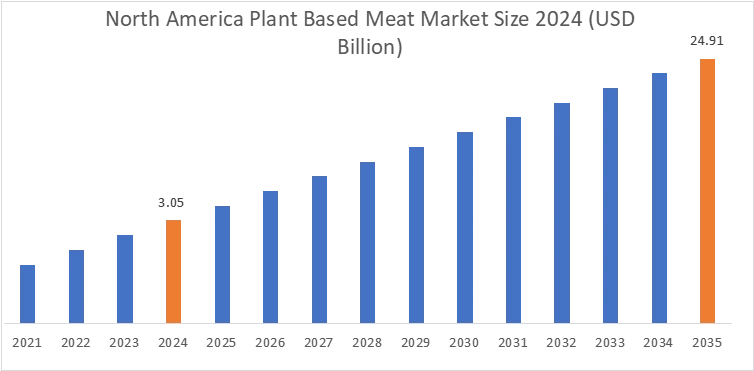
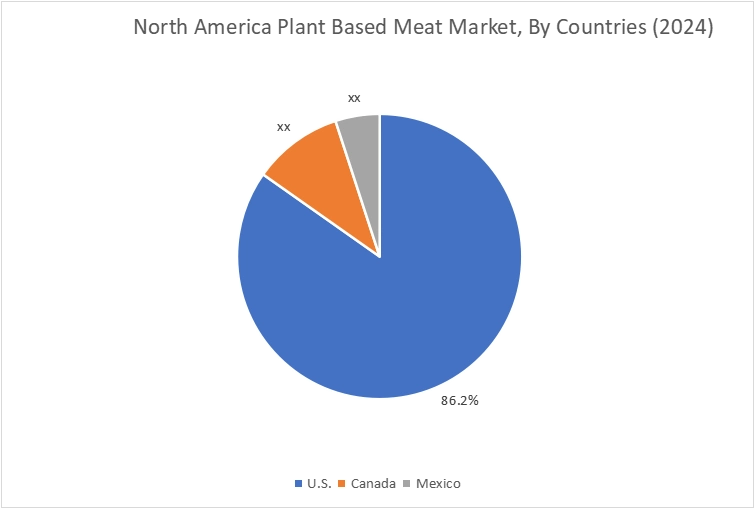
In 2024, North America accounted for the highest market share at 39.31% and was valued at USD 3.05 Billion, and is expected to reach USD 24.91 Billion by 2035. In North America, the U.S. accounted for the highest market share of 86.2% during the base year of 2024. Market growth is supported by strong retail penetration of plant based products and high consumer awareness regarding alternative proteins. Major food manufacturers and quick service restaurant chains are expanding plant based menu offerings across national outlets. Canada is also witnessing product expansion supported by rising vegan and flexitarian consumption patterns.
- For example, Plant Based Products Council (PBPC) 2025 research shows that 73% of Americans back federal incentives to boost U.S. plant-based product manufacturing.
Asia Pacific region is expected to have the fastest growth during the forecast period. The region is observing that China is increasing its local production of plant protein ingredients, reducing its dependence on imported meat. India is observing a growing demand for vegetarian protein alternatives in urban areas. Japan and Korea are expanding retail shelf space for alternative meat formats in response to changing dietary habits. The growing middle-class population and retail store development are supporting the growth of the market in the region.
- In July 2024, Plantaway has introduced India's first plant-based Chick'n Fillet, a pea protein whole cut with 19g protein per pack (2 pieces), zero trans fats, preservatives, and a chicken-like taste and texture for versatile dishes.
The growth of the plant-based meat market in Europe is driven by food policies that focus on sustainability, along with high consumer acceptability in the UK and Germany. France and the Netherlands are investing more in alternative protein production facilities.
Latin America plant based meat market growth is supported by rising health awareness in Brazil and Mexico. Local food companies are introducing affordable soy-based products to improve accessibility.
Middle East & Africa plant based meat market growth is supported by rising food import dependence and government focus on food security in the UAE and Saudi Arabia. South Africa is expanding plant protein processing capacity to address changing consumer dietary trends.
Top Key Players & Market Share Insights:
The plant based meat market is moderately fragmented, with global food manufacturers, specialized alternative protein companies, and regional private label brands competing for shelf space. Companies are investing in product reformulation, protein innovation, and manufacturing scale expansion to improve cost efficiency and taste alignment. Partnerships with quick service restaurants and retail chains are strengthening distribution reach. Capacity expansion in protein processing and focus on clean label positioning are shaping competitive positioning across major regions. Key participants in the market for plant based meat include:
- Beyond Meat Inc – US
- Impossible Foods Inc – US
- Maple Leaf Foods Inc – Canada
- Conagra Brands Inc – US
- Nestlé S.A. – Switzerland
- Unilever PLC – UK
- Kellogg Company – US
- Tyson Foods Inc – US
- Vivera BV – Netherlands
- Eat Just Inc – US
Recent Industry Developments:
Product Launches
- In February 2026, Beyond Meat expanded its Immerse sparkling protein drinks with four new flavors such as, Cherry Berry, Strawberry Lemonade, Piña Colada, and Cucumber Grapefruit. It offers 10g or 20g plant protein, 7g fiber, and electrolytes via Beyond Test Kitchen.
- In March 2025, Impossible Foods launched Impossible Steak Bites, its first plant-based steak product including pre-cooked, juicy, pre-seasoned bites with 21g protein, zero cholesterol, and 80% less saturated fat than beef for versatile meals like tacos and salads.
Plant Based Meat Market Report Insights:
| Report Attributes | Report Details |
|---|---|
| Study Timeline | 2019-2035 |
| Market Size in 2035 (USD Billion) | USD 63.37 Billion |
| CAGR (2025-2035) | 21.03% |
| By Source |
|
| By Type |
|
| By Product |
|
| By Storage |
|
| By Distribution Channel |
|
| By Region |
|
| Key Players |
|
| Report Coverage |
|
Key Questions Answered in the Report
How big is the plant based meat market? −
The plant based meat market size is estimated to reach over USD 63.37 Billion by 2035 from a value of USD 7.76 Billion in 2024 and is projected to grow by USD 9.40 Billion in 2025, growing at a CAGR of 21.03% from 2025 to 2035.
Which segmentation details are covered in the plant based meat report? +
The plant based meat report includes specific segmentation details for source, type, product, storage, distribution channel, and regions.
Which is the fastest segment anticipated to impact the market growth? +
Pea is the fastest growing source segment, driven by rising demand for allergen free formulations and clean label protein alternatives.
Who are the major players in the plant based meat market? +
The key participants in the plant based meat market are Beyond Meat Inc (US), Impossible Foods Inc (US), Maple Leaf Foods Inc (Canada), Conagra Brands Inc (US), Nestlé S.A. (Switzerland), Unilever PLC (UK), Kellogg Company (US), Tyson Foods Inc (US), Vivera BV (Netherlands), Eat Just Inc (US), and others.
What are the key trends in the plant based meat market? +
The plant based meat market is driven by quick service restaurant expansion, protein processing investment, and clean label product focus.
Overview
Reputation & Certifications


Our Services
- Market Intelligence & Forecasting
- Custom Research Solutions
- Market Entry Strategy
- Competitive Intelligence
- Customer Insights
- Industry Innovation Analysis
- Investment Advisory