Jump to Content
Protein Engineering Market Size & Industry Share - Growth Trends & Forecasts (2026 - 2034)
Protein Engineering Market Size:
The Protein Engineering market size was valued at 3,979.95 (US$M) in 2025 and is projected to grow from 4,481.43 (US$M) in 2026 to 11,580.39 (US$M) by 2034, at a CAGR of 12.6% from 2026 to 2034, according to a recent report from Consegic Business Intelligence.
Protein Engineering Market Scope & Overview:
Protein Engineering is a field of science that involves the design and modification of proteins to enhance their properties or create new functions. It involves altering a protein's structure, sequence, or properties to achieve desired traits. The three basic approaches applied in this field are rational design, directed evolution, and semi-rational design, which enables the creation of proteins with enhanced stability, specificity, or catalytic activity for specific tasks.
It has significant applications in medicine, biotechnology, agriculture, and environmental science. In medicine, engineered protein has led to the development of therapeutic proteins, vaccines, and enzyme therapies. In biotechnology, it has enabled the creation of industrial enzymes, biosensors, and biomaterials. In agriculture, it has been used to improve crop yields and develop novel food products.

Protein Engineering Market Dynamics - (DRO) :
Key Drivers:
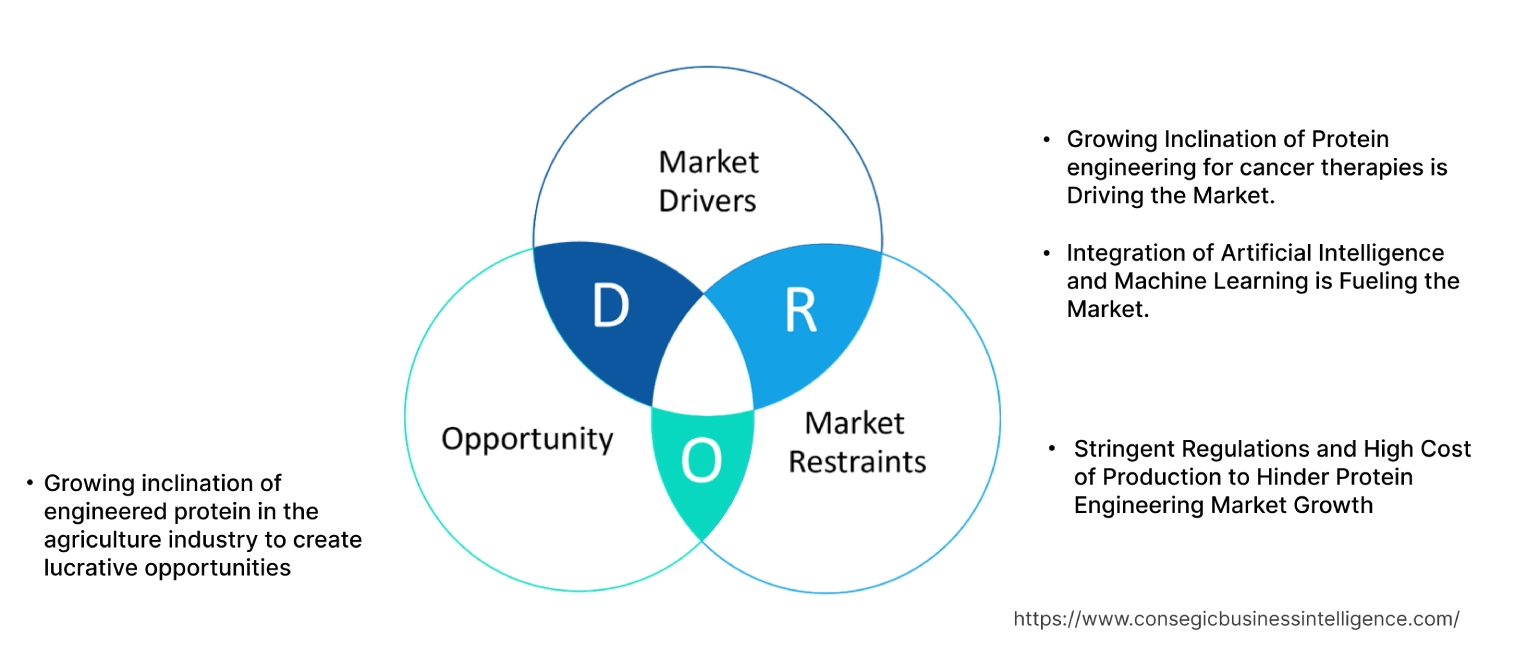
Growing Inclination of Protein engineering for cancer therapies is Driving the Market.
Protein engineering is a rapidly growing field that is having a positive impact on cancer therapy. By modifying proteins to target specific cancer cells, scientists are developing highly effective and targeted treatments. This approach offers numerous advantages, including increased potency, improved drug delivery, and reduced side effects. The rising global cancer burden, coupled with advancements in biotechnology, is driving significant investment in protein engineering research and development.
- For instance, Hopfner Labs is a research facility focused on developing innovative antibody engineering techniques to enhance cancer immunotherapy. The lab leverages protein engineering to optimize antibody-based therapies, tailoring them to the specific needs of cancer patients.
Thus, there is an increase in preference for cancer therapies is driving development in the protein engineering industry.
Integration of Artificial Intelligence and Machine Learning is Fueling the Market.
The integration of Artificial Intelligence (AI) and Machine Learning (ML) is fueling significant protein engineering market growth. These advanced technologies enable to accelerate the design, optimization, and production of proteins with desired properties. By analyzing vast amounts of biological data, AI and ML algorithms predict protein structure and function, identify potential drug targets, and optimize strategies. This has led to the development of novel therapeutics, enzymes, and materials with enhanced properties and specific functions.
- In 2023, Adaptyv Bio, a biotechnology company that leverages artificial intelligence (AI) to design innovative proteins for various applications, including therapeutics, materials, and enzymes has opened-sourced two of their internal tools to accelerate the field of protein engineering as a whole. Currently, they can run thousands of different proteins per day on each setup. Over the next few years, they plan to scale up our lab further and increase the number of protein design applications.
Moreover, AI-powered tools are streamlining the workflow, reducing time and cost, and increasing the efficiency of research and development. As AI and ML continue to advance, they will further propel, leading to innovations in various fields, including medicine, biotechnology, and materials science. Thus, the integration of AI will lead to the creation of better protein analysis by earlier prediction and detection of protein structures and integrations with high accuracy creating future protein engineering market trends.
Key Restraints :
Stringent Regulations and High Cost of Production to Hinder Protein Engineering Market Growth
Stringent regulations and high production costs are significant hurdles that hinder the growth of the market. Rigorous clinical trials are essential to ensure the safety and efficacy of protein-based therapeutics. Additionally, they are time-consuming and expensive. Moreover, intellectual property disputes and varying regulatory standards across different countries complicate the commercialization process.
Moreover, the complex nature of protein engineering and the specialized expertise required for its implementation contribute to high production costs. These factors limit the availability and affordability of protein-based products, particularly in low-income countries. While stringent regulations and high costs are necessary to ensure product quality and safety, they also impede the growth of the market, limiting its potential to address health challenges.
Future Opportunities :
Growing inclination of engineered protein in the agriculture industry to create lucrative opportunities
The growing inclination towards the agriculture sector is creating lucrative protein engineering market opportunities. By modifying proteins, the development of innovative crops with enhanced traits such as increased yield, improved nutritional value, and enhanced resistance to pests and diseases is conducted. This has led to the development of genetically modified crops that withstand harsh environmental conditions and produce higher yields. Additionally, it is also used to create novel enzymes that improve the efficiency of agricultural processes, such as fermentation and biofuel production.
- According to Creative BioMart, a company committed to introducing genes for proteins of a given trait of any given species into crops of interest, thereby conferring a desired trait or phenotype states that protein-engineered crop species offers promising solutions for agricultural development. It also states that studies show that scientists have successfully used protein engineering to identify new glyphosate-resistant ESP synthase mutants.
As the demand for sustainable and efficient agriculture continues to grow, protein engineering is poised to play a pivotal role in addressing food security challenges.
Protein Engineering Market Segmental Analysis :
By Method:
By method, the segment is categorized into rational protein design, directed evolution, semi-rational protein design, de novo protein design, and others.
Trends in Method:
- In current trends, Rational protein design is a widely used method of engineered proteins due to detailed knowledge of the structure and function of a protein to make desired changes
- De Novo Protein Design is emerging rapidly owing to its benefits and technological advancements in protein engineering market trends.
The Rational Protein Design accounted for the largest market share in 2023.
- Rational Protein Design is a strategy in protein engineering that involves making specific changes to a protein's amino acid sequence based on its known structure and function.
- By precisely targeting specific amino acid residues, new proteins with enhanced stability, activity, and specificity are developed. While other methods like directed evolution and DNA shuffling contribute to the field, rational protein design's predictability and precision make it a leading approach.
- In March 2024, the biotech companies AMSilk and BRAIN Biotech announced the first successes in the optimization of a structural protein using rational protein design and the patent application for the process. According to the company, a natural structural protein has been optimized in a target-oriented manner. The molecule was modified at the amino acid level so that the products could be tailored to the respective market requirements
- Thus, as per the analysis, rational protein design is likely to maintain its leading trends by method due to its applicability & efficiency.
The De Novo protein design in the method is expected to grow at the fastest CAGR over the forecast period.
- De Novo Protein Design is a cutting-edge approach in protein engineering where entirely new proteins from scratch, rather than modifying existing ones are developed. This involves using computational methods to predict the amino acid sequence that will fold into a desired three-dimensional structure with specific functions.
- It is a rapidly growing field characterized by its ability to create entirely novel proteins with tailored functions.
- In June 2024, Monod Bio will launch the world's first fully De Novo Protein Product: Luciferase LuxSit™ Pro for life sciences research and diagnostics. It is the world's smallest and first commercially available de novo luciferases, which are light-emitting enzymes that use proprietary chemical substrates. The products are initially available in two formats including a whole protein reporter and a split-pair for studying protein-protein interactions.
- Thus, the use of De novo protein design is increasing rapidly due to their advantages and technological advancements.
By Protein Type:
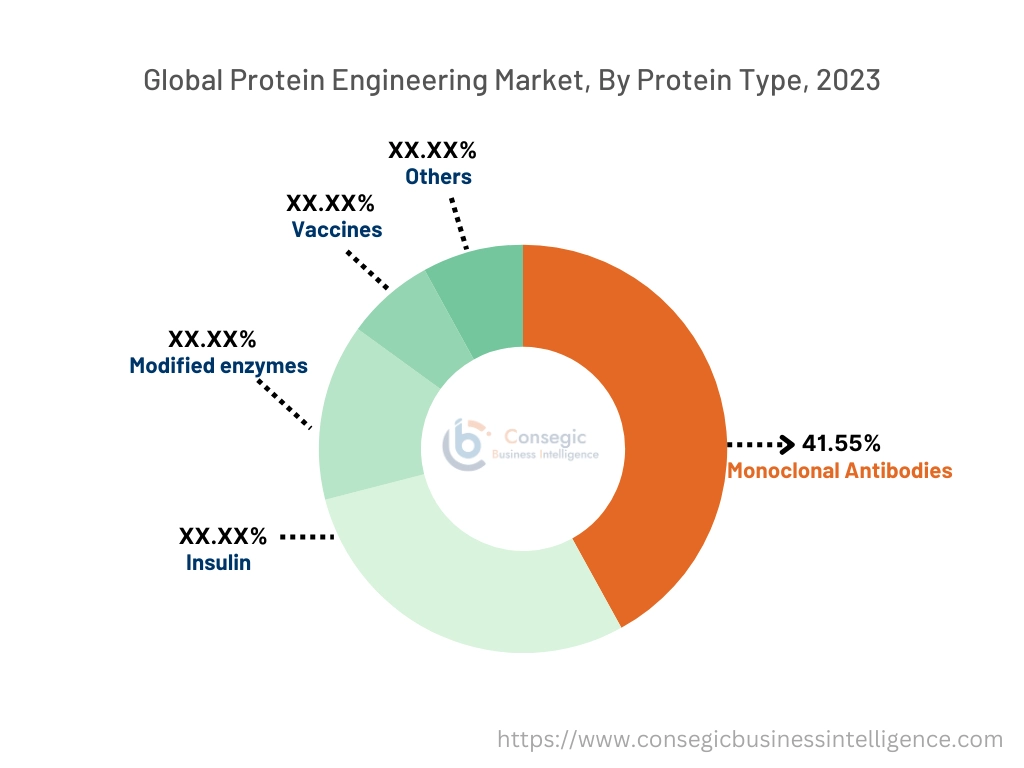
By Protein Type, the segment is categorized into Insulin, Monoclonal Antibodies, Modified enzymes, Vaccines, and others.
Trends in Protein Type:
- In current trends, Monoclonal antibodies are extensively produced for various applications.
- Insulin analogs are being produced rapidly for the application in the treatment of diabetes in current trends.
The Monoclonal Antibodies account for the largest protein engineering market share of 41.55% in 2023.
- Monoclonal antibodies (mAbs) are laboratory-produced proteins designed to mimic the immune system's ability to target specific antigens.
- Advancements in techniques, such as humanization, affinity maturation, and glycosylation engineering, have further enhanced the potency and specificity of mAbs.
- The increasing prevalence of chronic diseases and the aging population have fueled the demand for effective therapies, making mAbs a preferred treatment option.
- In March 2024, Dr Reddy's Laboratories Ltd introduced its first biosimilar Versavo (bevacizumab). Versavo (bevacizumab) is a monoclonal antibody, produced from an engineered protein that is a biosimilar of Genentech's Avastin.
- In summary, the development of monoclonal antibodies, through engineered solutions makes them safer, more efficient, and more versatile, thus leading to the protein engineering market expansion.
The insulin segment is expected to grow at the fastest CAGR over the forecast period.
- Insulin is a hormone produced by the pancreas that regulates blood sugar levels. It is a vital protein for individuals with diabetes, as it helps their bodies use glucose for energy.
- The increasing prevalence of diabetes, particularly type 2 diabetes, has led to a surge in demand for insulin therapy.
- Advancements in insulin delivery systems, such as insulin pens and pumps, have improved patient convenience and treatment outcomes, further boosting protein engineering market demand.
- Additionally, techniques have enabled the development of insulin analogs with enhanced properties, such as longer duration of action and reduced side effects.
- Furthermore, efforts to reduce the cost of insulin, including the development of biosimilars, have made insulin more accessible to a wider patient population.
- As a result, the insulin segment is expected to experience substantial growth in the coming years, thus influencing the protein engineering market demand.
Regional Analysis:
The regional segment includes North America, Europe, Asia Pacific, the Middle East and Africa, and Latin America.
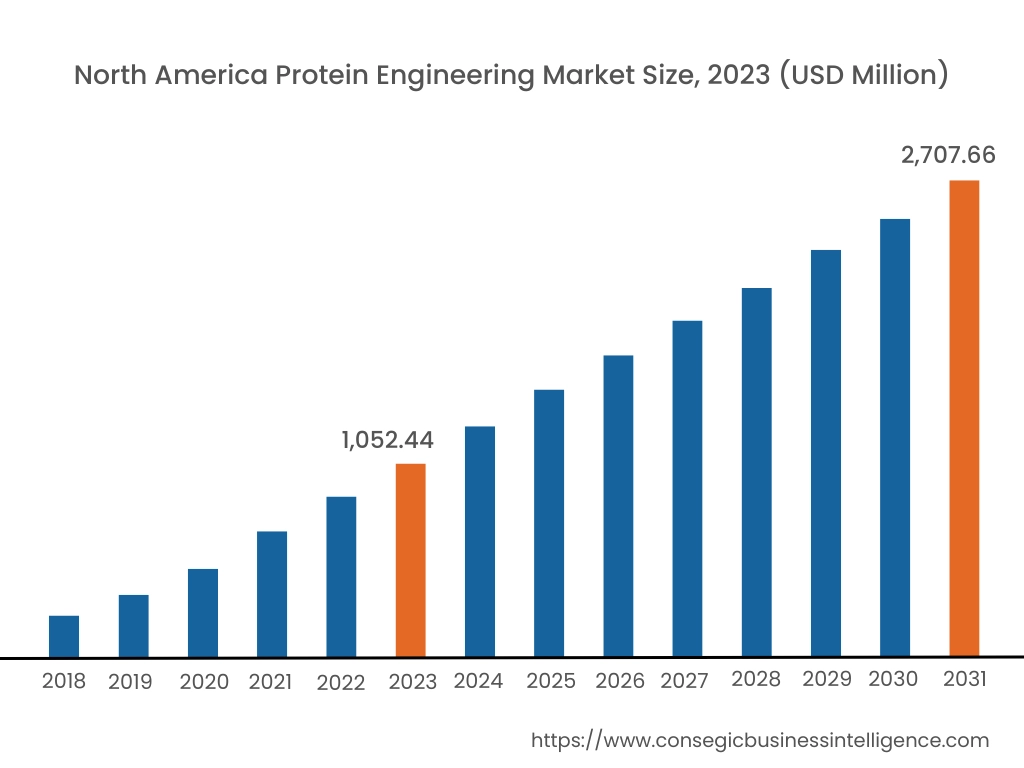
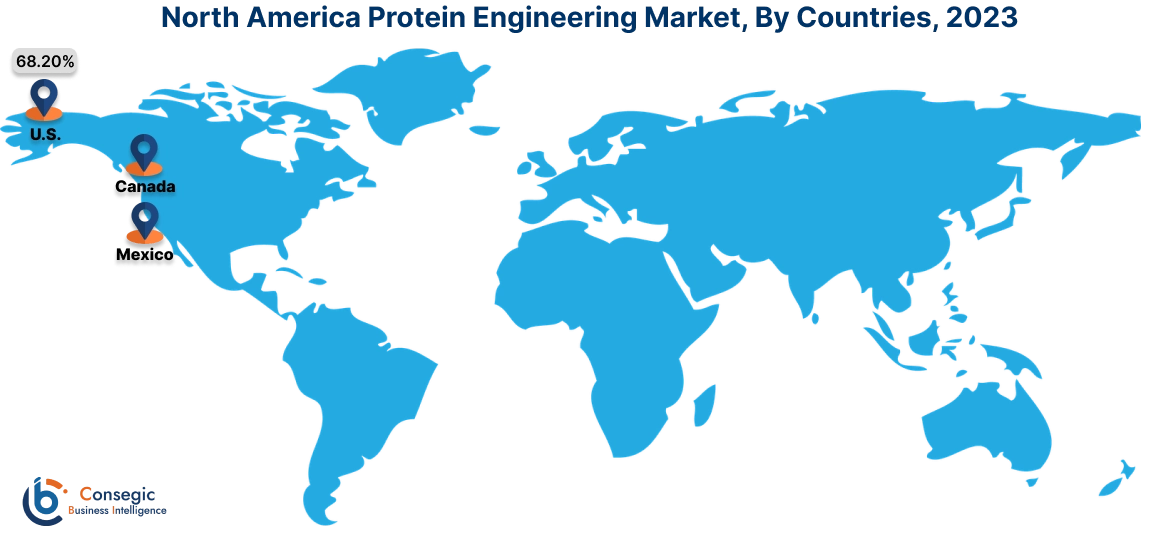
In 2023, North America accounted for the highest protein engineering market share at 33.25% and was valued at USD 1,052.44 Million and is expected to reach USD 2,707.66 Million in 2031. In North America, the U.S. accounted for the highest market share of 68.20% during the base year of 2023.
North America's dominance in the is supported by the robust biotechnology sector and significant investments in R&D. Moreover, the region's strong academic and industrial collaborations, coupled with government funding, and proper advancements in therapeutic proteins enzyme engineering are further fueling the market. Major pharmaceutical companies like Agilent Technologies, Thermo Fisher Scientific, research institutes, and biotech startups are actively involved in developing innovative techniques like CRISPER and other protein-based drugs.
- In October 2024, Helsinki-based Avenue Biosciences raises USD 2.5 million to scale AI-enhanced protein engineering. It announced the successful funding of USD 2.5 million which will accelerate the development of the Avenue Biosciences platform, designed to improve the efficiency of protein production in the biopharmaceutical sector.
Thus, protein engineering market analysis shows that North America's leadership is enhanced by investment in the latest technologies, government funding & well-established biotechnology fields leading to protein engineering market expansion.
Asia-Pacific is expected to witness the fastest CAGR over the forecast period of 13.3% during 2024-2031. Asia-Pacific is experiencing rapid growth in the market, led by countries such as China, Japan, and India. Increased government spending on healthcare, a growing geriatric population, and supportive government policies are stimulating demand for advanced medical therapies, including protein-based drugs. Additionally, the region's consists of skilled scientists and engineers, coupled with the increasing outsourcing of clinical trials and drug development activities, is attracting significant investment. The growing biosimilar market, which relies heavily on protein engineering techniques, further contributes to the region's growth. As a result, Asia-Pacific is emerging as a key player.
In Europe, countries like Germany, the UK, and France are leading innovations in therapeutic proteins, industrial enzymes, and agricultural biotechnology. The region has a favorable regulatory framework and is supported by European Union funding for research in cutting-edge areas like synthetic biology and CRISPER. The rising prevalence of chronic diseases and demand for personalized medicine are further boosting the adoption of technologies. Additionally, as per the protein engineering market analysis, Europe's stringent regulatory standards are driving the development of high-quality engineered proteins, fostering competitiveness and encouraging collaborations between academia, biotech firms, and pharmaceutical companies.
In the Middle East and Africa region, in countries like UAE, Saudi Arabia, and Africa, there is a rise in the sector. The region is focusing on improving its healthcare infrastructure with several countries prioritizing biotechnology and pharmaceutical advancements. Nations like South Africa, Saudi Arabia, and the UAE are witnessing a surge in biotech research and development, supported by government initiatives and partnerships with international players. While the market is still emerging compared to other regions, the growing interest in personalized medicine, biopharmaceuticals, and research into diseases prevalent in the region is creating new protein engineering market opportunities.
Latin America's market share is growing steadily, fueled by increasing investments in biotech, particularly in Brazil, Mexico, and Argentina. The region focuses on both therapeutic and agricultural production of engineered proteins, addressing local healthcare and food production challenges. The rising demand for advanced treatments, particularly in oncology, infectious diseases, and chronic conditions, is driving innovation in the market. However, the region faces challenges such as inconsistent regulatory frameworks, limited access to cutting-edge technologies, and financial constraints, which will impact the widespread adoption of engineered proteins across the region.
Top Key Players & Market Share Insights:
The Protein Engineering market is highly competitive with major players providing precise measurements between objects to the national and international markets. Key players are adopting several strategies in research and development (R&D) and product innovation to hold a strong position in the global protein engineering industry. Key players in the Protein engineering market include-
- Agilent Technologies, Inc (United States)
- Thermo Fisher Scientific Inc. (United States)
- GenScript (United States)
- Merck KGaA (Germany, Europe)
- Nabla Bio, Inc (United States)
- Bio-Rad Laboratories, Inc (United States)
- Bruker (United States)
- GE HealthCare (United States)
- Absolute Antibody (United Kingdom)
- MonodBio (United States)
Recent Industry Developments :
Launches:
- In August 2024, Bruker announced the Installation of a 1.2 GHz Avance Nuclear Magnetic Resonance Spectrometer at the Korea Basic Science Institute (KBSI). This cutting-edge 1.2 GHz Nuclear Magnetic Resonance spectrometer further enhances KBSI's Korea Basic Science Institute's capabilities in biomolecular structure analysis and drug development, pushing the boundaries of protein Nuclear Magnetic Resonance research.
Business Expansions:
- In August 2024, Bio-Rad will expand pioneer antibody discovery platform with SpyLock technology. SpyLock technology allows for precise binding and stabilization of antibodies, potentially leading to faster, more efficient antibody discovery processes. By streamlining antibody discovery, SpyLock technology would stimulate further innovation across the protein engineering market, encouraging new application in diagnostics, drug delivery and personalized medicine.
Technological Advancements:
- In 2024, Agilent Technologies Inc. announced the release of a new automated parallel capillary electrophoresis system for protein analysis. This new platform simplifies and improves the efficiency of analyzing complex protein mixtures, a process central to analytical workflows across the pharma, biotech, food analysis, and academia sectors.
Protein Engineering Market Report Insights :
| Report Attributes | Report Details |
| Study Timeline | 2021-2034 |
| Market Size in 2034 | USD 11,580.39 Million |
| CAGR (2026-2034) | 12.60% |
| Base Year | 2025 |
| By Method |
|
| By Protein Type |
|
| By Region |
|
| Key Players |
|
| North America | U.S. Canada Mexico |
| Europe | U.K. Germany France Spain Italy Russia Benelux Rest of Europe |
| APAC | China South Korea Japan India Australia ASEAN Rest of Asia-Pacific |
| Middle East and Africa | GCC Turkey South Africa Rest of MEA |
| LATAM | Brazil Argentina Chile Rest of LATAM |
| Report Coverage |
|
Key Questions Answered in the Report
How big is the Protein Engineering Market? −
Protein Engineering Market size is estimated to reach over USD 8,111.63 Million by 2031 from a value of USD 3,165.25 Million in 2023, growing at a CAGR of 13.3% from 2024 to 2031.
What specific segmentation details are covered in the Protein Engineering Market report? +
The Protein Engineering Market report includes specific segmentation details for Method and Protein Type.
Which is the fastest growing region in Protein Engineering Market? +
Asia Pacific is the fastest-growing region in the Protein Engineering Market
Who are the major players in the Protein Engineering Market? +
The key participants in the Protein Engineering market are Agilent Technologies Inc (United States), Thermo Fisher Scientific Inc. (United States), Bio-Rad Laboratories Inc (United States), Bruker (United States), GE HealthCare (United States), GenScript (United States), Merck KGaA (Europe), Nabla Bio Inc (United States), Absolute Antibody (United Kingdom), MonodBio (United States)
Overview
Reputation & Certifications


Our Services
- Market Intelligence & Forecasting
- Custom Research Solutions
- Market Entry Strategy
- Competitive Intelligence
- Customer Insights
- Industry Innovation Analysis
- Investment Advisory