Jump to Content
Silyl Modified Polymer Market - Size, Share, Industry Trends, and Forecasts (2026-2034)
Silyl Modified Polymer Market Size:
Silyl Modified Polymer Market size is estimated to reach over USD 3,098.40 Million by 2034 from a value of USD 1,801.46 Million in 2025 and is projected to grow by USD 1,886.07 Million in 2026, growing at a CAGR of 5.7% from 2026 to 2034.
Silyl Modified Polymer Market Key Takeaways
- Demand driven by eco-friendly, low-VOC, isocyanate-free formulations.
- Widely used in construction, automotive, marine, and electronics industries.
- High strength, elasticity, UV & weather resistance are core advantages.
- Slow curing time and moderate structural strength act as key restraints.
- Automotive (especially EVs) emerging as a major future growth opportunity.
- MS polymers dominate, while SPUR polymers are fastest-growing segment.
- Asia-Pacific leads growth due to urbanization and booming infrastructure.
Silyl Modified Polymer Market Scope & Overview:
The silyl modified polymers (SMP) are high-performance, moisture-curing materials that are primarily used in solvent-free and isocyanate-free adhesives and sealants. The key features offered by the modified polymer include high strength, superior elasticity, weatherability, and temperature resistance, which in turn is driving the silyl modified polymer market demand. Additionally, the polymer is mainly used for heavy-duty bonding in construction, marine, and transportation applications. Further, the key advantages driving the silyl modified polymer market growth include weather & UV resistance, eco-friendly formulation, high elasticity, and others. Furthermore, the polymer is widely used by end-use industries such as construction, healthcare, electronics, aerospace, and others. Moreover, the increasing need for sustainable and eco-friendly solutions is boosting the market progress.

Silyl Modified Polymer Market Dynamics - (DRO):
Key Drivers:
Proliferation of eco-friendly formulations is boosting market growth for silyl modified polymers
The rising demand for eco-friendly, low-VOC, and isocyanate-free formulations for driving applications in construction, automotive, and other industries is boosting the silyl modified polymer market growth. Additionally, the stringent government mandates focusing on limiting emissions in construction and automotive sectors are boosting the silyl modified polymer market demand. Moreover, the modern SMP are safer for both factory workers and end-users as they are free from isocyanates, which are fueling the market.
- For instance, in February 2023, Clariant launched AddWorks IBC 760, which is a silyl modified polymer sealant with improved performance in light and heat stability as compared to hazardous sealants. The launch aims to provide halogen-free, low flame-retardant, and safer alternatives, which in turn is driving the adoption of eco-friendly formulations across industries.
Therefore, the stringent government mandates and rising demand for eco-friendly, low-VOC, and isocyanate-free formulations are driving the growth of the market.
Key Restraints:
Operational limitations are restraining the market growth
The SMPs have slow and inconsistent cure times as the sealant requires ambient moisture to harden. Also, the thick paste makes it harder to gun or dispense smoothly at lower temperatures. The polymers do not offer significant structural adhesion, which in turn hinders the silyl modified polymer market expansion. Further, the curing process is completely halted if the sealant is exposed to acidic agents or unsuitable antioxidants.
Therefore, the slower curing speeds, moderate mechanical strength, and others are restraining the silyl modified polymer market expansion.
Future Opportunities :
Growing automotive sector is expected to promote potential opportunities for market growth
The automotive sector uses SMP primarily for high-durability bonding, glazing, and sealing. Also, the polymer is essential to fulfill the industry's shift towards lightweighting vehicles, eliminating toxic fumes, and providing robust weatherproofing without requiring heavy primers, which is creating silyl modified polymer market opportunities. Further, the rising adoption of electric vehicles across the globe is driving the market adoption for sealing & protection of EV batteries. Furthermore, the polymer formulations are helping automakers meet tightening global environmental regulations, which in turn is boosting the market progress.
- For instance, in August 2025, Bostik launched VSR 400A, which features silyl modified polymer and is designed for sheet molding compounds applications such as truck hoods. Also, the product delivers needed performance requirements and supports sustainability efforts.
Hence, the rising adoption in the automotive sector is anticipated to increase the utilization in turn promoting prospects for silyl modified polymer market opportunities during the forecast period.
Silyl Modified Polymer Market Segmental Analysis:
By Type:
Based on the type, the SMP market is bifurcated into silyl modified polyethers (MS polymers) and silyl modified polyurethanes (SPUR polymers).
Trends in the Type:
- The increasing focus on adhering to strict green building regulations and providing a safer, odorless working environment is driving the adoption of MS polymers, which is fueling the silyl modified polymer market trend.
- The chemical manufacturers are innovating SPUR polymers by blending acrylics and epoxies to increase toughness, which is fueling the silyl modified polymer market trend.
The silyl modified polyethers (MS polymers) accounted for the largest revenue share in the year 2025.
- The MS polymers are high-performance, moisture-cured hybrid polymers with the superior weatherability and UV resistance of silicones, which in turn drives the silyl modified polymer market share.
- Also, the MS polymers are widely used in construction, automotive, and industrial assemblies as environmentally friendly adhesives and sealants.
- Further, the push for low-VOC, solvent-free, and isocyanate-free materials is driving the adoption of MS polymers, which in turn is fueling the silyl modified polymer market size.
- Furthermore, the rising adoption of MS polymers in construction and assembly line applications to eliminate the need for screws or rivets is boosting the market progress.
- For instance, in March 2026, Forza Inc. launched an advanced MS Polymer adhesive and sealant technology platform in North America with an aim to improve product performance and comply with tightening environmental and safety regulations.
- Thus, as per the silyl modified polymer market analysis, the rising need for low-VOC, solvent-free, and isocyanate-free materials is driving the market progress.
The silyl modified polyurethanes (SPUR polymers) is anticipated to register the fastest CAGR during the forecast period.
- The SPUR polymers offer higher strength and slightly less susceptibility to environmental fluctuations due to their combination of silicones with the high bond strength of polyurethanes.
- Also, the SPUR polymers are highly favored for critical structural bonding in transportation and manufacturing, which in turn is boosting the silyl modified polymer market size.
- Additionally, the key advantages offered by SPUR polymers include rigidity, high bond strength, and chemical resistance of traditional polyurethanes, among others.
- Further, the rising need for high-performance sealants in building assembly, automotive body manufacturing, and marine applications is boosting the market progress.
- Furthermore, the SPUR polymers do not shrink, chalk, or crack over time, making them incredibly versatile for both indoor and outdoor applications.
- Therefore, as per the market analysis, the rising need for high-performance sealants that do not shrink or crack over time is anticipated to boost the market during the forecast period.
By Application:
Based on the application, the silyl modified polymer market is segmented into adhesives, sealants, coatings, construction materials, and fibers.
Trends in the Application:
- The trend towards the proliferation of massive construction and urbanization projects is boosting the adoption of polymer sealants.
- The trend towards the increasing use of high-performance structural bonding and liquid waterproofing is driving the market adoption for construction material applications.
The adhesives accounted for the largest revenue share in the year 2025.
- The solvent-free and isocyanate-free feature is making polymer adhesive an exceptionally safe and eco-friendly choice for both industrial manufacturing and household DIY.
- The stricter global regulations are driving the shift toward safer, eco-friendly formulations such as adhesives, which in turn is driving the silyl modified polymer market share.
- In the construction sector, the adhesives are mainly used for bonding ventilated facades, panels, and insulation due to excellent weather resistance, movement accommodation, and UV stability.
- Further, the adhesives are mainly applied in environments requiring constant exposure to moisture, such as marine and aerospace, due to their robust rust-prevention and anti-fungal properties.
- Thus, as per the silyl modified polymer market analysis, the stricter global regulations and rising adoption in construction, marine, and aerospace are driving the market progress.
The coatings is anticipated to register the fastest CAGR during the forecast period.
- The polymer coatings are next-generation formulations that combine the elastic strength of silicones with the adhesion of polyurethanes.
- The coating features low-VOC, isocyanate-free, and cures upon ambient moisture exposure for fast, durable surface protection, which is boosting the coating application.
- Additionally, the advantages of coating application include superior durability, exceptional adhesion, eco-friendly and safe solution. The polymer coatings are environmentally friendly, highly durable, and are used across demanding construction and marine environments.
- Further, the coatings offer high resistance to temperature extremes, moisture, and bacteria, which in turn increases their longevity in demanding environments.
- Therefore, as per the market analysis, the aforementioned factors are anticipated to boost the market during the forecast period.
By End-Use Industry:
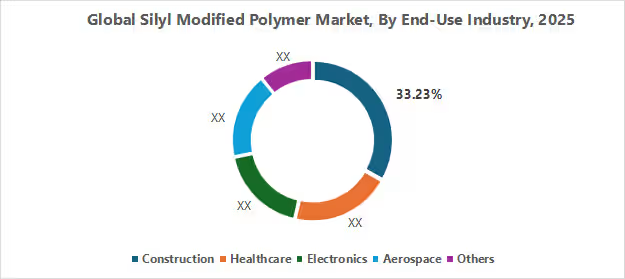
Based on the end-use industry, the market is segmented into construction, healthcare, automotive, electronics, aerospace, and others.
Trends in the End-Use Industry:
- The trend towards the need for excellent barrier properties and chemical resistance properties for advanced cardiac medical devices packaging is driving the market adoption.
- The trend towards the adoption of polymers to protect sensitive components in portable consumer electronics, wearables, and electric vehicles is boosting the market progress.
The construction accounted for the largest revenue share of 33.23% in the year 2025.
- The polymers are increasingly replacing traditional sealants and adhesives in the construction sector due to their ability to deliver superior elasticity, high weatherability, and strong multi-substrate bonding without releasing harmful VOCs.
- Additionally, the polymers are mainly used for facade sealing, waterproofing, and elastic bonding in the construction sector, which in turn is fueling the silyl modified polymer industry.
- Further, the rapid urbanization and large-scale infrastructure investments are accelerating the need for high-performance sealants in modern construction.
- Furthermore, the restrictions on volatile organic compounds and isocyanates in building materials are forcing a shift toward safer, solvent-free alternatives, which in turn is fueling the market progress.
- Thus, as per the market analysis, the aforementioned factors are driving the market trends.
The automotive is anticipated to register the fastest CAGR during the forecast period.
- The polymers are critical in the automotive sector for lightweighting, fuel efficiency, and elastic bonding of complex substrates like plastics, metals, and glass.
- Also, the rising focus on substituting heavy metals with composite materials, plastics, and non-ferrous metals to improve fuel efficiency is driving the market adoption in the automotive sector.
- Further, the polymer helps in maintaining structural integrity against severe weather and temperature fluctuations in exterior and interior automotive applications.
- Furthermore, in the automotive sector, the SMPs act as dampeners, reducing noise, vibration, and harshness in both traditional and modern vehicle designs.
- Therefore, as per the market analysis, the need for reducing the vehicle weight and maintaining structural integrity are anticipated to boost the market during the forecast period.
Regional Analysis:
The regions covered are North America, Europe, Asia Pacific, Middle East and Africa, and Latin America.
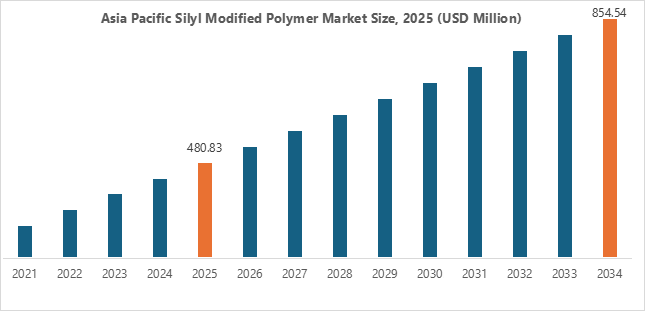
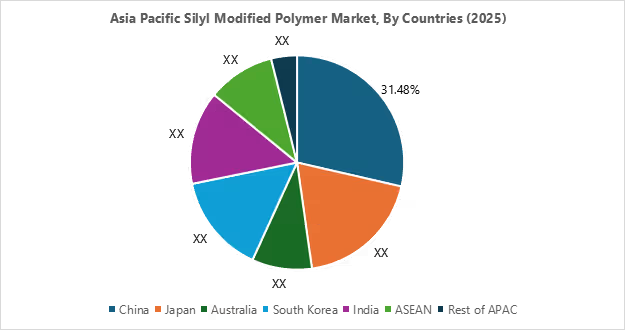
Asia Pacific region was valued at USD 480.83 Million in 2025. Moreover, it is projected to grow by USD 505.28 Million in 2026 and reach over USD 854.54 Million by 2034. Out of this, China accounted for the maximum revenue share of 31.48%. The market progress is mainly driven by the booming automotive sector in countries like China, India, and Japan. Furthermore, factors including the rapid urbanization and massive infrastructure investments are projected to drive the market growth in Asia Pacific region during the forecast period.
- For instance, according to the Indian Brand Equity Foundation (IBEF), the NIP project count reached around 3,500 projects with a significant investment of USD 292 billion in FY25.
North America is estimated to reach over USD 1,008.84 Million by 2034 from a value of USD 581.59 Million in 2025 and is projected to grow by USD 609.49 Million in 2026. The North American region's strict government mandates in the US and Canada, limitations on volatile organic compound emissions, offer lucrative growth prospects for the market. Additionally, the adoption of EV and the growing strong preference for green building materials are driving the market progress.
- For instance, according to Argonne National Laboratory, in the USA, approximately 209,456 HEVs were sold, which include 62,571 cars and 146,885 LTs in April 2026. Also, the sales areup by 10.1% compared to the sales in April 2025.
The regional analysis depicts that the environmental mandates highly favoring green construction are driving the market in Europe. Additionally, the key factor driving the market is the large-scale government initiatives, such as Saudi Arabia's Vision 2030, as well as the need for solvent-free, eco-friendly adhesives and sealants is propelling the market adoption in the Middle East and African region. Further, the significant regional investments in renewable energy and oil & gas pipeline sealing solutions is paving the way for the progress of the market in Latin America region.
Top Key Players & Market Share Insights:
The global silyl modified polymer market is highly competitive with major players providing silyl modified polymer to the national and international markets. Key players are adopting several strategies in research and development (R&D), product innovation, and end user launches to hold a strong position in the silyl modified polymer industry. Key players in the silyl modified polymer market include-
- Bostik SA(France)
- Kaneka Corporation(Japan)
- Risun Polymer International Co., Ltd.(China)
- PCC Group (Poland)
- Wacker Chemie AG (Germany)
- Evonik Industries AG (Germany)
- Henkel AG & Co. KGaA (Germany)
- 3M Company (United States)
- DowDuPont Inc. (United States)
- B. Fuller Company (United States)
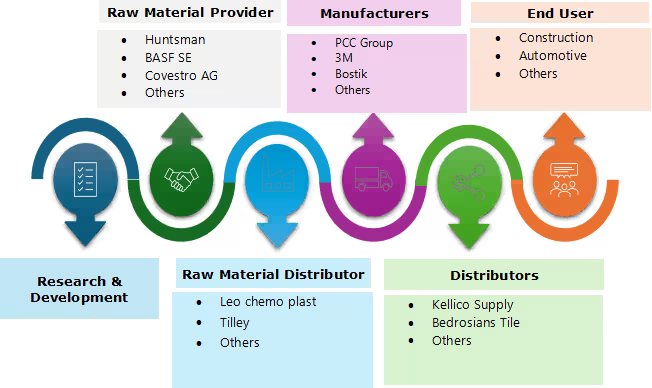
Silyl Modified Polymer Market Ecosystem:
Recent Industry Developments:
Product launches
In March 2026, Kaneka launched a next-generation 2-in-1 coating that features an MS polymer-based system and is designed for waterproofing and tile adhesion. Also, the coating provides exceptional adhesion to plastics and dissimilar materials, high-strength level adhesion, and others. In December 2025, Kastar launched MS Polymer sealants with an aim to cater to the environmental and performance requirements in global construction markets.
Silyl Modified Polymer Market Report Insights:
| Report Attributes | Report Details |
| Study Timeline | 2021-2034 |
| Market Size in 2034 (USD Million) | USD 3,098.40 Million |
| CAGR (2026-2034) | 5.7% |
| By Type |
|
| By Application |
|
| By End-Use Industry |
|
| By Region |
|
| Key Players |
|
| Report Coverage |
|
Key Questions Answered in the Report
How big is the silyl modified polymer market? −
Thesilyl modified polymer market size is estimated to reach over USD 3,098.40 Million by 2034 from a value of USD 1,801.46 Million in 2025 and is projected to grow by USD 1,886.07 Million in 2026, growing at a CAGR of 5.7% from 2026 to 2034.
Which segmentation details are covered in the silyl modified polymer report? +
The silyl modified polymer report includes specific segmentation details for type, application, end-use industry, and regions.
Which is the fastest segment anticipated to impact the market growth? +
In the silyl modified polymer market, the silyl modified polyurethanes (SPUR polymers) is the fastest-growing segment during the forecast period due to the rising need for high-performance sealants that do not shrink or crack over time.
Who are the major players in the silyl modified polymer market? +
The key participants in the silyl modified polymer marketare Bostik SA (France), Kaneka Corporation (Japan), Risun Polymer International Co., Ltd. (China), PCC Group (Poland), Wacker Chemie AG (Germany), Evonik Industries AG (Germany), Henkel AG & Co. KGaA (Germany), 3M Company (United States), DowDuPont Inc. (United States), H.B. Fuller Company (United States) and others.
What are the key trends in the silyl modified polymer market? +
The silyl modified polymer marketis being shaped by several key trends, including the proliferation of massive construction and urbanization projects, and innovation in SPUR polymers by blending with acrylics and epoxies to increase toughness are the key trends driving the market.
Overview
Reputation & Certifications


Our Services
- Market Intelligence & Forecasting
- Custom Research Solutions
- Market Entry Strategy
- Competitive Intelligence
- Customer Insights
- Industry Innovation Analysis
- Investment Advisory