Jump to Content
Single Cell Analysis Market - Size, Share, Industry Trends, and Forecasts (2025-2035)
Single Cell Analysis Market 2025 - 2035:
- The Global Single Cell Analysis Market recorded a value of USD 4.16 Billion in 2025.
- The market is projected to register a CAGR of 14.25% between 2025 and 2035.
- The market size is forecast to increase to USD 15.74 Billion by 2035.
- Asia Pacific is anticipated to witness the highest growth rate during the 2025–2035 forecast period.
Market Scope & Overview:
Single cell analysis is a specialized technique that offers detailed insights into cellular heterogeneity, gene expression patterns, and the ability to enhance understanding of complex biological systems. The development of single cell analysis technologies takes place using modern platforms such as next-generation sequencing, microfluidics, and advanced data processing techniques. The overall workflow includes sample preparation, cell isolation, high-throughput sequencing or imaging, and regulatory and quality validation measures, which ensure accurate and reliable analytical outcomes.
In addition, the major driving forces behind the single cell analysis market include the increasing need from genomics research and precision medicine applications. Moreover, the need for high-throughput and cost-effective analytical tools in biological research and clinical diagnostics also drives the growth of the single cell analysis market. Furthermore, the single cell analysis market also provides various advantages, including the ability to understand disease, biomarker discovery, and the ability to understand cellular functions. The single cell analysis market is experiencing growth as a result of the aforementioned factors.
Market Size & Forecast
- 2024 Market Size: USD 3.64 Billion
- 2025 Market Size: USD 4.16 Billion
- 2035 Projected Market Size: USD 15.74 Billion
- CAGR (2025–2035): 14.25%
- Largest Market in 2025: North America

Market Dynamics - (DRO):
Key Drivers:
Rising Prevalence of Chronic and Complex Diseases Drives Market Growth
The increasing prevalence of chronic and complex diseases is a significant factor driving the demand for single cell analysis technologies. The diseases, which include cancer, cardiovascular diseases, autoimmune diseases, and neurological disorders, among others, require sophisticated analytical technologies to understand cell type heterogeneity and disease progression at a detailed level. Single cell analysis provides researchers and clinicians with the ability to study cell behavior, isolate unique cell types, and examine gene expression profiles, which is important for improving disease diagnosis. In addition, healthcare systems and research centers have been dedicated to learning about disease mechanisms at the cellular level, which is leading to the adoption of single cell analysis systems for research and other applications.
- For example, in 2024, World Health Organization states that 20 million new cases of cancer and 9.7 million deaths were reported globally in 2022, with 53.5 million people living with cancer and five years or less until their expected death date.
Therefore, the single cell analysis market is experiencing growth due to the increasing prevalence of chronic and complex diseases.
Key Restraints:
High Cost of Instruments Limits Market Expansion
The high cost of single cell analysis instruments, such as advanced sequencing systems, and the cost of flow cytometers are slowing the adoption of single cell analysis in some research institutions and healthcare organizations. In addition, the high capital costs of purchasing and operating advanced single cell analysis instruments are also a factor in the conservative approach to adopting advanced technologies.
Therefore, the single cell analysis market is impacted by the high cost of instruments and associated financial constraints.
Future Opportunities:
Growing Integration of Artificial Intelligence in Data Analysis to Create Growth Opportunities for the Market
The increasing adoption of artificial intelligence in data analysis is anticipated to generate significant growth opportunities for the single cell analysis market. The biotechnology and life sciences industry is investing heavily in AI-based data interpretation tools to speed up research results. Furthermore, the adoption of computer-based tools to enhance large-scale cellular data interpretation is generating new demand for single cell analysis solutions, thereby increasing the single cell analysis market.
- For instance, in 2025, American Hospital Association stated 71% of hospitals reported using predictive AI integrated with the electronic health record (EHR) in 2024, up from 66% in 2023 to analyze patient data and generate risk scores. The growing adoption of AI in healthcare is expected to create new opportunities for the single cell analysis market, supporting advanced data-driven research and precision medicine.
Hence, the increasing integration of AI into data analysis is anticipated to promote future opportunities for the single cell analysis market during the forecast period.
Market Segmental Analysis:
By Product:
On the basis of product, the single cell analysis market is segmented into consumables and instruments.
Trends in product:
- The growing demand for single cell analysis across genomics research, drug discovery, and clinical diagnostics is fueling the adoption of various product types used in laboratory workflows.
- The increasing need for accurate cellular profiling, advanced sequencing capabilities, and efficient laboratory processes is driving the demand across different product categories.
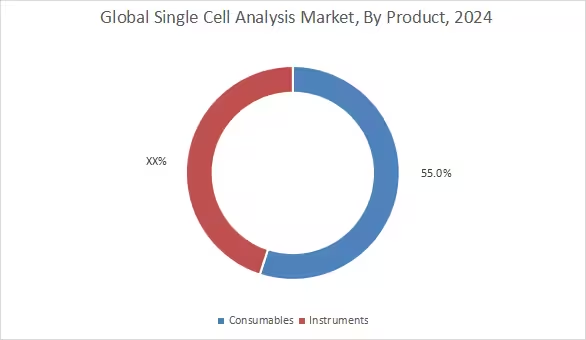
The consumables segment held the highest revenue share of 55% in 2024.
- Consumables help in providing consistent experimental performance, high-throughput sample processing, and reliable results, which is increasing their adoption.
- Also, the growing use of reagents, assay kits, and microplates in genomics and molecular biology studies is driving segment dominance.
- Moreover, their recurring usage in laboratory workflows is supporting continuous demand.
- Furthermore, the increasing number of research experiments involving cellular analysis is contributing to higher product consumption.
- Therefore, the dominance of the consumables segment is being fueled by their extensive use in single cell research and laboratory applications.
It is anticipated that the instruments segment will exhibit the highest compound annual growth rate (CAGR) during the forecast period.
- Instruments help in providing high-resolution cellular analysis, improved automation, and advanced data acquisition capabilities, which is increasing their adoption in research laboratories.
- Also, the rising demand for advanced sequencing platforms and analytical systems is fueling segment growth.
- Moreover, continuous technological advancements in cell sorting and imaging systems is supporting adoption.
- Therefore, the increasing investment in laboratory infrastructure and research technologies is accelerating the growth of the instruments segment during the forecast period.
By Cell Type:
On the basis of cell type, the market is divided into human cells, animal cells, and microbial cells.
Trends in cell type:
- The growing use of single cell analysis across biomedical research, disease diagnostics, and cellular biology studies is increasing its adoption across various cell types.
- The increasing focus on understanding cellular heterogeneity and genetic variation is fueling the demand across different biological cell categories.
The human cells segment held the highest revenue share in 2024.
- Human cells are widely used in biomedical research and disease analysis, which is driving their demand.
- Also, the increasing focus on cancer research, immunology studies, and precision medicine is fueling segment dominance.
- Moreover, the growing demand for personalized medicine research is supporting segment growth.
- Furthermore, the rising number of clinical and genomic research projects is contributing to increased analysis of human cells.
- Hence, the dominance of the human cells segment is being fueled by extensive research applications in healthcare and life sciences.
It is anticipated that the microbial cells segment will exhibit the highest compound annual growth rate (CAGR) during the forecast period.
- Microbial cells help in providing insights into microbial diversity, metabolic activity, and genetic variations, which is increasing their adoption in microbiology research.
- Also, the rising demand for studying microbial ecosystems and pathogen behavior is driving segment growth.
- Furthermore, the growing application of microbial cell analysis in biotechnology and environmental studies is supporting adoption.
- Therefore, the increasing focus on microbial genomics and microbiome research is accelerating the growth of the microbial cells segment.
By Technology:
On the basis of technology, the market is divided into flow cytometry, NGS, PCR, and microscopy.
Trends in technology:
- The growing demand for advanced cellular analysis techniques across research and clinical applications is increasing the adoption of various analytical technologies.
- The increasing need for high-throughput sequencing, accurate molecular detection, and real-time cellular imaging is fueling the demand across technology platforms.
The NGS segment held the highest revenue share in 2024.
- NGS technology enables large-scale genomic sequencing and accurate gene expression analysis, which is driving its demand in cellular research.
- Also, the increasing use of NGS platforms in genomics and precision medicine research is fueling segment dominance.
- Moreover, the growing demand for high-throughput sequencing solutions is supporting segment growth.
- Furthermore, the expansion of large-scale genomics projects worldwide is contributing to increased adoption.
- Therefore, the dominance of the NGS segment is being fueled by its extensive use in genomic sequencing and molecular research applications.
It is anticipated that the flow cytometry segment will exhibit the highest compound annual growth rate (CAGR) during the forecast period.
- Flow cytometry helps in providing rapid cell sorting, multi-parameter cellular analysis, and efficient sample processing, which is increasing its adoption in laboratory research.
- Also, the rising demand for high-speed cellular analysis in biomedical research is driving segment growth.
- Furthermore, the growing installation of advanced flow cytometry systems in research laboratories is supporting adoption.
- Therefore, the increasing focus on high-throughput cell analysis technologies is accelerating the growth of the flow cytometry segment.
By Workflow:
On the basis of workflow, the market is divided into downstream analysis, and data analysis.
Trends in workflow:
- The growing demand for efficient laboratory workflows in genomics and cellular research is increasing the adoption of different analytical processes.
- The increasing need for accurate interpretation of cellular data and improved research efficiency is fueling demand across workflow stages.
The downstream analysis segment held the highest revenue share in 2024.
- Downstream analysis is widely used for gene expression studies, protein analysis, and cellular profiling, which is driving its demand.
- Also, the increasing number of genomics and proteomics research projects is fueling segment dominance.
- Moreover, the growing need for accurate molecular characterization is supporting segment growth.
- Furthermore, the expansion of biomedical research activities worldwide is contributing to increased demand.
- Hence, the dominance of the downstream analysis segment is being fueled by its extensive use in cellular and molecular research activities.
It is anticipated that the data analysis segment will exhibit the highest compound annual growth rate (CAGR) during the forecast period.
- Data analysis helps in providing accurate interpretation of complex cellular datasets and genomic information, which is increasing its adoption in research workflows.
- Also, the rising demand for bioinformatics tools and computational platforms is driving segment growth.
- Furthermore, the growing integration of artificial intelligence in biological data processing is supporting the use of advanced data analysis solutions.
- Therefore, the increasing need for efficient processing of large-scale biological datasets is accelerating the growth of the data analysis segment.
By Application:
On the basis of application, the market is divided into research and medical.
Trends in application:
- The growing use of single cell analysis technologies in biomedical studies and healthcare diagnostics is increasing their adoption across major application areas.
- The increasing focus on disease research, drug discovery, and personalized medicine is fueling the demand across different application segments.
The research segment held the highest revenue share in 2024.
- Single cell analysis is widely used in genomics research, cancer studies, and immunology research, which is driving its demand.
- Also, the increasing investment in life sciences and biomedical research activities is fueling segment dominance.
- Moreover, the growing number of research collaborations and genomic projects is supporting segment growth.
- Furthermore, the expansion of biotechnology research institutes worldwide is contributing to increased technology adoption.
- Hence, the dominance of the research segment is being fueled by extensive use in scientific and biomedical research activities.
It is anticipated that the medical segment will exhibit the highest compound annual growth rate (CAGR) during the forecast period.
- Medical applications help in providing advanced diagnostic insights, disease monitoring capabilities, and improved treatment planning, which is increasing adoption in healthcare settings.
- Also, the rising demand for precision medicine and personalized treatment approaches is driving segment growth.
- Furthermore, the growing integration of genomic technologies in clinical diagnostics is supporting adoption.
- Therefore, the increasing focus on advanced healthcare diagnostics is accelerating the growth of the medical segment.
By End User:
On the basis of end user, the market is divided into pharmaceutical & biotechnology companies, academic & research institutes, diagnostic laboratories, and others.
Trends in end user:
- The growing adoption of single cell analysis technologies across biotechnology, pharmaceutical development, and clinical research is increasing demand across major end-user segments.
- The increasing focus on drug discovery, disease research, and advanced diagnostic technologies is fueling the demand across different research and healthcare organizations.
The academic & research institutes segment held the highest revenue share in 2024.
- Academic and research institutes widely use single cell analysis technologies for genomics studies, biomedical research, and molecular biology experiments, which is driving demand.
- Also, the increasing government funding for life sciences research is fueling segment dominance.
- Moreover, the growing number of collaborative research programs is supporting segment growth.
- Furthermore, the expansion of genomics and biotechnology research initiatives is contributing to increased technology adoption.
- Hence, the dominance of the academic & research institutes segment is being fueled by extensive use in scientific research and innovation activities.
It is anticipated that the pharmaceutical & biotechnology companies will exhibit the highest compound annual growth rate (CAGR) during the forecast period.
- Pharmaceutical and biotechnology companies increasingly use single cell analysis technologies for drug discovery, therapeutic research, and biomarkeridentification, which is increasing their adoption.
- Also, the rising demand for advanced molecular research in drug development is driving segment growth.
- Furthermore, the growing investment in biotechnology innovation and precision medicine is supporting technology adoption.
- Therefore, the increasing focus on innovative drug development and advanced research technologies is accelerating the growth of the pharmaceutical & biotechnology companies.
Regional Analysis:
North America, Europe, Asia Pacific, the Middle East and Africa, and Latin America are the regions of coverage.
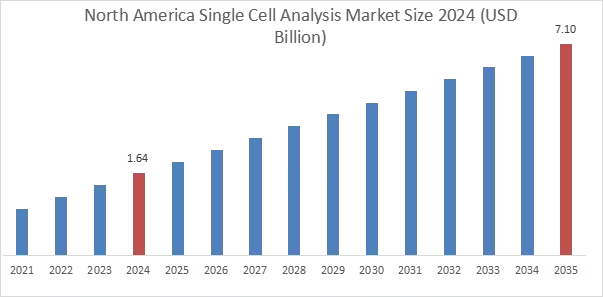
In 2024, North America accounted for the highest market share at 45.1% and was valued at USD 1.64 Billion, and is expected to reach USD 7.10 Billion by 2035. In North America, the US accounted for the highest market share of 85% during the base year of 2024. Market growth is primarily fueled by the strong presence of biotechnology companies, advanced research infrastructure, and increasing investment in genomics & life sciences research. Furthermore, the expanding biomedical research activities in major economies such as the US and Canada is propelling market adoption. Although other regions are expected to fuel market demand, North America is anticipated to remain the dominant revenue contributor during the forecast period.
- For instance, in February 2024, researchers identified over 275 million new genetic variants from genomic data of nearly 250,000 participants in the U.S. National Institutes of Health program. Thus, this is further strengthening the genomics and life sciences research landscape in the region.
In the Asia Pacific region, the single cell analysis market is expected to register the fastest growth during the forecast period. The growth in this region is driven by increasing investments in biotechnology research and expanding genomics research initiatives. In addition, biotechnology companies are increasingly using advanced single cell sequencing and analysis technologies to improve their research capabilities. Moreover, the expansion of the Indian healthcare sector is also expected to contribute to the growth of the single cell analysis market.
- For instance, in November 2025, IBEF published a report indicating that the Indian healthcare sector was valued at about USD 372 billion in 2023 and is expected to grow to about USD 638 billion by 2025. This indicates that the expansion of the Indian healthcare sector will contribute to the growth of the single cell analysis market.
Europe single cell analysis market is the second largest market after North America, owing to the increasing demand from biotechnology research, and academic research sectors. The expansion of genomics research initiatives and large-scale biomedical research programs are fueling the demand for single cell analysis technologies, hence driving the growth of the single cell analysis market.
Market growth in the Middle East & Africa is expanding due to the rising investments in life sciences research, as well as adoption of single cell analysis technologies in genomics studies. Moreover, the growing focus on biotechnology development is driving demand in this region, supported by ongoing healthcare research initiatives.
Latin America single cell analysis market is driven by rising demand from biotechnology and academic research sectors. Additionally, the growing adoption of single cell analysis technologies in genomics research, and cancer studies is driving demand in this region, thereby supporting growth of the market.
Top Key Players & Market Share Insights:
The single cell analysis market is competitive at the global level, with major biotechnology companies offering solutions for academic research institutes, and clinical laboratories worldwide. The companies operating in the market are offering a wide range of products for genomics research, clinical diagnostics, and other biological research applications. In addition, companies are adopting strategies such as product development, technological innovation, and geographic expansion to strengthen their market presence and gain a competitive advantage. The key players operating in the single cell analysis market include:
- Thermo Fisher Scientific Inc. – US
- Danaher Corporation – US
- Tecan Group Ltd. – Switzerland
- Agilent Technologies, Inc. – US
- Bio-Rad Laboratories Inc. – US
- Sartorius AG – Germany
- Takara Bio Inc. – Japan
- 10x Genomics – US
- Promega Corporation – US
- Illumina Inc. – US
Recent Industry Developments:
- In February 2026, Illumina introduced Nova Seq X DNA sequencing system with improved Q70 quality scores, 30% higher speed, and output of up to 35 billion reads. This platform generates over 20,000 whole genomes per year at nearly USD 200 per genome, supporting advancements in the single cell analysis market.
Single Cell Analysis Market Report Insights:
| Report Attributes | Report Details |
|---|---|
| Study Timeline | 2024-2035 |
| Market Size in 2035 (USD Billion) | USD 15.74 Billion |
| CAGR (2025-2035) | 14.25% |
| By Product |
|
| By Cell Type |
|
| By Technology |
|
| By Workflow |
|
| By Application |
|
| By End User |
|
| By Region |
|
| Key Players |
|
| Report Coverage |
|
Key Questions Answered in the Report
How big is the single cell analysis market? −
Single cell analysis market size is estimated to reach over USD 15.74 Billion by 2035 from a value of USD 3.64 Billion in 2024 and is projected to grow by USD 4.16 Billion in 2025, growing at a CAGR of 14.25% from 2025 to 2035.
Which segmentation details are covered in the single cell analysis report? +
The single cell analysis report includes specific segmentation details for product, cell type, technology, workflow, application, end user and region.
Which is the fastest segment anticipated to impact the market growth? +
In the single cell analysis market, the microbial cells segment is the fastest-growing segment during the forecast period, driven by the rising demand for studying microbial ecosystems and pathogen behavior.
Who are the major players in the single cell analysis market? +
The key participants in the single cell analysis market are Thermo Fisher Scientific Inc. (US), Danaher Corporation (US), Tecan Group Ltd. (Switzerland), Agilent Technologies, Inc. (US), Bio-Rad Laboratories Inc. (US), Sartorius AG (Germany), Takara Bio Inc. (Japan), 10x Genomics (US), Promega Corporation (US), Illumina Inc. (US), and others.
What are the key trends in the single cell analysis market? +
The single cell analysis market is shaped by key trends including rising prevalence of chronic and complex diseases.
Overview
Reputation & Certifications


Our Services
- Market Intelligence & Forecasting
- Custom Research Solutions
- Market Entry Strategy
- Competitive Intelligence
- Customer Insights
- Industry Innovation Analysis
- Investment Advisory