Jump to Content
Smart Sports Wearables Market - Size, Share, Industry Trends, and Forecasts (2025-2035)
What Defines the Smart Sports Wearables Market and Its Growth Potential?
Smart sports wearables are electronic devices that are used to track physical activities, health, and sports performance. Smart sports wearables include smartwatches, fitness bands, smart clothing, and performance trackers. Smart sports wearables track the most important parameters, which include heart rate, number of steps taken, distance covered, sleep patterns, and workout intensity. Smart sports wearables are used by athletes, fitness enthusiasts, and sports teams to track their performance and track their progress.
The smart sports wearables market is increasing due to the increasing demand for fitness tracking and health monitoring. Smartphones are becoming more popular, which is leading to the increased adoption of wearable technology in sports and fitness activities. Additionally, the expansion of digital health platforms and the increasing number of recreational sports are increasing the demand for smart sports wearables.
Market Size Outlook
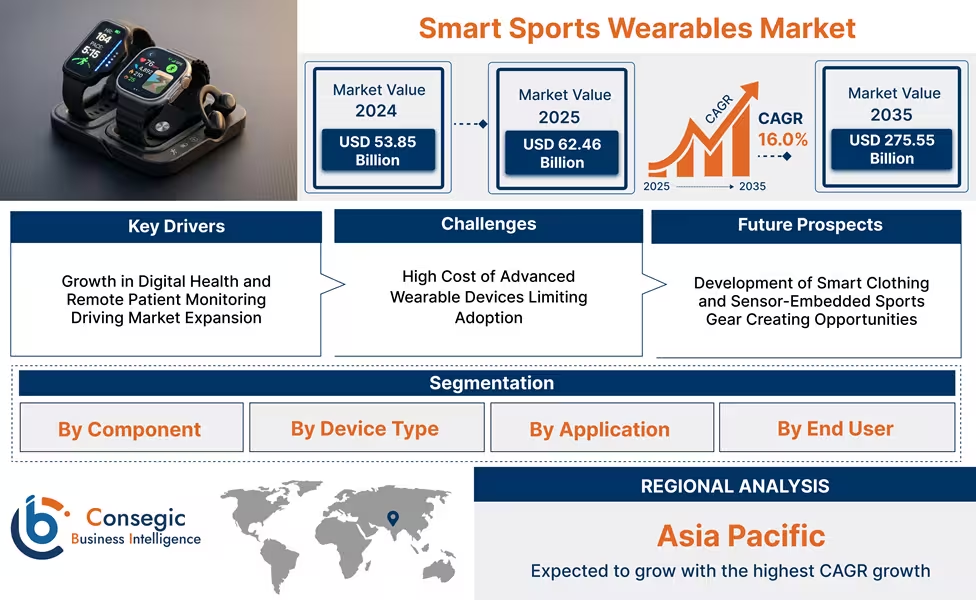
- The market size was recorded at USD 53.85 billion in 2024, which grew to USD 62.46 billion in 2025
- The market is expected to grow to USD 275.55 billion by 2035, with a CAGR of 16.0% during 2025-2035
- North America holds the largest share of the market in 2025
Exclusive Insights
Sensor-Level Technology Benchmarking
The sensor-level analysis indicates the varying performance levels of the heart rate sensor, SpO2 sensor, GPS module, and the motion tracking component. The accuracy of the semi-professional devices is better compared to the consumer devices. The consumer devices are designed with low costs and ease of usage in mind. The accuracy of the sensor results in high power consumption.
Ecosystem Integration Analysis
Smart sports wearables are connected to platforms such as Apple Health and Google Fit, which allow data tracking in a centralized manner. Compatibility with third-party fitness apps and coaching software improves user engagement and data accessibility. APIs support seamless data exchange, which strengthens connected fitness ecosystems and enhances user experience.
Drivers
Growth in Digital Health and Remote Patient Monitoring Driving Market Expansion
Expansion of digital health platforms and remote patient monitoring services is increasing demand for smart sports wearables. Healthcare providers are using these devices to track their patients' health conditions, such as heart rate, activity level, and sleep patterns, outside the hospital environment. The integration of these devices with mobile health platforms is helping in more efficient data collection and monitoring. The rising trend of using wearable devices in tracking health is also helping in the growth of the market.
For instance, in August 2024, the survey by the Rock Health Digital Health Consumer Adoption Survey 2023 reported that 44% of Americans are using wearables to track their sleep and heart rates, indicating the rising demand for wearable devices fueled by the growth of digital health and remote monitoring.
Increasing Global Focus on Health and Wellness Driving Wearable Demand
Increased awareness of preventive healthcare services and lifestyle management is creating more demand for smart sports wearables. Consumers are using products that allow them to track their fitness levels, heart rate, and other activities on a day-to-day basis. For instance, in March 2026, DR H launched WUJI Smart Ring, which is designed with fine jewelry features that also allow users to track their fitness levels. This is creating more demand for wearable technology in fitness and other aspects of life.
Rising Urban Population Increasing Participation in Fitness Activities
Increased growth in urban populations is creating more demand for fitness activities such as gym training, running, and cycling. Urban lifestyles are creating higher demand for convenient and data-driven fitness solutions. United Nations estimates that the global urban population will increase from 55% or approximately 4.2 billion people in 2018 to 68% or around 6.7 billion people by 2050. This shows that there is a rapid growth of the urban population. This growth will result in the adoption of smart sports wearables that are compatible with activity and performance tracking.
Challenges
High Cost of Advanced Wearable Devices Limiting Adoption
Advanced smart sports wearables are devices that are equipped with various sensors, connectivity features, and health monitoring capabilities. This makes the devices more expensive. The high cost of smart sports wearables makes them less affordable for customers. This growth of the urban population is limiting the adoption of smart sports wearables.
Future Prospects
Development of Smart Clothing and Sensor-Embedded Sports Gear Creating Opportunities
Innovation in sports apparel is helping in the development of sensor-based apparel that enables tracking of movements, posture, and physical performance in real time. This is helping in minimizing dependency on wearable devices, thereby enhancing user convenience. Increase in connected sports technology is helping in supporting growth in sports wearables. Partnerships and innovations in smart apparel are helping in creating growth opportunities in smart sports wearables.
For instance, in September 2025, Arkema collaborated with Movmenta to integrate battery-free SOLLO sensors into running shoes to track performance in real-time, thus creating growth opportunities in smart clothing.
Expansion into Medical-Grade Monitoring Devices Creating New Growth Avenues
Improvement in the accuracy of sensors and clinical validation of devices is supporting the shift of smart sports wearables to medical-grade monitoring applications. The devices are increasingly being used for the measurement of vital signs, such as heart rate variability, oxygen saturation, and sleep patterns, for preventive healthcare. In March 2026, ElliQ, a smart care device that uses AI, assists Washington Medicaid beneficiaries in independent living through health monitoring and engagement. This shift of smart sports wearables to medical-grade monitoring applications is opening up new revenue opportunities for the ecosystem of healthcare providers and insurers.
Smart Sports Wearables Segments
By Component
The market includes hardware, software, and services.
Dominant Segment
Hardware
Largest revenue share of 48.2% in 2024. High demand for smartwatches and fitness bands increases adoption. Multiple sensors improve tracking efficiency.
Fastest Growing
Software
Fastest CAGR during the forecast period. Growth in data analytics increases demand. Integration with digital health platforms supports expansion.

By Device Type
The market includes wristwear, headwear, smart bodywear, smart shoes, and others.
Dominant Segment
Wristwear
Largest revenue share in 2024. Strong adoption of smartwatches and fitness bands supports growth. Real-time tracking improves user engagement.
Fastest Growing
Smart Bodywear
Fastest CAGR during the forecast period. Sensor-based clothing enables performance tracking. Increasing use in training supports demand.
By Application
It comprises fitness and activity tracking, sports and performance enhancement, health monitoring, navigation and location tracking, and biometric analysis.
Dominant Segment
Fitness & Activity Tracking
Largest revenue share in 2024. The demand for step and activity tracking will drive adoption. Increasing awareness about fitness will drive growth.
Fastest Growing
Health Monitoring
Fastest CAGR during the forecast period. Wearables assist in heart rate and sleep monitoring. Digital health platforms will increase adoption.
By End User
The market includes professional and amateur.
Dominant Segment
Amateur
Largest revenue share in 2024. High adoption among fitness users supports growth. Affordable devices increase penetration.
Fastest Growing
Professional
Fastest CAGR during the forecast period. Increasing use in athlete performance tracking supports demand. Growth in sports analytics drives adoption.
Geographic Viewpoint:
The market is analyzed across North America, Europe, Asia Pacific, the Middle East and Africa, and Latin America.
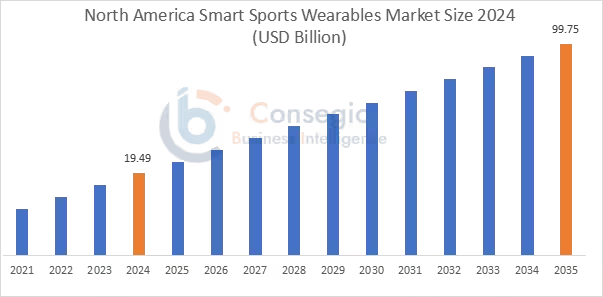
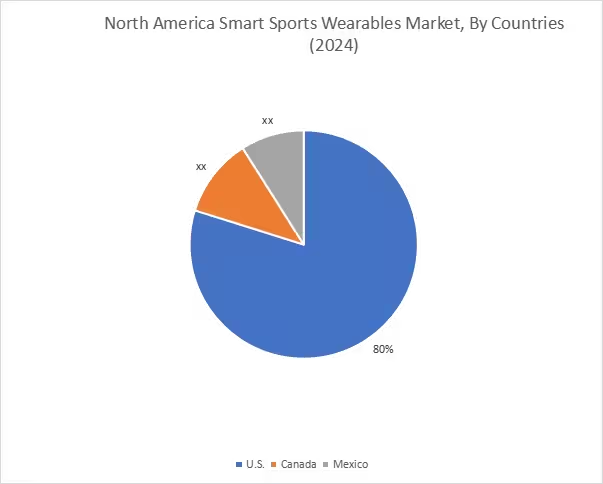
North America has the maximum market share of 36.2% in 2024, valued at USD 19.49 billion, and is expected to grow up to USD 99.75 billion by 2035. The US has more than 80% of the regional share in 2024. Strong demand for fitness trackers among consumers and the high adoption rate of wearables are key factors supporting the market. Innovation in wearables by tech firms is also supporting the market. For example, in March 2026, Mibro introduced two sports smartwatches that have been tested by athletes such as Explorer S-TI for extreme sports and GS Pro 2 for triathlon training.
Asia Pacific is expected to have the highest growth rate during the forecast period. The smartphone user base and the adoption of connected wearable devices in China and India are contributing to the growth of the market. China is also building up its manufacturing capabilities for wearable devices, and India is seeing a growing interest in fitness and health-related applications. The number of mobile internet users and the expansion of 5G connectivity are also contributing to the growth of the market. For example, GSMA reported that there are currently 1.5 billion mobile internet users in the Asia Pacific region, and this number is expected to increase to 1.8 billion by 2030. In addition, 91% of mobile connections in developed Asia Pacific are expected to be on 5G networks by 2030.
Market Competition and Leading Player Analysis
The smart sports wearables industry is moderately competitive in nature with various technology companies providing wearable devices, sensor-based platforms, and connected fitness solutions. The companies are increasing the range of products in the smart sports wearables segment. Strategic partnerships are increasing in the industry to provide fitness and digital health solutions. The competition in the industry is increasing with the development of advanced sensor-based technologies and AI-based features.
Key participants in the market for smart sports wearables include:
- Apple Inc.– US
- Garmin Ltd.– US
- Fitbit Inc.– US
- Samsung Electronics Co., Ltd. – South Korea
- Huawei Technologies Co., Ltd. – China
- Xiaomi Corporation – China
- Polar Electro Oy – Finland
- Suunto Oy – Finland
- Whoop, Inc. – US
- Amazfit – US
Recent Industry Developments
- In February 2026, Amazfit has announced the Active 3 Premium smartwatch with AI coaching, GPS, and health tracking features for runners.
- In February 2026, Apple has sped up the development of AI wearables such as smart glasses, a wearable pendant, and camera-enabled AirPods. The devices are expected to be out in the market by 2027.
Smart Sports Wearables Market Report Insights:
| Report Attributes | Report Details |
|---|---|
| Study Timeline | 2019-2035 |
| Market Size in 2035 (USD Billion) | USD 275.55 Billion |
| CAGR (2025-2035) | 16.0% |
| By Component |
|
| By Device Type |
|
| By Application |
|
| By End User |
|
| By Region |
|
| Key Players |
|
| Report Coverage |
|
Key Questions Answered in the Report
How big is the smart sports wearables market? −
The smart sports wearables market sizeis estimated to reach over USD 275.55 Billion by 2035 from a value of USD 53.85 Billion in 2024 and is projected to grow by USD 62.46 Billion in 2025, growing at a CAGR of 16.0% from 2025 to 2035.
Which segmentation details are covered in the smart sports wearables report? +
The smart sports wearables report includes specific segmentation details for component, device type, application, end user, and regions.
Which is the fastest segment anticipated to impact the market growth? +
Smart bodywear is the fastest growing segment due to rising adoption of sensor integrated sports apparel for performance tracking.
Who are the major players in the smart sports wearables market? +
The key participants in the smart sports wearables marketare Apple Inc. (US), Garmin Ltd. (US), Fitbit Inc. (US), Samsung Electronics Co., Ltd. (South Korea), Huawei Technologies Co., Ltd. (China), Xiaomi Corporation (China), Polar Electro Oy (Finland), Suunto Oy (Finland), Whoop, Inc. (US), Amazfit (US), and others.
What are the key trends in the smart sports wearables market? +
Increasing integration of AI based health analytics and expansion of digital health platforms are shaping the market.
Overview
Reputation & Certifications


Our Services
- Market Intelligence & Forecasting
- Custom Research Solutions
- Market Entry Strategy
- Competitive Intelligence
- Customer Insights
- Industry Innovation Analysis
- Investment Advisory