Jump to Content
Stem Cells Market - Size, Share, Industry Trends, and Forecasts (2025-2035)
Stem Cells Market:
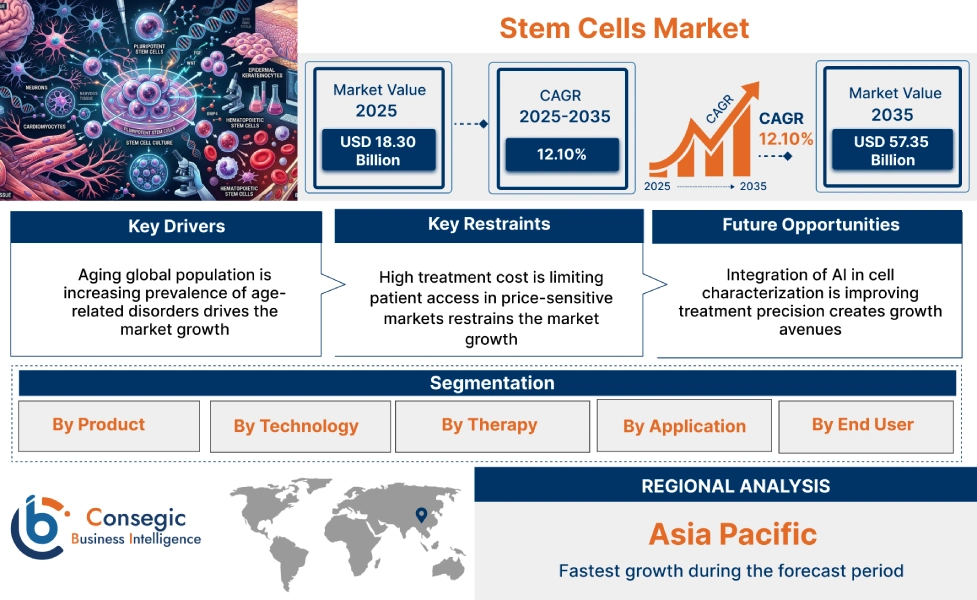
Stem Cells Market size is estimated to reach over USD 57.35 Billion by 2035 from a value of USD 16.33 Billion in 2024 and is projected to grow by USD 18.30 Billion in 2025, growing at a CAGR of 12.10% from 2025 to 2035
Stem Cells Market Scope & Overview:
Stem cells are defined as undifferentiated cells that have the capacity for self-renewal and differentiation into specialized cell types. The industry covers cell sourcing, processing, expansion, storage, and therapeutic application across autologous and allogeneic formats. It encompasses research-grade products, clinical-stage therapies, and commercially approved regenerative treatments. The major end users include hospitals, clinics, research institutions, and biotech companies specializing in cancer, orthopedic, neurology, and cardiovascular treatments.
The stem cells industry is expanding due to rising clinical research in regenerative medicine and increasing incidence of chronic disorders. Regulatory approvals for cell-based therapies in the US, Europe, and parts of Asia are supporting commercialization pathways. Private cord blood banking and the development of infrastructure for the manufacture of advanced therapies have enhanced the supply side. Collaboration between biotech firms and academic centers is accelerating product development and clinical translation.
Market Size & Forecast
- 2024 Market Size : USD 16.33 Billion
- 2025 Market Size : USD 18.30 Billion
- 2035 projected MarketSize : USD 57.35 Billion
- CAGR (2025-2035) : 12.10%
- Largest Market in 2025 : North America
How is the Stem Cells Market Affected by AI?
Advancements in biotechnology and AI are improving stem cell research through enhanced cell characterization, imaging analysis, and genetic profiling. Machine learning tools assist in identifying viable cell lines and predicting differentiation patterns. This ensures the precision of therapy development and minimizes the variability of clinical results. Automated bioprocess systems have also enhanced the scalability of cell expansion and manufacturing processes.
Artificial intelligence technology for data analysis is also aiding the design and selection of clinical trials for regenerative treatments. The AI system analyzes vast biological data and helps identify patterns of response to the treatments. The combination of bioinformatics and stem cell technologies has also been used for the development of targeted therapies for cancer, neurological disorders, and genetic disorders.
Stem Cells Market Dynamics - (DRO):
Key Drivers:
Aging global population is increasing prevalence of age-related disorders drives the market growth
The global population aged 60 years and above is increasing across the US, Europe, Japan, and China. Higher life expectancy is raising incidence of osteoarthritis, cardiovascular disorders, neurodegenerative diseases, and other chronic conditions. Stem cell therapies are being evaluated for tissue repair and functional recovery in age-related indications. Hospitals and specialty clinics are stepping up their regenerative treatment offerings to counter the long-term disease burden.
- For instance, in October 2025, WHO estimates that in October 2025, one in every six people will be aged 60 years or older by 2030. The elderly population is projected to rise to 2.1 billion people by 2050, including 426 million aged 80 years or older.
Therefore, the aging of the global population is boosting demand for stem cell-based regenerative medicine .
Key Restraints:
High treatment cost is limiting patient access in price-sensitive markets restrains the market growth
Stem cell therapies involve complex cell sourcing, processing, storage, and clinical administration. Manufacturing under GMP conditions results in higher operational expenditure. Limited reimbursement in developing nations increases out-of-pocket patient expenditure. Cost sensitivity in emerging markets is reducing treatment adoption despite clinical potential.
Thus, high treatment cost is restricting wider penetration of stem cell therapies in price-sensitive regions.
Future Opportunities:
Integration of AI in cell characterization is improving treatment precision creates growth avenues
AI-based imaging and genomic analysis tools are facilitating accurate identification of viable stem cell lines. Data-driven models are used to evaluate differentiation potential and predict response patterns. This minimizes the variability of results, thus promoting greater confidence. Research facilities and biotechnology companies are increasingly using AI-based tools to enhance quality control and cell selection processes.
- For instance, in January 2026, Partsol launched an updated version of AI Stem Cells, a new cognitive AI architecture, which replicates the characteristics of stem cells found in biology, developing intelligence based on structured fundamental knowledge, eliminating hallucinations found in LLM, especially in medicine, finance, and security applications.
Hence, the integration of AI in cell characterization is creating growth opportunities in the stem cells industry.
Stem Cells Market Segmental Analysis:
By Product:
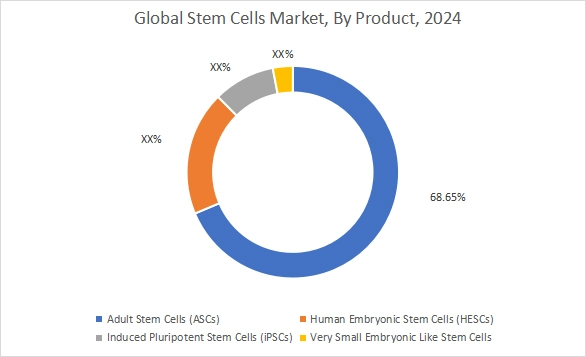
On the basis of product, the stem cells market is segmented into adult stem cells (ASCs), human embryonic stem cells (HESCs), induced pluripotent stem cells (iPSCs), and very small embryonic like stem cells.
Trends in the Product:
- Growing clinical preference for ethically compliant sources is increasing adoption of ASCs and iPSCs.
- Rising research in pluripotent cell applications is expanding laboratory use of iPSCs.
The adult stem cells (ASCs) was responsible for the highest revenue share of 68.65% in 2024.
- ASCs are widely used in approved regenerative procedures.
- Moreover, lower ethical concerns improve regulatory acceptance across major markets.
- In addition, established clinical protocols support faster therapy integration.
- Further, availability from bone marrow and adipose tissue strengthens supply access.
- Therefore, broader clinical acceptance is supporting dominance of the ASCs segment.
It is anticipated that the induced pluripotent stem cells (iPSCs) will exhibit the highest compound annual growth rate (CAGR) during the forecast period.
- iPSCs offer pluripotent capabilities without embryonic sourcing constraints.
- Also, increasing investment in personalized medicine is fueling research needs.
- In addition, applications in disease modeling and gene editing are broadening applications.
- Also, pharmaceutical firms are integrating iPSCs into early-stage drug screening.
- Therefore, expanding translational research is driving growth of the iPSCs segment.
By Technology:
On the basis of technology, the stem cells market is segmented into cell acquisition, cell production, cryopreservation, and expansion and sub-culture.
Trends in the Technology:
- Rising demand for scalable manufacturing is increasing focus on automated cell production systems.
- Growth in long-term storage requirements is strengthening investment in cryopreservation.
The cell production was responsible for the highest revenue share in 2024.
- Large-scale manufacturing is required for clinical-grade therapies.
- Moreover, GMP compliance standards increase spending on production infrastructure.
- In addition, commercial therapy pipelines require consistent batch output.
- Further, bioreactor adoption is improving controlled cell cultivation.
- Therefore, expansion of commercial manufacturing capacity is supporting dominance of the cell production segment.
It is anticipated that the cryopreservation will exhibit the highest compound annual growth rate (CAGR) during the forecast period.
- Long-term storage ensures therapy availability across treatment centers.
- Furthermore, global clinical trials require secure cross-border cell transport.
- In addition, private cord blood banking is expanding storage demand.
- Also, improvement in preservation media is enhancing post-thaw viability rates.
- Therefore, increasing storage infrastructure is driving growth of the cryopreservation segment.
By Therapy:
On the basis of therapy, the stem cells market is segmented into autologous and allogeneic.
Trends in the Therapy:
- Growing preference for personalized treatment is supporting autologous therapy adoption.
- Rising focus on scalable treatment models is increasing development of allogeneic platforms.
The autologous was responsible for the highest revenue share in 2024.
- Autologous therapies reduce risk of immune rejection.
- Moreover, patient-specific sourcing improves treatment compatibility.
- In addition, established use in orthopedic and cosmetic procedures supports revenue generation.
- Further, clinical familiarity strengthens physician confidence.
- Therefore, personalized treatment demand is supporting dominance of the autologous segment.
It is anticipated that the allogeneic will exhibit the highest compound annual growth rate (CAGR) during the forecast period.
- Allogeneic therapies support off-the-shelf product development.
- Furthermore, centralized manufacturing improves cost efficiency at scale.
- In addition, pharmaceutical companies are investing in universal donor cell lines.
- Also, pipeline expansion in oncology and rare diseases is increasing clinical trials.
- Therefore, scalability advantages are driving growth of the allogeneic segment.
By Application:
On the basis of application, the stem cells market is segmented into regenerative medicine and drug discovery and development.
Trends in the Application:
- Increasing focus on tissue repair therapies is expanding regenerative medicine programs.
- Pharmaceutical R&D investment is strengthening stem cell-based screening models.
The regenerative medicine was responsible for the highest revenue share in 2024.
- Clinical treatments for orthopedic and cardiovascular disorders are generating steady demand.
- Moreover, hospital adoption of cell-based procedures is increasing treatment volumes.
- In addition, regulatory approvals for advanced therapy products are supporting commercialization.
- Further, aging population trends are expanding patient base.
- Therefore, expanding clinical utilization is supporting dominance of the Regenerative Medicine segment.
It is anticipated that the drug discovery and development will exhibit the highest compound annual growth rate (CAGR) during the forecast period.
- Stem cells enable accurate disease modeling in preclinical studies.
- Furthermore, pharmaceutical firms are reducing reliance on animal testing models.
- In addition, personalized cell lines improve compound screening precision.
- Also, integration with gene editing platforms is expanding research scope.
- Therefore, increasing R&D integration is driving growth of the Drug Discovery and Development segment.
By End User:
On the basis of end user, the stem cells market is divided into hospitals, pharmaceutical & biotechnology companies, and research institutes.
Trends in the End User:
- Expansion of regenerative medicine units in hospitals is increasing therapy access.
- Increase in biotech funding are bolstering development pipelines.
Hospitals accounted for the largest revenue share in the year 2024.
- Hospitals serve as primary administration centers for stem cell therapies.
- Moreover, rising patient inflow for chronic disorders supports procedure volumes.
- In addition, integration of regenerative departments improves service capability.
- Further, reimbursement pathways are more structured in hospital settings.
- Therefore, higher treatment concentration is supporting dominance of the Hospitals segment.
Pharmaceutical & Biotechnology Companies is anticipated to register the fastest CAGR during the forecast period.
- Companies are expanding clinical pipelines for advanced therapy products.
- Furthermore, strategic partnerships are accelerating commercialization efforts.
- In addition, capital investment in GMP facilities is increasing production scale.
- Also, focus on proprietary cell platforms is strengthening competitive positioning.
- Therefore, pipeline expansion activities are driving growth of the Pharmaceutical & Biotechnology Companies segment.
Regional Analysis:
North America, Europe, Asia Pacific, the Middle East and Africa, and Latin America are the regions of coverage.
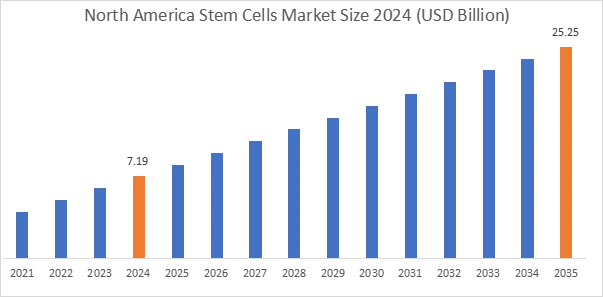
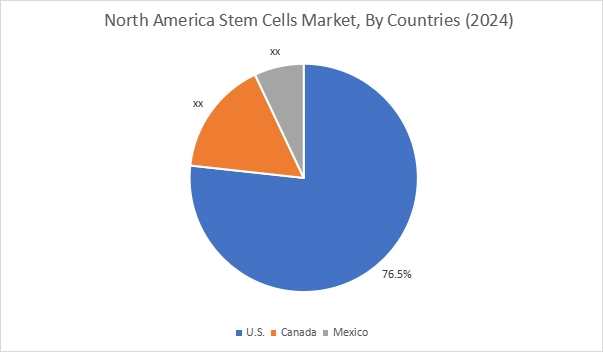
In 2024, North America accounted for the highest market share at 44.03% and was valued at USD 7.19 Billion, and is expected to reach USD 25.25 Billion by 2035. In North America, the U.S. accounted for the highest market share of 76.5% during the base year of 2024. Market growth is supported by established regenerative medicine frameworks and strong biotechnology investment. Presence of advanced GMP manufacturing facilities is strengthening commercial scale-up. In addition, increasing clinical trials across oncology and orthopedic indications is sustaining therapy demand across the US market.
- For example, in March 2026, Stanford researchers developed a stem cell-free method using a 15-PGDH inhibitor injection to reprogram aging chondrocytes, regenerating functional hyaline cartilage in old mice knees and human samples, potentially preventing osteoarthritis without surgery.
Asia Pacific is expected to witness the fastest growth during the forecast period. China is expanding stem cell research programs through state-backed biotechnology initiatives. Japan is supporting regenerative medicine with its conditional approval process for cell-based therapies. India is seeing an increase in its private healthcare infrastructure, which is supporting the use of autologous therapies. Southeast Asia medical tourism is another driver of autologous therapies.
- For example, In December 2025, Cipla entered a partnership with Stempeutics to launch Ciplostem, a DCGI-approved stem cell therapy using 25 million MSCs to treat Grade II-III knee osteoarthritis with up to 2 years of pain relief.
The Europe market for stem cells is growing due to the availability of clear regulatory pathways for ATMPs in Germany, France, and the UK. In addition, there is increased funding support to translational research programs. Academic and biotech collaborations are accelerating clinical development.
Latin America stem cells market growth is supported by expansion of private healthcare services in Brazil and Mexico. Rising aesthetic and orthopedic procedures are increasing demand for adult stem cell therapies. Clinical research capabilities are gradually improving across the region.
The Middle East and Africa stem cells market is driven by healthcare infrastructure investment in the UAE and Saudi Arabia. Expansion of specialty care centers is improving access to regenerative treatments. South Africa is observing steady research growth through university initiatives.
Top Key Players & Market Share Insights:
The stem cells market is moderately fragmented with companies operating in the biotechnology, therapy, and research segments. Companies are increasing GMP manufacturing capacity and developing proprietary cell platforms to improve consistency. Partnerships with hospitals and academic centers have been supporting clinical validation. The competition is growing in the regulated regenerative therapy market. Key participants in the market for stem cells include:
- Fate Therapeutics Inc. – US
- Mesoblast Limited – Australia
- Athersys, Inc.– US
- Gamida Cell Ltd. – Israel
- Smith & Nephew plc – UK
- Takeda Pharmaceutical Company Limited – Japan
- Novartis AG – Switzerland
- Lonza Group AG – Switzerland
- Pluristem Therapeutics Inc. – Israel
- BlueRock Therapeutics – US
Recent Industry Developments:
- In March 2026, REPROCELL has initiated GMP-compliant Master Cell Bank production for clinical-grade iPSCs at their Beltsville, MD, USA, facility, providing a full workflow from StemRNA seed cells and StemEdit gene editing to FDA-compatible MCBs such as the off-the-shelf LLF-34-F3 clone, which is ready-to-use and has active DMF.
- In August 2025, IAEA has initiated a coordinated research project using mesenchymal stem/stromal cell therapy (MSCT) to create regenerative medicine for the treatment of severe radiation-induced skin injuries, addressing the shortcomings of existing treatments for cutaneous radiation syndrome.
Stem Cells Market Report Insights:
| Report Attributes | Report Details |
|---|---|
| Study Timeline | 2019-2035 |
| Market Size in 2035(USD Billion) | USD 57.35 Billion |
| CAGR (2025-2035) | 12.10% |
| By Product |
|
| By Technology |
|
| By Therapy |
|
| By Application |
|
| By End User |
|
| By Region |
|
| Key Players |
|
| Report Coverage |
|
Key Questions Answered in the Report
How big is the stem cells market? −
The stem cells market size is estimated to reach over USD 57.35 Billion by 2035 from a value of USD 16.33 Billion in 2024 and is projected to grow by USD 18.30 Billion in 2025, growing at a CAGR of 12.10% from 2025 to 2035.
Which segmentation details are covered in the stem cells report? +
The stem cells report includes specific segmentation details for product, technology, therapy, application, end user, and regions.
Which is the fastest segment anticipated to impact the market growth? +
Allogeneic therapy is the fastest growing segment, driven by development of off-the-shelf cell products and scalable manufacturing models.
Who are the major players in the stem cells market? +
The key participants in the stem cells marketare Fate Therapeutics Inc. (US), Mesoblast Limited (Australia), Athersys, Inc. (US), Gamida Cell Ltd. (Israel), Smith & Nephew plc (UK), Takeda Pharmaceutical Company Limited (Japan), Novartis AG (Switzerland), Lonza Group AG (Switzerland), Pluristem Therapeutics Inc. (Israel), BlueRock Therapeutics (US), and others.
What are the key trends in the stem cells market? +
Expansion of regenerative medicine programs, increasing integration of AI in cell characterization, and rising GMP manufacturing investments are shaping the market.
Overview
Reputation & Certifications


Our Services
- Market Intelligence & Forecasting
- Custom Research Solutions
- Market Entry Strategy
- Competitive Intelligence
- Customer Insights
- Industry Innovation Analysis
- Investment Advisory