Jump to Content
Supercomputer Market Size & Industry Share - Growth Trends & Forecasts (2026 - 2034)
Supercomputer Market Size:
The Supercomputer Market is expected to expand from 13,327.88 (US$M) in 2025 to 14,873.92 (US$M) in 2026, and is forecast to surpass 35,788.13 (US$M) by 2034, growing at a CAGR of 11.6% between 2026 and 2034, according to a recent report from Consegic Business Intelligence.
Supercomputer Market Scope & Overview:
A supercomputer is an advanced computing machine with architecture, components, and resources that provides massive computing power to the user. It comprises a large number of processor chips that can perform billions and trillions of computations per second. These computers provide various advantages including high-speed performance, parallel processing, enhanced simulations and modeling, improved accuracy, and others. The aforementioned benefits are major determinants for increasing their adoption in education, healthcare, gaming, automotive, aerospace, and other industries.
Supercomputer Market Insights:

Supercomputer Market Dynamics - (DRO) :
Key Drivers:
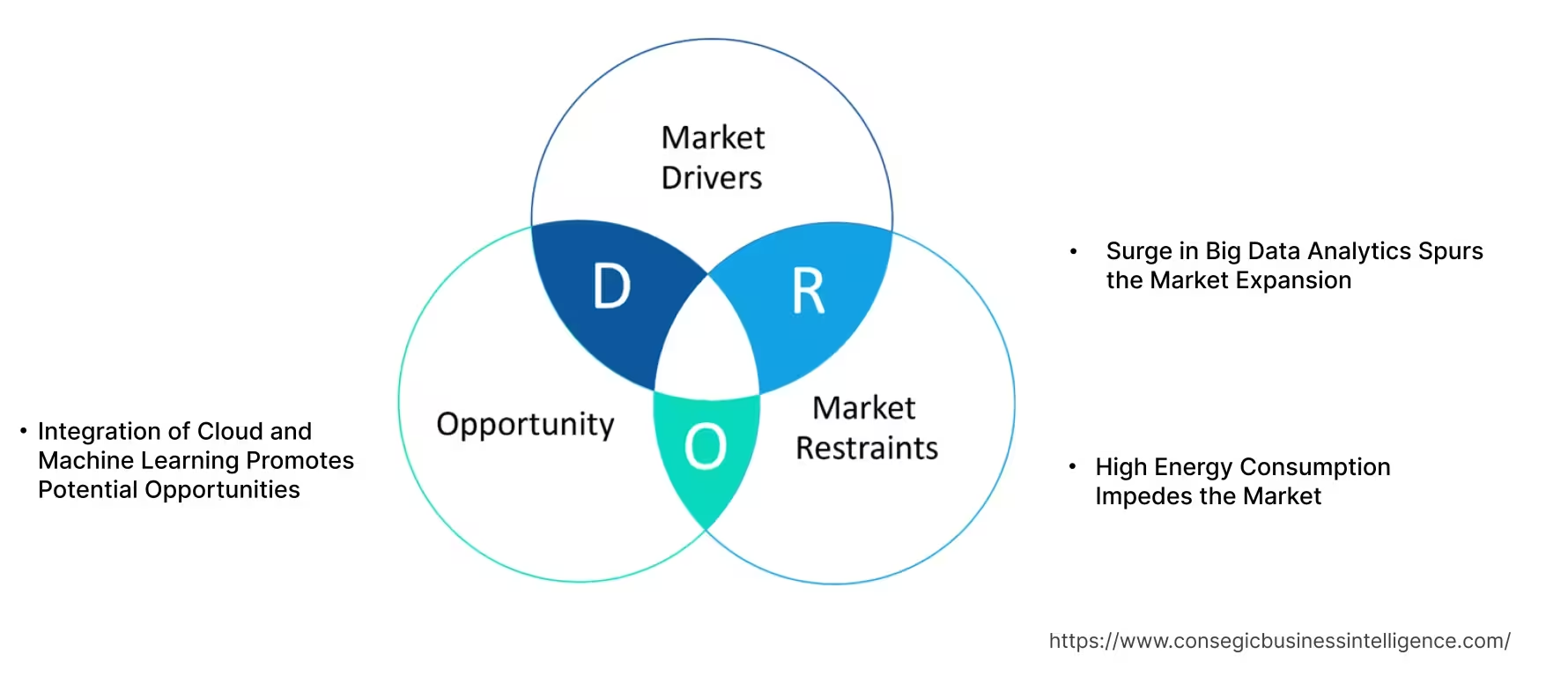
Surge in Big Data Analytics Spurs the Market Expansion
Supercomputers enable the processing, analysis, and visualization of this massive data volume in real time, extracting valuable insights and patterns that inform decision-making, optimize operations, and drive innovation. Additionally, the ability to handle complex datasets and perform sophisticated analyses, including predictive modeling and trend analysis, empowers organizations to gain a competitive edge and improve efficiency. Furthermore, big data analytics have become critical drivers of the market due to the vast amounts of data generated daily across various sectors including finance, healthcare, retail, social media, and others.
- According to the analysis of Intel High-Performance Data Analytics (HPDA) or Big Data Analytics utilizes HPC-like setups to gain valuable information from unstructured data, employing clustered compute and storage servers connected through effective networking. As the lines between HPC and Big Data become less distinct, technical computing abilities are being utilized for new commercial uses and advancements.
Therefore, the surge in big data analytics spurs the supercomputer market.
Key Restraints :
High Energy Consumption Impedes the Market
Supercomputers require enormous amounts of power to operate, often consuming as much electricity as thousands of households. This significant need for energy leads to both expensive operations and concerns about environmental impacts from carbon emissions and resource depletion. Additionally, with the focus on decreasing carbon footprints and meeting sustainable development goals, the lack of energy efficiency is now a limiting factor. This leads organizations to invest in advanced cooling technologies, energy-efficient equipment, and renewable energy sources to mitigate these concerns. However, these solutions are costly and complex to implement.
- For instance, Lenovo states that data centers are facing challenges due to the rising power consumption of High-Performance Computing (HPC) clusters. While old efficiency objectives aimed to maximize throughput throughout the system's lifespan, increasing energy prices now necessitate a balance between performance and energy usage. The task is made more difficult by the current infrastructure limitations.
Hence, balancing the need for high computational power with environmental sustainability and cost-effectiveness remains a major hurdle for the widespread adoption and growth of the supercomputer market.
Future Opportunities :
Integration of Cloud and Machine Learning Promotes Potential Opportunities
Cloud and Machine learning is revolutionizing the supercomputer market by offering scalable and flexible computing resources to organizations of all sizes. Leveraging cloud platforms with the advanced analytics capabilities of ML enables organizations to handle large datasets, and make informed decisions and complex computations more efficiently and cost-effectively.
- In July 2023, HCLTech collaborated with Microsoft to offer high-performance computing (HPC) solutions including core infrastructure, advanced analytics, machine learning, and simulations, enabling enhanced decision-making, streamlined operations, and driving innovation across various industries.
Therefore, the integration of cloud and machine learning enabling advanced analytics and optimized operations is expected to promote supercomputer market opportunities during the forecast period.
Supercomputer Market Segmental Analysis :
By Type:
Based on type the market is segmented into Vector Processing Machines, Tightly Connected Cluster Computers, and Commodity Clusters.
Trends in the type:
- The integration of tightly connected cluster computers with cloud platforms is facilitating hybrid computing environments, allowing organizations to utilize both on-site and cloud resources effortlessly.
- The increasing popularity of HPC-as-a-Service (HPCaaS) is propelled by commodity clusters, enabling companies to utilize supercomputing capabilities through a pay-as-you-go basis without the need to invest in physical infrastructure.
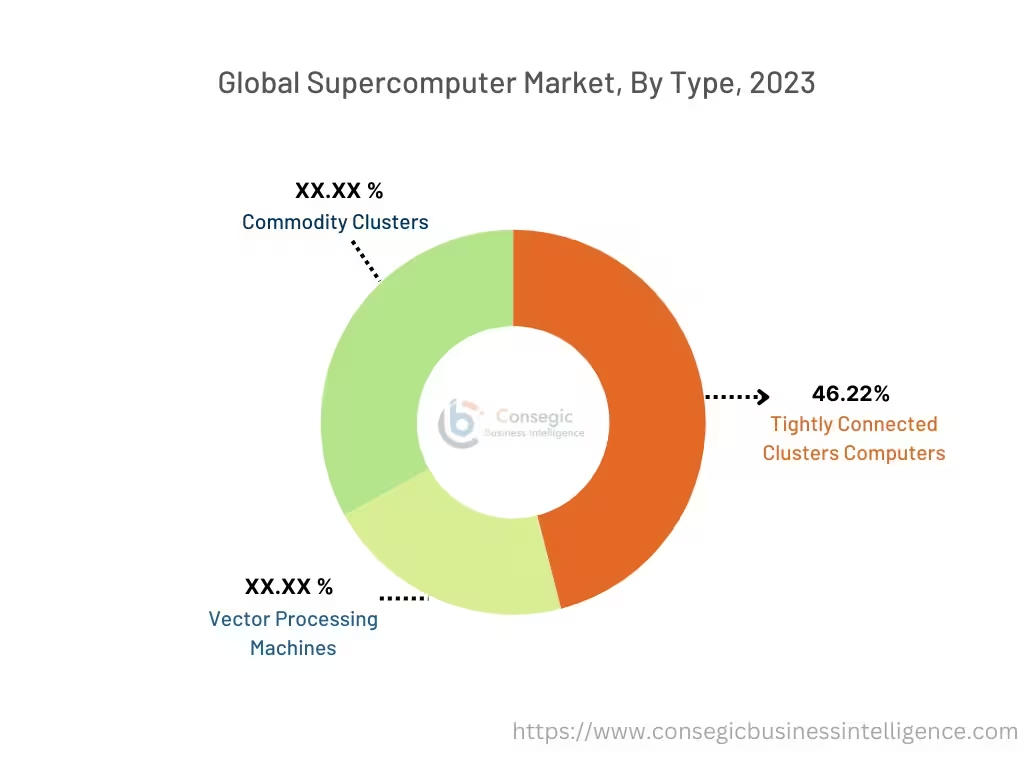
The tightly connected cluster segment accounted for the largest revenue of 46.22% of the total supercomputer market share in 2023.
- Tightly connected clusters are collections of networked computers working together to overcome a shared issue, providing high computational performance due to advanced interconnect technologies enabling fast data transfer and low latency between nodes. This makes them appropriate for complex applications that require a lot of data.
- These systems are used across a wide range of applications and industries, including scientific research, weather modeling, education, genomics, and others.
- Additionally, due to high performance and scalability these systems are ideal to train AI models, driving further adoption in AI research and applications.
- In February 2024, Intel, Dell Technologies, NVIDIA, and the Ohio Supercomputer Center (OSC) joined forces to launch Cardinal, an advanced high-performance computing (HPC) cluster. Specially designed to address the growing need for HPC resources in Ohio within research, academia, and industry innovation, specifically in artificial intelligence (AI).
- Thus, the ability of systems to facilitate scalability, versatility, and efficiency for high-performance computing is accelerating the supercomputer market growth.
The commodity cluster is anticipated to register the fastest CAGR during the forecast period.
- A commodity cluster is a supercomputer constructed using readily available hardware components like standard servers, processors, and networking equipment.
- They offer a more affordable entry point for high-performance computing, making them accessible to a broader range of organizations, including small and medium-sized enterprises (SMEs) and academic institutions.
- With the expansion of Artificial Intelligence (AI), data analytics, and deep learning, commodity clusters are well-positioned to handle large-scale data processing and complex AI workloads, benefiting from their ability to scale out horizontally.
- In May 2023, the National Nuclear Security Administration (NNSA) deployed the most advanced supercomputers, Dane and Bengal at Lawrence Livermore National Laboratory (LLNL) and Stout at Sandia National Laboratories. They use advanced Intel Xeon Scalable Processors and high-speed networking, enhance HPC workload performance, and demonstrate energy efficiency. They are particularly designed for AI, data analytics, and deep learning tasks.
- Hence, factors including cost-effectiveness, scalability, flexibility, and ability to meet evolving computational demands suggest that commodity clusters are expected to drive the supercomputer market trends during the forecast period.
By Operating System:
Based on Operating System the market is bifurcated into Linux and Unix.
Trends in operating systems:
- Operating systems are being optimized to handle artificial intelligence (AI) and machine learning (ML) workloads efficiently, with enhanced support for Graphic Processing Unit (GPU) acceleration and parallel processing.
The Linux segment accounted for the largest revenue share in the year 2023 and registered the fastest CAGR during the forecast period.
- Linux operating systems are utilized for overseeing a range of services, such as managing processes, scheduling applications, handling basic hardware devices, managing the file system, and other functions.
- Moreover, Linux features a high level of customization and a powerful terminal interface for efficient AI operations and data analytics processes including data cleaning, preprocessing scripting, and automation. The majority of the world's top high-performance supercomputers including Frontier, Aurora, Alps, Leonardo, and others run on various distributions of Linux.
- In June 2023, Intel in collaboration with Hewlett Packard Enterprises (HPE) and the Department of Energy (DOE) launched the Aurora supercomputer with Linux operating system which incorporates 1,024 storage nodes, 220 terabytes (TB) of capacity at 31TBs of total bandwidth, to provide advanced high-performance computing including simulations, data analytics, and artificial intelligence (AI) on an extremely large scale.
- Thus, due to efficiency and seamless AI operations and data analytics, the Linux operating system boosts the supercomputer market demand and trends.
By End-User:
Based on end users the market is segmented into commercial industries, government entities, research institutions, and others.
Trends in the end-user:
- The automotive industry employs supercomputers for simulations in vehicle design, crash testing, and the advancement of autonomous driving technologies.
- Energy corporations utilize high-performance computers for evaluating seismic information for oil and gas discovery, as well as for enhancing the management of renewable energy resources.
- The development of hybrid cloud solutions, which combine on-premises and cloud-based resources, is allowing organizations to optimize their supercomputing infrastructure for both performance and cost.
The government entities segment accounted for the largest revenue share in the year 2023.
- Governments make significant investments in supercomputing for national security reasons, including cryptographic analysis, cybersecurity, and defense simulations. These applications necessitate significant computational power and are crucial for national security and strategic decision-making.
- The supercomputers are used in government entities including National security and defense, weather forecasting, climate research, public health, infrastructure planning and management, space exploration, and research.
- Additionally, agencies like the National Aeronautics and Space Administration (NASA) and other space-focused governmental bodies use them for mission simulations, astronomical data analysis, and advanced space research, requiring high-performance computational resources.
- In November 2023, Researchers at NASA Advanced Supercomputing facility at the agency's Ames Research Center in California's Silicon Valley used the Pleiades supercomputer, to develop software that models various engine setups to decrease noise from turbofan engines.
- Consequently, as per the market analysis due to national defense and innovations in space research, the government entities segment is driving the global supercomputer market.
The commercial industries segment is anticipated to register the fastest CAGR during the forecast period.
- The demand for supercomputing power is increasing due to the integration of AI and machine learning in different business operations, enabling better decision-making and operational efficiency by handling intricate algorithms, vast datasets, and real-time analytics.
- Supercomputers enable businesses to perform big data analytics which helps to monitor and report on processes, key performance indicators (KPI), and employee activities to gain insights and better decision-making.
- Moreover, as businesses generate and collect vast amounts of data, the need for advanced analytics and data processing capabilities is becoming essential for gaining competitive insights and driving the supercomputer market growth.
- In May 2023, NVIDIA unveiled NVIDIA DGX, a high-memory AI supercomputer, designed to support the creation of large-scale, advanced models for generative AI language applications, recommendation systems, and advanced data analytics tasks.
- Hence, the demand for advanced data analytics, recommendations, personalization, and integration of artificial intelligence in systems by businesses, is anticipated to propel the market trend during the forecast period.
By Application:
Based on application the market is segmented into Cloud Infrastructure, Commercial, Space and Research Centers, Hospitals and Laboratories, Government Entities, Defense, BFSI, and others.
Trends in application:
- Boosting collaboration between traditional and cloud-based supercomputing resources to offer scalable, adaptable, and affordable computing solutions.
- Supercomputers are used for complex risk assessments and financial modeling, improving decision-making and stability, and enhancing capabilities for real-time detection and prevention of fraudulent activities in financial transactions.
The space and research segment accounted for the largest revenue of the overall supercomputer market share in 2023.
- Researchers utilize supercomputers to model and simulate new materials with desirable properties for various applications in space and research.
- Moreover, government space exploration and research centers like NASA leverage research in planetary science, astrophysics, and earth science.
- In November 2023, the Discover supercomputer at the NASA Center for Climate Simulation (NCCS) supports research in NASA earth science, heliophysics, planetary science, and astrophysics. Discover offers the NCCS user community over 2,600 times the original compute capacity, equivalent to 8.8 petaflops.
- Therefore, the aforementioned factors of space and research segment collectively drive the market.
The cloud infrastructure segment is anticipated to register the fastest CAGR growth during the forecast period.
- Cloud infrastructure provides adaptable and customizable options, enabling companies to modify their computing resources based on the requirements without major initial expenditures on hardware.
- These systems enable remote access to supercomputing resources, facilitating improved collaboration among dispersed teams, and enhancing productivity in the work space.
- Moreover, the rise of high-performance computing as a service (HPCaaS) is making supercomputing power more accessible to a broader range of users, including small and medium-sized enterprises.
- In January 2022, Lenovo unveiled Lenovo TruScale High Performance Computing as a Service (HPCaaS), delivering supercomputing abilities to businesses with cloud service. Lenovo's new HPCaaS offering expands its TruScale portfolio, providing HPC customers with more supercomputing resources for quicker problem-solving in important research areas.
- Thus, factors including scalability, cost efficiency, and cloud solutions are anticipated to boost the supercomputer market trends.
Regional Analysis:
The regions covered are North America, Europe, Asia Pacific, the Middle East and Africa, and Latin America.
North America is estimated to reach over USD 8,687.43 Million by 2031 from a value of USD 3,597.32 Million in 2023 and is projected to grow by USD 3,952.32 Million in 2024. The growth of the market is driven by prominent research institutions, national laboratories, and security, which use the most advanced supercomputers for scientific and technical research.
- In March 2023, IBM (US) unveiled the IBM-managed quantum supercomputer in the United States. The IBM Quantum System One, installed at Cleveland Clinic, is uniquely dedicated to healthcare research and aims to accelerate biomedical discoveries.
Furthermore, North America has a strong presence of commercial enterprises that leverage supercomputing for big data analytics, AI, and machine learning, contributing to high demand for these systems. Additionally, major cloud service providers like Amazon Web Services (AWS), Microsoft Azure, and Google Cloud offer high-performance computing (HPC) services, further boosting the region's dominance in the market.
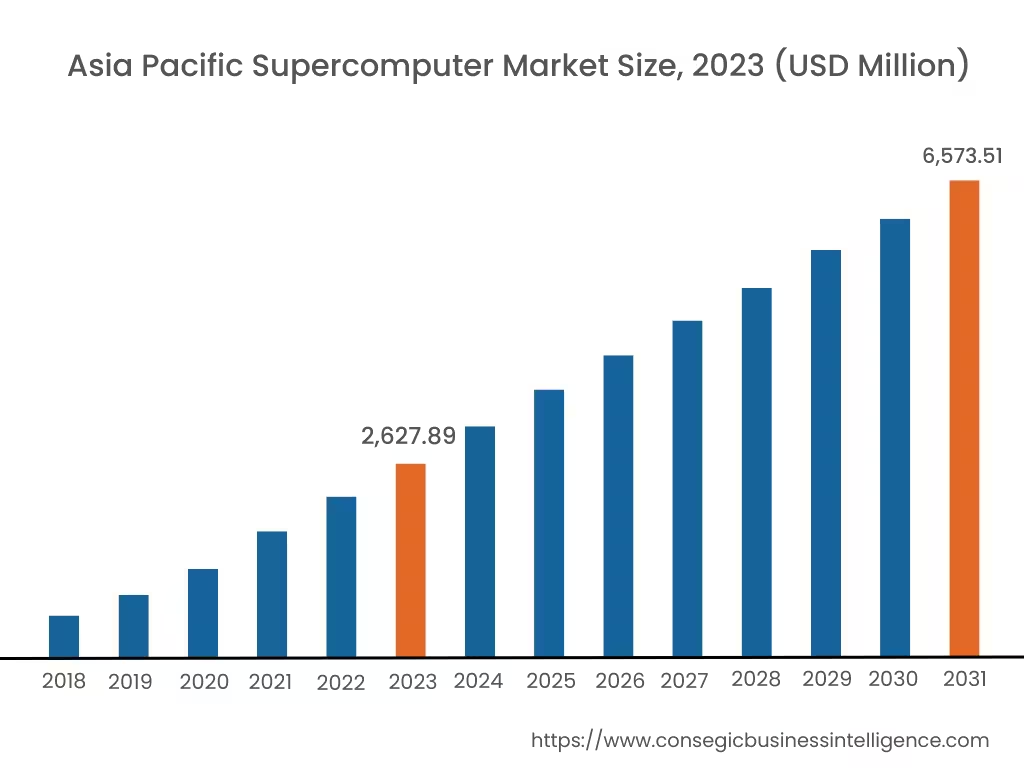
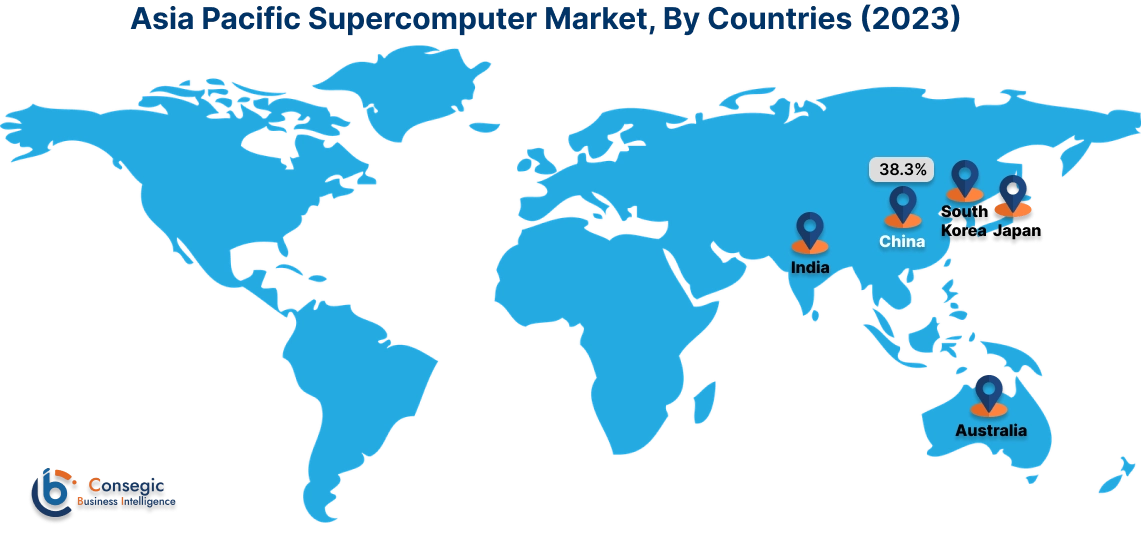
Asia-Pacific region was valued at USD 2,627.89 Million in 2023. Moreover, it is projected to grow by USD 2,895.84 Million in 2024 and reach over USD 6,573.51 Million by 2031. Out of this, China accounted for the maximum revenue share of 38.3%.
The Asia-Pacific region's growing industrialization and development offer lucrative development prospects for the market trend. Additionally, increased adoption of supercomputers in various industries, including manufacturing, pharmaceuticals, and finance, to enhance data processing capabilities and optimize operations
- In February 2020, Samsung Electronics introduced Flashbolt to optimize high-performance computing (HPC) systems and assist system manufacturers in progressing supercomputers, AI-powered data analysis, and advanced graphics systems promptly.
As per supercomputer market analysis, Europe is anticipated to experience significant growth in this sector, driven by substantial investments in scientific research, environmental modeling, and healthcare, which are increasing the demand for high-performance computing. France, Germany, and the UK are at the forefront of research institutions and government projects that extensively make use of supercomputers.
The Middle East, Africa, and Latin America are expected to experience significant development. The expansion of data centers and cloud services is facilitating the deployment of supercomputers, while increased emphasis on research and development is fostering academic and scientific advancements. Additionally, investments in healthcare and environmental research are driving their adoption of medical research, disease modeling, and climate studies. Collaborative efforts with international technology partners, along with a focus on innovation and economic diversification, are further supporting the region's burgeoning supercomputer market.
Top Key Players & Market Share Insights:
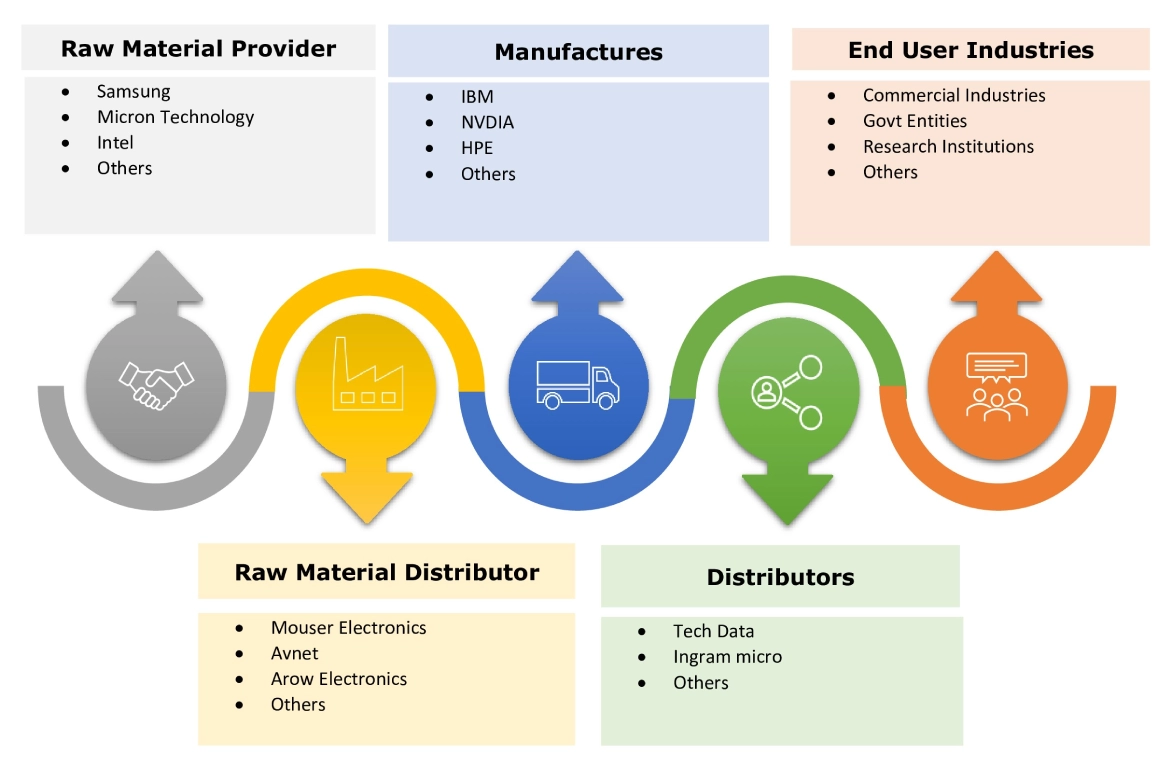
The supercomputer market is highly competitive with major players providing high-performance computation to the national and international markets. Key players are adopting several strategies in research and development (R&D), product innovation, and end-user launches to hold a strong position in the supercomputer market. Key players in the supercomputer industry include-
- Hewlett Packard Enterprise (HPE) (US)
- IBM (US)
- Dell Technologies (US)
- Fujitsu (Japan)
- Samsung Electronics (South Korea)
- NVIDIA Corporation (US)
- Microsoft (US)
- Cerebras (US)
- Huawei Technologies Co. LTD (China)
- Intel Corporation (US)
Recent Industry Developments :
Collaboration and Partnership
- In May 2024, Hewlett Packard Enterprise, joined forces with Intel and launched the world's second exascale supercomputer, Aurora with 1.012 exaflops on 87% of the system making it the second fastest supercomputer enabling the largest AI-capable system.
- In April 2024, IBM partnered with RIKEN, a Japanese national research laboratory to introduce IBM's latest quantum computer design and most advanced quantum processor at the RIKEN Center for Computational Science in Kobe, Japan. This will be the singular occasion when a quantum computer is placed together with the supercomputer Fugaku.
Product Launch
- In March 2024, NVIDIA launched the NVIDIA DGX SuperPOD, an AI supercomputer designed to handle trillion-parameter models continuously for large-scale generative AI training and inference tasks.
- In April 2024, Intel launched the Gaudi 3 AI accelerator, the fastest AI supercomputer designed to boost performance, transparency, and options for enterprise generative AI (GenAI). They also introduced a lineup of innovative scalable systems, next-generation products, and key partnerships to drive the adoption of GenAI.
- December 2023, IBM introduced 'IBM Quantum Heron,' a large-scale quantum processor designed to achieve IBM's best performance and lowest error rates out of any IBM Quantum processor.
Business Expansion:
- In May 2023, IBM revealed a USD 100 million, 10-year project in collaboration with the University of Tokyo and the University of Chicago to create a quantum-focused supercomputer with 100,000 qubits, offering a base to tackle some of the world's most urgent issues.
Supercomputer Market Report Insights :
| Report Attributes | Report Details |
| Study Timeline | 2021-2034 |
| Market Size in 2034 | USD 35,788.13 Million |
| CAGR (2026-2034) | 11.60% |
| Base Year | 2025 |
| By Type |
|
| By End-User |
|
| By Application |
|
| By Region |
|
| Key Players |
|
| North America | U.S. Canada Mexico |
| Europe | U.K. Germany France Spain Italy Russia Benelux Rest of Europe |
| APAC | China South Korea Japan India Australia ASEAN Rest of Asia-Pacific |
| Middle East and Africa | GCC Turkey South Africa Rest of MEA |
| LATAM | Brazil Argentina Chile Rest of LATAM |
| Report Coverage |
|
Key Questions Answered in the Report
How big is the supercomputer market? −
Supercomputer Market size is estimated to reach over USD 25,748.17 Million by 2031 from a value of USD 10,664.78 Million in 2023 and is projected to grow by USD 11,716.97 Million in 2024, growing at a CAGR of 11.6% from 2024 to 2031.
Which is the fastest-growing region in the Supercomputer Market? +
Asia Pacific is the fastest-growing region in the supercomputer market due to the increased adoption of supercomputers in various industries, including manufacturing, pharmaceuticals, and finance, to enhance data processing capabilities and optimize operations
What is the key market trend of the supercomputer market? +
The integration of AI and machine learning in various business processes is driving the demand for supercomputing power to handle complex algorithms, large datasets, and real-time analytics, enhancing decision-making and operational efficiency.
Who are the major players in the Supercomputer market? +
The key players in the supercomputer market include Hewlett Packard Enterprise (HPE) (US), IBM (US), NVIDIA Corporation (US), Dell Technologies (US), Fujitsu (Japan), Samsung Electronics (South Korea), Intel Corporation (US), Microsoft (US), Cerebras (US), Huawei Technologies Co. LTD (China).
Overview
Reputation & Certifications


Our Services
- Market Intelligence & Forecasting
- Custom Research Solutions
- Market Entry Strategy
- Competitive Intelligence
- Customer Insights
- Industry Innovation Analysis
- Investment Advisory