Jump to Content
Sustainable Plastic Packaging Market - Size, Share, Industry Trends, and Forecasts (2024 - 2031)
Sustainable Plastic Packaging Market Size:
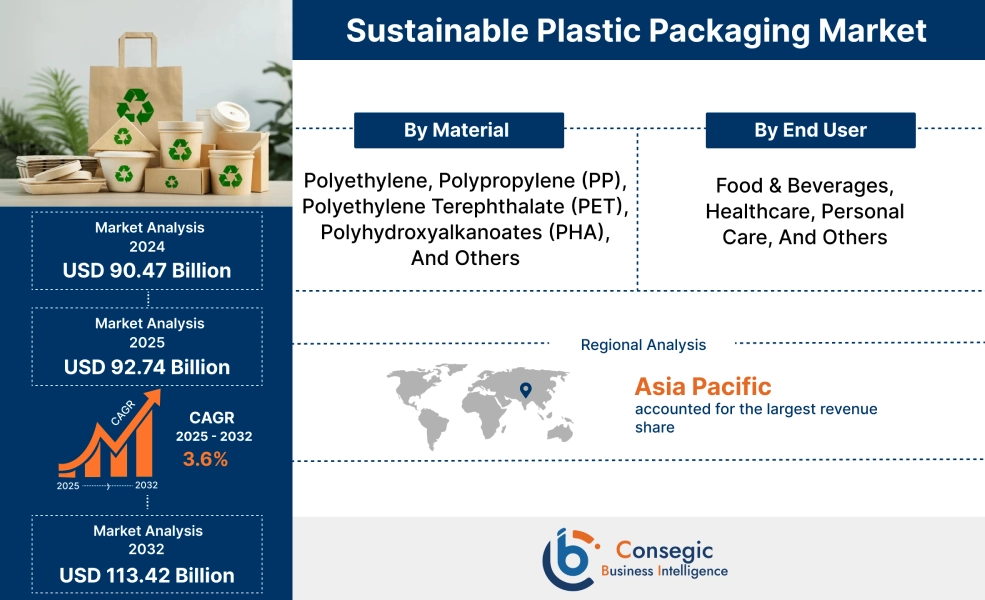
The Sustainable Plastic Packaging Market size is growing with a CAGR of 3.6% during the forecast period (2025-2032), and the market is projected to be valued at USD 113.42 Billion by 2032 from USD 90.47 Billion in 2024. Additionally, the market value for 2025 is attributed to USD 92.74 Billion.
Sustainable Plastic Packaging Market Scope & Overview:
Sustainable plastic packaging focuses on minimizing the environmental damage along with the resource depletion across its entire lifecycle, from production and design to its utilization. This approach focuses on reducing waste generation and plastic pollution by including recycled materials, developing bio-based or compostable plastics from renewable resources, and implementing other innovative strategies. In addition to this, the increasing consumer demand for eco-friendly products, along with a growing awareness of plastic pollution are few of the key drivers contributing to the development and adoption of these sustainable plastic packaging solutions.
How is AI Transforming the Sustainable Plastic Packaging Market?
AI is increasingly being integrated into the sustainable plastic packaging sector for several applications, ranging from product development and process optimization to facilitating safety and sustainability. AI-driven systems are used to design optimized packaging, improve material selection, automate recycling processes, optimize supply chains, and enhance product process and quality control, in turn reducing waste and environmental impact. Moreover, an AI-powered quality control system helps ensure production accuracy and consistency in packaging manufacturing processes. Consequently, the above factors are projected to boost the market growth in upcoming years.
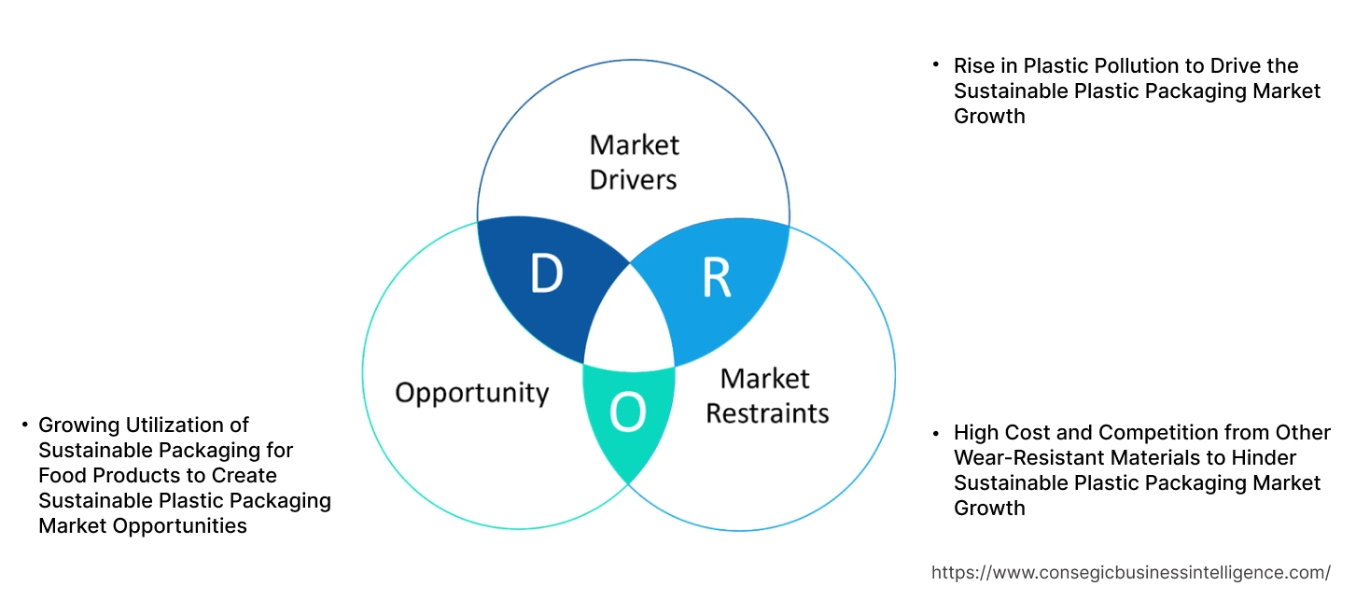
Sustainable Plastic Packaging MarketDynamics - (DRO) :
Key Drivers:
Rise in Plastic Pollution to Drive the Sustainable Plastic Packaging Market Growth.
The rise in the consumption and production of single use plastic materials, along with inadequate waste management system for plastic recycling infrastructure are primary reasons that lead to plastic pollution. The inherent durability and slow degradation process leads to vast quantities of collection in the environment. These factors are responsible for the rise in generation of waste and cause plastic pollution.
For instance,
- The data by OECD in 2022 states that nearly two third of plastic waste comes from plastics with lifetime under 5 years. Around 40% of waste is generated from packaging, 12% from consumer goods and 11% from clothing and textiles.
Thus, the rise in the use of single use plastic material is influencing the sustainable plastic packaging market expansion.
Key Restraints :
High Cost and Competition from Other Wear-Resistant Materials to Hinder Sustainable Plastic Packaging Market Growth.
The wide availability of wear resistant, and durable packaging materials other than sustainable plastic packaging such as rigid paperboard, and aluminum amongst others is one of the key factors contributing to the hinderance in market. These alternatives offer better superior wear resistance, barrier properties, and reusability compared to sustainable plastic packaging, which leads to manufacturers opting for these alternatives, thereby limiting the market's reach. In addition to this, high cost as compared to its alternative limits the market revenue, especially for small and medium scale companies. Therefore, the above-mentioned factors are contributing to hinderance in market.
Future Opportunities :
Growing Utilization of Sustainable Packaging for Food Products to Create Sustainable Plastic Packaging Market Opportunities.
In the past years plastic has been the material of choice for various food products because of its cost effectiveness, versatility, lightweight nature and enhanced barrier properties. However, the environmental issues caused by single use of plastic and their accumulation in landfills and oceans have necessitated a shift towards more sustainable packaging solutions. The rise in consumer awareness about the effects of plastic on human health and the environment is influencing food and beverage providers in incorporate packaging materials that are made from plastic packaging.
For instance,
- In 2025, Berry Global Group, Inc collaborated with snacks and treats leader Mars to change its pantry jars for M&M’s, SKITTLES and STARBURST brands to 100% recycled plastic packaging. This achievement advances the ongoing collaboration between Berry and Mars to develop packaging made with recycled content.
Thus, the rise in the use of sustainable material for packaging food products creates sustainable plastic packaging market opportunities.
Sustainable Plastic Packaging Market Segmental Analysis :
By Material:
Based on Material, the market is categorized into polyethylene, polypropylene (PP), polyethylene terephthalate (PET), polyhydroxyalkanoates (PHA), and others.
Trends in Material:
- According to sustainable plastic packaging market trends, polyethylene is widely used for food product packaging due to its versatility and recyclability.
- The use of Polyhydroxyalkanoates is increasing due to its natural decomposition and consumer demand for eco-friendly alternatives as per the latest trends.
The polyethylene segment accounted for the largest Sustainable Plastic Packaging market share of 38.15% in 2024.
- Polyethylene (PE) has a simple chemical structure compared to other polymers, which makes them highly recyclable.
- The recyclability property allows for its recovery and repurposes it into new products, leading to the reduction in waste from landfills and oceans.
- Innovations are focusing on improving PE recycling infrastructure and developing advanced recycling techniques to increase its circularity.
- Additionally, the development of bio-based polyethylene offers a pathway to reduce the carbon footprint associated with its production.
- For instance, SABIC, Lamb Weston, and OPACKGROUP partnered to create sustainable packaging made with bio-polyethylene. This will lead to the bio-circular retail packaging solution for Lamb Weston’s frozen potato products.
- Thus, the rise in the use of recyclable and biobased polyethylene drives the sustainable plastic packaging market demand.
The polyhydroxyalkanoates (PHA) segment is expected to grow at the fastest CAGR over the forecast period.
- Unlike conventional plastics that are generally derived from fossil fuels, PHAs are a family of biodegradable polyesters that are naturally synthesized by various microorganisms through fermentation of organic feedstocks, including waste streams.
- The biological origin makes them a renewable resource, significantly reducing reliance on petrochemicals.
- Additionally, their nontoxic nature and the ability to decompose naturally aligns with the growing requirement of an eco-friendly and sustainable packaging solution.
- Thus, as per the market analysis, based on the above-mentioned factors, the non-toxic nature of this compound is influencing the growth potential of the segment.

By End-User:
The End User segment is categorized into food & beverages, healthcare, personal care, and others.
Trends in the End User
- The demand for sustainable material for packaging food products to ensure quality and reduce plastic waste is influencing the use of sustainable packaging.
- Sustainable plastic packaging is being rapidly used in healthcare to reduce environmental impact and to extend the shelf life of products as per the latest trends.
The food and beverages segment accounted for the largest market share in 2024.
- The food and beverages sector widely uses plastic materials for various food products mainly because of its cost effectiveness and food preservation capabilities.
- However, the health and environmental effect of virgin plastics is creating awareness about the need for sustainable materials.
- Various food and beverage companies are adopting sustainable plastics such as those made from recycled content, bio-based polymers, compostable or biodegradable plastics, and designs optimized for easy recyclability or lightweighting.
- Additionally, manufacturers of various food products are using sustainable packaging for their product mainly to promote sustainable and eco-friendly practices.
- For instance, in 2022, Mondelez International announced that few of their chocolate bars are now wrapped in packaging with 30% recycled. The company has started to roll out the packaging innovation on more than 28 million sharing bars.
- Thus, based on the market analysis, the growing need for sustainable packaging material in food packaging is driving the segment expansion.
The healthcare segment is expected to grow at the fastest CAGR over the forecast period.
- Plastics are being used in the healthcare sector mainly because of its durability, and the ability to be easily sterilized. This leads to significant generations of plastic waste.
- However, the rise in regulatory pressure, and the rise in environmental consciousness is driving the adoption of sustainable packaging solutions.
- Materials such as bio-polypropylene, polyhydroxyalkanoates, and others are being considered due to their biodegradability and lower carbon footprints in healthcare.
- As a result, owing to the aforementioned factors, the healthcare segment is expected to be lucrative over the forecast period.
Regional Analysis:
The regional segment includes North America, Europe, Asia Pacific, the Middle East and Africa, and Latin America.

In 2024, Asia Pacific accounted for the highest market share at 40.65% and was valued at USD 36.92 Billion and is expected to reach USD 46.76 Billion in 2032. In Asia Pacific, China accounted for the market share of 37.66% during the base year of 2024. Countries within the Asia Pacific region, mainly those with growing economies and large populations, are the major contributors of global plastic waste. The waste generally ends up in oceans because of the inadequate waste management infrastructure, which leads to significant plastic pollution.
- For instance, according to the Plastics for Change Organization, in 2024, states that India has become the world’s largest contributor to plastic pollution, accounting for nearly 20% of the total global plastic waste. With 9.3 million tons of plastic waste generated annually.
Thus, this visible and alarming environmental degradation has led to heightened public awareness, scaling consumer pressure, and increasingly stringent regulatory actions from governments across the region.

In Europe, the Sustainable Plastic Packaging industry is experiencing the fastest growth with a CAGR of 4.1% over the forecast period. The growing focus of manufacturers towards the utilization of sustainable packaging materials is aligning with the European Union’s goals. Sustainable Plastic Packaging contributes to the growing demand and utilization of sustainable materials. Additionally, various stringent regulations administered for single-use plastic are encouraging food products manufacturers in using this sustainable plastic for the packaging purpose. Thus, as per the sustainable plastic packaging market analysis, these above-mentioned factors are contributing to the market trends in this region
According to market analysis, the sustainable plastic packaging market share of North America is experiencing significant growth, influenced by the growing awareness of sustainability, stringent environmental regulations, and advancements in packaging technologies. The region’s well-established supply chain infrastructure and technological innovation are further fueling this market. Countries like the United States, and Canada are key contributors to this market, by promoting sustainable practices and a circular economy. Thus, as per the market analysis, these factors are having a positive impact on the sustainable plastic packaging market demand in this region.
The sustainable packaging market in the Middle East and Africa regions is experiencing steady growth, because of factors such as growing industrialization, and rising awareness about sustainability. Industries such as food and beverage, logistics, and retail are adopting this type of packaging in the Middle East and Africa region. The region is focusing on using biodegradable bags to sustainable plastic containers, promoting eco-friendly and sustainability practices. Thus, as per the sustainable plastic packaging market analysis, the growing adoption of sustainable packaging in the food and beverage sectors is driving the sustainable plastic packaging market expansion in this region.
Latin America's sustainable plastic packaging market growth is growing because of the growing focus on sustainability and the adoption of eco-friendly practices by industries. Key sectors such as healthcare are potentially using this sustainable packaging material instead of virgin plastic. The government in this region is promoting circular economic practices and the participation of global companies is thus accelerating the sustainable plastic packaging market trends in this region.
Top Key Players & Market Share Insights:
The Global Sustainable Plastic Packaging Market is highly competitive with major players providing products to the national and international markets. Key players are adopting several strategies in research and development (R&D) and product innovation to hold a strong position in the global Sustainable Plastic Packaging market. Key players in the Sustainable Plastic Packaging industry include
- Berry Global Inc. (United States)
- Mondi (United Kingdom)
- Constantia Flexibles (Austria)
- NEFAB GROUP (Sweden)
- Reynolds Packaging (United States)
- Amcor plc (Australia)
- AptarGroup, Inc (United States)
- Crown Holdings, Inc. (United States)
- Tetra Pak (Switzerland)
- DS Smith (United Kingdom)
Recent Industry Developments :
Research and Developments:
- In 2024, HydroGraph Clean Power announced a technological advancement in its sustainable plastic packaging research. It demonstrated that its FGA-1 enhances the performance of polyethylene terephthalate (PET) bottles at an ultra-low loading of just 0.006 wt-% of graphene added, which could lead to lightweighting and an overall reduction in plastic use.
Launches:
- In 2024, SCGC launched 100% recycled plastic packaging for skincare products. This partnership aims to help propel Thailand and ASEAN toward a low-carbon society under SCGC’s "Low Waste, Low Carbon" strategy. This will lead to the proliferation of the sustainable plastic packaging market.
Sustainable Plastic Packaging Market Report Insights :
| Report Attributes | Report Details |
| Study Timeline | 2018-2031 |
| Market Size in 2031 | USD 113.42 Billion |
| CAGR (2024-2031) | 3.6% |
| By Material |
|
| By End-use Industry |
|
| By Region |
|
| Key Players |
|
| North America | U.S. Canada Mexico |
| Europe | U.K. Germany France Spain Italy Russia Benelux Rest of Europe |
| APAC | China South Korea Japan India Australia ASEAN Rest of Asia-Pacific |
| Middle East and Africa | GCC Turkey South Africa Rest of MEA |
| LATAM | Brazil Argentina Chile Rest of LATAM |
| Report Coverage |
|
Key Questions Answered in the Report
How big is the Sustainable Plastic Packaging market? −
In 2024, the Sustainable Plastic Packaging market is USD 90.47 Billion.
Which is the fastest-growing region in the Sustainable Plastic Packaging market? +
Europe is the fastest-growing region in the Sustainable Plastic Packaging market.
What specific segmentation details are covered in the Sustainable Plastic Packaging market? +
By Material and End User segmentation details are covered in the Sustainable Plastic Packaging market.
Who are the major players in the Sustainable Plastic Packaging market? +
Berry Global Inc. (United States), Mondi (United Kingdom), Amcor plc (Australia) are some of the major players in the market.
Overview
Reputation & Certifications


Our Services
- Market Intelligence & Forecasting
- Custom Research Solutions
- Market Entry Strategy
- Competitive Intelligence
- Customer Insights
- Industry Innovation Analysis
- Investment Advisory