Jump to Content
Trail Camera Market - Size, Share, Industry Trends, and Forecasts (2025-2035)
Trail Camera Market Scope & Overview
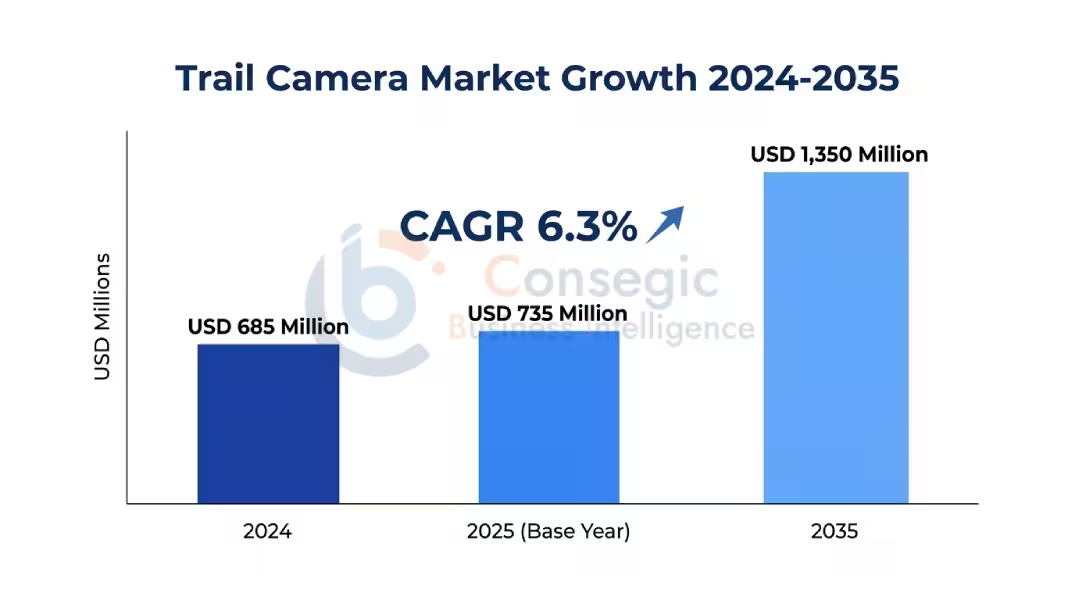
The trail camera market is a high-tech and dynamically changing sector of the outdoor electronics, wildlife observation and surveillance security sectors, consisting of ruggedized, battery-powered digital cameras that can be deployed in remote areas to monitor motion, infrared or no-glow flash lighting, with extreme environmental weatherproofing and cellular connectivity with the Internet so that remote images are transmitted in real-time. These sophisticated units are used in diverse applications such as wildlife, wildlife research, hunting scouting and game management, property surveillance and security, agricultural monitoring, ecological conservation and anti-poaching with the capability to provide high-resolution still images (12-32 megapixels) and video recording (720p to 4K resolution) using passive infrared (PIR) motion sensors (15-30 meters) that trigger very fast (0.2-0.6 seconds). The industry has a market size of USD 685 Million in 2024, and a USD 735 Million in 2025 (base year) and it is projected to grow significantly to USD 1,350 Million in 2035. This growth trend reflects a compound annual growth rate (CAGR) of 6.3% during the forecast period of 2026 to 2035, which is due to revolutionary cellular connectivity integration that will allow the transmission of real-time images, artificial intelligence use to do species recognition and intelligent filtering, increased applications beyond traditional hunting, into security and conservation aspects, improvement on technology to improve image quality and battery life, and the increasing popularity of wildlife observation and outdoor recreation activities.
Key Highlights of the Trail Camera Market
- Trail cameras are rugged, battery-powered cameras used for remote wildlife monitoring and security.
- They use PIR motion sensors (15–30 m), infrared/no-glow flash, and cellular connectivity for real-time image transmission.
- Provide 12–32 MP images, 720p–4K video, and 0.2–0.6 sec trigger speed.
- Used in wildlife research, hunting, property surveillance, agriculture, and conservation/anti-poaching.
- Market size: USD 685M (2024) → 735M (2025).
- Projected: USD 1,350M by 2035, growing at 6.3% CAGR (2026–2035) due to AI integration, better technology, and rising outdoor/wildlife interest.
Camera traps, also referred to as game cameras, trail cameras or camera traps, are no longer a basic film-based motion-detection camera but a highly advanced digital image capture complete with 4G LTE and future 5G cellular network access, machine-intelligent image processing, solar power, and cloud-based camera-management services. Contemporary trail cameras are fitted with passive infrared sensors that detect changes of temperature due to motion of an animal or a human being and record an image using an infrared LED illumination array set to either no-glow (940nm wavelength) so that the subject cannot see it, or to low-glow (850nm wavelength) giving a faint glow of red but providing a better nighttime image.
North America had an installed base of more than 15.2 million active trail cameras in 2024, with global deployment being about 58 percent and a large number of licensed hunters (15.2 million hunters in the United States) and rural land holdings driving such large installations. Unit shipments amounted to about 3.8 million cameras annually, and average selling prices are between USD 70-130 on basic models and USD 280-550 on cellular-enabled high-end cameras, and special research-grade units sell at USD 600-1200 with maximum durability and additional features.
Market Channel Distribution Analysis
The trail camera industry has got four distribution channels that cater to the different customer segments with differentiated purchasing behaviors, technical needs, and service expectation. The overall market revenue distribution reveals that there is a strong range according to channels type and geographical market features:
Breakdown of Distribution channel (2025):
- Sporting Goods/Outdoor Retailers USD 309 Million (42.0% of total market value)
- Online Retailers and E-Commerce Sites: USD 235 Million (32.0% of market revenue)
- Farm and Ranch Supply Stores: USD 110 Million (15.0% of market share)
- Other Channels (Direct Sales, Electronics Retailers, Security Specialists): USD 81 Million (11.0% of total market value)
In 2024, trail camera technology as an investment in the global market, such as the integration of cellular connectivity and artificial intelligence algorithms, the development of solar power systems, and cloud platform infrastructure has reached USD 125 million, with large camera manufacturers dedicating about 7.5-8.5 percent of revenue to development of next-generation features including 5G cellular connectivity, new AI-based species recognition, improved low-light image sensors, longer battery life through power optimization, and in-built solar charging systems to allow operation in remote locations.
The industry is undergoing a fundamental change to connected camera ecosystems as cellular-activated models increase to 22% of unit shipments in 2020 to 42% in 2024 due to consumer demand to receive real-time image deliveries, remove the need to visit a field to retrieve memory card data, and offer value-added services such as cloud storage services, management of mobile applications, and social sharing data. The major producers such as Reconyx, Bushnell, Browning Trail Cameras, Moultrie, Spypoint and Stealth Cam have come up with full cellular platforms complete with month-to-month subscription services that have provided recurring revenue streams to supplement the traditional hardware sales.
Trail Camera Market Dynamics (DRO)
Key Drivers:
Cellular Connectivity Revolution and Image Transmission in Real Times.
The greatest structural force is still the fast implementation of cellular-enabled trail cameras that provides revolutionary user experience by providing real-time image transmission through 4G LTE and new 5G networks to cloud services accessible via smartphone applications. With this technology, the physical memory card retrieval workflow cannot be used, and humans will no longer be as present in the wildlife zones, and the technology will also allow instant notification of cameras being used and control over the cameras in the remote areas, such as setting adjustment and monitoring the battery life.
Consumer studies have shown that 74% of cellular camera users describe significantly increased satisfaction over SD card cameras, and that the use of field visits is eliminated which saves 80-85% of the time and offers real time knowledge of the wildlife behavior or security issues. The cellular camera uptake shows a good growth curve with the market penetration set to hit 62-68% market penetration by 2035 due to the expansion of cellular coverage, the drop in the cost of data plans due to competition, and consumer awareness on the product will be enhanced by the success stories among the early adopters.
Recurring revenues in the form of USD 5-15/month subscriptions per camera open manufacturers to recurring revenue opportunities, with major cell platforms managing more than 950, 000 active subscriptions across the world and generating significant revenue through service offerings as well as customer retention benefits of ecosystem lock-in.
Artificial Intelligence and Image Intelligent Processing.
The combination of image classification algorithms and machine learning algorithms on automated image classification, species detection, and intelligent filtering illustrates the evolutional step forward towards solving the primary issue of information overload with conventional trail cameras producing thousands of images every month. Research has shown that 45-65 percent of camera triggers are due to false positive such as wind-blown vegetation, small animals of low interest or the environmental condition that creates a massive time waste in reviewing images.
AI-driven systems can process images based on on-device processing or Cloud-based computing and automatically detect objects as human, deer, bear, turkey, vehicle, and other preset categories, so users can filter their images by subject type and only be notified of relevant detections. Higher technological systems offer species recognition of both male and female animals, the count of animals within a group, and the movement of a particular animal through various cameras based on recognizing specific characteristics and using behavior pattern identification.
Increased Uses Not Limited to Conventional Hunting and Wildlife Viewing.
Although hunting and wildlife viewing continue to be the most common applications that make up 58-62% of market value, large growth is found in the increased use applications such as residential and agricultural property security, ecology research and conservation surveillance, and specialized surveillance applications. Security of property is an especially good growth market, with trail cameras being a relatively inexpensive surveillance option to remote sites that have no electrical supply, and operating under no-glow infrared lighting that allows someone to monitor the activities of a potential intruder without their knowledge.
Farming uses comprise animal tracking, predator tracking, crop surveillance as well as equipment protection, with farmers putting cameras on large farms to track activities and prevent theft. Trail cameras are becoming widely used in ecology studies, as they find use in biodiversity surveys, population ecology studies, and behavioral research, as well as in anti-poaching initiatives, and standardized protocols allow large-scale collaborative research programs including conservation organizations and higher education.
Key Restraints:
Cellular Network and Limited Coverage as Well as dependencies of connectivity.
There is also a significant amount of market restraint due to the lack of coverage of cellular networks in remote rural and wilderness regions where trail cameras are commonly utilized as tools to monitor wildlife and to hunt. Whereas large carriers have a massive coverage of populated areas, rural coverage is still patchy, with approximated 28-35% of potential deployment areas of adequate cellular signal strength to transmit pictures reliably leading to cellular camera being adopted in those locations with known coverage compared to traditional SD card cameras being utilized in the truly remote areas.
Data transmission through the cellular networks also presents continuous expenditure in terms of monthly subscription fees, which pose an incremental cost to users who install several cameras in large areas of land. Although the convenience benefits are widely accepted by the subscription prices, there are a number of users who are price sensitive and those who have large camera networks might not accept the continuous commitments whereas the conventional camera needs no fee other than the periodic replacement of batteries.
Maintenance Requirement and Battery Life Constraints.
Although power management technology has significantly advanced, battery life is still a basic limitation that necessitates field service to replace the battery after every several months, where standard alkaline battery packs normally give 2-6 months of service time as per level of camera usage, ambient temperature, and features used. Battery life is greatly diminished when under cold weather conditions and cellular-enabled cameras have been shown to consume 35-50 times more power than a traditional model since it requires wireless transmission.
Lithium battery packs can last 4-12 months and cost USD 28-48 each, though offer less functionality compared to solar panel accessories which cost USD 55-110 and do not last as long in a heavily forested area or during winter in a high latitude area.
Ethical Considerations and Privacy Regulations.
The increasing consumer and regulatory interest in electronic surveillance presents a challenge to some uses of trail cameras, especially those that may be prone to violating privacy or display ethical issues. Certain states in the United States and overseas authorities have also placed prohibitions on cellular camera use during hunting periods on the basis of fair chase or other privacy laws such as GDPR in Europe on the utilisation and sharing of images by cameras that may be recording people without prior permission.
Future Opportunities:
High-tech Solar Intense and Green Power Systems.
There is a huge market potential in the development of integrated solar charger systems and innovative energy harvesting technologies that would not involve the need to replace batteries. The current generation of solar panels and lithium battery banks allow the continuity of camera operation in areas that have sufficient sunlight, systems are created to work 12-18 hours per day under a minimum of 4-6 hours of direct sunlight exposure. The integrated solar systems may be integrated into high-end cameras by the year 2027-2029, as the efficiency of solar panels rises and prices drop.
Analytics Services and Artificial Intelligence Ecosystem Development.
The shift to cellular-enabled cameras opens possibilities of complex AI-powered applications such as individual animal recognition and tracking camera networks, behavioral analytics and pattern recognition, automated population estimation and demographic evaluation, and predictive analytics of how cameras should be located. These new features make the use of trail cameras more than mere picture recording devices and turn them into smart surveillance systems giving actionable information and management suggestions with the help of subscription-based analytics services.
Business and Corporate Market Growth.
Significant development remains in the professional markets such as large-scale conservation monitoring, anti-poaching adoption, agricultural security systems, and infrastructure surveillance and specialized needs of fleet maintenance capabilities, advanced analytics platforms, and extension of warranty, and interoperability with other security solutions. Such applications normally accommodate premium price in regard to high reliability, special features and professional services.
Market Segmentation Analysis
By Connectivity Type: Technology Platform Analysis
Cellular-Enabled Trail Cameras: Rapidly Expanding Product.
The fastest-growing area is cellular trail cameras that have a market position of USD 309 Million or 42.0% of the total market value in 2025 and is expected to grow to USD 689 Million in 2035 at 8.3% CAGR. These cameras include 4G LTE and newer 5G cellular modems that transfer images to cloud-based platforms that can be accessed via smartphone apps, and the transmission can be configured to a real-time transmission or a scheduled batch upload or an on-demand transmission, which can use less data and increased battery life depending on the user preferences and data plan constraints.
Major cellular platforms such as Spypoint, Bushnell CelluCORE, Moultrie Mobile and Reconyx Connect have complete ecosystems with monthly subscriptions of USD 5-15 per camera based on the amount of image transmission a camera needs with multi-month premium plans often offering unlimited service at higher prices.
Non-Cellular Trail Cameras: Traditional Market Foundation.
The non-cellular trail cameras with SD card storage take USD 426 Million (58.0% of market value) and it is estimated that by 2035, it rises to USD 661 Million at 4.5% CAGR. This segment remains competitive with multiple benefits such as lack of subscription charges, image storage of unlimited size and is only limited to the size of the memory card, not being dependent on the presence of a cellular network, and cost of purchase USD 70-190 of quality models as compared to USD 280-550 of similar cellular cameras.
By Application: End-Use Market Analysis
Hunting and Wildlife Observation: Overriding Application.
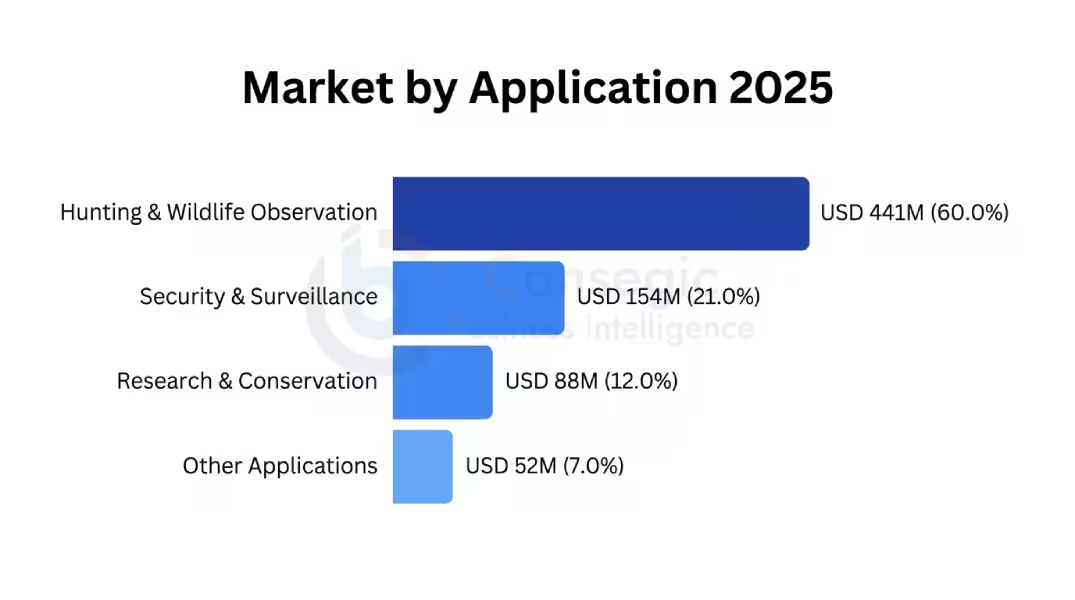
Hunting and wildlife viewing is USD 441 Million (60.0% of total market value), which includes hunters who perform pre-season scouting to determine the game behavior and the best areas to hunt, wildlife observers who use this as an opportunity to observe the behavior and biodiversity of wildlife, and property owners who monitor the population of this wildlife. The 15.2 million licensed hunters in the United States hunting community would be also core customer base as 45 per cent of hunters are estimated to use trail cameras as standard game management and scouting equipment.
Security and Surveillance Applications: Rapidly Expanding Market.
The fastest-growing segment is security and surveillance applications with USD 154 Million (21.0% of market value), with the CAGR of 8.5, explained by affordability in comparison with the traditional security camera systems that need electrical infrastructure and installation. It has been used in residential property surveillance, agricultural machine surveillance and livestock surveillance, construction sites and remote facility surveillance by using no-glow infrared lighting to operate covertly.
Monitoring Research and Conservation.
Research and conservation uses USD 88 Million (12.0% of market value) nicheing ecological researchers, wildlife biologists, conservation organizations, and government agencies in population survey, biodiversity mapping, behavioral research and anti-poaching missions. This market segment requires specialized capabilities such as long battery life, robust construction, GPS geotagging, and standardized metadata that can support scientific workflows and research efforts as well as collaborations.
Other Applications
Agricultural monitoring, outdoor recreation documentation, and targeted surveillance applications are other applications that have USD 52 Million (7.0% of market value).
Regional Market Analysis
North America: Market leadership and Technology innovation.
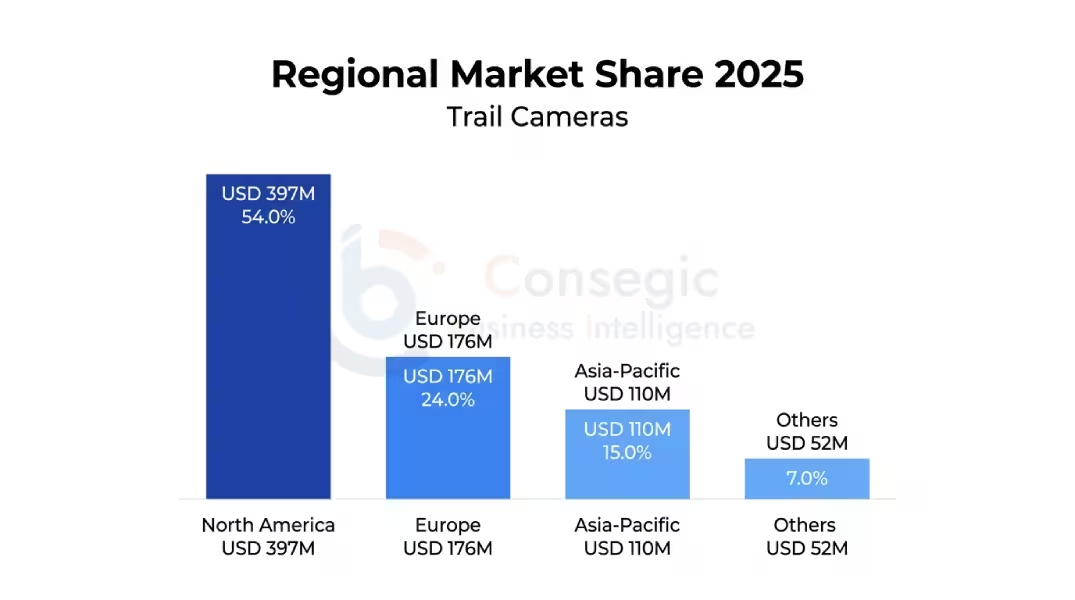
The trail camera market in North America is also projected to reach USD 397 Million in 2025 with a 54.0% market value of the global but the estimates are expected to grow to USD 729 Million by 2035 with a CAGR of 6.2%. The region is dominated by the United States with 91.0% market value of the demand predetermined by high rates of hunting, high prevalence of private land ownership which provides the opportunity to control the property, the high culture of outdoor recreation and technological leadership in the creation of cameras and integration of cellular platforms.
U.S. market is the market with the highest adoption rates at 44 percent of units shipped in 2024, with a strong network coverage of 4G LTE in hunting areas and the readiness of consumers to pay subscription fees due to convenient usage. Large companies such as Reconyx, Bushnell, Browning Trail Cameras, Moultrie and Stealth Cam have their headquarters and main operation in the United States which helps them adapt to innovation environment and high-level responsiveness to consumer tastes and technological advancements.
Europe: Protection of Environment and Data Protection.
In 2025, the European trail camera market had increased to USD 176 Million, which is 24.0% of total global market worth, and this is projected to increase to USD 324 Million in 2035 at 6.3% CAGR. Germany has a share of 26.0% of the regional market value, United Kingdom has 22.0, France has 18.0 and Scandinavia has 16.0 of the share, with the rest of the European countries taking up 18.0 of the share.
European market has unique features such as more emphasis on wildlife viewing and conservation surveillance than on hunting applications, more stringent data privacy policies that influence the use of cellular cameras and other image sharing habits, and increased penetration in agricultural uses to monitor livestock and prevent animal damage to crops.
Asia-Pacific: Manufacturing Center and New Uses.
Asia-Pacific trail camera markets attract USD 110 Million in 2025, which is 15.0% of the world market value, and the market is expected to grow to USD 203 Million in 2035 at 6.3 CAGR. The Chinese market comprises of 35.0 percent of the regional market value as a major manufacturing hub in the state of development of domestic consumption, the Australian market makes up 32.0 percent with vast agricultural lands that need remote monitoring, and the Japanese market makes up 20.0 percent with advanced wildlife viewing applications.
Other Regions
Other areas such as Latin America, Middle East, and Africa are a total USD 52 Million (7.0% of world market) with applications being made to conserve monitoring, anti-poaching efforts and also agricultural security in areas that have a high scale of wildlife-human conflict.
Competitive Landscape and Key Market Players
Market Leadership and Strategic Positioning
Reconyx, Inc. (United States) - Best Quality, Leader on the Market.
Reconyx is able to provide premium market positioning with their range of professional-grade cameras that sell at USD 450-700 price points to serious hunters, researchers, and security applications where high reliability and quality of images are essential. The HyperFire and UltraFire series of its products provide lead time 0.2-second trigger response times, superior quality of construction, and service life estimated at 5-plus years with cameras regularly functioning effectively in the hard field environment.
Vista Outdoor Inc. (Bushnell, Moultrie) - Leadership Mass Markets.
Vista Outdoor is the unit volume leader in the trail camera industry with more than 20 brands in its portfolio such as Bushnell and Moultrie that have diversified product lines, starting with USD 85 entry level and USD 450 cellular high-end cameras. CelluCORE and Moultrie Mobile cellular platforms of the company are competitive in pricing and full mobile applications with regard to subscription prices.
GSM Outdoors (Stealth Cam) - Value-Oriented Focus.
GSM Outdoors retains a good market position with Stealth Cam brand with products that focus on value-based product lines with cellular capabilities, good retail distribution relationships, and low prices to attract price-conscious consumer without compromising on the quality and reliability of their products.
Other Key Market Competitors:
- Spypoint (Canada) - Cellular camera industry leader that has pioneering data plan designs.
- Browning Trail Cameras (United States) - Full-end product with reputation on the firearm industry.
- Cuddeback (United States) - New CuddeLink wireless networking.
- Covert Scouting Cameras (United States) - Cellular oriented product development.
- Tactacam (United States) - High-end cell cameras of high features.
Recent Industry Developments
5G Cellular Connections and Faster Transmission (2024-2025).
The major manufacturers have introduced 5G enabled trail cameras with rates that are high in image transmission, better connectivity in crowded cellular connections and better real time streaming functions. Although 5G coverage at rural areas of deployment is still sparse, the cameras will offer future-proof connectivity as the network infrastructure is extended throughout the period of the forecast.
Sophisticated AI Species Recognition and Behavioral Analysis (2024).
Various producers incorporated advanced artificial intelligence algorithms that offer species-based recognition, tracking individuals, automated population data, and behavioral recognition. Reconyx AI and Bushnell CelluCORE AI have been shown to be of practical use in commercial applications in providing intelligent image processing that can shorten the time of review by 65-75% and yield actionable wildlife management information.
Extended Battery Solutions and Integrated Solar Power Systems (2024-2025)
Large scale producers increased the products of built up solar panel systems and optional battery pack accessory that provides longer life over the standard restrictions. Spypoint SOLAR, Browning Defender Wireless Solar, and Reconyx XtraLong illustrate effective utilization of renewable energy sources that do not demand the use of batteries in the cameras in sufficient sunny places.
Multi-Network Cellular Technology and Optimization of Coverage (2025)
State-of-the-art mobile cameras with support of dual-SIM and automatic switching between major operators enhance connectivity robustness in fringy coverage regions, thereby mitigating the inherent weakness of the single-carrier reliance, as well as enhancing operational quality and decreasing connectivity-related customer support challenges.
Trail Camera Market Report Insights
| Report Attributes | Report Details |
|---|---|
| Study Timeline | 2022-2035 |
| Base Year | 2025 |
| Forecast Period | 2026-2035 |
| Market Size in 2025 | USD 735 Million |
| Market Size in 2035 | USD 1,350 Million |
| CAGR (2026-2035) | 6.3% |
| By Connectivity | Cellular-Enabled (42.0%), Non-Cellular (58.0%) |
| By Application | Hunting & Wildlife (60.0%), Security (21.0%), Research (12.0%), Others (7.0%) |
| By Resolution | High Resolution 20-32MP (48.0%), Standard 12-20MP (38.0%), Entry Level <12MP (14.0%) |
| By Region | Asia-Pacific, Europe, North America, Latin America, Middle East & Africa |
| Key Players | Reconyx, Vista Outdoor (Bushnell/Moultrie), GSM Outdoors (Stealth Cam), Spypoint, Browning, Cuddeback, Covert, Tactacam |
Key Questions Answered in the Report
What is the market size of the Trail Camera? −
The trail camera market in the world has strong growth potential of USD 735 Million in 2025 and USD 1,350 Million in 2035 at 6.3% CAGR with a sustained growth following the cellular connectivity revolution that allows real-time transmission of the image and eliminates the necessity to visit the field to retrieve the memory card, the introduction of artificial intelligence which provides the possibility to identify species and filter the information much more intelligently, and the increasing popularity of the wildlife watching activities and outdoor recreation activities in the market.
What is the most growing market in the Trail Camera market? +
Europe has a high regional growth potential of 6.3% CAGR, which is equal to that of Asia-Pacific growth rates, as it is based on the growing wildlife observation and conservation monitoring applications, growing agricultural applications to livestock and crop monitoring, and rising environmental research projects. Nonetheless, North America offers superior market positions with 54.0% market share because of the strong hunting culture with 15.2 million licensed hunters, rural property ownership at large with ability of security application, technological leadership in camera development and cellular platform integration, and the highest rates in cellular camera adoption of 44% of unit shipments with support of extensive 4G LTE network coverage.
What are the technological advances changing the market? +
Highlighted technological advancements are cellular connectivity with 4G LTE and developing 5G integration enabling real-time image transmission and growing to 22-42% of unit shipments through 2020-2024, artificial intelligence with automated species identification and intelligent filtering reducing false positive triggers by 60-70%, advanced image sensors with 20-32 megapixel image resolution with greater infrared nighttime functionality, integrated solar charging systems to enable continuous operation eliminating battery replacement needs, 5G connectivity and multi-network switching.
What do you consider to be the main market challenges preventing wider adoption? +
The main issues are cellular network coverage and range with a projected figure of between 28-35 percent coverage of the deployment sites having inadequate signal strength, which limits cellular camera usage, recurring subscription fees of USD 5-15 monthly per camera that creates cumulative cost pressure on multi-camera deployments with the introduction of lithium battery technology that offers 4-12 months of operation, privacy laws and ethical considerations with state-specific restrictions on cellular cameras during hunting seasons and the compliance requirement of the GDPR in Europe, image quality at night due to infrared lighting sources.
What are the applications that have high potential growth opportunities to 2035? +
Significant opportunities are security and surveillance applications with a 8.5% CAGR of providing affordable monitoring of remote locations with no electric infrastructure, conservation and ecological research with standardized protocols to offer large-scale biodiversity measurements and population studies, agricultural applications such as livestock monitoring, predator detection, and equipment security across large farms and ranch properties, professional and enterprise use cases that need fleet management capabilities, advanced analytics, and integration with existing protocols in security systems, solar-powered autonomous systems, which do not need any maintenance, and special uses such as anti-poaching operations.
Overview
Reputation & Certifications


Our Services
- Market Intelligence & Forecasting
- Custom Research Solutions
- Market Entry Strategy
- Competitive Intelligence
- Customer Insights
- Industry Innovation Analysis
- Investment Advisory