Jump to Content
Ulnar Nerve Treatment Market - Size, Share, Industry Trends, and Forecasts (2025-2032)
Ulnar Nerve Treatment Market Size:
Ulnar Nerve Treatment Market size is estimated to reach over USD 266.74 Million by 2032 from a value of USD 191.94 Million in 2024 and is projected to grow by USD 196.58 Million in 2025, growing at a CAGR of 4.2% from 2025 to 2032.
Ulnar Nerve Treatment Market Scope & Overview:
The ulnar nerve treatment focuses on the diagnosis, management, and treatment of ulnar nerve conditions, including ulnar neuropathy and cubital tunnel syndrome, which result from compression or damage to the ulnar nerve. This market includes therapeutic options such as physical therapy, anti-inflammatory medications, nerve decompression surgeries, and assistive devices like braces and splints. Key characteristics of ulnar nerve treatments include minimally invasive techniques, targeted therapies for nerve regeneration, and advanced diagnostic tools to assess nerve function. The benefits include improved mobility, reduced pain, and restoration of hand and arm functionality. Applications span orthopedic and neurology practices, rehabilitation centers, and specialized surgical procedures. End-users include hospitals, outpatient clinics, and rehabilitation facilities, driven by rising prevalence of nerve compression syndromes, advancements in surgical techniques, and increasing awareness about early intervention for nerve-related disorders.

Ulnar Nerve Treatment Market Dynamics - (DRO) :
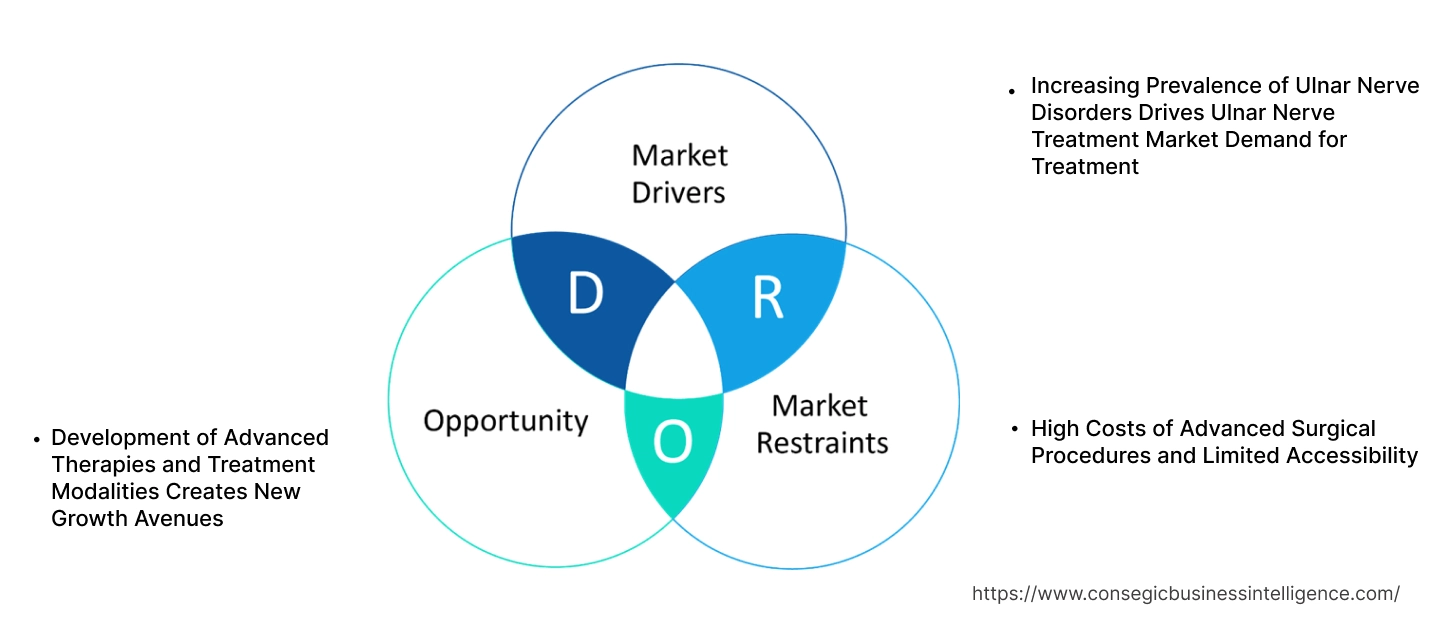
Key Drivers:
Increasing Prevalence of Ulnar Nerve Disorders Drives Ulnar Nerve Treatment Market Demand for Treatment
The rising incidence of ulnar nerve disorders, such as cubital tunnel syndrome and ulnar nerve entrapment, is a key driver for the ulnar nerve treatment market expansion. These conditions are often caused by repetitive strain, prolonged pressure on the elbow, or trauma, and are particularly prevalent among aging populations and individuals with physically demanding occupations. Symptoms like numbness, tingling, and muscle weakness in the hand and arm significantly impact quality of life, prompting patients to seek medical interventions.
As awareness of these conditions grows, there is a heightened emphasis on early diagnosis and timely treatment to prevent complications such as permanent nerve damage. This has led to increased adoption of both conservative approaches, like physical therapy and bracing, and surgical interventions for severe cases. The growing recognition of ulnar nerve disorders as a serious health concern is fueling ulnar nerve treatment market demand for innovative and effective treatment options, shaping in the ulnar nerve treatment market trends.
Key Restraints:
High Costs of Advanced Surgical Procedures and Limited Accessibility
The high costs associated with advanced surgical procedures for ulnar nerve treatment pose a significant barrier to market expansion. Minimally invasive techniques and robotic-assisted surgeries, while offering improved outcomes and shorter recovery times, require specialized equipment and skilled surgeons, driving up overall treatment costs. This financial burden is further exacerbated in regions with limited insurance coverage or inadequate healthcare infrastructure, restricting access for many patients.
Additionally, rehabilitation costs following surgery, including physical therapy and follow-up consultations, add to the financial challenges faced by patients. For individuals in low- and middle-income regions, these expenses often make advanced treatments unaffordable, leading to delayed or inadequate care. Addressing these cost and accessibility issues is critical to ensuring broader adoption of advanced ulnar nerve treatment options.
Future Opportunities :
Development of Advanced Therapies and Treatment Modalities Creates New Growth Avenues
The development of advanced therapies and innovative treatment modalities is creating significant opportunities in the ulnar nerve treatment market expansion. Emerging technologies in neuro-regenerative medicine, such as stem cell therapy and nerve grafting, are being explored to enhance nerve repair and recovery. These therapies offer the potential to treat severe cases more effectively and improve outcomes in patients with chronic or advanced-stage ulnar nerve disorders.
Additionally, advancements in minimally invasive surgical techniques, coupled with the integration of imaging and robotic-assisted systems, are revolutionizing the treatment landscape. These innovations enable precise nerve decompression and repair with minimal damage to surrounding tissues, improving patient satisfaction and recovery times. As research continues to expand the therapeutic possibilities for ulnar nerve disorders, the market is poised to benefit from a broader range of high-impact solutions tailored to meet diverse patient needs.
Ulnar Nerve Treatment Market Segmental Analysis :
By Treatment Type:
Based on treatment type, the ulnar nerve treatment market is segmented into over-the-counter (OTC) pain relievers, nerve spasm drugs, physical therapy, and surgery.
The over-the-counter (OTC) pain relievers segment accounted for the largest revenue share in 2024.
- OTC pain relievers such as acetaminophen and NSAIDs are widely used as the first-line treatment for ulnar nerve pain.
- These medications are easily accessible and cost-effective, making them the preferred choice for patients experiencing mild to moderate pain.
- The trends of self-medication for minor nerve discomfort, supported by growing awareness of pain management options, drives this segment’s dominance.
- Additionally, the increasing availability of OTC medications through online pharmacies further enhances accessibility.
- OTC pain relievers dominate the market due to their accessibility, affordability, and widespread adoption as an initial treatment for ulnar nerve discomfort.
The surgery segment is anticipated to register the fastest CAGR during the forecast period.
- Surgical interventions such as simple decompression (endoscopic), medial epicondylectomy, and transpositions are increasingly used for severe ulnar nerve compression cases.
- The rising demand for minimally invasive surgical techniques, which reduce recovery time and improve outcomes, is driving this segment.
- The growing trends of incorporating advanced imaging and robotic assistance in surgeries further supports its rapid growth.
- Surgery is expected to grow rapidly in this segmental analysis, driven by advancements in minimally invasive techniques and increasing cases of severe ulnar nerve compression requiring surgical intervention.
By Distribution Channel:
Based on distribution channel, the market is segmented into hospital pharmacies, retail pharmacies, and online pharmacies.
The hospital pharmacy segment accounted for the largest revenue in ulnar nerve treatment market share in 2024.
- Hospital pharmacies are the primary source of prescription medications for ulnar nerve treatment, particularly for patients undergoing surgical or advanced therapeutic interventions.
- The trends of integrating hospital pharmacies with digital prescribing systems to ensure timely access to medications enhances their relevance.
- Additionally, the availability of specialized drugs, such as nerve spasm medications, supports this segment’s demand.
- Hospital pharmacies dominate the ulnar nerve treatment market trends demand due to their integration with treatment facilities and their role in providing specialized medications.
The online pharmacy segment is anticipated to register the fastest CAGR during the forecast period.
- Online pharmacies are gaining popularity due to their convenience, competitive pricing, and wide product availability.
- The increasing trends of adopting digital health platforms and e-commerce for purchasing medications supports the growth of this segment.
- Additionally, the expansion of online platforms offering OTC and prescription drugs, coupled with home delivery services, enhances accessibility for patients.
- Online pharmacy analyses are expected to grow rapidly, driven by the rising demand and adoption of digital healthcare solutions and the increasing demand for convenient access to medications.
By End-User:
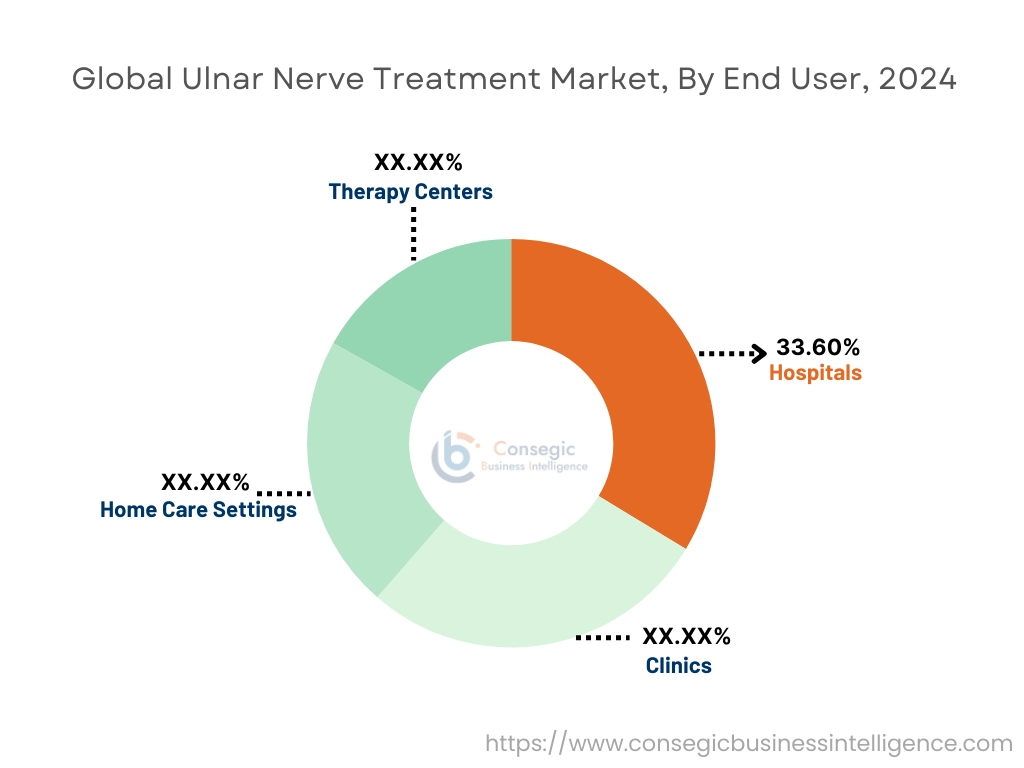
Based on end-users, the market is segmented into hospitals, clinics, home care settings, and therapy centers.
The hospitals segment accounted for the largest revenue in ulnar nerve treatment market share of 33.60% in 2024.
- Hospitals serve as primary treatment centers for complex ulnar nerve cases requiring multidisciplinary care.
- The trends of equipping hospitals with advanced diagnostic tools and surgical facilities to address nerve compression and injuries has strengthened this segment.
- Additionally, the rising number of hospital-based outpatient departments offering physical therapy services contributes to its market share.
- Hospitals lead the market due to their comprehensive care offerings and advanced facilities for diagnosis, therapy, and surgical intervention.
The therapy centers segment is anticipated to register the fastest CAGR during the forecast period.
- Therapy centers specializing in physical rehabilitation and nerve stimulation are gaining traction among patients recovering from ulnar nerve surgeries or managing chronic nerve pain.
- The trends of adopting personalized physical therapy programs and advanced techniques like electrical stimulation therapy drives this segment.
- Additionally, increasing patient awareness of non-invasive treatment options for nerve recovery supports ulnar nerve treatment market growth.
- Therapy centers are expected to grow rapidly, supported by their role in rehabilitation and the trends of adopting advanced physical therapy solutions.
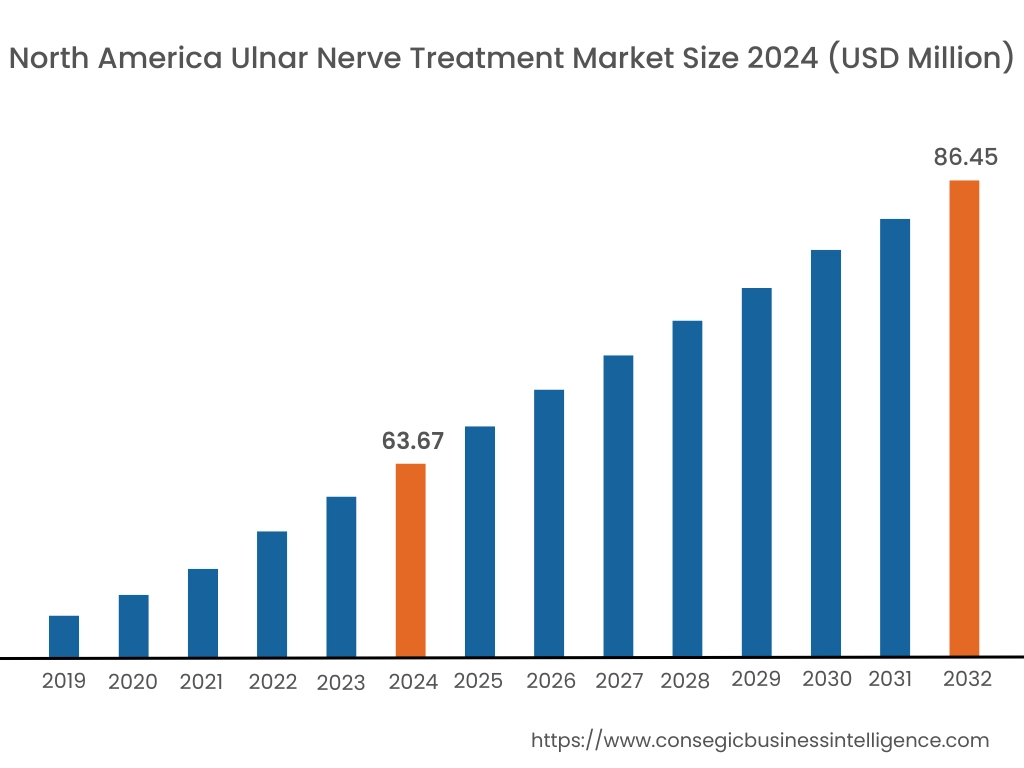
Regional Analysis:
The regions covered are North America, Europe, Asia Pacific, the Middle East and Africa, and Latin America.
In Asia Pacific, the market is experiencing the fastest growth with a CAGR of 4.6% over the forecast period. The ulnar nerve treatment market analysis is driven by rising healthcare expenditure, increasing awareness about nerve disorders, and improving access to specialized care in China, Japan, and India. China leads the region with its growing number of orthopedic and neurological clinics addressing nerve injuries caused by workplace ergonomics and trauma. Japan’s aging population and advanced healthcare system support the use of minimally invasive surgical techniques and nerve repair devices. India’s growing medical tourism industry and increasing awareness of nerve-related conditions are fostering the adoption of advanced treatments. However, challenges such as limited access to specialized care in rural areas and affordability issues may hinder widespread adoption.

In Asia Pacific, the market is experiencing the fastest growth with a CAGR of 4.6% over the forecast period. The ulnar nerve treatment market analysis is driven by rising healthcare expenditure, increasing awareness about nerve disorders, and improving access to specialized care in China, Japan, and India. China leads the region with its growing number of orthopedic and neurological clinics addressing nerve injuries caused by workplace ergonomics and trauma. Japan’s aging population and advanced healthcare system support the use of minimally invasive surgical techniques and nerve repair devices. India’s growing medical tourism industry and increasing awareness of nerve-related conditions are fostering the adoption of advanced treatments. However, challenges such as limited access to specialized care in rural areas and affordability issues may hinder widespread adoption.
Europe is a significant market for ulnar nerve treatment analysis, supported by a growing focus on neurological disorders and advancements in nerve repair technologies. Countries like Germany, France, and the UK are key contributors, with well-established healthcare systems offering comprehensive care for nerve injuries. Germany’s advanced medical research facilities and emphasis on cutting-edge surgical techniques drive ulnar nerve treatment market growth. The UK focuses on patient awareness programs for early diagnosis and treatment of ulnar nerve compression, while France is seeing an increasing adoption of regenerative therapies for nerve repair. However, regional variations in healthcare accessibility and high costs of advanced therapies may limit adoption in some areas.
The Middle East & Africa region is witnessing steady progress in the ulnar nerve treatment market, with rising healthcare investments and improving access to diagnostic and surgical facilities. The UAE and Saudi Arabia analysis portrays the leading market with an emphasis on developing specialized healthcare centers for neurology and orthopedic treatments. South Africa is also showing growth, driven by increasing awareness of peripheral nerve injuries and expanding healthcare infrastructure. However, limited availability of advanced treatment options and skilled professionals in some parts of the region pose challenges to market expansion.
Latin America is an emerging market for ulnar nerve treatment, led by Brazil and Mexico. Brazil’s healthcare industry is increasingly incorporating advanced surgical techniques and regenerative therapies for nerve repair, particularly in urban areas. Mexico is seeing growth in nerve decompression surgeries and physical therapy services to address nerve injuries caused by workplace conditions and sports. Public health initiatives aimed at raising awareness of nerve-related conditions are further supporting the market. However, economic instability and limited access to specialized care in rural regions may restrict broader ulnar nerve treatment market opportunities.
Top Key Players & Market Share Insights:
The Ulnar Nerve Treatment market is highly competitive with major players providing products and services to the national and international markets. Key players are adopting several strategies in research and development (R&D), product innovation, and end-user launches to hold a strong position in the global Ulnar Nerve Treatment market. Key players in the Ulnar Nerve Treatment industry include -
- Pfizer Inc. (United States)
- Teva Pharmaceutical Industries Ltd. (Israel)
- Johnson & Johnson (United States)
- GlaxoSmithKline plc (United Kingdom)
- Endo International plc (Ireland)
- Apotex Inc. (Canada)
- Mylan N.V. (United States)
- Alkem Laboratories Ltd. (India)
- Amneal Pharmaceuticals LLC (United States)
- Aurobindo Pharma (India)
Recent Industry Developments :
Innovations:
- In 2024, Aspire Physiotherapy in Edmonton introduced innovative and personalized treatment strategies for ulnar neuropathy, focusing on non-invasive, comprehensive care. Their approach includes customized exercise programs to strengthen the hand and arm, manual therapy to alleviate discomfort, and lifestyle modifications to reduce nerve pressure. This holistic treatment aims to manage symptoms, improve functionality, and prevent further nerve damage. Additionally, the clinic emphasizes ergonomic adjustments and offers pain management techniques to enhance patient comfort. This development highlights a growing trend in the healthcare sector towards non-surgical, patient-centered care for conditions like ulnar neuropathy.
Ulnar Nerve Treatment Market Report Insights:
| Report Attributes | Report Details |
| Study Timeline | 2019-2032 |
| Market Size in 2032 | USD 266.74 Million |
| CAGR (2025-2032) | 4.2% |
| By Treatment Type |
|
| By Distribution Channel |
|
| By End-User |
|
| By Region |
|
| Key Players |
|
| North America | U.S. Canada Mexico |
| Europe | U.K. Germany France Spain Italy Russia Benelux Rest of Europe |
| APAC | China South Korea Japan India Australia ASEAN Rest of Asia-Pacific |
| Middle East and Africa | GCC Turkey South Africa Rest of MEA |
| LATAM | Brazil Argentina Chile Rest of LATAM |
| Report Coverage |
|
Key Questions Answered in the Report
What is the size of the market? −
The Ulnar Nerve Treatment market is estimated to reach over USD 266.74 Million by 2032 from a value of USD 191.94 Million in 2024. It is projected to grow by USD 196.58 Million in 2025, growing at a CAGR of 4.2% from 2025 to 2032.
What are the key segments in the market? +
The key segments in the Ulnar Nerve Treatment market include Treatment Type, Distribution Channel, and End-User. The market is segmented by treatment type into over-the-counter (OTC) pain relievers, nerve spasm drugs, physical therapy, and surgery. By distribution channel, it is segmented into hospital pharmacies, retail pharmacies, and online pharmacies. By end-user, the market includes hospitals, clinics, home care settings, and therapy centers.
Which segment is expected to grow the fastest in the market? +
The surgery segment is anticipated to register the fastest CAGR during the forecast period. This is due to the growing demand for minimally invasive surgical techniques, which improve outcomes and reduce recovery time for patients with severe ulnar nerve compression.
Who are the major players in the market? +
Major players in the Ulnar Nerve Treatment market include Pfizer Inc. (United States), Teva Pharmaceutical Industries Ltd. (Israel), Apotex Inc. (Canada), Mylan N.V. (United States), Alkem Laboratories Ltd. (India), Amneal Pharmaceuticals LLC (United States), Aurobindo Pharma (India), Johnson & Johnson (United States), GlaxoSmithKline plc (United Kingdom), and Endo International plc (Ireland).
Overview
Reputation & Certifications


Our Services
- Market Intelligence & Forecasting
- Custom Research Solutions
- Market Entry Strategy
- Competitive Intelligence
- Customer Insights
- Industry Innovation Analysis
- Investment Advisory