Jump to Content
Ultrasonic Testing Market - Size, Share, Industry Trends, and Forecasts (2025-2035)
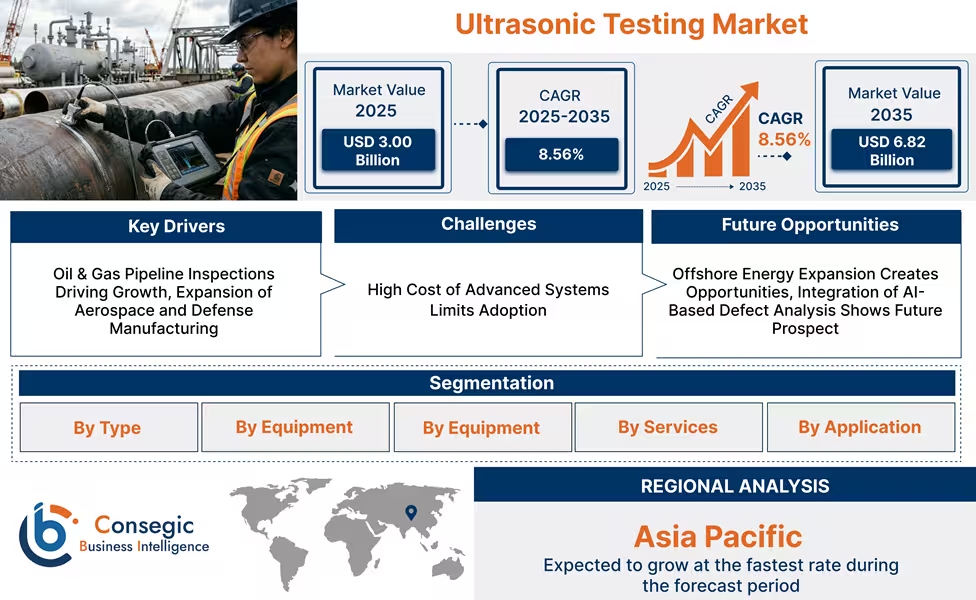
Market Insights
- Fastest Growing Region: Asia Pacific
- Market Size (2025): USD 3.00 Billion
- Market Size (2035): USD 6.82 Billion
- CAGR (2025–2035): 8.56%
Key Takeaways
- The increase in oil and gas pipelines requires ultrasonic testing for integrity, thus reducing leakage risks.
- The growth in aerospace and defense industries requires precise inspection of manufactured parts.
- The use of artificial intelligence in the analysis of defects enhances inspection accuracy, thus promoting automated inspection techniques.
- The increase in offshore energy projects has future prospects for inspection.
- North America held the largest market share in 2024.
- Key players include Olympus Corporation, Baker Hughes Company, GE Vernova, Inc., Mistras Group, Inc., and Zetec, Inc.
What is Ultrasonic Testing and Why is It Important in Industrial Inspection?
Ultrasonic testing is a non-destructive testing method used for detecting defects in a material and determining its thickness using high-frequency sound waves. The process of carrying out ultrasonic tests on a material involves using ultrasonic probes, which transmit high-frequency sound waves to a material and measure their reflections in order to detect defects in the material. The method is used in carrying out tests on welds, pipelines, and pressure vessels in various industries, including oil and gas, construction, automotive, and aerospace.
The market for ultrasonic testing is witnessing steady growth with increased emphasis on asset reliability and high safety inspection standards in various industries. Energy, manufacturing, and infrastructure segments are adopting non-destructive tests for detecting defects in equipment and averting equipment failure. The rise in investment in industrial maintenance activities, along with the development of infrastructure and energy projects, is driving the demand for ultrasonic testing solutions in global markets.
Standards and Certification Trends Analysis
The standards and certification needs are on the rise in the ultrasonic testing market, which needs to be adhered to for accuracy in inspections and safety compliances. Industries operate according to global standards, which are provided by International Organization for Standardization, ASTM International, American Society of Mechanical Engineers, and many other organizations. ISO 16810 and ISO 17640 are examples of standards, which provide guidelines on methodology, while ASME BPVC and API provide guidelines on inspections of pressure vessels and pipelines respectively.
The certification procedure is becoming more organized, with international bodies coordinating the certification procedures. ISO 9712 has guidelines on the qualification of personnel in NDT, while ISO/IEC 17024 has guidelines on the credibility of certification bodies. Level I, Level II, and Level III have been established to classify technicians according to their skills, with CWB Group offering training programs to cater to the demands of industries for certified technicians.
Driving Factors
Oil & Gas Pipeline Inspections Driving Growth
Oil and gas companies also improve inspection activities on their pipelines, storage tanks, and pressure vessels to ensure safety and efficiency. Ultrasonic testing aids in the detection of defects, corrosion, and thinning of equipment surfaces. They also improve inspection activities on their equipment to avoid failures and meet regulatory requirements. For example, according to International Energy Agency, oil demand is set to rise by 850 kb/d in 2026 compared to 770 kb/d in the preceding year. This indicates an increase in inspection activities on oil and gas equipment.
Expansion of Aerospace and Defense Manufacturing
The growth of aerospace and defense industry, particularly in the manufacturing of equipment, also drives ultrasonic testing to ensure safety and efficiency. This includes critical equipment such as turbine blades, where ultrasonic testing aids in the detection of defects. They also improve inspection activities on their equipment to avoid failures and meet regulatory requirements. According to Stockholm International Peace Research Institute, US arms companies ranked in the Top 100 had combined revenues of 334 billion USD in 2024, a 3.8% increase compared to 2023, with 30 of 39 firms reporting growth, including Lockheed Martin, Northrop Grumman, and General Dynamics.
Growth in Automotive Production
The growth in the production of motor vehicles is the main driver for the demand for ultrasonic testing, which is required to ensure the quality of the welds and structures. Manufacturers are focusing on the detection of flaws in the chassis and lightweight materials to ensure the safety of the vehicles. OICA reported the production of motor vehicles globally, which rose to 68.8 million units in YTD Q1-Q3 2025 from 57.1 million units in YTD Q1-Q3 2021. This indicates the growth in the production of motor vehicles.
Challenges
High Cost of Advanced Systems Limits Adoption
Advanced ultrasonic testing systems such as phased array and automated systems involve a higher cost of investment. For small service providers and manufacturers, budget constraints can be a problem at the time of adopting these technologies. The cost of calibration, maintenance, and a skilled workforce also increases operational expenses. This is a constraint on the adoption of advanced ultrasonic testing solutions.
Opportunities
Offshore Energy Expansion Creates Opportunities
Offshore oil and gas infrastructure needs to be inspected regularly to ensure the safety of operations. Ultrasonic testing helps in the detection of corroded areas, cracks, and damage to the structure of the infrastructure. The increasing number of offshore oil and gas explorations is creating a demand for better inspection tools For instance, in March 2025, according to Global Energy Monitor, 19 offshore projects were made operational in 2024, which is equivalent to 71% of new reserves. This indicates a growing demand for ultrasonic testing solutions.
Integration of AI-Based Defect Analysis Shows Future Prospect
The integration of AI-based analysis tools is enhancing the efficiency of ultrasonic testing solutions. The focus of industries is to minimize inspection time and dependency on humans. The integration of AI helps in the predictive analysis and real-time evaluation of data. In November 2025, Chung-Ang University researchers have developed an AI tool named DiffectNet that helps in the creation of real-time ultrasonic images to detect internal cracks in the infrastructure.
Ultrasonic Testing Market Segmental Analysis
By Type
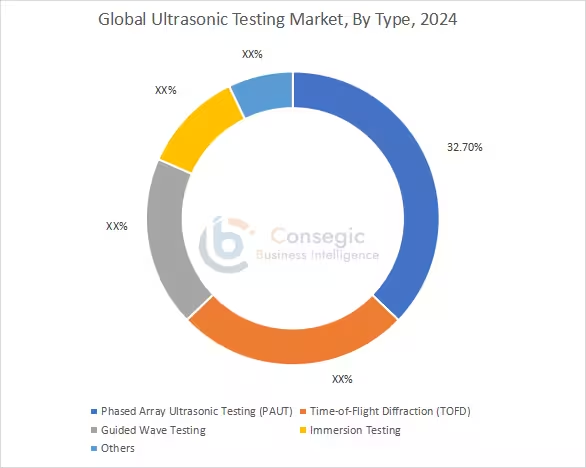
The market includes phased array ultrasonic testing (PAUT), time-of-flight diffraction (TOFD), guided wave testing, immersion testing, and others.
Dominant Segment
Phased Array Ultrasonic Testing (PAUT)
Largest revenue share of 37.2% in 2024. High demand for detailed defect imaging increases adoption. Use in pipeline and weld inspection supports segment growth.
Fastest Growing
Time-of-Flight Diffraction (TOFD)
Fastest CAGR during the forecast period. An increase in crack measurement application growth fuels the demand. Pipeline inspection program expansion is another factor.
By Equipment
The market includes flaw detectors, thickness gauges, transducers and probes, imaging systems, tube inspection systems, and others.
Dominant Segment
Flaw Detectors
Largest revenue share in 2024. High use in crack and defect detection supports demand. Portable devices increase adoption across industries.
Fastest Growing
Imaging Systems
Fastest CAGR during the forecast period. Demand for visual inspection data increases adoption. Integration with digital inspection platforms supports growth.
By Services
The market includes inspection services, equipment rental services, calibration services, and training services.
Dominant Segment
Inspection Services
Largest revenue share in 2024. Rising outsourcing of inspection activities supports demand. Growth in industrial safety programs increases adoption.
Fastest Growing
Training Services
Fastest CAGR during the forecast period. Demand for skilled technicians increases training adoption. Growth in advanced systems supports expansion.
By Application
The market includes weld inspection, corrosion detection, thickness measurement, material characterization, and others.
Dominant Segment
Weld Inspection
Largest revenue share in 2024. High demand exists in defect detection in welded joints. Pipeline and infrastructure projects increase.
Fastest Growing
Corrosion Detection
Fastest CAGR during the forecast period. Rising need for monitoring material degradation increases demand. Aging infrastructure supports adoption.
By End User
The market includes oil and gas, manufacturing, aerospace, power generation, automotive, and others.
Dominant Segment
Oil and Gas
Largest revenue share in 2024. High inspection demand for pipelines and pressure vessels supports growth. Expansion of energy infrastructure increases adoption.
Fastest Growing
Aerospace
Fastest CAGR during the forecast period. Growth in aircraft production increases inspection demand. Use in composite material testing supports expansion.
Regional Breakdown
The ultrasonic testing market is analyzed across North America, Europe, Asia Pacific, the Middle East and Africa, and Latin America.
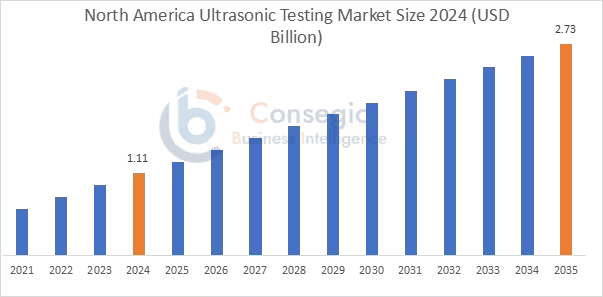
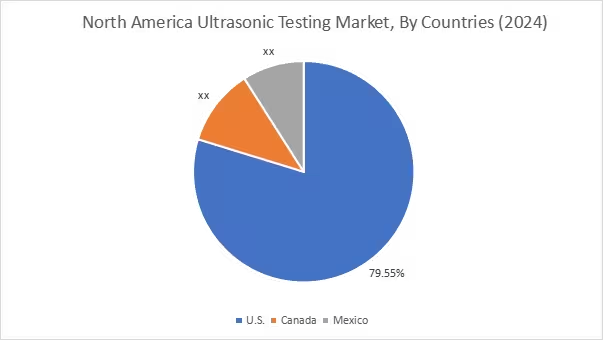
North America, Europe, Asia Pacific, the Middle East and Africa, and Latin America represent the key regions in the ultrasonic testing market. North America held the largest share of 40.06% in 2024 and was valued at USD 1.11 billion, with projections reaching USD 2.73 billion by 2035. The US accounted for 79.55% of the regional share in 2024. Growth in this region is driven by extensive oil and gas pipeline networks and stringent inspection regulations in various industries. Companies are increasing the use of ultrasonic testing in pipeline monitoring and structural inspection to maintain asset safety. For instance, Phoenix Inspection Systems Limited launched a new product called ‘Orbital’ automated ultrasonic testing weld scanner in May 2024 to efficiently inspect pipe welds, tanks, and vessels in various industries such as oil and gas and power generation.
Asia Pacific is expected to grow at the fastest rate during the forecast period, driven by increasing manufacturing and infrastructure activities in China and India. An increase in industrial production capacity in China fuels the demand for material inspection and testing services. An increase in infrastructure activities in India fuels the demand for pipeline inspection services. The National Bureau of Statistics of China reports that the output of equipment manufacturing in China grew by 9.2%, and the output of high-tech manufacturing grew by 9.4% in 2025, which boosts the adoption of ultrasonic testing solutions.
Market Competition and Leading Player Analysis
The ultrasonic testing market has a moderate level of competition, with several players offering inspection solutions, equipment, and testing services. The players in the ultrasonic testing market are diversifying their offerings to serve the inspection demands of pipelines, weld inspection, corrosion monitoring, and structural testing. Companies are emphasizing more on the development of advanced technology solutions for oil and gas, aerospace, and power generation industries. Competitive intensity is rising with growing demand for accurate inspection solutions and the adoption of automated and digital testing systems.
Key participants in the market for ultrasonic testing include:
- Olympus Corporation– Japan
- Baker Hughes Company– US
- GE Vernova, Inc.– US
- Mistras Group, Inc. – US
- Zetec, Inc. – US
- Sonatest Ltd. – UK
- Eddyfi Technologies – Canada
- KARL DEUTSCH Prüf- und Messgerätebau GmbH – Germany
- Cygnus Instruments Ltd. – UK
- TÜV Rheinland Group – Germany
Latest News & Developments
In November 2025, the CWB Group introduced a new ultrasonic testing certification under its non-destructive testing program to improve inspection standards and support the growing need for skilled professionals across Canada.
In June 2025, Previan announced plans to separate Eddyfi Technologies and NDT Global into independent entities to strengthen focus on growth, innovation, and market positioning in testing and integrity management.
Ultrasonic Testing Market Report Insights:
| Report Attributes | Report Details |
|---|---|
| Study Timeline | 2019-2035 |
| Market Size in 2035 (USD Billion) | USD 6.82 Billion |
| CAGR (2025-2035) | 8.56% |
| By Type |
|
| By Equipment |
|
| By Services |
|
| By Application |
|
| By End User |
|
| By Region |
|
| Key Players |
|
| Report Coverage |
|
Key Questions Answered in the Report
How big is the ultrasonic testing market? −
The ultrasonic testing market sizeis estimated to reach over USD 6.82 Billion by 2035 from a value of USD 2.76 Billion in 2024 and is projected to grow by USD 3.00 Billion in 2025, growing at a CAGR of 8.56% from 2025 to 2035.
Which segmentation details are covered in the ultrasonic testing report? +
The ultrasonic testing report includes specific segmentation details for type, equipment, services, application, end user, and regions.
Which is the fastest segment anticipated to impact the market growth? +
Time of flight diffraction (TOFD) is the fastest growing segment due to rising demand for weld inspection.
Who are the major players in the ultrasonic testing market? +
The key participants in the ultrasonic testing marketare Olympus Corporation (Japan), Baker Hughes Company (US), GE Vernova, Inc. (US), Mistras Group, Inc. (US), Zetec, Inc. (US), Sonatest Ltd. (UK), Eddyfi Technologies (Canada), KARL DEUTSCH Prüf- und Messgerätebau GmbH (Germany), Cygnus Instruments Ltd. (UK), TÜV Rheinland Group (Germany), and others.
What are the key trends in the ultrasonic testing market? +
Increasing industrial inspection activities and adoption of advanced ultrasonic testing technologies are shaping the market.
Overview
Reputation & Certifications


Our Services
- Market Intelligence & Forecasting
- Custom Research Solutions
- Market Entry Strategy
- Competitive Intelligence
- Customer Insights
- Industry Innovation Analysis
- Investment Advisory