Jump to Content
Achondrogenesis Market Size & Industry Share - Growth Trends & Forecasts (2026 - 2034)
Achondrogenesis Market Size:
The Achondrogenesis market size was valued at 2.01 (US$B) in 2025 and is projected to grow from 2.12 (US$B) in 2026 to 3.25 (US$B) by 2034, at a CAGR of 5.5% from 2026 to 2034, according to a recent report from Consegic Business Intelligence.
Achondrogenesis Market Scope & Overview:
Achondrogenesis is a rare and severe genetic disorder that affects bone development, resulting in skeletal abnormalities and growth deficiencies. It is typically diagnosed during pregnancy or shortly after birth and is characterized by extremely short limbs, a small body, and underdeveloped lungs. The condition is caused by mutations in specific genes responsible for bone and cartilage development, leading to severe complications. Due to the rarity of the disorder, treatment focuses on supportive care, as there is no cure currently available. The market is primarily driven by research institutions, hospitals, and specialty clinics focused on rare diseases, with an emphasis on genetic research, diagnostics, and patient support.

Achondrogenesis Market Dynamics - (DRO) :
Key Drivers:
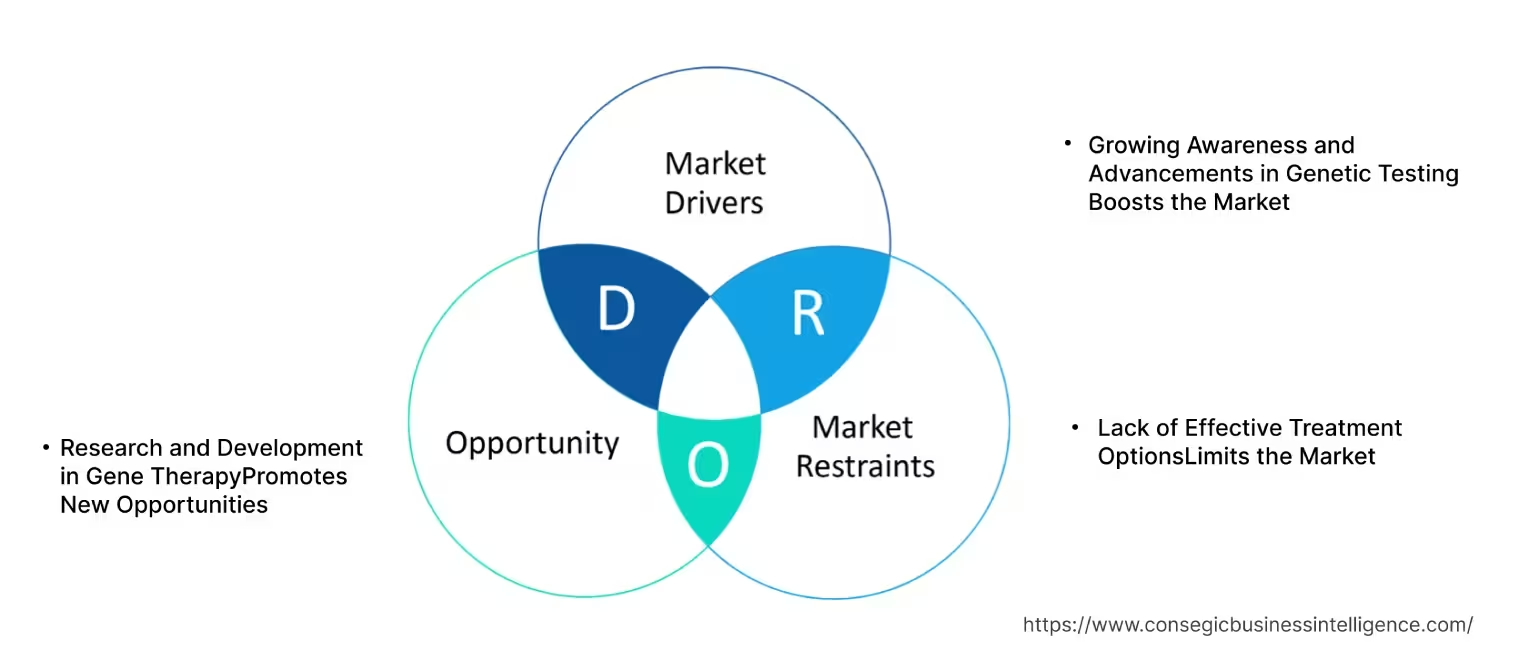
Growing Awareness and Advancements in Genetic Testing Boosts the Market
The rising awareness of rare genetic disorders and advancements in diagnostic tools, particularly genetic testing and prenatal diagnostics, are driving the achondrogenesis market growth. With increased access to advanced genetic testing techniques, such as next-generation sequencing (NGS) and molecular diagnostics, early detection and accurate diagnosis of the disorder are becoming more feasible. This has driven the demand for specialized diagnostic services, especially in high-risk pregnancies where there is a family history of skeletal dysplasia. Genetic counseling services have also seen increased demand as families seek better understanding and management options for such rare conditions.
Key Restraints :
Lack of Effective Treatment Options Limits the Market
One of the major restraints in the achondrogenesis market is the absence of effective treatments. Achondrogenesis is a fatal condition, with most cases resulting in stillbirth or death shortly after birth due to respiratory failure. Current medical management is largely supportive, focusing on symptomatic relief rather than a curative approach. The lack of therapeutic interventions and the high mortality rate have limited the development of marketable treatments. Moreover, the rarity of the condition makes large-scale clinical trials challenging, further hampering the development of targeted therapies. These factors significantly constrain the achondrogenesis market demand, as the focus remains on diagnosis and genetic counseling rather than treatment.
Future Opportunities :
Research and Development in Gene Therapy Promotes New Opportunities
The ongoing research into gene therapy and advanced molecular treatments offers a promising achondrogenesis market opportunities. As scientists continue to explore gene-editing technologies like CRISPR and other genetic modification techniques, the potential to correct the underlying genetic mutations that cause achondrogenesis is gaining attention. While still in the experimental phase, these emerging therapies could revolutionize the treatment of rare genetic disorders by targeting the root cause at the molecular level. Investment in research and development for gene-based therapies holds significant potential to create new avenues for treating achondrogenesis and similar rare conditions in the future. Companies and research institutions focusing on rare genetic diseases may find long-term opportunities in developing targeted treatments for skeletal dysplasias like achondrogenesis.
Achondrogenesis Market Segmental Analysis :
By Type:
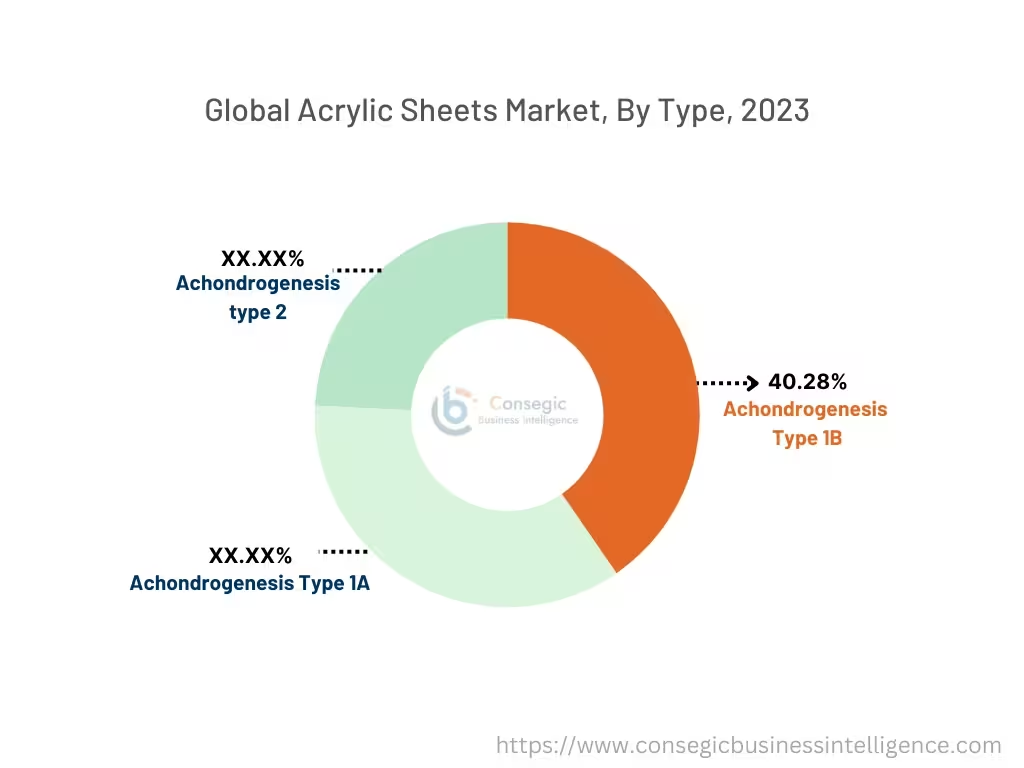
Based on type, the market is segmented into achondrogenesis type 1A, achondrogenesis type 1B, and achondrogenesis type 2.
The achondrogenesis type 1B segment accounted for the largest revenue share of 40.28% in 2023.
- Achondrogenesis type 1B, also known as Parenti-Fraccaro type, is the most severe form of the disorder. It is characterized by a lack of bone development, leading to extreme skeletal abnormalities and underdeveloped lungs.
- The high prevalence of type 1B, coupled with its severe manifestations and high mortality rate, makes this segment the largest in the market.
- Type 1B is most often diagnosed through prenatal imaging and confirmed via genetic testing, with a focus on managing symptoms and providing supportive care.
- Due to the lack of curative treatments, the primary focus remains on early diagnosis and genetic counseling.
- Thus, the market trends analysis, type 1B leads the market due to its high severity and prevalence, with a strong emphasis on early diagnosis and supportive care, driving the achondrogenesis market demand.
The achondrogenesis type 2 segment is anticipated to register the fastest CAGR during the forecast period.
- Achondrogenesis type 2, or Langer-Saldino type, is slightly less severe compared to type 1 but is still associated with significant skeletal malformations.
- This form of the condition presents with short limbs, abnormal ribcage development, and other bone growth issues.
- The increasing focus on prenatal diagnosis and advancements in genetic research are driving the growth of this segment.
- Although the condition remains fatal in most cases, ongoing research into its genetic causes is opening doors to potential interventions, particularly in genetic counseling and palliative care.
- As per the segmental analysis, the type 2 is expected to grow rapidly due to advancements in prenatal diagnostics and genetic research, which are improving early detection and care options, boosting the achondrogenesis market trends.
By Diagnosis:
Based on diagnosis, the market is segmented into prenatal ultrasound, genetic testing, X-rays, MRI, and others.
The prenatal ultrasound segment accounted for the largest revenue share of the total achondrogenesis market share in 2023.
- Prenatal ultrasound is the primary diagnostic tool for identifying achondrogenesis, as skeletal abnormalities can be detected as early as the second trimester.
- Ultrasound enables early detection of shortened limbs, abnormal bone development, and other characteristics of the disorder.
- Given the importance of early diagnosis in managing the condition and offering genetic counseling to parents, prenatal ultrasound remains the leading diagnostic method.
- Its non-invasive nature and widespread availability make it the preferred choice for initial screening of fetal skeletal development abnormalities.
- Thus, as per the segmental trends analysis, the prenatal ultrasound dominates the diagnostic segment due to its effectiveness in early detection of skeletal abnormalities, ensuring timely intervention and counseling for families, driving the achondrogenesis market growth.
The genetic testing segment is anticipated to register the fastest CAGR during the forecast period.
- Genetic testing is becoming increasingly important in confirming a diagnosis of achondrogenesis, particularly following prenatal ultrasound findings.
- Genetic tests can identify mutations in the genes responsible for the disorder, such as mutations in the SLC26A2 gene for type 1B and COL2A1 gene for type 2.
- As awareness of genetic disorders grows and advancements in testing technologies make these tests more accessible, the demand for genetic testing is expected to increase significantly.
- This method not only confirms the diagnosis but also provides valuable information for family planning and managing future pregnancies.
- The analysis of market trends shows that genetic testing is expected to grow rapidly as it provides definitive confirmation of the disorder and supports genetic counseling for families, making it a crucial tool in diagnosis, boosting the achondrogenesis market trends.
By Treatment:
Based on treatment, the market is segmented into supportive care, palliative care, genetic counseling, and others.
The supportive care segment accounted for the largest revenue share of the overall achondrogenesis market share in 2023.
- Given the severe nature of achondrogenesis and its high mortality rate, supportive care is the primary focus of treatment.
- This involves managing respiratory issues, ensuring comfort, and addressing feeding difficulties in affected infants.
- Multidisciplinary care teams, including neonatologists and genetic specialists, work to provide comprehensive care to improve the quality of life for the affected child, albeit for a limited time.
- The absence of curative treatments makes supportive care critical in the management of this condition, which is why this segment leads the market.
- Therefore, the market trends shows that supportive care dominates the treatment segment as it remains the cornerstone of managing achondrogenesis, focusing on comfort and addressing the immediate needs of affected infants, boosting the achondrogenesis market expansion.
The genetic counseling segment is anticipated to register the fastest CAGR during the forecast period.
- Genetic counseling is essential for families with a history of achondrogenesis or who receive a prenatal diagnosis.
- This service helps parents understand the genetic basis of the disorder, its inheritance patterns, and the risks for future pregnancies.
- As genetic testing becomes more accessible, the demand for genetic counseling is increasing, particularly in regions where awareness of genetic disorders is growing.
- Counseling services are key in helping families make informed decisions and manage the emotional challenges associated with such a diagnosis.
- Genetic counseling is set to grow rapidly due to the increasing use of genetic testing, providing essential support to families in understanding the disorder and managing future reproductive decisions.
By End-User:
Based on end-user, the market is segmented into hospitals, specialty clinics, diagnostic centers, research institutes, and others.
The hospitals segment accounted for the largest revenue share in 2023.
- Hospitals remain the primary care providers for achondrogenesis cases, offering comprehensive services ranging from diagnosis to supportive care.
- Due to the complexity of the condition, affected infants often require neonatal intensive care units (NICUs) for respiratory support, feeding assistance, and other critical interventions.
- Hospitals are also equipped with advanced diagnostic tools such as prenatal ultrasounds, genetic testing facilities, and MRI machines, which are crucial for accurate diagnosis and care.
- As the first point of care for newborns with severe skeletal abnormalities, hospitals play a central role in managing this condition.
- As per the achondrogenesis market analysis, hospitals lead the market as the main providers of comprehensive care for achondrogenesis, including critical diagnostic and supportive services for affected infants.
The research institutes segment is anticipated to register the fastest CAGR during the forecast period.
- Research institutes are increasingly focusing on the genetic and molecular underpinnings of achondrogenesis, aiming to better understand its causes and potential therapeutic targets.
- With advancements in genetic research and the growing interest in rare genetic disorders, research institutes are playing a pivotal role in discovering potential interventions.
- Ongoing clinical trials and studies focusing on gene therapy and prenatal interventions are expected to drive the growth of this segment.
- Additionally, the collaboration between research institutes and hospitals is fostering innovation in early diagnosis and treatment options.
- Research institutes are expected to grow rapidly as advancements in genetic research and ongoing studies drive new discoveries and potential therapeutic approaches for the disorder, driving the achondrogenesis market expansion.
Regional Analysis:
The regions covered are North America, Europe, Asia Pacific, the Middle East and Africa, and Latin America.
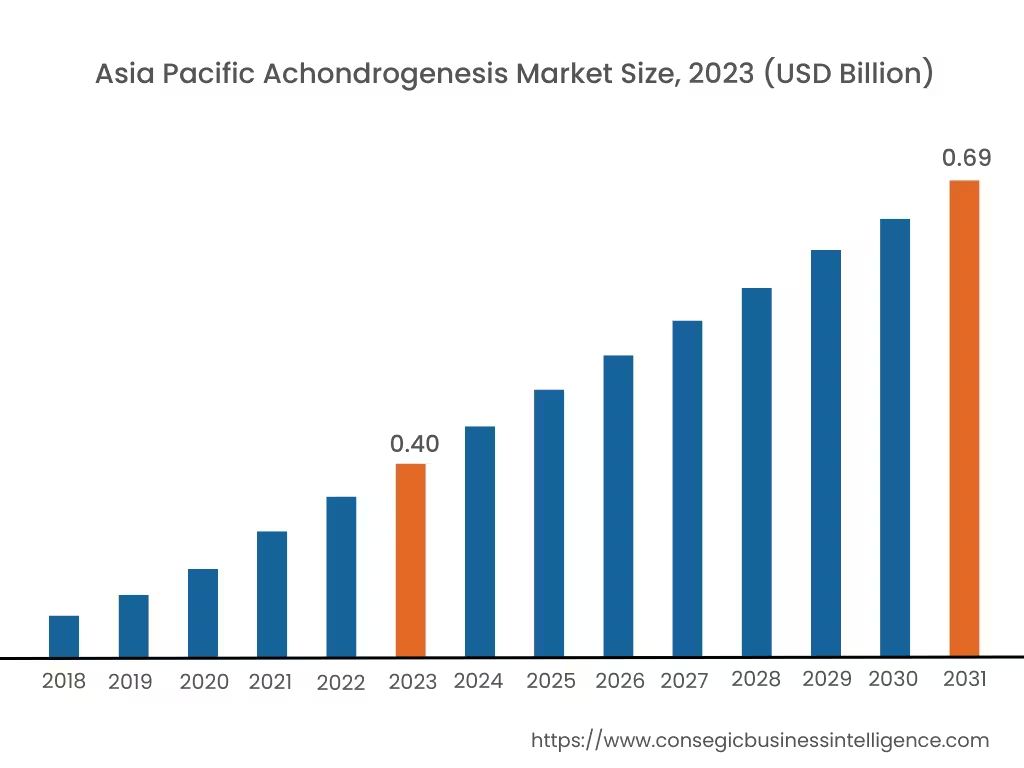
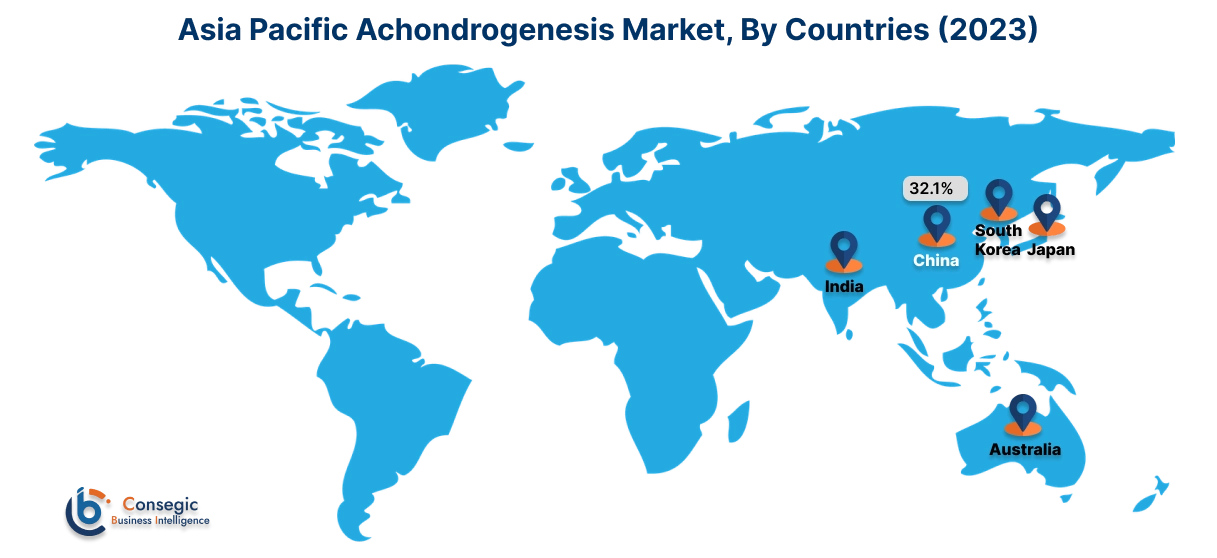
Asia Pacific region was valued at USD 0.40 Billion in 2023. Moreover, it is projected to grow by USD 0.42 Billion in 2024 and reach over USD 0.69 Billion by 2031. Out of this, China accounted for 32.1% of the total market share. As per the achondrogenesis market analysis, Asia-Pacific is an emerging market, with growing awareness of rare genetic disorders in countries like China, Japan, and India. Increasing investments in healthcare infrastructure, along with rising demand for prenatal diagnostics, contribute to market growth. However, the region faces challenges related to the limited availability of specialized diagnostic centers and insufficient awareness of the disorder, particularly in rural areas. Government initiatives to improve healthcare access and promote research into rare diseases are expected to boost market development in the coming years.
North America holds a significant share of the market due to advanced diagnostic technologies and a well-established healthcare infrastructure. The U.S. leads the region, driven by increasing awareness of rare genetic disorders and access to advanced prenatal care and genetic testing. Government funding for rare disease research, along with the presence of specialized genetic research institutions, supports market growth. However, the high cost of treatment and diagnostic procedures for achondrogenesis remains a challenge for widespread access.
Europe represents a considerable market, with countries like Germany, France, and the UK at the forefront. The region benefits from strong healthcare systems and government initiatives focused on rare diseases, which drive demand for diagnostic and therapeutic solutions. Increasing collaboration between healthcare providers and research institutions for studying rare genetic disorders further propels market growth. However, the lack of curative treatments and limited awareness of the disorder among the general public pose challenges to the market's expansion.
The Middle East & Africa region sees moderate growth in the market, particularly in countries like Saudi Arabia, the UAE, and South Africa. Improving healthcare infrastructure and the increasing availability of prenatal care services drive demand for diagnostics. However, limited access to advanced genetic testing facilities and specialized healthcare services in some parts of the region pose significant challenges to market expansion.
Latin America is an emerging market, with Brazil and Mexico being key contributors. The region's market growth is driven by improving healthcare systems and increasing awareness of genetic disorders. Government initiatives aimed at expanding healthcare access and increasing investments in genetic research also support market development. However, economic instability and a lack of specialized healthcare professionals limit the region's ability to provide widespread access to diagnostic and therapeutic services.
Top Key Players & Market Share Insights:
The achondrogenesis market is highly competitive with major players providing treatments to the national and international markets. Key players are adopting several strategies in research and development (R&D), product innovation, and end-user launches to hold a strong position in the global achondrogenesis market. Key players in the achondrogenesis industry include -
- Invitae Corporation (USA)
- Illumina, Inc. (USA)
- Thermo Fisher Scientific (USA)
- Centogene N.V. (Germany)
- Fulgent Genetics, Inc. (USA)
- PerkinElmer, Inc. (USA)
- Quest Diagnostics Incorporated (USA)
- Myriad Genetics, Inc. (USA)
- GeneDx, Inc. (USA)
- Pacific Biosciences of California, Inc. (USA)
Recent Industry Developments :
Product Launches:
- In May 2024, Tuesday Health, a company focused on value-based care for critical illnesses, launched a solution designed to provide early supportive care throughout a patient's treatment journey. This solution aims to connect individuals with the most suitable services from leading providers at the critical times in their lives.
- In 2023, Thermo Fisher Scientific Inc. launched the Ion Torrent S5 Next-Generation Sequencing System, designed to offer rapid and comprehensive genetic analysis, potentially transforming achondrogenesis testing with faster and more precise results.
- In 2021, Illumina, Inc. introduced the NovaSeq 6000 Sequencing System, known for its ultra-high-throughput capabilities, which supports quicker and highly accurate achondrogenesis testing, aiming to significantly reduce analysis time.
Achondrogenesis Market Report Insights :
| Report Attributes | Report Details |
| Study Timeline | 2021-2034 |
| Market Size in 2034 | USD 3.25 Billion |
| CAGR (2026-2034) | 5.50% |
| Base Year | 2025 |
| By Material Type |
|
| By Diagnosis |
|
| By Treatment |
|
| By End-User Industry |
|
| By Region |
|
| Key Players |
|
| North America | U.S. Canada Mexico |
| Europe | U.K. Germany France Spain Italy Russia Benelux Rest of Europe |
| APAC | China South Korea Japan India Australia ASEAN Rest of Asia-Pacific |
| Middle East and Africa | GCC Turkey South Africa Rest of MEA |
| LATAM | Brazil Argentina Chile Rest of LATAM |
| Report Coverage |
|
Key Questions Answered in the Report
How big is the Achondrogenesis Market? −
Achondrogenesis Market size is estimated to reach over USD 2.77 Billion by 2031 from a value of USD 1.80 Billion in 2023 and is projected to grow by USD 1.87 Billion in 2024, growing at a CAGR of 5.5% from 2024 to 2031.
What are the key factors driving the growth of the Achondrogenesis Market? +
The growth of the Achondrogenesis Market is driven by advancements in genetic research and diagnostic technologies that enable early detection of the disorder. Increased awareness, investments in rare disease research, and the development of potential therapies for rare genetic disorders are also contributing to market growth.
What challenges does the Achondrogenesis Market face? +
One of the major challenges in the Achondrogenesis Market is the lack of effective treatments for this condition, as it is rare and fatal in most cases. Limited funding for research into rare diseases, high costs associated with genetic testing, and the absence of curative therapies also pose significant challenges to market expansion.
Which regions are witnessing significant activity in the Achondrogenesis Market? +
North America and Europe are leading regions in the Achondrogenesis Market, driven by their advanced healthcare infrastructure, increased funding for rare disease research, and the availability of genetic testing. The presence of organizations focused on rare genetic disorders further contributes to market activity in these regions.
What are the current treatment approaches for achondrogenesis? +
Currently, there is no cure for achondrogenesis, and treatment mainly focuses on supportive care to manage symptoms and improve the quality of life for affected individuals. Genetic counseling is also provided to families at risk, and research is ongoing into potential gene therapies and other innovative treatments.
Overview
Reputation & Certifications


Our Services
- Market Intelligence & Forecasting
- Custom Research Solutions
- Market Entry Strategy
- Competitive Intelligence
- Customer Insights
- Industry Innovation Analysis
- Investment Advisory