Jump to Content
Mental Wellness Market - Size, Share, Industry Trends, and Forecasts (2025 - 2032)
Mental Wellness Market Size:
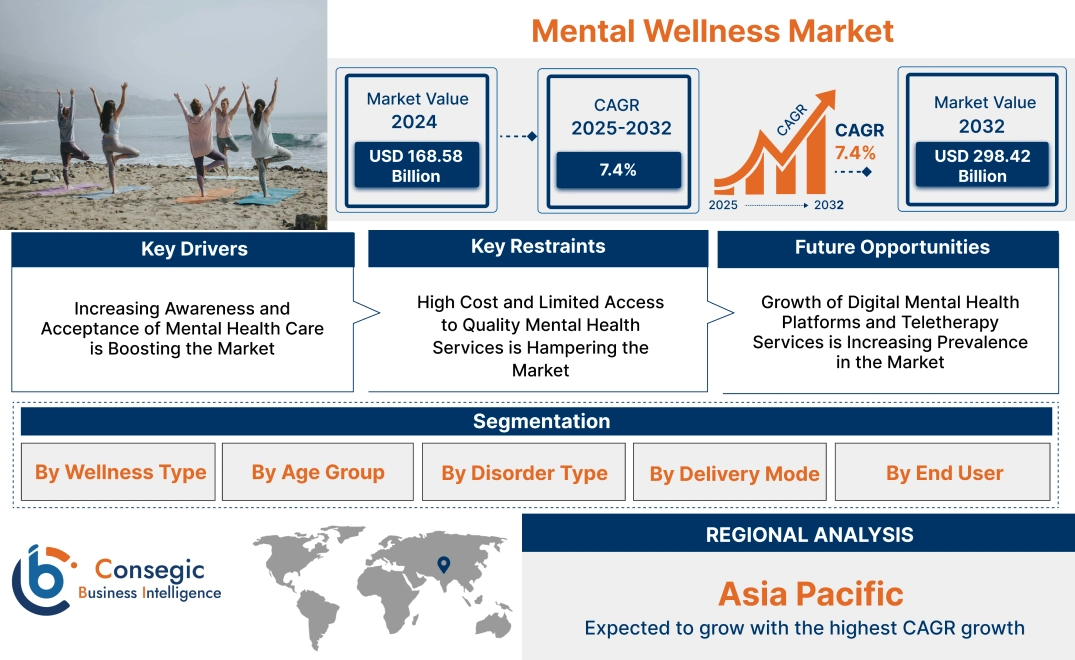
Mental Wellness Market size is estimated to reach over USD 298.42 Billion by 2032 from a value of USD 168.58 Billion in 2024 and is projected to grow by USD 178.05 Billion in 2025, growing at a CAGR of 7.4% from 2025 to 2032.
Mental Wellness Market Scope & Overview:
The mental wellness focuses on products, services, and solutions aimed at promoting emotional, psychological, and social well-being. This market includes therapy and counseling services, mental health apps, mindfulness and meditation programs, stress management solutions, and wellness retreats. Additionally, it covers nutritional supplements, wearable devices for mental health tracking, and corporate wellness programs designed to reduce stress and improve mental resilience.
Key products and solutions of the market include personalized mental health solutions, digital accessibility, and holistic approaches to mental health care. The benefits include reduced anxiety and stress levels, improved emotional resilience, and enhanced overall quality of life.
Applications span stress management, sleep improvement, anxiety reduction, mood enhancement, and workplace mental health initiatives. End-users include individuals, corporate organizations, educational institutions, and healthcare providers, driven by increasing awareness of mental health issues, rising stress-related disorders, technological advancements in mental health solutions, and supportive government initiatives promoting mental wellness.
Mental Wellness Market Dynamics - (DRO) :
Key Drivers:
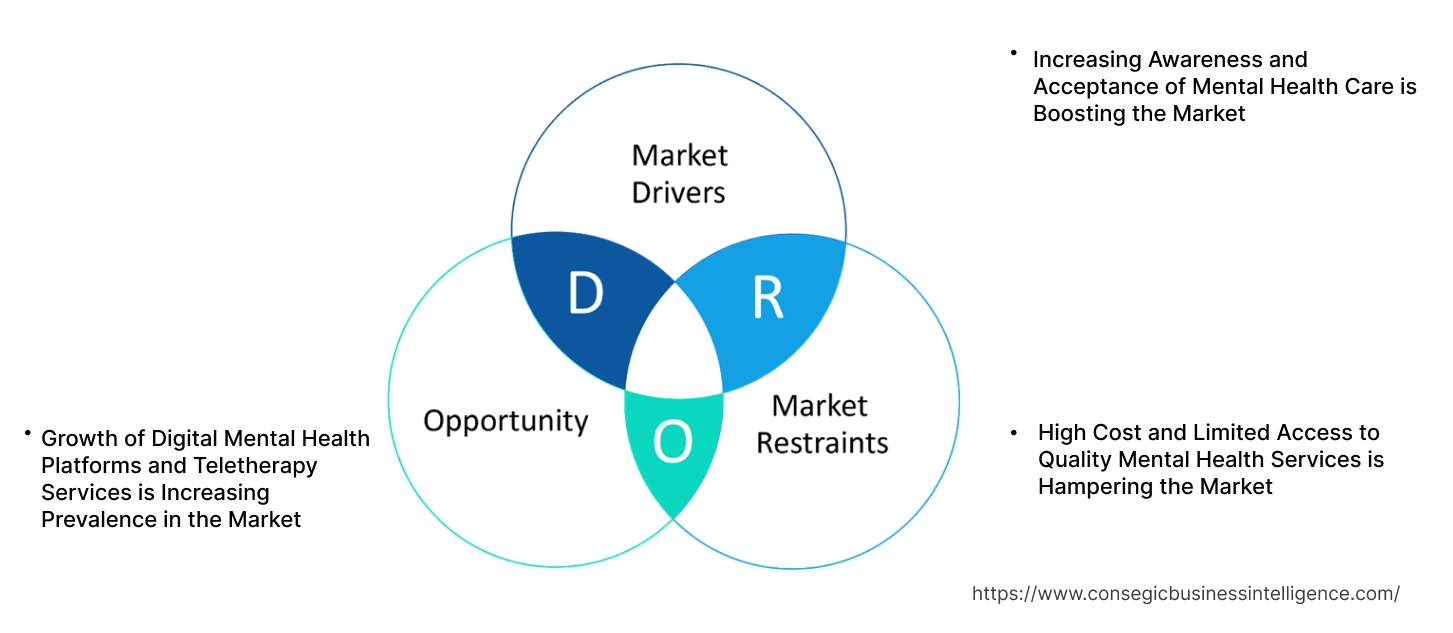
Increasing Awareness and Acceptance of Mental Health Care is Boosting the Market
The growing global awareness and acceptance of mental health issues have become a significant driver of the mental wellness market. Increased advocacy, public health campaigns, and media coverage have destigmatized mental health discussions, encouraging more individuals to seek support and invest in mental wellness products and services. Governments and organizations worldwide are prioritizing mental health by integrating mental wellness programs into workplace policies, schools, and community health initiatives.
- In June 2022, the World Health Organization (WHO) emphasized the urgent need for expanded access to mental health services in its report. With 1 in every 8 people globally affected by mental disorders, the WHO called for increased investment in mental health infrastructure and the integration of mental health services into primary healthcare systems. This initiative has driven industry players to accelerate the development of innovative and accessible mental health solutions to bridge care gaps, reduce stigma, and meet the growing demand for mental wellness products and services.
Additionally, the rising incidence of stress, anxiety, and depression exacerbated by modern lifestyles and the impact of global events like the COVID-19 pandemic, has heightened the demand for mental health solutions, including therapy, mindfulness practices, and digital wellness tools.
Key Restraints:
High Cost and Limited Access to Quality Mental Health Services is Hampering the Market
Despite the growing recognition of mental health's importance, the market is restrained by the high cost and limited access to quality mental health care, particularly in low- and middle-income regions. Professional therapy, psychiatric consultations, and wellness programs can be prohibitively expensive for many individuals, with limited insurance coverage for mental health services exacerbating the financial burden. Furthermore, the shortage of trained mental health professionals in many countries creates a gap between demand and service availability, leading to long waiting times and inadequate care. This lack of access to affordable, quality mental health services remains a critical barrier to the widespread adoption of mental wellness solutions.
Future Opportunities :
Growth of Digital Mental Health Platforms and Teletherapy Services is Increasing Prevalence in the Market
The rapid mental wellness market expansion of digital mental health platforms and teletherapy services presents a significant growth opportunity for the market. Mobile apps offering meditation, mindfulness, stress management, and online counseling have become widely popular due to their affordability, convenience, and accessibility. Platforms like Headspace, Calm, and online therapy providers such as BetterHelp and Talkspace have gained traction globally, providing users with flexible mental health support. Advancements in artificial intelligence (AI) and machine learning are also enabling the development of personalized mental wellness solutions, improving user engagement and outcomes. Additionally, the integration of wearable devices that track mental well-being indicators (e.g., heart rate variability, sleep patterns, and stress levels) is creating new mental wellness market opportunities for proactive mental health management. As the adoption of telehealth and digital wellness tools grows, companies investing in scalable and innovative mental health solutions are well-positioned for substantial market expansion.
These dynamics underscore the rising importance of mental wellness in global health priorities. While affordability and accessibility challenges persist, the integration of digital platforms, teletherapy, and personalized wellness solutions are driving transformative trends in the market, reshaping how mental health care is accessed and delivered worldwide.
Mental Wellness Market Segmental Analysis :
By Wellness Type:
Based on wellness type, the market is segmented into senses, spaces, and sleep; brain boosting nutraceuticals & botanicals; self-improvement; meditation and mindfulness; traditional and complementary medicine; and therapy and counseling services.
The therapy and counseling services segment accounted for the largest revenue share in 2024.
- Increasing awareness about mental health and the rising prevalence of mental disorders have driven mental wellness market demand for professional therapy and counseling services.
- Growing government initiatives and insurance coverage for mental health treatments support market dominance.
- Expanding access to mental health professionals and services through public and private healthcare systems fuels mental wellness market growth.
- Rising destigmatization of mental health issues has led to higher development for therapy and counseling services across demographics.
The meditation and mindfulness segment is anticipated to register the fastest CAGR during the forecast period.
- Rising stress levels, lifestyle-related mental health issues, and growing awareness of self-care practices have boosted advancemnt for mindfulness and meditation programs.
- Increasing adoption of mindfulness apps and virtual meditation sessions has expanded accessibility to these services.
- Corporate wellness programs are increasingly incorporating mindfulness practices to improve employee productivity and mental well-being.
- Growing scientific validation of mindfulness techniques for managing stress, anxiety, and depression is driving adoption.
By Age Group:
Based on age group, the market is segmented into children and adolescents, adults, and the geriatric population.
The adults segment accounted for the largest revenue in mental wellness market share in 2024.
- Adults face increasing mental health challenges due to work-related stress, lifestyle pressures, and social dynamics.
- High prevalence of anxiety, depression, and burnout among working professionals drives demand for mental wellness services.
- Growing acceptance and participation in therapy, counseling, and self-improvement programs among adults support this segment's analysis.
- Expanding corporate wellness initiatives aimed at addressing workplace mental health further bolsters this segment.
The children and adolescents segment is anticipated to register the fastest CAGR during the forecast period.
- Rising cases of anxiety, depression, and stress among children and adolescents due to academic pressures and social media exposure are driving development for mental wellness solutions.
- Increasing focus on early mental health intervention in educational institutions supports trends in this segments analysis.
- Expansion of child-friendly therapy and mindfulness programs tailored to young audiences boosts adoption.
- Government initiatives and parental awareness about mental well-being in children are expected to propel mental wellness market growth in this segment.
By Disorder Type:
Based on disorder type, the market is segmented into anxiety disorders, depression, stress-related disorders, substance abuse disorders, sleep disorders, and others.
The anxiety disorders segment accounted for the largest revenue in mental wellness market share in 2024.
- Anxiety disorders are the most common mental health conditions globally, leading to high mental wellness market demand for therapy, medication, and wellness programs.
- Increasing societal pressures, economic uncertainties, and lifestyle challenges contribute to the growing prevalence of anxiety.
- Expanding availability of cognitive-behavioral therapy (CBT), mindfulness programs, and digital therapeutics for anxiety management drives this segmental analysis.
- Ongoing awareness campaigns and education about anxiety disorders have encouraged more individuals to seek professional help.
The sleep disorders segment is anticipated to register the fastest CAGR during the forecast period.
- Increasing prevalence of sleep disorders like insomnia and sleep apnea, often linked to stress and anxiety, drives trends for sleep wellness solutions.
- Rising adoption of sleep-focused therapies, wearable sleep trackers, and relaxation techniques supports mental wellness market trends in this segment.
- Expanding product innovations in sleep aids, such as smart mattresses and sleep-inducing devices, enhance market potential.
- Growing awareness of the impact of sleep on mental health is expected to drive significant growth in this segment.
By Delivery Mode:
Based on delivery mode, the market is segmented into in-person counseling and therapy, online platforms and apps, and workshops and seminars.
The in-person counseling and therapy segment accounted for the largest revenue share in 2024.
- In-person counseling remains the most effective mode for treating severe mental health conditions and ensuring personalized care.
- Increasing availability of mental health professionals and expanding healthcare industry support this segment's dominance.
- Growing insurance coverage and healthcare policies for mental health services encourage in-person consultations.
- Rising development for specialized therapy services, including group therapy and psychiatric counseling, drives market mental wellness market trends.
The online platforms and apps segment is anticipated to register the fastest CAGR during the forecast period.
- The rise of teletherapy and mental health apps has made mental wellness services more accessible and affordable.
- Increasing smartphone penetration and internet accessibility globally are driving the adoption of online mental health platforms.
- Integration of artificial intelligence and data analytics in mental wellness apps enhances personalized care and engagement.
- Growing preference for privacy and convenience among users is propelling the growth of digital mental health solutions.
By End-User:
Based on end-user, the market is segmented into hospitals, mental health clinics, homecare settings, educational institutions, and corporate organizations.
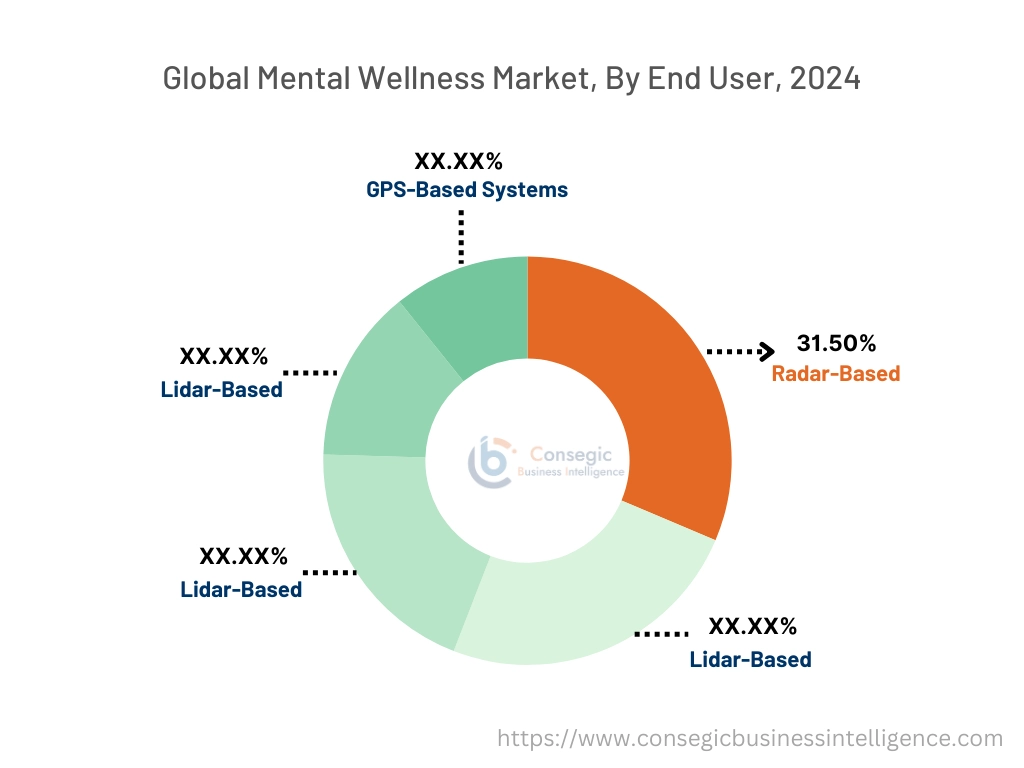
The hospitals segment accounted for the largest revenue share of 31.50% in 2024.
- Hospitals serve as primary centers for diagnosing and treating severe mental health conditions, supporting this segment's dominance.
- Increasing hospital investments in dedicated mental health departments and psychiatric units drive advancement.
- Rising hospital admissions for acute mental health crises and substance abuse treatments further bolster this segment.
- Expanding collaborations between hospitals and mental health professionals improves treatment accessibility and quality.
The corporate organizations segment is anticipated to register the fastest CAGR during the forecast period.
- Increasing awareness about workplace mental health has led organizations to invest in employee wellness programs.
- Rising workplace stress, burnout, and mental health issues among employees are driving demand for corporate mental wellness solutions.
- Integration of mental health support services, mindfulness programs, and counseling in employee assistance programs (EAPs) boosts trends.
- Growing emphasis on mental well-being as a component of organizational productivity and retention strategies is fueling this segment.
Regional Analysis:
The regions covered are North America, Europe, Asia Pacific, the Middle East and Africa, and Latin America.
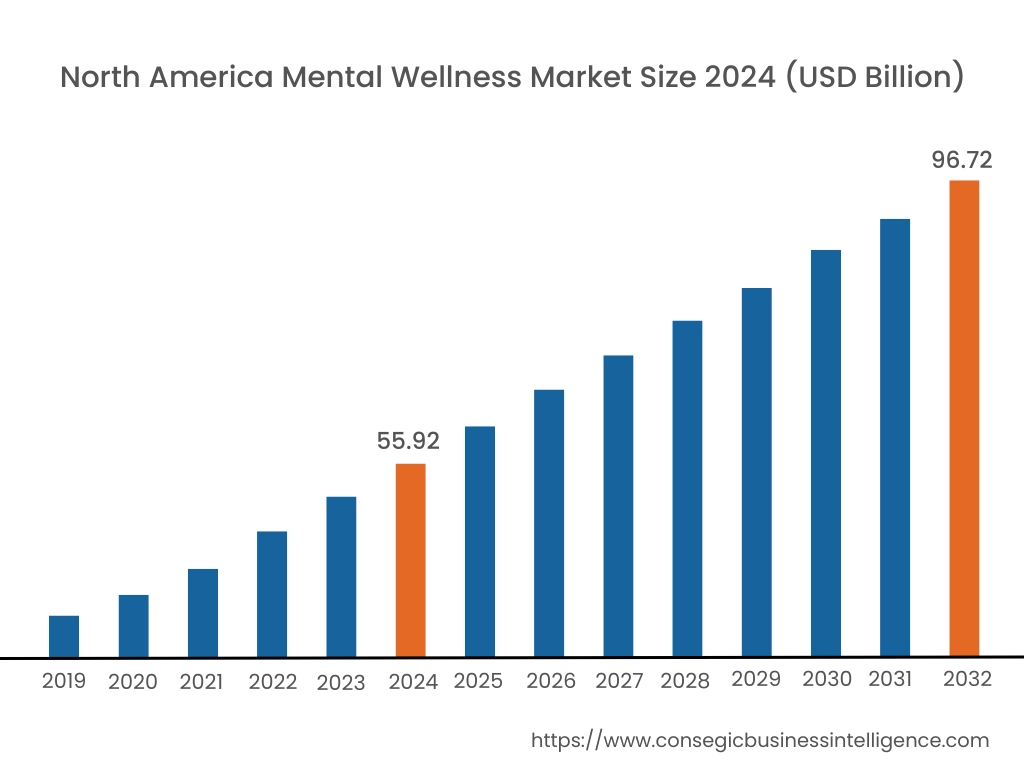
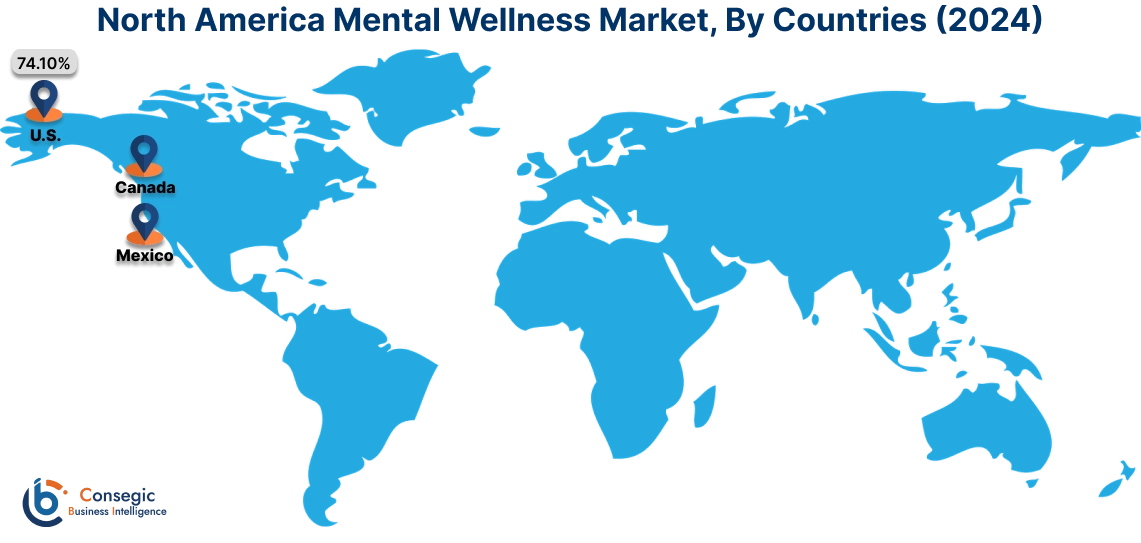
In 2024, North America was valued at USD 55.92 Billion and is expected to reach USD 96.72 Billion in 2032. In North America, the U.S. accounted for the highest share of 74.10% during the base year of 2024. North America holds a significant share in the global mental wellness market, driven by increasing awareness about mental health, rising prevalence of stress-related disorders, and strong governmental support for mental health initiatives. The U.S. leads the region with widespread adoption of digital mental wellness platforms, therapy services, and mindfulness-based stress reduction programs. The growing demand for mental health apps, counseling services, and wellness retreats also contributes to market trends. Canada is expanding its mental health services through public health campaigns and integration of mental wellness programs in workplaces. However, stigma associated with mental health in certain communities and high therapy costs may hinder full market potential.
In Asia Pacific, the market is experiencing the fastest growth with a CAGR of 7.8% over the forecast period. The mental wellness market analysis, is fueled by rising awareness about mental health, increasing stress levels due to urbanization, and improving healthcare industry in China, India, and Japan. China leads the region with growing adoption of digital mental health platforms, meditation apps, and corporate wellness programs. India’s expanding middle-class population drives demand for affordable mental health services, including online counseling and mindfulness practices. Japan emphasizes preventive mental health care and stress management solutions, leveraging its technological advancements. However, cultural stigma surrounding mental health and limited access to mental health professionals in rural areas may hinder mental wellness market trends in certain parts of the region.
Europe is a prominent market for mental wellness, supported by progressive mental health policies, growing awareness campaigns, and significant government funding for mental health initiatives. Countries like Germany, the UK, and France are key contributors. Germany drives market surge through workplace wellness programs and increasing use of stress management solutions. The UK focuses on mental health awareness through national campaigns and widespread availability of counseling and therapy services, while France emphasizes early intervention strategies in schools and workplaces. However, disparities in mental health services across urban and rural areas may pose challenges to accessibility.
The Middle East & Africa region is witnessing steady growth in the market, driven by increasing governmental focus on mental health awareness and growing trends for wellness services. As per the mental wellness market analysis, countries like Saudi Arabia and the UAE are adopting mental health awareness programs and integrating wellness services into workplaces and healthcare facilities. In Africa, South Africa is emerging as a key market, focusing on improving access to mental health services and reducing stigma through community outreach programs. However, limited mental health infrastructure and cultural taboos in certain areas may restrict the expansion of wellness services.
Latin America is an emerging market for mental wellness, with Brazil and Mexico leading the region. Brazil’s growing awareness of mental health and increasing stress levels drive surge for therapy services, mindfulness apps, and wellness retreats. Mexico focuses on expanding access to mental health services through public health initiatives and workplace wellness programs. The regional analysis shows it also benefits from growing partnerships between mental health startups and healthcare providers. However, economic instability and limited access to mental health professionals may pose challenges to market expansion in smaller economies.
Top Key Players and Market Share Insights:
The mental wellness market is highly competitive with major players providing products and services to the national and international markets. Key players are adopting several strategies in research and development (R&D), product innovation, and end-user launches to hold a strong position in the global mental wellness market. Key players in the mental wellness industry include -
- Headspace Health (United States)
- com, Inc. (United States)
- Lyra Health (United States)
- Moodfit (United States)
- Mindhouse (India)
- Talkspace, Inc. (United States)
- BetterHelp (United States)
- Ginger (United States)
- Happify Health (United States)
Mental Wellness Market Report Insights :
| Report Attributes | Report Details |
| Study Timeline | 2019-2032 |
| Market Size in 2032 | USD 298.42 Billion |
| CAGR (2025-2032) | 7.4% |
| By Wellness Type |
|
| By Age Group |
|
| By Disorder Type |
|
| By Delivery Mode |
|
| By End-User |
|
| By Region |
|
| Key Players |
|
| North America | U.S. Canada Mexico |
| Europe | U.K. Germany France Spain Italy Russia Benelux Rest of Europe |
| APAC | China South Korea Japan India Australia ASEAN Rest of Asia-Pacific |
| Middle East and Africa | GCC Turkey South Africa Rest of MEA |
| LATAM | Brazil Argentina Chile Rest of LATAM |
| Report Coverage |
|
Key Questions Answered in the Report
What factors are driving the growth of the Mental Wellness Market? −
The market is primarily driven by growing awareness of mental health issues, rising cases of stress, anxiety, and depression, advancements in digital mental health platforms, and the integration of mental wellness programs in workplaces and educational institutions.
What challenges are limiting the growth of the market? +
High costs of professional mental health services, limited access to quality care in low- and middle-income regions, and a shortage of trained mental health professionals are key barriers to market expansion.
Which segment holds the largest share in the market? +
The therapy and counseling services segment holds the largest market share due to increased demand for professional mental health support and growing destigmatization of mental health treatment.
Which region leads the global Mental Wellness Market? +
North America leads the global market, driven by widespread adoption of digital mental health platforms, strong healthcare infrastructure, and government support for mental health initiatives.
Overview
Reputation & Certifications


Our Services
- Market Intelligence & Forecasting
- Custom Research Solutions
- Market Entry Strategy
- Competitive Intelligence
- Customer Insights
- Industry Innovation Analysis
- Investment Advisory