Jump to Content
Agrochemicals Market - Size, Share, Industry Trends, and Forecasts (2024 - 2031)
Agrochemicals Market Size:
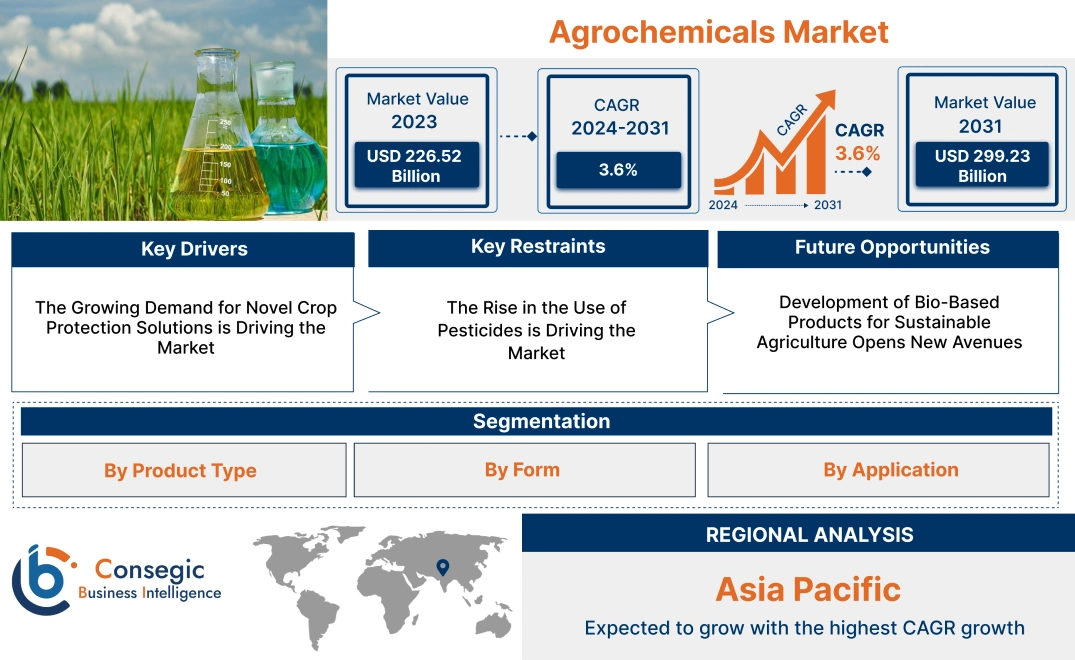
Agrochemicals Market size is growing with a CAGR of 3.6% during the forecast period (2024-2031), and the market is projected to be valued at USD 299.23 Billion by 2031 from USD 226.52 Billion in 2023.
Agrochemicals Market Scope & Overview:
Agrochemicals are a type of chemical substances that are essential for modern agriculture. They play a crucial role in boosting crop yields, safeguarding crops from pests, weeds, and diseases, and enhancing soil fertility. By controlling pests and diseases, these chemicals reduce crop losses, ensuring a stable food supply. They also improve crop quality and quantity, contributing to food security and economic development. They encompass a wide range of products, including fertilizers (nitrogenous, phosphatic, and others), pesticides (insecticides, fungicides, herbicides, biopesticides, and others), plant growth regulators, soil conditioners, and others. These products are formulated as liquids, powders, or other forms and are applied to various crops such as cereals and grains, oilseeds and pulses, fruits and vegetables, and others.
Key Takeaways:
- Market Growth: Expected to reach USD 299.23B by 2031 at a 3.6% CAGR.
- Core Importance: Essential for increasing crop yield, quality, and food security.
- Product Range: Includes fertilizers, pesticides, and growth regulators.
- Asia Pacific Leads: Largest share (36.75%) and fastest growth (4.2% CAGR), driven by countries like China and India.
- North America & Europe: Focus on sustainable and regulated use
- MEA & Latin America: Growth due to harsh conditions and expanding farmland
- Key Drivers: Rising food demand, population growth, and agricultural expansion.
- Sustainability Shift: Increasing focus on responsible usage and environmental impact.
Key Drivers:
The Growing Demand for Novel Crop Protection Solutions is Driving the Market
The increasing need for food products due to a growing number of individuals has put immense pressure on the agricultural sector. To meet this rising requirement, farmers need to adopt innovative and sustainable solutions to enhance crop yields and quality. The growing prevalence of pests, diseases, and weeds, coupled with climate change, poses significant challenges to agricultural productivity. As a result, there is a growing requirement for novel crop protection solutions such as new formulations of insecticides, and pesticides among others that are effective, environmentally friendly, and economically viable.
To address specific pest and disease problems, these novel solutions help farmers to maintain the crop's health. Various manufacturers are introducing novel solutions to address pest and disease problems.
- For instance, in December 2023, FMC Corporation, a leading agricultural sciences company, introduced its new optimized insecticide formulation, Coragen eVo. This innovative product is designed to provide enhanced control of key insect pests in various crops, including fruits, vegetables, and field crops. Coragen eVo leverages the active ingredient Rynaxypyr, known for its targeted mode of action and selectivity.
Overall, these solutions aim to enhance crop yields, minimize environmental impact, and ensure sustainable agricultural practices. By addressing specific pest and disease problems, these novel solutions help farmers maintain crop health and productivity.
The Rise in the Use of Pesticides is Driving the Market
The rising use of pesticides is a significant driver of the agrochemicals market growth. As pests continue to evolve and adapt, there is a growing need for effective and innovative pesticides to protect crops from damage and disease. This increasing demand has led to the development of new and more sophisticated pesticide formulations, driving market growth. Additionally, changing climatic conditions and the emergence of new pests and diseases have further necessitated the use of pesticides to maintain crop yields and quality. Based on the analysis, these factors have led to the rising utilization of these solutions in various agricultural settings.
- For instance, according to the data published by FAO, in 2022, total pesticide use in agriculture reached 3.70 Billion tons of active ingredients, marking a 4% increase compared to 2021. This trend reflects a decade-long growth of 13% from 2012.
Overall, factors like evolving pests, changing climate, and increasing food requirements have driven the rising utilization of pesticides in various agricultural settings. This trend has significantly contributed to the agrochemicals market growth.
Key Restraints :
Environmental and Health Concerns are Hampering the Market
The global agrochemicals industry is navigating a complex regulatory landscape that poses significant restraints to its development and profitability. Stringent regulations imposed by various government bodies aim to protect human health and the environment, but they also increase the cost and complexity of developing and commercializing new products.
Rigorous testing and approval processes significantly delay the time to market for new products. Additionally, strict restrictions on product use limit their market potential and reduce revenue opportunities. Adherence to stringent environmental and safety standards further burdens the industry with increased operational costs.
The dynamic nature of the regulatory environment adds to the complexity. Changes in regulations occur frequently, creating uncertainty and risk for businesses. This uncertainty makes long-term planning challenging for businesses and leads to substantial financial losses if they fail to adapt to evolving regulatory requirements. Ultimately, the ability of companies to navigate the complex regulatory landscape will determine their long-term success.
Future Opportunities :
Development of Bio-Based Products for Sustainable Agriculture Opens New Avenues
The development of Bio-Based products for sustainable agriculture is driving significant development, creating lucrative agrochemicals market opportunities for innovation and investment. As global agricultural practices face increasing pressure to meet the requirements of a growing population, there is a rising need for solutions that promote productivity while minimizing environmental impact. These products cater to the growing consumer requirement for food that is both high quality and produced in an environmentally responsible way. These products also help in reducing the carbon footprint of agriculture by promoting practices such as precision farming, which minimizes the overuse of chemicals and optimizes resource efficiency.
- For instance, in 2024, UPM Biochemicals has made a significant stride towards sustainable agriculture by launching its new range of bio-based plant stimulants, UPM SolargoTM. This innovative product line represents a significant shift away from traditional fossil fuel-derived chemicals, offering a more environmentally friendly and sustainable solution for farmers.
Overall, these products not only boost crop yields and quality but also contribute to environmental sustainability, thus creating lucrative agrochemicals market opportunities.
Agrochemicals Market Segmental Analysis :
By Product Type:
Based on product type, the market is segmented into fertilizers, pesticides, plant growth regulators, soil conditioners, and others.
Trends in the Product Type:
- The growing trend for biobased fertilizers is driven by the demand for organic products.
- The utilization of fungicides is used for the removal of fungal infestation.
The fertilizers segment accounted for the largest agrochemicals market share in 2023.
- The segment is further categorized into nitrogenous fertilizers, phosphatic fertilizers, and others.
- Fertilizers are materials that are applied to plants or the soil to provide proper nutrients and enhance the yield of the plant.
- Fertilizers, a crucial component of agrochemicals, play a pivotal role in modern agriculture. These chemical substances, both organic and inorganic, are applied to the soil or directly to plants to supplement essential nutrients like nitrogen, phosphorus, potassium, and others.
- Nitrogenous fertilizers supply essential nitrogen to plants, boosting their development and yield. Common types include urea, ammonium nitrate, ammonium sulfate, and calcium ammonium nitrate among others.
- By utilizing these nutrients, fertilizers enhance soil fertility, promote plant growth, and ultimately boost crop yields.
- Phosphatic fertilizers are a vital source of phosphorus, a key nutrient for plant growth and development. They play a crucial role in promoting root development, energy transfer, and flowering. Common types of phosphatic fertilizers include single superphosphate (SSP), double superphosphate (DSP), triple superphosphate (TSP), monoammonium phosphate (MAP), and diammonium phosphate (DAP) among others.
- As per the analysis, various tests and research activities are undertaken for the production of novel fertilizers using various nutrients.
- For instance, in November 2023, EuroChem-BMU completed pilot tests for the production of innovative mineral Nitrogen Phosphorous Sulphur (NPS) fertilizers. This development marks a significant step towards providing farmers with a more sustainable and efficient fertilizer solution.
- Thus, the use of fertilizers for providing nutrients to plants is influencing segments.
The plant growth regulator segment is expected to grow at the fastest CAGR over the forecast period.
- Plant growth regulators (PGRs) are chemical substances that regulate plant growth and development. They are used in agriculture to control various aspects of plant growth, such as root development, flowering, fruit setting, and ripening.
- These substances are synthetic or naturally occurring and are applied to plants in various forms.
- By carefully controlling the application of PGRs, farmers improve crop yields, quality, and uniformity.
- Based on the analysis, various novel products are introduced to enhance the yield and quality of the plant.
- For instance, in March 2023, Sumitomo Chemical India Ltd. launched Promalin, a cutting-edge plant growth regulator designed to enhance fruit size, quality, and yield in various crops. This innovative product offers a sustainable solution for modern agriculture, empowering farmers to optimize their harvests.
- Thus, the growing development and use of plant growth stimulators creates potential agrochemicals market trends for the product.
By Form:
Based on Form, the market is categorized into liquid, powder, and others.
Trends in the Form:
- Liquid formulations are well-suited for precision application techniques, such as spraying and fertigation. This allows for targeted delivery, reducing environmental impact, and optimizing resource use.
- Granular and micro granular formulations are applied directly to the soil or plant surface, providing targeted delivery of active ingredients.
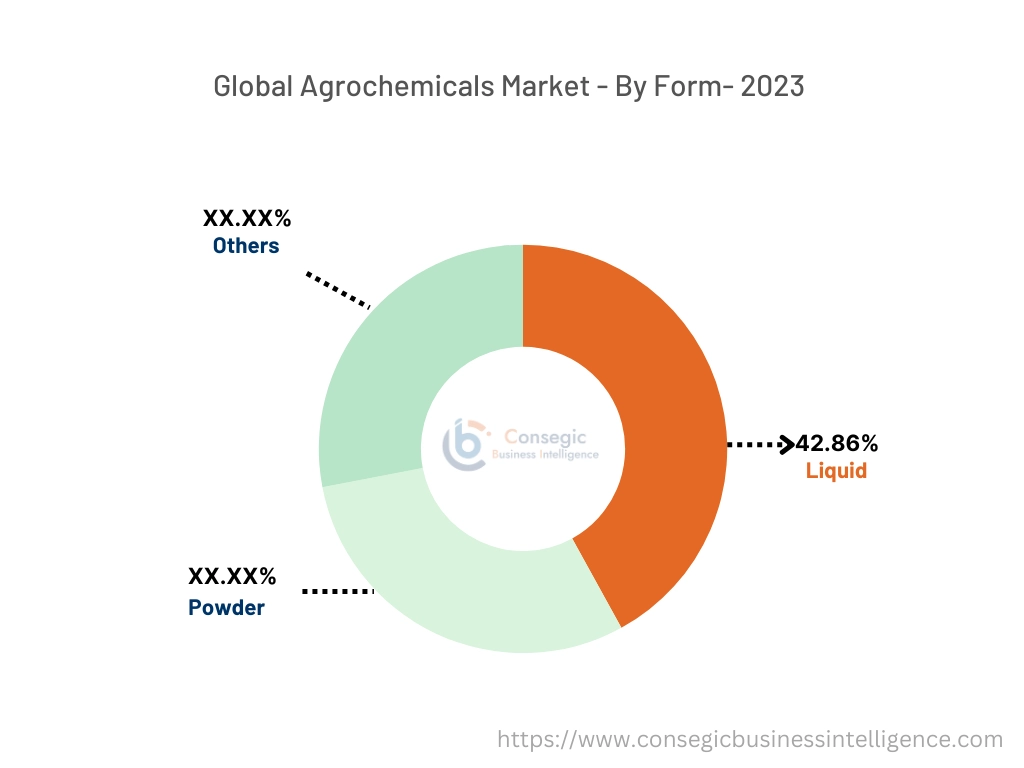
The liquid segment accounted for the largest market share of 42.86% in 2023 and is expected to grow at the fastest CAGR over the forecast period.
- Liquid formulations refer to solutions that are dissolved or suspended in a liquid medium. They have gained significant popularity in recent years due to their numerous advantages.
- Liquid formulations offer precise applications, ensuring uniform distribution of the active ingredients, such as urea, ammonium sulfate, and others across the target area of the crop or soil. This minimizes wastage and maximizes efficacy.
- Additionally, liquid formulations are often more convenient to handle, and store compared to solid or granular forms. They are easily mixed with water and applied using various equipment, including sprayers and drippers.
- Moreover, liquid formulations are formulated to incorporate multiple active ingredients, providing a comprehensive solution for pest and disease control.
- This versatility makes liquid formulations a valuable tool for modern agriculture, enabling farmers to optimize crop yields and quality while minimizing environmental impact.
- Numerous novel liquid-based formulations have been introduced for applications such as crop protection.
- For instance, in November 2023, FMC Corporation introduced Ethos Elite LFR, a novel combination of insecticide and biofungicide available in the liquid-based formulation. This innovative product offers a comprehensive approach to crop protection, combining chemical and biological active ingredients to provide superior pest and disease control.
- Liquid formulations are often absorbed quickly by plants, leading to rapid action and improved efficacy. This is particularly beneficial for controlling pests and diseases that quickly damage crops, leading to a further increase in adoption rate.
- Moreover, advancements in formulation technology, such as microencapsulation and nanoemulsions, are enabling the development of more effective and targeted liquid solutions. These technologies improve the stability, efficacy, and safety of liquid formulations creating lucrative opportunities over the forecast period.
- Overall, convenience, handling, and storage properties enhance the trends of liquid-based solutions thus driving the agrochemicals market expansion.
By Application :
Trends in the Application:
- The adoption of precision agriculture techniques in cereals & grains is optimizing resource use and minimizing environmental impact.
- Fruits and vegetables are often high-value crops, making it economically viable to invest in advanced crop protection technologies.
The cereals & grains segment accounted for the largest market share in the year 2023.
- Agrochemicals play a crucial role in the production of cereals and grains, helping to protect crops from pests, diseases, and weeds.
- Herbicides are used to control weeds that compete with crops for nutrients and water, ensuring optimal growth and yield.
- Insecticides are applied to combat insect pests that damage crops, such as aphids, caterpillars, and beetles.
- Fungicides are used to prevent and control fungal diseases that cause significant losses in cereal and grain production.
- Additionally, fertilizers play a crucial role in optimizing the development and yield of cereal and grain crops. These crops primarily require three essential nutrients: nitrogen, phosphorus, and potassium among others,
- Wheat, rice, maize, and others are common types of cereals and grains that use agrochemicals.
- The rise in the production of cereals and grains leads to the requirements for these chemicals, as these solutions are used to enhance crop yield and productivity.
- For instance, according to the data published by the World Bank Group, in 2024, globally, around 2.5 billion tons of cereals are produced annually. According to the FAO, maize, wheat, and rice collectively account for over 75% of global grain production. Thus, the incorporation of agrochemicals in the production of grain to improve the yield led to wide usage in crop production.
- Thus, the rise in production and consumption of cereals & grains leads to segmental trends leading to agrochemicals market demand.
The oilseed & pulses segment is expected to grow at the fastest CAGR over the forecast period.
- Oilseeds and pulses are essential crops that provide nutrients like protein, oil, and fiber.
- Agrochemicals play a crucial role in their cultivation, protecting them from pests, diseases, and weeds.
- Herbicides, insecticides, and fungicides among others are essential tools for protecting oilseed and pulse crops from weeds, pests, and diseases. By effectively managing these threats, farmers significantly improve crop yields and quality.
- Key oilseed crops like sunflower seeds and soybeans, along with various leguminous pulses, are witnessing increased cultivation.
- Major oilseed-producing countries such as Brazil, China, and the United States are expected to drive significant requirements for agrochemicals in the coming years to sustain and enhance their production, thus driving the segment requirement which leads to agrochemicals market trends.
Regional Analysis:
The regional segment includes North America, Europe, Asia Pacific, the Middle East and Africa, and Latin America.
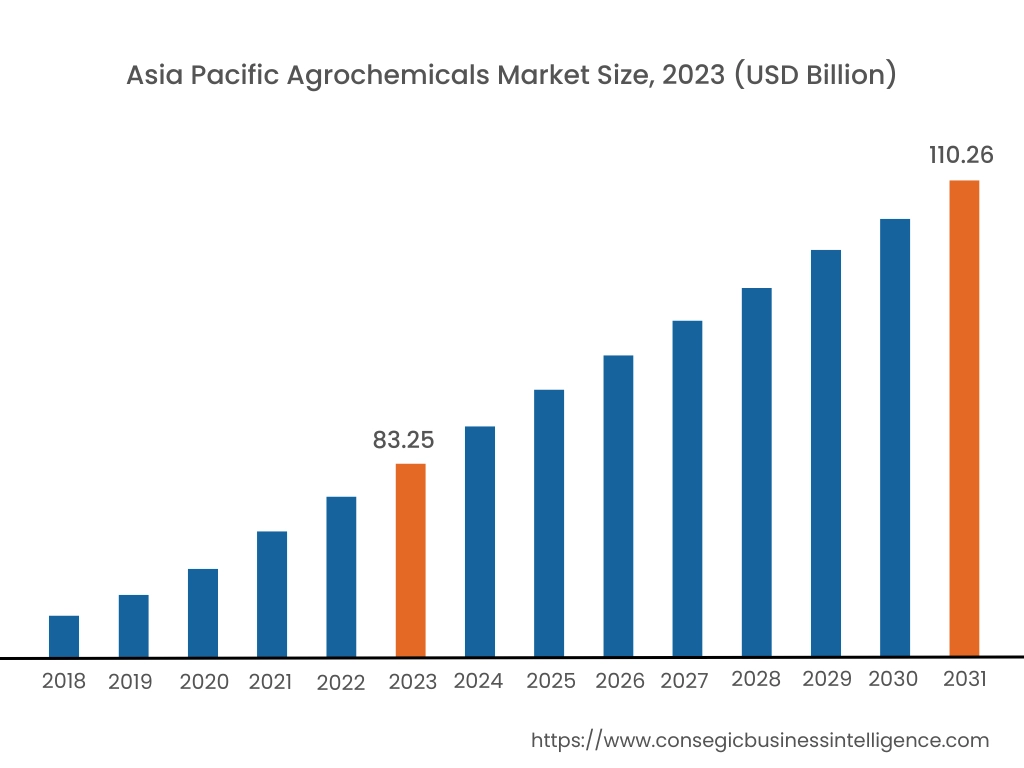
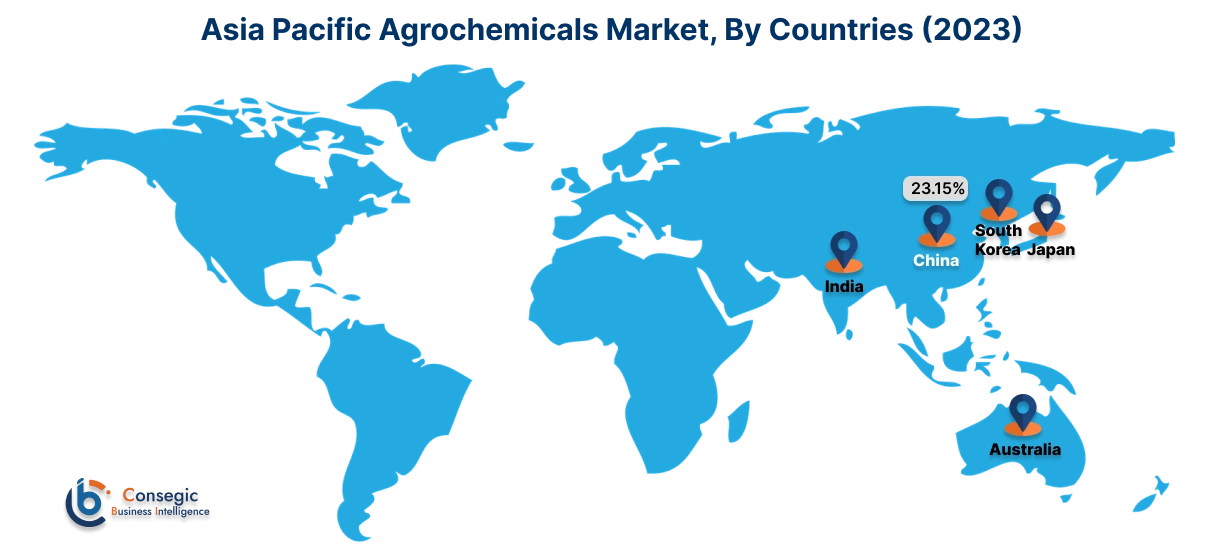
In 2023, Asia Pacific accounted for the highest agrochemicals market share at 36.75% and was valued at USD 83.25 Billion and is expected to reach USD 110.26 Billion in 2031 and is experiencing the fastest growth with a CAGR of 4.2% over the forecast period. In Asia Pacific, China accounted for the highest market share of 23.15% during the base year of 2023. The Asia Pacific region is one of the largest producers of agricultural solutions globally. Countries such as China, India, and Indonesia consist of largely agricultural land and are major producers of crops such as rice, wheat, corn, and others, driving the agrochemicals market demand. Factors such as increasing food requirements, expanding agricultural land, government support, and rising income levels are fueling the development of this market. Based on the agrochemicals market analysis, the rise in the agriculture industry leads to the utilization of these agricultural solutions.
- For instance, according to the data published in the World Food and Agriculture Yearbook, in 2022, states that Asia contributed 64% to the global total GDP. Notably, Asia has seen a significant rise in this area, with an increase from USD 1.2 trillion in 2000 to USD 2.3 trillion in 2020. The rise in the agriculture sector leads to the rise in the use of agrochemicals.
Thus, as per the agrochemicals market analysis, the rise in the agriculture sector leads to the rise in the use of agricultural solutions.
Agrochemical use in North America is significant, driven by the region's intensive agricultural practices. Herbicides, insecticides, and fungicides among others are widely used to control weeds, pests, and diseases, boosting crop yields and quality. Additionally, stricter regulations are promoting responsible use in North America. Furthermore, public awareness campaigns are educating farmers and consumers about the responsible use of these chemicals. By promoting sustainable practices and responsible use, the goal is to ensure the long-term health of agricultural ecosystems and human health. Overall, these factors are boosting the use of these chemicals in various agricultural practices for promoting crop health, thus influencing the agrochemicals market expansion.
Agrochemicals have played a crucial role in European agriculture, contributing significantly to food security and economic development. By effectively controlling pests, weeds, and diseases, these chemicals have helped farmers increase crop yields, improve crop quality, and reduce post-harvest losses. This has led to a more stable and reliable food supply for European populations. Additionally, these solutions have facilitated the development of more efficient farming practices, reducing the need for extensive manual labor and minimizing the overall environmental impact of agriculture. Based on the analysis, these factors lead to the utilization of these chemicals to enhance the crop yield and offer protection to the crop, thus driving market demand.
In the Middle East and Africa, agrochemicals have played a crucial role in enhancing agricultural productivity. By effectively controlling pests, weeds, and diseases, these chemicals have significantly increased crop yields. This has been particularly important in countries with harsh climatic conditions and limited water resources. By protecting crops from pests and diseases, these chemicals have ensured a more reliable and stable food supply, contributing to food security for the growing populations in these regions. Additionally, they have reduced post-harvest losses, improving the quality and quantity of agricultural produce. Moreover, these chemicals have facilitated the cultivation of crops in challenging environments, expanding agricultural frontiers and contributing to economic development in these regions.
Agrochemicals have played a pivotal role in boosting agricultural productivity in Latin America. By effectively controlling pests, weeds, and diseases, these chemicals have significantly increased crop yields, ensuring food security for a growing population. By effectively controlling pests and diseases, they have significantly reduced post-harvest losses. These chemicals protect crops from pests and pathogens during storage and transportation, ensuring that a higher proportion of the harvested yield reaches the market. Moreover, these chemicals have facilitated the cultivation of crops in expanding agricultural boundaries and contributing to the economic development of the region. These chemicals have enabled farmers to cultivate crops in marginal lands with poor soil quality, water scarcity, or adverse climatic conditions, expanding agricultural frontiers and contributing to economic development in the region.
Top Key Players & Market Share Insights:
The global agrochemicals market is highly competitive with major players providing products and services to the national and international markets. Key players are adopting several strategies in research and development (R&D) and product innovation to hold a strong position in the global agrochemicals market. Key players in the agrochemicals industry include-
Recent Industry Developments :
Manufacturing Unit:
- In September 2024, Ratnakar India Ltd. Launched its novel manufacturing Unit in Dahej, Gujrat to boost agrochemical production.
Product Enhancements:
- In September 2024, Crystal Crop Protection introduced PROCLAIM XTRA, a new insecticide designed to protect corn and soybean crops from a variety of pests.
- In April 2024, Bayer is developing a novel bioinsecticide for arable crops, aiming to provide a sustainable and environmentally friendly solution for pest control.
- In April 2024, Godrej Agrovet introduced a new pesticide, Hanabi, specifically designed to protect apple orchards in India from a range of pests.
Agrochemicals Market Report Insights :
| Report Attributes | Report Details |
| Study Timeline | 2018-2031 |
| Market Size in 2031 | USD 299.23 Billion |
| CAGR (2024-2031) | 3.6% |
| By Product Type |
|
| By Form |
|
| By Application |
|
| By Region |
|
| Key Players |
|
| North America | U.S. Canada Mexico |
| Europe | U.K. Germany France Spain Italy Russia Benelux Rest of Europe |
| APAC | China South Korea Japan India Australia ASEAN Rest of Asia-Pacific |
| Middle East and Africa | GCC Turkey South Africa Rest of MEA |
| LATAM | Brazil Argentina Chile Rest of LATAM |
| Report Coverage |
|
Key Questions Answered in the Report
How big is the Agrochemicals market? −
In 2023, the Agrochemicals market will be USD 226.52 Billion.
Which is the fastest-growing region in the Agrochemicals market? +
North America is the fastest-growing region in the Agrochemicals market.
What specific segmentation details are covered in the Agrochemicals market? +
Product Type, Formulation, and Application segmentation details are covered in the Agrochemicals market.
Who are the major players in the Agrochemicals market? +
BASF SE (Germany), Sumitomo Chemical Co., Ltd. (Japan), Bayer AG (Germany), Clariant (Switzerland), Solvay (Belgium), Bharat group. co. in (India), SABIC (Saudi Arabia), Dhanuka Agritech Ltd (India), Yara (Norway), ADM (United States).
Overview
Reputation & Certifications


Our Services
- Market Intelligence & Forecasting
- Custom Research Solutions
- Market Entry Strategy
- Competitive Intelligence
- Customer Insights
- Industry Innovation Analysis
- Investment Advisory