Jump to Content
Alpha Hydroxy Acid Market - Size, Share, Industry Trends, and Forecasts (2025 - 2032)
Alpha Hydroxy Acid Market Size:
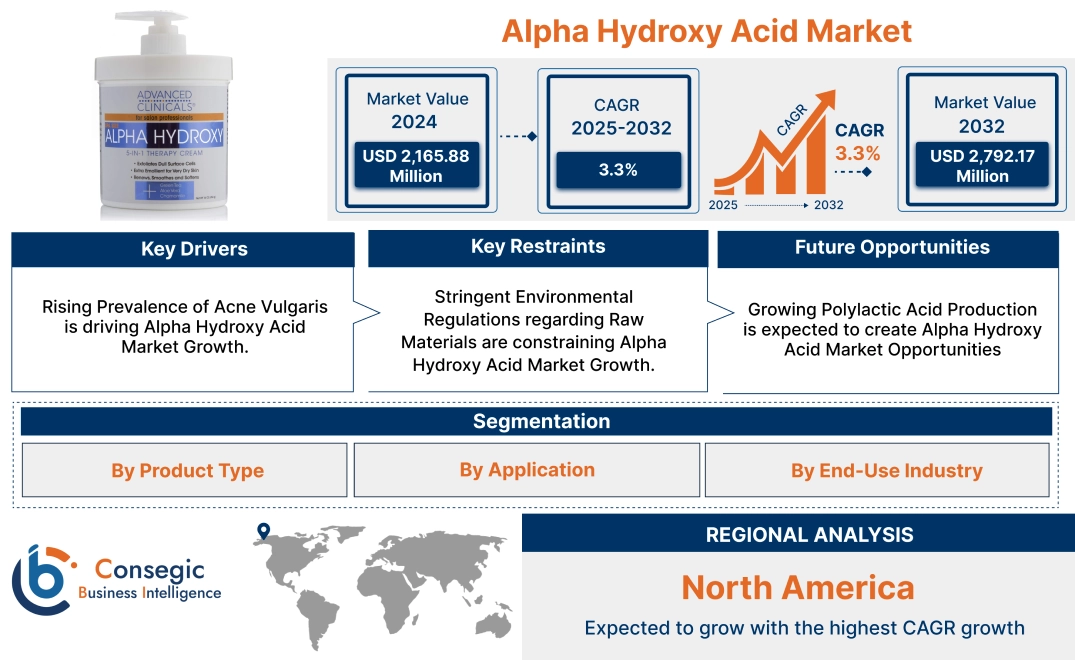
Alpha hydroxy acid market size is estimated to reach over USD 2,792.17 Million by 2032 from a value of USD 2,165.88 Million in 2024, growing at a CAGR of 3.3% from 2025 to 2032.
Alpha Hydroxy Acid Market Scope & Overview:
Alpha hydroxy acid (AHA) is a group of water-soluble organic acids derived from natural sources such as fruits, milk, sugarcane, and others. They are primarily characterized by their ability to gently exfoliate the skin by breaking down the bonds between dead skin cells and promoting cell turnover. AHA contains different types such as glycolic acid, tartaric acid, lactic acid, citric acid, and others, each with unique properties and applications. Furthermore, types of glycolic acid and lactic acid are widely used in skincare and cosmetics for their exfoliating and skin-renewing properties. The key applications of AHA include skincare, haircare, dairy products, and others. There are various advantages of AHA including exfoliation, anti-aging properties, skin hydration, enhancement of cell turnover, and others, which are driving the alpha hydroxy acid market.
Alpha Hydroxy Acid Market Dynamics - (DRO) :
Key Drivers:
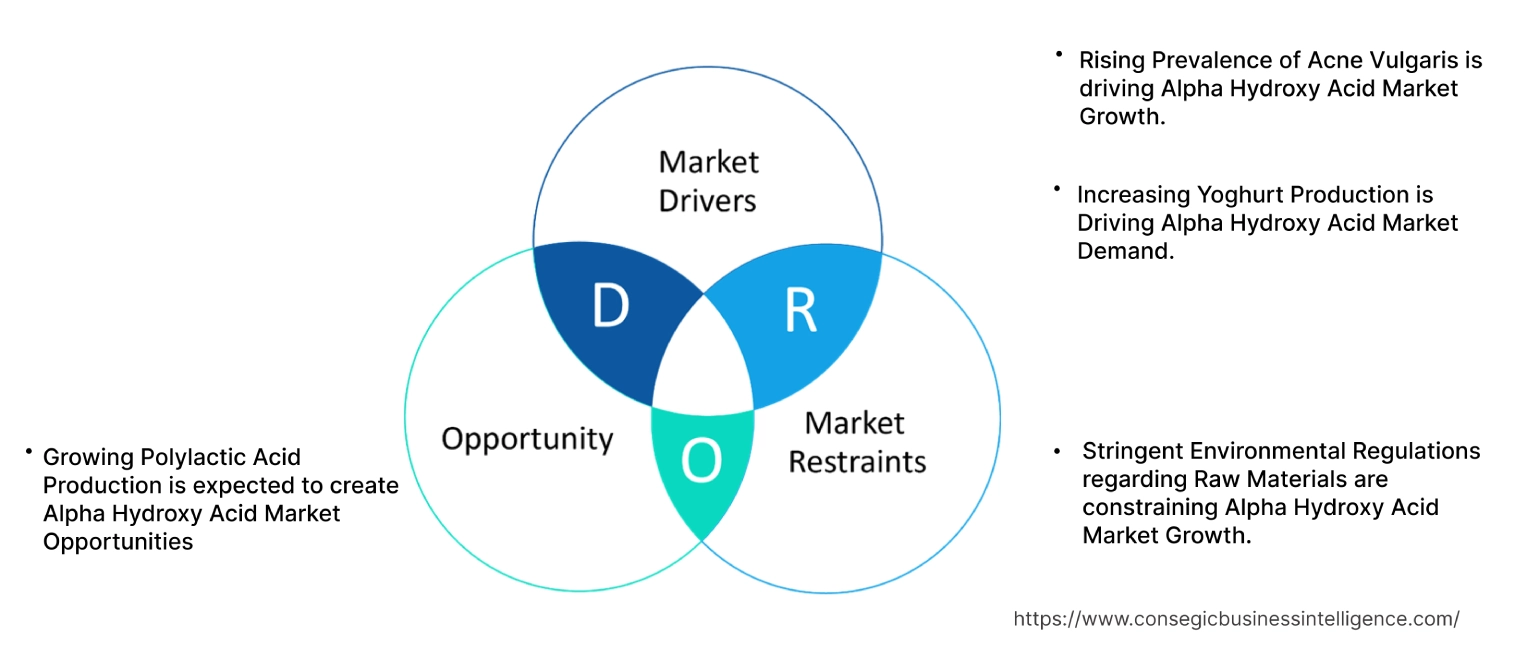
Rising Prevalence of Acne Vulgaris is driving Alpha Hydroxy Acid Market Growth.
Acne vulgaris is a chronic inflammatory skin condition and symptoms range from uninflamed blackheads to pus-filled pimples or large, red, and tender bumps. Alpha hydroxy acids such as glycolic acid and lactic acid are widely incorporated in the treatment of acne vulgaris due to their skin hydrating and exfoliating properties. The cases of acne vulgaris are rising due to hormonal changes, unhealthy lifestyles, pollution, and other factors.
- In 2022, according to the British Journal of Dermatology, acne vulgaris is affecting around 9.4% of the global population. Alpha hydroxy acids, particularly glycolic acid, and lactic acid are widely used in the treatment of acne vulgaris due to their exfoliating, pore-cleaning, and scar-reducing properties. Thus, the growing prevalence of acne vulgaris is driving the alpha hydroxy acid market, due to the role of glycolic acid and lactic acid in effective skin treatment.
Thus, the rising prevalence of acne vulgaris is leading to alpha hydroxy acid market demand, supported by effective treatment in reducing scars and improving skin hydration.
Increasing Yoghurt Production is Driving Alpha Hydroxy Acid Market Demand.
Alpha hydroxy acid, particularly lactic acid is used in the production of yogurt to give a smooth and creamy texture. It also helps in preserving yogurt by creating an environment that inhibits the growth of harmful bacteria, thus extending shelf life. During the fermentation process, lactic acid bacteria convert lactose into lactic acid, lowering the pH of the milk. This acidification causes the milk proteins to coagulate and form a yogurt.
- In 2023, according to Glanbia Nutritionals, the global production volume of yogurt is 6.5% more than the production volume in the year 2021. Lactic acid, a type of alpha hydroxy acid is used in the production of yoghurt for its antimicrobial and preservative properties. Thus, the surge in the production of yogurt fueled by the increasing need for probiotics and healthier snacks, has further accelerated the alpha hydroxy acid market expansion.
Thus, an increase in yogurt production is creating demand for lactic acid, leading to alpha hydroxy acid market expansion.
Key Restraints:
Stringent Environmental Regulations regarding Raw Materials are constraining Alpha Hydroxy Acid Market Growth.
Regulatory safety standards are a significant restrain in the alpha hydroxy acid market, particularly in industries like skincare, pharmaceuticals, and food & beverages. Alpha hydroxy acids such as glycolytic acid and lactic acid, are subject to stringent safety and efficacy regulations set by organizations like the United States Food and Drug Administration, European Medicines Agency (EMA), and others. These agencies monitor permissible concentrations in formulations to prevent potential side effects like irritation, redness, or hypersensitivity. Further, in the food & beverages sector, alpha hydroxy acids used as acidulants or preservatives must comply with food safety regulations, which vary across regions. This complexity delays product launches and increases compliance costs. Furthermore, the need for comprehensive safety testing and certification adds to the financial burden for alpha hydroxy acid manufacturers.
Thus, stringent safety regulations are constraining the production and adoption of alpha hydroxy acid, impacting market proliferation and innovation.
Future Opportunities :
Growing Polylactic Acid Production is expected to create Alpha Hydroxy Acid Market Opportunities
Lactic acid, a type of alpha hydroxy acid is the primary raw material used for polylactic acid production which involves fermentation and polymerization process. As sustainability and environmental concerns continue to rise, there is a growing shift towards polylactic acid adoption offering alternatives to traditional fossil-fuel-based plastic polymers.
- In 2024, Emirates Biotech launched a production plant for polylactic acid in the United Arab Emirates. The facility will be constructed in two phases, each with an annual capacity of 80,000 tonnes, resulting in a total production capacity of 160,000 tonnes per annum. Lactic acid, a type of alpha hydroxy acid is used for the development of polylactic acid, which is a key ingredient in bioplastic production. The surge in the production of polylactic acid is creating the need for lactic acid, thereby enhancing the market.
Thus, growing polylactic acid production is creating alpha hydroxy acid market opportunities due to the rising need for lactic acid.
Alpha Hydroxy Acid Market Segmental Analysis :
By Product Type:
By product type, the market is divided into glycolic acid, tartaric acid, lactic acid, citric acid, and others.
Trends in Product Type
- As per alpha hydroxy acid market trends, glycolic acid is widely used in skincare products promoting cell renewal and improving skin texture.
- Lactic acid is being largely incorporated in the production of bioplastics, reducing waste and promoting sustainability as per market trends.
The glycolic acid accounted for the largest market share in the year 2024.
- Glycolic acid is widely used alpha hydroxy acid which is primarily used in skincare products.
- It is derived from sugarcane and has the smallest molecule size among the other alpha hydroxy acids, allowing it to penetrate deeply into the skin.
- Glycolic acid is highly effective in exfoliating dead skin cells, promoting cell renewal, and improving skin texture.
- It is commonly used in anti-aging products such as moisturizers, serums, and more, due to its ability to reduce fine lines, dark spots, and acne scars.
- Beyond skincare glycolic acid is also used in hair care, where it enhances hair strength and elasticity.
- Thus, glycolic acid is widely used as alpha hydroxy acid due to its exfoliating skin hydration properties.
The lactic acid is expected to grow at the fastest CAGR over the forecast period.
- Lactic acid is rapidly used as alpha hydroxy acid, particularly in skincare products for its gentle exfoliating and hydrating properties, making it suitable for sensitive skin.
- It is derived from milk and natural fermentation processes and helps improve skin texture, reduce hyperpigmentation, and support cell turnover.
- Apart from skincare products, it is also used in the production of polylactic acid, which is a biodegradable polymer in bioplastics production, reducing waste and promoting sustainability.
- For instance, in 2024, SK Geo Centric introduced a microbial fermentation method for producing lactic acid for bio-based plastic polylactic acid, using a sustainable method that minimizes costs and chemical byproducts.
- In conclusion, the use of lactic acid is growing significantly, supported by its sustainability and hydrating
By Application:
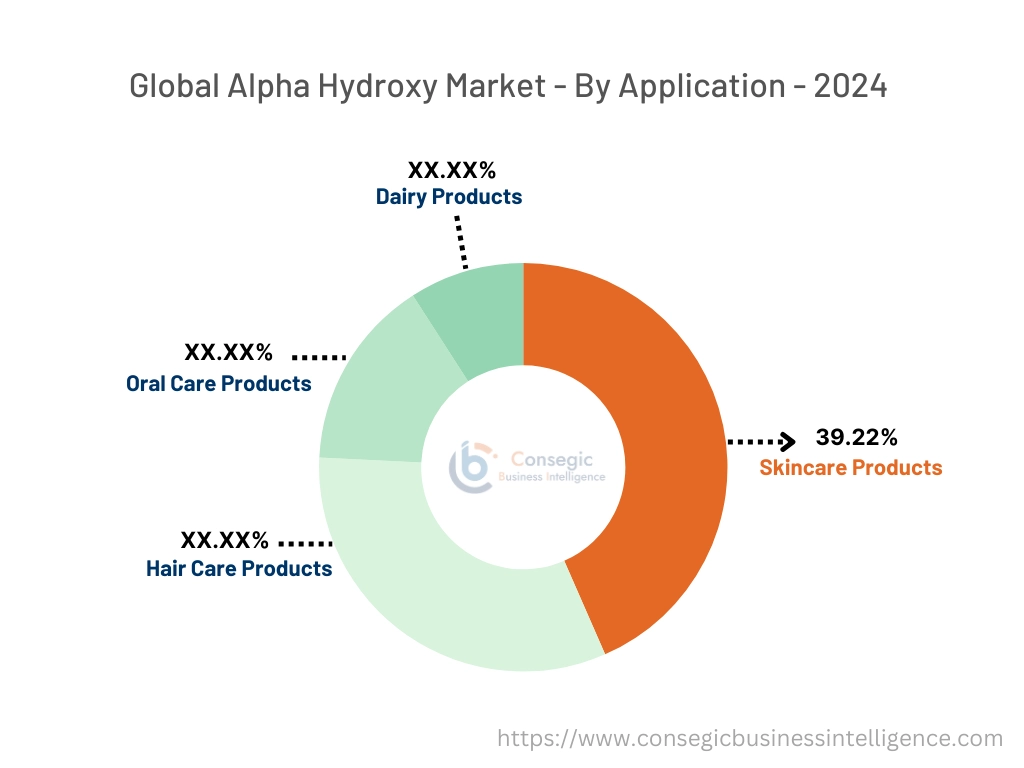
By application, the market is divided into skincare products, hair care products, oral care products, dairy products, and others.
Trends in Application
- As per alpha hydroxy acid market trends, glycolic acid and lactic acid are widely used in skin care products for treating acne, hyperpigmentation, and fine lines.
- AHA is rapidly used in hair care products due to its exfoliating and nourishing properties as per market trends.
The skincare products accounted for the largest market share of 39.22% in the year 2024.
- Alpha hydroxy acids, such as glycolic acid, lactic acid, and citric acid are widely used in skincare products due to their ability to exfoliate the skin and promote cell turnover.
- These acids work by breaking down the bonds between dead skin cells, allowing them to be removed more easily, which helps reveal fresher, smothered skin underneath.
- They are particularly effective in treating issues like acne, hyperpigmentation, and fine lines, making them a popular choice in anti-aging and acne-fighting formulations.
- In addition to exfoliation, they improve skin hydration by attracting moisture to the skin, contributing to plumper, healthier appearances.
- Thus, AHA is widely used in skincare products due to its ability to promote cell turnover and skin exfoliation.
Haircare products are expected to grow at the fastest CAGR over the forecast period.
- Alpha hydroxy acids, particularly glycolic acid, and lactic acid are gaining popularity in hair care products due to their exfoliating and nourishing properties.
- In shampoos and scalp treatments, it helps to remove dead skin cells, unclog hair follicles, and promote a healthier scalp environment.
- Companies are largely incorporating lactic acid in their hair care brands, due to its nourishing and cell turnover ability.
- For instance, in 2024, Cécred a hair care brand launched by Beyoncé included products such as a double-cleanse duo clarifying shampoo & scalp scrub which contains lactic acid and other ingredients.
- Thus, AHA is gaining traction in hair care products, promoting a healthier scalp environment and nourishing hair effectively.
By End-Use Industry:
By end-use industry, the segment is divided into cosmetics & personal care, food & beverages, pharmaceuticals, agriculture, and others.
Trends in End-Use Industry
- In cosmetics and personal care, alpha hydroxy acid is widely used due to its exfoliating and skin hydration properties.
- As per market trends, the use of lactic acid is rising in food and beverages due to its microbial and preservative properties.
Cosmetics and personal care accounted for the largest market share in the year 2024.
- In cosmetics and personal care, alpha hydroxy acids, including glycolic acid and lactic acid are widely used for their exfoliating and skin-renewing properties.
- They are effective in treating acne, hyperpigmentation, and fine lines, as they stimulate collagen production and enhance skin hydration.
- Alpha hydroxy acid, helps remove dead skin cells, promotes cell turnover, and improves skin texture, making them a key ingredient in skin cleansers, gels, shampoos, and others.
- For instance, in 2024, Victoria Beckham launched a skin cleansing duo which includes Daily Oil Cleanser and Daily Lactic Acid Gel Cleanser. It contains lactic acid and other ingredients for skin nourishment and pigmentation reduction.
- Thus, alpha hydroxy acid is widely used in cosmetics and personal care, due to its skin hydrating and exfoliating properties.
Food and beverages are expected to grow at the fastest CAGR over the forecast period.
- Alpha hydroxy acid is largely being incorporated in food and beverages, due to its functional and preservative properties.
- Citric acid is the widely used alpha hydroxy acid in fruits, juices, and candy to provide a flavor and acts as an acidulant, enhancing the taste of these products.
- Alpha hydroxy acid is widely used in yogurt, cheese, and others which aid in fermentation, improve texture, and maintain product freshness.
- It is also used in processed foods to prevent microbial growth and increase the shelf life of the products.
- In conclusion, the use of alpha hydroxy acid is growing rapidly in food and beverages, due to their preserving and texture-improving properties.
Regional Analysis:
The regional segment includes North America, Europe, Asia Pacific, the Middle East and Africa, and Latin America.
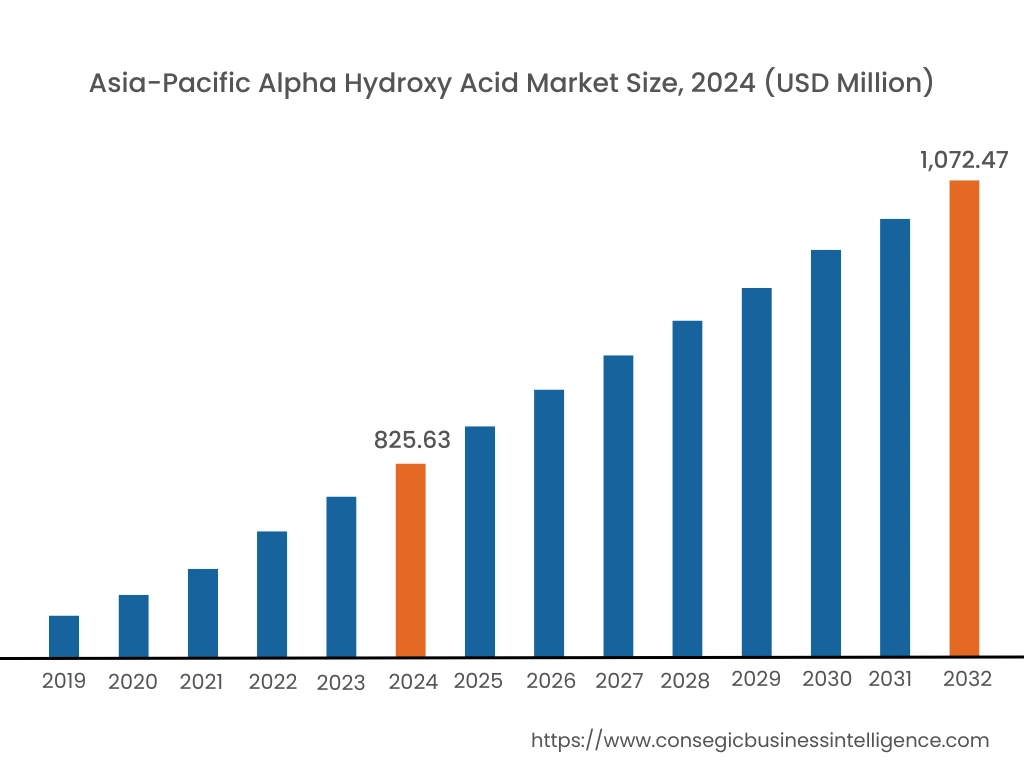
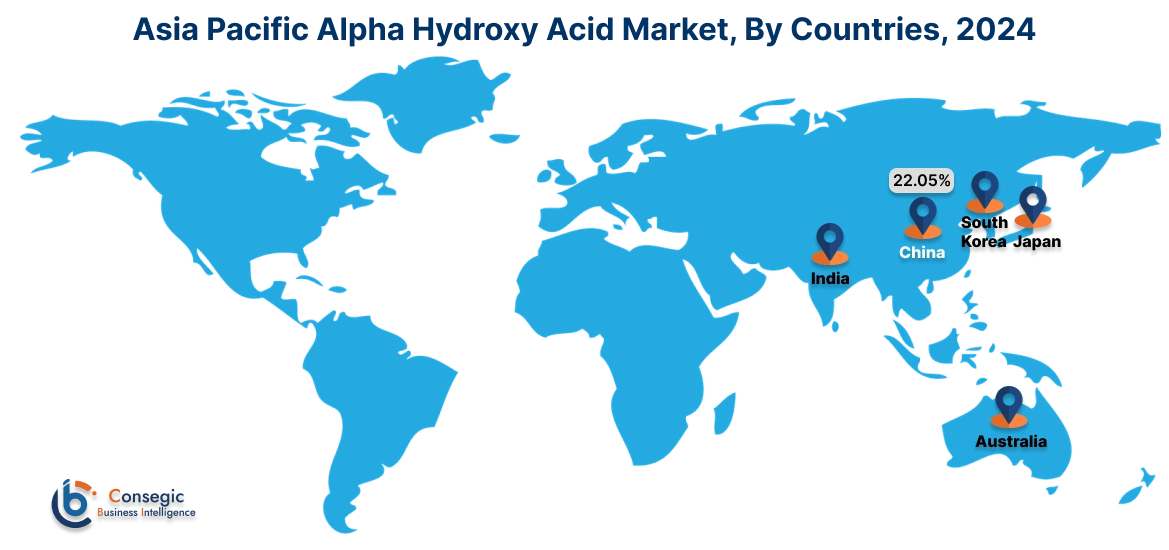
In 2024, Asia Pacific accounted for the highest market share at 38.12% and was valued at USD 825.63 Million and is expected to reach USD 1,072.47 Million in 2032. In Asia Pacific, China accounted for the highest market share of 22.05% during the base year of 2024.
The alpha hydroxy acid market share of the Asia-Pacific region is experiencing market proliferation, driven by increasing consumer awareness of skincare and rising disposable incomes in emerging economies like China, India, Japan, and South Korea. Alpha hydroxy acid is gaining traction in the food & beverages and pharmaceuticals sectors in the region, with growing applications in functional foods and wound healing. Additionally, the region’s boosting cosmetics and personal care sector is a major contributor, with alpha hydroxy acids like glycolic acid and lactic acid being key ingredients in exfoliating, anti-aging, and brightening skincare products.
- In 2024, Foxtale collaborated with Nykaa to introduce body care products. It includes a body wash and lotion comprising glycolic acid and other ingredients. Glycolic acid is one of the types of alpha hydroxy acid and it is widely used in body care products to enhance skin tone and texture, further accelerating the market.
Thus, Asia-Pacific is dominating the market due to the well-established cosmetic sector and growing applications in the food & beverages sector as per the analysis.
North America is expected to witness the fastest CAGR of 3.8% over the forecast period of 2024-2031.
As per alpha hydroxy acid market analysis, North America is growing significantly in the market driven by the growing applications across personal care, pharmaceuticals, and food & beverages industries. The region’s well-established cosmetics sector is a major contributor, with the rising consumer preference for skin care products containing alpha hydroxy acids like glycolic acid and lactic acid for their exfoliating and anti-aging benefits. The increasing prevalence of skin-related disorders, including acne and hyperpigmentation, coupled with high disposable income, boosts the adoption of premium alpha hydroxy acid-based products. The pharmaceutical sector also supports market growth, as alpha hydroxy acid is used in wound healing and dermatological treatments.
Thus, the alpha hydroxy acid market share in the North America region is expanding significantly supported by the robust cosmetics sector and rising consumer preference towards organic products as per analysis.
According to alpha hydroxy acid market analysis, the Europe region is witnessing substantial growth, driven by increasing preferences for natural and organic cosmetic products and rising awareness of alpha hydroxy acid benefits in skincare. Countries like Germany, France, and the United Kingdom are leading markets, supported by a strong presence of cosmetics and personal care manufacturers. The region’s aging population has significantly boosted the need for aging and exfoliating skincare products containing alpha hydroxy acids such as glycolic acid and lactic acid. Additionally, the stringent regulations set by the European Union, including compliance with cosmetic regulations, ensure high-quality and safer products, fostering consumer trust.
The Middle East and Africa region is growing steadily in the market, driven by increasing consumer awareness of skincare and personal care products. Urbanizations and rising disposable incomes in countries like the UAE, Saudi Arabia, and South Africa are contributing to the demand for alpha hydroxy acid-based products, particularly in the cosmetics sector. Skincare products containing alpha hydroxy acid such as glycolic acid and lactic acid, are popular for addressing concerns such as hyperpigmentation, acne, and skin aging, which are prevalent in the region due to prolonged sun exposure. The growing adoption of premium beauty products and a shift towards natural and organic formulations further fuel market growth as per analysis.
As per market analysis, Latin America is experiencing growth due to rising demand for skincare and personal care products across countries like Brazil, Mexico, and Argentina. The region’s growing middle-class population and increasing awareness of skincare benefits are driving the adoption of alpha hydroxy acid-based products, particularly for anti-aging, acne treatment, and hyperpigmentation solutions. Brazil, being one of the largest beauty markets globally, significantly contributes to the demand for alpha hydroxy acid, with glycolic acid and lactic acid being widely used in exfoliating and rejuvenating formulations. Additionally, the natural and organic cosmetics trend aligns with consumer preferences, further boosting the market in the region.
Top Key Players and Market Share Insights:
The alpha hydroxy acid industry is highly competitive with major players providing products to the national and international markets. Key players are adopting several strategies in research and development (R&D) and product innovation to hold a strong position in the global alpha hydroxy acid market. Key players in the alpha hydroxy acid industry include-
- BASF (Germany)
- Procter & Gamble (United States)
- Kao Corporation (Japan)
- Galderma (Switzerland)
- Henkel (Germany)
- DuPont (United States)
- L'Oréal Paris (France)
- Unilever (United Kingdom)
- The Chemours Company (United States)
- Cargill (United States)
Recent Industry Developments :
Mergers and Acquisitions:
- In 2023, PureTech Scientific LLC acquired the glycolic acid business from The Chemours Company for USD 137 million. It makes PureTech Scientific a global leader in the organic synthesis of ultra-high purity alpha hydroxy acids for the Life Sciences and Specialty Chemical industries.
Launches:
- In 2024, NIVEA India launched a derma skin clear range containing salicylic acid, niacinamide, and glycolic acid that are specially designed for blemish-prone skin.
- In 2023, OLAY launches OLAY Super Serum, a skincare innovation that includes activated niacinamide, alpha hydroxy acid, and other ingredients.
Joint Venture:
- In 2022, LG Chem and ADM launch a joint venture for U.S. production of lactic acid to meet the growing demand for a wide variety of plant-based products, including bioplastics. The joint venture, GreenWise Lactic, would produce up to 150,000 tons of high-purity corn-based lactic acid annually.
Alpha Hydroxy Acid Market Report Insights :
| Report Attributes | Report Details |
| Study Timeline | 2019-2032 |
| Market Size in 2032 | USD 2,792.17 Million |
| CAGR (2025-2032) | 3.3% |
| By Product Type |
|
| By Application |
|
| By End-Use Industry |
|
| By Region |
|
| Key Players |
|
| North America | U.S. Canada Mexico |
| Europe | U.K. Germany France Spain Italy Russia Benelux Rest of Europe |
| APAC | China South Korea Japan India Australia ASEAN Rest of Asia-Pacific |
| Middle East and Africa | GCC Turkey South Africa Rest of MEA |
| LATAM | Brazil Argentina Chile Rest of LATAM |
| Report Coverage |
|
Key Questions Answered in the Report
How big is the alpha hydroxy acid market? −
In 2024, the alpha hydroxy acid market is USD 2,165.88 Million.
Which is the fastest-growing region in the alpha hydroxy acid market? +
North America is the fastest-growing region in the alpha hydroxy acid market.
What specific segmentation details are covered in the alpha hydroxy acid market? +
Product type, application, and end-use industry are covered in the alpha hydroxy acid market.
Who are the major players in the alpha hydroxy acid market? +
BASF (Germany), Procter & Gamble (United States), and DuPont (United States) are some of the major players in the market.
Overview
Reputation & Certifications


Our Services
- Market Intelligence & Forecasting
- Custom Research Solutions
- Market Entry Strategy
- Competitive Intelligence
- Customer Insights
- Industry Innovation Analysis
- Investment Advisory