Jump to Content
Bioplastics Market - Size, Share, Industry Trends, and Forecasts (2024 - 2031)
Bioplastics Market Size:
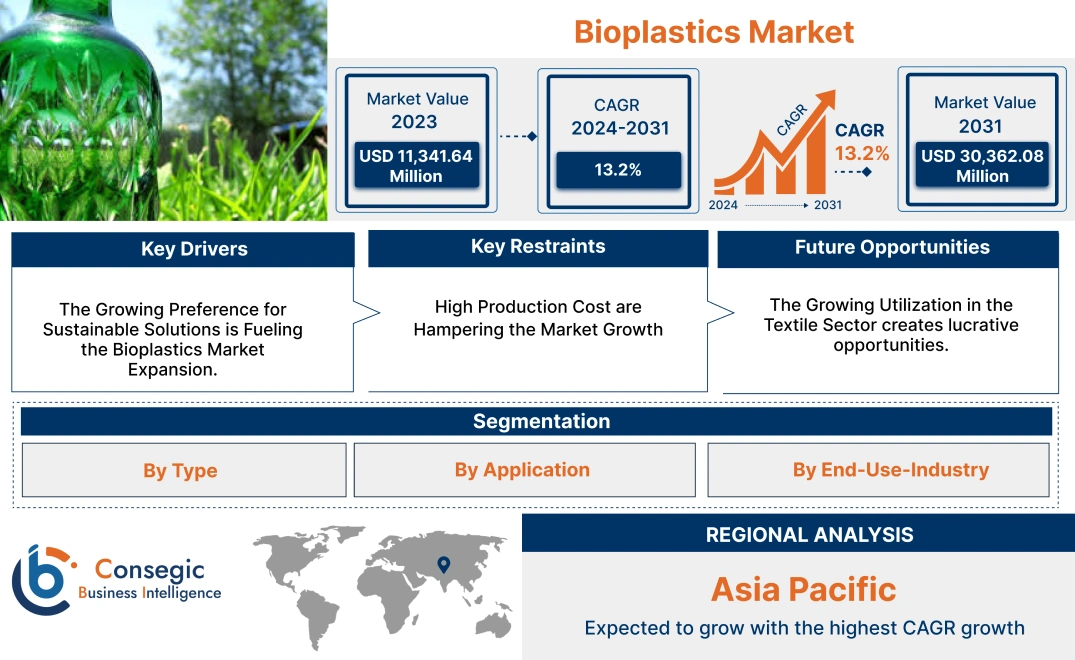
Bioplastics Market size is growing with a CAGR of 13.2% during the forecast period (2024-2031), and the market is projected to be valued at USD 30,362.08 Million by 2031 from USD 11,341.64 Million in 2023.
Bioplastics Market Scope & Overview:
Bioplastics are derived from biological substances rather than petroleum. They provide a sustainable solution to the environmental challenges posed by traditional fossil fuel-based plastics. They are primarily categorized into two types of mainly non-biodegradable and biodegradable. Non-biodegradable bioplastics are a type of plastic that is made from renewable resources like plants, such as corn starch, sugarcane, or wood pulp. While they are derived from renewable sources, they do not break down naturally in the environment like traditional biodegradable plastics. By utilizing these renewable resources, they reduce dependence on finite fossil fuels. Biodegradable plastics, on the other hand, decompose naturally through microbial action under specific conditions, such as in industrial composting facilities. This property makes them a valuable tool in reducing plastic waste and minimizing its environmental impact.
They find applications across various industries. In packaging, bioplastic films, bags, and containers reduce plastic waste and promote composability. In agriculture, biodegradable mulch films and plant pots improve soil health and reduce environmental impact. They also find use in the automotive sector for interior components and exterior parts, contributing to lighter and more sustainable vehicles. Additionally, they are employed in medical devices, offering biocompatible and biodegradable solutions. As technology advances and costs decrease, these plastics are poised to revolutionize various sectors, driving a more sustainable future.
How is AI Impacting the Bioplastics Market?
AI is significantly impacting the bioplastics market by accelerating material discovery, optimizing production processes, and improving waste management. AI also optimizes manufacturing processes, enhancing energy efficiency and minimizing waste in bioplastic production. Additionally, AI-powered sorting technologies are improving the efficiency of plastic recycling and waste management, contributing to a more circular economy.
Bioplastics Market Dynamics - (DRO) :
Key Drivers:
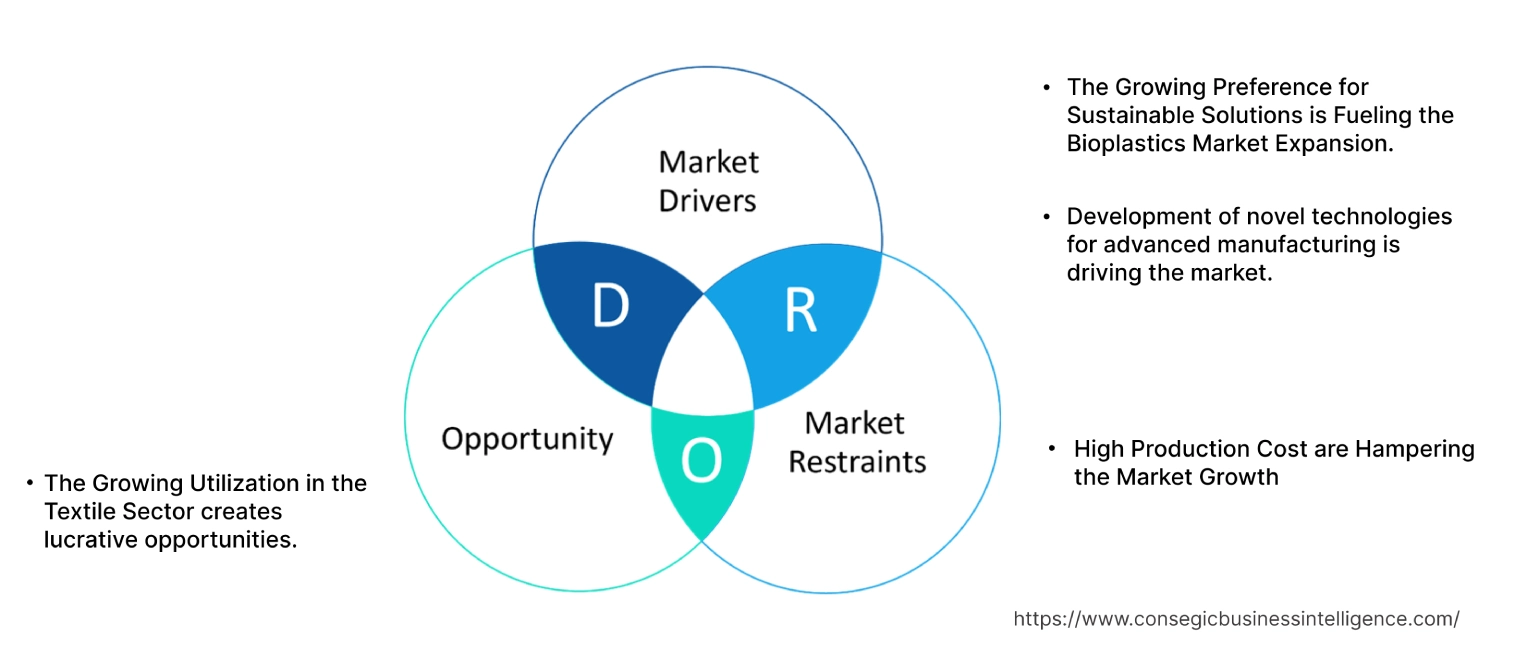
The Growing Preference for Sustainable Solutions is Fueling the Bioplastics Market Expansion.
The preference is steadily increasing, driven by a growing environmental consciousness and a desire for sustainable solutions. As consumers become more aware of the negative impact of traditional plastics on the environment, they are increasingly seeking eco-friendly alternatives. They offer advantages such as reduced carbon footprint and enhanced composability, making them an attractive substitute for traditional plastic in industries ranging from food packaging to automotive.
The growing availability of bioplastic products in packaging to consumer goods is making it easier for consumers to incorporate them into their daily lives. Furthermore, governments and regulatory bodies are implementing stricter regulations on plastic pollution, which is further driving the market, thus influencing consumer preference.
- For instance, according to the data published by the Plastic Industry Association, states that according to a study conducted on the preference of bioplastics in 2024, a significant surge in consumer preference has been observed, with 70% of respondents expressing a preference for these sustainable materials. This marks a 5% increase since the initial study conducted in 2018, highlighting the growing consumer awareness and requirement for eco-friendly products.
Thus, the growing awareness, and utilization of plastic substitutes, leads to growing preference in consumers, thus influencing the bioplastics market growth.
Development of novel technologies for advanced manufacturing is driving the market.
Researchers and innovators are continuously exploring innovative approaches to improve the performance, cost-effectiveness, and sustainability of bioplastics. These advancements include the development of new bio-based polymers, efficient processes, and advanced material processing techniques.
These advancements include the development of new bio-based polymers such as polylactic acid (PLA), polyhydroxyalkanoates (PHAs), and polybutylene succinate (PBS). These bio-based polymers offer a range of properties, including biodegradability, composability, and mechanical strength, making them suitable for various applications.
- For instance, additionally, Sulzer expanded its bioplastic portfolio by introducing a new end-to-end licensed technology called CAPSUL™ for the continuous production of polycaprolactone (PCL). This biodegradable polyester is widely used in various industries, including packaging, textiles, agriculture, and horticulture.
By optimizing these technologies, it is efficient to create these solutions with properties comparable to or even surpass traditional plastics, while minimizing their environmental impact. Thus, the introduction of various technologies for the production of efficient products is propelling the bioplastics market demand.
Key Restraints :
High Production Cost are Hampering the Market Growth
While bioplastics offer numerous environmental benefits, their higher production costs compared to traditional plastics remain a significant problem. They often rely on natural, renewable resources like corn starch, sugarcane, or plant-based oils as raw materials. These natural resources are more expensive to source and process compared to fossil fuel-derived feedstocks, contributing to higher production costs.
The complex manufacturing processes involved, limited economies of scale, and the need for specialized infrastructure contribute to increased production costs. These factors contribute to the higher cost of biodegradable materials such as PHA, PLA, and PBAT among others. This price disparity hinders widespread adoption, particularly in price-sensitive markets.
Future Opportunities :
The Growing Utilization in the Textile Sector creates lucrative opportunities.
The textile sector is increasingly utilizing bioplastics as a sustainable alternative to traditional petroleum-based materials. Key applications include clothing, footwear, and accessories made from biodegradable material such as Polylactic acid (PLA), and Polyhydroxyalkanoates (PHA), among others. Various projects are conducted to enhance the properties of bioplastic-derived fibers to improve the mechanical strength, and thermal resistance for various clothing, and footwear applications.
- For instance, Caroline Zimbalist's Spring/Summer 2025 collection pioneers a fusion of fashion and sustainability by incorporating innovative bioplastic materials. This collection showcases garments designed with a focus on eco-friendly practices, utilizing bioplastics as a progressive alternative to conventional textiles.
Additionally, technologies such as 3D printing are further utilized for the production of biodegradable shoes, further enhancing the sustainability of footwear.
- For instance, in November 2024, Neri Oxman's design studio, OXMAN, unveiled a novel project, the O° platform. This innovative system leverages 3D printing and biomaterials to create fully biodegradable, sustainable wearables. Their latest creation, the O° shoe, is created using PHA-based biomaterials.
Overall, the industry reduces its carbon footprint, conserves resources, and contributes to a more sustainable future, thus creating a bioplastics market opportunity.
Bioplastics Market Segmental Analysis :
By Type:
Based on type, the market is bifurcated into biodegradable and non-biodegradable.
Trends in the Type:
- Increasing focus on developing cost-effective production methods to make PHAs more commercially viable.
- Development of starch-based bioplastics with improved water resistance and mechanical properties.
The biodegradable segment accounted for the largest market share in 2023 .
The segment is further categorized into Polylactic acid (PLA), Polyhydroxyalkanoates (PHA), Starch Blends, Polybutylene Adipate Terephthalate (PBAT), and Others.
- Biodegradable bioplastics are a sustainable alternative to traditional plastics derived from fossil fuels.
- These plastics are designed to decompose naturally into simpler substances, such as water, carbon dioxide, and biomass, under specific environmental conditions. This decomposition process is facilitated by microorganisms like bacteria and fungi.
- They are often derived from renewable resources like plant starch, vegetable oils, or even food waste. By utilizing these renewable resources and breaking down naturally, they help reduce reliance on fossil fuels and minimize plastic pollution.
- As technology advances and consumer awareness grows, the requirement for these solutions is expected to increase, driving innovation and sustainability in various industries.
- Additionally, as per the bioplastics market analysis, various novel technologies are being developed for the production of new technologies for manufacturing biodegradable bioplastics such as PLA.
- Thus, the aforementioned factors are driving the bioplastics market demand.
The non-biodegradable segment is expected to grow at the fastest CAGR over the forecast period.
- The non-biodegradable segment is further bifurcated into Bio-Polypropylene (PP), Bio, Polyethylene (PE), Bio Polyethylene Terephthalate (PET), Bio Polyamides (PA), and Others.
- Non-biodegradable bioplastics are derived from renewable biological sources like corn starch, sugarcane, or algae.
- Among the various types, Bio-Polypropylene (PP), Bio-Polyethylene (PE), Bio-Polyethylene Terephthalate (PET), and Bio-Polyamides (PA) are prominent examples.
- They offer a sustainable alternative to traditional fossil fuel-based plastics, reducing reliance on non-renewable resources and minimizing environmental impact.
- These plastics are often used in applications that require long-lasting performance, such as automotive parts, electronics, and construction materials, among others.
- While they do not decompose as readily as biodegradable plastics, they offer several advantages, including reduced reliance on fossil fuels, lower carbon emissions, and compatibility with existing recycling infrastructure.
- The growing consumer requirement for sustainable products is influencing the use of non-biodegradable solutions such as biobased Bio-Polypropylene (PP) var various applications.
- For instance, in 2021, PACCOR, a packaging solutions provider, unveiled a new range of sustainable packaging materials for Orkla, a major supplier of consumer goods across the Nordic region. These innovative products, made from biobased polypropylene (Bio-PP), are derived from renewable resources and certified by the ISCC mass balance principle.
- This collaboration between PACCOR and Orkla marks a significant step towards an eco-friendlier future, as it allows for the replacement of traditional fossil fuel-based plastics with a more sustainable alternative.
- Overall, the growing consumer requirement for sustainable alternatives is driving segment expansion.
By Application:
Based on applications, the market is categorized into flexible packaging, rigid packaging, textile, disposable products, stationery & office supplies, toys & leisure, drug delivery systems, electronic components, and others.
Trends in the Application:
- Biodegradable implants, such as screws and sutures, offer advantages in terms of biocompatibility and reduced risk of infection.
- Rising trends for bioplastics are used to create durable and eco-friendly enclosures for electronic devices.
The flexible packaging segment accounted for the largest market share in 2023.
- Bioplastics has emerged as a promising solution for sustainable flexible packaging, particularly in the food sector.
- Flexible packaging refers to packaging materials that are thin, lightweight, and easily adaptable to various shapes and sizes.
- These materials are commonly used for packaging food, beverages, and other consumer goods. They are derived from renewable biological sources, are increasingly being used in flexible packaging. They offer several advantages over traditional petroleum-based plastics, including reduced reliance on fossil fuels, lower carbon emissions, and potential for biodegradability.
- Their biodegradable nature, especially for perishable products, makes them an attractive option for reducing plastic waste.
- Industrially compostable bioplastic food packaging, such as films and trays, has been successfully commercialized and is widely used for fresh produce like fruits and vegetables.
- These biodegradable materials extend the shelf life of perishable items, reducing food waste.
- Moreover, the application has expanded to include confectionery and dry food products, showcasing their versatility and potential to revolutionize the packaging sector, which is influencing flexible packaging.
- For instance, in 2022, CJ Biomaterials, a division of CJ CheilJedang, launched a new line of bioplastic products designed for flexible packaging applications. The PHACT™ product line, based on polyhydroxyalkanoate (PHA) technology, offers biodegradable and compostable solutions for reducing plastic waste. These bioplastic films are designed to be compatible with existing packaging machinery and processes, making the transition to sustainable packaging more accessible for businesses.
- Thus, the aforementioned factors are influencing the trends of the segment, leading to bioplastics market growth.
The electronic components segment is expected to grow at the fastest CAGR over the forecast period.
- Bioplastics are increasingly being explored for applications in electronic components.
- These biodegradable and eco-friendly materials offer several advantages over traditional plastics, including reduced environmental impact, lower carbon footprint, and potential for improved biodegradability.
- It is used in various electronic components such as casings, connectors, and packaging materials.
- By incorporating them, the electronics sector moves towards more sustainable and environmentally responsible manufacturing practices, thus creating potential trends and bioplastics market opportunities.
By End-User Industry:
Based on the end-use industry, the market is categorized into packaging, food and beverages, agriculture, consumer goods, electrical and electronics, construction, healthcare, and others.
Trends in the End Use Industry :
- Bioplastics are increasingly used for food packaging, offering biodegradable and compostable alternatives to traditional plastics.
- There is a rising trend for the use of bioplastic with natural fibers to create composite material for construction.
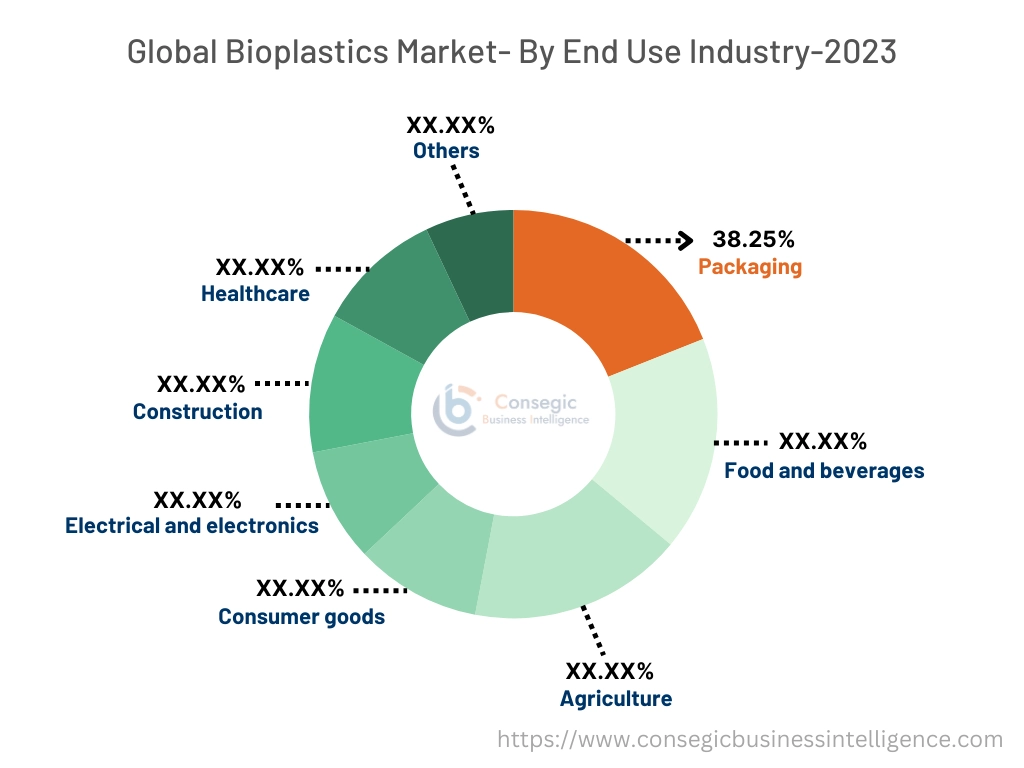
The packaging segment accounted for the largest bioplastics market share of 38.25 in the year 2023.
- Bioplastics emerge as a transformative solution for the packaging sector, providing sustainable and eco-friendly alternatives to conventional petroleum-based plastics.
- These biodegradable materials offer a wide range of applications in packaging, including flexible films, rigid containers, and single-use items.
- There is a high requirement for packaging made from these solutions to be used for wrapping organic food as well as for premium and branded products with particular requirements.
- By minimizing landfill waste, reducing reliance on fossil fuels, and promoting a circular economy, they offer a promising solution for a more sustainable future.
- For instance, according to the data published by European Plastics, in 2022, global bioplastic production capacity reached approximately 2.2 million tons, with nearly half (48%) of this volume earmarked for the packaging sector, making it the largest market segment within the sector.
- Thus, based on the analysis, the aforementioned factors are driving the bioplastics market trends of the segment.
The healthcare segment is expected to grow at the fastest CAGR over the forecast period.
- Bioplastics is emerging as a promising solution for the healthcare sector, offering sustainable and biodegradable alternatives to traditional plastics.
- Bioplastic-based medical devices, such as sutures, implants, and drug delivery systems, offer enhanced biocompatibility, reduced risk of infection, and improved patient outcomes.
- These devices degrade naturally within the body, eliminating the need for surgical removal in many cases.
- Additionally, bioplastic packaging for medical supplies minimizes waste, reduces environmental impact, and enhances sterilization processes.
- Hence, as per the bioplastics market analysis, as the healthcare sector strives to adopt more eco-friendly practices, it presents a significant opportunity to reduce reliance on conventional plastics and promote a sustainable healthcare system.
Regional Analysis:
The regional segment includes North America, Europe, Asia Pacific, the Middle East and Africa, and Latin America.
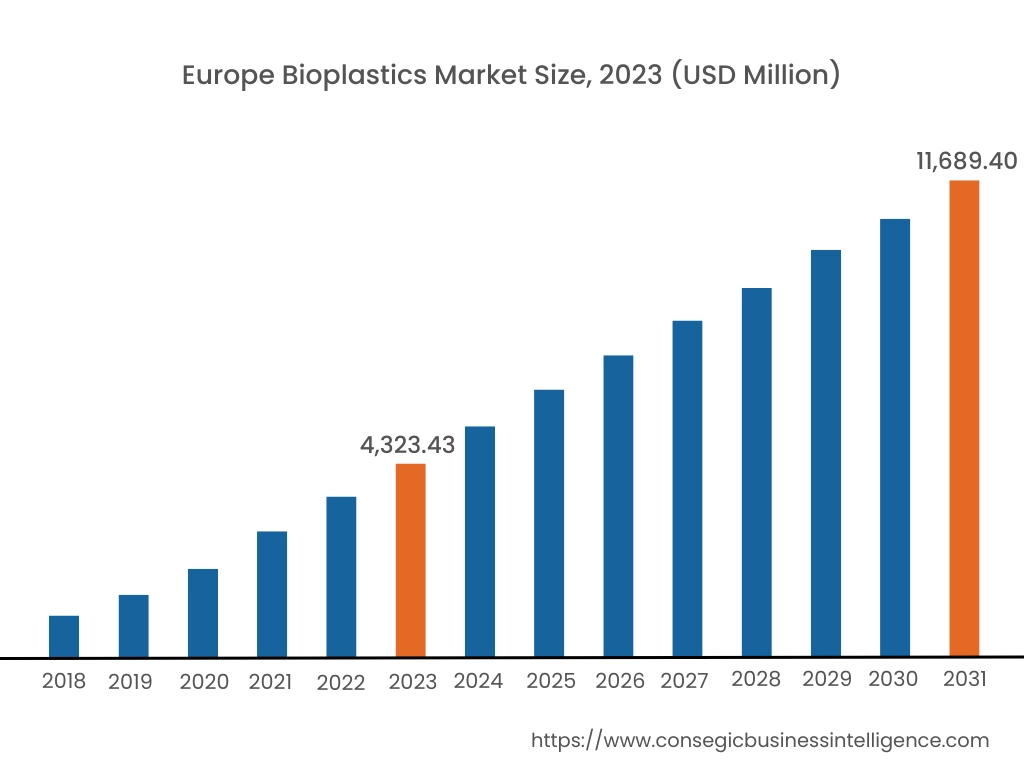
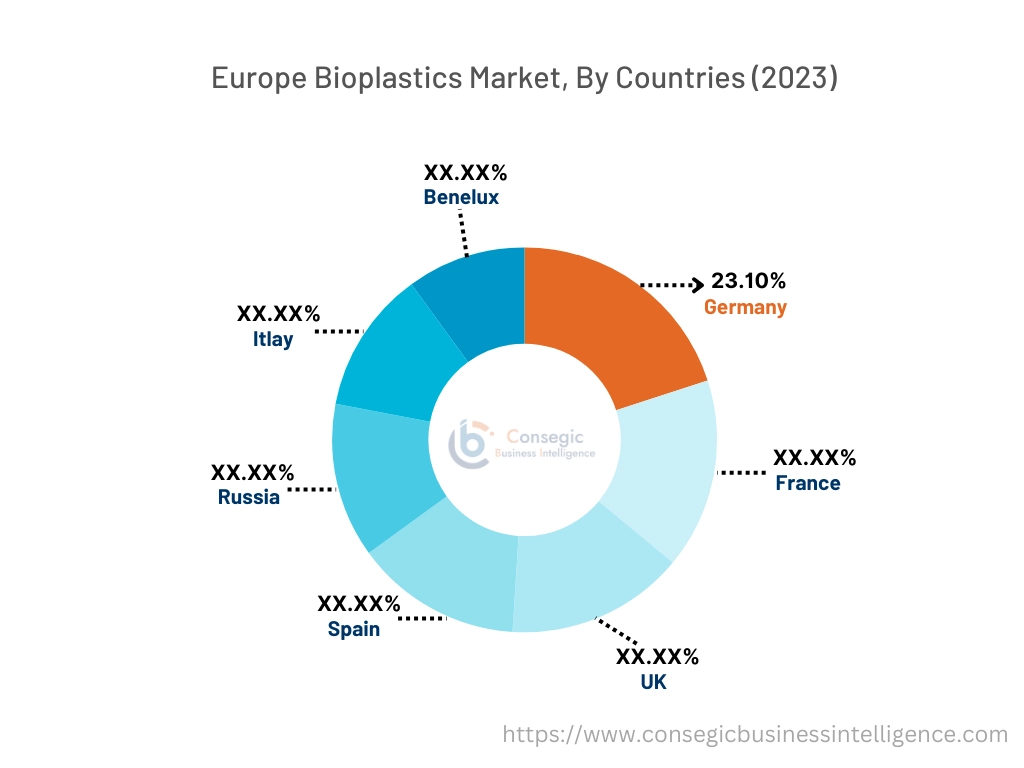
In 2023, Europe accounted for the highest bioplastics market share at 38.12% and was valued at USD 4,323.43 Million and is expected to reach USD 11,689.40 Million in 2031. In Europe, the Germany accounted for the highest market share of 23.10% during the base year of 2023.
Europe stands as a global leader, renowned for its strong commitment to sustainability and circular economic initiatives. The region boasts a well-established ecosystem of manufacturers, researchers, and innovators, driving the development and commercialization of innovative bioplastic solutions. Key applications in Europe encompass a wide range of sectors, including packaging, agriculture, automotive, and consumer goods among others. As Europe strives to reduce plastic pollution and transition to a more sustainable future, the demand continues to grow, solidifying the region's position as a major player. These properties leads to higher production in Europe.
- For instance, According to the data published in an article by Crain Communications, Inc. in 2023, states that Europe accounted for 12.8% of the global bioplastics production capacity.
The EU's supportive regulatory framework, coupled with increasing consumer awareness of environmental issues, is further propelling the adoption across various industries.
The Asia Pacific market for Bioplastics is experiencing the fastest growth with CAGR of 13.9% over the forecast period. The Asia-Pacific region is a major player, driven by increasing environmental concerns, growing consumer awareness, and stringent government regulations on plastic pollution. Countries like China, India, Japan, and South Korea are leading the charge in bioplastic production and consumption. The region's strong manufacturing base, abundant renewable resources, and rapid economic growth contribute to its significant bioplastics market expansion. Key applications in the Asia-Pacific region include packaging, agriculture, consumer goods, and others. As per the analysis, various government initiatives are undertaken to promote the use of bioplastic products. As the requirement for sustainable solutions continues to rise, the Asia-Pacific region is poised to remain a key driver of the market.
North America is a significant market, driven by increasing environmental concerns and stringent regulations on plastic waste. The region boasts a strong presence of bioplastic manufacturers and a growing requirement for sustainable packaging solutions. Key applications in North America include flexible and rigid packaging, food service ware, and agricultural films. The region's focus on reducing plastic pollution and promoting a circular economy is further fueling the adoption, making it a key market for sustainable materials. As per the market analysis, these factors influence production in North America.
- For instance,According to the data published by the Plastics Industry Association, in 2024, states that North America, particularly the United States, is a significant global center for bioplastic production, accounting for approximately 18.7% of the world's total bioplastic production capacity. This substantial contribution positions North America as a key player in the global bioplastics industry.
Thus, based on the analysis, the aforementioned factors lead to the market demand and bioplastics market trends in North America.
The Middle East and Africa (MEA) region is emerging as a significant market for bioplastics, driven by increasing environmental concerns and government initiatives promoting sustainability. Countries in the region are recognizing the need to reduce plastic pollution and transition to more eco-friendly solutions. Key applications in the MEA region include packaging, agriculture, and automotive. While the market is still in its early stages, significant growth potential exists, particularly in countries with abundant renewable resources and supportive government policies. As awareness of the environmental benefits grows, the MEA region is poised to become a key player in the market, leading to the growth of the market.
Latin America is an emerging market for bioplastics, driven by a growing awareness of environmental concerns and government regulations aimed at reducing plastic pollution. Countries like Brazil and Mexico, rich in renewable resources such as sugarcane and cassava, are well-positioned to become major players in this sector. These abundant natural resources provide sustainable feedstock, offering a greener alternative to traditional petroleum-based plastics. Key applications in Latin America include packaging, agriculture, and consumer goods. As the region continues to prioritize sustainability and reduce its environmental footprint, the is expected to grow significantly, making Latin America a key market for this innovative and eco-friendly material.
Top Key Players & Market Share Insights:
The Bioplastics market is highly competitive with major players providing precise measurements between objects to the national and international markets. Key players are adopting several strategies in research and development (R&D) and product innovation to hold a strong position in the global Bioplastics market. Key players in the Bioplastics industry include-
- BASF SE (Germany)
- Mitsubishi Chemical Group (Japan)
- Corbion (Netherlands)
- Futerro (Belgium)
- Toray Industries Inc. (Japan)
- FKuR (Germany)
- Bhagirath Group (India)
- Braskem (Brazil)
- Ecolastic Products Pvt. Ltd. (India)
- Biome Bioplastics (United Kingdom)
Recent Industry Developments :
Partnership:
- In 2024, CSIRO and Murdoch University joined forces to establish the Bioplastics Innovation Hub, to develop fully biodegradable plastics. This initiative focuses on creating plastics that decompose completely in compost, soil, or water, leaving no harmful residues.
- In 2024, The POLYMEER project, a recently launched initiative, aims to establish a sustainable, bio-based value chain for bioplastics. This project, funded by the Circular Bio-Based Europe Joint Undertaking HORIZON program with a grant of USD 5.16 million, is coordinated by the Università degli Studi di Perugia and involves 14 partners from 8 countries. The project will span 48 months.
- In 2022, LG Chem and ADM have formed a joint venture to establish a significant production facility for lactic acid and polylactic acid (PLA) in the United States. This strategic partnership aims to meet the growing global demand for sustainable bio-based materials and contribute to a more circular economy. The new facility will play a crucial role in expanding the availability of bio-based plastics, offering a sustainable alternative to traditional petroleum-based polymers.
Production Plants:
- In 2024, Balrampur Chini Mills, a leading sugar manufacturer in India, has committed USD 23 million to establish a bioplastic production facility, slated to commence operations by 2026.
New Launches
- In 2021, TerraVerdae Bioworks Inc, introduced a new line of bioplastic products suitable for various applications, including blown films, cast films, injection molding, and thermoforming.
Bioplastics Market Report Insights :
| Report Attributes | Report Details |
| Study Timeline | 2018-2031 |
| Market Size in 2031 | USD 30,362.08 Million |
| CAGR (2024-2031) | 13.2% |
| By Type |
|
| By Application |
|
| By End-User Industry |
|
| By Region |
|
| Key Players |
|
| North America | U.S. Canada Mexico |
| Europe | U.K. Germany France Spain Italy Russia Benelux Rest of Europe |
| APAC | China South Korea Japan India Australia ASEAN Rest of Asia-Pacific |
| Middle East and Africa | GCC Turkey South Africa Rest of MEA |
| LATAM | Brazil Argentina Chile Rest of LATAM |
| Report Coverage |
|
Key Questions Answered in the Report
How big is the Bioplastics market? −
In 2023, the Bioplastics market is USD 11,341.64 Million.
Which is the fastest-growing region in the Bioplastics market? +
Asia Pacific is the fastest-growing region in the Bioplastics market.
What specific segmentation details are covered in the Bioplastics market? +
Type, Application, and End-Use Industry segmentation details are covered in the Bioplastics market.
Who are the major players in the Bioplastics market? +
BASF SE (Germany), Mitsubishi Chemical Group (Japan), Corbion (Netherlands), Futerro (Belgium), FKuR (Germany), Bhagirath Group (India), Braskem (Brazil), Toray Industries Inc. (Japan), Ecolastic Products Pvt. Ltd. (India), Biome Bioplastics (United Kingdom).
Overview
Reputation & Certifications


Our Services
- Market Intelligence & Forecasting
- Custom Research Solutions
- Market Entry Strategy
- Competitive Intelligence
- Customer Insights
- Industry Innovation Analysis
- Investment Advisory