Jump to Content
Animal Feed Additives Market - Size, Share, Industry Trends, and Forecasts (2025-2035)
Animal Feed Additives Market Scope & Overview
Animal feed additives are a complex and highly-technological field within the agricultural value chain, comprising of a wide range of functional ingredients such as, amino acids, vitamins, minerals, enzymes, probiotics, prebiotics, organic acids, antioxidants and specialty performance enhancers, which are carefully added to the animal feeds to maximize livestock health, feed efficiency, livestock product quality, and production economics in poultry, swine, ruminants, aquaculture and companion animal feeding systems. Market size is USD 45, 200 Million in 2024, and USD 46, 800 Million in 2025 (base year) and it is estimated to grow by USD 76, 900 Million in 2035. The growth pathway is a compound annual growth rate (CAGR) of 5.0 percent during the forecast period between 2026 and 2035 due to the increasing global protein demand, intensification of livestock production, the regulated use of antibiotic growth promoters, technological advances in precision nutrition, the growing interest in food safety and animal welfare, and the growing concern with sustainable animal production methods to address environmental issues.
Key Insights
- Global Animal Feed Additives Market 2035: USD 76,900 Million
- Asia-Pacific Animal Feed Additives Market 2035: USD 30,820 Million
- North America Animal Feed Additives Market 2035: USD 15,378 Million
- Europe Animal Feed Additives Market 2035: USD 17,532 Million

Animal feed additives play a very important role as performance-enhancing ingredients to meet a variety of production goals such as better nutrient digestibility by supplementing with enzymes, better gut health by intervention with probiotics and prebiotics, balance of amino acids to ensure effective protein synthesis, disease prevention by immunomodulatory compounds, and palatability to enhance feed intake. The total number of livestock animals all around the world is estimated to be about 33.1 billion poultry birds, 1.5 billion cattle, 1.0 billion pigs, 1.2 billion sheep, and accelerated aquaculture production of more than 114 million metric tons every year with feed additives constituting important value-added items that can convert feed materials into high-quality animal protein.
The compound feed sector has shown impressive magnitude and advanced technology, with the world production of USD 485,000 Million in 2024, and the use of feed additives at average addition rates of 0.1-5.0% by weight based on the type of additives, animals, and the production stage together with nutritional goals. Feed additives provide skewed value compared with degree of inclusion, and in case of amino acid supplementation, it raises the ratio of feed to nutrient digestibility by 5-12 percent, enzyme additives improve production efficiency and nutrient digestibility by 5-12 percent, and probiotic interventions lowers mortality rates by 2-5 percent across commercial livestock enterprises, which translates to large economic returns in terms of production efficiency and product quality.
Market Channel Distribution Analysis
The market structure of animal feed additives has four separate channels that distribute the products to the specific livestock companies with diverse nutritional needs and production models. The overall market revenue dissection shows that there is a large disparity in revenue based on animal species, production intensity, and regional feeding behavior:
Breakdown of Distribution Channel (2025):
- Poultry (Broilers, Layers, Turkeys): USD 18,720 Million (40.0% of the value of the total market)
- Swine (Piglets, Growers, Sows): USD 10,764 Million (23.0 of the market revenue)
- Ruminants (Dairy Cattle, Beef Cattle, Small Ruminants): USD 9,360 Million (20.0% of market share)
- Other Animals (Aquaculture, Equine, Companion Animals): USD 7,956 Million (17.0% of total market value)
By 2024, USD 1,850 Million had been invested globally in the research and development of feed supplements and the discovery of novel ingredients, such as precision-fermented proteins, postbiotic metabolites, phytogenic compounds, microencapsulated delivery systems, and species-specific formulations to suit the requirements of livestock breeds with high performance including cattle, sheep, pigs, and more. Major multinational corporations invest approximately 4.5-5.2 percent of revenue in developing next-generation additives such as precision
The industry is undergoing radical change into systems based on antibiotic-free production, with the European Union introducing wide-ranging bans on antibiotic growth promoters since 2006, the United States FDA introducing Veterinary Feed Directive bans since 2017, and China phasing out antibiotic growth promoters effective July 2020, all creating significant demand that alternative performance-enhancing substances, such as organic acids, essential oils, probiotics, prebiotics, and immunomodulatory compounds can sustain production performance
Animal Feed Additives Market Dynamics (DRO)
Key Drivers:
Increasing Demand and Intensification of Animal Protein Production.
The greatest structural force is the growing demand in animal protein around the world that is accelerating as population grows to more than 9 billion people by 2050, as per capita income grows in the developing economies, and as many people switch to high protein diets. In 2024 the global meat consumption was estimated at 346 million metric tons, with a projected growth to 430 million metric tons in 2035, which would be a growth of 24.3% per the forecast period with poultry meat having the highest growth at 2.8% annually and pork at 1.9% annually.
Meat consumption shows a significant positive correlation with economic growth, and the average meat consumption in developing economies is 32.5 kg/capita/year versus 88.5 kg /capita/year in developed economies, which presents a great growth opportunity as Asian incomes grow. Such a protein requirement growth also requires constant enhancement of livestock production efficiency, and feed additives are important instruments that can help to ensure achievement of genetic potentials in present-day high-performing breeds, such as feed ratios of 1.55-1.70:1 in broilers and 2.8-3.2:1 in pigs, which is far better than historical performance levels.
Regulation on the Antibiotic Growth Promoters and other alternatives.
The worldwide regulatory tendency to control or ban the use of antibiotic growth promoters puts in place the dynamic market dynamics, with regulations in force in all regions that constitute 78 percent of the world production of livestock. These limitations are based on increasing alarm about antimicrobial resistance, and the livestock production is estimated to consume about 73 percent of the world antibiotic use based on a number of estimates and hence there is urgent need of effective substitution.
The elimination of antibiotic growth promoters will usually lead to a loss of 2-5 percent average daily gain, 3-7 percent feed conversion efficiency, and 1-3 percent rise in mortality rate without nutritional riddance treatments. This performance difference opens up high demand on alternative additives such as organic acids, essential oils, probiotics, prebiotics and enzymes with comprehensive alternative programs showing the ability to restore 70-95% of performance loss due to antibiotic elimination via effective additive combinations and management optimization.
Technological Innovation in Precision Nutrition and Sustainable Production
The aggressive growth in the nutritional science and biotechnology as well as ingredient production technologies allows creating more advanced feed additives that possess greater effectiveness and greater functionality. The modern enzyme technology achieves 95-98 percent phytate-bound phosphorus release in comparison to 30-50 percent efficiency of the first-generation products, which allows cutting inorganic phosphorus supplementation by 30-50 percent with a 25-35 percent decrease in phosphorus excretion to address the environmental issues.
The increasing interest in environmental sustainability opens the prospects of additives that reduce greenhouse gas emissions with methane-reducing ruminant additives being a huge opportunity given that enteric fermentation contributes about 6% of the total global greenhouse gas emissions. New compounds such as 3-nitrooxypropanol (3-NOP) show the ability to cut methane emission by 25-35% and the production performance remains unchanged producing new revenue streams through carbon credit programs.
Key Restraints:
Unpredictable Raw Material Price and Supply Chain Risk.
A significant market restraint is manifested by large price fluctuation of major raw materials of the additive production especially amino acids, vitamins and trace minerals reliant on energy intensive production processes and massive concentration of production in certain geographic areas. The volatility of lysine prices in the range of 35-55%/year depending on energy prices and capacity utilization rates, and the volatility of vitamin prices in the 180-220%/year range between 2019 and 2024 in the disruptions of production and the concentration of capacities becomes even more extreme.
The supply chain of feed additives is highly geographically concentrated with China producing 65-70% of the world amino acids and 45-50% of the global capacity to produce vitamins, producing supply vulnerable to regional shocks such as regulatory changes, environmental limitations and geopolitical conflicts that affect different types of additives.
Complexity and Registration Requirement in Regulatory.
The industry of feed additives has been subjected to even more severe regulatory standards that demand that extensive safety testing, efficacy demonstration, and continuous observation of approved products are done. The feed additive authorization process of the European Union consists of extensive dossies and approval timelines that normally take 2-4 years to grant approval with a cost of USD 1.5-3.5 million per additive per species, which are very prohibitive to new additives and very much advantageous to large multinational corporations that have the resources and expertise to compile a complete dossy.
Consumer Perception Problems and Clean Label Trends.
A rising consumer awareness over animal production technology poses a threat to some types of additives that are seen to be artificial even after proving to be both safe and effective. Consumer studies also show that 52-68 percent of consumers across developed economies are willing to buy meat and dairy products that are produced by animal husbandry practices that were free of any additional hormones, antibiotics, or artificial components, which applies market pressure to position clean label as a standard despite the rationale behind the use of additives in food production.
Future Opportunities:
Digital Integration and Precision Livestock Farming.
The integration of the feed additive technology with the precision livestock farming systems that include sensors, automated monitoring, artificial intelligence, and predictive analytics present the transformational opportunity in the form of dynamic nutrition optimization. Precision feeding systems have the capability of adjusting the rates at which additives are included in real-time, based on environmental conditions, the level of disease challenge and individual animal needs to maximize efficiency and reduce waste and develop new service-based revenue models by the additive suppliers.
Aquaculture Development and Special Use.
Aquaculture is the most rapidly expanding animal protein industry and by the year 2035, the sector will grow to produce 155 million metric tons of food which leaves tremendous growth potential of specialized feed additives. Aquaculture feeds have special nutritional needs and feed constitutes 50-70% of the total production expense, which makes enhancement in efficiency extremely cost-effective with specific additives, such as attractants, digestive enzymes, immune stimulants, and pigment sources.
Integration of Methane Reduction and Carbon Credit.
Innovation of methane-lowering feed that can be given to ruminants will be a major opportunity to solve the environmental issue and an additional source of income through carbon credit schemes. Initial commercial application is proving to effectively integrate with economic benefits, with large dairy cooperatives having programs that reward farmers with carbon premiums in cases of confirmed reduction of emissions.
Market Segmentation Analysis
By Product Type: Additive Category Analysis
Amino Acids: Biggest Market Segment.
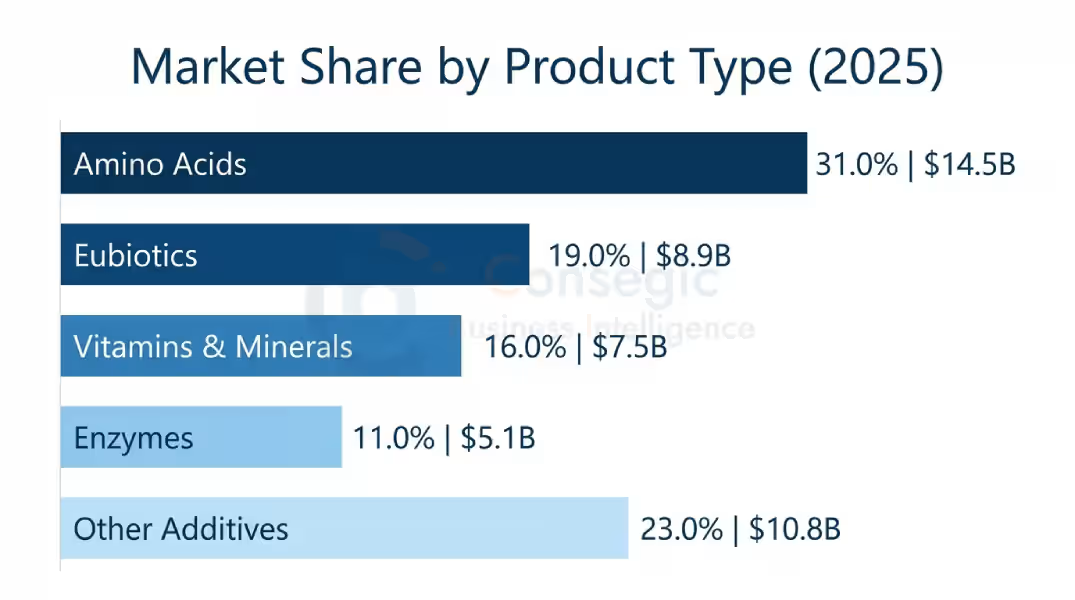
Amino acids retain dictatorial position at USD 14,508 Million or 31.0% of total market value in 2025 which is expected to hike to USD 23,839 Million at 5.0% CAGR in 2035. This group contains essential amino acids, namely, lysine (largest volume 2.8 million metric tons worldwide), methionine (1.2 million metric tons), threonine (650,000 metric tons), tryptophan (180,000 metric tons) and valine (145,000 metric tons), which allow the precise intake of amino acids in the diet that optimize the efficiency of protein synthesis and reduce the amount of crude protein and consequently the excretion of nitrogen.
Minerals and Vitamins: Micronutrition.
Vitamins and minerals contribute USD 7,488 Million (16.0% of market value), which includes fat-soluble (A, D3, E, K3) and water-soluble (B-complex, C) vitamins, required to provide strong metabolic activity, immunological competence and reproductive performance. The formulations of the modern world more and more use organic forms of the mineral that show a higher bioavailability of 1535 percent higher than the inorganic sources and lead to less excretion and better performance of animals.
Performance Enhancement Technology: Enzymes.
Feed enzymes USD 5,148 Million (11.0% of market value), with phytase (largest category), carbohydrases, and proteases that enhance nutrient digestibility as well as feed utilization efficiency. The present phytase supplementation of 500-1,500 FTU per kilogram allows reduction in inorganic phosphorus supplementation with resultant improvement in phosphorus availability, an economic benefit of USD 2-6 per metric ton in nutrient savings in excess of the enzyme expenditure.
Eubiotics: Enteral Health Care.
Eubiotics such as probiotics, prebiotics, organic acids constitute USD 8,892 Million (19.0% of market value) is the fastest growing segment with the influence of the demand of antibiotic alternatives. This group shows forecasted growth of 7.0-7.5% CAGR, and extensive gut health initiatives involving a combination of various eubiotics to show competence to sustain production performance in antibiotic-free systems.
Other Additives: Special Purposes.
Other additives such as antioxidants, binders, pigments and mycotoxin binders together take USD 10,764 Million (23.0% of market value) and have specialized applications such as feed preservation, product quality improvement and contaminant control.
By Livestock: Animal Species Analysis
Poultry: Leading Consumption Division.
The highest livestock component is poultry at USD 18,720 Million (40.00 percent market value), under the influence of intensive production mechanisms and high growth rates which ensure additive investments are very cost-efficient. Broiler production has extensive additive procedures such as amino acids, enzymes, vitamins, minerals, probiotics and coccidiostats which maximize performance in 35-45 days production cycle and layer operations which focus on calcium and vitamin D3 sources and pigment which optimize egg quality.
Swine: Sophisticated Nutrition Programs.
Swine owns USD 10,764 Million (23.0 of market value), and it uses phase-feeding programs based on specific additive requirements in production phases. Piglet feeding exercise specially intensive use of additives such as specialty proteins, acidifiers, and palatability improvers to overcome post-weaning issues, and grower-finisher programs are aimed at amino acid optimization and feed efficiency improvement.
Ruminants: Specialized Requirements.
Ruminants constitute USD 9,360 Million (20.0% of market value) and there are specific nutritional needs which depend on rumen fermentation. Dairy cattle farming is based on such additives as milk production optimization such as rumen-protected amino acid, feed efficiency by use of ionophores, and fiber digestion by yeast cultures improvement, and beef farming is based on growth promotion and feed conversion improvement.
Other Animals: New business opportunities.
Other animals such as aquaculture, equine and companion animals are in USD 7,956 Million (17.0% of market value) with aquaculture as the fastest growing subsection due to increased global fish and shrimp production that requires special nutritional solutions.
Regional Market Analysis
Asia-Pacific: Market Dominance and Fierce Development.
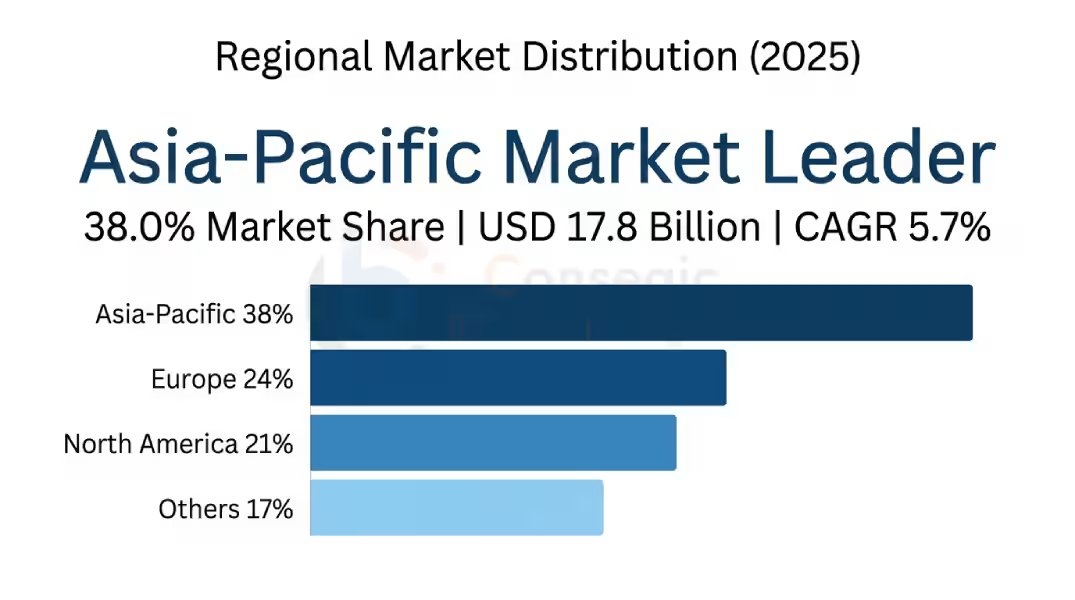
Asia-Pacific animal feed additives market has USD 17,784 Million market value as of 2025, which is 38.0% of the world market value and is expected to rise by 5.7% CAGR to USD 30,820 Million in 2035. China with 58.5% of market value is the dominating regional demand as the largest livestock producer in the world with close to 700 million pigs and 6.2 billion poultry birds, and also is a large production centre of feed additives such as amino acids and vitamins.
The feed additive market in China exhibits unusual growth dynamics which are supported by intensive production, the phase-out of antibiotic growth promoters which is effective in July 2020 and the growing interest of consumers in food safety. Production of the compound feed touched 265 million metric tons in 2024, and the rates of additive inclusions rose since the 0.8-1.2 per cent traditionally up to 1.5-2.2 per cent presently, with producers adopting complex alternative programs in lieu of antibiotics.
India has 12.5 percent of the market value of Asia-Pacific with an emerging and rapidly developing poultry industry and rising dairy industries that are a source of additive demand and rapidly growing export markets in Southeast Asia countries of Vietnam, Thailand, and Indonesia that are increasingly modernizing livestock production systems and increasing their involvement in the export market.
Technology Leadership and Innovation North America.
In 2025, the North American animal feed additives market is USD 9,828 Million (21.02) of the global market value, and it is projected to grow to USD 15,378 Million in 2035. The United States controls the regional demand being 87.5 percent of the market value; it has advanced livestock industries that have high rates of technology use and has an elaborate regulatory system that has guaranteed the product safety and effectiveness.
The livestock production of the U.S. includes 9.2 billion broiler chickens, 75 million pigs and 95 million cattle per year with an estimated consumption of 285 million metric tons of compounded feed with an added additive inclusion level of 2.0-3.5 percent which is amongst the highest in the world. In the market, certain areas of strength include the enzyme technology, probiotic innovation, and precision nutrition applications.
Europe: sustainable Leadership and Focus.
European animal feed additives market requires USD 11,232 Million in 2025, at 24.0% of the global market and it is estimated that the market requirements will be USD 17,532 Million in 2035. The aggregate demand in Germany, France, Spain and Netherlands constitutes 63 per cent of the regional demand, with their intensive livestock industries being regulated with strict regulatory frameworks that focus on animal welfare, environmental sustainability and antibiotic stewardship.
Antibiotic growth promoter restrictions pioneered in Europe starting in 2006, developed a well-developed market in alternative additives, with full application of organic acids, essential oils, probiotics and enzymes, performing as well as the previous antibiotic-supplemented programs. The area shows specific competence in innovation based on sustainability such as methane-reducing additives and precision nutrition technologies.
Other Regions
The largest segment of USD 5,148 Million (11.0% of the world market) in Latin America with Brazil as the leading country as a major exporter of poultry and beef, with an elaborate system of feed production, and the Middle East and Africa takes USD 2808 Million (6.0) each with growth potential owing to their developing livestock industries and growing production intensity.
Competitive Landscape and Key Market Players
Market Leadership and Strategic Positioning
DSM-Firmenich (Netherlands/Switzerland) - Leader of Innovation.
DSM-Firmenich retains market leadership by having a complete portfolio, covering vitamins, carotenoids, enzymes, and eubiotics with estimated revenue in feed additives of USD 3,200-3,600 Million, which also stands at approximately 7.5% of the global market share. Sustainability-thus-oriented innovations such as Bovaer(r) (3-NOP) methane-cutting ruminant additive are particularly strong in the company, which has received regulatory approval in several jurisdictions and has been implemented early.
Cargill, Incorporated (United States) -ampal, Solutions Provider.
Cargill has a market share of about 7.2 globally and feed additives revenue of USD 3,100-3,400 Million in 2024, and operates on vertically integrated business model which includes the sourcing of raw materials, manufacturing as well as technical service. The company has end-to-end digital nutrition systems with additive optimization, and real-time performance feedback and economic simulation.
Evonik Industries AG (Germany) - Specialization in Amino Acids.
Evonik holds about 6.8 percent of the world market share and its feed additive is projected to reach USD 2,850-3,200 Million in 2024, producing amino acids such as methionine, threonine, and tryptophan. The company also leads the technology in production based on fermentation and manufacturing processes aimed at sustainability.
BASF SE (Germany) - Vitamin and Specialty Portfolio.
BASF has an estimated market share of 6.2 and feed additive revenue of USD 2,650-2,950 Million in 2024 with full focus on quality and reliability, offering a complete pack of vitamin portfolio, carotenoids and organic acids.
Other Important Market players:
- Adisseo (China/France) - market share 5.8% akin to methionine and enzyme specialization.
- Alltech (United States)- 4.5% market share, yeast-based solutions and organic minerals.
- Nutreco (Netherlands) - 4.2 market share, combined nutrition solutions.
- Novus International (United States) - market share 3.8 per cent., chelated minerals and methionine.
- Hansen (Denmark) - 3.5% market share, probiotic and enzyme technologies.
- Kemin Industries (United States) - 3.2% market share, antioxidants and gut solutions.
Recent Industry Developments
Commercialization of Methane Reduction Technology (2024-2025).
DSM-Firmenich got wider regulatory acceptance of Bovaer(r) (3-NOP) in various jurisdictions such as FDA and EU approval of dairy and beef cattle application. Large international dairy cooperatives started to introduce commercial programs that rewarded farmers by paying them a carbon premium and the early outcomes showed a reduction of 25-30% of the methane concentration in the air without affecting milk production and milk composition, and this indicated that the research has successfully been converted into commercial practice.
Integrity Nutrition Platform (2024-2025).
Key additive suppliers introduced an all-encompassing digital platform with a combination of nutritional modelization, real-time performance feedback and dynamic additive optimization. They integrate artificial intelligence that forecasts optimum inclusion rates depending on the environmental factor, cost of ingredient, and production performance indicators to help feed mills and livestock producers to maximize economic returns, and to maximize animal health and performance.
Antibiotic Alternative Program Expansion (2024)
Various large suppliers created large-scale antibiotic alternative programs using a mixture of organic acids, essential oils, probiotics, and immunomodulators, and field trials showed performance in 2-3% of antibiotic-supplemented programs and met consumer needs of antibiotic-free production. Precision application strategies in these programs are becoming increasingly more precise, application strategies including varying rates of inclusion depending on level of difficulty in production and level of disease challenge.
Sustainable Technology Advancement in Production (2024-2025).
The large-scale manufacturing producers of major amino acids deployed new-generation fermentation processes with a 35-45% per kilogram of product carbon footprint, comprising renewable energy solutions, process engineering, and co-product values to meet industry sustainability pledges and remain competitive in terms of cost.
Animal Feed Additives Market Report Insights
| Report Attributes | Report Details |
|---|---|
| Study Timeline | 2022–2035 |
| Base Year | 2025 |
| Forecast Period | 2026–2035 |
| Market Size in 2025 | USD 46,800 Million |
| Market Size in 2035 | USD 76,900 Million |
| CAGR (2026–2035) | 5.0% |
| By Product Type | Amino Acids (31.0%), Vitamins & Minerals (16.0%), Enzymes (11.0%), Eubiotics (19.0%), Others (23.0%) |
| By Livestock | Poultry (40.0%), Swine (23.0%), Ruminants (20.0%), Others (17.0%) |
| By Function | Performance Enhancers (45.0%), Nutritional (27.0%), Health & Welfare (20.0%), Sensory & Functional (8.0%) |
| By Region | Asia-Pacific, Europe, North America, Latin America, Middle East & Africa |
| Key Players | DSM-Firmenich, Cargill, Evonik, BASF, Adisseo, Alltech, Nutreco, Novus International, Chr. Hansen, Kemin Industries |
| Report Coverage |
|
Key Questions Answered in the Report
What is the size of the Animal Feed Additives market? −
The animal feed additives market is evidenced to have a strong growth potential that is expected to hit USD 46800 Million in 2025 and could potentially reach USD 76900 Million by 2035 due to sustained growth in the market based on the growing global protein demand, intensification of animal production in developing economies, regulatory pressure on the use of antibiotic growth promoters that is forcing the need to replace them with other performance enhancers, technological advancement in precision nutrition and functional ingredients, growing consumer interest in food safety and animal welfare.
What is the most rapidly developing market in the Animal Feed Additives? +
Asia-Pacific is the greatest and quickest rising regional marketplace, due to China, with a huge livestock business, and to the success of antibiotic substitute application following growth promoter regulation, India, with its speedy flourishing poultry and dairy industries with growing technology admission, and general production intensification across the area due to rising consumer protein intake and the outcomeant development of export markets generating wide needs of performance-enhancing feed additives. The key drivers of growth are increasing global demand on animal protein due to population increase and rising incomes in the emerging economies, regulatory constraints on the expansion of antibiotic growth promoters in various regions that are thought to represent 78 percent of total livestock production, technological advances allowing precise nutrition and innovation in new functional ingredients with greater effectiveness and reduced environmental impact, the growing consumer attention to food safety, animal welfare, and sustainability, the rising aquaculture industry with its specialized additive needs, and the rising interest in concerning environmental sustainability stimulating opportunities of additives that minimize greenhouse gas emissions.
What are the new opportunities in 2035? +
Opportunities such as precision livestock farming integration, which allows the optimization of nutrition in real-time through real-time monitoring and artificial intelligence, the growth of the aquaculture nutrition market due to the rapidly expanding field of animal proteins, which requires species-specific nutrient additions, using methane-reducing additives to reduce ruminant emissions which are a combination of approximately 6% of global greenhouse gas emissions and generates carbon credit revenue streams, postbiotic metabolites and precision-fermented ingredients, representing next-generation solutions with greater stability and efficacy.
What specific challenges does the industry face? +
Among the issues that arise are unpredictable prices of raw materials and dependence on the supply chain that create price voids in the economics of feed formulation, the complexity of regulation that may require years of testing and approval of individual additives that cost USD 1.5-3.5 million, geographical concentration of production capacity especially in the amino acids and vitamin segments that create supply vulnerability, the challenge posed by consumers who perceive synthetic additives as a whole on their part despite demonstrated efficacy and safety, the technical complexity of formulating effective antibiotic alternative programs that may require advanced research, precise formulation strategies, and continuous monitoring to maintain animal health and productivity, which increases operational costs for manufacturers.
Overview
Reputation & Certifications


Our Services
- Market Intelligence & Forecasting
- Custom Research Solutions
- Market Entry Strategy
- Competitive Intelligence
- Customer Insights
- Industry Innovation Analysis
- Investment Advisory