Jump to Content
Animal Feed Market - Size, Share, Industry Trends, and Forecasts (2025 - 2035)
Animal Feed Market Scope & Overview (2025–2035)
Animal feed integrates innovative and research-based nutritional technologies that transform basic agricultural inputs into high-value animal proteins across all animal production sectors like livestock, poultry, aquaculture, and pets. The animal feed market is projected to reach USD 571,537 Million by 2025 (base year), with an annual growth rate (CAGR) of 4.2% from 2026 to 2035, At USD 862,425.40 Million. Key drivers of this growth include the increase in average income in the world, intensification of livestock production, advancements in aquaculture, growth in pet ownership, and subsequent increase in demand for high-quality pet feed.
Regional Trends and Insights
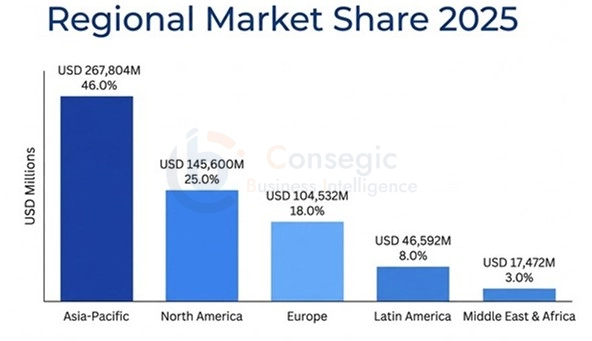
- Asia-Pacific animal feed market | 2025: USD 267,804M (46.0% global share) - 2035: USD 400,474M | CAGR 4.1%
- North America animal feed market | 2025: USD 145,600M (25.0% global share) - 2035: USD 217,975M | CAGR 4.1%
- Europe animal feed market | 2025: USD 104,532M (18.0% global share) - 2035: USD 156,542M | CAGR 4.1%
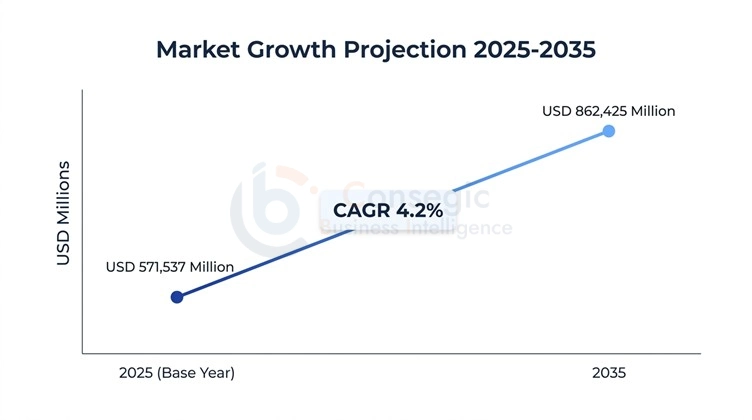
The animal feed industry is involved in the production and marketing of feed in the form of complete feeds, concentrates, premixes, specialty additives, and a range of products. The global animal feed industry utilizes about 785 million metric tons of grains and oilseeds to process 1,285 million metric tons of feed, thereby providing support to global livestock production that is valued over USD 3,850,000 million for meat, milk, and eggs.
Market Channel Distribution Analysis:
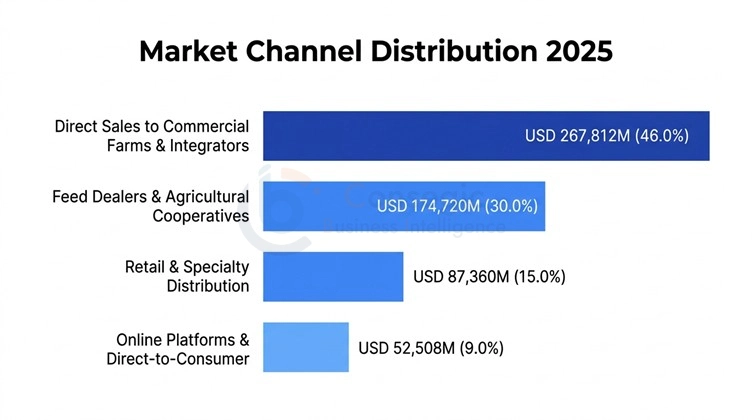
The animal feed market operates through four distinct sales and delivery channels, each serving specific customer segments with differentiated value propositions and service models. The total market revenue distribution demonstrates significant variation by customer type, farm size, and regional factors:
- Direct Sales to Commercial Farms & Integrators:USD 267,812 Million (46.0% of total market value)
- Feed Dealers & Agricultural Cooperatives:USD 174,720 Million (30.0% of market revenue)
- Retail & Specialty Distribution:USD 87,360 Million (15.0% of market share)
- Online Platforms & Direct-to-Consumer:USD 52,508 Million (9.0% of total market value)
Global investment in feed manufacturing infrastructure, precision nutrition technologies and alternative ingredient development reached USD 18 500 million in 2024. Major feed manufacturers allocated about 4.2% of revenue to research plus development of sustainable protein sources, to improve feed conversion efficiency, to advance gut health solutions and to commercialize precision feeding platforms. The industry shifts toward sustainable feed formulations that include insect proteins, algae, microbial proteins but also agricultural co products. Those formulations see rapid adoption in poultry, swine, aquaculture and companion animal segments.
Animal Feed Market Dynamics (DRO)
Key Drivers:
Global Protein Demand and Dietary Transition
The single most important structural driver is the acceleration of global demand for animal protein due to population growth expected to reach 9.7 billion by 2050, growing incomes in emerging economies and dietary transitions that see consumption of meat, dairy and eggs increase radically as national GDP increases. In 2024, global meat production was recorded at 365 million metric tons and is expected to reach up to about 455 million metric tons by 2035 which will then require a proportional increase in the supply of high-quality animal feed for efficient livestock growth and productivity.
The Asia-Pacific region shows especially dramatic growth trajectories for protein consumption, with per capita meat consumption in China hitting 68 kilograms annually by 2024 from 38 kilograms in 2010, while India’s dairy consumption grew by an average of 48% over the same period. The transitions in these dietary trends lead to persistent demand for scientifically formulated animal feeds that allow for improved feed conversion ratios and production efficiency over conventional feeding systems.
Intensification and Industrialization of Livestock Production
A global transition from large-scale, low-input agriculture systems to intensive, commercial-sized operations is contributing to strong demand for tailored compound feeds and accompanying nutrition solutions. First developed in the US industrial poultry sector, commercial, large-scale farms now represent over 72% of global production for poultry and over 65% for industrial pigs both systems that demand uniform, high-quality feeds formulated to meet a set of exact criteria related to growth phase, genetics and productivity targets.
Integrated livestock operations lean more on in-house or contract feed mills, leading to stable, high-volume demand for complete feeds and premixes. In intensive livestock production, feed costs often account for 55-70% of the overall production expenses, and therefore improvements in feed conversion efficiency are crucial to ensuring economic viability and competing effectively.
Antibiotic Reduction and Functional Feed Solutions
Stronger demand for functional feed ingredients and alternative health solutions is driven by regulatory and consumer pressure to reduce or eliminate in-feed antibiotics, as well as the need to optimize economic production efficiency. The ban on antibiotic growth promotors in EU and 85 countries is opening lucrative market for probiotics, prebiotics, organic acids, essential oils, enzymes and immune modulators that aid gut health performance.
Key Restraints:
Raw Material Price Volatility and Supply Chain Disruptions
Animal feed manufacturing faces significant economic challenges due to the unstable prices of primary commodities such as corn, soybeans, wheat, and other feedstuffs, which account for 65-75% of the overall cost of feed production. Prices for corn vary by 38% in 2024, with prices ranging from USD 4.85-6.70 per bushel, while prices for soybean meals vary by 42%, with prices ranging from USD 385-545/mt, which presents a challenge for feed manufacturers with profit margins that vary between 3-7%.
Climate change, geopolitical tensions, and changes in international trade policies are some of the other challenges. The drought in 2024, which has affected the major corn-growing areas of the world, has reduced the total global production by 4.2%.
Disease Outbreaks and Biosecurity Challenges
Animal diseases like Epidemic African Swine Fever (ASF), Highly Pathogenic Avian Influenza (HPAI), and foot-and-mouth diseases have considerable negative effects on the demand for feed in the region. The outbreak of African Swine Fever in China and Southeast Asia has resulted in the loss of over 40% of the pig population, temporarily affecting the demand for swine feed. The HPAI outbreak in 2024 has resulted in the killing of over 55 million birds in North America and Europe.
Future Opportunities:
Alternative Protein Sources and Sustainable Ingredients
Insect farming, along with microbial fermentation and algae growing, is opening cool ways to get sustainable protein. They can help us rely less on the usual soy and fish meals and be better for the planet. The animal feed market for other sources of protein was worth USD 8,450 Million in 2024 and is growing by 18.5% each year. Insect meals, single-cell proteins, and algae stuff are becoming real options for lots of animals.
Black soldier fly larvae meal can have 55-62% protein, with great amino acids and is easy to digest (over 85%) for chicken and fish. In 2024, we made 285,000 metric tons of insect protein, and big feed companies are teaming up with insect protein makers.
Precision Nutrition and Digital Feed Management
Using sensors, data analytics, and artificial intelligence in feed formulation and farm management lets farmers tailor nutrition more precisely. This helps make feed use more efficient, cuts down on waste, and boosts how well animals do by feeding them based on their individual needs. The precision livestock farming market hit USD 6,850 Million in 2024, growing at a rate of 12. Feed management is a key area where you can see 4-8% better feed conversion ratios, leading to about 5% growth each year.
Market Segmentation Analysis
By Livestock: Animal Species Analysis
Poultry Feed: Largest Market Segment
Poultry feed is the biggest segment, expected to reach USD 244,608 Million in 2025, making up 42 percent of the market. The total market value is currently at 0%, but it's expected to grow to USD 366,198 Million by 2035 with a growth rate of 4.The compound annual growth rate is 1%.This includes feed for broiler chickens, layer hens, turkeys, and other types of poultry, supporting a global production of 142 million metric tons of poultry meat and 88 million metric tons of eggs each year.
Modern broiler production gets feed conversion ratios down to about 1.6 to 1, which means just 1. It takes 6 kilograms of feed to produce 1 kilogram of live weight, showing how genetic selection and careful nutrition have made the process much more efficient. The segment shows a solid use of performance-enhancing additives like enzymes, organic acids, probiotics, and amino acids.
Swine Feed: Major Protein Production
Swine feed makes up about USD 151,224 million, which is around 26%. They support global pork production, which reaches about 128 million metric tons each year. China produces more than half of the world's pigs, about 52%, and as it recovers from African Swine Fever, the industry is shifting toward modern methods like commercial compound feeds and focused gut health programs.
Ruminant Feed: Dairy and Beef Applications
Ruminant feed accounts for USD 116,480 Million, making up (20.0%). This covers dairy cattle, beef cattle, sheep, and goat nutrition. The dairy segment pushes demand for high-energy concentrates, bypass proteins, and metabolizable energy sources to boost milk production and support reproductive performance.
Aquaculture Feed: Fastest Growing Segment
Aquaculture feed accounts for USD 46,592 Million (8.0%) but demonstrates the highest growth potential at 6.8% CAGR driven by global aquaculture expansion. As wild-capture fisheries plateau at approximately 95 million metric tons annually, farmed fish and shrimp production continues rapid expansion, requiring specialized high-protein feeds.
Other Livestock Applications
Pet food and other specialty use make up USD 23,296 million. This includes companion animals, horses, and specialty livestock nutrition, with premium pricing and the use of functional ingredients.
By Form: Physical Presentation Analysis
Pelleted Feed: Dominant Format
Pelleted feed is still leading the market at USD 343,416 Million, making up 59.0%. It offers better digestibility, less waste, tastes better, and is easier to handle than mashing feed. Pelleting feed helps improve feed conversion efficiency by about 3-5% because nutrients become easier for animals to absorb.
Mash Feed: Traditional Applications
Mash feed makes up USD 145,600 million, which is about 25.0%, which includes ground and mixed ingredients without being pelleted. This is often used in layer operations, small-scale farming, and other specific cases where pelleting isn’t needed or would be too expensive.
Other Forms
Crumbles, extruded feeds, and liquid feeds together make up USD 93,184 Million, which is about 16.0% used for specific purposes like feeding young animals and creating high-quality aquaculture feeds.
By Ingredient: Raw Material Analysis
Cereals: Primary Energy Source
Cereal grains account for USD 262,080 Million (45.0%), including corn, wheat, barley, sorghum, and other grains serving as primary energy sources providing carbohydrates and digestible starches. Corn represents approximately 685 million metric tons annually, accounting for 62% of total cereal usage in animal feed.
Oilseed Meals: Essential Protein
Oilseed meals and protein sources represent USD 174,720 Million (30.0%), with soybean meals dominating at approximately 265 million metric tons annually, representing 68% of global protein meal consumption in animal feed applications.
Other Ingredients
Molasses, fats, oils, minerals, vitamins, and specialty additives collectively account for USD 145,600 Million (25.0%).
Regional Market Analysis
Asia-Pacific: Dominant Market Leader
The Asia-Pacific animal feed market accounted for USD 267,804 Million in 2025, accounting for 46.0% of the global market share, and is expected to grow at a CAGR of 4.1% to reach USD 400,474 Million by 2035. The China market is the largest in the Asia-Pacific region, accounting for 48.5% of the market share, followed by the Indian market at 16.5%, Japan at 8.0%, and Southeast Asian countries at 27.0%.
The China animal feed market accounted for USD 129,885 Million in 2025, driven by the country's huge livestock production base, including 450 million pigs, 6.8 billion chickens, and 98 million cattle. The country produces 285 million metric tons of compound feed every year through 6,850 feed mills, with the top three feed mill companies being New Hope Group, Twins Group, and Tongwei Group.
North America: Technology and Innovation Leadership
By the year 2025, the North American animal feed market hit USD 145,600 million and this accounted for 25.0% of the global market value. The growth trend is set to continue with projections suggesting an increase in value to USD 217,975 million by 2035 at a CAGR of 4.1%. In terms of regional demand, United States is the leading buyer with a market value share of 85.5% and runs approximately 6,200 feed mills producing around 285 million metric tons of feeds every year.
The region highlights the application of precision nutrition technologies, enzymes and specialty additives, which are adopted by poultry, swine and beef feedlot systems. Pet food is a very fast-growing subcategory with more people leaning towards premium products and functional ingredients.
Europe: Sustainability and Quality Focus
The European animal feed market stood at USD 104,532 Million in 2025, which accounted for 18.0% of the overall market value. It is projected that the European animal feed market will reach USD 156,542 Million by 2035, growing at a CAGR of 4.1%. Germany, France, Spain, and the Netherlands account for 58% of the regional demand.
The EU has the most stringent policies in terms of antibiotic growth promoters, mycotoxin content, and traceability, thus favoring the use of functional feed additives and alternative protein sources. 49% of European facilities are classified as high-efficiency units, compared to 25% worldwide.
Other Regions
Latin America represents USD 46,592 Million (8.0%), driven by Brazil and Argentina as major producers and exporters of feed ingredients and livestock products. Middle East & Africa accounts for USD 17,472 Million (3.0%), demonstrating growth potential driven by expanding poultry and dairy sectors.
Competitive Landscape and Key Market Players
Market Leadership and Strategic Positioning
Cargill, Incorporated (United States) - Global Market Leader
Cargill maintains commanding market leadership with estimated 2024 animal feed revenue of USD 52,400 Million, representing 9.0% global market share. The company operates 485 feed manufacturing facilities across 70 countries, producing approximately 145 million metric tons of animal feed annually with comprehensive species coverage including poultry, swine, cattle, aquaculture, and companion animals.
New Hope Group (China) - Asia-Pacific Leader
New Hope Group captures approximately 6.8% global market share with feed revenue estimated at USD 39,600 Million in 2024, operating over 600 feed mills primarily across China and Southeast Asia, producing approximately 38 million metric tons annually with strong vertical integration across livestock production.
Charoen Pokphand Foods (Thailand) - Integrated Operations
CP Group holds approximately 5.5% global market share with revenue estimated at USD 32,000 Million in 2024, maintaining market leadership through vertically integrated operations spanning feed production, livestock farming, and food processing across Asia-Pacific markets.
Additional Key Market Participants:
- Archer Daniels Midland Company (United States)- 4.8% market share
- Land O'Lakes, Inc. (United States)- 3.2% market share
- Nutreco N.V. (Netherlands)- 2.9% market share
- Alltech, Inc. (United States)- 2.1% market share
- ForFarmers N.V. (Netherlands)- 1.8% market share
Recent Industry Developments
Cargill - Regenerative Agriculture Partnership
Cargill expanded its RegenConnect program in 2025, targeting 30% of North American corn and soy sourcing from regenerative agriculture practices by 2030. This initiative addresses Scope 3 emissions in feed supply chains while offering livestock producers lower carbon footprint feed solutions, supporting sustainability commitments across the value chain.
New Hope Group - Sustainable Feed Initiative
New Hope Group committed USD 420 Million toward sustainable feed ingredient development and alternative protein commercialization, targeting 25% reduction in soybean meal dependency by 2030 through increased utilization of insect proteins, microbial proteins, and agricultural co-products.
ADM - Precision Nutrition Platform
ADM launched its NutriOpt precision nutrition platform featuring artificial intelligence algorithms that analyze animal performance data, ingredient prices, and nutritional requirements to generate optimized feed formulations achieving 8-12% improvements in feed conversion efficiency while reducing costs by 3-5%.
Animal Feed Market Report Insights
| Report Attributes | Report Details |
|---|---|
| Study Timeline | 2022-2035 |
| Base Year | 2025 |
| Forecast Period | 2026-2035 |
| Market Size in 2025 | USD 571,537 Million |
| Market Size in 2035 | USD 862,425.40 Million |
| CAGR (2026-2035) | 4.2% |
| By Livestock | Poultry, Swine, Ruminants, Aquaculture, Companion Animals, Others |
| By Form | Pellets, Mash, Crumbles, Extruded, Others |
| By Ingredient | Cereals, Oilseed Meals, Molasses, Fats & Oils, Additives & Supplements |
| By End-User | Commercial Farms, Integrated Producers, Cooperatives, Smallholders |
| By Region | Asia-Pacific, Europe, North America, Latin America, Middle East & Africa |
| Key Players | Cargill Inc., New Hope Group, Charoen Pokphand Foods, ADM, Land O'Lakes, Nutreco, Alltech, ForFarmers, De Heus, Muyuan Foods |
| Report Coverage |
|
Key Questions Answered in the Report
How big is the Animal Feed market? −
The animal feed market is projected to reach USD 571,537 Million by 2025, with an annual growth rate (CAGR) of 4.2% from 2026 to 2035, At USD 862,425.40 Million, reflecting sustained growth driven by global protein demand expansion, livestock production intensification, aquaculture growth, and companion animal premiumization trends.
Which is the fastest-growing region in the Animal Feed market? +
Asia-Pacific represents both the largest and fastest-growing regional market, driven by rapid protein consumption growth, livestock sector modernization, aquaculture expansion, and rising incomes across China, India, Southeast Asia, and other emerging economies supporting dietary transitions toward animal protein.
What specific segmentation details are covered in the Animal Feed report? +
The report provides comprehensive segmentation analysis by Livestock (Poultry, Swine, Ruminants, Aquaculture, Companion Animals), Form (Pellets, Mash, Crumbles, Extruded), Ingredient (Cereals, Oilseed Meals, Additives & Supplements), End-User (Commercial Farms, Integrated Producers, Cooperatives), and Regional markets with detailed subsegment analysis and volume-value metrics.
Who are the major players in the Animal Feed market? +
The competitive landscape is led by Cargill, Incorporated (9.0% market share), New Hope Group (6.8% market share), Charoen Pokphand Foods (5.5% market share), Archer Daniels Midland Company (4.8% market share), Land O'Lakes, Inc. (3.2% market share), Nutreco N.V. (2.9% market share), and numerous regional feed manufacturers serving specialized applications and local markets.
What are the key technology trends shaping the market through 2035? +
Major technological trends include alternative protein ingredients (insect meal, microbial proteins, algae) reducing soybean dependency by 15-25%, precision nutrition platforms utilizing AI and data analytics to optimize formulations and improve feed conversion by 8-15%, functional feed additives replacing antibiotic growth promoters through probiotics and prebiotics, sustainable aquafeed formulations reducing fish meal inclusion while maintaining performance, and digital farm management systems enabling real-time monitoring and optimization of feeding programs for enhanced efficiency and sustainability.
Overview
Reputation & Certifications


Our Services
- Market Intelligence & Forecasting
- Custom Research Solutions
- Market Entry Strategy
- Competitive Intelligence
- Customer Insights
- Industry Innovation Analysis
- Investment Advisory