Jump to Content
Bearings Market - Size, Share, Industry Trends, and Forecasts (2026-2034)
Bearings Market Size:
Bearings Market is estimated to reach over USD 337.72 Billion by 2034 from a value of USD 146.55 Billion in 2025 and is projected to grow by USD 158.58 Billion in 2026, growing at a CAGR of 8.8% from 2026 to 2034.
Bearings Market Key Takeaways
- Asia-Pacific led the bearing market, supported by strong industrial and automotive growth.
- Ball bearings held a major market share due to their extensive industrial applications.
- The automotive sector remained the largest end-use industry for bearing demand.
- OEM sales dominated the market, driven by growing manufacturing activities worldwide./li>
- Rising automation and renewable energy investments are supporting market expansion.
- SKF, Schaeffler, NSK, NTN, and Timken are among the leading players in the global market.
Bearings Market Scope & Overview:
Bearings are highly engineered mechanical components designed to facilitate smooth rotational or linear motion by reducing friction between moving surfaces while supporting high radial or axial loads. The components are used across a wide range of sectors, including automotive, industrial automation, energy & power, aerospace, railway, and others. Further, key trends driving the market include rapid integration of sensor-equipped smart rotary components for real-time predictive maintenance and the accelerating transition toward high-speed ceramic hybrid components. Furthermore, there is a significant shift toward sustainable manufacturing practices, including the use of high-purity recycled steel and bio-based lubricants to align with global carbon-neutrality targets.

Bearings Market Dynamics - (DRO) :
Market Drivers:
Growing Automotive Sector Drives the Market
The automotive sector remains the primary engine for the market, driven by a surge in vehicle production and technological transformation. Manufacturers are focusing on electrification, high-precision, low-friction motion solutions to meet the specific requirements of electric motors and e-axles, which operate at significantly higher rotational speeds than traditional engines. Furthermore, rising focus on lightweighting to enhance fuel efficiency and battery range is pushing the adoption of advanced materials like ceramic hybrids and high-strength alloys.
- For instance, according to the International Energy Agency (IEA), global electric vehicle market is experiencing a significant surge, with sales surpassing 17 million units in 2024. Also, momentum is projected to accelerate through 2025, with deliveries expected to exceed 20 million vehicles.
Thus, rising focus on high-precision & low-friction components, the growing EV sector, and lightweighting contribute significantly to the rise in the bearings market size.
Market Restraints:
Raw Material Price Volatility is Limiting the Market Growth
Raw material price volatility acts as a significant barrier to market growth by destabilizing production costs and compressing profit margins across the supply chain. High-grade alloy steel and specialty polymers account for approximately 60% to 70% of total manufacturing expenses. The sudden price spikes in iron ore, scrap metal, or energy directly inflate the cost of finished units. These unpredictable fluctuations make long-term contract pricing and CAPEX planning increasingly difficult for manufacturers, often leading to supply chain disruptions or higher prices that end-users are reluctant to absorb. Consequently, smaller players face severe operational strain, while larger manufacturers must divert resources into risk-mitigation strategies rather than innovation.
Future Market Opportunities :
Increasing Emphasis on Industrial Automation Drives Bearings Market Opportunities
The increasing emphasis on industrial automation is significantly expanding opportunities within the market as manufacturers transition toward high-precision, autonomous production environments. As core components in the robotic arms, collaborative robots, and high-speed conveyor systems, these components are evolving from passive parts into intelligent data nodes. The market is increasingly favoring high-performance precision bearings to facilitate predictive maintenance. This technological shift enables automated facilities to minimize unplanned downtime and achieve the repeatable accuracy necessary for complex, 24/7 manufacturing operations.
Thus, industry 4.0 integration, predictive maintenance strategies, and the growth of collaborative robotics drive the bearings market opportunities.
Bearings Market Segmental Analysis:
By Product Type:
Based on the product type, the bearings market is segmented into ball bearings, roller bearings, plain bearings, and specialty bearings.
Trends in the Product Type:
- In electric vehicles, high-speed ball bearings are being engineered with specialized internal geometries to handle rotational speeds exceeding 15,000 RPM, which is driving the bearings market trends.
- Manufacturers are increasingly embedding wireless sensor nodes to provide real-time data on temperature and vibration, which in turn drives the bearings market size.
Roller Bearings accounted for the largest revenue share in the year 2025.
- New alloy steel treatments and optimized roller profiles are significantly increasing the dynamic load ratings for heavy industrial applications, driving the bearings market share.
- Further, large-diameter spherical roller components are being redesigned to withstand the extreme torque and harsh offshore environments.
- Furthermore, automotive manufacturers are transitioning to lightweight, high-stiffness tapered roller components to reduce vehicle emissions and improve fuel economy, which in turn drives the bearings market trends.
- Thus, as per the bearings market analysis, weight reduction, load capacity enhancement, and others are driving the market.
Specialty bearings is anticipated to register the fastest CAGR during the forecast period.
- Magnetic bearings are becoming the standard for high-speed turbomachinery and oil-free hydrogen compressors to eliminate mechanical wear.
- Further, specialty rotary components now feature integrated IoT chips that communicate directly with factory-level AI systems for autonomous health monitoring, which subsequently propels the bearings market expansion.
- Furthermore, 3D printing is being used to create complex, lightweight bearing cages and housings, which in turn drives the bearings market demand.
- Therefore, based on analysis, the aforementioned trends are anticipated to boost the growth of the market during the forecast period.
By Material:
Based on the material, the market is segmented into alloy steel, ceramic & hybrid, and polymers & composites.
Trends in the Material:
- Hybrid motion solutions with silicon nitride balls are seeing massive adoption to prevent electrical erosion, driving the bearings market demand.
- Polymer rotary components are rapidly becoming the preferred choice for marine applications and solar tracking systems due to their immunity to rust and chemical attack, driving the bearings market share.
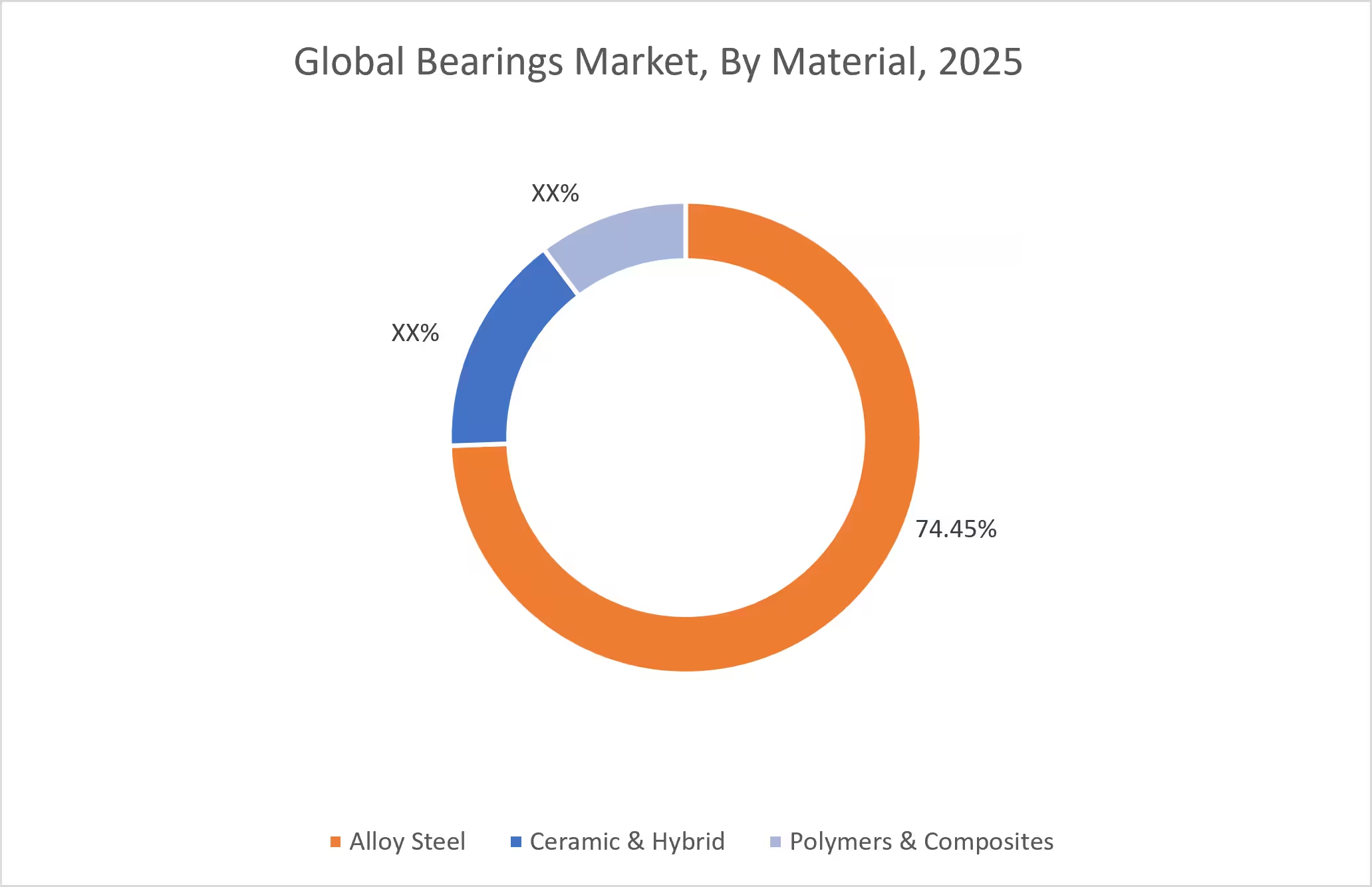
Alloy Steel accounted for the largest revenue share of 74.45% in the year 2025 and is anticipated to register a significant CAGR during the forecast period.
- Manufacturers are adopting high-purity, clean steel grades with fewer non-metallic inclusions to significantly extend fatigued life and reliability, which in turn drives the bearings market growth.
- Further, the use of vacuum degassing and electroslag remelting is becoming standard for high-carbon chromium steel to ensure microstructural uniformity, in turn driving the bearings industry.
- Furthermore, innovations in induction hardening and carburizing are improving the surface hardness and shock resistance, which in turn drives the market.
- Thus, as per the bearings market analysis, advanced heat treatment, clean steel initiatives, and vacuum processing are driving the bearings market expansion.
By End User:
Based on the end user, the market is segmented into automotive, industrial automation, energy & power, aerospace, railway, and others.
Trends in the End User:
- There is a rising demand for high-precision cross-roller components that provide the smooth, safe motion required for robots working, which in turn drives the bearings market growth.
- Manufacturers are replacing traditional steel components with fiber-reinforced polymer cages to significantly reduce aircraft weight and fuel consumption, propelling the bearings market.
Automotive accounted for the largest revenue share in the year 2025 and is anticipated to register the fastest CAGR during the forecast period.
- Motion solutions are being redesigned with ceramic balls and specialized coatings to handle the high rotational speeds and electrical discharge common in EV e-axles.
- Further, there is a transition toward thin-walled, high-stiffness bearing rings to reduce vehicle mass and lower carbon emissions.
- Furthermore, surface treatment innovations are extending the service life of replacement rotary components to match the aging global vehicle fleet's maintenance cycles.
- Thus, based on analysis, electrification-specific design, focus on lightweighting, and others are driving the market growth.
Bearings Market Regional Analysis:
The regions covered are North America, Europe, Asia Pacific, Middle East and Africa, and Latin America.
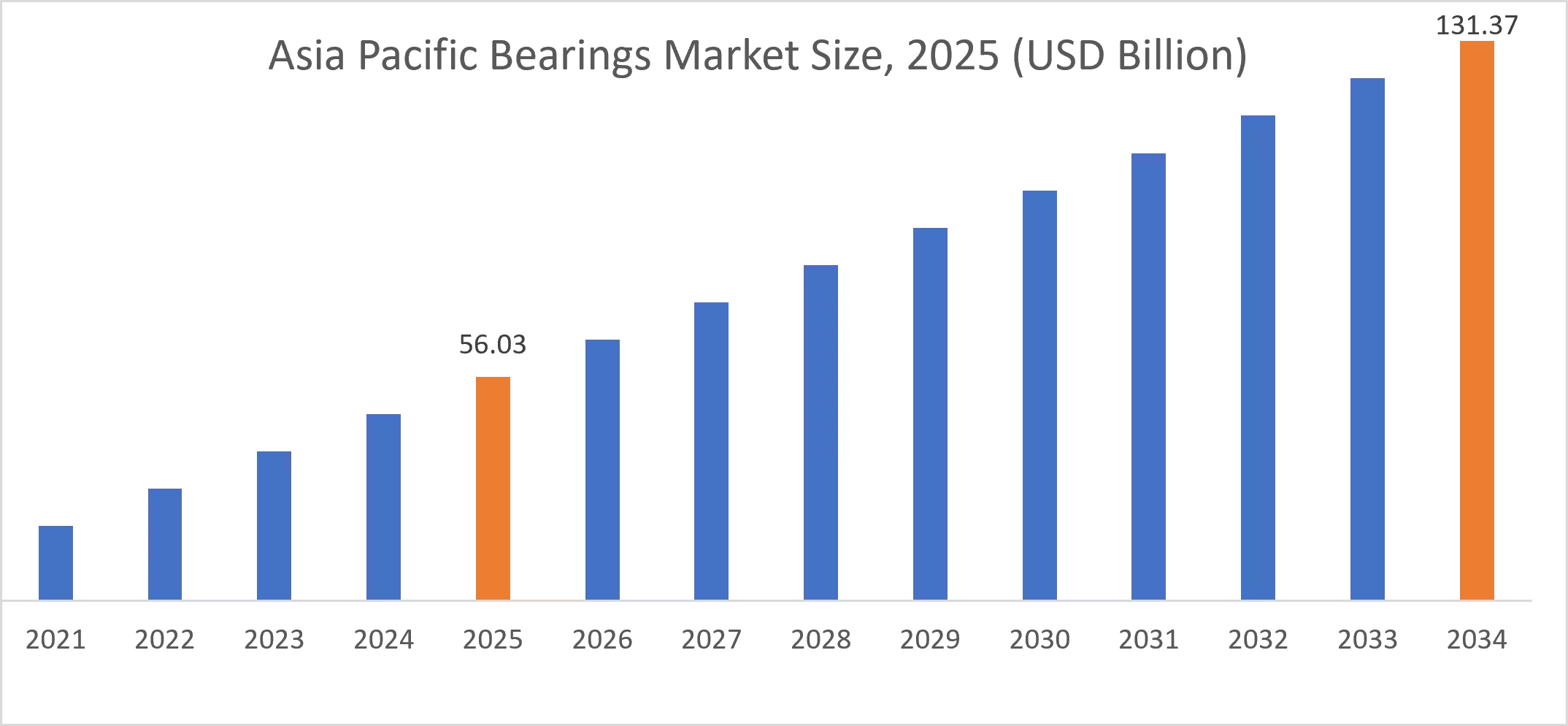
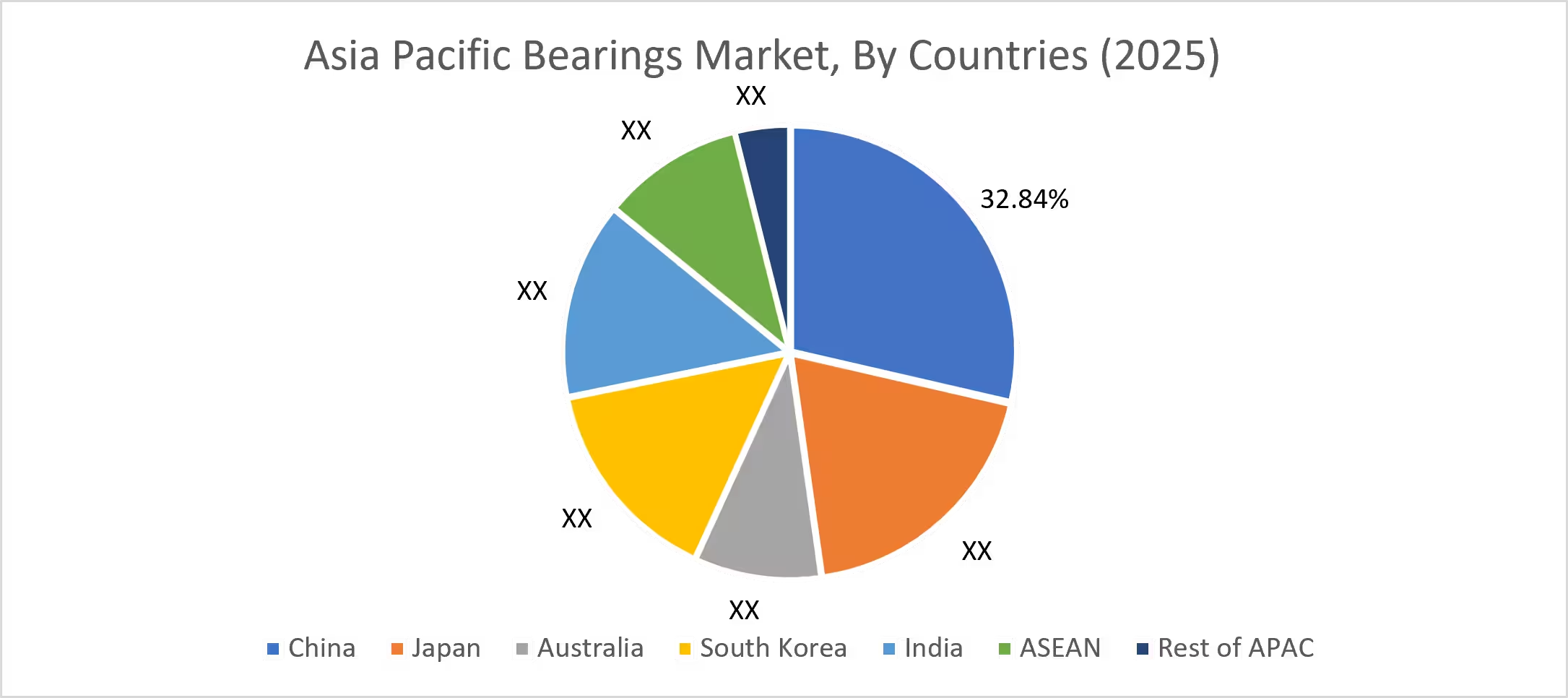
Asia Pacific region was valued at USD 51.59 Billion in 2025. Moreover, it is projected to grow by USD 56.20 Billion in 2026 and reach over USD 111.58 Billion by 2034. Out of this, China accounted for the maximum revenue share of 32.84%. The market growth is mainly driven by rapid industrialization and massive infrastructure investments, alongside the growing automotive manufacturing sector. This momentum is further accelerated by the aggressive adoption of industrial automation and robotics, which necessitates high-precision components.
- For instance, according to the International Energy Agency (IEA), China solidified its global dominance in the EV sector during 2024, with electric vehicles capturing nearly 50% of the nation's total automotive market. The country sold 11 million units of EV, which in turn drives the bearing market.
North America is estimated to reach over USD 79.42 Billion by 2034 from a value of USD 37.22 Billion in 2025 and is projected to grow by USD 40.48 Billion in 2026. The North American market is primarily driven by the rapid development of the electric vehicle and aerospace sectors, which necessitate high-precision, specialized rotary components for advanced motors and drivetrains. This demand is also bolstered by a strong focus on industrial automation, where integrated sensors are being widely adopted for predictive maintenance.
- For instance, in November 2022, The Timken Company completed the acquisition of GGB Bearings, a move that integrates GGB’s specialized expertise in metal-polymer plain rotary components and tribology into Timken’s existing roller and ball bearing portfolio. By combining advanced surface engineering with Timken's industrial motion solutions, the acquisition strengthens the company’s ability to provide high-performance engineered components across a diverse global customer base.
The regional trends analysis depicts that decarbonization targets, the growing EV sector, and strict safety regulations in Europe are driving the market. Additionally, the factors driving the market in the Middle East and African region are rapid industrialization and large-scale infrastructure projects. Further, modernization of local automotive production facilities and the growing mining and agriculture sectors in the Latin America region are driving the market.
Top Key Players & Market Share Insights:
The global bearings market is highly competitive with major players providing solutions to the national and international markets. Key players are adopting several strategies in research and development (R&D), product innovation, and end-user launches to hold a strong position in the bearings industry. Key players in the global bearings market include-
- SKF (Sweden)
- Schaeffler Group (Germany)
- NSK Ltd. (Japan)
- The Timken Company (US)
- NTN Corporation (Japan)
- JTEKT Corporation (Japan)
- MinebeaMitsumi Inc. (Japan)
- Nachi-Fujikoshi Corp. (Japan)
- RBC Bearings Incorporated (US)
- C&U Group (China)
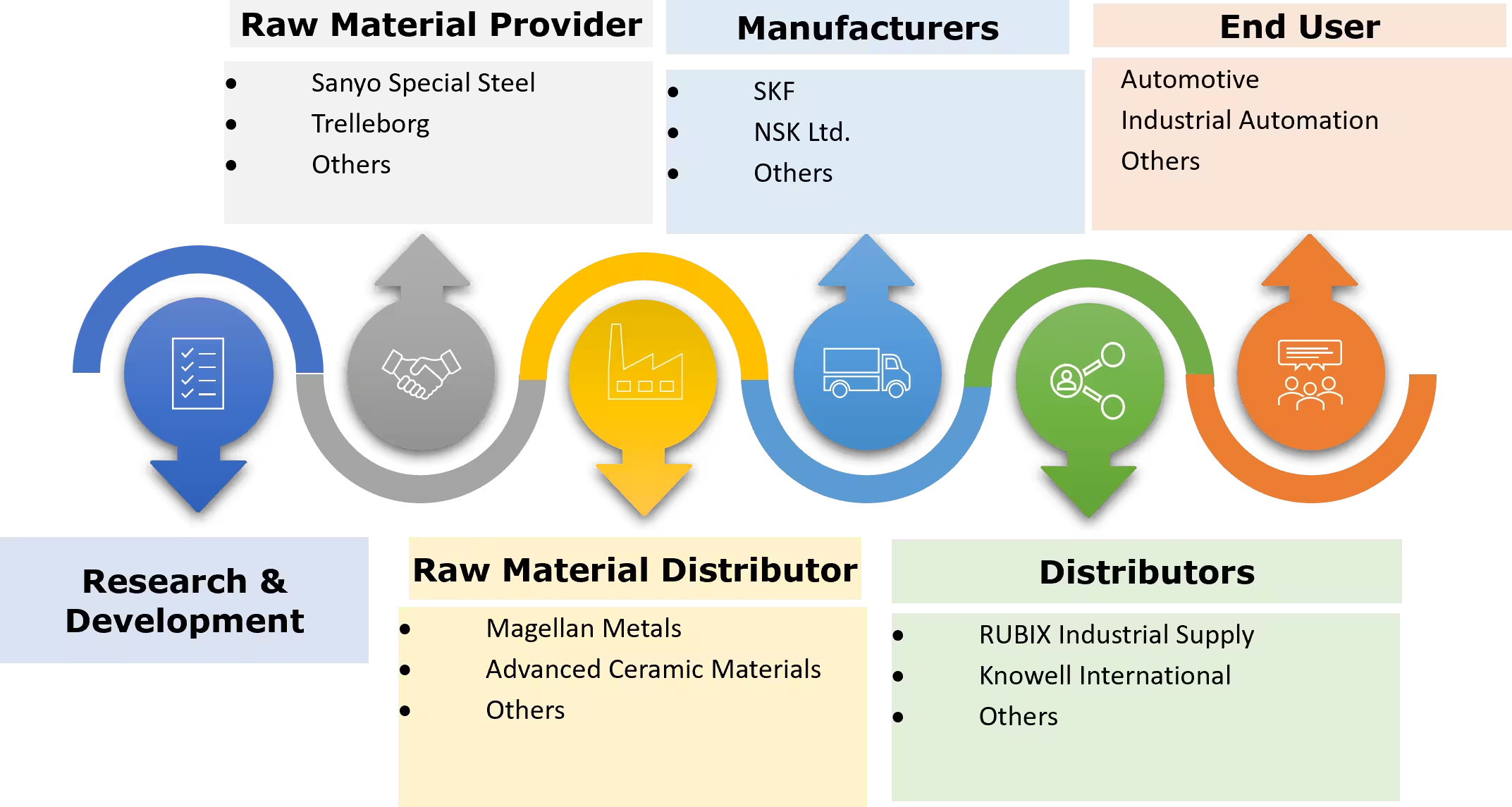
Bearings Market Ecosystem :
Recent Industry Developments :
Product launch
- In February 2026, NTN Europe introduced ROX, a specialized spherical roller bearing engineered to withstand the extreme conditions of quarries and mines. The robust design doubles longevity and slashes lubrication requirements by over 50%, significantly lowering maintenance downtime and environmental impact.
- In November 2024, SKF has introduced its SKF Infinium series, a breakthrough in circular manufacturing that utilizes advanced Laser Metal Deposition technology to enable repeated recladding and reuse of bearings. This innovation marks a major shift from traditional replacement cycles, providing an infinitely refurbishable alternative that outperforms standard components in demanding environments.
Partnerships and Collaboration
- In September 2025, NSK Ltd. launched a verification program in collaboration with a global steel company to establish a circular business model centered on bearing reconditioning and reuse. This initiative focuses on co-creating value with customers throughout the entire maintenance and repair phase, proving the viability of high-precision diagnostics in promoting sustainable industrial operations.
Expansion
- In September 2025, SKF inaugurated its new global center of excellence for super-precision bearings in Airasca, Italy. This highly automated and digitally integrated facility consolidates key innovation and production functions to enhance the development of high-performance bearing solutions..
Bearings Market Report Insights :
| Report Attributes | Report Details |
| Study Timeline | 2021-2034 |
| Market Size in 2034 | USD 337.72 Billion |
| CAGR (2026-2034) | 8.8% |
| By Product Type |
|
| By Material |
|
| By Sales Channel |
|
| By End-User Industry |
|
| By Region |
|
| Key Players |
|
| Report Coverage |
|
Key Questions Answered in the Report
How big is the bearings market? −
The bearings market is estimated to reach over USD 337.72 Billion by 2034 from a value of USD 146.55 Billion in 2025 and is projected to grow by USD 158.58 Billion in 2026, growing at a CAGR of 8.8% from 2026 to 2034.
What specific segmentation details are covered in the bearings report? +
The bearings report includes specific segmentation details for product type, material, end user, and regions.
Which is the fastest segment anticipated to impact the market growth? +
In the bearings market, specialty bearings is the fastest-growing segment during the forecast period.
Who are the major players in the bearings market? +
The key participants in the bearings market are SKF (Sweden), Schaeffler Group (Germany), NSK Ltd. (Japan), The Timken Company (US), NTN Corporation (Japan), JTEKT Corporation (Japan), MinebeaMitsumi Inc. (Japan), Nachi-Fujikoshi Corp. (Japan), RBC Bearings Incorporated (US), C&U Group (China), and others.
What are the key trends in the bearings market? +
The bearings market is being shaped by several key trends including the accelerated adoption of sensor-integrated bearings for predictive maintenance, increasing need for high-speed ceramic hybrid units, and a focus toward sustainable, low-friction designs.
Overview
Reputation & Certifications


Our Services
- Market Intelligence & Forecasting
- Custom Research Solutions
- Market Entry Strategy
- Competitive Intelligence
- Customer Insights
- Industry Innovation Analysis
- Investment Advisory