Jump to Content
Biopesticides Market - Size, Share, Industry Trends, and Forecasts (2024 - 2031)
Biopesticides Market Size:
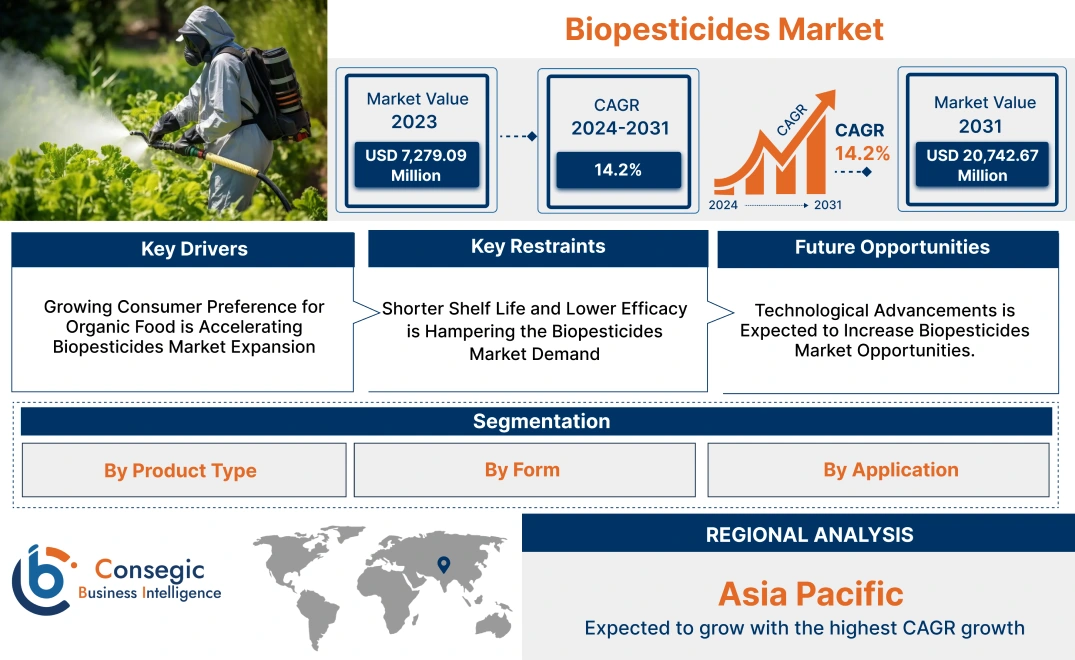
Biopesticides Market size is growing with a CAGR of 14.2% during the forecast period (2024-2031), and the market is projected to be valued at USD 20,742.67 Million by 2031 from USD 7,279.09 Million in 2023.
Biopesticides Market Scope & Overview:
Biopesticides are natural or biologically derived agents used to control pests, diseases, and weeds. Unlike synthetic pesticides, they are typically sourced from natural materials such as plants, microorganisms, or certain minerals. They are categorized into multiple types, namely bioinsecticides, biofungicides, bioherbicides, and others. They offer numerous advantages over traditional chemical pesticides. They are environmentally friendly, breaking down rapidly without leaving harmful residues, which helps preserve soil and water quality. They are highly specific, targeting only the intended pests or diseases. This minimizes harm to beneficial organisms such as pollinators and natural predators. They are also safer for humans, reducing the risk of toxicity. Additionally, they are a sustainable option, helping to prevent pest resistance over time. Their integration into agricultural practices promotes ecological balance and supports organic farming initiatives, making them a key tool for sustainable agriculture.
Biopesticides Market Dynamics - (DRO) :
Key Drivers:
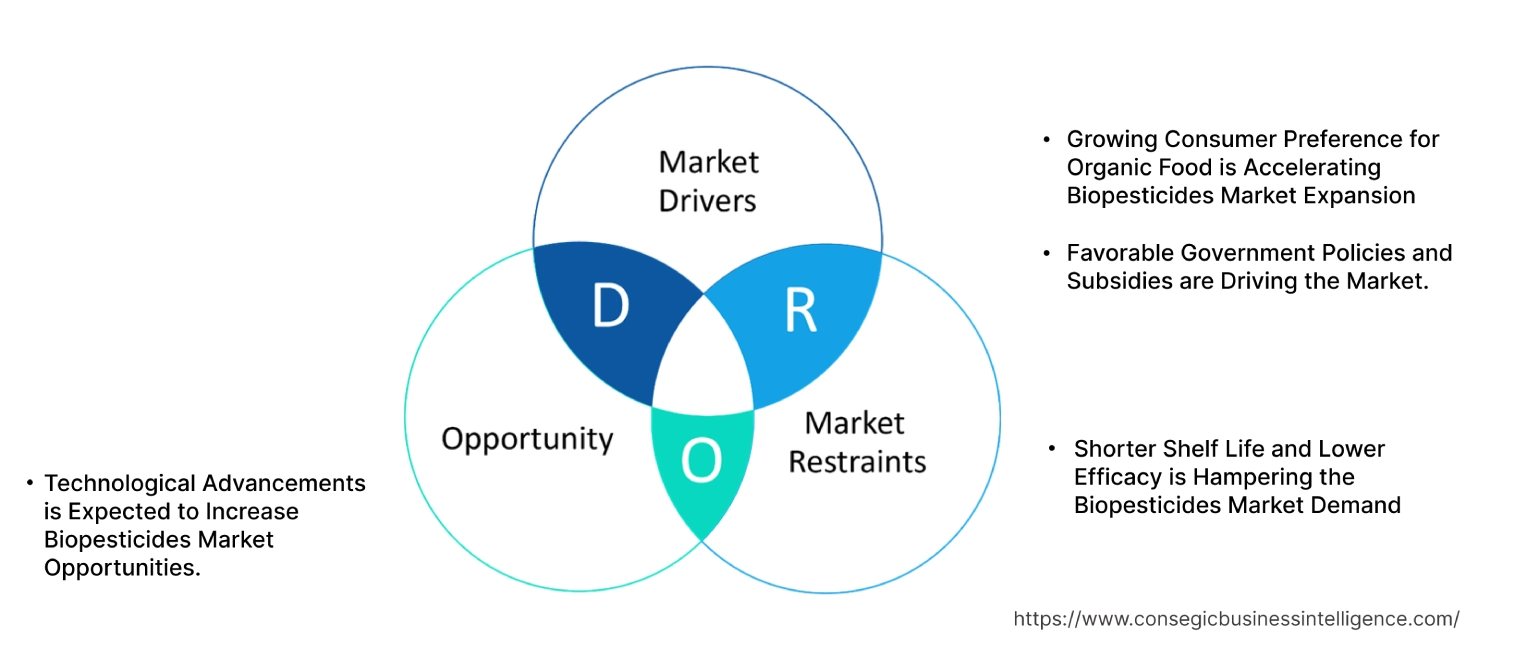
Growing Consumer Preference for Organic Food is Accelerating Biopesticides Market Expansion
Organic food is produced without the use of synthetic pesticides, fertilizers, or genetically modified organisms (GMOs). It prioritizes environmental sustainability, animal welfare, and human health. In contrast to traditional chemical pesticides, bioinsecticides, bio fungicides, and bioherbicides exhibit greater selectivity. They target specific pests, minimizing harm to beneficial insects and other organisms. Additionally, they decompose quickly, reducing their long-term impact on the environment. By using them, organic farmers maintain crop health and yield while adhering to strict organic standards and preserving ecosystem balance.
There is increasing awareness regarding environmental issues such as pesticide pollution, soil degradation, and climate change among consumers which has led to an increase in the need for healthier and more sustainable food options.
- For instance, according to Gillco Ingredients, the sales of organic food have shown consistent growth over the last 15 years, rising roughly 4 times from 2005 to 2021. Thus, as per the analysis, increasing demand for organic food has stimulated the increased usage of biological pesticides, positively influencing the market.
Overall, the growing consumer preference for organic food, driven by environmental concerns and health consciousness, is significantly boosting the biopesticides market expansion.
Favorable Government Policies and Subsidies are Driving the Market.
Chemical pesticides pose significant drawbacks. They harm beneficial insects, birds, and other wildlife. Additionally, they contaminate water bodies and soil, leading to environmental pollution. Long-term exposure to chemical pesticides also has adverse health effects on humans, including neurological disorders and cancer. Furthermore, overuse of these chemicals leads to the development of pesticide resistance in pests, reducing their effectiveness over time.
Governments worldwide are increasingly recognizing the environmental and health risks associated with synthetic chemical pesticides and are implementing supportive policies to promote the adoption of sustainable and eco-friendly pest management practices.
- For instance, in June 2022, the EU Commission established mandatory EU-target levels aimed at decreasing both the usage and hazards of chemical pesticides, with a goal to cut the use of the most harmful pesticides by 50%. Thus, this has influenced the increased usage of bioinsecticides, biofungicides, and bioherbicides, impacting the market positively.
Additionally, these policies include subsidies, and research grants to encourage the development and commercialization of biologically made pesticides. Overall, by providing financial support and creating a conducive regulatory environment, governments are playing a crucial role in accelerating the global biopesticides market growth.
Key Restraints :
Shorter Shelf Life and Lower Efficacy is Hampering the Biopesticides Market Demand
Low performance compared to traditional chemical pesticides is one of the key restraints hindering the widespread adoption of these biologically derived pesticides. Biopesticides are sensitive to factors like temperature, humidity, and light. Improper storage further reduces their shelf life.
- For instance, according to a study published by the National Center for Biotechnology Information, in 2023, biologically originated pesticides have limited effectiveness and slower response in managing pests and diseases. Second, commercially available products tend to be quite costly and are not easily accessible in the global marketplace. Third, besides the challenge of commercialization, they also encounter issues related to quality control and a limited shelf-life. Thus, this is hindering the biopesticides market demand.
In addition to that, these pesticides, being derived from natural sources, are more susceptible to degradation and have a limited duration of activity. This necessitates more frequent applications, increasing labor costs and reducing overall crop protection. Furthermore, under adverse environmental conditions or against highly resistant pests, these pesticides lead to inconsistent results and potentially compromise crop yields.
Overall, analysis shows that the lower efficacy and shorter shelf life of bio-derived pesticides compared to chemical pesticides, coupled with higher costs pose significant challenges to their widespread adoption, hampering the biopesticides market trends.
Future Opportunities :
Technological Advancements is Expected to Increase Biopesticides Market Opportunities.
Ongoing technological advancements in biotechnology and formulation technologies are creating significant global biopesticides market opportunities. These advancements are leading to the development of more effective and targeted biological pesticides with enhanced efficacy, broader target spectra, and improved environmental compatibility.
- For instance, according to an article published by Phoreus Biotech, a life sciences company that develops nanocarrier technology, in 2024, RNA interference (RNAi) biological pesticides represent an innovative strategy for controlling pathogens. They function by employing RNA molecules to silence particular genes in the intended pests. This natural biological mechanism effectively hampers the pests' ability to survive or reproduce. This presents manufacturers to develop new solutions, creating potential for the upcoming years.
Moreover, integrating biological pesticides with precision agriculture technologies is impacting positively the biopesticides market trends. By utilizing advanced data analytics and sensor technologies, farmers can precisely identify areas with pest infestations and apply these pesticides only where needed. This targeted approach will minimize chemical input while optimizing resource utilization.
Overall, leveraging technological advancements and strategic integrations can significantly enhance the efficacy and market potential of biological pesticides.
Biopesticides Market Segmental Analysis :
By Product Type:
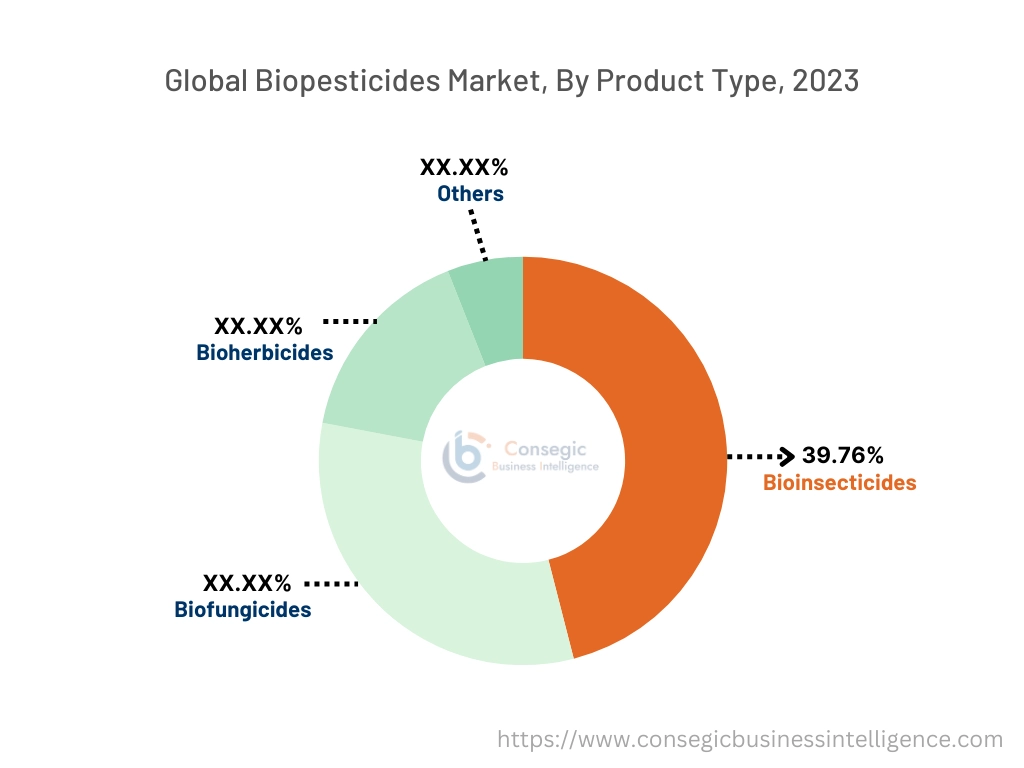
Based on product type, the market is categorized into bioinsecticides, biofungicides, bioherbicides, and others.
The bioinsecticides segment accounted for the largest market share of 39.76% in 2023.
- Bioinsecticides are natural substances derived from microorganisms (e.g., bacteria, fungi, viruses), plants, or minerals. They are used to control a wide range of insect pests that damage crops, including aphids, caterpillars, beetles, and flies.
- They work by targeting specific pests without harming beneficial insects. By controlling pests, they enhance crop quality and yield. Moreover, they reduce chemical pesticide usage, minimizing soil and water contamination. Additionally, they are safer for farm workers and consumers due to low toxicity levels.
- Strategic collaboration between manufacturers with other companies and research institutions is significantly accelerating product development and market penetration.
- For instance, in October 2024, BASF is collaborating with AgroSpheres to bring a new bioinsecticide to the market. This product is designed to manage lepidopteran pests, including specific moths and butterflies.
- Overall, bioinsecticides offer a sustainable and environmentally friendly solution to pest control in agriculture. Strategic collaborations among industry players are accelerating the development and commercialization of innovative bioinsecticides, thus driving the segment.
The biofungicides segment is expected to grow at the fastest CAGR over the forecast period.
- Biofungicides are natural or biological products derived from microorganisms such as fungi, bacteria, or naturally occurring substances used to control fungal plant diseases. They work by suppressing or killing fungal pathogens, enhancing plant resistance, and promoting healthy growth.
- They are used to combat a wide range of fungal diseases that affect crops, including powdery mildew, blight, and root rot. They are particularly beneficial in high-value crops such as fruits, vegetables, grains, and ornamentals, where disease control is critical for yield and quality. They are also used in organic farming and Integrated Pest Management (IPM) programs.
- Many bio fungicides improve soil health by promoting beneficial microbial activity. Their target-specific action helps protect beneficial organisms such as pollinators.
- As per the market research analysis, the segment of bio-fungicides for the upcoming years is driven by the rising need for organic produce, stricter pesticide regulations, and increased adoption of sustainable farming practices.
By Form:
The form segment is categorized into liquid and powder.
The liquid segment accounted for the largest market share in 2023.
- Liquid biopesticides are formulations of biological control agents, such as bacteria, fungi, or viruses, suspended in a liquid carrier.
- Liquid biopesticides dominate the market due to their ease of handling, storage, and application. They are convenient to use and are easily applied through sprayers, making them suitable for large-scale agricultural operations.
- Moreover, these formulations are quickly absorbed by plants, leading to faster and more effective pest control. In addition to that, they are mixed with other agrochemicals, such as fertilizers and other pesticides, simplifying application processes.
- Furthermore, the liquid form provides consistent dispersion in water, ensuring uniform coverage over crops.
- Increasing consumer awareness about the harmful effects of chemical pesticides is driving the segment. Strategic collaborations and partnerships between manufacturers are accelerating novel product development.
- For instance, in April 2024, Bayer revealed that it has entered into a partnership with the UK-based firm AlphaBio Control to obtain an exclusive license for a novel biological insecticide FLiPPER. Thus, this increases the commercialization of products, driving the segment.
- Overall, liquid biopesticides are the dominant form in the market due to their ease of use and application. Factors such as increasing consumer requirements, favorable government regulations, and strategic collaborations are driving this segment in the biopesticide industry.
The powder segment is expected to grow at the fastest CAGR over the forecast period.
- Powdered biologically derived pesticides are formulations of biological control agents, such as bacteria, fungi, or viruses, in a dry powder form.Powder form has several advantages, including ease of storage without the need for special conditions.
- They are applied using various methods, including dusting, spraying, or seed treatment. Moreover, they are highly concentrated, reducing transportation costs, and can be applied directly to soil or plants, providing flexibility.
- Additionally, powders are less prone to degradation from temperature or light, making them suitable for diverse climates. Furthermore, they are ideal for slow-release applications, ensuring prolonged pest control effects.
- Advancements in formulation technologies, cost-effectiveness, and the growing need for targeted pest control create potential for the segment in the upcoming years.
By Application:
The application segment is categorized into fruits and vegetables, cereals and grains, oilseeds and pulses, and others.
The fruits and vegetables segment accounted for the largest market share in 2023.
- Generally, fruits and vegetables are harvested regularly, and the collected produce is sold for human consumption right away without any assessment of pesticide residue.
- Nevertheless, the harmful impacts of synthetic pesticides pose a significant danger. Biologically derived pesticides are safe and eliminate the risk of residual effects for consumers. As an example, various neem products are used in managing Jassid in field conditions.
- For instance, according to the Organic Trade Association, the demand for organic fruits and vegetables is significantly increasing, with this category representing the largest portion of organic retail sales, making up around 36% of all organic retail sales. This has led farmers to maintain sustainable practices using bio-derived solutions.
- Overall, the analysis indicates that the rising global demand for organic produce and the increasing efficacy of biological pesticides are driving the segment.
The cereals and grains segment is expected to grow at the fastest CAGR over the forecast period.
- Biopesticides are extensively used in cereal and grain production for effective pest management.
- Bacillus thuringiensis, commonly referred to as Bt is a naturally occurring bacterium found in soil that proves harmful to specific pest insects when applied to plants. For many years, both farmers and home gardeners have utilized Bt as a microbial pesticide spray to manage caterpillars, and various beetle species, in addition to mosquitoes and black flies.
- Additionally, fungal-based pesticides such as Metarhizium anisopliae are used to target soil-borne pests such as wireworms and white grubs. By controlling pests and diseases, it contributes to higher crop yields and quality.
- The increasing availability and accessibility of these products are making them more convenient for farmers to adopt, driving the adoption. Also, increasing integrated pest management (IPM) strategies further boost the segmental trend in the forecasted years.
Regional Analysis:
The regional segment includes North America, Europe, Asia Pacific, the Middle East and Africa, and Latin America.
The regional segment includes North America, Europe, Asia Pacific, the Middle East and Africa, and Latin America.
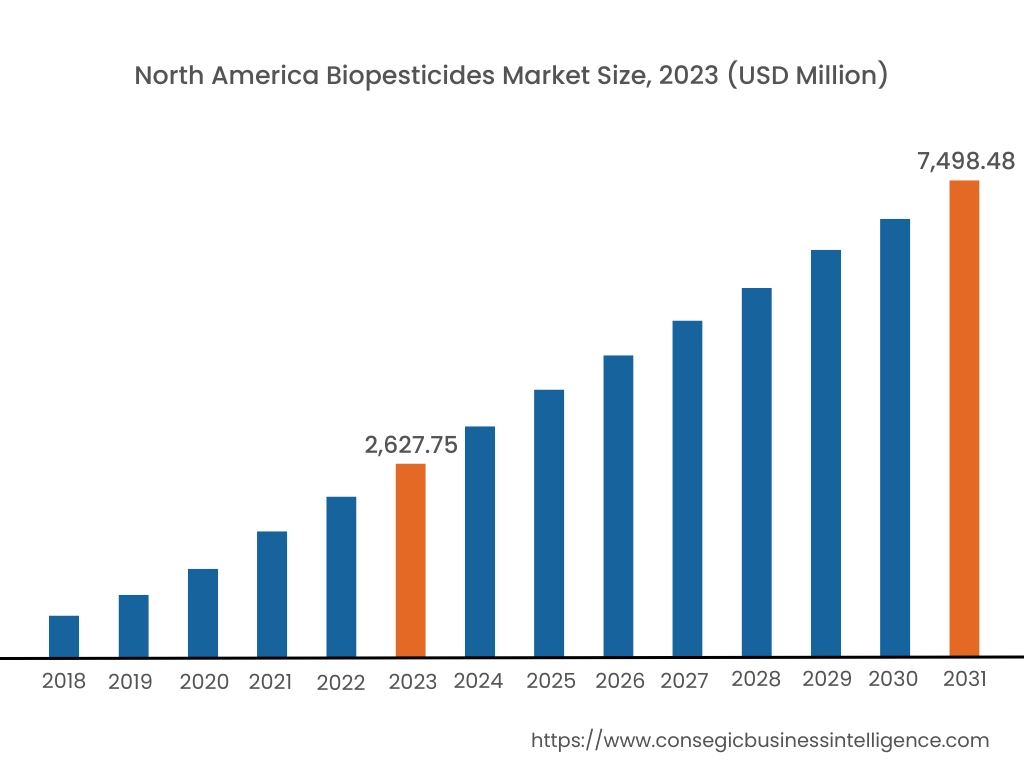
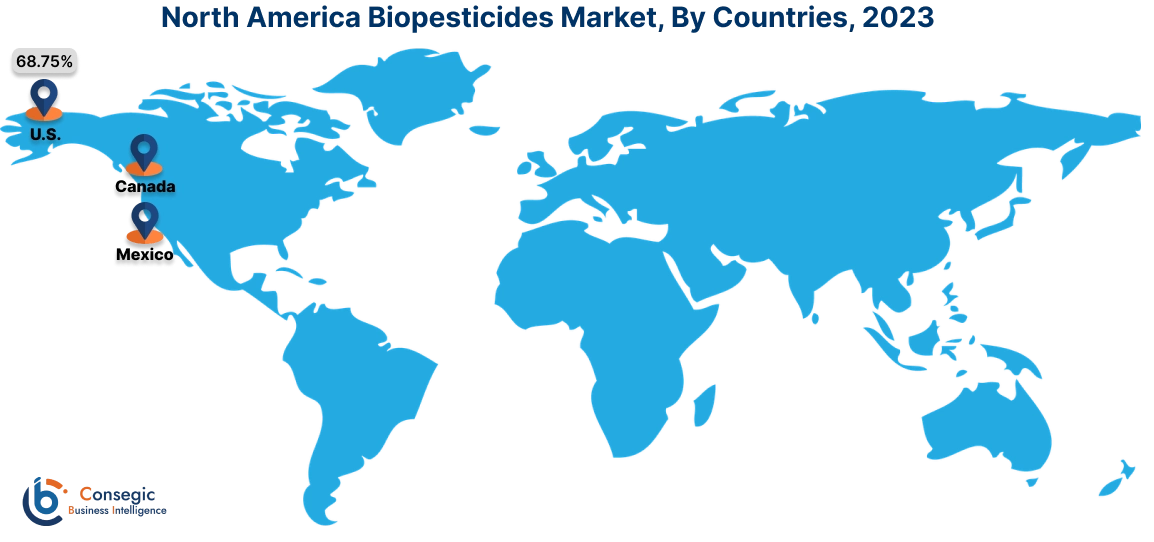
In 2023, North America accounted for the highest biopesticides market share at 36.10% and was valued at USD 2,627.75 Million and is expected to reach USD 7,498.48 Million in 2031. In North America, the U.S. accounted for the highest biopesticides market share of 68.75% during the base year of 2023. The dominance is driven by several key trends. First, the region has stringent regulations on synthetic pesticides, encouraging the adoption of eco-friendly alternatives. Moreover, the biopesticides market analysis depicts that a significant portion of the population prefers organic and sustainably produced food, leading manufacturers to increase organic production, and influencing the need for bioherbicides, bio fungicides, and bioinsecticides.
- For instance, from 2022 to 2023, Mexico saw an increase in its organic production area for oranges (rising from 16,668 acres to nearly 20,943 hectares), mangoes (increasing from 13,598 acres to 16,506 hectares), and lemons (growing from 5,068 acres to 6,266 hectares).
Additionally, substantial investments in research and development have led to the development of innovative biological pesticides and advanced application technologies. Furthermore, well-established distribution networks and strong consumer awareness about the benefits of biologically derived pesticides contribute to the biopesticides market growth in the region. Overall, the stringent regulations, growing organic food demand, and significant investments in research and development are driving the dominance of North America in the global biopesticides market.
In Asia Pacific, the biopesticides market is experiencing the fastest growth with a CAGR of 14.9% over the forecast period. The market is driven by increasing agricultural activity and the need for sustainable farming practices. Government initiatives promoting organic farming, especially in countries such as India and China, play a crucial role. Rising awareness among farmers about the environmental and health hazards of synthetic pesticides has shifted the focus toward bio-based alternatives. High population growth and food security concerns also necessitate improved crop yields through safer pest control solutions.
Europe's biopesticides market analysis states several factors are responsible for the progress of the market in the region, characterized by strict regulations and a strong emphasis on sustainable agriculture. The region’s focus on reducing pesticide usage by 50% by 2030 has accelerated organic pesticide adoption. Moreover, the region has a well-established regulatory framework, ensuring their safety and efficacy. Investments in biocontrol R&D and a strong network of startups in countries such as France, Germany, and the Netherlands also contribute to market growth in the region. Environmental conservation policies and eco-certifications further encourage their widespread use. The growing demand for organic food and increasing consumer awareness about the environmental impact of synthetic pesticides are driving the market forward.
The Middle East and Africa (MEA) region is also witnessing a notable surge in the biopesticides market, fueled by the region facing challenges such as water scarcity, soil degradation, and pest infestations. Bio-pesticides offer sustainable solutions to these problems. Moreover, government initiatives to improve agricultural productivity in arid climates, particularly in the Gulf countries, promote adoption. In Africa, international aid and partnerships, such as programs focusing on organic farming, foster the use of eco-friendly pest control methods. Additionally, rising awareness of the adverse effects of chemical pesticides on health and the environment creates potential.
The Latin American biopesticides market size is also emerging. The expansion of organic farming and export-oriented agriculture is a major drive. Countries such as Brazil, Argentina, and Mexico are adopting these pesticides to meet stringent import regulations from North America and Europe. Rising incidences of pest resistance to synthetic pesticides are pushing farmers toward sustainable options. Additionally, Latin America's rich biodiversity supports the development of region-specific pesticides. Government subsidies for organic farming and private-sector investments in agricultural biotechnology further propel the market.
Top Key Players & Market Share Insights:
The Biopesticides market is highly competitive with major players providing products to the national and international markets. Key players are adopting several strategies in research and development (R&D) and product innovation to hold a strong position in the global Microbiology market. Key players in the Biopesticides industry include-
- BASF SE (Germany)
- Bayer AG (Germany)
- Koppert Biological Systems (Netherlands)
- Certis Biologicals (U.S.)
- Biobest B.V. (Belgium)
- Syngenta AG (Switzerland)
- Sumitomo Chemical Co., Ltd (Japan)
- Corteva Agriscience (U.S.)
- FMC Corporation (U.S.)
- Valent BioSciences (U.S.)
Recent Industry Developments :
Product Launch:
- In October 2024, BioConsortia’s innovative bio fungicide/bactericide, Amara, was granted registration by the Environmental Protection Agency (EPA). Aimed at high-value fruit and vegetable production, this product is specifically formulated to safeguard crops against foliar diseases through a biological mechanism that provides an alternative to chemical fungicides while offering superior consistency in effectiveness compared to existing biological products available in the market.
- In November 2023, FMC introduced a new crop protection product that combines an insecticide and fungicide, Ethos Elite LFR, targeted for the U.S. market in 2024. This innovative solution merges a well-established and reliable pyrethroid insecticide, bifenthrin, with two unique FMC biological strains, Bacillus velezensis strain RTI301 and Bacillus subtilis strain RTI477, providing extensive control over early-season diseases and soilborne pests.
Biopesticides Market Report Insights :
| Report Attributes | Report Details |
| Study Timeline | 2018-2031 |
| Market Size in 2031 | USD 20,742.67 Million |
| CAGR (2024-2031) | 14.2% |
| By Product Type |
|
| By Form |
|
| By Application |
|
| By Region |
|
| Key Players |
|
| North America | U.S. Canada Mexico |
| Europe | U.K. Germany France Spain Italy Russia Benelux Rest of Europe |
| APAC | China South Korea Japan India Australia ASEAN Rest of Asia-Pacific |
| Middle East and Africa | GCC Turkey South Africa Rest of MEA |
| LATAM | Brazil Argentina Chile Rest of LATAM |
| Report Coverage |
|
Key Questions Answered in the Report
How big is the Biopesticides market? −
In 2023, the Biopesticides market is USD 7,279.09 Million.
Which is the fastest-growing region in the Biopesticides market? +
Asia Pacific is the fastest-growing region in the Biopesticides market.
What specific segmentation details are covered in the Biopesticides market? +
Product Type and Application segmentation details are covered in the Biopesticides market
Who are the major players in the Biopesticides market? +
BASF SE (Germany), Bayer AG (Germany), Syngenta AG (Switzerland), Sumitomo Chemical Co., Ltd (Japan), Corteva Agriscience (U.S.), FMC Corporation (U.S.), Valent BioSciences (U.S.), Koppert Biological Systems (Netherlands), Certis Biologicals (U.S.), and Biobest B.V. (Belgium).
Overview
Reputation & Certifications


Our Services
- Market Intelligence & Forecasting
- Custom Research Solutions
- Market Entry Strategy
- Competitive Intelligence
- Customer Insights
- Industry Innovation Analysis
- Investment Advisory