Climate Crisis 2026: A Defining Moment of Global Emergency
The climate crisis in 2026 is what climate experts and economists refer to the state of climate emergency as it stands in 2026- record breaking temperatures, repeated extreme weather and the political and economic failures around these impacts.
This basically refers to the accelerating global emergency caused by global climate change, rising temperature, more frequent climate changes and growing pressure on ecosystem, economies and human societies. This signals a time when researchers and government officials begin to recognize that the Earth has officially entered a new era, where it is undergoing dangerous amounts of warming, necessitating immediate action through more stringent emission reductions and adaptation plans.
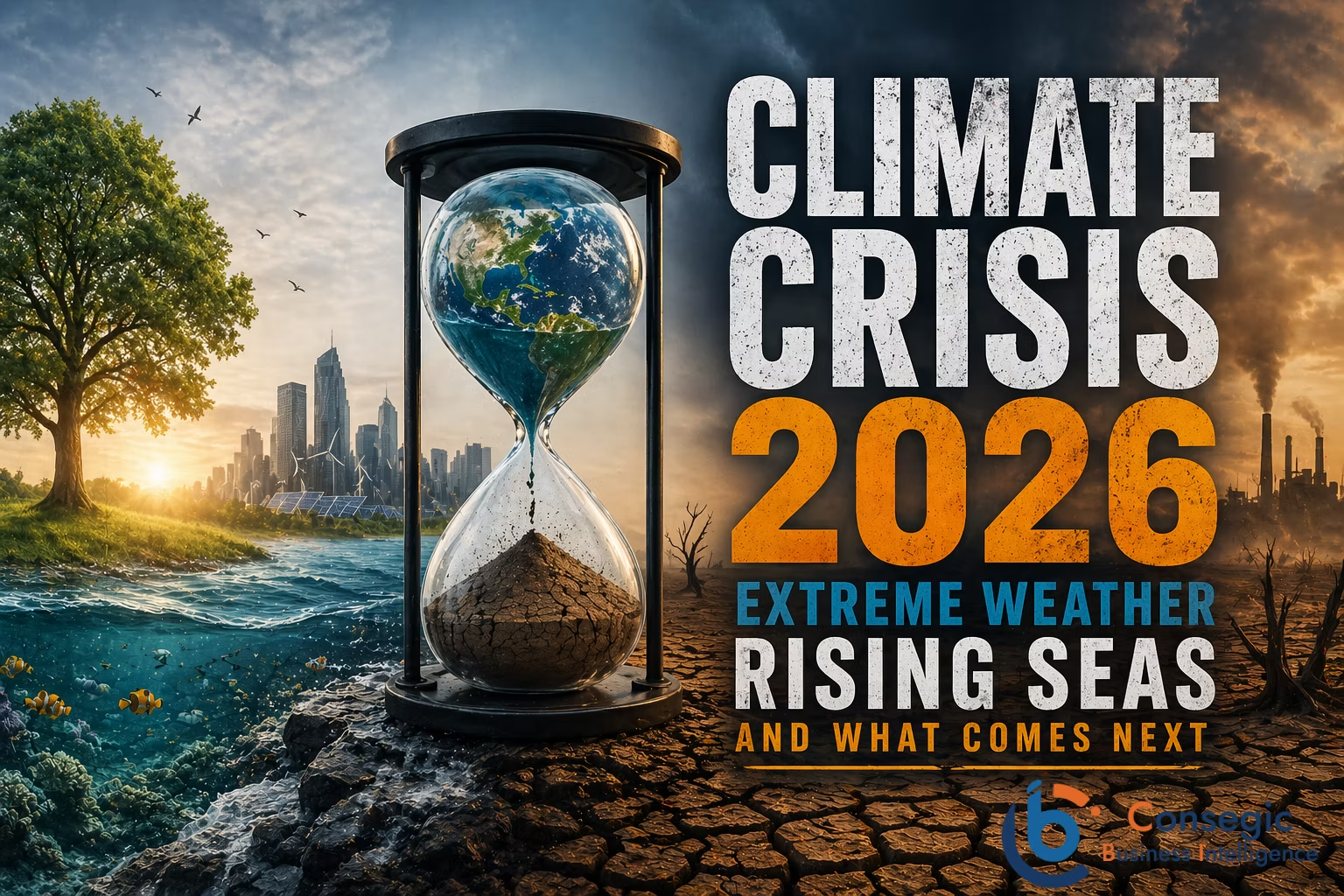
The face of climate disaster in 2026 will be dominated by extreme weather events and rising sea levels. Heatwaves, storms, droughts and floods are happening more frequently, more intensely and in surprising combinations. Along with this, sea levels are creeping higher and worsening coastal flooding worldwide.
What comes next in climate change is depended heavily upon how fast the world cuts emissions, even under optimistic scenarios the planet is already locked into further warming, more extreme weather and rising sea levels over the coming decades.
Extreme Weather: A New Normal?
Extreme weather events are no longer rare or unpredictable but are becoming a regular feature of life across globe. Rising global temperatures are intensifying the frequency, duration and severity of events like heatwaves, floods, droughts and wildfires.
Along with this, extreme heat is pushing global agrifood systems to the brink, threatening the livelihoods and health of more than a billion people involved in farming, fishing and related supply-chain work. Heat stress reduces crop yields such as wheat, maize, rice, and pulses and can damage livestock and fisheries, undermining food security even before markets or politics worsen shortages. More frequent heatwaves and droughts increase the risk of simultaneous “breadbasket” failures in different regions, raising the chances of global food price spikes.
Extreme weather is becoming a direct threat not just to lives and infrastructure but also to elections and democracy. In the period from 2006 to 2025, there have been at least 94 election disruptions in 52 countries caused by natural disasters such as floods, forest fires, droughts and hurricanes. In just 2024, there were 23 elections affected by severe weather conditions in 18 countries. Forest fires, floods, droughts and hurricanes lead to destruction of polling sites, roads and power supply systems and also displace voters.
Rising Seas and Coastal Risks
Rising sea levels are one of the long term and lasting impact of global climate change, affecting millions of people, ecosystems and economies worldwide. Cities like Mumbai, New York and Jakarta are facing repeated water intrusion into roads, homes and infrastructure, disrupting daily life and increasing long-term damage.
As the water rises, shorelines retreat faster, swallowing beaches, cliffs and low lying land, sometimes at a rate of about 1 meter of land lost per 1 centimetre of sea level rise. Tens of millions of people living in that area will be exposed to annual flooding by 2050 and this could grow to hundreds of millions later this century if emission remains high.
A major 2026 study found that coastal sea levels are already much higher than earlier estimates, by up to about 1 meter or over 3 feet in some regions, meaning more people are at risk from flooding than previously believed. This implies that even ‘normal’ high tides and modest storms now push water farther inland, increasing sunny day flooding and erosion along many coasts.
In April 2026, the UN held a high level Sea Level Rise Declaration meeting to strengthen global cooperation, especially for small island developing states and other vulnerable coastal countries. Several countries and cities are now revising coastal planning rules, including sea wall designs, land use zoning and relocation plans, because the old sea level projections are no longer realistic.
Global Impact: People, Economy & Ecosystems
The global climate challenge is no longer just an environmental issue but has evolved into a global economic and human challenge affecting nearly every aspect of life.
Impact on people: Rising temperatures and extreme weather events are directly threatening human life and sustainability. Heatwaves are increasing cases of strokes and dehydration especially among vulnerable groups like children, the elderly and people who work outdoors majority of the day. Floods and storms on the other hand, force millions to leave their homes behind and displace.
Economic consequences: Climate change is placing a heavy burden on economies worldwide. Natural disasters manage infrastructures such as roads, bridges and buildings, leading to massive repair costs. Agriculture is specially vulnerable with unpredictable rainfall and draughts massively damaging the yields production and farmers income. Industries like tourism, fisheries and insurance are also facing increasing losses.
Disruption of ecosystem: Ecosystems in nature are undergoing great strain. Forests are being depleted due to forest fires and deforestation and oceans are heating up and becoming increasingly acidic. Loss of biodiversity is occurring as numerous species are finding it difficult to adapt to environmental changes or simply having nowhere else to go.
What Comes Next: The Near Future of the Climate Crisis
The issue of climate change will no longer be seen as something scary but rather as a normal part of reality, influencing how humans work, interact, move and live their lives all over the globe.
Weather will become harsher in its nature and more frequent, meaning that heatwaves, floods and storms will occur often and simultaneously. The seasons will no longer be predictable and reliable in their appearance, having a significant impact on agriculture, water supplies and people’s lives overall.
Coastal zones will be flooded regularly, even when there are no storms, as well as during normal high tides. The boundaries between land and sea will slowly start to change, with some territories becoming inhabitable because of regular flooding.
Simultaneously, the climate crisis will become part of everyday discourse on a global level and will be taken into consideration when making any decisions. This will mean that it will cease to be viewed as something independent and become a determining factor for all sectors. What is coming up next is a new reality dominated by climate changes and influenced by their effects.