Packaging has quietly become one of the more complicated parts of running a product business. What used to be a box or a bag has turned into something brands actively think about- not just as a cost, but as a statement. The global packaging market sits at around $1.32 trillion this year and while that number will keep climbing, the bigger story is how much the industry itself is being pushed to change.
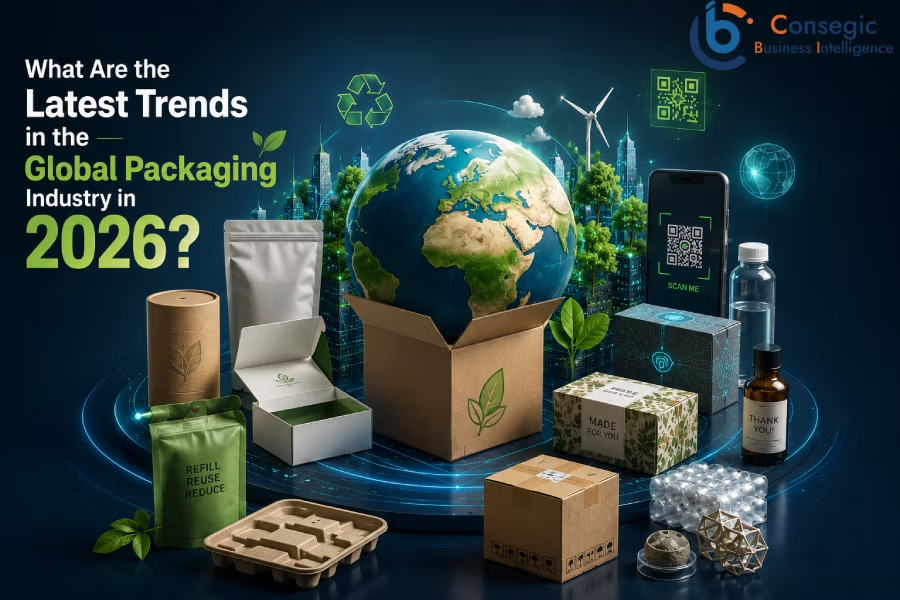
Companies today are dealing with pressure from every direction. Consumers want packaging that feels sustainable and responsible, governments are introducing stricter environmental rules and brands are trying to stand out in an increasingly crowded market.
At the same time, packaging still has to do its basic job- protect products, survive shipping and remain affordable. That balancing act is what’s driving so much innovation across the industry right now. Businesses are experimenting with recyclable materials, reusable formats, smarter designs and even technology enabled packaging to meet changing expectations without sacrificing performance or customer experience.
Sustainability Has Gotten Specific
For years, slapping "eco-friendly" on a label was enough to satisfy most buyers. That window has largely closed. Consumers are more sceptical now and regulators have started putting real teeth into sustainability requirements.
The EU's Packaging and Packaging Waste Regulation is the clearest example of this shift and it's prompting companies to back up green claims with science and lifecycle assessments- not greenwashing jargon. Companies are therefore responding with a clear focus on cutting out PFAS and opting for moulded fibre and shaving off material weights whenever feasible.
The idea of transparency as a competitive advantage is also being increasingly accepted. Brands that openly publish their sourcing practices, recycling rates and emissions data tend to earn more goodwill from both consumers and retail partners than those who keep things vague.
Single Material Packaging Is Gaining Ground
Traditional flexible packaging often stacked several different materials on top of each other- a layer of this plastic for structure, a layer of that one for barrier protection. The packaging worked fine, but recycling it was a nightmare because the layers couldn't easily be separated.
The industry has been working around this for a while and in 2026 the solutions are actually viable. Mono-material packaging- built entirely from one polymer family- can now meet the performance standards that manufacturers need. Better coatings and material engineering made that possible.
For many companies, this isn't just a "nice to have" anymore. Extended producer responsibility rules in multiple markets mean that recyclability has moved from a preference to a practical requirement.
Smart Packaging Is Moving into the Mainstream
A QR code on a box isn't new. What's changed is how much those codes are expected to actually do.
Brands are using smart packaging to give consumers access to product histories, freshness data, usage instructions and even digital brand experiences. In pharmaceuticals, the stakes are higher- packaging that can detect tampering or track temperature conditions is becoming standard in some categories.
The push for digital product passports, particularly across Europe, has accelerated all of this. Regulators want traceability built into products from the start and packaging is the most logical place to put it. Some people in the industry are calling this "Packaging 4.0"- the idea that a package isn't just a container, it's also a data point.
Biobased Materials Are Becoming More Practical
The appeal of packaging made from sugarcane, corn starch, bamboo or agricultural waste has always been obvious. The problem was that these materials often couldn't match the performance or cost profile of conventional plastics. That gap is narrowing.
Better manufacturing processes have produced renewable films and coatings that can actually hold up in real-world applications. Compostable certifications are becoming easier to obtain as material science improves and on the economics side, rising fossil fuel costs and tighter carbon regulations have made traditional plastics automatically less cheap.
None of this means conventional plastics are disappearing anytime soon. But the calculus is shifting and more companies are finding that biobased options make sense for at least part of their packaging portfolio.
Refillable Systems Are Finally Getting Serious
Refill and reuse concepts have been kicking around the industry for a long time without much traction. The logistics were hard; consumer participation was spotty and the economics rarely worked out.
That's starting to change. Major brands across beverages, personal care and household products have made real investments in return programs and refillable formats. Extended producer responsibility legislation in several markets has also given companies a clearer incentive to move away from single-use packaging rather than just talk about it.
The reverse logistics problem hasn't been fully solved and getting packaging back from consumers at scale is still genuinely difficult. But the direction of travel is clear and the infrastructure is slowly catching up.
The Industry Keeps Consolidating
M&A activity in packaging has been consistent for several years now and 2026 is no different. The big players have already absorbed a lot of the obvious acquisition targets, which means deal activity is increasingly focused on regional and mid-sized companies, particularly in Europe.
The logic behind these moves is fairly straightforward- organic growth in packaging tends to be slow, so buying market share is often more efficient than building it. Companies are also looking to consolidate operational footprints and eliminate redundancy across their supply chains.
Packaging as a Brand Experience
Walk through any unboxing video online and the pattern becomes obvious- people notice packaging. The texture of the box, the way it opens, whether there's something unexpected inside- these details register and consumers talk about them.
Brands selling direct to consumers have leaned into this hard. Premium finishes, bold typography, unusual structural formats- these aren't just aesthetic choices, they're part of how a product gets remembered and shared. For categories where price and features are close across competitors, packaging has become one of the cleaner ways to differentiate.
Where Things Are Headed
The packaging industry in 2026 is being pulled in a few directions at once, toward sustainability, toward smarter materials, toward digital integration and toward better consumer experiences. The companies navigating this well are the ones treating these pressures as connected rather than separate problems. Better materials can also mean better branding. Traceable packaging can also mean stronger consumer trust. The businesses that figure out how to tie those threads together are the ones that will be worth watching over the next few years.