The oil & gas industry may seem old school with its reliance on large machinery, extensive infrastructure and high-risk environments but a technology-driven overhaul is transforming the sector. Instead of underground, it's a massive stream of data moving at a rapid pace from wells to pipelines to offshore platforms and finally to refineries.
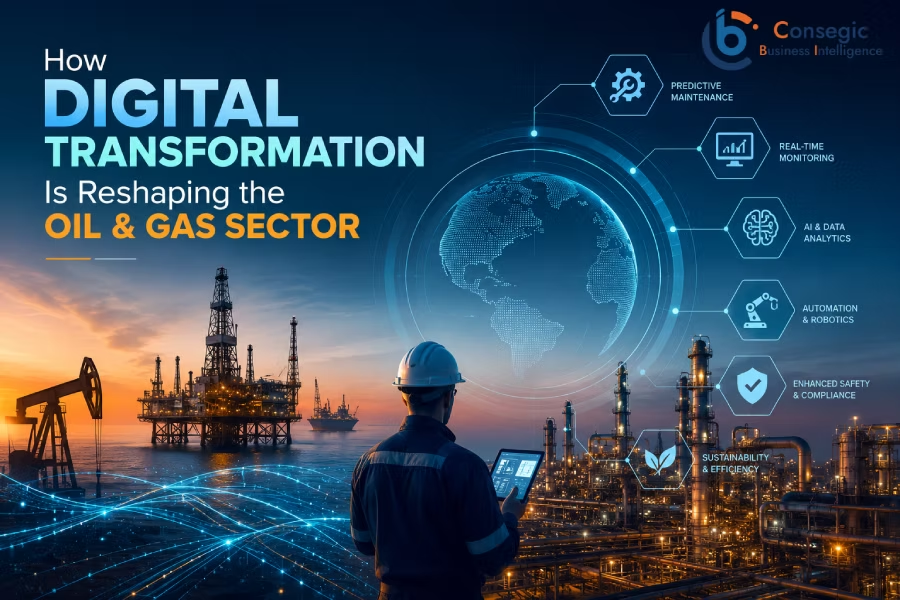
It may have previously taken a combination of geology and engineering know-how with years of experience to successfully run this sector. However, Digital technologies are now transforming how energy companies operate- with AI, sensors, analytics and automation helping businesses boost efficiency, minimize operational risks and speed up their decision making.
The evidence of this shift is evident throughout the sector with global digital oil & gas market set to surpass USD 73 billion by 2030. Companies utilizing predictive analytics are already cutting down unplanned downtime by approximately 25% with AI exploration solutions producing savings of up to 40%.
What is Driving the Change?
With the energy sector historically being a laggard when it came to implementing digital technologies compared to industries like finance and retail due to high infrastructure costs, restrictive regulations and cautious operations, it was a question of 'when', not 'if'. However, a variety of pressures have now made this transformation unavoidable.
Market volatility in oil prices, spiralling operating expenses, rising ESG expectations and the ongoing global shift towards cleaner energy sources are forcing companies to reassess their operating procedures. Companies are now expected to increase efficiency whilst reducing both emissions and levels of transparency.
The COVID-19 pandemic played a major catalyst in this transformation. Restrictions on travel and reduced available workforce prompted organizations to adopt remote monitoring and digital operations much faster than predicted with solutions that would once have been considered optional now an essential element in enabling business continuity and production.
The leadership team within this sector are now realizing the future competitiveness of the industry hinges not on the resources the company holds, but on how well they can leverage the data associated with them.
Industrial IoT & Smart Operations
One of the key technologies defining this transformation is the rise of Industrial IoT systems. Modern oil & gas facilities now utilize tens of thousands of connected sensors capable of providing continuous real-time monitoring of the facility and associated machinery and infrastructure.
Offshore platforms and production facilities can continually monitor pipeline integrity, flow rates, pressure and temperature- providing a steady stream of data enabling operators to identify operational problems in their earliest stages before an expensive failure occurs.
Predictive maintenance has become the primary benefit of these linked systems. Rather than waiting for machinery to fail, companies now use machine language algorithms to analyse real-time sensor and historical data in order to detect the subtle warnings signs that an item of equipment is about to fail weeks in advance.
Global corporations have already reported reductions in unintended downtimes following the deployment of IoT-linked asset management systems leading to greater profitability and operational reliability.
AI in Exploration
AI has also become an integral component of exploration and production activities within the sector. Seismic interpretation traditionally requires lengthy manual analysis; however, AI algorithms are now significantly shortening this time through the interpretation of large geological datasets with unparalleled speed and accuracy, in addition to helping companies efficiently identify potential hydrocarbon reservoirs and reducing their exploration risks and costs.
AI can also help optimize reservoir management using digital twins. Digital twins are a physical representation of the actual reservoir in a computer environment which will analyse operational and geological data enabling engineers to experiment with various production strategies without impacting real-world production, allowing for faster more optimal decisions.
With companies constantly looking for the edge over competitors, the operational efficiency these algorithms provide can be instrumental, aided by Cloud and edge computing which facilitate rapid analysis of extensive amounts of data.
Enhancing Safety through Technology
One of the biggest advantages that comes with digital transformation in the sector is the impact it has had on workforce safety.
Once, an oil & gas workplace was one of the most hazardous on the planet with risks of explosion, toxic gas leak or equipment failure. Fortunately, advanced digital technologies have helped significantly mitigate this risk.
Worker specific environmental and biometric data from sensors worn by employees can monitor real-time working conditions, identify exposure to toxic gases and extreme temperatures. Operators receive instant warnings when the working environment becomes unsafe and droids can now be utilized for inspections of flares, storage tanks and pipelines, reducing the number of workers required to enter potentially hazardous spaces. Simulation tools enable workers to practice operating safely in challenging conditions-something that can save lives in future potential emergencies.
Following the "Deepwater Horizon disaster" of 2010, many experts now feel that advanced monitoring and automatic shutdown technology would be capable of preventing such a catastrophe from happening again.
Digitalization and Sustainability
In light of increased awareness of environmental impact coupled with continuing financial pressure to remain profitable during the global energy transition, digital technology is playing a major role in helping companies achieve both objectives.
Monitoring and curbing methane emissions is a primary focus with regulators and investors. Both satellites and AI imaging technology can be used to quickly and efficiently locate methane leaks across the network, improving environmental performance and response to critical operations. This improved efficiency not only reduces per barrel emissions, but has shifted the paradigm towards treating digitalization as a central part of sustainability planning.
The Human Factor
Although rapidly growing, digital transformation also involves a significant shift in human capability. In addition to traditional engineering skills the workforce now requires knowledge of data science, AI and cybersecurity. To support this demand, companies are investing in training and partnering with universities to develop these capabilities.
Change of culture within organizations is likely to be one of the toughest hurdles with traditional hierarchical operational processes now adapting to more agile, data-led processes.
Looking Ahead
Digital transformation in the oil & gas industry is more than just a temporary shift, but a fundamental change in how energy resources are identified, produced, processed and utilized. Companies that are willing to invest in not only the appropriate digital technology, but also the skilled workforce to harness it and agility to adapt in real time, will stand to reap significant benefits.
The ongoing and future volatility of the oil & gas sector combined with mounting pressure from investors and the general public to move towards cleaner alternatives, places the focus on leveraging data to facilitate fast, accurate decision-making as one of the sector's most critical competitive advantages.
The future of the oil fields is increasingly digital and a large amount of that future is here today.