The global packaging industry, valued at approximately $1.28 trillion in 2025, is expected to grow significantly and reach nearly $1.75 trillion by 2035. However, this growth is not being shared evenly across all packaging materials. Certain categories are advancing much faster than the others, largely because of increasing sustainability requirement, the continuous rise of e-commerce and rapid technological innovation.
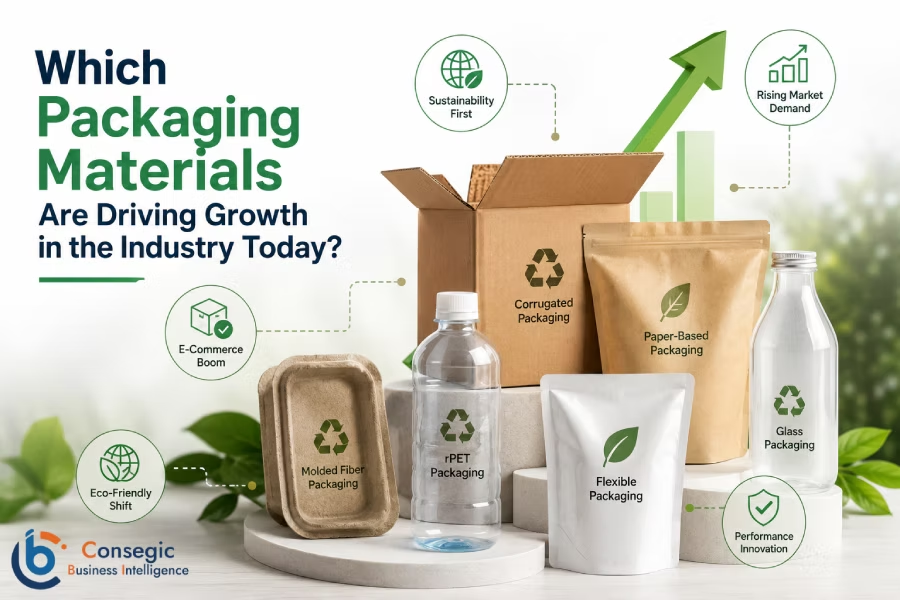
Packaging today is experiencing one of the biggest shifts the industry has seen in decades. Consumer preferences have evolved, governments all around the world are introducing stricter environmental regulations and supply chain challenges have encouraged companies to rethink the materials that they use.
As a result, manufacturers, retailers and brand owners are all asking the same question- which packaging material can best balance functionality, environmental responsibility and long-term commercial success?
The answer becomes clear when we examine the materials currently gaining the most momentum in the market.
A Market Being Reshaped
Due to changing customer demands, some areas of packaging are growing rapidly, with forecasts showing the global packaging market to value $1.75 trillion by 2035, the active and intelligent packaging sector will be valued at $16.2 billion by 2026 and the biodegradable packaging market forecast to be worth more than $40.75 billion by 2034.
- Sustainable and biodegradable materials
While there are countless numbers of emerging trends, sustainable packaging holds the largest significance among them. Increasingly, biodegradable and compostable packaging materials are becoming companies' preferred choice in their mission to diminish their carbon footprint.
Examples of these materials include polylactic acid (PLA), which can be manufactured from a range of sustainable feed stocks including corn starch, sugarcane bagasse and various bio-based polymers; their usage are increasing across the board.
Annual growth is forecast to be above 10%, increasing the market value from an estimated $15.4 billion in 2024 to more than $40 billion by 2034. Food & beverages, beauty & personal care, health & life sciences are leading segments making this transition. A variety of brands are switching out the plastic packaging for paper board, recyclable materials and renewability.
Industry mindset has also altered. Sustainability used to be an additional feature that would highlight a product in its niche. Currently, it is a basic requirement.
- Paper and paperboard
Paper and paperboard continue to dominate the packaging industry in terms of overall material usage. Governments across Europe, Asia and North America are implementing restrictions on single use plastic creating strong demand for paper-based alternatives.
The overall effect is fuelling the growth of many paper packing applications. Sales revenue generated from products of flexible paper packaging products will grow from $55.4 billion to about $86.7 billion at early 2030s, increasing from $55.4 billion in 2025.
Large international brands including Nestlé, Unilever and Procter & Gamble are investing in responsibly sourced fibre-based packaging as part of their commitment to a circular economy. Their commitments are helping strengthen demand and encouraging suppliers throughout the value chain to increase production of sustainable paper solutions.
Because paper packaging is widely recyclable, familiar to consumers and increasingly versatile, it remains one of the most important material categories in the industry.
- Flexible packaging
Flexible packaging has emerged as one of the fastest growing areas of the packaging market. This segment includes products such as pouches, bags, wraps, films and sachets. Industry forecast suggests that the market could grow from roughly $287 billion in 2024 to around $423 billion by 2029, representing a CAGR of approximately 8%.
Flexible packaging popularity is due to many practical benefits. These packaging solutions are light and inexpensive. Additionally, they help increase the product life and are effective in contemporary e-commerce supply chains where shipment weight and product protection are extremely important.
The growth in online purchases has considerably raised demand for mailers, protective films and cushioning materials, utilized in delivery. With e-commerce accounting for a growing share of retail sales, businesses require packing formats that require durability with cost efficiency.
At the same time, improvements in multi-layer barrier technologies and the development of water based and bio-based coatings are enabling flexible packaging to enter categories that traditionally relied on rigid containers, including dairy products, beverages and dry food applications.
- Smart and active packaging
Beyond packaging's original function of holding and protecting goods, smart and active packaging are positioning themselves as components to transmit data, to maintain quality of products and to increase customer satisfaction.
The active and intelligent packaging market is set to be valued at 16.2 billion dollars by 2026 with new freshness indicators, oxygen absorbers, antimicrobial film, RFID labels and other technology used to improve the visibility of product life and shelf life along the supply chain.
Digital technology is opening up opportunities for further advancements in the market. The use of NFC enabled packaging and augmented reality is allowing brands to communicate directly with the consumers via their packaging, while AI technology is being utilized to tailor specific packaging experience to specific consumers.
IBM, Diageo and Unilever have all made significant use of these technologies, making smart packaging far more than just a theoretical exercise.
- Mono-materials and recyclable plastics
Plastic packaging innovation is thriving despite mounting pressure to decrease plastic waste.
This year, the global plastic packaging market is expected to grow from about $451 billion in 2026 to $664 billion by 2035. Much of this growth is anticipated to come from increased research into recyclable plastics, mono-material packaging structures and bio-based polymers.
Mono-material packaging designs combine fewer materials, usually just one, in their construction which facilitates an efficient and effective recycling process. Bio-based plastics offer business with the desired performance features, while at the same time reducing our reliance on non-renewable resources.
It is notable that sustainability priorities for brands are changing and although recyclability is a key issue, companies are now considering lightness and right-sizing with greater emphasis, to drive resource and transportation savings.
The Broader Industry Outlook
A combination of powerful forces is reshaping the future of packaging. Regulatory requirements continue to push companies toward more sustainable solutions. E-commerce growth is driving demand for packaging that can withstand shipping and delivery challenges. At the same time, rapid urbanization and rising income across the Asia Pacific regions are contributing significantly to market expansion.
Some countries will be disproportionately influential for future growth such as China and India. India in particular is becoming a dominant fast growing packaging market due to factors such as an increasing urban population, rising levels of consumption and online retail growth. Plastic credits in India for instance are predicted to grow to $1.67 billion from $982 million in 2030.
The successful businesses in the long run will be those that recognize packaging as a strategic asset rather than an overhead. Packaging can serve as a brand building element, product protection, support to environmental goals and a valuable supply chain differentiator.