Jump to Content
Botanical Extracts Market - Size, Share, Industry Trends, and Forecasts (2025-2032)
Botanical Extracts Market Size:
Botanical Extracts Market size is estimated to reach over USD 11,599.15 Million by 2032 from a value of USD 6,552.52 Million in 2024 and is projected to grow by USD 6,920.65 Million in 2025, growing at a CAGR of 7.4% from 2025 to 2032.
Botanical Extracts Market Scope & Overview:
Botanical extracts are concentrated substances derived from plant parts such as leaves, flowers, roots, seeds, and stems through various extraction methods. These extracts are available in forms like powders, liquids, and oils, making them versatile for different applications. They are known for their natural origin and bioactive properties, offering a range of therapeutic, nutritional, and cosmetic benefits. These extracts are rich in compounds such as antioxidants, vitamins, flavonoids, and alkaloids. Their primary characteristics include high potency, stability, and compatibility with a variety of formulations. These extracts are widely regarded for their ability to enhance product functionality and provide natural alternatives to synthetic ingredients. The benefits of botanical extracts include their role in improving product performance, extending shelf life, and aligning with the growing trend for sustainable and clean-label solutions. They also contribute to health and wellness through their therapeutic properties and ability to promote skin care, immunity, and overall well-being.
Applications of botanical extracts span diverse sectors such as food and beverages, cosmetics, pharmaceuticals, and personal care. They are used in functional foods, dietary supplements, skincare products, hair care formulations, and wellness solutions. Their multifunctional properties make them essential in product development across these industries. Key end-use industries incorporating these extracts include healthcare, beauty and personal care, nutraceuticals, and food and beverage production. These industries leverage the natural appeal and efficacy of botanical extracts to create innovative, consumer-focused products that meet the demand for health-conscious and sustainable offerings.
How is AI Transforming the Botanical Extracts Market?
There is an emerging use of AI in botanical extracts market. AI-powered systems are specifically being used to optimize extraction processes, analyze plant genetics, and identify new bioactive compounds. This includes using AI solutions to improve efficiency in extracting valuable compounds from plant waste, accelerate genetic research, and analyze large datasets related to plant metabolomics and genomics.
Additionally, AI-powered solutions can optimize extraction parameters such as temperature, pressure, and solvent ratios, in turn maximizing yield and purity of desired compounds. Further, AI solutions can also analyze real-time data from sensors during extraction, which enables adjustments to maintain efficiency and consistency. Thus, the above factors are anticipated to boost the market growth in upcoming years.

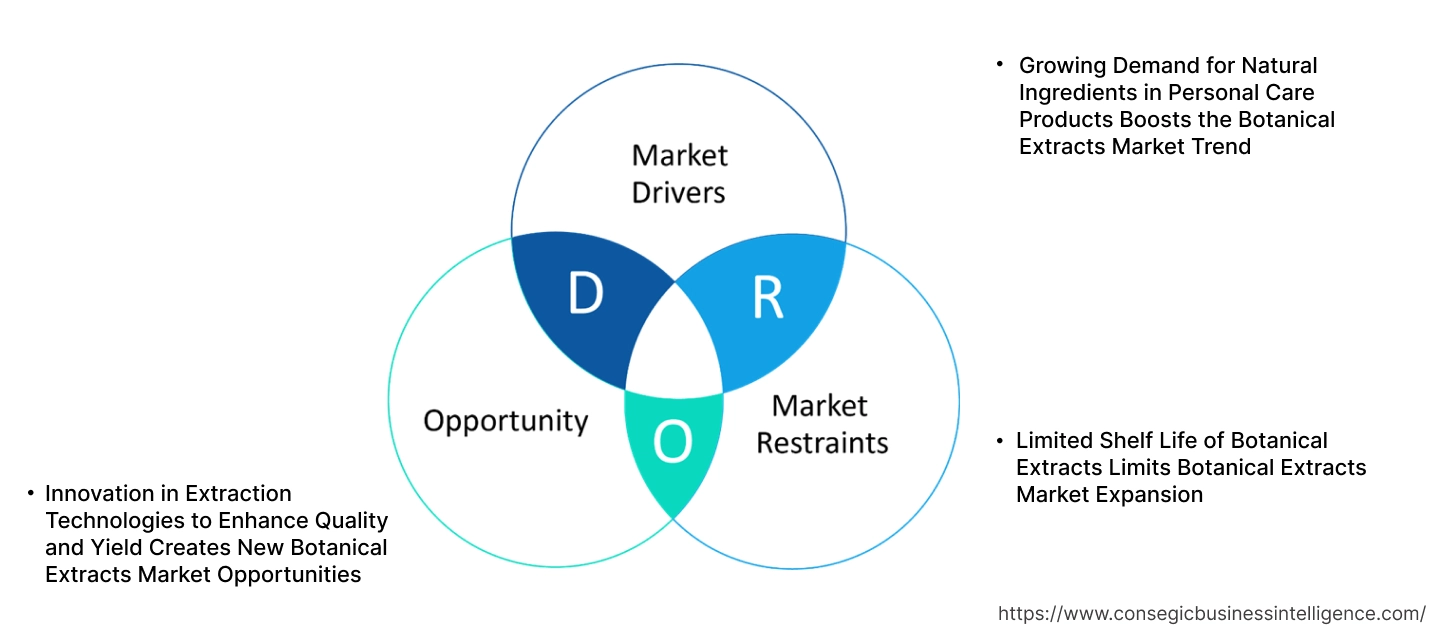
Botanical Extracts Market Dynamics - (DRO) :
Key Drivers:
Growing Demand for Natural Ingredients in Personal Care Products Boosts the Botanical Extracts Market Trend
The demand for botanical extracts is rapidly increasing in the personal care and cosmetics industry due to a rising consumer preference for natural and organic products. Consumers are becoming more conscious of the ingredients in skincare, haircare, and beauty products, opting for plant-based alternatives over synthetic chemicals. Extracts, such as aloe vera, lavender, and green tea, offer soothing, anti-aging, and moisturizing benefits, making them highly desirable in personal care formulations. For instance, the use of aloe vera extract in moisturizers and sunscreens has become a standard due to its calming and hydrating properties. This shift towards natural ingredients is driven by consumer awareness of the potential harmful effects of synthetic chemicals, leading to increased demand for products containing botanical extracts. As the personal care sector continues to focus on clean, green, and effective formulations, the market is set to expand.
Key Restraints:
Limited Shelf Life of Botanical Extracts Limits Botanical Extracts Market Expansion
One of the key challenges is the limited shelf life of many plant-based extracts. Botanical extracts, particularly those derived from fruits, flowers, and herbs, are prone to degradation over time due to factors like light, temperature, and humidity. This makes their storage and transportation more challenging, as they may lose potency and efficacy. For example, essential oils and herbal extracts can lose their fragrance, color, and therapeutic properties when exposed to heat or air for extended periods. This short shelf life can limit their appeal to manufacturers, especially in industries like food and beverage, where product freshness is crucial. As a result, the need for specialized packaging and storage solutions adds to the cost of using botanical extracts, limiting their widespread adoption. Thus, the limited shelf life remains a significant barrier to the botanical extracts market growth.
Future Opportunities :
Innovation in Extraction Technologies to Enhance Quality and Yield Creates New Botanical Extracts Market Opportunities
Advancements in extraction technologies are expected to open new avenues for the botanical extracts market growth. Technologies such as supercritical CO2 extraction, cold-press extraction, and enzyme-assisted extraction offer higher purity and yield compared to traditional methods, while maintaining the natural properties of the botanical extracts. These innovations allow for the extraction of a wider range of bioactive compounds from plants, enabling new applications in pharmaceuticals, food and beverages, and personal care products. For instance, the use of supercritical CO2 extraction in the production of high-quality essential oils has become a preferred method, as it preserves the integrity of delicate compounds. As these extraction technologies continue to evolve, they will likely reduce production costs, improve the quality of the extracts, and expand their use in various industries. Therefore, ongoing innovation in extraction methods presents a significant opportunity to enhance the market potential of botanical extracts.
Botanical Extracts Market Segmental Analysis :
By Source:
Based on the source, the market is segmented into herbs, spices, flowers, fruits, and others.
The herbs segment accounted for the largest revenue in Botanical Extracts Market share in 2024.
- Herbs like mint, basil, and oregano are widely used for their therapeutic and flavoring properties in various industries.
- The increasing consumer preference for herbal-based products in the food and beverage, cosmetics, and pharmaceuticals sectors is boosting the botanical extracts market
- These extracts are rich in bioactive compounds, such as antioxidants, anti-inflammatory, and antimicrobial properties, which contribute to their popularity in natural products.
- The trend toward natural and organic products is further accelerating the growth of the herbal extracts market.
- Therefore, according to botanical extracts market analysis, the herb segment is expected to remain dominant due to its wide-ranging applications and natural appeal.
The fruit segment is anticipated to register the fastest CAGR during the forecast period.
- Fruit extracts, including citrus, apple, and pomegranate, are gaining traction due to their high antioxidant content and health benefits.
- With the growing demand for functional foods, fruit extracts are being increasingly used in the nutraceuticals, food & beverages, and dietary supplements industries.
- These extracts offer excellent flavor and color enhancement, making them popular in the production of juices, smoothies, and natural supplements.
- The shift toward healthier, plant-based alternatives is expected to drive the expansion of fruit-based extracts.
- Thus, according to botanical extracts market analysis, the fruit segment is poised for rapid growth, driven by the increasing trend of health-conscious consumer preferences.
By Form:
Based on form, the market is segmented into powder and liquid.
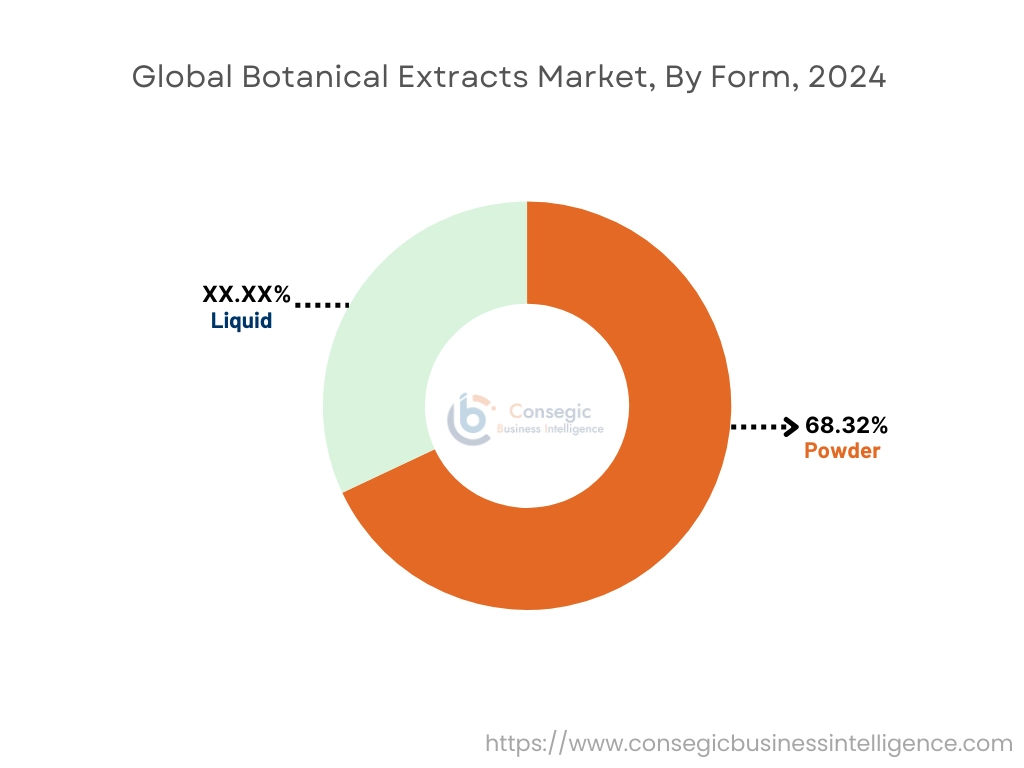
The powder form accounted for the largest revenue of Botanical Extracts Market share by 68.32% in 2024.
- Powdered botanical extracts are favored for their convenience, longer shelf life, and ease of incorporation into various formulations in the food & beverage and nutraceuticals industries.
- The compact nature of powdered extracts reduces storage and transportation costs, making it a preferred choice for mass production.
- These powders are used in a range of products, from dietary supplements to functional foods, due to their high concentration and stability.
- The versatility of powdered botanical extracts ensures their dominance across multiple industries, contributing to sustained market growth.
- Therefore, according to market analysis, the powder form will continue to be the leading form due to its efficiency in production and widespread application in health-related products.
The liquid form is expected to grow at the fastest CAGR during the forecast period.
- Liquid botanical extracts are increasingly used in formulations that require easy absorption and quick effects, such as in cosmetics, personal care, and pharmaceuticals.
- The growing consumer preference for ready-to-use, functional, and convenient products drives the demand for liquid extracts.
- Liquid extracts also offer higher bioavailability, which makes them a preferred option in nutraceuticals and dietary supplements.
- Advances in extraction technology are enhancing the quality and purity of liquid botanical extracts, further fueling their popularity.
- Thus, according to market analysis, the liquid form of botanical extracts will continue to gain momentum due to its practical benefits and increasing consumer demand for ready-to-use applications.
By Application:
Based on application, the market is segmented into food & beverages, cosmetics & personal care, pharmaceuticals, nutraceuticals, animal feed, and others.
The food & beverage segment accounted for the largest revenue share in 2024.
- Botanical extracts are widely used to enhance the flavor, color, and health benefits of various food products, including beverages, snacks, and desserts.
- With the growing demand for natural and clean-label ingredients, botanical extracts are being increasingly incorporated into processed foods and beverages.
- Consumers' growing interest in functional foods, including those with antioxidant, anti-inflammatory, and digestive health benefits, is driving the demand for botanical extracts in this sector.
- The food & beverage sector remains the most significant revenue generator due to its widespread use of botanical extracts across various sub-segments.
- Therefore, according to market analysis, the food & beverage application will continue to hold the largest market share due to ongoing consumer trends for healthier, natural ingredients in food products.
The nutraceutical segment is expected to register the fastest CAGR during the forecast period.
- Botanicals, due to their potent health benefits, are increasingly being used in dietary supplements and functional food products.
- Consumers are increasingly seeking natural solutions to support immunity, mental health, and overall wellness, which is driving the botanical extracts market demand nutraceuticals.
- Extracts such as turmeric, ginger, and ginseng are popular in this segment for their anti-inflammatory and energy-boosting properties.
- The increasing shift towards preventive healthcare is expected to boost the demand for botanicals in the nutraceutical industry.
- Thus, according to market analysis, the nutraceutical sector is expected to expand rapidly as consumers continue to prioritize health and wellness through natural supplements.
By Extraction Method:
Based on extraction method, the market is segmented into solvent extraction, steam distillation, supercritical fluid extraction, and cold press extraction.
The solvent extraction method accounted for the largest revenue share in 2024.
- Solvent extraction remains the most widely used method due to its simplicity, cost-effectiveness, and high yield of botanical extracts.
- This method is preferred for extracting essential oils and active compounds from herbs, flowers, and other plant sources.
- Solvent extraction is well-established in the cosmetics, personal care, and nutraceuticals industries, where it helps extract high-value ingredients in a cost-efficient manner.
- It is widely used for large-scale production of extracts that are incorporated into various product formulations.
- Therefore, according to market analysis, solvent extraction will continue to dominate the market due to its efficiency and ability to extract a wide range of botanical compounds.
The supercritical fluid extraction method is anticipated to register the fastest CAGR during the forecast period.
- Supercritical fluid extraction (SFE) is a cleaner and more sustainable alternative to traditional methods, using CO2 as a solvent, which leaves no residue.
- This method is gaining popularity in industries like cosmetics and pharmaceuticals due to its ability to extract pure, high-quality ingredients without compromising bioactive compounds.
- The increasing consumer preference for clean, organic, and eco-friendly products is expected to drive the adoption of SFE in the botanical extracts market.
- The ability to tailor the extraction process for specific compounds further enhances its attractiveness, particularly in high-end product formulations.
- Thus, according to market analysis, supercritical fluid extraction will see rapid growth due to its environmentally friendly nature and the increasing demand for pure botanical extracts.
By End-Use Industry:
Based on end-use industry, the market is segmented into food processing, skincare & beauty, healthcare, dietary supplements, and others.
The food processing industry accounted for the largest revenue share in 2024.
- Botanical extracts are heavily used in food processing for flavoring, coloring, and enhancing the nutritional profile of processed foods and beverages.
- As consumers continue to prioritize clean-label products, food manufacturers are increasingly incorporating natural botanical extracts as alternatives to synthetic ingredients.
- The growing trend for organic and plant-based food products further supports the demand for botanical extracts in food processing.
- Botanical extracts, rich in antioxidants and bioactive compounds, also play a key role in improving the shelf life and stability of food products.
- Therefore, according to market analysis, the food processing industry will continue to be the dominant sector in the botanical extracts market due to its extensive use across various food products.
The skincare & beauty segment is expected to register the fastest CAGR during the forecast period.
- Botanical extracts are integral to skincare products, offering benefits such as anti-aging, moisturizing, soothing, and skin repair.
- With the growing demand for natural and organic cosmetics, botanical extracts are increasingly being incorporated into skincare formulations to cater to consumer preferences for clean beauty products.
- Key ingredients, such as aloe vera, chamomile, and lavender, are popular for their skin benefits and gentle nature, driving the growth of botanical extracts in this segment.
- As consumers become more conscious of product ingredients, botanical extracts are expected to be increasingly favored in skincare and beauty formulations.
- Thus, according to market analysis, the skincare & beauty industry will experience significant growth, driven by the ongoing trend toward natural and effective cosmetic ingredients.
Regional Analysis:
The regional segment includes North America, Europe, Asia Pacific, Middle East and Africa, and Latin America.
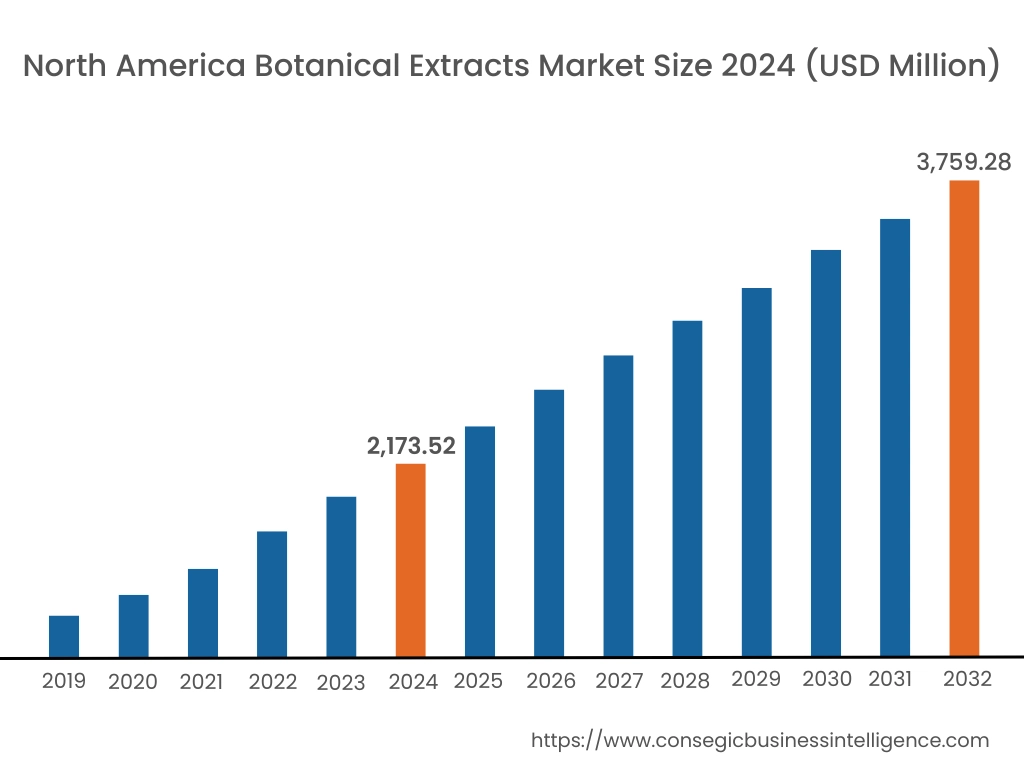
In 2024, North America was valued at USD 2,173.52 Million and is expected to reach USD 3,759.28 Million in 2032. In North America, the U.S. accounted for the highest share of 73.70% during the base year of 2024. North America holds a significant position in the botanical extracts market due to strong demand from the food and beverage, pharmaceutical, and personal care industries. The rising preference for natural and plant-based ingredients among consumers supports market expansion. The United States dominates the region, driven by the increasing use of botanical extracts in functional foods, dietary supplements, and cosmetics. Regulatory support for clean-label products further enhances the market’s performance.

In Asia Pacific, the market is experiencing the fastest growth with a CAGR of 7.8% over the forecast period. Asia-Pacific exhibits substantial demand for botanical extracts, fueled by the region’s rich tradition of herbal medicine and natural remedies. Countries like China, India, and Japan lead the market due to their extensive use of plant-based ingredients in traditional medicine and modern formulations. The growing food and beverage sector in this region emphasizes the incorporation of natural flavors and extracts. Additionally, rising awareness of health and wellness trends among consumers accelerates the adoption of botanical extracts in dietary supplements and functional foods.
Europe is a prominent region in the botanical extracts market, supported by high consumer demand for organic and natural products. Stringent regulations on synthetic additives and preservatives have led to increased use of botanical extracts in food, beverages, and cosmetics. Germany, France, and the UK are key contributors, with established industries focusing on natural and sustainable ingredients. The region’s interest in clean-label and functional food products also drives the demand for botanical extracts.
The Middle East and Africa (MEA) present emerging opportunities for the botanical extracts market. The growing food and beverage industry and rising consumer interest in natural products influence market demand. In the Middle East, countries like the UAE and Saudi Arabia are adopting botanical extracts in beverages and personal care products. Africa’s market is expanding gradually due to the increased use of natural ingredients in traditional medicine and modern formulations, despite challenges related to raw material availability and manufacturing infrastructure.
Latin America demonstrates significant potential in the global botanical extracts market due to the abundance of diverse flora and traditional knowledge of herbal remedies. Brazil and Mexico are key markets, with growing demand for natural ingredients in food, beverages, and cosmetics. The region’s focus on sustainability and the use of indigenous plants in product formulations contribute to market expansion. However, limited industrial infrastructure in some areas poses challenges to large-scale production and distribution.
Top Key Players & Market Share Insights:
The Global Botanical Extracts Market is highly competitive with major players providing products and services to the national and international markets. Key players are adopting several strategies in research and development (R&D), product innovation, and end-user launches to hold a strong position in the Botanical Extracts Market. Key players in the Botanical Extracts industry include-
- Sensient Technologies Corporation (United States)
- Döhler GmbH (Germany)
- Indesso Aroma (Indonesia)
- Martin Bauer Group (Germany)
- Ransom Naturals Ltd. (United Kingdom)
- Symrise AG (Germany)
- Archer Daniels Midland Company (ADM) (United States)
- Kalsec Inc. (United States)
- Frutarom Industries Ltd. (Israel)
- Givaudan SA (Switzerland)
Recent Industry Developments :
Product Launch:
- In April 2024, Nektium had launched Vanizem, a botanical extract from the Aframomum melegueta spice, at Vitafoods Europe 2024. Vanizem is intended to help with stress and mood support.
- In September 2024, Givaudan Active Beauty launched the [N.A.S.]™ Vibrant Collection of vegan botanical extracts for hybrid make-up. The collection includes extracts from curcuma, gardenia, spirulina, and radish.
- In March 2024, Kao built a plant factory called Smart Garden Meguri to produce high-purity botanical extracts. These extracts are being considered for use in Kao Group products and may be sold as raw materials in the future.
Botanical Extracts Market Report Insights:
| Report Attributes | Report Details |
| Study Timeline | 2019-2032 |
| Market Size in 2032 | USD 11,599.15 Million |
| CAGR (2025-2032) | 7.4% |
| By Source |
|
| By Form |
|
| By Application |
|
| By Extraction Method |
|
| By End-Use Industry |
|
| By Region |
|
| Key Players |
|
| North America | U.S. Canada Mexico |
| Europe | U.K. Germany France Spain Italy Russia Benelux Rest of Europe |
| APAC | China South Korea Japan India Australia ASEAN Rest of Asia-Pacific |
| Middle East and Africa | GCC Turkey South Africa Rest of MEA |
| LATAM | Brazil Argentina Chile Rest of LATAM |
| Report Coverage |
|
Key Questions Answered in the Report
How big is the Botanical Extracts Market? −
In 2024, the Botanical Extracts Market was USD 6,552.52 million.
What will be the potential market valuation for the Botanical Extracts Market by 2032? +
In 2032, the market size of Botanical Extracts Market is expected to reach USD 11,599.15 million.
What are the segments covered in the Botanical Extracts Market report? +
The source, form, application, extraction method, and end-use industry are the segments covered in this report.
Who are the major players in the Botanical Extracts Market? +
Sensient Technologies Corporation (United States), Döhler GmbH (Germany), Symrise AG (Germany), Archer Daniels Midland Company (ADM) (United States), Kalsec Inc. (United States), Frutarom Industries Ltd. (Israel), Givaudan SA (Switzerland), Indesso Aroma (Indonesia), Martin Bauer Group (Germany), Ransom Naturals Ltd. (United Kingdom), are the major players in the Botanical Extracts market.
Overview
Reputation & Certifications


Our Services
- Market Intelligence & Forecasting
- Custom Research Solutions
- Market Entry Strategy
- Competitive Intelligence
- Customer Insights
- Industry Innovation Analysis
- Investment Advisory