Jump to Content
Brain Monitoring Market - Size, Share, Industry Trends, and Forecasts (2025-2032)
Brain Monitoring Market Size:
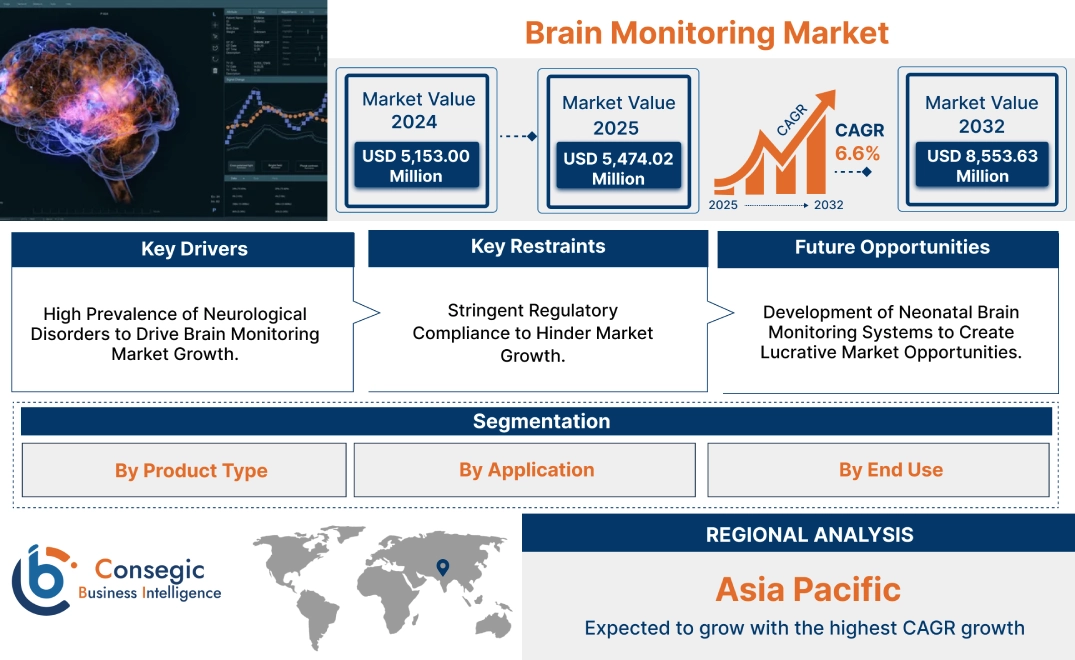
The Brain Monitoring Market size is growing with a CAGR of 6.6% during the forecast period (2025-2032), and the market is projected to be valued at USD 8,553.63 Million by 2032 from USD 5,153.00 Million in 2024. Additionally, the market value for 2025 attributed to USD 5,474.02 Million.
Brain Monitoring Market Scope & Overview:
Brain monitoring is a group of various techniques that are used to observe and measure the electrical activity of brain. This monitoring accesses brain activity in continuous manner non-invasively. Techniques that are used include electroencephalography, magnetoencephalography, intracranial pressure monitoring, cerebral oximeters, and more. These systems are available in portable and non-portable types. This is important to detect, diagnosis, monitor, and manage potential risks in several conditions. By conditions, brain monitoring systems are utilized for brain injury, dementia, Parkinson's, stroke, epilepsy, anesthesia monitoring, sleep disorders, amongst others. This makes them appropriate for end use in hospitals, ambulatory surgical centers, neurology centers, and others.
Brain Monitoring Market Dynamics - (DRO) :
Key Drivers:
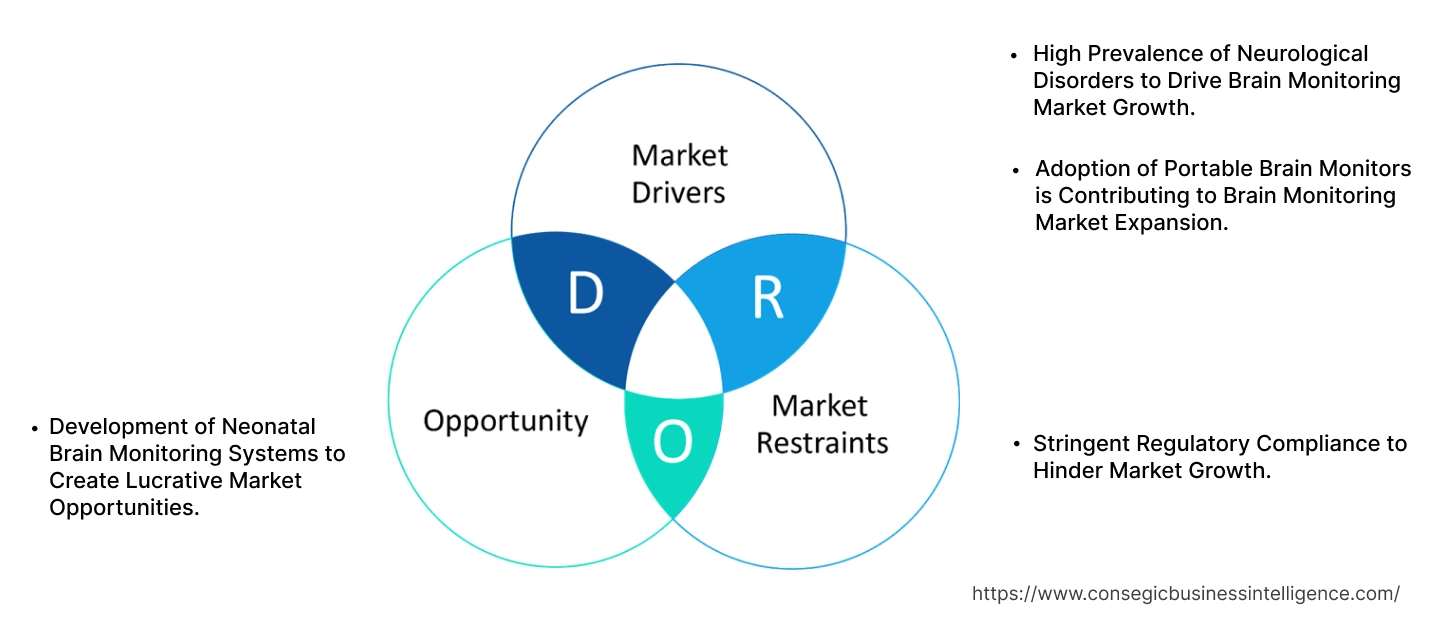
High Prevalence of Neurological Disorders to Drive Brain Monitoring Market Growth.
The high prevalence of neurological conditions, particularly among the aging population, is driving market growth. Neurological conditions include epilepsy, Alzheimer’s disease, Parkinson's disease, and multiple sclerosis among others. The high incidences of these disorders result in the need for brain monitoring.
- For instance, according to the 2022 data from Parkinson's Foundation, it is stated 90,000 people are diagnosed with Parkinson’s disease in the U.S. each year. More than 10 million people worldwide are living with this condition.
This prevalence directly impacts the demand for effective brain monitoring solutions for diagnosis, treatment, and ongoing management further propelling the market growth.
Adoption of Portable Brain Monitors is Contributing to Brain Monitoring Market Expansion.
The growing awareness of continuous patient monitoring for chronic conditions or post-surgery recovery along with the inclination towards remote monitoring are contributing to the necessity of portable devices. Portable brain monitoring systems increase accessibility in hospitals and ambulatory settings as well. Additionally, they are smaller, lighter, and wireless that enhances patient comfort. These advantages are leading to the development of portable brain monitors.
- For instance, in 2024, NeuroVigil introduced iBrain personal brain monitor in the U.S. It is a portable device that noninvasively records the brain’s electrical activity. The device is developed to be used by patients at home, and during sleep.
Thus, due to the above-mentioned factors, the shift towards portable products is contributing to brain monitoring market expansion.
Key Restraints:
Stringent Regulatory Compliance to Hinder Market Growth.
Stringent regulatory standards imposed by government agencies and international organizations worldwide cause barriers in the market. Regulatory bodies such as Food and Drug Administration and European Medicines Agency among others impose long process for approvals. This involves lengthy documentation, product safety assessment, and rigorous quality control procedures. It leads to increase production costs and slow down product development. Additionally, regulatory authorities and regulatory standards differ by country and region. This creates limitations for researchers and companies operating in multiple jurisdictions. Thus, the impact of these stringent regulations on the having a negative impact on brain monitoring market.
Future Opportunities :
Development of Neonatal Brain Monitoring Systems to Create Lucrative Market Opportunities.
The rise in developments towards brain monitoring specifically for neonates is creating market growth over the forecast period. Neonatal brain is still in developmental stage. This presents the requirement for specialized monitoring techniques and equipment that are tailored to their physiology. In addition to this, there is growing recognition for the use of brain monitors for early brain development and neonatal brain injuries. As a result, the key players are introducing systems for neonatal brain monitoring.
- For instance, in January 2025, CergenX announced FDA approval as breakthrough device designation for its Wave device for neonatal brain monitoring. This promotes the development of brain monitors particularly for neonates.
Thus, developments towards brain monitoring specifically for neonates are creating market trajectory over the upcoming period.
Brain Monitoring Market Segmental Analysis :
By Product Type:
Based on product type, the market is categorized into electroencephalography (EEG) devices, magnetoencephalography (MEG) devices, intracranial pressure (ICP) monitors, cerebral oximeters, and others.
Trends in the Product Type:
- The inclination towards development of portable devices such as wearable is rising.
- The use of artificial intelligence and machine learning for improvement in data analysis in monitoring of brain.
The electroencephalography (EEG) devices segment accounted for the largest market share in 2024.
- Electroencephalography devices hold the dominant position in the market. They provide painless tests to measure the brain’s electrical activity.
- The demand for electroencephalography devices is increasing due to the preference for versatile systems which are also non-invasive in operation.
- Hence, these products have contributed to their high accessibility with low cost for neurological disorders. Due to this, users operating in the market are also focusing on using EEG systems in point-of-care settings.
- For instance, in May 2024, ChristianaCare in Delaware launched an innovative electroencephalogram program for brain monitoring. The easy-to-use EEG program is the first of its kind that is performed at the bedside to measure the brain function. This helps diagnose seizures more quickly.
- Collectively, aforementioned factors support segment trajectory in the overall market for brain monitoring.
The others segment is expected to grow at the fastest CAGR in the forecast period.
- The other motoring device types for the brain include transcranial doppler devices, electromyography devices, depth electrodes, near-infrared spectroscopy (NIRS), brain-computer interfaces (BCIs), and more.
- The advancements in device technologies are a key pointer supporting the segment trajectory in future years. NIRS is experiencing high requirements in neonatal care, critical settings, and research areas.
- Additionally, there is a requirement for the use of multiple modalities. Multimodal Monitoring systems offer comprehensive brain function.
- BCIs are being increasingly used in the management of neurological impairments for communication and rehabilitation.
- Thus, considering these factors, the other segment is expected to occupy greater CAGR in the forecast years.
By Application:
The application segment is categorized into traumatic brain injury, anesthesia monitoring, neurological disorders, sleep disorders, and others.
Trends in the Application
- The adoption rate for polysomnography for diagnosing and managing sleep disorders is rising.
- Combining EEG data with other vital signs for a complete assessment of the patient's condition.
The traumatic brain injury segment accounted for the largest brain monitoring market share in 2024.
- Traumatic brain injury (TBI) is dominating the market due to the growing incidence as well as the critical role of monitoring for understanding severity of brain injury.
- TBI is caused by accidents, falls, and sports incidents. It is observed that brain monitoring systems are a need for detecting life-threatening complications of injury. They provide guidance for treatment decisions.
- The high incidences of traumatic brain injury further create the requirement for these monitoring systems for brain.
- For instance, as per the data provided by Centers for Disease Control and Prevention in 2024, it is found that there were over 69,000 TBI-related deaths in the United States in 2021. It accounts for about 190 TBI-related deaths every day.
- Owing to the above-mentioned factors, the traumatic brain injury segment occupies a dominant state in the overall brain monitoring market demand.
The anesthesia monitoring segment is expected to grow at the fastest CAGR over the forecast period.
- The integration of brain monitoring in anesthesia monitoring is expected to rise due to the rise in the number of surgical procedures. Anesthesia is crucial during surgery.
- Monitoring techniques for the brain are used to determine the effectiveness of anesthesia. This ensures that the patient is unconscious.
- The improvement in healthcare results in the number of surgeries performed presenting positive impact on the market.
- Moreover, improvements in EEG technology along with the development of algorithms to analyse the data are enhancing the accuracy of anesthesia.
- Thus, due to the above-mentioned factors, the anesthesia monitoring segment is expected to register the fastest CAGR over the forecast period in the overall brain monitoring market demand.
By End Use:
Based on end use, the market is categorized into hospitals, ambulatory surgical centers, neurology centers, and others.
Trends in the End Use:
- The increase in need for continuous brain monitoring in critical care settings and for managing chronic conditions has led to need for assessment of brain functioning.
- There is growing trend in the use of point-of-care systems and remote monitoring solutions.
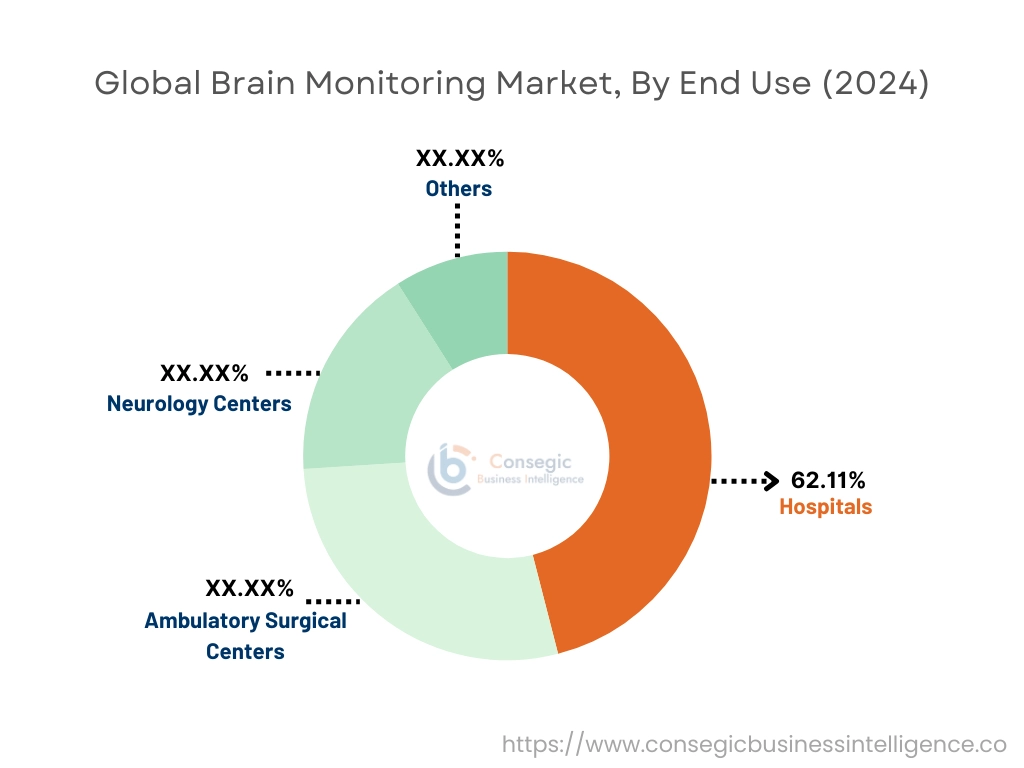
The hospitals segment accounted for the largest market share of 62.11% in 2024.
- Hospitals provide expertise, advanced infrastructure, well-established systems amongst others.
- The complex nature of surgical procedures and other conditions requires specialized infrastructure, advanced equipment and intensive care units for patient care.
- These procedures and conditions also necessitate teams that include highly skilled surgeons and anesthesiologists, and other specialists like nurses and technicians. Hospitals are well equipped to provide these teams.
- Furthermore, hospitals serve as central hubs within established referral networks for patients with traumatic brain injury, anesthesia monitoring, neurological disorders, sleep disorders, and others. They are also involved in adopting advanced solutions for patient care.
- For instance, in July 2023, Saint Francis Hospital announced the adoption of point-of-care EEG brain monitoring for critically ill patients.
- This analysis positions the hospitals as a key end user segment within the dynamic brain monitoring market opportunities.
The ambulatory surgical center segment is expected to grow at the fastest CAGR in forecast years.
- The ambulatory surgical center (ASC) end user is expected to occupy growing contribution to the market.
- ASCs have the ability to provide effective and specialized care. They provide surgical procedures in less resource-intensive environments. This allows for quicker recovery and cost-effective solutions for the patient.
- Patients benefit from this setting as it offers minimally invasive surgery. Additionally, these facilities consist of advanced technology and specialized equipment. This helps them to deliver high-quality care and maintain a personalized approach.
- Thus, based on the brain monitoring market analysis, the aforementioned factors contribute to ambulatory surgical centers as prominent end-users.
Regional Analysis:
The regional segment includes North America, Europe, Asia Pacific, the Middle East and Africa, and Latin America.
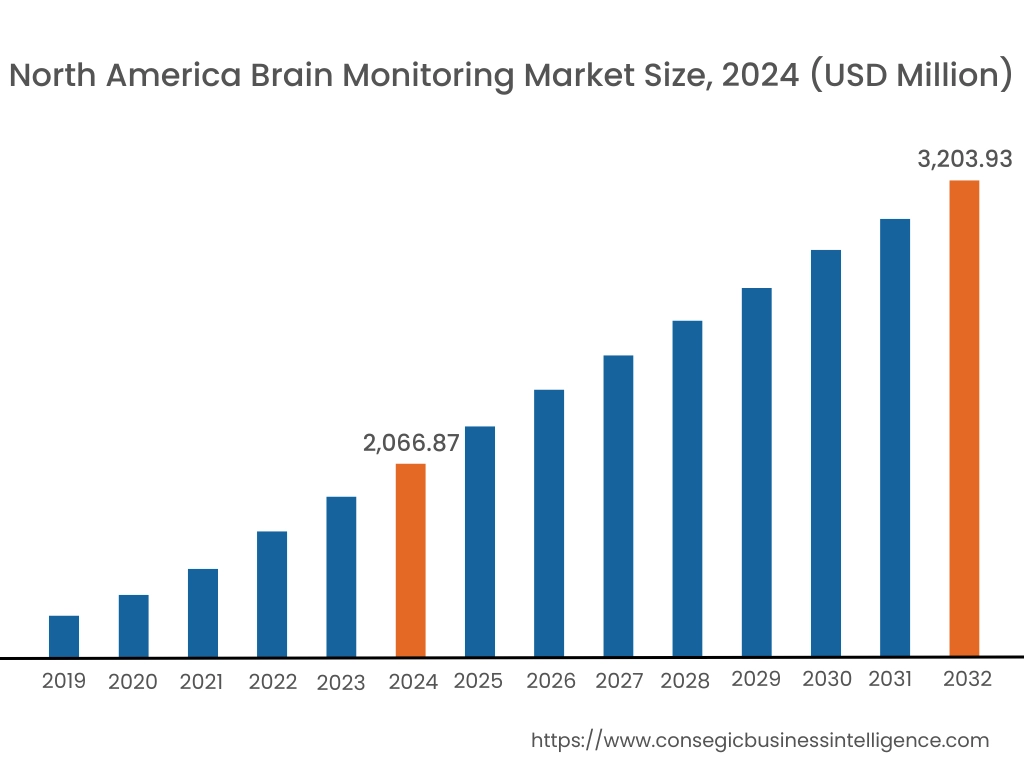
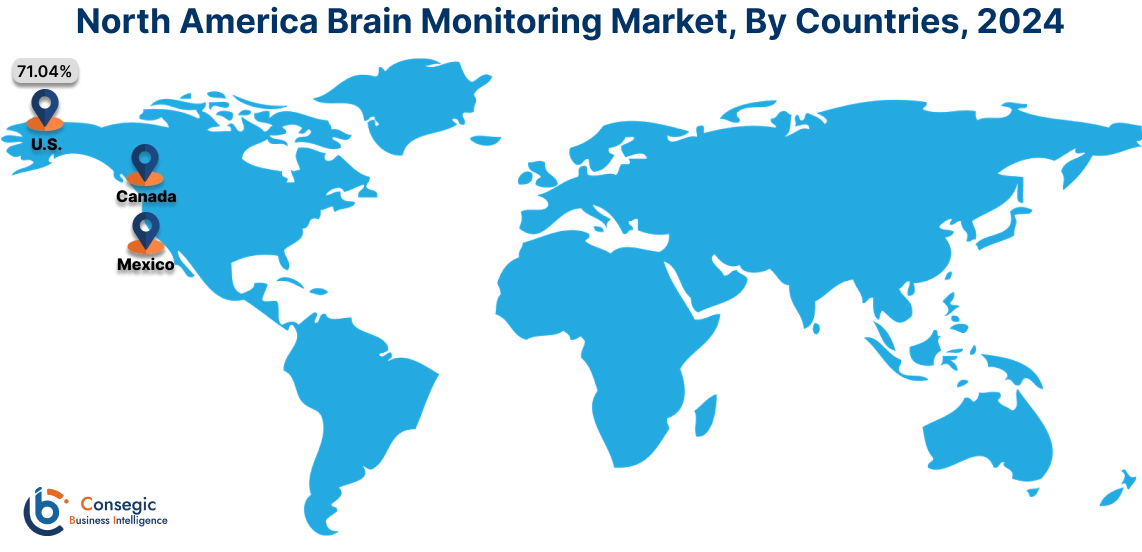
In 2024, North America accounted for the highest brain monitoring market share at 40.11% and was valued at USD 2,066.87 Million and is expected to reach USD 3,203.93 Million in 2032. In North America, the U.S. accounted for the largest share of 71.04% during the base year of 2024.
The rising incidences of neurological disorders is the key factor that is leading to the market trajectory of brain monitoring in North America. This surge in the prevalence of these conditions is fueled by a growing aging population. As incidences of Alzheimer's disease, Parkinson's disease, and stroke increase, there is a greater need for effective solutions for monitoring electrical activity of brain. Additionally, the American companies are leading in the adoption of advanced technologies in brain monitoring products.
- For instance, in January 2025, Zeto, Inc.,S. based medical technology company, announced the recent successful closing of a USD 31 million funding round for development of advanced EEG brain monitoring.
Therefore, as per market analysis, the increased prevalence of neurological disease along with the high adoption of advanced technologies results in brain monitoring market trend in North America region.
In Asia Pacific the brain monitoring market analysis is experiencing the fastest growth with a CAGR of 8.3% over the forecast period. Shift towards development of novel devices serves a prominent role brain monitoring market growth in Asia Pacific. This results in the increasing utilization of advanced brain monitoring technologies, such as portable EEG devices, AI-supported tools for data analysis, and emerging techniques such as MEG and NIRS. Additionally, the high incidence rate of traumatic brain injury is impacting the market demand. As a result, key players are focusing on developing portable systems, further supporting brain monitoring market opportunities in Asia Pacific.
The increasing focus on using brain monitoring devices in point-of-care (POC) applications is one of the primary factors creating market demand across Europe. European countries present some of the most advanced healthcare systems with patient-centric approaches. This aligns perfectly with POC brain monitoring. It is promoting European companies to invest in research and development to produce brain monitoring with portable modality. Collectively, the combination of well-established healthcare system, and the need for convenient devices for accessibility creates market demand across Europe.
The rise in the traumatic brain injury incidences is a prominent trend that drives the brain monitoring market trend in Latin America. This trend is influenced because of increase in motor vehicle use. In addition, varying levels of road safety infrastructure contribute to a high number of traffic accidents that results in TBI. Additionally, awareness about neurological disorders and brain health is growing in the region. The investment in improving healthcare industry is creating access to brain monitors in hospitals. Consequently, the above-mentioned factors support market in Latin America.
The Middle East and African industry is led by the rising adoption of telemedicine and remote monitoring. Telemedicine and remote monitoring improve access to specialized care for patients in remote areas. Additionally, improving healthcare infrastructure across the region is driving the market. Government bodies across the region are increasingly investing in the development of hospitals, clinics, and specialty centers with provision of advanced equipment. Owing to these factors, the market for brain monitoring in the Middle East and Africa is growing at a considerate rate.
Top Key Players and Market Share Insights:
The global Brain Monitoring Market is highly competitive with major players providing products to the national and international markets. Key players are adopting several strategies in research and development (R&D) and product innovation to hold a strong position in the global Brain Monitoring market. Key players in the Brain Monitoring industry include-
- Medtronic (Ireland)
- Masimo (U.S.)
- Fritz Stephan GmbH (Germany)
- NIHON KOHDEN CORPORATION (Japan)
- Natus Medical Incorporated (U.S.)
- Koninklijke Philips N.V. (Netherlands)
- Elekta (Sweden)
- EB Neuro S.p.A. (Italy)
Recent Industry Developments :
Approval:
- in January 2025, CergenX announced FDA approval as breakthrough device designation for its Wave device for neonatal brain monitoring. This promotes the development of brain monitors particularly for neonates.
Product Launches:
- In 2024, NeuroVigil introduced iBrain personal brain monitor which is a portable device. It records the brain’s electrical activity noninvasively.
Brain Monitoring Market Report Insights :
| Report Attributes | Report Details |
| Study Timeline | 2019-2032 |
| Market Size in 2032 | USD 8,553.63 Million |
| CAGR (2025-2032) | 6.6% |
| By Product Type |
|
| By Application |
|
| By End Use |
|
| By Region |
|
| Key Players |
|
| North America | U.S. Canada Mexico |
| Europe | U.K. Germany France Spain Italy Russia Benelux Rest of Europe |
| APAC | China South Korea Japan India Australia ASEAN Rest of Asia-Pacific |
| Middle East and Africa | GCC Turkey South Africa Rest of MEA |
| LATAM | Brazil Argentina Chile Rest of LATAM |
| Report Coverage |
|
Key Questions Answered in the Report
How big is the Brain Monitoring market? −
In 2024, the Brain Monitoring market is USD 5,153.00 Million.
Which is the fastest-growing region in the Brain Monitoring market? +
Asia Pacific is the fastest-growing region in the Brain Monitoring market.
What specific segmentation details are covered in the Brain Monitoring market? +
By Product Type, Application, and End Use segmentation details are covered in the Brain Monitoring market.
Who are the major players in the Brain Monitoring market? +
Medtronic (Ireland), Masimo (U.S.), Natus Medical Incorporated (U.S.), Koninklijke Philips N.V. (Netherlands) are some of the major players in the market.
Overview
Reputation & Certifications


Our Services
- Market Intelligence & Forecasting
- Custom Research Solutions
- Market Entry Strategy
- Competitive Intelligence
- Customer Insights
- Industry Innovation Analysis
- Investment Advisory