Jump to Content
Heart Scan Market Size & Industry Share - Growth Trends & Forecasts (2026 - 2034)
Heart Scan Market Size:
Heart Scan Market size is estimated to reach over 21.65 (US$B) by 2034 from a value of 12.6 (US$B) in 2025 and is projected to grow by 13.38 (US$B) in 2026, growing at a CAGR of 6.2% from 2026 to 2034, according to a recent report from Consegic Business Intelligence.
Heart Scan Market Scope & Overview:
Heart scan, also known as cardiac scan, involves various non-invasive imaging tests, such as CT (Computed Tomography), nuclear, or ultrasound scans, which are capable of creating detailed pictures of the heart along with its blood vessels. The main purpose of a heart scan is to help diagnose as well as assess conditions such as coronary artery disease, heart damage, or any blockages in the heart. Moreover, the market involves the development, manufacturing, and sales of diagnostic technologies that are used for evaluating heart health, including various imaging devices along with its related software.
How is AI Transforming the Heart Scan Market?
The incorporation of AI is considerably transforming the heart scan market. AI incorporation helps in improving diagnostic accuracy and efficiency, while also facilitating early detection of cardiovascular diseases. AI-powered systems are used for automating image analysis for a variety of scans, including echocardiograms and CT scans, for quickly measuring heart function and identifying disease markers, which can be more accurate and faster than manual measurements. Moreover, incorporation of AI-powered cardiac scanning systems offers several benefits including automated analytics, improved diagnostic capabilities, enhanced image quality and workflow, along with early risk prediction, among others. Hence, the above factors are expected to positively impact the market growth in the upcoming years.

Heart Scan Market Dynamics - (DRO) :

Key Drivers:
Rising incidence of cardiovascular diseases is driving the heart scan market growth
The rising global prevalence of cardiovascular diseases is a primary factor driving the market. Cardiovascular diseases are among the leading causes of death worldwide. Several factors, including aging populations, sedentary lifestyles, unhealthy diets, rising obesity, along with increased stress, are contributing to the increasing incidence of heart conditions. This in turn, is driving the need for precise, non-invasive methods for assessing heart health, identifying any blockages, along with monitoring heart function, thereby driving the market.
Moreover, recent advancements in imaging technology, including AI-driven analysis, are making cardiac scans more accurate, faster, and safer. In addition, the growing focus on early detection of heart diseases, particularly for high-risk and asymptomatic patients, is further driving the market.
- For instance, according to the S. Centers for Disease Control and Prevention, heart disease is considered to be a leading cause of death in the U.S. It also states that approximately 919,032 individuals died from cardiovascular disease in 2023.
Thus, the rising incidence of cardiovascular diseases and rising focus on early detection of heart diseases are driving the heart scan market size.
Key Restraints :
High cost and limited accessibility are restraining the market
The substantial cost associated with advanced cardiac scans, such as high-resolution CT and MRI, is considered to be a key barrier to market growth. Also, for many individuals, these diagnostic tests are financially prohibitive, particularly since insurance coverage for preventive screenings can be limited. In addition to the cost of equipment and maintenance, the procedures also require highly skilled professionals for accurate operation as well as interpretation, which in turn also increases costs. The above financial and operational barriers result in significant accessibility issues, particularly in low-income regions, rural areas, along with developing countries, where healthcare infrastructure may be limited. As a result, many at-risk individuals, who would benefit from early detection, are unable to access these essential diagnostic tools, which in turn may limit market expansion. Hence, the aforementioned factors are hindering the overall market growth.
Future Opportunities :
Growing geriatric population is expected to drive the heart scan market opportunities
The growing geriatric population worldwide is expected to offer lucrative aspects for market growth, as elderly patients usually have a higher incidence of cardiovascular diseases, more severe disease courses, along with increased mortality rates. Moreover, the global population of individuals aged 65 and older is expanding considerably, which in turn creates a large and vulnerable patient pool with a high prevalence of complex, age-related heart conditions like coronary artery disease, heart failure, and valvular disorders, among others. Heart scans including advanced CT, MRI, and echocardiography are essential diagnostic tools for elderly population as they offer non-invasive, precise methods for identifying structural and functional cardiac changes. This in turn, is increasing the demand for advanced diagnostic imaging services in hospitals, specialty cardiac centers, and other healthcare settings, thereby driving the market.
- For instance, according to the U.S. Census Bureau, the total number of Americans aged 65 and older is estimated to increase from 58 million in 2022 to 82 million by 2050. Likewise, the share of 65 and older age group in the U.S. is anticipated to increase from 17% to 23% of the total population.
Hence, according to the analysis, the growing geriatric population is expected to drive the heart scan market opportunities.
Heart Scan Market Segmental Analysis :
By Type:
Based on the type, the market is segmented into Echocardiogram (ECG), Computed Tomography (CT), Nuclear Heart Scan, Magnetic Resonance Imaging (MRI), Angiocardiography and Coronary Arteriography, and others.
Trends in the Type:
- Increased use of contrast agents improves image quality in patients with poor acoustic windows, enhancing visualization of blood flow and structural defects, in turn driving the heart scan market trends.
- Positron Emission Tomography (PET) is gaining traction due to its superior quantitative assessment of myocardial blood flow and viability, which is expected to drive the heart scan market size.
Echocardiogram (ECG) accounted for the largest revenue share in the year 2024.
- There's a growing trend towards the adoption of Artificial Intelligence for automated measurements and segmentation, significantly boosting diagnostic accuracy and workflow efficiency, in turn driving the heart scan market share.
- Further, the rising shift towards smaller, portable, and handheld ultrasound devices is expanding access and enabling faster bedside diagnosis in critical care.
- Furthermore, growing adoption of 3D and 4D echocardiography enhances visualization of structural heart defects for better surgical planning, which in turn drives the heart scan market trends.
- Thus, as per heart scan market analysis, AI integration, point-of-care adoption, and advanced imaging technologies are driving the market.
Computed Tomography (CT) is anticipated to register the fastest CAGR during the forecast period.
- Coronary Computed Tomography Angiography (CCTA) is now a recommended first-line diagnostic test for stable and acute chest pain, driving the heart scan market share.
- Further, technological advancements like iterative reconstruction and dose modulation are continually reducing radiation exposure while maintaining high image quality, which in turn drives the heart scan market demand.
- There is continued hardware and software innovations focused on improving temporal resolution to effectively freeze heart motion, leading to sharper images.
- Therefore, based on analysis, aforementioned trends are anticipated to boost the market during the forecast period.
By Indication:
Based on the indication, the market is bifurcated into coronary arteries blockage, structural heart disease, congenital heart disease, blood clots, arrhythmia, and others.
Trends in the Indication:
- Emerging research is utilizing CT to image perivascular fat attenuation as a non-invasive marker for coronary vessel inflammation and future risk, which in turn drives the heart scan market demand.
- 4D flow MRI is a growing technology rapidly, providing non-invasive, comprehensive functional assessment of blood flow patterns and shunts, in turn driving the heart scan market growth.
Coronary arteries blockage accounted for the largest revenue share in the year 2024.
- Coronary CT Angiography (CCTA) is displacing invasive angiography as the preferred initial test for stable chest pain due to its high negative predictive value and non-invasive nature, which in turn drives the market.
- Further, imaging is focusing beyond simple stenosis to plaque morphology, using CT and MRI to identify high-risk, which is driving the heart scan industry.
- Furthermore, Coronary Artery Calcium (CAC) scoring is seeing increased use in asymptomatic intermediate-risk patients for highly effective primary prevention risk stratification, which is driving the market.
- Thus, as per heart scan market analysis, CCTA as first-line, plaque characterization, and risk stratification are driving the market.
Structural Heart Disease is anticipated to register the fastest CAGR during the forecast period.
- The market is dominated by the demand for extremely precise 3D/4D imaging for pre-procedural planning of transcatheter valve replacement (TAVR) and mitral/tricuspid repair (TMVR).
- There is increased use of image fusion technology to integrate live fluoroscopy or ultrasound with pre-acquired 3D CT/MRI models to guide interventional procedures in real time.
- Further, imaging protocols are being optimized to reduce artifacts and clearly visualize implanted devices like surgical clips and transcatheter valves, which subsequently propel the heart scan market expansion.
- Therefore, the aforementioned factors are anticipated to boost the progression of the market during the forecast period.
By End-User:
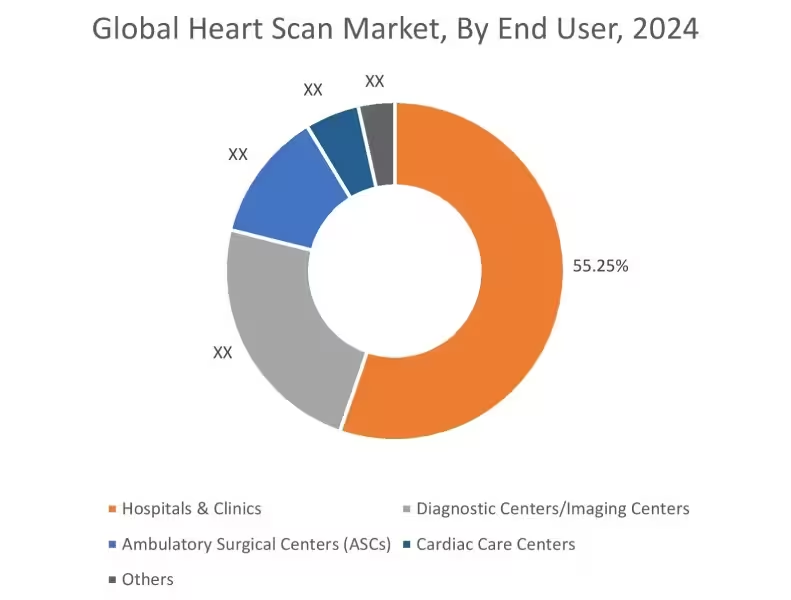
Based on the end user, the market is segmented into Hospitals & Clinics, Diagnostic Centers/Imaging Centers, Ambulatory Surgical Centers (ASCs), Cardiac Care Centers, and Others.
Trends in the End User:
- Diagnostic Centers are strategically positioning themselves to capture the growing volume of non-invasive cardiac scans which in turn drive the heart scan market expansion.
- Ambulatory centers & home care segment is experiencing significant growth due to the shift toward remote diagnostics and continuous monitoring, which subsequently propels the heart scan market.
Hospitals & Clinics accounted for the largest revenue share of 55.25% in the year 2024 and is anticipated to register a significant CAGR during the forecast period.
- Hospitals are rapidly investing in AI-powered tools integrated into PACS systems to manage the increasing volume of complex cardiac CT and MRI studies, which in turn drive the market.
- Further, hospitals remain the first adopters of next-generation, high-cost imaging equipment due to the demand for advanced care and academic research capabilities.
- Furthermore, hospitals are creating their own hospital-affiliated ambulatory centers to retain profitable outpatient diagnostic volumes that are otherwise migrating to independent centers.
- Thus, based on analysis, AI workflow integration and advanced modality adoption are driving the market.
Regional Analysis:
The regions covered are North America, Europe, Asia Pacific, Middle East and Africa, and Latin America.
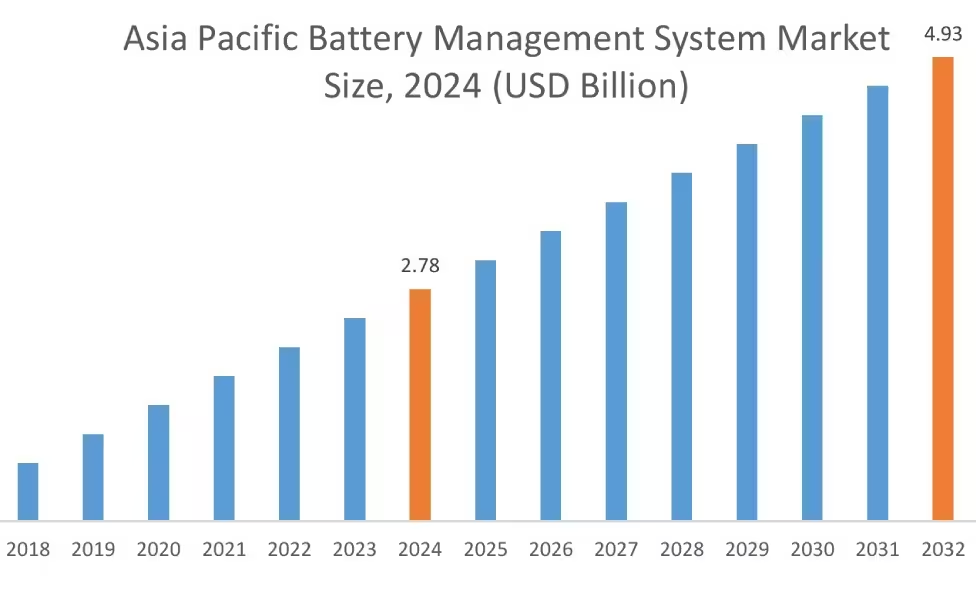
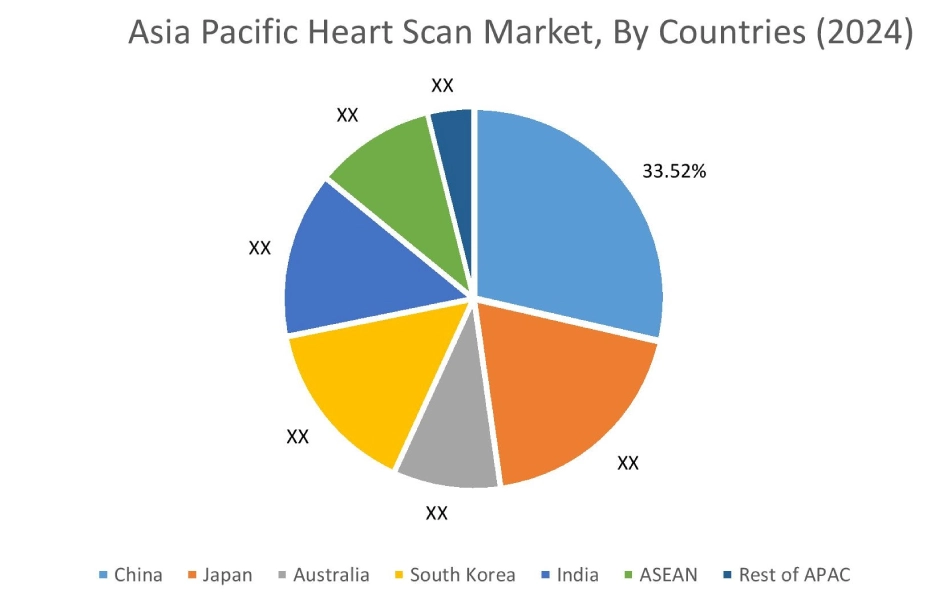
Asia Pacific region was valued at USD 2.78 Billion in 2024. Moreover, it is projected to grow by USD 2.92 Billion in 2025 and reach over USD 4.93 Billion by 2032. Out of this, China accounted for the maximum revenue share of 33.52%. The market growth in the Asia Pacific region is primarily driven by the rising prevalence of cardiovascular diseases along with increasing investments in healthcare facilities, among others. Similarly, the rising development of hospitals, growing geriatric population, and advancements in diagnostic solutions for heart conditions are further driving the market in the region.
- For instance, there is a substantial increase in heart diseases in India, wherein cardiovascular diseases cause approximately 25% of all deaths within the 30-44 age group and 35.6% for individuals within the 45-54 age group. The above factors are increasing the demand for advanced diagnostics solutions for cardiovascular diseases, in turn driving the market in the Asia-Pacific region.
North America is estimated to reach over USD 7.20 Billion by 2032 from a value of USD 4.26 Billion in 2024 and is projected to grow by USD 4.46 Billion in 2025. The North American market is primarily driven by the increasing prevalence of cardiovascular diseases, caused by factors such as changing lifestyles and rising obesity rates, among others. Additionally, the increasing government expenditure on improving healthcare infrastructure and services is further propelling the market in the region.
- For instance, according to the American Hospital Association, there are approximately 6,093 hospitals across the United States, which mainly include community hospitals, federal government hospitals, and others. The above factors are expected to drive the market in North America during the forecast period.
The regional trends analysis depicts that factors including the prevalence of elderly population, growing healthcare industry, and robust healthcare and diagnostic infrastructure are driving the market in Europe. Additionally, key factors driving the market in Latin America, Middle East and African regions include increasing prevalence of cardiovascular diseases and other chronic heart conditions, combined with the increasing development of healthcare facilities including hospitals and clinics, and expanding access to improved healthcare services, among others.
Top Key Players & Market Share Insights:
The global heart scan market is highly competitive with major players providing solutions to the national and international markets. Key players are adopting several strategies in research and development (R&D), product innovation, and end-user launches to hold a strong position in the heart scan industry. Key players in the global heart scan market include-
- Siemens Healthineers AG (Germany)
- Canon Medical Systems (Japan)
- Hoffmann-La Roche AG (Switzerland)
- Danaher Corporation (US)
- Medtronic Inc. (US)
- GE HealthCare (US)
- Boston Scientific Corporation (US)
- Koninklijke Philips N.V. (Netherlands)
- Abbott Laboratories (US)
- Terumo Medical Corporation (Japan)
Recent Industry Developments :
Product Launches:
- In November 2025, Philips announced the launch of its new AI-enabled Cardiac MR (CMR) solutions, which aim at streamlining heart imaging procedures to make them faster, easier, and more accessible for clinicians and patients. The new solutions are capable of simplifying complex workflows, reducing scan times, and improving diagnostic precision, helping clinicians detect as well as manage heart disease earlier and with greater confidence across a wider patient population.
- In August 2024, GE HealthCare introduced two new AI-driven cardiac technologies. The Vscan Air SL wireless handheld ultrasound system uses Caption AI software for facilitating rapid point-of-care cardiac assessments. In addition, the Revolution Apex platform offers ECG-less Cardiac CT scanning, which in turn enables image acquisition without an electrocardiogram signal.
Partnerships & Collaborations:
- In December 2024, Philips announced a research collaboration with Mayo Clinic for facilitating AI for cardiac MRI scans. The collaboration mainly focuses on applying AI to MRI scans of the heart with the aim of shortening exam times along with streamlining workflows.
Heart Scan Market Report Insights :
| Report Attributes | Report Details |
| Study Timeline | 2021-2034 |
| Market Size in 2034 | USD 21.65 Billion |
| CAGR (2026-2034) | 6.20% |
| Base Year | 2025 |
| By Type |
|
| By Indication |
|
| By End-user |
|
| By Region |
|
| Key Players |
|
| North America | U.S. Canada Mexico |
| Europe | U.K. Germany France Spain Italy Russia Benelux Rest of Europe |
| APAC | China South Korea Japan India Australia ASEAN Rest of Asia-Pacific |
| Middle East and Africa | GCC Turkey South Africa Rest of MEA |
| LATAM | Brazil Argentina Chile Rest of LATAM |
| Report Coverage |
|
Key Questions Answered in the Report
How big is the heart scan market? −
The heart scan market is estimated to reach over USD 19.20 Billion by 2032 from a value of USD 11.31 Billion in 2024 and is projected to grow by USD 11.85 Billion in 2025, growing at a CAGR of 6.2% from 2025 to 2032.
What specific segmentation details are covered in the heart scan report? +
The heart scan report includes specific segmentation details for, type, indication, end user, and regions.
Which is the fastest segment anticipated to impact the market growth? +
In the heart scan market, Computed Tomography (CT) is the fastest-growing segment during the forecast period.
Who are the major players in the heart scan market? +
The key participants in the heart scan market are Siemens Healthineers AG (Germany), GE HealthCare (US), Boston Scientific Corporation (US), Koninklijke Philips N.V. (Netherlands), Abbott Laboratories (US), Terumo Medical Corporation (Japan), Canon Medical Systems (Japan), F. Hoffmann-La Roche AG (Switzerland), Danaher Corporation (US), Medtronic Inc. (US) and others.
What are the key trends in the heart scan market? +
The Heart Scan market is being shaped by several key trends including rapid integration of Artificial Intelligence (AI) to enhance diagnostic accuracy and workflow efficiency, growing adoption of non-invasive procedures, and the increasing use of portable and point-of-care ultrasound devices.
Overview
Reputation & Certifications


Our Services
- Market Intelligence & Forecasting
- Custom Research Solutions
- Market Entry Strategy
- Competitive Intelligence
- Customer Insights
- Industry Innovation Analysis
- Investment Advisory