Jump to Content
Acoustic Neuroma Market Size & Industry Share - Growth Trends & Forecasts (2026 - 2034)
Acoustic Neuroma Market Size:
Acoustic Neuroma Market size is estimated to reach over 4. (US$B) by 2034 from a value of 2.09 (US$B) in 2025 and is projected to grow by 2.24 (US$B) in 2026, growing at a CAGR of 7.5% from 2026 to 2034, according to a recent report from Consegic Business Intelligence.
Acoustic Neuroma Market Scope & Overview:
Acoustic neuroma, also known as vestibular schwannoma, is a non-cancerous tumor that develops on the nerve connecting the ear to the brain, impacting balance and hearing. It typically grows slowly, but if left untreated, it can lead to complications such as hearing loss, balance disorders, and in severe cases, brain damage. Treatment options for acoustic neuroma include surgery, radiation therapy, and monitoring, depending on the size and growth rate of the tumor. Advanced treatment techniques have improved patient outcomes, making early diagnosis and intervention critical in managing the condition. End-use sectors, including hospitals, specialty clinics, and research institutions, are focusing on enhancing treatment outcomes and patient care as part of the market's expansion.
How is AI impacting the Acoustic Neuroma Market?
AI is significantly impacting the acoustic neuroma (AN) market by driving innovation and improving various aspects of patient care, including diagnosis, treatment planning, and personalized management. Additionally, AI-assisted tools improve the accuracy of initial diagnosis, enabling physicians to detect smaller tumors at earlier stages, thereby expanding the potential patient base for treatment. Further, the increasing integration of AI presents a significant opportunity for the acoustic neuroma market growth.

Acoustic Neuroma Market Dynamics - (DRO) :
Key Drivers:
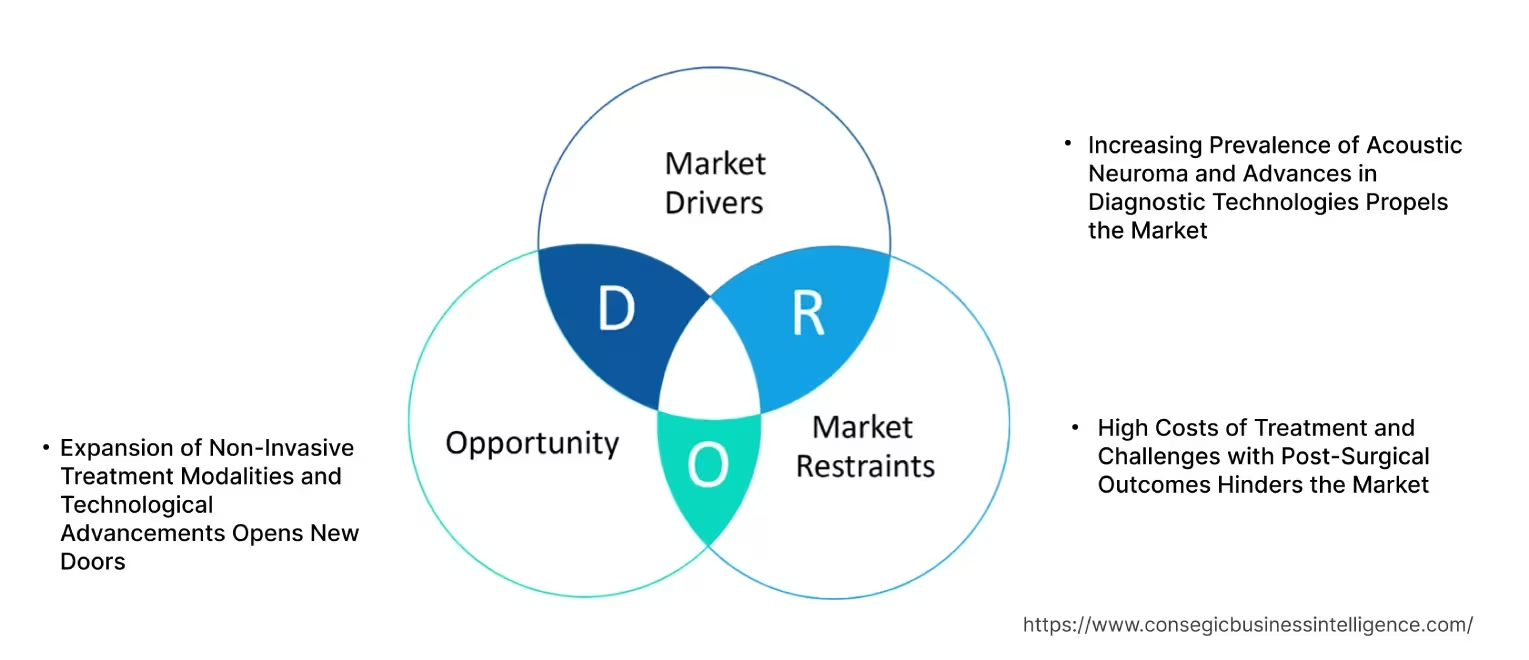
Increasing Prevalence of Acoustic Neuroma and Advances in Diagnostic Technologies Propels the Market
The rising incidence of acoustic neuroma, also known as vestibular schwannoma, is a significant driver of market. Advances in diagnostic imaging, particularly in high-resolution MRI and CT scans, have improved early detection rates. These developments allow for the identification of smaller tumors, which are often asymptomatic in the early stages. This has contributed to an increased number of cases being diagnosed and treated earlier, which drives demand for surgical interventions, radiation therapies, and monitoring solutions. Furthermore, growing awareness among healthcare professionals and patients about the importance of early intervention has expanded the market for both diagnostics and treatments in developed markets like North America and Europe.
Key Restraints :
High Costs of Treatment and Challenges with Post-Surgical Outcomes Hinders the Market
The high cost of acoustic neuroma treatments, especially for microsurgical procedures and advanced radiotherapy techniques such as Gamma Knife radiosurgery, remains a key challenge in the market. Microsurgical excision, while effective, is associated with significant expenses due to the complexity of the procedure and the need for highly specialized surgical teams. Additionally, post-surgical complications, such as facial nerve damage, hearing loss, and vestibular dysfunction, are major concerns for both patients and healthcare providers. These complications can reduce the quality of life post-treatment, making some patients hesitant to opt for surgery even when medically indicated. Radiotherapy, though less invasive, carries its own risks, including potential long-term radiation side effects. The lack of widespread access to affordable treatment options in emerging markets further limits the acoustic neuroma market growth potential.
Future Opportunities :
Expansion of Non-Invasive Treatment Modalities and Technological Advancements Opens New Doors
The development and adoption of non-invasive treatment options, particularly stereotactic radiosurgery (SRS) technologies such as Gamma Knife and CyberKnife, present a significant opportunity for the acoustic neuroma market. These non-invasive techniques allow for the precise targeting of tumors with minimal impact on surrounding healthy tissue, offering improved outcomes with fewer complications compared to traditional surgical approaches. The integration of advanced imaging and AI-driven treatment planning systems is further enhancing the precision and effectiveness of these treatments. As more patients seek less invasive options with shorter recovery times and reduced risks of nerve damage, the demand for SRS is expected to grow significantly. Additionally, ongoing research into novel therapeutics, including targeted drug therapies and genetic interventions, may open acoustic neuroma market opportunities for treating acoustic neuroma, especially for patients who are not ideal candidates for surgery or radiation.
Acoustic Neuroma Market Segmental Analysis :
By Type:
Based on type, the market is segmented into unilateral and bilateral.
The unilateral acoustic neuroma segment accounted for the largest revenue of the total acoustic neuroma market share in 2023.
- Unilateral acoustic neuroma is the most common form of acoustic neuroma, accounting for approximately 95% of all cases.
- This type of tumor typically develops on one side of the head, affecting the vestibular nerve and leading to hearing loss, tinnitus, and balance issues.
- The increasing prevalence of unilateral acoustic neuromas, particularly among individuals aged 40 to 60, is driving the segment.
- Advances in diagnostic imaging, especially MRI, have improved early detection, contributing to the dominance of this segment in the market.
- Thus, the market analysis shows that Unilateral acoustic neuroma leads the market due to its high prevalence, with advances in diagnostic imaging playing a significant role in improving detection rates and patient outcomes, boosting the acoustic neuroma market demand.
The bilateral acoustic neuroma segment is anticipated to register the fastest CAGR during the forecast period.
- Bilateral acoustic neuroma, commonly associated with neurofibromatosis type 2 (NF2), is a rarer condition but often more severe.
- Patients with NF2 are predisposed to developing tumors on both sides of the vestibular nerve.
- While the prevalence is lower, the increasing awareness and advancements in genetic testing for early detection of NF2 are contributing to the segment.
- The availability of specialized treatment options for NF2, such as targeted therapies and minimally invasive surgical techniques, is also driving the market for bilateral acoustic neuroma treatments.
- Thus, the market trends analysis shows that the bilateral acoustic neuroma segment is expected to grow rapidly, driven by increased awareness, advancements in genetic testing, and the availability of specialized treatments for patients with neurofibromatosis type 2, boosting the acoustic neuroma market trends.
By Diagnosis:
Based on diagnosis, the market is segmented into magnetic resonance imaging (MRI), computerized tomography (CT), audiometry, electronystagmography (ENG), and others.
The magnetic resonance imaging (MRI) segment accounted for the largest revenue of the overall acoustic neuroma market share in 2023.
- MRI is the gold standard for diagnosing acoustic neuroma due to its high sensitivity in detecting small tumors in the internal auditory canal.
- It provides detailed imaging of the vestibular nerve, allowing for early detection and accurate tumor characterization.
- The growing adoption of high-resolution MRI scans in hospitals and diagnostic centers, combined with the increasing availability of advanced imaging technology, is driving the segment.
- MRI's non-invasive nature and ability to provide precise anatomical details make it the preferred diagnostic tool for acoustic neuromas.
- Thus, the segmental trends analysis, the MRI leads the diagnostic segment due to its unparalleled accuracy in detecting acoustic neuromas, with increasing adoption of advanced imaging technologies further driving its dominance, boosting the acoustic neuroma market growth.
The audiometry segment is anticipated to register the fastest CAGR during the forecast period.
- Audiometry is a non-invasive test used to evaluate hearing loss, a common symptom of acoustic neuroma.
- As part of routine diagnostic procedures, audiometry helps clinicians assess the extent of hearing impairment and track changes over time.
- Its wide availability, low cost, and effectiveness in identifying early hearing deficits make it a key diagnostic tool, particularly in initial screening.
- With the rising prevalence of hearing-related issues and the growing awareness of early hearing loss detection, the demand for audiometry is expected to increase significantly.
- Thus, the segmental trends analysis depicts that Audiometry is poised for rapid rise due to its critical role in assessing hearing loss in acoustic neuroma patients, with its cost-effectiveness and widespread availability contributing to its increasing adoption, boosting the acoustic neuroma market trends.
By Treatment:
Based on treatment, the market is segmented into surgery, radiation therapy, observation/monitoring, and drug therapy.
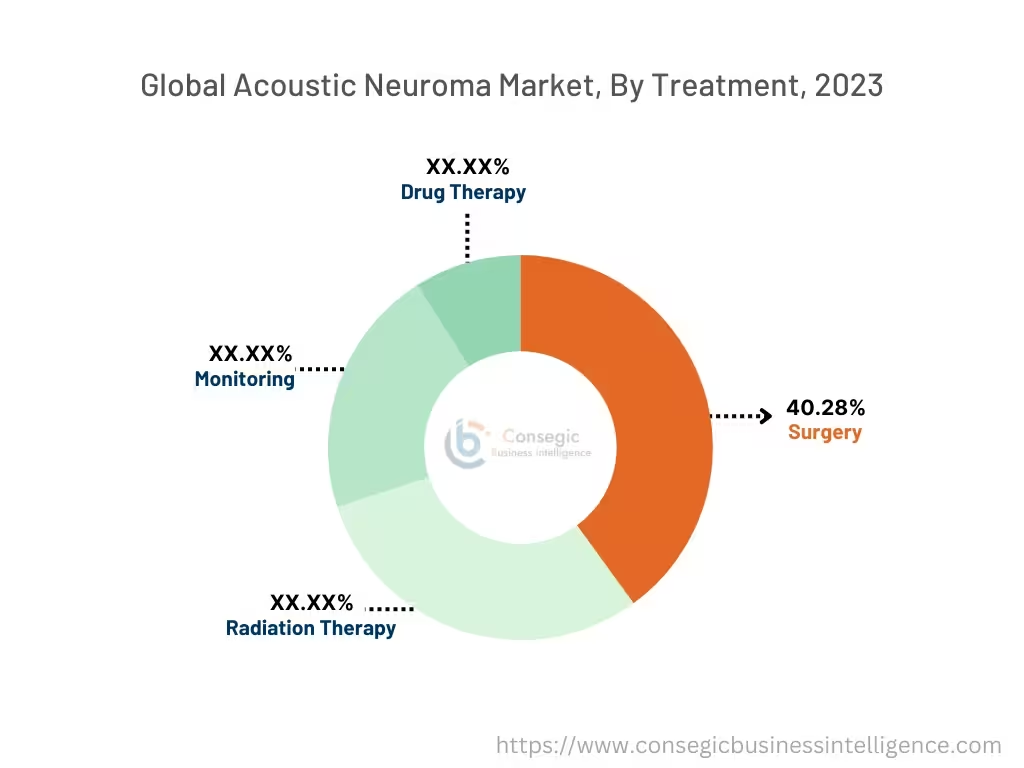
The surgery segment accounted for the largest revenue share of 40.28% in 2023.
- Surgical removal remains the primary treatment for larger or symptomatic acoustic neuromas, especially when the tumor poses a risk of brainstem compression or significant hearing loss.
- Several surgical approaches, including microsurgery and endoscopic techniques, are used depending on tumor size and location.
- Advances in microsurgical techniques have significantly improved patient outcomes, reducing post-operative complications and preserving hearing in many cases.
- The increasing demand for minimally invasive surgeries and the availability of skilled neurosurgeons in specialized centers are key drivers for the surgery segment.
- Surgery dominates the market as the standard treatment for larger or symptomatic tumors, with advances in microsurgical techniques improving patient outcomes and driving acoustic neuroma market expansion.
The radiation therapy segment is anticipated to register the fastest CAGR during the forecast period.
- Radiation therapy, particularly stereotactic radiosurgery (SRS), is gaining popularity as a non-invasive alternative to surgery for smaller tumors or patients who are not ideal surgical candidates.
- SRS delivers focused radiation to the tumor, minimizing damage to surrounding tissues.
- This approach is highly effective in stopping tumor growth and preserving hearing, making it increasingly preferred by both patients and clinicians.
- The growing adoption of advanced radiation technologies, such as Gamma Knife and CyberKnife, is driving the segment.
- Thus, the analysis of market trends shows that radiation therapy, especially stereotactic radiosurgery, is expected to grow rapidly due to its non-invasive nature, effectiveness in halting tumor growth, and growing adoption of advanced radiation technologies, boosting the acoustic neuroma market demand.
By End-User:
Based on end-user, the market is segmented into hospitals, specialty clinics, ambulatory surgical centers, research institutes, and others.
The hospitals segment accounted for the largest revenue share in 2023.
- Hospitals are the primary providers of diagnosis and treatment for acoustic neuromas, offering comprehensive care that includes surgery, radiation therapy, and monitoring.
- With access to advanced imaging technologies, multidisciplinary teams, and specialized neurosurgery departments, hospitals are the first choice for patients requiring complex treatment.
- The high volume of cases managed in hospitals, combined with their capacity for handling advanced diagnostic and therapeutic procedures, solidifies their leading position in the market.
- Thus, the acoustic neuroma market analysis shows that hospitals lead the market due to their ability to offer comprehensive diagnostic and treatment services, advanced technology, and specialized neurosurgery departments.
The specialty clinics segment is anticipated to register the fastest CAGR during the forecast period.
- Specialty clinics, particularly those focused on neurological and audiological care, are becoming increasingly popular for the diagnosis and management of acoustic neuromas.
- These clinics often provide more personalized care, shorter wait times, and access to highly specialized medical professionals.
- The growing trend toward outpatient care and the expansion of specialized centers for neurosurgery and hearing loss treatments are driving the segment.
- Additionally, specialty clinics are increasingly equipped with advanced diagnostic tools and treatment options, making them a preferred choice for many patients.
- Specialty clinics are expected to grow rapidly due to the increasing demand for specialized, outpatient care in the diagnosis and treatment of acoustic neuromas, driven by their personalized care approach and advanced technology adoption.
Regional Analysis:
The regions covered are North America, Europe, Asia Pacific, the Middle East and Africa, and Latin America.
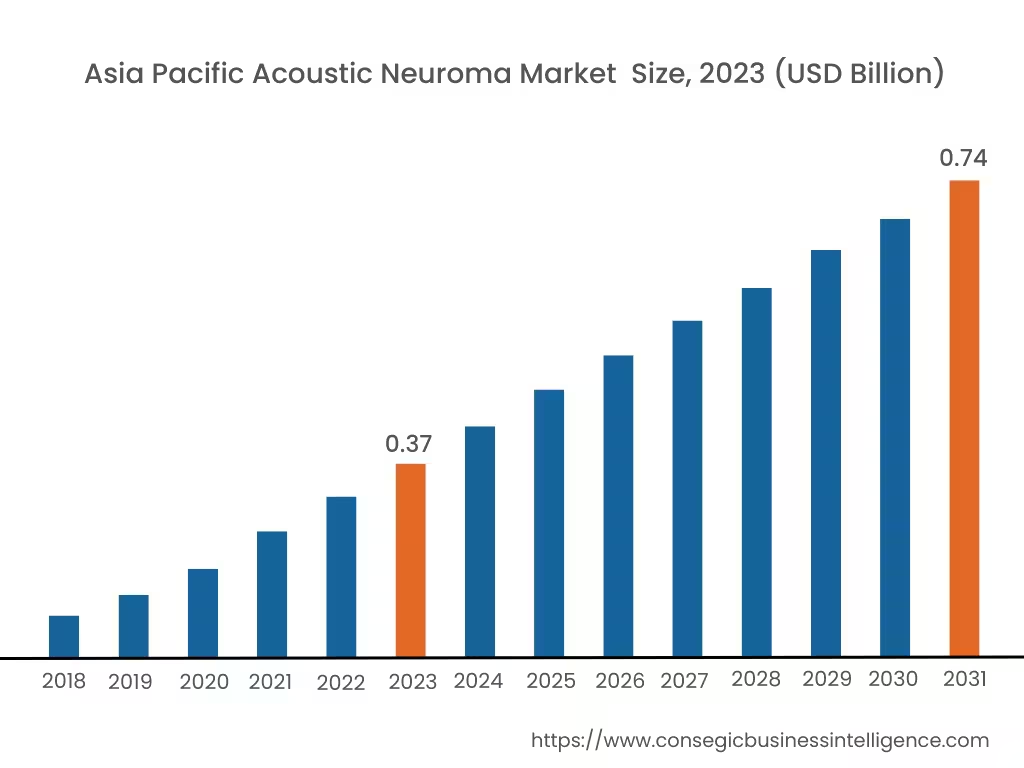
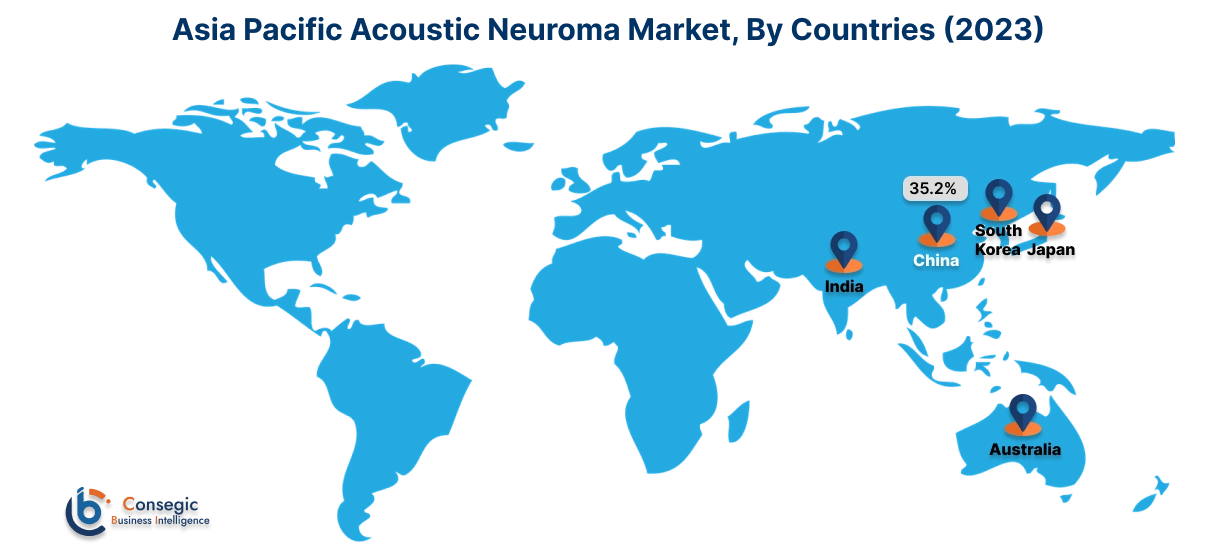
Asia Pacific region was valued at USD 0.37 Billion in 2023. Moreover, it is projected to grow by USD 0.39 Billion in 2024 and reach over USD 0.74 Billion by 2031. Out of this, China accounted for 35.2% of the total market share. As per the acoustic neuroma market analysis, Asia-Pacific is the fastest-growing region primarily due to improving healthcare infrastructure, rising awareness, and growing healthcare expenditures in countries like China, Japan, and India. The increasing prevalence of age-related hearing disorders and the expansion of diagnostic facilities contribute to market. Japan, in particular, is known for its advanced medical technologies, while China is rapidly investing in healthcare services and treatments for rare diseases. However, the lack of specialized neurosurgeons and limited access to advanced treatments in rural areas hinder full acoustic neuroma market expansion.
North America is the largest market for acoustic neuroma treatment, driven by a well-established healthcare system, high awareness of early detection, and advanced treatment options. The U.S. leads the region, with significant investments in neurosurgery and radiation therapy technologies, such as Gamma Knife radiosurgery. A growing aging population, combined with government support for research and treatment of rare conditions, contributes to market. However, high treatment costs and limited insurance coverage for advanced therapies can restrain market expansion.
Europe holds a significant share in the market, with countries like Germany, the UK, and France leading due to their strong healthcare systems and focus on rare disease treatment. The increasing prevalence of neuro-oncological disorders and advancements in minimally invasive surgical techniques drive demand. The region also benefits from government initiatives to improve patient access to advanced treatments, particularly in Western Europe. However, the high costs associated with neurosurgery and long waiting times for treatment in public healthcare systems can pose challenges.
The Middle East & Africa region is experiencing moderate growth in the acoustic neuroma market, led by countries like Saudi Arabia, the UAE, and South Africa. The focus on improving healthcare infrastructure, coupled with rising investments in advanced neurosurgery, is boosting the market. Saudi Arabia and the UAE are expanding their medical tourism sectors, offering high-quality treatment options for complex neurosurgical cases, including acoustic neuromas. However, limited access to cutting-edge treatments and high costs of care remain significant barriers in the region.
Latin America is an emerging market for acoustic neuroma treatment, with Brazil and Mexico being key contributors. Growth is driven by increasing healthcare access and rising awareness of neurological conditions. Brazil's growing medical tourism industry, especially in neurology and oncology, is expected to boost market demand. However, economic constraints and the lack of advanced neurosurgical facilities in some regions may slow market expansion.
Top Key Players & Market Share Insights:
The acoustic neuroma market is highly competitive with major players providing products to the national and international markets. Key players are adopting several strategies in research and development (R&D), product innovation, and end-user launches to hold a strong position in the global acoustic neuroma market. Key players in the acoustic neuroma industry include-
- Medtronic Plc (USA)
- Varian Medical Systems, Inc. (USA)
- Accuray Incorporated (USA)
- Stryker Corporation (USA)
- Carl Zeiss Meditec AG (Germany)
- Elekta AB (Sweden)
- GE Healthcare (USA)
- Siemens Healthineers (Germany)
- Hoffmann-La Roche Ltd. (Switzerland)
- Brainlab AG (Germany)
Recent Industry Developments :
Clinical Trails:
- In June 2023, a clinical trial is set to begin, involving 36 participants, to assess the effectiveness of microsurgical resection of vestibular schwannoma compared to stereotactic radiosurgery. This trial is sponsored by the Medical College of Wisconsin in the United States.
Product Launches:
- In May 2022, Elekta introduced the Elekta Esprit, its next-generation stereotactic radiosurgery system, at the ESTRO conference. This non-invasive brain treatment aims to replace traditional open surgery and conventional radiotherapy methods.
Investments and Fundings:
- In May 2022, the Brain Foundation in Australia provided funding for a project led by researchers at the University of Newcastle, aimed at developing a novel targeted therapy for the treatment of acoustic neuroma.
Acoustic Neuroma Market Report Insights :
| Report Attributes | Report Details |
| Study Timeline | 2021-2034 |
| Market Size in 2034 | USD 4.00 Billion |
| CAGR (2026-2034) | 7.50% |
| Base Year | 2025 |
| By Type |
|
| By Diagnosis |
|
| By Treatment |
|
| By End-User |
|
| By Region |
|
| Key Players |
|
| North America | U.S. Canada Mexico |
| Europe | U.K. Germany France Spain Italy Russia Benelux Rest of Europe |
| APAC | China South Korea Japan India Australia ASEAN Rest of Asia-Pacific |
| Middle East and Africa | GCC Turkey South Africa Rest of MEA |
| LATAM | Brazil Argentina Chile Rest of LATAM |
| Report Coverage |
|
Key Questions Answered in the Report
What is the size of the Acoustic Neuroma Market? −
Acoustic Neuroma market size is estimated to reach over USD 3.22 Billion by 2031 from a value of USD 1.80 Billion in 2023 and is projected to grow by USD 1.90 Billion in 2024, growing at a CAGR of 7.5% from 2024 to 2031.
What is the growth potential of the Acoustic Neuroma Market? +
This growth is primarily driven by increasing awareness of the condition, advancements in diagnostic technologies, and a rise in treatment options such as radiosurgery and microsurgery.
What are the primary treatment options for acoustic neuroma? +
The primary treatment options for acoustic neuroma include microsurgery, radiosurgery (like Gamma Knife), and watchful waiting in cases of smaller tumors or asymptomatic patients. The choice of treatment depends on the size of the tumor, patient’s age, and overall health condition.
Which region is expected to see the highest growth in the Acoustic Neuroma Market? +
North America is expected to see the highest growth in the Acoustic Neuroma Market, owing to the advanced healthcare infrastructure, higher awareness, and accessibility to cutting-edge treatments like radiosurgery. Additionally, increased research funding for neurological disorders further fuels market expansion in this region.
What are the key challenges faced by the Acoustic Neuroma Market? +
Key challenges include the high cost of treatments such as microsurgery and radiosurgery, potential side effects like hearing loss or facial nerve damage, and the lack of awareness in developing regions. These challenges may slow market growth in certain areas.
Overview
Reputation & Certifications


Our Services
- Market Intelligence & Forecasting
- Custom Research Solutions
- Market Entry Strategy
- Competitive Intelligence
- Customer Insights
- Industry Innovation Analysis
- Investment Advisory